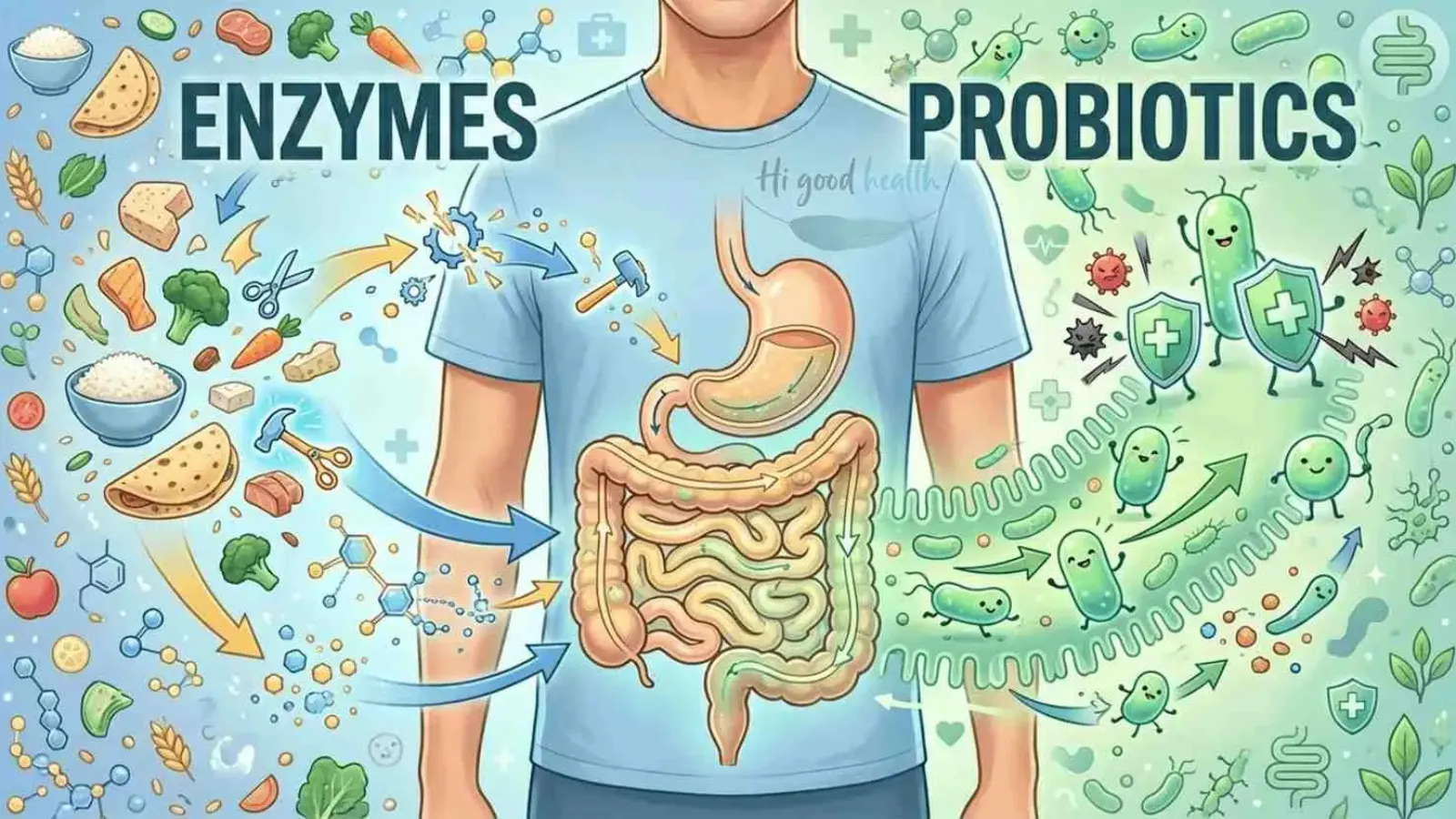
In our previous article, “The Unsung Heroes: How Enzymes Power Your Body and Drive Digestion,” we explored how enzymes do far more than just aid digestion; they are essential for breaking down food and supporting countless bodily functions.
Now, let’s deepen our understanding by contrasting these workhorses with another popular category of gut health supporters: prebiotics and probiotics. Knowing the distinct functions of each will empower you to make informed decisions for your digestive health.
At a glance
They are three different things doing three different jobs. Enzymes break food down. Probiotics are live bacteria that join the ones already living in your gut. Prebiotics are the fibre those bacteria eat. Choosing between them starts with knowing which problem you actually have.
Probiotic foods come before probiotic capsules. Dahi, chaas, lassi, kanji and brine-fermented pickles all carry live cultures. Idli, dosa and dhokla are fermented but cooked, which kills the organisms — still good food, just not a probiotic one.
The evidence is strongest for diarrhoea, particularly after antibiotics, and it is strain-specific rather than general. For gas and bloating, prebiotic fibre and the traditional carminatives — ajwain, jeera, saunf — do more than most people expect.
Understanding the Key Differences: Enzymes, Prebiotics and Probiotics
While all three contribute to a healthy digestive system, they operate in fundamentally different ways:
- Digestive Enzymes: The Breakdown Specialist
These are proteins that chemically break down food molecules (carbohydrates, fats, proteins) into smaller, absorbable units. They are the “workforce” directly involved in the breakdown process. Your body naturally produces digestive enzymes in the salivary glands, stomach, pancreas, and small intestine[1].
- Probiotics: The Gut’s Good Bacteria
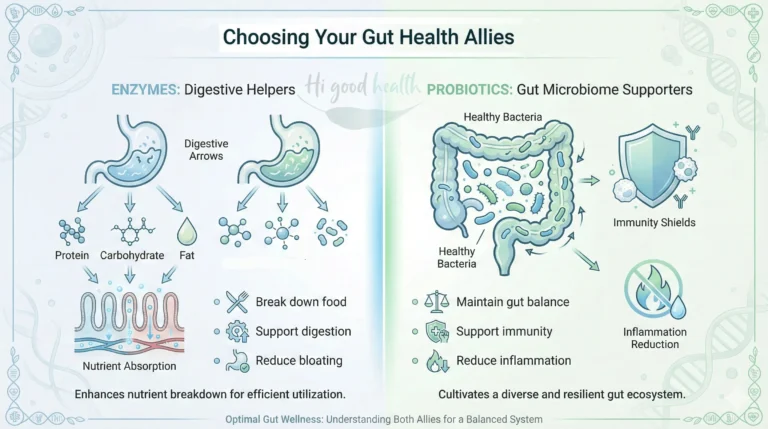
These are beneficial living microorganisms (like bacteria and yeasts) that reside in your gut. They contribute to a healthy gut microbiome, influencing everything from digestion and nutrient absorption to immune function and even mood[2].
Rather than breaking down food directly, they help maintain a balanced gut microbiome, which supports digestion, nutrient absorption, immune health, and even aspects of mental well-being.
- Prebiotics: Fuel for Your Microbiome
These are non-digestible fibres that act as “food” for the beneficial probiotic bacteria in your gut. By selectively feeding the good bacteria, prebiotics help them multiply and flourish, supporting a robust and diverse gut microbiome[3].
Figure 1: Visual comparison of enzymes, probiotics, and prebiotics in the digestive system
While all three play a crucial role in maintaining gut health, they each play a distinct role in supporting a healthy digestive system.
Figure 2: Key differences between enzymes, prebiotics, and probiotics
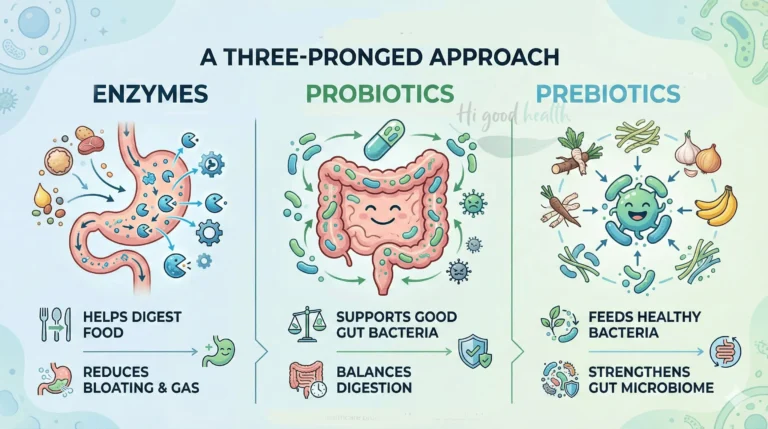
Think of it as a garden: enzymes are the tools that break down compost, probiotics are the beneficial plants, and prebiotics are the fertiliser that helps those plants thrive.
Traditional Wisdom Meets Modern Science: This understanding aligns with traditional Ayurvedic concepts of digestive fire (Agni) and gut flora (Pachaka Pitta).
While Ayurveda didn’t use modern terminology, it recognised that proper digestion requires both the “fire” to break down food (similar to enzymes) and a balanced internal environment (similar to a healthy microbiome). Modern research now provides scientific validation for these time-tested observations.
Curious about how your gut communicates with your brain—and what it means for your mood and mental well-being? Dive into our detailed blog: How Is Your Gut Talking to Your Brain?
Probiotic Foods: What to Eat for Gut Health in India
Probiotics are live micro-organisms that provide a health benefit when eaten in adequate amounts. The distinction that matters once you are actually standing in a shop is between food that is fermented and food that is probiotic. Every probiotic food is fermented; not every fermented food is probiotic, because heat kills the organisms.
If you want the enzyme side of this in depth — what enzymes are, how they work, and the signs of a genuine deficiency — that is covered in our companion article, The Unsung Heroes: How Enzymes Power Your Body and Drive Digestion.
Probiotic foods with live cultures, easily available in India:
- Dahi (curd) — the most reliable everyday source. Set at home from a live starter, it carries Lactobacillus in useful numbers. Long-life packaged curd is sometimes heat-treated after setting, which kills the cultures, so look for the words live and active cultures on the pack.
- Chaas and buttermilk — the same organisms, diluted, and considerably easier on the stomach in hot weather.
- Lassi — the same again, although the sugar in sweet lassi works against you if it becomes a daily habit.
- Kanji — the fermented black-carrot drink of north Indian winters. Genuinely lacto-fermented and never heated, which makes it one of the better traditional sources.
- Brine-fermented pickles — the traditional salt-and-sun method. Most commercial achar is preserved in oil and vinegar and contains no live cultures at all.
- Kefir, kimchi, sauerkraut, miso and kombucha — from other food traditions, and increasingly stocked in Indian cities.
Fermented but not probiotic once cooked: idli, dosa, dhokla and appam. The batter ferments beautifully and is then steamed or cooked, which kills the organisms.
That does not make them pointless — fermentation reduces phytates and improves how much iron and zinc you absorb, and it pre-digests some of the starch — but the benefit is not a probiotic one, and it is worth knowing which is which.
Yakult Benefits: What a Probiotic Drink Actually Does
Yakult is the probiotic most people in India have actually heard of, so it deserves a specific answer rather than a general one. It contains a single strain, Lactobacillus casei Shirota, at roughly 6.5 billion live organisms per bottle.
What the evidence supports: strain-specific benefits for bowel transit time and constipation, and a role in reducing antibiotic-associated diarrhoea. The trials are mostly small, and a good proportion are industry-funded — which is normal in this field, and still worth knowing when you read the claims.
What it will not do: it is not a treatment for irritable bowel syndrome, it does not detoxify anything, and the effect stops when you stop drinking it.
Watch the sugar as well — a bottle carries around 10 grams, which matters if you are managing blood sugar or giving one to a child every day. Plain unsweetened dahi does much of the same work without it.
Prebiotic Foods: Feeding the Bacteria You Already Have
Prebiotics are not organisms at all. They are types of fibre that your own gut bacteria ferment — mainly inulin, fructo-oligosaccharides and resistant starch. Feeding the bacteria you already have is often more effective, and very much cheaper, than buying new ones.
- Onion and garlic, raw or lightly cooked
- Raw or green banana and unripe plantain
- Whole wheat, jowar, bajra and oats
- Sprouted pulses and chana
- Rice and potato that have been cooked and then cooled, which converts some starch to resistant starch
- Flaxseed and chicory root
Increase these slowly. A sudden jump in prebiotic fibre produces exactly the gas and bloating you were trying to get rid of. Build up over two or three weeks rather than in a day.
Probiotics and Diarrhoea: Where the Evidence Is Strongest
Of everything probiotics are sold for, this is the area with the clearest and most specific support.
- Antibiotic-associated diarrhoea — Saccharomyces boulardii and Lactobacillus rhamnosus GG both reduce the risk. Take them a couple of hours apart from the antibiotic dose rather than alongside it.
- Acute infectious diarrhoea in children — a modest reduction in how long it lasts. ORS and zinc remain the treatment; probiotics are an addition to them, never a replacement.
- Strain specificity matters more here than anywhere else. Evidence for one strain does not transfer to another, even within the same species, and a product that names only the genus is not telling you enough.
One genuine caution: probiotics are not appropriate for anyone severely immunocompromised, critically ill, or with a central venous line. Rare bloodstream infections are documented in exactly those groups. Ask a doctor first rather than assuming that a food-category product is automatically safe for everyone.
Should You Take Probiotics With Food?
With a meal, or just before one, in most cases. Stomach acid is the main obstacle a probiotic has to survive, and food buffers that acid and improves how many organisms reach the intestine alive.
A meal containing some fat improves survival further. Taking a capsule on an empty stomach — which is most people’s instinct — is the least protective moment of the day.
With dahi, chaas and the other food sources the question does not arise at all, which is one more argument for food before capsules.
Prebiotic and Probiotic Capsules: What They Actually Do
A combined prebiotic-and-probiotic capsule, sometimes labelled a synbiotic, supplies live organisms together with the fibre they feed on. In India these are sold mainly for gas and bloating, for recovery after a course of antibiotics, and for general gut health.
What to check on the label: the strain and not merely the species — L. rhamnosus GG rather than just “Lactobacillus”; the CFU count at expiry rather than at manufacture, since the organisms die off over time; and the storage requirement, because some strains need refrigeration and lose potency on a warm shelf.
What they are not: a substitute for fixing what you eat, and not a treatment for a diagnosed condition without medical advice. Under FSSAI’s nutraceutical regulations these are foods rather than drugs, so they cannot legally claim to treat disease — and a product that claims it anyway is telling you something useful about itself.
Gas, Bloating and Acidity: Home Remedies Worth Trying
The traditional Indian remedies for gas are not nothing, but the evidence behind them varies a great deal, and it is worth knowing which is which.
- Ajwain (carom seeds) — the thymol content gives it a genuine carminative effect, and it is the best supported of the traditional options.
- Jeera (cumin) water — some trial evidence for improving symptoms in irritable bowel syndrome.
- Saunf (fennel) — a long-used carminative with some evidence in infant colic.
- Hing (asafoetida) — traditionally added to pulses for precisely this reason, and the tradition is sound even if the trial data is thin.
- Chaas with roasted jeera after a heavy meal — combines the probiotic and the carminative in one glass.
- Enteric-coated peppermint oil — not traditional, but the best-evidenced of the lot for irritable bowel syndrome.
When it is not simple gas: bloating together with weight loss, blood in the stool, persistent vomiting, difficulty swallowing, or symptoms that wake you at night are not problems for a home remedy. Those need a doctor.
Man-Made Supplements to Address Enzyme Deficiency: Clinical Evidence and Success
For individuals with diagnosed enzyme deficiencies or persistent digestive issues, digestive enzyme supplements are widely available and can be highly effective.
These formulations typically include a blend of key enzymes such as:
- Amylase (for carbohydrates)
- Protease (for proteins)
- Lipase (for fats)
- Cellulase (for plant fibres)
- Lactase (for dairy)
By directly supplying enzymes that the body may be lacking, these supplements support the essential process of breaking down food into absorbable nutrients.[4]
Regulatory Note for India: In India, digestive enzyme supplements are regulated under the Food Safety and Standards Authority of India (FSSAI). When purchasing supplements, look for products with valid FSSAI license numbers to ensure quality and safety standards are met.
Clinical Evidence for Enzyme Supplementation
The benefits of digestive enzyme supplements are particularly well-documented for specific medical conditions:
- Exocrine Pancreatic Insufficiency (EPI): A condition where the pancreas fail to produce sufficient digestive enzymes, pancreatic enzyme replacement therapy (PERT) is considered essential treatment. Multiple clinical studies have demonstrated that PERT significantly improves nutrient absorption, reduces malabsorption symptoms, and improves quality of life in patients with EPI[5].
- Non-Specific Digestive Discomfort: For milder, non-clinical digestive discomfort not caused by diagnosed enzyme deficiencies, over-the-counter enzyme supplements may help reduce symptoms like bloating, gas, and indigestion.
A comprehensive review by Money and Camilleri, published in the Journal of Clinical Gastroenterology (2012), examined the utility of various digestive enzyme supplements in alleviating malabsorption symptoms [6].
- Irritable Bowel Syndrome (IBS): Research published in Digestive Diseases and Sciences has indicated that multi-enzyme supplements may improve symptoms in some IBS patients, particularly those with predominant bloating[7]. However, results vary among individuals, and more research is needed to establish definitive protocols.
Important Note:
When considering digestive enzyme supplements:
- Choose reputable brands that undergo third-party testing
- Avoid self-diagnosing enzyme deficiencies
- Consult a healthcare professional for the appropriate type and dosage
Digestive symptoms can often overlap with other conditions, making proper evaluation essential before starting supplementation.
For Indian Consumers: When selecting enzyme supplements, look for:
• FSSAI license number on packaging
• Third-party testing certifications (ISO, GMP)
• Clear ingredient disclosure
• Manufacturing date and expiry information
• Vegetarian/vegan certification if following a plant-based diet
Popular Indian brands manufacturing digestive enzyme supplements include those certified by FSSAI and following Good Manufacturing Practices (GMP).
To understand how modern lifestyle factors may be impacting your gut health, explore our detailed guide: Your Digital Life & Inflammation – Spot It, Stop It, & Safeguard Your Brain & Gut
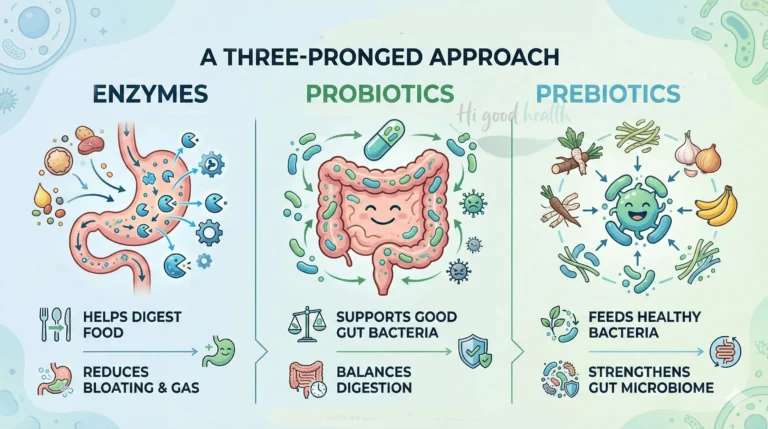
Figure 3: Digestive enzyme supplements and their role in addressing enzyme deficiency
How to Decide: Prebiotics, Probiotics, or Enzymes for Digestive Issues?
Choosing the right supplement depends on the underlying cause of your digestive issues and should ideally be guided by a healthcare professional. Here’s a general framework to help you understand which might be most appropriate:
Considerations for Indian Diets
Given the diversity of Indian dietary patterns from predominantly vegetarian diets in many regions to varied regional cuisines digestive support needs may differ:
• High-fibre vegetarian diets may benefit from both prebiotics (already abundant) and probiotics to support healthy gut bacteria
• Lactose intolerance is common in Indian populations (estimated 60-70%); lactase enzyme supplements can help those who wish to consume dairy
• Legume-heavy diets (dal, rajma, chole) may cause gas and bloating; alpha-galactosidase enzymes can help break down complex sugars
• Spice-rich foods generally support digestive enzyme secretion naturally, but may require probiotic support if the gut microbiome is imbalanced
Understanding your specific sensitivities is crucial for long-term metabolic health. Read more about symptoms of gluten intolerance and traditional grain alternatives to modern wheat, for detailed information, read our article.
Common Digestive Concerns:
1. Lactose Intolerance: Highly prevalent in Indian populations. Lactase enzyme supplements taken with dairy can prevent bloating, gas and diarrhoea.
2. Legume-Related Bloating: Common with dal, rajma, and chole consumption. Alpha-galactosidase enzymes help break down raffinose and stachyose sugars.
3. Post-Meal Heaviness: Often experienced after rich, oil-based curries. Multi-enzyme formulations with lipase can support fat digestion.
4. Gluten Sensitivity: Increasingly recognised in urban India. While not a cure for coeliac disease, some enzyme supplements may help with mild gluten sensitivity (always consult a doctor for diagnosed coeliac disease).
Understanding your specific sensitivity to different grains is the first step toward better metabolic health. Use our guide to identify symptoms of gluten intolerance and traditional grain alternatives to modern wheat, for detailed information, read our article.
Consider Digestive Enzymes If
Digestive enzymes are most helpful when the issue lies in breaking down food properly.
You may benefit if:
- You experience immediate post-meal discomfort such as bloating, gas, or a feeling of fullness (typically within 1–2 hours after eating)
- You notice undigested food particles in your stool
- You have difficulty digesting specific types of foods (fatty meals, dairy, high-protein foods)
- You’re an older adult (natural enzyme production decreases with age)
- You have been diagnosed with specific pancreatic concerns or conditions affecting enzyme production
- You experience symptoms particularly after large or rich meals
Opt for Probiotics if:
Probiotics are ideal when the issue is related to an imbalanced gut microbiome.
You may benefit if:
- You suffer from irregular bowel movements (chronic constipation or diarrhoea)
- You have frequent infections or a weakened immune system
- You experience chronic, generalised bloating not specifically tied to meals
- You’ve recently completed a course of antibiotics
- You show other indicators of an imbalanced gut microbiome (dysbiosis)
- You’re recovering from gastrointestinal illness
Incorporate Prebiotics if:
Prebiotics are best for nourishing and strengthening your existing gut bacteria.
You may benefit if:
- You are currently taking probiotics and want to maximise their effectiveness
- You wish to foster the growth of your existing beneficial gut bacteria naturally
- You want to support long-term gut health through dietary fibre
- You have a generally healthy digestive system and want to maintain it
Figure 4: Decision-making framework for choosing digestive supplements
Important: Often, digestive issues are complex and multifactorial. A synergistic approach combining enzymes, probiotics, and/or prebiotics might be most effective for comprehensive digestive support.
The best course of action is always to consult with a healthcare professional such as a gastroenterologist, registered dietitian, or general physician (GP) who can help identify the root cause of your symptoms and recommend a personalised strategy.
In-depth diagnostics can provide the clarity needed for a personalized gut repair plan. Explore blood markers that provide a deeper understanding of your metabolic and digestive health, for detailed information, read our article.
Vegetarian and Vegan Enzyme Supplements: Efficacy and Indian Brand Recommendations
The market for vegetarian and vegan digestive enzyme supplements in India has expanded considerably, offering numerous plant-based options that are both effective and ethically produced. Many of these enzymes are derived from fungal sources (such as Aspergillus oryzae or Aspergillus niger), or extracted from fruits like pineapple (bromelain) and papaya (papain)[8].
Effectiveness of Plant-Based Enzymes
Plant-derived and fungal enzymes are highly effective at breaking down proteins, fats, and carbohydrates. In fact, they offer several advantages over animal-derived enzymes:
Broader pH Range: Fungal enzymes often demonstrate efficacy across a wider pH range (from the acidic environment of the stomach to the more alkaline small intestine), allowing them to function optimally throughout the digestive tract[7].
Cellulase Inclusion: Plant-based formulations frequently include cellulase, an enzyme that breaks down plant fibre cellulose. Since the human body does not naturally produce cellulase, this addition makes plant-based supplements particularly beneficial for those following high-fibre vegan or vegetarian diets.
Proteolytic Properties: Bromelain and papain have well-established proteolytic (protein-digesting) properties supported by clinical research, while fungal-derived amylase and lipase efficiently break down starches and fats[9].
Reputable Indian Brands for Vegan and Vegetarian Digestive Enzymes
When selecting a supplement, always verify “vegan” or “vegetarian” certification on the label. Here are well-regarded brands available in the Indian market:
Recommended Indian Brands:
- Himalaya Wellness Digestive Enzyme Capsules – A trusted Ayurvedic brand offering plant-based digestive enzyme formulations. Known for rigorous quality standards, FSSAI compliance, and wide availability across pharmacies and online platforms in India.
- Carbamide Forte Digestive Enzymes – A popular and affordable Indian brand offering broad-spectrum plant-derived enzyme blends. GMP certified, FSSAI approved, and widely available on major e-commerce platforms.
- HealthKart HK Vitals Digestive Enzymes – A well-known Indian health supplement brand offering targeted enzyme formulations with good consumer reviews. FSSAI registered, with transparent labelling and third-party tested formulations.
- Boldfit Digestive Enzyme Supplement – An emerging Indian brand providing vegetarian-friendly digestive enzyme capsules at competitive pricing. GMP certified and FSSAI approved, with clear ingredient labelling.
- Kapiva Ayurveda Digesti Care – An Ayurvedic brand combining traditional knowledge with modern formulation science. Uses plant-based and herbal enzyme sources, is FSSAI and AYUSH certified, and is widely available across India.
What to Look for When Selecting a Supplement
- Broad-Spectrum Blends: Ensure the formula contains enzymes for all major macronutrients (proteins, fats, and carbohydrates)
- Activity Units: Enzymes are measured by activity (such as FCC units), not just milligrams. Higher activity units indicate greater potency.
- Third-Party Testing: Look for certifications from AYUSH or GMP certification indicating purity and potency verification
- Clear Labelling: The supplement facts panel should clearly list enzyme types and their activity levels
- Allergen Information: Ensure the product is free from allergens relevant to you
Note: Product availability and formulations may change. Always verify current product specifications and consult with a healthcare provider before starting any new supplement regimen.
Side Effects, Duration and Timing of Supplement Intake
Potential Side Effects
Digestive enzyme supplements are generally considered safe for most individuals when taken as directed. Side effects are uncommon but may include:
- Mild Gastrointestinal Upset: Nausea, abdominal cramping, or diarrhoea, particularly when first starting supplementation or taking very high doses. These symptoms are usually transient and resolve as your body adjusts.
- Allergic Reactions: Though rare, some individuals may experience allergic reactions to specific enzyme sources (for example, bromelain derived from pineapple may cause reactions in those with pineapple allergies). Symptoms may include rash, itching, or difficulty breathing. Discontinue use immediately and seek medical attention if severe reactions occur.
- Headaches: Infrequently reported by some users.
- Interactions with Medications: High-dose protease enzymes may interact with blood-thinning medications or affect the absorption of certain drugs. Always inform your healthcare provider about all supplements you’re taking.
How Long Should Enzyme Supplements Be Taken?
The appropriate duration depends on your reason for use:
Occasional Digestive Discomfort: Take as needed when consuming hard-to-digest meals or during periods of dietary indulgence (festivals, weddings, travel, etc.).
Chronic Enzyme Deficiencies: For diagnosed conditions like EPI, enzyme replacement therapy is typically long-term or lifelong, as prescribed by a physician.
Ongoing Digestive Support: Many individuals with mild, chronic digestive issues take enzyme supplements regularly. However, it’s advisable to work with a healthcare professional to periodically assess whether ongoing supplementation is still necessary or if underlying issues have improved.
Trial Period: If trying enzymes for the first time for non-specific symptoms, consider a 4–6 week trial to assess effectiveness.
Important: Regular follow-up with your healthcare provider is recommended for long-term supplementation to monitor effectiveness and adjust dosage as needed.
Optimal Timing for Taking Digestive Enzymes
Best Practice: Take digestive enzyme supplements with the first bite of a meal or immediately before eating (within 5 minutes). This ensures the enzymes are present in your digestive tract when food arrives, allowing them to begin breaking down nutrients immediately.
If missed: Taking enzymes during the meal or shortly after (within 30 minutes) can still provide benefit, though effectiveness may be somewhat reduced.
Consistency Matters: For best results, take enzymes consistently with meals that typically cause you discomfort.
Follow Product Instructions: Always adhere to the specific dosing instructions on your supplement label or follow your healthcare provider’s recommendations, as enzyme potency and formulations vary between products.
Key Takeaways
- Enzymes break food down, probiotics are live bacteria, prebiotics are the fibre that feeds them. They are not interchangeable and they solve different problems.
- Dahi, chaas, lassi, kanji and brine-fermented pickles are the reliable probiotic foods in an Indian diet. Idli, dosa and dhokla are fermented but cooked, so the organisms do not survive.
- Prebiotic fibre — onion, garlic, green banana, oats, sprouted pulses, cooled rice — is cheaper and often more effective than buying new bacteria. Increase it slowly or it causes the bloating you were treating.
- Probiotic evidence is strongest for antibiotic-associated diarrhoea and for shortening acute diarrhoea in children, and it is specific to the strain, not the species.
- Take probiotic capsules with or just before a meal. Stomach acid is the obstacle, and food buffers it.
- On a capsule label, look for the named strain and the CFU count at expiry rather than at manufacture. Under FSSAI rules these are foods, not drugs, and cannot claim to treat disease.
- Probiotics are not for everyone: anyone severely immunocompromised, critically ill or with a central venous line should ask a doctor first.
Frequently Asked Questions
1. Can I take digestive enzymes and probiotics together?
Yes, absolutely. These supplements perform complementary but different roles: digestive enzymes break down food molecules immediately during digestion, while probiotics work to balance gut bacteria and support the microbiome over time. Taking them together can offer a comprehensive approach—enzymes provide immediate digestive support for your current meal, while probiotics contribute to long-term gut health and immune function. There are no known negative interactions between the two.
2. Which is better for bloating: enzymes or probiotics?
The choice depends on the timing and pattern of your bloating:
Choose digestive enzymes if you feel bloated or gassy immediately after eating (within 1–2 hours of a meal). This pattern suggests difficulty breaking down specific food components, and enzymes can provide immediate relief.
Choose probiotics if your bloating is chronic, occurs at various times regardless of meals, or is accompanied by irregular bowel movements (constipation or diarrhoea). This pattern suggests a gut microbiome imbalance that probiotics can help address over time.
If bloating persists despite supplementation, consult a healthcare provider to rule out underlying conditions such as SIBO (small intestinal bacterial overgrowth), food intolerances, or IBS.
3. When is the best time to take digestive enzymes?
The most effective time is with your first bite of food or within 5 minutes before a meal. This timing ensures the enzymes are present in your digestive tract to immediately begin breaking down nutrients when food arrives. If you forget, taking them during or within 30 minutes after eating can still provide some benefit, though potentially less effectively.
4. Will taking enzyme supplements stop my body from producing its own enzymes?
No, there is currently no strong scientific evidence that taking over-the-counter digestive enzyme supplements suppresses your body’s natural enzyme production. Your body’s enzyme secretion is primarily triggered by the presence of food and hormonal signals, and this feedback mechanism continues to function normally during supplementation[7]. Dependency is generally not a concern for non-prescription digestive enzyme supplements. However, if you have specific medical conditions, discuss long-term supplementation with your healthcare provider.
5. How long does it take for digestive enzymes to work?
The effects of digestive enzymes are often felt relatively quickly within 30 minutes to 2 hours after a meal. Many people notice less gas, reduced bloating, or a “lighter” feeling shortly after taking them with food. However, optimal benefits for nutrient absorption and overall digestive comfort may develop over several weeks of consistent use as your body adjusts. Individual responses vary based on the severity of enzyme deficiency and the specific digestive issues being addressed.
6. Are plant-based enzymes as effective as animal-derived enzymes?
Yes, plant-based and fungal enzymes (including bromelain, papain, and fungal-derived amylase/lipase/protease) are highly effective for digestive support. In fact, they offer certain advantages: they remain active across a broader pH range than many animal-derived enzymes, meaning they can function throughout the entire digestive tract from the acidic stomach to the more alkaline small intestine. This makes them versatile and reliable for breaking down proteins, fats, and carbohydrates. Clinical research supports their efficacy[9].
7. Can I take digestive enzymes every day?
Yes, for individuals with chronic enzyme deficiencies, ongoing digestive discomfort, or conditions requiring enzyme support, daily use is common and generally safe when taken as directed. For occasional digestive issues, such as after heavy meals, during travel, or during festive celebrations, you can take them “as needed” for immediate relief. If you plan to use digestive enzymes daily for an extended period, it’s advisable to consult with a healthcare professional to ensure appropriate dosage and to monitor for any underlying conditions that may require additional treatment.
8. Do I need a prescription for digestive enzyme supplements?
Most digestive enzyme supplements are available over-the-counter (OTC) without a prescription. However, prescription-strength pancreatic enzyme replacement therapy (PERT) is required for diagnosed pancreatic insufficiency and must be prescribed by a physician. If you have severe or persistent digestive symptoms, consult a healthcare provider for proper diagnosis before self-treating with OTC supplements.
9. Can digestive enzymes help with weight loss?
Digestive enzymes are not weight loss supplements and should not be taken solely for that purpose. Their primary function is to help break down food for better nutrient absorption and to alleviate digestive discomfort. While improved digestion may indirectly support overall metabolic health, there is no scientific evidence that enzyme supplements directly cause weight loss. For weight management concerns, consult with a registered dietitian or healthcare provider for evidence-based strategies.
10. Are there any foods that naturally boost my enzyme production?
Yes, certain foods naturally contain digestive enzymes or support your body’s enzyme production:
-> Pineapple: Contains bromelain (protein-digesting enzyme)
-> Papaya: Contains papain (protein-digesting enzyme)
-> Mango: Contains amylase (carbohydrate-digesting enzyme)
-> Honey: Contains various digestive enzymes
-> Fermented foods (idli, dosa batter, dahi/curd, kanji, achaar): Support overall digestive health. Traditional Indian fermented preparations have been part of our cuisine for centuries and provide natural probiotic support. Idli and dosa batter (fermented rice and lentils), dahi (traditional curd with lactobacillus), kanji (fermented black carrot drink), achaar (naturally fermented pickles), dhokla batter (fermented chickpea), and ambali (fermented rice water popular in South India) all contribute to gut health, although the ones that are steamed or cooked before eating, such as idli, dosa and dhokla, lose their live cultures in the process. Their benefit comes from what fermentation does to the batter rather than from the bacteria surviving to reach your gut.
Ginger: May stimulate digestive enzyme secretion.
However, cooking and processing can destroy natural enzymes in food. Eating a variety of raw fruits, vegetables, and fermented foods can complement your body’s natural enzyme production.
Managing cravings is a biological process deeply rooted in your microbiome balance. Discover how natural and artificial sweeteners impact your gut microbiome and hunger signals, for detailed information, read our article.
11. Are digestive enzyme supplements safe for vegetarians and vegans following Indian diets?
Yes, many digestive enzyme supplements are plant-based or fungal-derived, making them suitable for vegetarians and vegans. Look for products clearly labelled as vegetarian/vegan and certified by relevant authorities. Plant-based enzymes such as papain (from papaya), bromelain (from pineapple), and fungal-derived enzymes are highly effective and align with plant-based dietary principles. In India, FSSAI-certified vegetarian supplements display a green dot symbol on packaging. Traditional enzyme-rich foods like raw papaya (used in pachaadi) and pineapple have been used in Indian cuisine for generations to aid digestion, especially when consuming protein-rich meals.
12. What are the best probiotic foods in India?
Dahi set at home from a live starter is the most reliable and the cheapest. Chaas and buttermilk carry the same organisms in a lighter form. Kanji, the fermented black-carrot drink of north Indian winters, is genuinely lacto-fermented and never heated. Traditional brine-fermented pickles qualify, although most commercial achar is preserved in oil and vinegar and contains no live cultures. Kefir, kimchi, sauerkraut, miso and kombucha are increasingly available in Indian cities. Look for the words live and active cultures on any packaged product.
13. Do idli and dosa count as probiotic foods?
Not once they are cooked. The batter ferments genuinely and beautifully, but steaming an idli or cooking a dosa kills the organisms, so nothing live reaches your gut. That does not make them poor food. Fermentation reduces phytates, improves how much iron and zinc you absorb, and pre-digests some of the starch, which is why fermented batters have always been easier to digest than unfermented ones. The benefit is real; it is simply not a probiotic benefit. For that you want dahi, chaas or kanji, none of which is heated.
14. What is the difference between prebiotics and probiotics?
Probiotics are live bacteria that join the population already living in your gut. Prebiotics are not alive at all: they are types of fibre, mainly inulin, fructo-oligosaccharides and resistant starch, that your existing gut bacteria ferment. In plain terms, probiotics are the seeds and prebiotics are the fertiliser. Prebiotic foods such as onion, garlic, green banana, oats, sprouted pulses and cooled rice are cheaper and often more effective than buying new bacteria, but increase them gradually, because a sudden jump in fibre causes exactly the gas and bloating you were trying to fix.
15. Is it good to drink Yakult every day?
For most healthy adults it is safe, and there is reasonable strain-specific evidence for bowel transit time and for reducing antibiotic-associated diarrhoea. Two caveats are worth weighing before it becomes a daily habit. A bottle contains around 10 grams of sugar, which matters if you are managing blood sugar or giving one to a child every day. And the benefit stops when you stop. Plain unsweetened dahi does much of the same work at a fraction of the cost. Anyone severely immunocompromised or critically ill should ask a doctor before taking any probiotic.
References
All reference links valid and accessible on 10 April 2026
1. Ianiro, G., et al. (2016). Digestive enzyme supplementation in gastrointestinal diseases. Current Drug Metabolism, 17(2), 187-193. https://pubmed.ncbi.nlm.nih.gov/26806042/
2. Hill, C., et al. (2014). Expert consensus document: The International Scientific Association for Probiotics and Prebiotics consensus statement on the scope and appropriate use of the term probiotic. Nature Reviews Gastroenterology & Hepatology, 11(8), 506-514. https://pubmed.ncbi.nlm.nih.gov/24912386/
3. Gibson, G. R., et al. (2017). Expert consensus document: The International Scientific Association for Probiotics and Prebiotics (ISAPP) consensus statement on the definition and scope of prebiotics. Nature Reviews Gastroenterology & Hepatology, 14(8), 491-502. https://pubmed.ncbi.nlm.nih.gov/28611480/
4. Keller, J., & Layer, P. (2005). Human pancreatic exocrine response to nutrients in health and disease. Gut, 54(suppl 6), vi1-vi28. https://pubmed.ncbi.nlm.nih.gov/15951527/
5. Hardt, P. D., & Ewald, N. (2011). Exocrine pancreatic insufficiency in diabetes mellitus: A complication of diabetic neuropathy or a different type of diabetes? Experimental Diabetes Research, 2011, Article ID 761950. https://pubmed.ncbi.nlm.nih.gov/21822421/
6. Money, M. E., & Camilleri, M. (2012). Review: Management of postprandial diarrhea syndrome. American Journal of Medicine, 125(6), 538-544. https://pubmed.ncbi.nlm.nih.gov/22624684/
7. Roxas, M. (2008). The role of enzyme supplementation in digestive disorders. Alternative Medicine Review, 13(4), 307-314. https://pubmed.ncbi.nlm.nih.gov/19152478/
8. Raveendran, S., et al. (2018). Applications of microbial enzymes in the food industry. Food Technology and Biotechnology, 56(1), 16-30. https://pubmed.ncbi.nlm.nih.gov/29795993/
9. Pavan, R., et al. (2012). Properties and therapeutic application of bromelain: A review. Biotechnology Research International, 2012, Article ID 976203. https://pubmed.ncbi.nlm.nih.gov/23304525/
10. Patel, R., & Dubey, A. K. (2014). Microbiological profile of commercial probiotics available in Indian market. Journal of Food Science and Technology, 51(11), 3495-3502. https://pubmed.ncbi.nlm.nih.gov/26396355/
Disclaimer
The content provided on higoodhealth.com is for general informational purposes only. While we strive to offer accurate and up-to-date content, much of the information is derived from publicly available sources and personal research. We do not make any warranties about the completeness, reliability, or accuracy of this information.
