
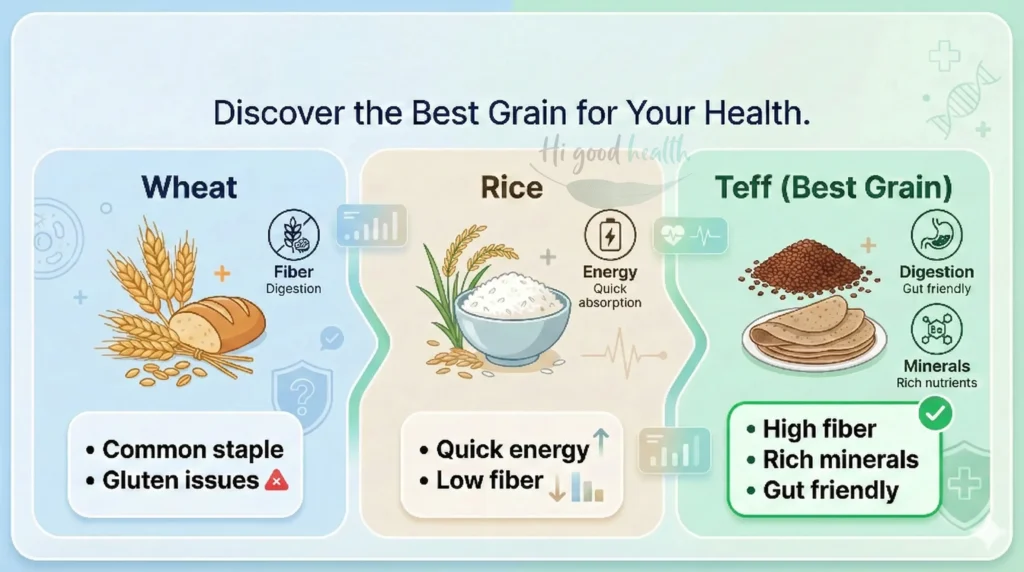
Every Indian meal revolves around them — wheat rotis at breakfast, rice at lunch, maybe both at dinner. They’ve been on our plates for generations. So here’s a question most of us never think to ask: are wheat and rice actually good for us?
The honest answer? It depends — mostly on how processed they are.
The Refined Grain Problem
When wheat is milled into maida or rice is polished white, both lose their outer bran and inner germ — the parts that carry fiber, B vitamins, iron, and minerals. What’s left is mostly starch that hits your bloodstream fast. White rice carries a high glycemic index of 73, while refined wheat products behave similarly — both linked to rising rates of type 2 diabetes and heart disease in India. And despite being the 4th largest coarse grain producer in the world, India is among the top consumers of refined grains.
Whole Grains vs. Refined: A Big Difference
Switching to whole wheat atta and brown rice is a meaningful upgrade — more fiber, slower sugar release, better gut health. Brown rice alone offers 3.5g of fiber per cup and covers 88% of your daily manganese need. But even these familiar grains have limits. Wheat contains gluten, which causes real harm to people with celiac disease or sensitivity — including bloating, fatigue, and gut inflammation.
Meet Teff: The Grain You’ve Probably Never Heard Of
If you’re looking for the world’s most nutrient-dense grain, researchers are pointing to teff — a tiny ancient grain from Ethiopia, now quietly available in Indian health stores. It is naturally gluten-free, impossibly hard to refine (it’s too small), and packed with nutrients that dwarf both wheat and rice:
- 5× more calcium than wheat (180mg vs. 34mg per 100g)
- Double the iron of wheat, nearly 10× that of rice
- 8g of fiber per cup cooked, plus resistant starch that feeds good gut bacteria
- A low-to-medium glycemic index (57–74), with fermented teff showing the lowest blood sugar spikes
A peer-reviewed study in the Journal of Diabetes Research found teff-based food caused significantly lower blood sugar responses compared to other grains — and recommended it for diabetes dietary programs globally.
What Should You Actually Eat?
No single grain is perfect for everyone, but India’s own ICMR and National Institute of Nutrition recommend whole, minimally processed grains and variety over relying on one staple. A smart approach for most Indians:
- Choose whole wheat atta over maida
- Opt for brown rice or basmati over white polished rice
- Rinse rice well and cook in extra water to reduce arsenic absorption
- Gradually explore millets, quinoa, oats, and teff for variety and better nutrition
For gluten sensitivity, diabetes, or iron deficiency, ancient grains like teff, amaranth, or sorghum may genuinely change your health outcomes.
All reference links valid and accessible on 1 May 2026
National Institutes of Health. “Teff Grain Nutritional Analysis.” Advanced Health nutritional data
Want the full science — Are Wheat and Rice Truly Healthy Grains for Your Well-being? Discover the Best Grain in the World for Your Health Goals
