
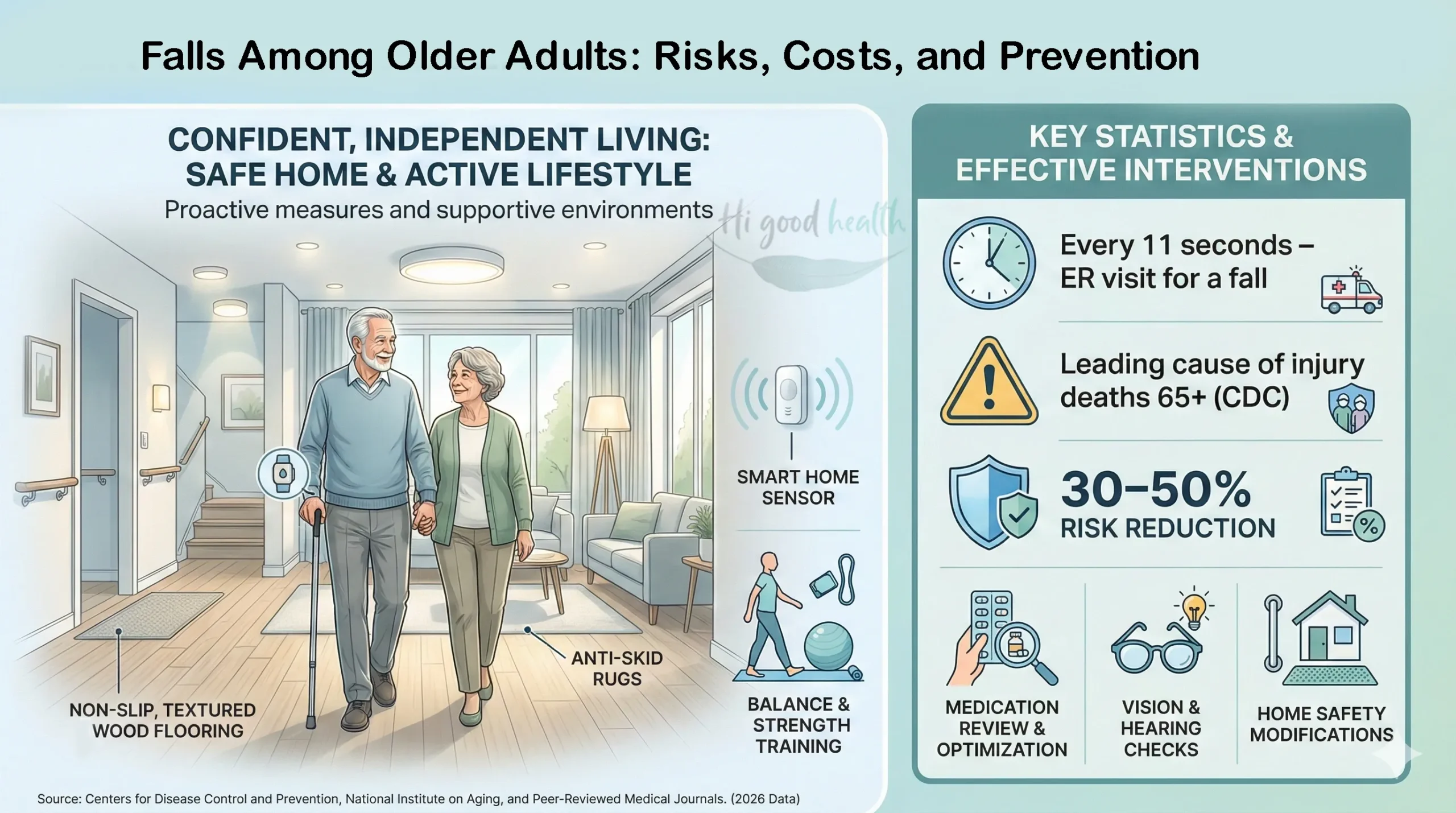
Every year, 2 lakh Indians over 50 fracture their hip from a fall. One in five won’t survive the following year. And the ones who do face surgery bills of ₹1.5 to ₹4.8 lakhs — often paid entirely out of pocket by the family.
The harder truth? Most of these falls were preventable.
India’s Hidden Fall Epidemic
Falls affect anywhere from 14% to 53% of Indians aged 60 and above depending on their health and living conditions. And India’s elderly population is about to nearly triple — from 14 crore today to 34 crore by 2050. This is not a small problem quietly solving itself. It’s a growing crisis that most families are completely unprepared for.
The cruel aftermath isn’t just physical. Up to 73% of people who fall develop such intense fear of falling again that they stop leaving home — triggering a spiral of isolation, muscle loss, and further decline.
Why Seniors Fall: It’s Not Just Clumsiness
Falls are almost never caused by a single thing. They happen when several risks collide:
- Muscle weakness and poor balance from age-related sarcopenia
- Medications for blood pressure, anxiety, or sleep that cause dizziness or sudden pressure drops — polypharmacy is extremely common in Indian seniors managing multiple conditions
- Vision problems like cataracts and glaucoma that impair depth perception
- India-specific home hazards: wet marble and granite floors (a monsoon nightmare), traditional raised doorstep thresholds (dehleez), squat-style toilets, and worn-out loose chappals
What Actually Prevents Falls — Proven by Science
The good news is compelling: the right interventions cut fall risk by 30–50%. Here’s what research backs:
- Yoga — widely available at parks, housing society halls, and community centres across India — significantly improves balance and lower-body strength. A 2025 systematic review confirmed its effectiveness for older women
- Otago Exercise Programme — structured home strength and balance exercises that reduce falls by 35–40%
- Tai Chi — Harvard-affiliated research shows it can cut fall risk by up to 50%
- Even 10–15 minutes of daily movement — heel raises, wall push-ups, standing on one foot — makes a measurable difference
Fix the Home First: A Weekend Can Save a Life
The most immediate action any family can take is a home safety audit:
- Install grab bars in bathrooms near toilets and inside showers
- Place anti-slip rubber mats on marble, granite, and kitchen floors — especially before monsoon
- Add motion-sensor night lights in hallways and staircases
- Remove throw rugs, clear walkways, and fix loose handrails
- Consider replacing or ramping raised dehleez thresholds
- Replace squat-style toilets or add a raised toilet seat attachment — available at most medical supply shops
The Real Cost Calculation
| Prevention | Cost |
| Yoga/exercise classes | ₹2,000–8,000/year |
| Grab bars + anti-slip mats | ₹2,000–5,000 (one-time) |
| SOS wearable device | ₹2,000–8,000 |
| Hip replacement surgery | ₹1.5–4.8 lakhs |
The math is impossible to ignore. A single fall can cost more than a decade of prevention.
Other Smart Steps
- Ask your doctor for a medication review — some blood pressure or sleep medications directly increase fall risk
- Get annual eye and hearing check-ups — even hearing loss affects balance
- Check Ayushman Bharat PM-JAY eligibility at pmjay.gov.in for coverage of hip fracture surgery if needed
- In an emergency, call 112 (national emergency) or 108 (ambulance)
Falls are not a normal part of ageing. They are predictable, measurable, and — with the right steps — largely preventable. The tools are affordable. The science is clear. All it takes is acting before the fall, not after.
All reference links valid and accessible on 1 May 2026
Facts About Falls: Older Adult Fall Prevention.
MSD Manual Professional Version. (2025). Falls in Older Adults.
Want the complete guide — Fall Prevention That Actually Works: Protecting Seniors in 2026
