
Here’s something most Indian families don’t talk about at the dinner table: your parents or grandparents could be malnourished — even if they look well-fed. Malnutrition in seniors isn’t just about being thin. It silently shows up in people of all sizes, quietly stealing muscle, bone density, and mental sharpness.
And the numbers are stark. By 2050, India will have 225 million elderly citizens — and healthcare costs for older adults are already four times higher than for younger adults. What goes on the plate matters more than most families realise.
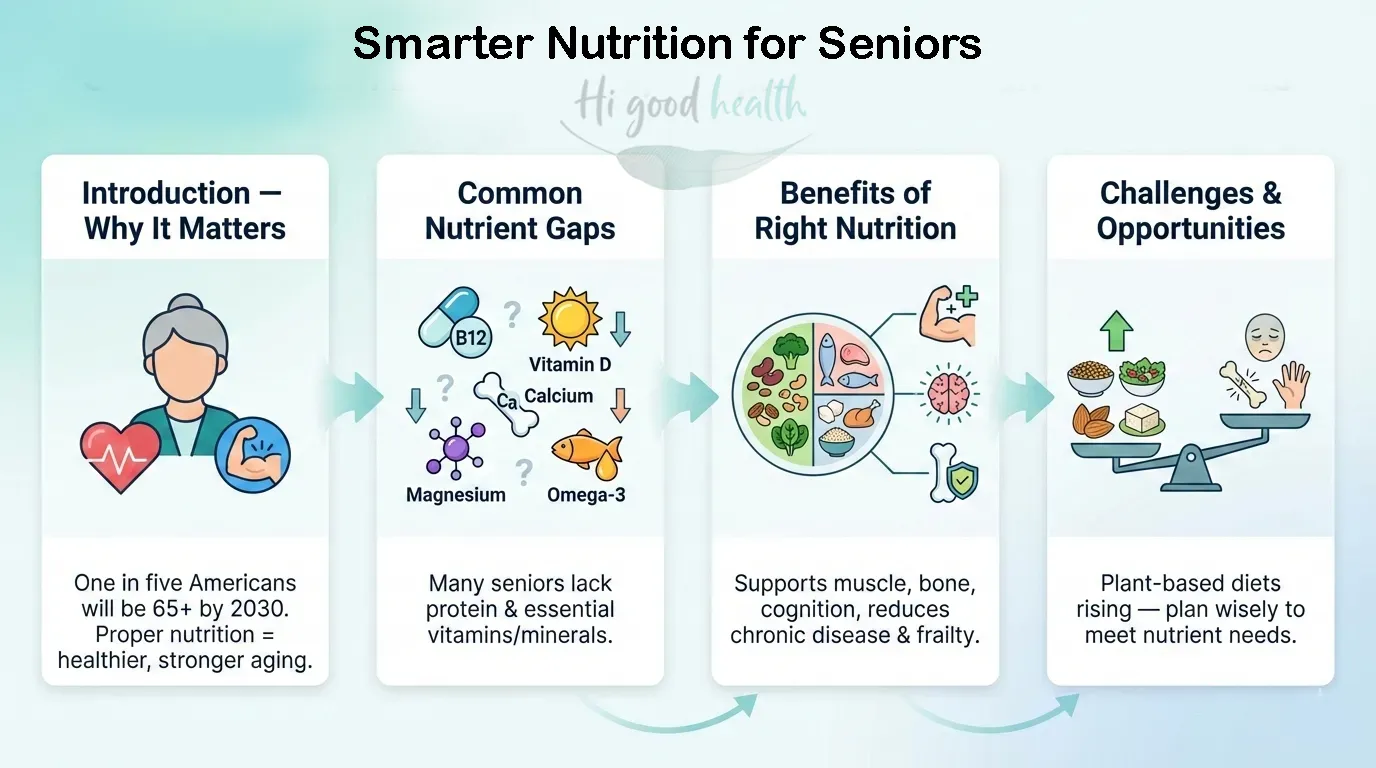
The 6 Nutrients Most Indian Seniors Are Missing
Research consistently shows seniors fall short on these critical nutrients:
- Protein — needed to prevent sarcopenia (age-related muscle loss), which raises fall and fracture risk
- Vitamin B12 — absorption drops with age; deficiency can cause nerve damage and memory decline
- Vitamin D — essential for bones, muscles, and immunity; deficiency is widespread
- Calcium — vital for bone density; absorption also declines with age
- Magnesium — affects sleep, heart rhythm, and muscle function
- Omega-3 fatty acids — support brain health and reduce inflammation
Protein: The Most Urgent Priority
Most seniors don’t eat nearly enough protein. Experts recommend 1.0–1.2 grams per kg of body weight per day — yet the average Indian senior diet falls well short. The result is sarcopenia, which leads to frailty, falls, and loss of independence. The fix is simpler than it sounds: eggs, dal, curd, paneer, fish, and soy milk — spread across all three meals, not just dinner.
Plant-Based Diets: Healthy, But Plan Carefully
India’s largely vegetarian senior population can thrive on plant-based eating — but only with smart choices. Plant-based diets lower heart disease and diabetes risk, but they raise the risk of B12, iron, calcium, and complete protein deficiencies. Fortified plant milks, combinations like dal-rice or rajma-roti, and algae-based omega-3 supplements can bridge the gap effectively.
What Every Senior (and Their Family) Should Do Now
- Get annual blood tests for B12, vitamin D, calcium, and iron levels
- Add a protein source at every meal, not just once a day
- Switch to fortified foods and targeted supplements — not generic multivitamins
- For difficulty chewing: Greek yogurt, soft-boiled eggs, smoothies, soups, and protein powder are practical solutions
- Stay hydrated — dehydration quietly worsens nutrient absorption and fatigue
Good nutrition after 60 isn’t about eating less or eating “safe” food. It’s about eating smart — and doing it consistently. The body at 70 can still rebuild muscle, support a sharp mind, and stay active. But it needs the right fuel to do it.
All reference links valid and accessible on 1 May 2026
Academy of Nutrition and Dietetics. (2024). Nutrition and healthy aging.
Want the complete guide — Senior Nutrition in 2026: Protein, Supplements & Plant-Based Diets
