
Here’s a number that should stop you mid-scroll: according to an IMRB survey, 73–80% of Indians don’t get enough protein — including 91% of vegetarians and 85% of non-vegetarians. And over 90% of Indians don’t even know how much protein they actually need. We’re not talking about bodybuilders. We’re talking about everyday people slowly losing muscle, energy, and mental sharpness — without realising why.
Protein isn’t a gym supplement. It’s the raw material your body uses to build muscle, produce mood-regulating brain chemicals, repair tissue, and slow ageing. Getting the wrong kind — or not enough — costs you more than you think.
Not All Protein Is the Same
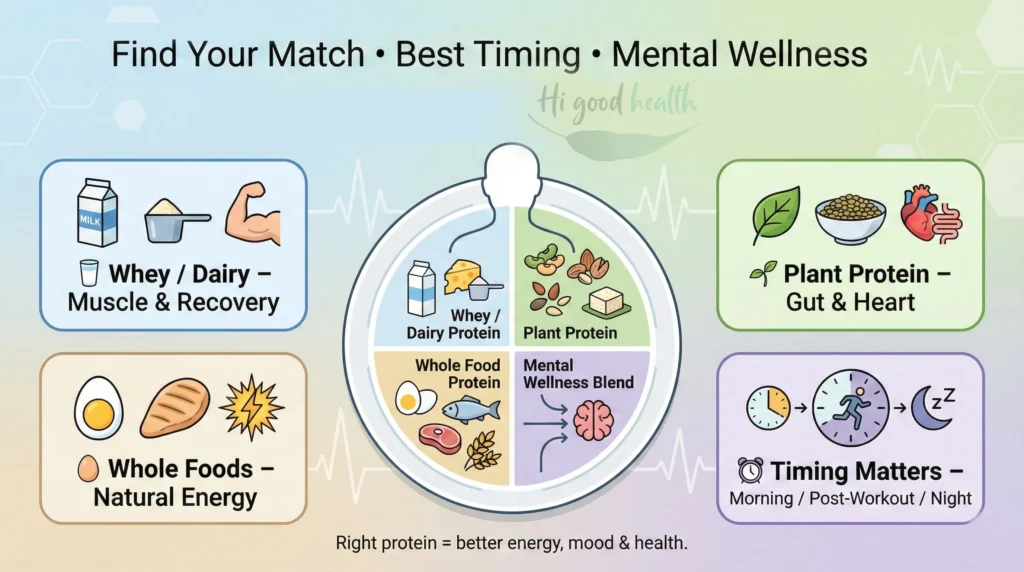
The right protein depends on who you are and what your body needs:
| Protein Type | Best For | Timing |
| Whey | Post-workout recovery, muscle building | Within 2 hours after exercise |
| Casein | Overnight repair, preventing muscle loss | 30 min before bed |
| Pea / Soy / Rice blend | Vegetarians, dairy intolerance | Any meal; use blends for completeness |
| Collagen | Joints, skin, gut health | Morning or post-workout |
| Lentils / Quinoa | Everyday real-food protein | Any meal |
Research confirms that plant-based proteins — when taken in adequate amounts — build muscle as effectively as whey. Indian bodybuilder Hira Lal Dhillan gained 10 kg of muscle on soy protein alone and won the 65th World Bodybuilding Championship. Sunil Chhetri credits a plant-based shift for faster recovery and sustained performance into his late 30s.
Timing Matters — But Total Intake Matters More
Most people obsess over when to take protein while ignoring how much. Science is clear:
- Active adults need 1.6–2.2g per kg of body weight daily, spread across 3–5 meals
- A protein-rich breakfast reduces cravings throughout the day
- Casein before bed supports overnight muscle repair — especially important for anyone over 50
- Post-workout protein within 1–2 hours helps recovery, but total daily intake is the real driver of results
Protein and Your Mind: The Link Most Indians Miss
Low protein doesn’t just shrink muscles — it quietly affects your brain. Amino acids from protein build serotonin and dopamine — the neurotransmitters that regulate mood, sleep, and focus. A 2024 British Journal of Nutrition analysis found that insufficient protein intake increases the risk of depressive symptoms and cognitive decline, particularly in older adults. If your elderly parent is forgetful, fatigued, or low in mood, their protein intake may be part of the answer.
How to Choose Wisely in India
- Bloating from protein powder? Switch to whey isolate (less lactose) or fermented plant protein
- Vegetarian? Combine dal + rice, rajma + roti, or hummus + whole wheat — you get all essential amino acids
- Over 50? Prioritise high-leucine proteins like whey or soy to counteract muscle loss
- Pregnant? Aim for at least 1.1g/kg per day, with iron, calcium, and DHA alongside
- Buying supplements? Always check for a 14-digit FSSAI licence number on the packaging — it’s mandatory and your primary safety guarantee in India
The Biggest Myths — Busted
- “High protein damages kidneys” — False, in healthy individuals. Confirmed by the Journal of the International Society of Sports Nutrition
- “Vegetarians can’t build muscle” — False. Combining plant sources gives all essential amino acids
- “More protein = more muscle” — Only with resistance training and recovery. Protein alone isn’t enough
Good protein isn’t always expensive. It just needs to be consistent, well-digested, and complete.
All reference links valid and accessible on 27 March 2026
Protein & cognitive health — PMC verified:
Want the full guide — Which Protein Is Best for You? Find Your Match, Ideal Timing & Mental Wellness (No More Myths)
