
Fifty-nine percent of Indians get less than six hours of sleep a night. That’s not just tiredness — that’s a public health crisis quietly driving up the risk of heart disease, diabetes, obesity, depression, and cognitive decline across the country. And with 37.4% of Indians affected by sleep apnea and 25.7% suffering from insomnia, we’re only beginning to understand the true scale of the damage.
Sleep trackers promise to help. But do they actually deliver?
What Sleep Trackers Can — and Cannot — Do
Here’s the honest science: consumer wearables are over 97% accurate at detecting whether you’re asleep or awake — but they correctly identify specific sleep stages like REM or Deep Sleep only 50–65% of the time. They’re excellent trend-trackers. They are not medical diagnostic devices.
A 2026 study found that wearables often mistake “lying still” for light sleep — so your device may be inflating your sleep time simply because you’re resting quietly in bed. None of these gadgets replace a proper clinical sleep study if you genuinely suspect a disorder.
The 2026 Device Landscape — What’s Available in India
| Device Type | Best For | India Price Range |
| Smartwatch (Apple Watch, Samsung, boAt, Noise) | General wellness + daytime tracking | ₹10,000–55,000 |
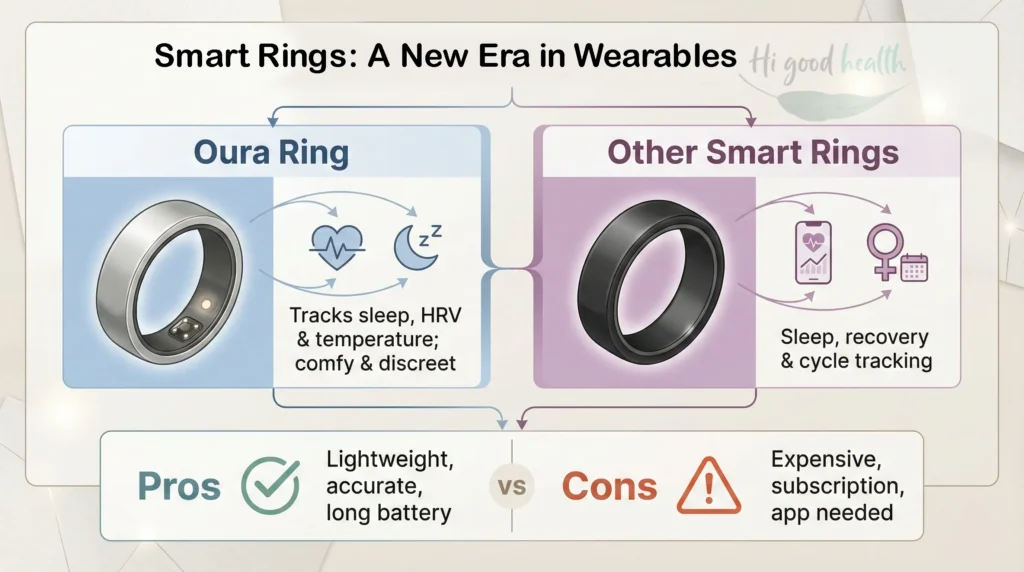
| Smart Ring (Oura, Samsung Galaxy Ring 2, boAt, Gabit) | Sleep-focused comfort, 4–7 day battery | ₹3,999–42,000 |
| EEG Headband (Muse S, Dreem) | Higher sleep stage accuracy | ₹35,000–50,000+ |
| Under-mattress Mat (Withings Sleep Analyzer) | Passive monitoring, apnea screening | ₹8,000–42,000 |
| Smart Mattress (Wakefit smart range) | No-wear tracking, full night data | ₹15,000–40,000+ |
For budget-conscious users, the boAt Active Plus Smart Ring (₹3,999) and Noise Luna Ring Gen 2.0 (₹23,999) are strong India-made entry points before committing to premium imports like the Oura Ring (₹28,900) or Samsung Galaxy Ring 2 (₹40,999).
The Risk Nobody Talks About: Orthosomnia
There’s a real phenomenon called “orthosomnia” — anxiety created by obsessing over your sleep scores. Checking your deep sleep percentage every morning and feeling stressed about it is, ironically, making your sleep worse. Experts recommend focusing on weekly trends, not nightly numbers — and taking periodic breaks from tracking altogether.
What Actually Improves Sleep in India
No tracker fixes bad habits. The biggest sleep disruptors for urban Indians are:
- Late-night mobile and social media use — the single biggest driver of sleep loss
- Evening chai or tea — caffeine disrupts sleep onset more than most people realise
- Heavy late-night meals — common in Indian households and directly linked to poor sleep quality
- Bedroom heat — aim for 25–27°C; a fan or AC makes a measurable difference
A sleep tracker is most valuable when it motivates real behaviour change — earlier screens-off, consistent wake times, less caffeine after 4 PM. The data is the nudge. The lifestyle change is the cure.
If you have loud snoring, breathing pauses during sleep, or crushing daytime sleepiness, don’t rely on a wearable. Get a formal sleep study — available at Apollo Sleep Disorders Lab, Fortis, and AIIMS Delhi, among others.
India’s sleep tech market is projected to hit ₹11,500 crore by 2030. The tools are increasingly affordable and available. The question is whether you use them as a starting point — or mistake them for the destination.
All reference links valid and accessible on 1 May 2026
NEJM — Apple Heart Study Full Results.
JMIR Research — Wearable Health Technology Studies.
Want the full comparison — The Future of Wearable Sleep Tech: Beyond Smartwatches in 2026
