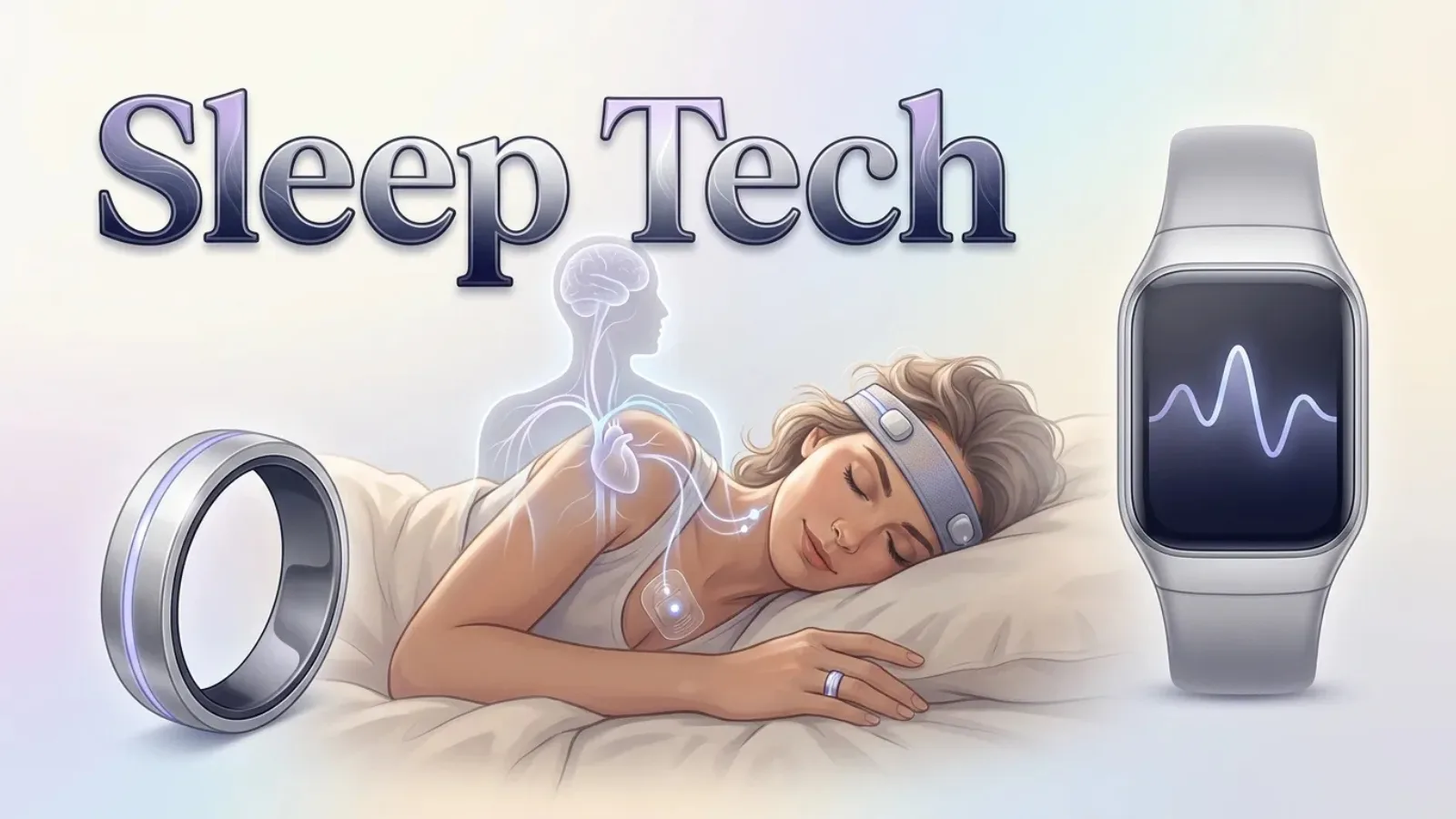
At a Glance: How to Track Your Sleep in India in 2026
- Your phone on its own cannot really track your sleep. Apple Health needs an Apple Watch. Samsung Health needs a Galaxy Watch or a Fit band. Phone-only apps estimate sleep from movement and sound — a rough log, not a measurement.
- Google Fit is being retired. The Fitbit app became the Google Health app on 19 May 2026, and Google has said Google Fit will be replaced by it by the end of 2026. On Android, that is where sleep data is moving.
- Sleep apnea notifications reached India on 21 May 2026 — Apple Watch Series 9, 10 and 11, and Ultra 2 and Ultra 3. It is a prompt to see a doctor, not a diagnosis, and Apple states plainly that not everyone with sleep apnea will get one. Silence is not an all-clear.
- India has one of the widest smart-ring markets anywhere — roughly ₹3,999 to ₹43,000. The decision that matters is the monthly subscription, not the sticker price.
- No consumer device replaces a sleep study. Use one to spot a pattern over weeks, then take the pattern to a doctor.
Introduction: Why Sleep Is the Next Health Frontier
By 2026, millions of people across the world will actively track steps, calories, and heart rate through wearable devices. But the next frontier of health optimisation is shifting away from daytime activity and toward nighttime sleep.
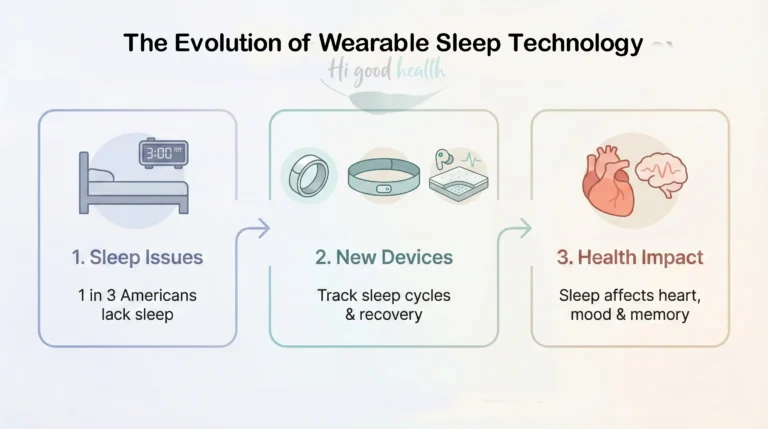
The sleep crisis is particularly acute in India. A 2025 national survey found that 59% of Indians get less than six hours of uninterrupted sleep daily — far below the recommended 7–9 hours for adults.
India is the second most sleep-deprived country globally, behind only Japan, according to a Fitbit global study. [India-Sleep1][India-Sleep2] Separately, a 2025 systematic review of nearly 68,000 individuals published in the Indian Journal of Public Health found pooled prevalence figures of 25.7% for insomnia and 37.4% for obstructive sleep apnea (OSA). [India-Sleep3]
Those two OSA numbers need care, because they are widely repeated without it. The 37.4% figure is a pooled estimate across studies that include a large share of hospital and clinic populations — people who were already being investigated for something. The same review reports 14.6% in healthy populations and 48.1% in patient populations.
A separate meta-analysis of Indian adults that used actual sleep studies rather than questionnaires puts general-population OSA at around 11% (13% in men, 5% in women), with moderate-to-severe OSA at about 5%. [India-Sleep4]
So: sleep apnea is common in India and under-diagnosed — but roughly one adult in nine, not four in ten.
Chronic sleep deprivation has been consistently associated with increased risk of obesity, depression, cardiovascular disease, and emerging evidence suggests potential associations with cognitive decline. As awareness grows, both consumers and clinicians are increasingly viewing sleep as a foundational pillar of long-term health.
Enter wearable sleep technology. Once dominated by fitness-focused smartwatches, the market has expanded to include rings, headbands, ear sensors, and smart mattresses promising better insights into sleep cycles, snoring, and recovery.
India’s sleep tech device market generated USD 595 million in 2023 and is projected to reach USD 1.38 billion by 2030, growing at a CAGR of 12.8%. Indian brands like Wakefit, boAt, and Noise are now building sleep-focused technology for the Indian consumer, alongside global players like Oura, Samsung, and Garmin. [India-Market]
The real question isn’t just whether these devices work — but how well, and what’s coming next beyond them.
The Limitations of Smartwatches for Sleep Tracking
Smartwatches like the Apple Watch, Samsung Galaxy Watch, and Fitbit introduced mainstream users to sleep tracking. However, they have notable limitations:
- Comfort: Can be bulky and uncomfortable on the wrist during sleep
- Battery life: Frequent charging often conflicts with nighttime use
- Accuracy: Rely primarily on movement and heart rate, which may misclassify sleep stages
- Apnea detection: Most standard models cannot reliably screen for sleep apnea
Recent studies show that while wearables are excellent at detecting when you are asleep, they still struggle to identify specific sleep stages. Current devices are over 97% accurate at distinguishing between being awake and asleep, but they correctly identify stages like REM or Deep sleep only 50 to 65% of the time.
According to the Schyvens et al. (2026) study, this discrepancy is often caused by the wake problem. This occurs when a device mistakes lying still for light sleep because it cannot distinguish physical stillness from the early stages of rest. Consequently, a wearable may overestimate your sleep time simply because you are resting quietly in bed.
How to Track Sleep on an Android Phone — and What Happened to Google Fit
If you arrived here looking for Google Fit sleep tracking, the honest answer has two parts, and neither is the one most articles give you. Google Fit is being retired, and it never measured your sleep from the phone alone in the first place.
Google Fit is being replaced by the Google Health app
Google started winding down the Google Fit developer APIs several years ago in favour of Health Connect, with the shutdown landing in 2026. Then, on 19 May 2026, the Fitbit app became the Google Health app, and Google has said Google Fit will be replaced by it by the end of 2026.
Practical consequence: if you are setting something up today, set up Google Health, not Google Fit. Anything you build a habit around in Google Fit is on a clock.
Health Connect is a pipe, not a tracker
Health Connect is the Android layer that lets health apps share data with each other with your permission. It is genuinely useful — it is how a ring app, a running app and a weighing scale end up in one place. But it is worth being clear about what it is: Health Connect stores and passes on data. It does not measure anything. Nothing in it tracks your sleep by itself.
What actually measures sleep on Android
- Google Health app + a Fitbit device or Pixel Watch. Sleep stages, a sleep score, and coaching if you pay for the premium tier — which is available in India.
- Samsung Health + a Galaxy Watch or Galaxy Fit band. Sleep score, sleep stages, and on Watch4 and later, blood-oxygen tracking through the night and snore detection. Samsung Health cannot track sleep from the phone alone. Snore detection is the one exception and it works by leaving the phone face-up on a stable surface near the bed, using its microphone.
- Third-party phone-only apps. They estimate sleep from how much the mattress moves and what the microphone hears. Treat the output as a rough diary of when you were probably asleep, not as a measurement of sleep stages.
The pattern across all three is the same, and it is the thing worth taking away: on Android as on iPhone, a phone in isolation cannot see your sleep. Something has to be touching you.
Apple Health Sleep Analysis: What Your iPhone Can and Cannot Do
The same split applies on iOS, and it catches people out because the Health app has a Sleep section whether or not you own a watch.
What the iPhone does on its own
Sleep Focus, a sleep schedule, wind-down, and a record of the hours you told it you intended to be in bed. That is useful — a consistent schedule is one of the few sleep interventions with good evidence behind it — but it is a plan, not a measurement. The iPhone does not know whether you slept.
What needs an Apple Watch
- Sleep stages — Awake, REM, Core and Deep
- Heart rate through the night, and respiratory rate
- The Sleep Score, which arrives each morning
The Sleep Score runs 0 to 100 and is built from three things: duration (50 points), bedtime consistency (30 points, judged against your last 13 nights) and interruptions (20 points). Notice what that means — half the score is simply how long you were asleep, and nearly a third is whether you went to bed at your usual time. It is a habits score more than a physiology score, which is a reasonable thing for it to be, as long as you know that is what you are reading.
You will find all of it in Health → Browse → Sleep on the iPhone. The watch collects it; the phone displays it.
Sleep Apnea Notifications Reached India in May 2026
This is the most consequential thing to happen to consumer sleep tech in India in years, and it is recent enough that most coverage of sleep wearables has not caught up with it. On 21 May 2026, Apple switched on sleep apnea notifications in India, on Apple Watch Series 9, Series 10 and Series 11, and on Ultra 2 and Ultra 3.
How it works
The watch uses its accelerometer to pick up the small wrist movements that accompany interrupted breathing, and classifies each night as showing elevated or not elevated breathing disturbances. It needs at least ten nights of sleep wear inside a thirty-day window, and it reviews the pattern every thirty days. If the disturbances stay consistently elevated, it tells you.
Its limits, in Apple’s own words
- It is intended for people 18 and older who have not already been diagnosed with sleep apnea.
- It is not intended to diagnose, treat, or aid in the management of sleep apnea.
- Not everyone with sleep apnea will receive a notification.
That last point is the one to hold onto. A quiet watch is not an all-clear. Obstructive sleep apnea is common in India and heavily under-diagnosed, and the people most affected are often the least likely to be wearing a ₹40,000 watch to bed. If you snore heavily, wake unrefreshed after a full night, fall asleep during the day, or your partner has watched you stop breathing — see a doctor, whatever any device tells you.
Used the other way round, though, it is a genuinely good prompt. A notification is a reason to book a sleep study you might otherwise have put off for another five years.
The Rise of Smart Rings: Compact Sleep Tracking
Rings are the format that suits sleep best, for a simple reason: you forget you are wearing one. A watch is a piece of hardware strapped to the wrist you sleep on; a ring is not. India also happens to be one of the most competitive smart-ring markets in the world right now, which means real choice at every price.
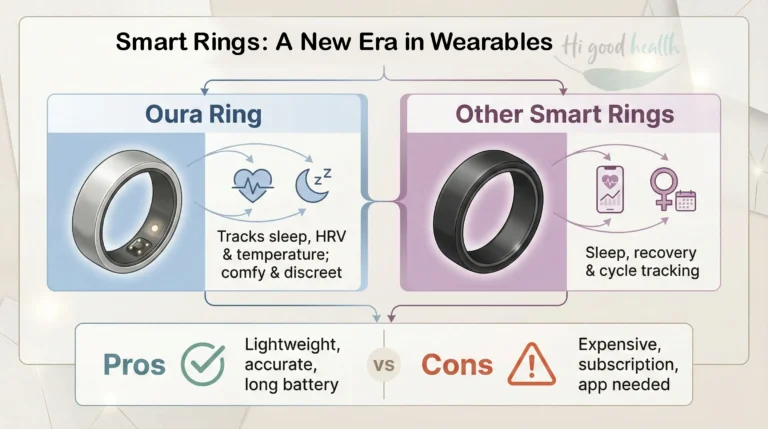
Oura Ring
- Tracks sleep stages using body temperature, heart rate variability (HRV), and movement sensors
- Comfortable and discreet design worn by athletes and health enthusiasts
- Requires subscription for detailed insights (~₹500/month as of 2026). Available in India starting at ₹28,900 (Oura Ring 4). [India-Ring1]
Other Smart Rings
Options like Ultrahuman Ring AIR, Evie Ring, and Circular Ring offer similar sleep-tracking capabilities, with some designed specifically for women’s health monitoring, including menstrual cycle integration and recovery scoring.
In India, affordable alternatives include the boAt Active Plus Smart Ring (₹3,999), Noise Luna Ring Gen 2.0 (₹23,999), Samsung Galaxy Ring 2 (₹40,999), Gabit Smart Ring (₹13,775), and the Ultrahuman Ring AIR — widely available on Amazon and Flipkart. [India-Ring1]
The decision that actually matters: the subscription
Almost everyone compares sticker prices. The recurring fee is what decides the five-year cost, and it is the clearest difference between the two rings most people shortlist.
| Ring | India price | Subscription | Notes |
| Oura Ring 4 | ₹28,900–₹39,900 | ₹599/month | Launched in India March 2026. The most studied sleep algorithm of the group |
| Ultrahuman Ring AIR | ₹28,499 | None | Indian company. No recurring fee is its central pitch |
| Ultrahuman Ring Pro | ₹42,990 | None | Same, higher tier |
| Samsung Galaxy Ring 2 | ₹40,999 | None | Best if you are already in Samsung Health with a Galaxy phone |
| Noise Luna Ring Gen 2.0 | ₹23,999 | None | Budget-premium |
| Gabit Smart Ring | ₹13,775 | None | |
| boAt Active Plus | ₹3,999 | None | Entry level. Expect movement-based estimates, not staged sleep |
Worked example. Over five years, an Oura Ring 4 at ₹28,900 plus ₹599 a month comes to roughly ₹64,840. An Ultrahuman Ring AIR at ₹28,499 with no subscription stays at ₹28,499. That is not an argument that one is better — Oura’s insights and its research record are what you are paying the monthly fee for — but it is the number the comparison usually leaves out.
Prices as of mid-2026 and they move. Check before buying, and check whether the subscription is bundled for the first year, as it sometimes is.
Advantages
- Lightweight and comfortable for nighttime wear
- Extended battery life (typically 4–7 days)
- Accurate HRV and temperature tracking compared to wrist-worn devices
Limitations
- Higher upfront cost for premium models (₹25,000–₹42,000+); affordable India-made options available from ₹3,999
- Many features require ongoing subscriptions
- Limited real-time display (requires smartphone app)
- Recent studies suggest sleep stage accuracy may be lower than manufacturer claims, with some research showing only 53% overall accuracy for detailed sleep stage classification
Headbands & EEG-Based Wearables
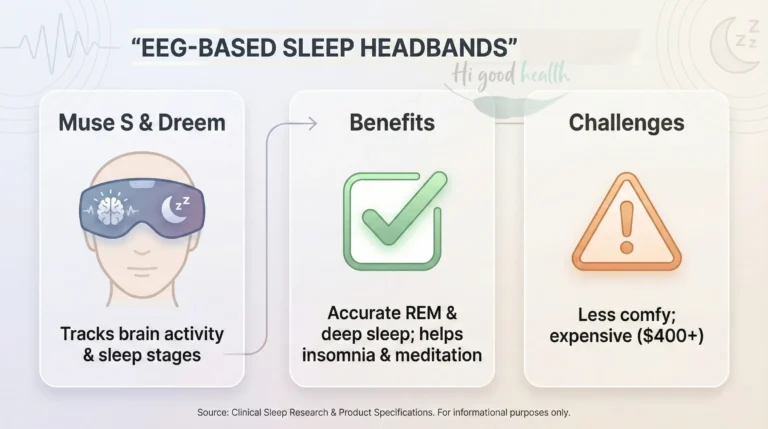
The next generation of sleep technology measures brain activity directly using electroencephalography (EEG), like Muse S Headband and Dreem Headband. They achieve significantly higher accuracy (up to 65%) in identifying sleep stages because their location on the forehead allows them to capture electrical brain activity directly, which wrist-based sensors cannot do.
Examples: Muse S & Dreem Headbands
- Use EEG sensors to capture real-time brain wave patterns
- May track sleep stages more accurately than movement-based devices
- Some models offer audio feedback designed to promote deeper sleep states
Potential Benefits
- Enhanced accuracy for REM and deep sleep detection compared to actigraphy
- May be useful as adjunct tools for insomnia management and meditation training
- Provide more granular sleep data
Challenges
- Higher price point (₹35,000–₹50,000+); limited availability in India — primarily through international import or specialist electronics stores
- Less comfortable for extended nightly wear
- May require adjustment period for comfortable use
To dive deeper into the connection between sleep and brain health, explore our comprehensive blog: Early Signs of Brain Decline and How to Slow It After 60 — Naturally
Earbuds & In-Ear Sleep Devices
These monitor sleep by using an in-ear optical heart rate sensor and motion sensors to infer sleep stages from your pulse and movement, though they lack the brain-wave (EEG) sensors found in clinical-grade headbands.
Kokoon Nightbuds
- Lightweight earbuds designed for sleep tracking while playing relaxing audio
- Can detect environmental disturbances and adjust sound accordingly
Philips SmartSleep
- Device designed to potentially improve deep sleep using audio stimulation techniques
- Marketed for sleep quality enhancement
Advantages
- Dual function as relaxation and sleep tracking aids
- Portable option for travellers
- May help mask environmental noise
- Can help manage tinnitus (ringing sound in the ear) by providing soothing sound masking — particularly useful in noisy urban Indian environments where traffic and ambient noise disrupt sleep
Limitations
- Battery duration constraints
- May be uncomfortable for side sleepers
- Effectiveness varies by individual
- Prolonged use can cause ear wax and moisture buildup in the ear
Non-Wearable Sleep Technology
Withings Sleep Analyzer
- Mat placed under the mattress for passive monitoring
- Tracks breathing patterns, snoring events, and heart rate
- FDA-cleared for sleep apnea screening (510(k) clearance received in 2024) — available in India via Amazon import; CDSCO India approval for medical devices recommended before use for clinical purposes
Smart Beds
Smart mattresses from Indian brands (Wakefit Smart Mattress with sleep tracking) and global options (Eight Sleep Pod — limited India availability via import):
- Automatically adjust temperature and firmness
- Collect detailed biometric sleep data
- Integrate with smart home systems
India context: Wakefit, India’s leading sleep brand, has integrated smart sleep-monitoring technology into its mattresses, offering an accessible and locally supported option. [India-Market]
Advantages
- No need to wear any device during sleep
- Continuous, passive data collection
- May be preferable for individuals sensitive to wearing devices
Limitations
- Significantly higher cost (₹85,000–₹4,25,000+ for imported smart beds; Wakefit smart options from ₹15,000–₹40,000)
- Limited portability
- Requires bedroom setup and space
Sleep Tracking Devices Compared (2026)
| Feature | Smartwatch | Smart Ring | EEG Headband | Non-Wearable (Mat/Bed) |
| Comfort for Sleep | Moderate (bulky for some) | High | Low–Moderate | Very High |
| Battery Life | 1–2 days | 4–7 days | 1–3 nights | Continuous (plugged in) |
| Sleep/Wake Detection | Good | Good | Excellent | Good |
| Sleep Stage Accuracy | Limited vs. clinical standard | Moderate (variable by model) | Higher (closer to clinical) | Moderate |
| REM & Deep Sleep | Often inaccurate | Better than watches | Most accurate available | Limited |
| Sleep Apnea Screening | Limited (select models only) | Limited | Not typically available | Yes (some FDA-cleared) |
| Ease of Use | High | High | Moderate | Very High |
| Best For | General wellness tracking | Sleep-focused users | Research-grade insights | Apnea risk, passive monitoring |
| Typical Cost (INR) | ₹10,000–₹55,000 | ₹3,999–₹42,000 | ₹35,000–₹50,000+ | ₹15,000–₹4,25,000+ |
| Medical-Grade Status | Consumer wellness device | Consumer wellness device | Near-clinical research | Some CDSCO/FDA-cleared |
Key Insight: Smartwatches and rings are best suited for wellness trend tracking, EEG headbands may offer higher sleep-stage accuracy, and non-wearable systems can be appropriate for apnea screening and long-term passive monitoring. However, none of these devices replace clinical sleep studies for diagnostic purposes.
The Science of Sleep Tracking
Sleep is not a uniform state — it cycles through light sleep, deep (slow-wave) sleep, and REM (rapid eye movement) sleep, each playing a distinct role in physical recovery and brain function.
Consumer sleep tracking technologies attempt to interpret these stages using indirect signals like movement, heart rate, and temperature — or in advanced cases, brain activity (EEG). Their goals are practical rather than clinical:
- Identify potential breathing irregularities during sleep
- Monitor recovery patterns, particularly for athletes
- Support improved sleep hygiene and behaviour modification
- Provide longitudinal trend data
Important Limitations
Sleep medicine experts emphasise that consumer devices are wellness tools, not medical-grade diagnostic instruments. The American Academy of Sleep Medicine advises that patients should not self-diagnose sleep apnea, insomnia, or other sleep disorders using consumer tracking devices alone. These tools are most valuable for identifying trends and motivating discussions with healthcare providers.
We investigated whether the latest health tech is actually keeping seniors safe or if they are just giving families a false sense of security. To dive deeper into the realities behind wearable devices, explore our in-depth blog: Wearable Health Tech for Seniors in 2026 — Hype vs Reality.
The Costs of Sleep Technology (2026 Estimates)
- Smartwatches:
- Smart Rings: → ₹3,999–₹42,000 + subscription (~₹500/month for premium features); India-made options from ₹3,999
- EEG Headbands/Sleep Earbuds:
- Non-wearable Mats: → ₹8,000–₹42,000 (Withings via import); Wakefit smart options from ₹15,000
- Smart Beds:
The consumer sleep technology market represents one of the fastest-growing segments of digital health. India’s sleep tech device market is projected to reach USD 1.38 billion (~₹11,500 crore) by 2030, growing at 12.8% CAGR — driven by rising health awareness, smartphone penetration, and a growing urban middle class grappling with poor sleep. [India-Market]
Promise vs Pitfalls
Potential Benefits
- Increased awareness of sleep importance and personal sleep patterns
- May help identify irregular breathing patterns that warrant medical evaluation
- Can motivate positive lifestyle and behaviour changes
- Integration with comprehensive health tracking ecosystems
- Longitudinal data that can be shared with healthcare providers
Important Limitations
- Accuracy still significantly lags behind clinical polysomnography (gold-standard)
- Subscription fatigue from recurring monthly fees for full feature access
- Data privacy concerns regarding health information security and usage
- Risk of “orthosomnia” — anxiety caused by obsessive sleep tracking
The Future: Where Sleep Tech May Be Headed
1. Enhanced Medical-Grade Home Testing
- Increased regulatory clearances (FDA globally; CDSCO in India) of consumer devices for specific screening purposes
- Better integration with electronic health records
2. Personalised Sleep Coaching
- AI-driven recommendations combining sleep data with diet, exercise, and stress metrics
- More sophisticated algorithms for individualised insights
3. Contactless Monitoring
- Radar and RF-based technology that monitors breathing and movement without body contact
- Privacy-preserving sleep monitoring
4. Smart Home Integration
- Automated adjustment of bedroom temperature, lighting, and ambient sound
- Coordinated sleep environment optimisation
5. Insurance and Healthcare Integration
- Potential inclusion of CDSCO-cleared sleep apnea screening devices under health insurance policies in India — currently being explored by insurers as wearable data gains clinical validation
- Remote patient monitoring incorporating sleep data — increasingly relevant in India’s expanding telemedicine and digital health ecosystem under the National Digital Health Mission (NDHM / ABHA)
Imagine checking your blood pressure as easily as checking the time, without ever having to feel that annoying squeeze on your arm again. To explore this in depth, check out our blog: “The Best Cuffless Blood Pressure Monitors of 2026 — Are They Game Changers?“
Potential Short- vs Long-Term Effects of Sleep Tech Use
Short-Term Effects
- Improved awareness of personal sleep hygiene
- Motivation to reduce caffeine intake, screen exposure, and late meals
- Early identification of concerning breathing patterns that prompt medical consultation
Potential Long-Term Effects
Research suggests that improved sleep quality may be associated with:
- Reduced cardiovascular risk factors
- Potential benefits for cognitive health (though more research is needed on dementia risk)
- Enhanced daily productivity and mood regulation
- Possible reduction in healthcare utilisation for sleep-related conditions
Note: Long-term health outcomes require further research, and individual results vary significantly.
To go beyond the headlines and understand what AI really means for patients, explore our full blog: AI in Healthcare: Promise vs Pitfalls for Patients in 2026.
How to Use Sleep Tech Wisely: A Practical Guide
- Choose the Right Device for Your Needs: Smartwatches/rings for general wellness trend tracking; Headbands/mats for more detailed data; Consult a healthcare provider if sleep apnea is suspected
- Avoid Obsessive Tracking: Focus on weekly trends rather than nightly scores; Be aware of orthosomnia (sleep tracking-induced anxiety); Consider periodic breaks from tracking
- Integrate Lifestyle Modifications: Use data insights to guide behaviour changes; Maintain consistent sleep schedule; Optimise bedroom environment (temperature 25–27°C is generally recommended for comfortable sleep); Limit caffeine and alcohol, especially in evening hours
- India-specific sleep hygiene tips: Reduce late-night mobile/social media use (a leading driver of sleep loss in India); manage bedroom heat with fans or air conditioning; avoid heavy late-night meals (especially common in Indian households); consider reducing evening chai/tea intake as caffeine disrupts sleep onset.
- Review Privacy Policies: Understand how your health data is stored and used; Check if companies share or sell anonymised data; Review data retention policies
- Collaborate with Healthcare Providers: Share device data during medical consultations for context; Use tracking data to facilitate conversations, not replace professional assessment; Seek formal sleep studies if clinically indicated
What Health Experts Say
Centers for Disease Control and Prevention (CDC): Reports ~35% of US adults are sleep-deprived. In India, the situation is more severe — 59% of Indians get less than 6 hours of sleep daily. [India-Sleep1] Source:
American Academy of Sleep Medicine (AASM): Sleep medicine experts caution that consumer sleep trackers should be viewed as wellness tools rather than diagnostic devices and recommend professional evaluation for suspected sleep disorders. Source:
Research Institutions: Studies from academic medical centres note that while sleep wearables can increase awareness and engagement, their accuracy varies significantly by device type and measured parameter, with sleep/wake detection being more reliable than specific sleep stage classification.
Key Takeaways
- A phone alone cannot measure your sleep. Apple Health needs an Apple Watch; Samsung Health needs a Galaxy Watch or Fit band. Something has to be touching you.
- Google Fit is being retired. The Fitbit app became the Google Health app on 19 May 2026, and Google Fit is due to be replaced by it by the end of 2026. Set up Google Health instead.
- Sleep apnea notifications arrived in India on 21 May 2026 on Apple Watch Series 9, 10 and 11 and Ultra 2 and 3 — a prompt to see a doctor, never a diagnosis, and silence from the watch is not an all-clear.
- Rings suit sleep better than watches, and India has unusually wide choice — roughly ₹3,999 to ₹43,000. Compare the subscription, not the sticker price.
- Trackers are good at duration and poor at stages. Read the weekly trend, not last night’s number.
- Sleep apnea is common in India and under-diagnosed — around one adult in nine by objective sleep studies. If you snore heavily or wake unrefreshed, that is a conversation with a doctor, not a purchase.
- Tracking does not improve sleep on its own. A consistent schedule does. The device is only useful if it changes what you do.
Frequently Asked Questions
How accurate are consumer sleep trackers compared to medical sleep studies?
Consumer devices vary widely in accuracy. Research indicates that most wrist-based and ring trackers can reliably detect when you’re asleep versus awake (over 95% sensitivity), but they frequently misclassify specific sleep stages like REM versus deep sleep when compared with polysomnography (clinical sleep study). Some studies show sleep stage accuracy as low as 53% for detailed classification. They are best used for tracking trends over time rather than making medical decisions based on individual night data.
Can a smartwatch or ring diagnose sleep apnea?
No device diagnoses sleep apnea — but the picture changed in India in May 2026. Since 21 May 2026, Apple Watch Series 9, 10 and 11 and Ultra 2 and 3 can send sleep apnea notifications in India: the watch looks for a pattern of elevated breathing disturbances across at least 10 nights in a 30-day window and tells you to get checked. Apple states it is not intended to diagnose, treat or aid in the management of sleep apnea, and that not everyone with sleep apnea will receive a notification, so a quiet watch is not reassurance. Separately, some non-wearable devices such as the Withings Sleep Analyzer mat hold FDA 510(k) clearance for sleep apnea screening, again not diagnosis. If you suspect sleep apnea based on symptoms like loud snoring, breathing pauses, or excessive daytime sleepiness, consult a healthcare provider for proper evaluation, which typically includes a formal sleep study. In India, formal sleep studies (polysomnography) are available at major hospitals and sleep clinics in metro cities including Apollo Sleep Disorders Lab, Fortis, and AIIMS Delhi.
Which is better for sleep tracking: a smart ring or a smartwatch?
For sleep-focused tracking, rings like the Oura often have advantages: they’re less bulky, more comfortable for nighttime wear, and typically hold a charge for 4–7 days without nightly charging. Smartwatches offer more daytime functionality but may require daily charging and can feel uncomfortable during sleep. The choice depends on your priorities — comprehensive all-day tracking versus sleep-optimised comfort. For budget-conscious users in India, the boAt Active Plus Smart Ring (₹3,999) or Noise Luna Ring (₹23,999) offer good value entry points before committing to premium options like Oura (₹28,900) or Samsung Galaxy Ring 2 (₹40,999). [India-Ring1]
Do I need to pay a monthly subscription to use these devices?
Many premium devices require ongoing subscriptions to access full data insights and features. Oura Ring 4 requires a membership at ₹599 a month in India. Ultrahuman, an Indian brand, charges nothing recurring — across five years that difference is larger than the price of the ring itself. Always review the total cost of ownership, including subscriptions, before purchasing. Some devices offer basic features without subscriptions but lock advanced analytics behind paywalls.
Can sleep tracking cause anxiety or worsen sleep?
Yes, this phenomenon is called “orthosomnia” — anxiety or obsession over sleep tracking data. Some individuals become so focused on achieving “perfect” sleep scores that the stress itself interferes with sleep quality. If checking your sleep data causes stress or affects your mood, experts recommend focusing on weekly trends instead of nightly numbers, or taking periodic breaks from tracking altogether.
Are there sleep trackers I don’t have to wear on my body?
Yes. “Non-wearable” sleep technology includes smart mats that slide under your mattress (like Withings Sleep Analyzer) and smart beds/mattresses (like Eight Sleep — limited India availability via import, or Wakefit’s smart mattress range — an Indian brand with local support) that track metrics through the mattress itself. These devices monitor heart rate, breathing, and movement without requiring you to wear anything. They’re excellent options if you find wearables uncomfortable or forget to charge devices.
Will tracking my sleep actually improve it?
Tracking alone does not improve sleep — it provides data. Real improvement comes from using insights to motivate evidence-based lifestyle changes such as maintaining consistent sleep schedules, optimising bedroom environment, reducing caffeine and alcohol intake, limiting screen time before bed, and addressing underlying medical conditions.
Some research suggests that awareness and engagement with sleep data can lead to modest improvements in sleep duration and behaviours, but individual results vary significantly.
To better understand how sleep influences longevity and overall healthspan, explore our in-depth blog: Longevity Lifestyle & “Augmented Biology” — Living Better, Longer.
What replaced Google Fit for sleep tracking?
The Google Health app. On 19 May 2026 the Fitbit app was rebranded as Google Health, and Google has said Google Fit will be replaced by it by the end of 2026. The older Google Fit developer APIs were already being wound down in favour of Health Connect. If you are setting sleep tracking up on Android today, set up Google Health rather than Google Fit.
Can my phone track my sleep without a watch or ring?
Not in any meaningful way. Samsung Health needs a Galaxy Watch or Galaxy Fit band, and Apple Health needs an Apple Watch. Phone-only apps estimate sleep from mattress movement and microphone sound, which gives you a rough diary of when you were probably asleep but not reliable sleep stages. The one thing a phone does well on its own is snore detection, because that only needs a microphone.
Does Apple Health show sleep analysis without an Apple Watch?
Only partly. Without a watch you get Sleep Focus, a sleep schedule, wind-down and a record of the hours you told the phone you intended to be in bed. Sleep stages, overnight heart rate, respiratory rate and the Sleep Score all require an Apple Watch worn overnight. The Sleep Score itself is 0 to 100, built from duration worth 50 points, bedtime consistency against your last 13 nights worth 30, and interruptions worth 20.
Are Apple Watch sleep apnea notifications available in India?
Yes, since 21 May 2026, on Apple Watch Series 9, Series 10, Series 11, Ultra 2 and Ultra 3. The feature is intended for people 18 and older who have not already been diagnosed with sleep apnea. It needs at least 10 nights of sleep wear within a 30-day period and reviews the pattern every 30 days.
What is the best sleep tracker in India under 5,000 rupees?
At that price the realistic option is an entry-level smart ring or band such as the boAt Active Plus at around 3,999 rupees. Be clear about what you are buying: devices in this bracket estimate sleep from movement, so treat the duration as broadly useful and the sleep-stage breakdown as decorative. If your actual question is whether you have a sleep disorder rather than whether you slept enough, the money is better spent on a consultation than on a device.
Conclusion
In 2026, wearable sleep technology has evolved significantly beyond the basic smartwatch. Rings, headbands, non-wearable mats, and smart mattresses are redefining how people monitor rest and recovery. While the science shows promise in raising awareness and tracking trends, these devices have important accuracy limitations and should not replace professional medical evaluation.
The key takeaway: Sleep technology is a wellness tool, not a medical cure or diagnostic device. Used appropriately as part of a comprehensive approach to health, it can increase awareness, support behaviour change, and facilitate productive conversations with healthcare providers. However, quality sleep ultimately depends on consistent habits, healthy lifestyle choices, and addressing any underlying medical conditions — not just the sophistication of your gadgets.
If you experience persistent sleep problems, excessive daytime sleepiness, loud snoring, breathing pauses during sleep, or other concerning symptoms, consult a board-certified sleep medicine specialist for proper evaluation and treatment.
India Note: With 59% of Indians reporting less than six hours of sleep a night, and insomnia and obstructive sleep apnea both common and substantially under-diagnosed, there has never been a more important time to take sleep seriously.
India’s rapidly growing sleep tech market — from affordable options by Noise, boAt, and Wakefit, to premium global devices — now offers every budget segment a path to better sleep insight. The tools are available. Use them wisely, and pair them with professional medical guidance when needed. [India-Sleep1][India-Sleep3][India-Market]
Glossary of Sleep Terms
- REM Sleep (Rapid Eye Movement Sleep): Sleep stage associated with dreaming, memory consolidation, and emotional processing
- Polysomnography: Gold-standard overnight laboratory sleep study that measures brain waves, oxygen levels, heart rate, breathing, and movement
- Obstructive Sleep Apnea (OSA): Condition where breathing repeatedly stops and starts during sleep due to airway collapse
- Orthosomnia: Term for anxiety or obsession caused by tracking sleep data too closely
- HRV (Heart Rate Variability): Variation in time between heartbeats, used as an indicator of recovery, stress levels, and autonomic nervous system function
- Actigraphy: Method of monitoring rest and activity cycles using wearable sensors that detect movement
- CDSCO: Central Drugs Standard Control Organisation — India’s regulatory authority for medical devices, equivalent to the US FDA. CDSCO clearance is relevant when evaluating medical-grade sleep devices for use in India.
- EEG (Electroencephalography): Technology that measures electrical activity in the brain; used in advanced sleep-tracking headbands for more accurate sleep stage classification
- ABHA / NDHM: Ayushman Bharat Health Account / National Digital Health Mission — India’s national digital health framework enabling integration of health device data with medical records
References
All web sources accessed April 2026 unless otherwise stated. Sources on Google Health, Apple Health, sleep apnea notifications and 2026 smart-ring pricing were checked in August 2026.
[1] Centers for Disease Control and Prevention. Sleep and Health. Accessed February 2026.
[2] Centers for Disease Control and Prevention. Adults Sleep Facts and Stats. Updated January 2025.
[5] American Academy of Sleep Medicine. Consumer Sleep Technology: Position Statement.
[India-Sleep1] 59% Indians get less than 6 hours of sleep — New Indian Express Survey, 2025.
[India-Sleep2] India is the second most sleep-deprived country — Times of India, 2023.
[India-Market] India Sleep Tech Device Market Research Report, 2029 — Actual Market Research; India Sleep Tracking Devices Market Outlook 2030 — Grand View Research.
https://www.grandviewresearch.com/horizon/outlook/sleep-tracking-devices-market/india
Disclaimer
The content provided on higoodhealth.com is for general informational purposes only. While we strive to offer accurate and up-to-date content, much of the information is derived from publicly available sources and personal research. We do not make any warranties about the completeness, reliability, or accuracy of this information.
