At a Glance: What Is a Truffle, and How Is It Different?
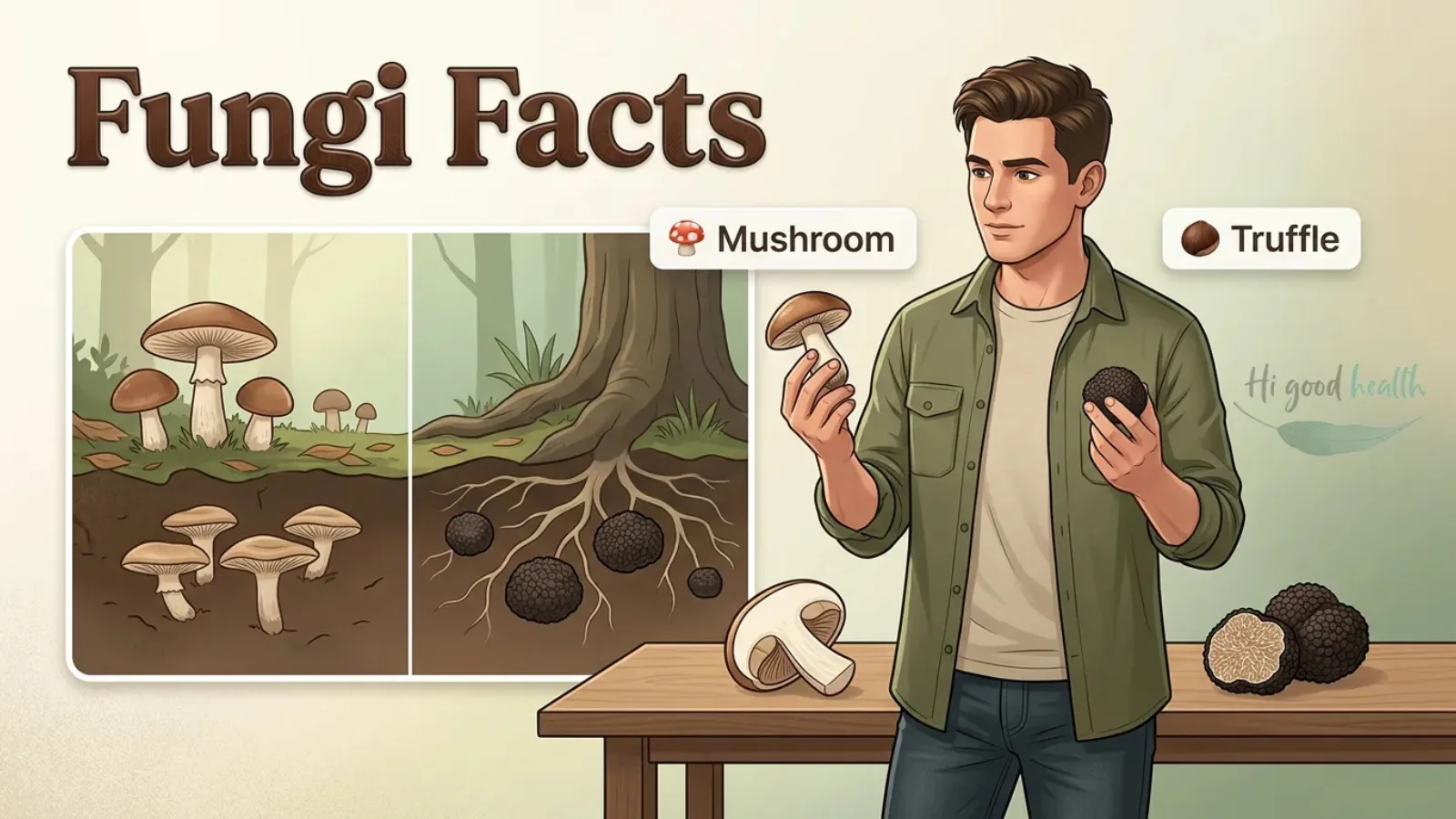
- A truffle is a mushroom that grows underground. Same kingdom, same basic biology — it simply fruits below the soil instead of above it, which is the source of almost every difference that follows.
- It cannot live alone. A truffle grows only in partnership with the roots of particular trees. That single fact is why it cannot be mass-farmed, and why it costs what it does.
- Because it grows underground it cannot spread spores on the wind, so it evolved an intense aroma to make animals dig it up instead. That aroma is the whole product.
- The aroma fades within days of harvest, which is why fresh truffle is priced as a perishable and truffle oil usually contains no truffle at all.
- Dogs find them, not pigs — not any more. Pigs eat the find and damage the ground.
- Not the same as a chocolate truffle. The dessert was named after the fungus because it looks like one. No connection beyond the shape.
You’ve seen them on your plate, in gourmet restaurants, and on health influencer reels. Mushrooms are the everyday star of vegetarian cooking. Truffles are the mysterious luxury that chefs shave over pasta at ₹2,50,000 per kg. But here’s the question most people never think to ask:
Are they truly the same thing — and are they as “vegetarian-clean” as you think?
The real answer lies in the backed up practical nature of reality. Let’s look at it closely and change the perception of it.
They’re Both Fungi — But That’s Where the Similarity Ends
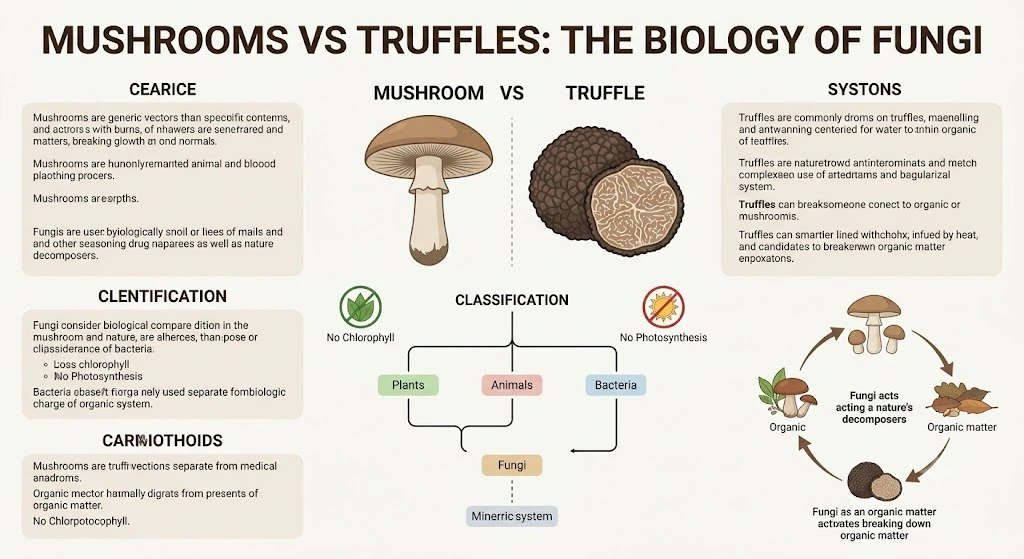
Most people assume mushrooms and truffles are plants. They’re not. Fungi belong to their own separate kingdom of life — distinct from plants, animals, and bacteria. Unlike plants, fungi have no chlorophyll, cannot photosynthesise, and do not make their own food. Instead, they are nature’s master decomposers, breaking down organic matter and recycling nutrients back into the ecosystem.
This makes them biologically fascinating — and nutritionally unique. As Dr. Paul Stamets, one of the world’s foremost mycologists and founder of Fungi Perfecti, puts it: “Mushrooms are more aligned with humans genetically than they are with plants.” That’s not just a fun fact — it has real implications for how these organisms interact with their environment, and with your body.
Mushrooms vs. Truffles: How Are They Actually Different?
Mushrooms and truffles are both fungi, but they differ dramatically in appearance, rarity, flavour, and — critically — how they are found and harvested.
Feature | Mushrooms | Truffles |
Growth Location | Above ground on soil or wood | Underground near tree roots |
Shape | Cap and stem | Irregular, roundish |
Aroma | Mild to earthy | Strong, musky, complex |
Taste | Subtle to umami | Intense, savoury, aromatic |
Harvest Method | Handpicked | Located by trained dogs or pigs |
Rarity | Common, widely cultivated | Rare, seasonal, hard to cultivate |
Price | Affordable | Extremely expensive (₹25,000–₹2,50,000+/kg) |
Nutritional Highlights | Fibre, B vitamins, antioxidants | Phenolics, antioxidants, amino acids |
Popular Varieties | Button, Shiitake, Portobello, Oyster | Black Périgord, White Alba |
Primary Region | Worldwide | Mainly Italy, France, Spain |
Status | Everyday food | Luxury delicacy |
What’s Actually Inside a Mushroom? The Nutrition Science
Mushrooms are more than a culinary ingredient. They are nutrient-rich foods that contain a variety of bioactive compounds, including dietary fibre, β-glucans, ergothioneine, vitamins, minerals, and polyphenols. Ongoing research suggests that these compounds may contribute to overall health and support normal metabolic and immune function.
A 2025 analysis published on News Medical Life Sciences found that whole mushroom consumption consistently reduced triglycerides, improved fasting glucose, and showed early signals of improved immune markers (salivary IgA) in human subjects. This is significant for anyone managing blood sugar or heart health.
Key Nutrients in Mushrooms:
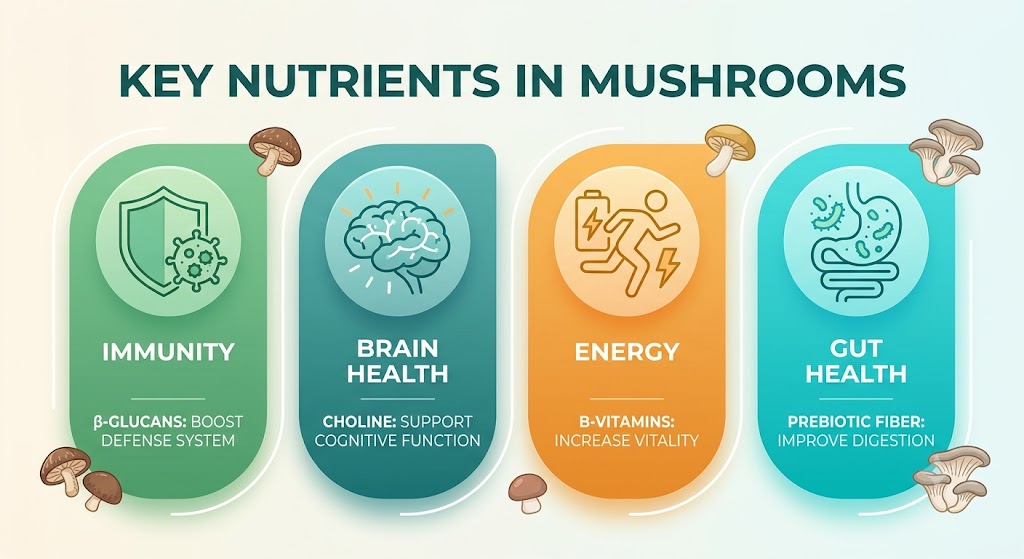
- β-Glucans — polysaccharides that modulate immune response and may inhibit tumour growth
- Vitamin D — mushrooms are the only non-fortified plant-based source of Vitamin D as it is produced in the presence of sunlight
- Ergothioneine — a rare amino acid with powerful antioxidant properties, known as the “longevity vitamin”
- B Vitamins (B2, B3, B5) — critical for energy metabolism and neurological function
- Choline — supports muscle movement, cognitive health
- Prebiotic fibre — fuels the beneficial bacteria in your gut microbiome
“As a physician managing patients with diabetes and metabolic syndrome, I’ve watched some patients lower their fasting blood sugar noticeably after increasing their intake of shiitake and oyster mushrooms as part of a whole-food diet. The β-glucan connection to insulin sensitivity is real and backed by science.”
Want to know how to get all your essential nutrients on a plant-based plan? [Click here to read our complete guide on plant-based nutrition.]
What Is a Truffle, Exactly?
The plainest answer: a truffle is the fruiting body of a fungus that grows entirely underground. A button mushroom pushes its fruiting body up into the air; a truffle forms a lumpy, irregular ball a few centimetres to a few dozen centimetres below the surface, usually near the roots of an oak, hazel, beech or poplar.
Everything else follows from that one difference.
Why it smells the way it does
A mushroom above ground releases spores into the air and lets the wind do the work. A truffle buried in soil has no wind. So it evolved a different strategy: produce an aroma powerful enough that an animal will smell it through the earth, dig it up and eat it, and spread the spores that way.
That is worth sitting with for a second, because it reframes the entire luxury industry. The famous truffle smell is not a flavour the plant developed for us. It is a lure evolved to be irresistible to a foraging animal, and we happen to be one.
Black truffle, white truffle — and the chocolate one
- White truffle (Tuber magnatum, the Alba truffle) — the rarest and most expensive. Essentially impossible to cultivate reliably and still almost entirely wild-harvested. Season roughly September to December.
- Black truffle (Tuber melanosporum, the Périgord truffle) — cultivable, with difficulty, and therefore considerably cheaper. Season roughly November to March.
- Chocolate truffle — a ganache confection, no relation. It was named after the fungus because it looks like one: a rough, dark, irregular ball. If you searched for truffles and arrived here expecting dessert, that is the whole connection.
Why Are Truffles So Expensive?
Five reasons, and none of them is snobbery. Each one independently restricts supply.
- It cannot grow on its own. A truffle forms only in a mycorrhizal partnership with the roots of a living host tree, and specific truffle species pair with specific trees. You cannot grow them in a shed on straw the way button mushrooms are grown. This is the fundamental constraint and there is no way around it.
- A truffle orchard takes five to eight years to produce anything — and may never produce. You plant inoculated saplings and wait most of a decade to find out whether it worked. Very little food is grown on those terms.
- The season is short. White truffles run roughly September to December, peaking in October and November. Black truffles stretch a little further, November to March. Outside that window there is no fresh product at any price.
- They have to be found by nose, one at a time. A trained dog and a handler walk the ground and dig each one by hand. Pigs were used historically and have been largely abandoned — a pig will eat the truffle before you reach it, and roots up the soil in a way that damages next year’s crop.
- The aroma starts leaving immediately. A fresh truffle loses its intensity within days of being lifted. It is priced like a perishable because it is one — and it is the reason a truffle is shaved raw over a finished dish rather than cooked into it.
And the supply is getting tighter. Wild harvests are shrinking as temperatures rise and rainfall becomes less predictable; research on yields suggests a drop of roughly a fifth for each degree above historical norms. Whatever you think of truffles as food, the price is not going down.
What that means at an Indian price point
Fresh truffle in India is an import on a short clock, so the shelf price carries air freight and wastage on top of an already scarce product — which is how you arrive at figures in the region of ₹25,000 to ₹2,50,000 per kilogram depending on species, season and grade.
One practical warning, because it is where most people’s money actually goes: most truffle oil on shelves contains no truffle. The aroma comes from a synthesised compound — commonly 2,4-dithiapentane — added to a base oil. It is not dangerous and some people like it. But if you are buying truffle oil expecting the real thing, read the ingredients rather than the front of the bottle.
Truffles: More Than Just a Luxury Ingredient
Truffles have been celebrated since ancient Rome. Julius Caesar reportedly feasted on them. Today, white Alba truffles from Italy can fetch over ₹2,50,000 per kg at auction — making them one of the most expensive foods on earth.
But beyond their price tag, truffles carry serious medicinal potential. A comprehensive 2025 review published in PubMed identified that truffles contain a rich array of phenols, terpenoids, polysaccharides, and ergosterols — compounds associated with antioxidant, antibacterial, anti-inflammatory, hepatoprotective, and anti-cancer effects.
A 2021 study that analysed ten truffle species found that Tuber magnatum (the prestigious White Alba truffle) had the highest total phenolic compound content at 290 mg GAE/100g — exceptional antioxidant capacity comparable to known superfoods. Research on North African desert truffles (Terfezia and Tirmania species) also confirmed high antioxidant activity, opening doors for medicinal applications.
The Gut-Brain Connection: Why Fungi Are the Future of Functional Food
One of the most active areas of nutritional research involves the interaction between edible fungi and the gut microbiome. Studies suggest that mushroom-derived fibres and polysaccharides may influence the composition and activity of intestinal microorganisms.
Potential mechanisms include:
- Improving intestinal barrier function (“leaky gut” repair)
- Promoting production of short-chain fatty acids (SCFAs) — key molecules that reduce inflammation and reduce the outbreak of Interleukins in the system
- Inhibiting pathogenic bacteria colonisation (quorum sensing)
- Highly immunogenic — Activating macrophages, NK cells, and T-lymphocytes — your immune army
This isn’t just theoretical. Reishi and Turkey Tail mushrooms have been shown to specifically balance the microbiome in favour of beneficial Lactobacillus and Bifidobacterium bacteria, which is associated with better digestion, reduced anxiety, and healthier body weight, thereby encouraging dysbiosis.
The gut-brain axis research is exploding. As researchers at Madre Mushroom reported in late 2025: “Fungi-powered compounds can nourish the gut and, in turn, influence everything from mood to immune function.”
👉 Curious about the power of a plant-based lifestyle? [Read: Can Humanity Thrive Without Meat and Fish? The Abundant Promise of a Plant-Powered Future]
The Ethical Question: Are Truffles Truly Vegetarian-Friendly?
This is where things get philosophically interesting — and where many vegetarians haven’t fully thought things through.
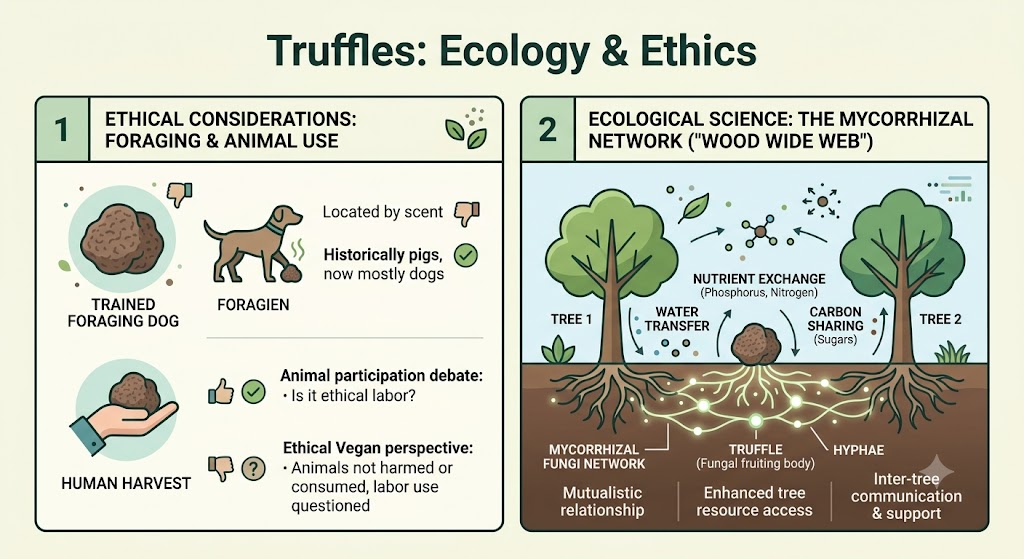
Truffles themselves are fungi — not animals. But their harvesting process traditionally involves pigs (now largely replaced by trained dogs), who locate truffles underground using their sensitive noses. For strict vegetarians or ethical consumers, this raises a genuine question: does using trained animal labour in food production cross an ethical line?
There is no universal answer. Most mainstream vegetarian and vegan organisations classify truffles as acceptable because the animals are not harmed or consumed. But for those guided by spiritual or strict ethical principles — including many in the Jain or certain Hindu traditions — the involvement of animals in the production process is worth contemplating.
Bottom line: If you source commercially cultivated mushrooms grown on plant-based substrates like straw or sawdust, you’re on the clearest ethical ground.
The Mycorrhizal Mystery: Fungi as Nature’s Internet
Here’s something that should genuinely expand your mind: most premium edible fungi — especially truffles — form mycorrhizal relationships with tree roots. These are deep, symbiotic partnerships where the fungal network (mycelium) extends the root system of trees, helping them absorb water and nutrients — in exchange for carbohydrates from the tree.
Scientists now call this the “Wood Wide Web” — an underground communication and nutrient-sharing network that connects entire forests. This system is so sophisticated that trees have been observed sending nutrients to sick or young trees through fungal networks.
When you eat a truffle, you’re not just eating a fungus. You’re eating the culmination of a years-long ecological conversation between fungi, trees, soil microbes, and the forest floor.
Wild vs. Farmed: Does It Matter for Purity?
Wild-harvested mushrooms and truffles grow in natural environments where they may absorb nutrients from decaying plant and animal matter — because fungi, as decomposers, do not discriminate. This is simply how nature works; it is not a contamination concern in the traditional sense, but it is worth awareness for those with very strict dietary philosophies.
Commercially cultivated mushrooms — button, shiitake, oyster, portobello — are grown in sterilised, plant-based substrates (sawdust, straw, rice bran) in controlled environments. This significantly reduces external contamination and gives consumers the most control over what they’re eating.
New to vegetarianism? Start here: [Nutrition & Diet: A Beginner’s Guide to Vegetarianism]
Latest Science in Plain Language
Here’s a quick summary of what cutting-edge research (2022–2025) is telling us about fungi:
- Immune modulation: β-glucans in mushrooms activate macrophages and NK cells, which are your body’s first-line defenders. Studies show potential in adjunct cancer therapy.
- Blood sugar & heart health: Whole mushroom consumption reduces fasting glucose and triglycerides — directly relevant to diabetes management.
- Gut health revolution: Fungal polysaccharides act as prebiotics, reshaping gut microbiota composition in measurable, beneficial ways.
- Truffle antioxidants: White truffles (T. magnatum) have antioxidant profiles comparable to known superfoods, with antibacterial and hepatoprotective activity.
- Longevity potential: Ergothioneine — found almost exclusively in fungi — is being studied as a key molecule in ageing prevention and neurological protection.
Your Plate, Your Principles: How to Make the Most Informed Choice
Food choices are deeply personal. For most people — vegetarians and non-vegetarians alike — mushrooms and truffles represent an extraordinary, health-promoting, ecologically important food. The nuances around ethics and purity don’t eliminate their value; they deepen your appreciation of where food actually comes from.
Here’s a simple practical guide:
- For everyday nutrition: Choose commercially cultivated mushrooms — shiitake, oyster, portobello, button. They’re affordable, nutritious, and widely available at your local sabzi mandi or supermarket.
- For immune support: Reishi, Turkey Tail, and Lion’s Mane mushrooms are your best functional medicine allies.
- For gourmet experience: Black or white truffles, used in small amounts, bring exceptional flavour and health benefits — use truffle oil (plant-based) as a more accessible alternative.
- For ethical clarity: Opt for farmed over wild-harvested when purity of sourcing matters to you.
Key Takeaways
- A truffle is a mushroom that fruits underground. Not a different kind of organism — a different strategy.
- The aroma exists to be dug up. Buried underground, a truffle cannot use wind to spread spores, so it evolved a smell strong enough to recruit an animal instead.
- The price is a supply problem, not a status one. It needs a living host tree, an orchard takes five to eight years and may fail, the season is a few months, each one is found by dog and dug by hand, and the aroma starts fading the day it is lifted.
- White truffle is essentially wild-only and the most expensive; black truffle can be cultivated with difficulty and costs far less.
- Most truffle oil contains no truffle. Check the ingredients, not the label.
- Supply is tightening as the climate shifts — wild yields fall roughly a fifth per degree above historical norms.
- Everyday mushrooms do the nutritional work. If you are here for health rather than for the experience, a ₹40 packet of button mushrooms is where the value is.
Frequently Asked Questions
Are mushrooms and truffles the same thing?
Both are fungi, but they are very different in where they grow, how they taste, how they are harvested, and their price. Mushrooms grow above ground and are widely farmed; truffles grow underground near tree roots and are rare luxury items.
Are mushrooms really good for blood sugar?
Yes. Research published in 2025 shows whole mushroom consumption reduces fasting glucose and triglycerides, making them especially valuable for metabolic health and diabetes management.
Can vegetarians eat truffles?
Generally yes — truffles are fungi, not animals. However, because harvesting involves trained dogs (or historically, pigs), strict ethical vegetarians may wish to consider this aspect.
What is the healthiest mushroom to eat?
For immune health: Turkey Tail and Reishi. For daily nutrition: Shiitake and Oyster. For brain health: Lion’s Mane. For Vitamin D: Any mushroom exposed to UV light.
Do mushrooms help gut health?
Absolutely. Multiple 2024–2025 NIH studies confirm that fungal polysaccharides act as prebiotics, improving gut microbiome diversity, intestinal barrier function, and reducing inflammation.
What is a truffle?
A truffle is the fruiting body of a fungus that grows entirely underground, usually a few centimetres below the surface near the roots of an oak, hazel, beech or poplar. It is a mushroom in the same sense that a button mushroom is — the difference is that it fruits below the soil rather than above it, and almost every other difference follows from that.
Why are truffles so expensive?
Five reasons, each of which independently limits supply. A truffle grows only in partnership with the roots of a living host tree, so it cannot be farmed in a shed the way button mushrooms are. A truffle orchard takes five to eight years to produce anything and may never produce at all. The season is only a few months. Each truffle has to be located by a trained dog and dug by hand. And the aroma begins fading within days of harvest, so it is priced as a perishable. Wild yields are also falling as the climate shifts.
What is the difference between black and white truffles?
White truffle, Tuber magnatum or the Alba truffle, is the rarest and most expensive. It is essentially impossible to cultivate reliably and is still almost entirely wild-harvested, with a season running roughly September to December. Black truffle, Tuber melanosporum or the Perigord truffle, can be cultivated with difficulty and costs considerably less, with a season running roughly November to March.
Is a chocolate truffle related to the truffle mushroom?
No, beyond the name. The chocolate confection was named after the fungus because it resembles one — a rough, dark, irregular ball. There is no ingredient in common and no culinary relationship.
Why do truffle hunters use dogs instead of pigs?
Pigs find truffles naturally and were used for centuries, but they have two serious drawbacks: a pig will eat the truffle before the handler can retrieve it, and it roots up the ground in a way that damages the following season. Dogs have no natural appetite for truffles, so they can be trained to find and indicate them without eating them, and they disturb far less soil.
Does truffle oil actually contain truffle?
Usually not. Most truffle oil on shelves takes its aroma from a synthesised compound, commonly 2,4-dithiapentane, added to a base oil. It is not harmful and some people prefer it, but it is not the same thing and it will not taste like fresh truffle. Read the ingredients rather than the front of the bottle.
Are truffles worth the money for health reasons?
Not really, and it is worth being direct about it. Truffles are eaten for aroma and experience, not for nutrition, and the quantities involved are tiny — a few grams shaved over a dish. If your interest is health rather than the experience, ordinary mushrooms do the nutritional work at a fraction of the cost, and a packet of button mushrooms delivers more usable nutrition than any realistic serving of truffle.
Glossary
Term | Definition |
β-Glucans | Polysaccharides found in fungal cell walls; known to modulate immune response and inhibit tumour growth |
Mycorrhiza | A symbiotic association between fungi and plant roots, where both organisms exchange nutrients |
Mycelium | The network of thread-like filaments (hyphae) that form the vegetative part of a fungus; the body of the fungus |
Polysaccharides | Long-chain carbohydrate molecules found in mushrooms with significant health-modulating properties |
Phenolic compounds | Antioxidant molecules found in truffles and mushrooms that protect cells from oxidative damage |
Ergosterol | A sterol compound in fungi that converts to Vitamin D2 when exposed to ultraviolet light |
Ergothioneine | A rare amino acid found almost exclusively in fungi; studied for antioxidant and longevity properties |
SCFAs | Short-Chain Fatty Acids — produced when gut bacteria ferment dietary fibre; reduce inflammation and support gut health |
Hepatoprotective | Having a protective effect on the liver |
Hypogeal | Growing or occurring underground; used to describe how truffles grow |
Tuberaceae | The fungal family to which true truffles (genus Tuber) belong |
NK cells | Natural Killer cells — a type of immune cell that rapidly destroys infected or cancerous cells |
IgA (salivary) | Immunoglobulin A — an antibody found in saliva and mucous membranes that forms the first line of immune defence |
Prebiotic | A substance that feeds beneficial gut bacteria, promoting a healthy microbiome |
Antioxidant | A compound that neutralises free radicals, protecting cells from oxidative stress and disease |
GAE | Gallic Acid Equivalents — a standard unit used to measure total phenolic (antioxidant) content |
Interleukins | Signalling proteins (cytokines) produced by immune cells that regulate and coordinate immune and inflammatory responses |
Quorum sensing | A process that allows bacteria to grow and colonise in a specific place, forming a thick and strong layer of bacterial growth — generally referred to as bacterial colonisation |
References
- Rašeta et al. (2020); Liu et al. (2024); Setyawan et al. (2024) — Innovative applications of medicinal mushrooms in functional foods. Frontiers in Microbiology. PMC12405408
- PubMed (2025) — Bioactive Compounds and Antioxidant Potential of Truffles: A Comprehensive Review. PubMed/NCBI. https://pubmed.ncbi.nlm.nih.gov/41300498/
- NIH/PMC (2025) — Application of edible fungi in gut microbiota regulation. PMC/NIH. PMC12827429
- Valverde et al. (2015); Cheung (2022) — Mushrooms as future generation healthy foods. Frontiers in Nutrition. PMC9763630
- Heleno et al. (2021) — Chemical composition and evaluation of antioxidant, antimicrobial and cytotoxic activities of ten truffle species. PubMed. https://pubmed.ncbi.nlm.nih.gov/33648293/
- Patel & Goyal (2017) — The beneficial role of edible mushrooms in human health. ScienceDirect.
- Stamets, P. (2015) — Mushrooms and Mycelium Help the Microbiome. Fungi Perfecti. https://fungi.com/blogs/articles/mushrooms-and-mycelium-help-the-microbiome
- Zhao et al. (2020) — Potentials of truffles in nutritional and medicinal applications: a review. PubMed. https://pubmed.ncbi.nlm.nih.gov/32566240/
- Medical News Today (2019, updated) — Mushrooms: Nutritional value and health benefits. https://www.medicalnewstoday.com/articles/278858
- News-Medical Life Sciences (2025) — Are mushrooms more than a low-calorie food? New analysis explains their hidden advantages.
- Madre Mushroom (2025) — Functional Mushrooms for Gut Health: Microbiome & Gut-Brain Guide.
- Notulae Botanicae Horti Agrobotanici (2024) — Antioxidant properties and chemical composition of white truffle species.
A Note from HiGood Health
At higoodhealth.com/India, our mission is simple: deliver clean, credible, science-backed health information in plain language — no jargon, no agenda, no fluff. We bust myths, celebrate nature’s wisdom, and help you make choices that genuinely serve your health and your values. Whether you’re a curious 12-year-old or a seasoned nutritionist, there’s something here for you.
Explore more on our website:
- How to Get All Your Essential Nutrients on a Vegetarian Plan
- Can Humanity Thrive Without Meat and Fish? The Plant-Powered Future
- Nutrition & Diet: A Beginner’s Guide to Vegetarianism
Have a topic you’d like us to cover? Drop us your suggestions — we read every message. Your curiosity drives our content.
Disclaimer
This article is for educational and informational purposes only and does not constitute medical advice, diagnosis, or treatment. Always consult a qualified healthcare professional before making changes to your diet, especially if you have a medical condition such as diabetes, autoimmune disease, or digestive disorders. The mention of specific mushroom varieties or compounds is not an endorsement of any supplement or product.