
Updated: 6 October 2026
Everyone knows the weight-loss story of GLP-1 medicines. But do we really know the heart and kidney story?
Walk into almost any Indian family gathering and high chances are someone will mention they are diabetic or have blood pressure issues or both before any meal is served.
The family friend who underwent bypass surgery despite never looking particularly overweight.
And increasingly, there is someone talking about a new class of medicines called GLP-1 drugs.
Over the past few years, medicines such as Ozempic, Wegovy, and Mounjaro have become household names in many parts of the world. News headlines focus on dramatic weight loss. Social media is filled with transformation stories. Celebrity endorsements have only added to the buzz.
As a result, most people think they know what these medicines do.
They help people lose weight.
End of story.
Except that it isn’t.
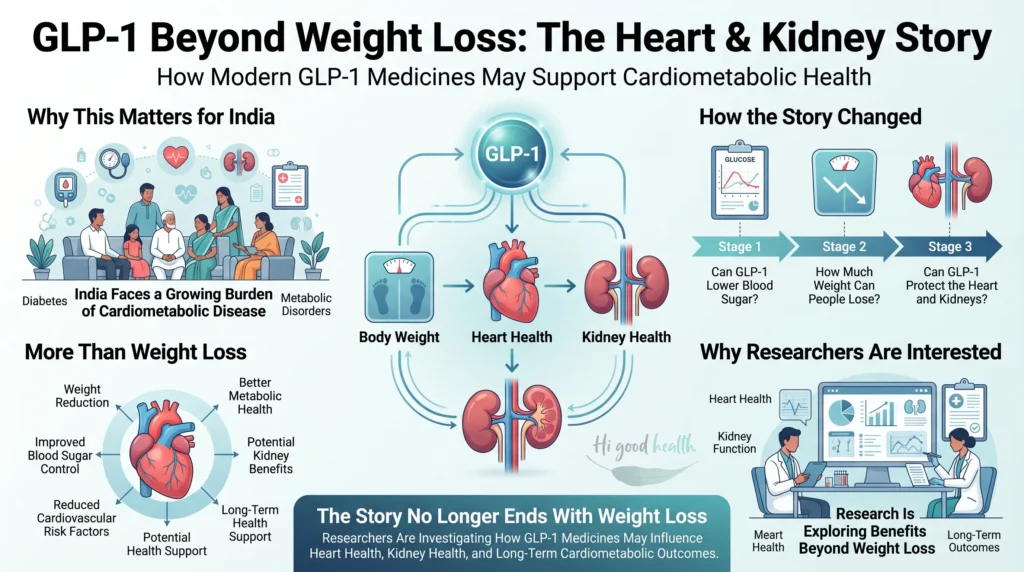
Behind the scenes, researchers have been uncovering something far more interesting. The same medicines that are helping people eat less and lose weight may also be helping to protect the heart and kidneys; two organs that are under constant attack in people living with obesity, diabetes, and metabolic diseases.
For many experts, this has been one of the most unexpected developments in modern medicine.
A decade ago, doctors were primarily asking:
“Can these medicines lower blood sugar?”
A few years later, the question became:
“How much weight can people lose?”
Today, the conversation has evolved again.
“Could these medicines help prevent heart attacks, slow kidney diseases, and improve long-term health outcomes?”
That possibility is particularly relevant for India.
Because if there is one thing India does not have a shortage of, it is cardiometabolic disease.
At a glance
GLP-1 medicines such as Ozempic, Wegovy, and Mounjaro do far more than help with weight loss.
Large trials point to real GLP-1 heart benefits and GLP-1 kidney benefits: fewer heart attacks and strokes, and slower kidney damage in selected patients with type 2 diabetes or high cardiovascular risk.
A common question is the link between Ozempic blood pressure and heart health. Studies suggest semaglutide may modestly help Ozempic lower blood pressure alongside weight loss, though it is not a blood pressure medicine.
These benefits matter for India, where diabetes, heart disease, and kidney disease often appear early and together. Any GLP-1 medicine should be used only under a doctor’s guidance.
Why Indians Should Pay Attention to GLP-1 Heart and Kidney Benefits
India is home to one of the largest populations of people living with diabetes in the world.
But diabetes is only part of the story.
The bigger issue is what often follows.
Heart disease, kidney disease, stroke, hypertension, and fatty liver disease often follow in its wake.
Many of these conditions are connected, almost like dominoes lined up in a row.
When one falls, others often follow.
A person gains excess weight around the abdomen.
Insulin resistance develops.
Blood sugar begins to rise.
Blood vessels experience years of silent damage.
Eventually, the heart and kidneys start paying the price.
The frightening part is that this process often begins long before symptoms appear.
In many Indian households, diabetes is no longer an exception—it is expected. It is not unusual for three generations of the same family to manage diabetes, hypertension, or heart disease simultaneously. What was once considered a disease of older age is increasingly being diagnosed in younger adults, sometimes even before obvious symptoms appear.
South Asians carry a higher metabolic risk even at a ‘normal’ weight; find out why the ‘thin-fat’ Indian pattern makes organ protection a priority
And in Indians, these changes often happen earlier than expected.
Doctors have long observed a phenomenon sometimes described as the “thin-fat Indian” pattern. However, current research adds another crucial layer: the high prevalence of Metabolically Obese Normal Weight (MONW).
This means a large portion of Indians who appear slim on the outside may still have high body fat, low muscle mass, and significant metabolic risk, putting them in a group most likely to develop diabetes and heart disease.
In short, body weight and BMI alone do not tell the full story.
This helps explain why South Asians frequently develop type 2 diabetes, cardiovascular disease, and kidney complications at younger ages compared with many other populations.
It also explains why researchers are becoming increasingly interested in treatments that do more than simply lower blood sugar.
Because when millions of people are at risk of damage to multiple organs, the most valuable medicines may be those that protect multiple organs as well.
And that is exactly why GLP-1 medicines are attracting so much attention today.
Their story is no longer just about weight loss.
It is becoming a story about protection of organs such as heart and kidney.
GLP-1 Heart Benefits: What These Medicines Do for the Heart
For years, doctors treated diabetes with one primary goal: lowering blood sugar.
And for good reason. High blood sugar damages blood vessels over time, increasing the risk of heart attacks, strokes, kidney disease, vision loss, and nerve damage.
But modern medicine has started asking a more ambitious question.
What if a diabetes medication could do more than control blood sugar? What if it could actually help protect the heart?
That possibility is one of the reasons GLP-1 medicines have attracted so much scientific attention.
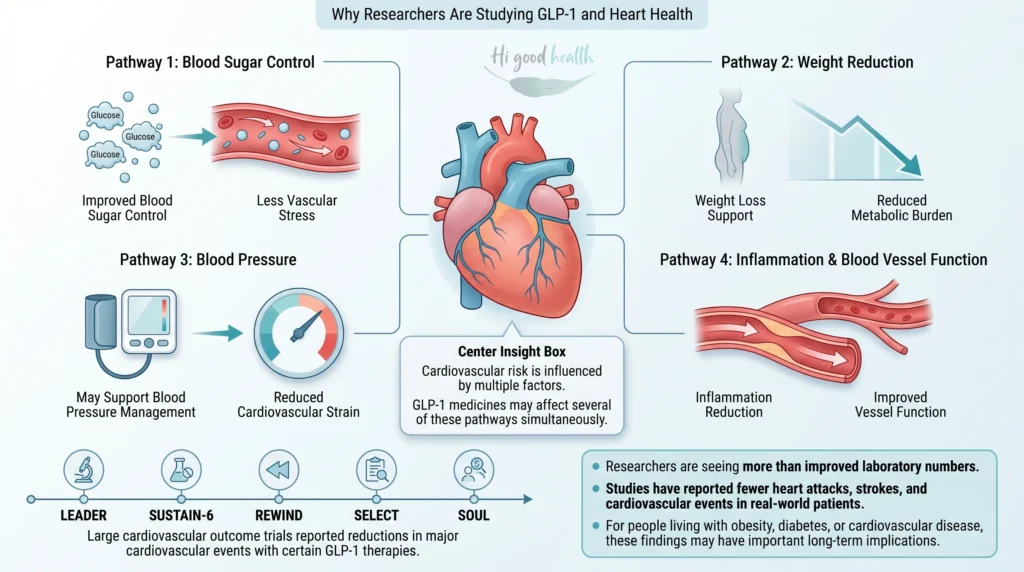
Researchers believe these medicines may influence several risk factors for cardiovascular disease simultaneously. They help lower blood sugar levels, promote weight loss, and may reduce blood pressure in some individuals. Studies have also suggested beneficial effects on inflammation and blood vessel function, two factors increasingly recognized as important contributors to cardiovascular disease.[14][18]
Instead of targeting a single problem, GLP-1 medicines appear to influence several risk factors at once. Weight tends to decrease, blood sugar improves, blood pressure may become easier to control, and inflammation may be reduced. The combined effect is a cardiovascular system that has less work to do and potentially fewer threats to manage over time.
Perhaps the most convincing evidence comes from large cardiovascular outcome trials involving thousands of patients across multiple countries.
Studies such as LEADER, SUSTAIN-6, REWIND, SELECT, and most recently the SOUL trial demonstrated that certain GLP-1 receptor agonists were associated with reductions in major adverse cardiovascular events, including heart attack, stroke, and cardiovascular death.[4][5][6][7] Much of the semaglutide cardiovascular evidence, in particular, has shaped how doctors now think about these medicines.
That may sound technical, but the practical meaning is simple.
Researchers are not merely seeing better laboratory numbers.
They are seeing fewer serious cardiovascular events occurring in real people.
For patients living with obesity, diabetes, or established cardiovascular disease, that distinction matters enormously.
Because losing weight is important.
Avoiding a heart attack may be even more important.
These medicines act as a ‘smart supervisor’ for your internal organs; revisit our foundation guide on how GLP-1 molecules work to protect your system.
Ozempic and Blood Pressure: What the Evidence Shows
One of the most common questions people ask is about the Ozempic blood pressure connection. Blood pressure sits at the centre of heart risk, so it is fair to ask whether these medicines help here too.
The short answer is that clinical trials have reported modest reductions in systolic blood pressure among people taking semaglutide, the active ingredient in Ozempic and Wegovy.[18] This is why the Ozempic blood pressure question keeps coming up as part of the wider cardiovascular picture, rather than as a stand-alone effect.
How might Ozempic lower blood pressure? The likely reasons include weight loss, less fluid retention, and better blood vessel function. As people lose weight and inflammation settles, the pressure inside the arteries often eases.
So while Ozempic is not approved as a treatment for high blood pressure, some people do see helpful changes in their Ozempic blood pressure readings as a side effect of the wider metabolic improvement.[14]
It helps to be clear about what this does and does not mean. Using Ozempic for high blood pressure on its own is not the goal, and the same caution applies to Wegovy high blood pressure questions; a change in blood pressure is a bonus, not the reason these medicines are prescribed.
Anyone already taking blood pressure tablets should never adjust them without medical advice, because a GLP-1 medicine can change how much support the body needs.
In short, the Ozempic blood pressure benefit is real for some people, but it stays secondary to the larger heart and kidney story.
Beyond Metabolic Disease: Could GIP/GLP-1 Medicines Affect the Brain?
The research around incretin-based medicines is also expanding beyond diabetes, obesity, and cardiovascular disease. Eli Lilly is developing brenipatide, an investigational once-weekly GIP/GLP-1 receptor agonist that may act on pathways in the central nervous system (CNS) as well as inflammatory pathways, including those involved in reward and addiction.
In an early Phase I study of more than 200 people, brenipatide had a half-life of approximately 9–12.5 days, supporting its potential for weekly dosing. Gastrointestinal side effects were among the most commonly reported adverse events.
Lilly is now testing brenipatide in Phase III trials for major depressive disorder (MDD) and alcohol use disorder (AUD), alongside studies in other psychiatric, substance-use and inflammatory conditions. These trials are still underway, so it is too early to know whether brenipatide will provide meaningful clinical benefits for CNS or psychiatric disorders.[20]
The research is nevertheless an example of how incretin science is expanding beyond its traditional focus on blood sugar and body weight. For now, these potential CNS effects remain investigational and should not be interpreted as established benefits of currently approved GLP-1 medicines.
GLP-1 Kidney Benefits: The Story Nobody Saw Coming
If the cardiovascular findings generated excitement, the kidney findings generated surprise.
Traditionally, kidneys have not been the first organs people think about when discussing obesity or diabetes medications.
Yet kidney diseases are one of the most common and devastating complications of diabetes.
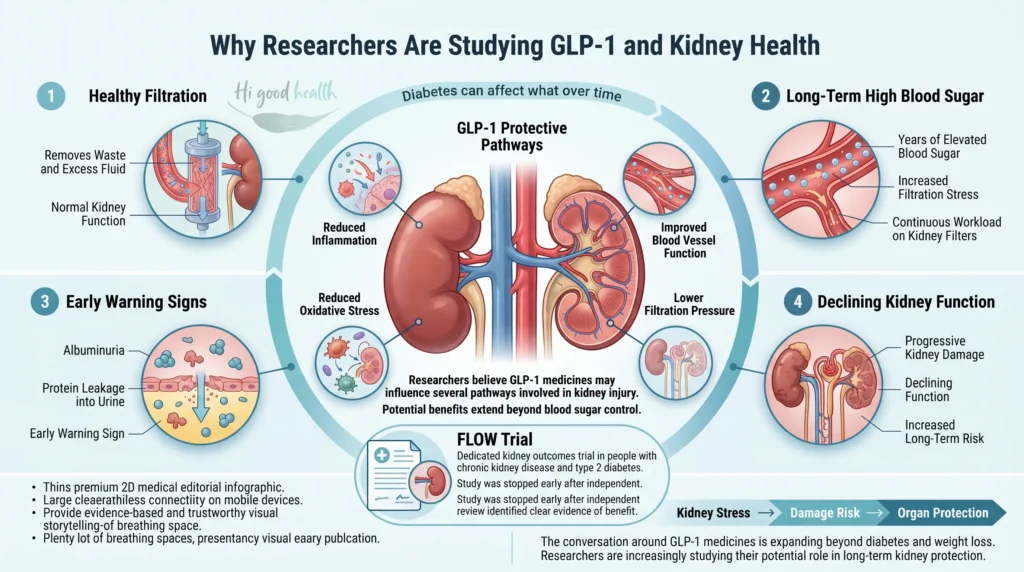
The kidneys act as the body’s filtration system, continuously removing waste products and excess fluid from the bloodstream.
When blood sugar remains elevated for years, those delicate filters are forced to work under increasing stress.
Imagine running a water purifier continuously at maximum pressure for years.
Eventually, damage begins to appear.
Small amounts of protein start leaking into the urine; a warning sign known as albuminuria.
Kidney function gradually declines.
In severe cases, dialysis or kidney transplantation may become necessary.
This is why kidney protection has become a major focus of diabetes care worldwide.
Interestingly, researchers have discovered that GLP-1 medicines may influence several biological pathways involved in kidney injury. Evidence suggests they may reduce inflammation, improve blood vessel function, decrease oxidative stress, and potentially reduce harmful pressure within the kidney’s filtration units.
Scientists are still working to fully understand every mechanism involved, but the clinical results have been encouraging.
Multiple studies have shown reductions in albuminuria, slower decline in kidney function, and fewer kidney-related complications among patients receiving GLP-1 receptor agonists.[9][10]
Then came a study that attracted global attention.
The FLOW trial, the first dedicated kidney outcomes trial designed specifically to evaluate a GLP-1 medicine in people with chronic kidney disease and type 2 diabetes, was stopped early because an independent monitoring committee determined that clear evidence of benefit had already emerged.[11]
In clinical research, trials are rarely stopped early.
When it happens because patients are experiencing meaningful benefit, researchers pay attention.
For many experts, the FLOW results represented an important turning point.
The conversation around GLP-1 medicines was no longer only about diabetes.
It was no longer only about obesity.
Increasingly, it was becoming a conversation about long-term organ protection.
And for countries like India—where diabetes, cardiovascular disease, and kidney disease often travel together; that shift may have profound implications.
The Semaglutide Cardiovascular and Kidney Trials That Changed the Conversation
Scientific excitement around GLP-1 medicines did not emerge from a single study. It came from a series of landmark clinical trials that gradually revealed a pattern.
The LEADER trial showed that liraglutide reduced the risk of major cardiovascular events in people with type 2 diabetes.[4] Soon after, SUSTAIN-6 demonstrated similar benefits with semaglutide.[5] Then came REWIND, which suggested that cardiovascular protection could extend even to patients without established cardiovascular disease.[6]
The SELECT trial made headlines because it showed cardiovascular benefits in people with overweight or obesity who did not have diabetes, a finding that challenged long-held assumptions about who might benefit from these medicines.[7]
Most recently, an international trial called SOUL, which tested an oral form of semaglutide, included 788 Indian patients across 32 centres. It demonstrated a 14% reduction in major cardiovascular events and a 26% reduction in heart attacks specifically for Asian patients.[19]
The kidney story gained momentum with the FLOW trial, the first dedicated kidney outcomes study of a GLP-1 medicine. The trial was stopped early following a recommendation from an independent monitoring committee after prespecified analyses showed a clear kidney benefit.[11]
For patients, the takeaway is simple.
Researchers are no longer looking only at weight loss or blood sugar numbers. They are increasingly seeing evidence that these medicines may help reduce the risk of serious complications affecting the heart and kidneys.
What Does This Mean for Indians?
This question may be especially important in India, where bodies such as the Indian Council of Medical Research (ICMR) have long highlighted the country’s early and heavy burden of diabetes and heart disease.
Indians tend to develop type 2 diabetes, cardiovascular disease, and metabolic complications at younger ages than many Western populations.
An Indian may not appear overweight but may still be at increased risk of metabolic and cardiovascular complications as explained by “thin-fat Indian” phenomenon.
This is why experts increasingly emphasize prevention rather than waiting for complications to appear.
If future research continues to support the heart and kidney benefits seen in current trials, GLP-1 medicines could become part of a broader strategy aimed not only at managing disease but potentially delaying some of its most serious consequences.
For a country facing rising rates of obesity, diabetes, cardiovascular disease, and chronic kidney disease, that possibility is difficult to ignore.
Who May Benefit the Most?
Not everyone taking a GLP-1 medicine will experience the same benefits. However, current evidence suggests that certain groups may have the most to gain.
This includes people living with obesity and type 2 diabetes, individuals who already have cardiovascular disease, and those at increased risk of developing kidney complications.
That does not mean these medicines are appropriate for everyone.
Treatment decisions depend on multiple factors, including medical history, existing health conditions, other medications, and treatment goals. This is why experts emphasize physician-guided decision-making rather than self-prescribing or following social media trends.
After all, the best treatment is not necessarily the newest one; it is the one that is right for the individual patient.
Important Limitations: What We Still Don’t Know
As promising as the evidence is, GLP-1 medicines are not miracle drugs.
They cannot replace healthy lifestyle habits. In fact, the greatest benefits are usually seen when medication is combined with sustainable changes such as healthier eating patterns, portion control, regular physical activity, and better sleep.
There are also important limitations to keep in mind.
Benefits vary from person to person. Some patients respond exceptionally well, while others may experience more modest improvements.
Certain GLP-1 medicines can cause a small increase in heart rate, which is usually not clinically significant but remains an area of ongoing research. Some patients may require additional monitoring, particularly if they have underlying cardiovascular conditions.
Gastrointestinal side effects such as nausea, vomiting, or diarrhoea can occasionally lead to dehydration, which may place additional stress on the kidneys if not managed appropriately.
For Indians, practical challenges also remain.
These medicines can be expensive, insurance coverage is often limited, and many patients pay out of pocket. As a result, long-term treatment can become difficult to sustain.
However, a major turning point occurred on March 20, 2026, when the primary compound patent for semaglutide expired in India. Since the patent expiry, the Indian pharmaceutical market has been completely transformed and monthly treatment costs have dropped dramatically.
In addition, most of the major cardiovascular and kidney outcome trials have been conducted in global populations, with relatively limited representation from Indian patients.
While the findings are encouraging, more India-specific research will help clarify how these benefits translate to local populations.
A New Chapter in Diabetes and Obesity Care
Perhaps the most important lesson from the GLP-1 story is that medicine is beginning to think differently about chronic disease.
For decades, success was measured largely by blood sugar numbers.
Today, the goal is becoming much broader.
Can we protect the heart?
Can we preserve kidney function?
Can we prevent complications before they occur?
Increasingly, the answer may involve treating obesity, diabetes, cardiovascular disease, and kidney disease as interconnected conditions rather than separate problems.
Another emerging trend is the use of GLP-1 medicines alongside sodium-glucose transporter (SGLT2) inhibitors, a class of drugs already known for their heart and kidney benefits.[17] Researchers are actively exploring how SGLT2 inhibitors and GLP-1 medicines may complement each other, and many specialists now view this combination as a promising strategy for whole-body cardiorenal protection.
The science is still evolving, but one thing is becoming clear.
The future of diabetes care may not be defined solely by glucose control.
The next decade of diabetes care may be less about chasing blood sugar targets and more about helping people avoid the complications they fear most; heart attacks, kidney failure, and years of preventable illness.
Glossary
Albuminuria: A condition where a small amount of protein leaks into the urine. It can be an early sign of kidney damage.
BMI (Body Mass Index): A number based on height and weight used to estimate body size. It does not show where fat is stored, so it may miss hidden belly fat.
Cardiometabolic disease: A group of related health problems such as obesity, diabetes, high blood pressure, heart disease, and fatty liver disease.
Chronic kidney disease (CKD): Long-term loss of kidney function. It often develops slowly and may not cause symptoms at first.
GLP-1: A natural gut hormone that helps the body release insulin after meals, slows digestion, and helps control appetite.
GLP-1 receptor agonist: A medicine that works like GLP-1 in the body. It is used for diabetes, weight management, and in some cases heart or kidney risk reduction.
Incretin: A hormone that helps the body respond better to food by improving insulin release after meals.
Insulin resistance: A condition where the body does not respond well to insulin, so blood sugar rises more easily.
Intraglomerular pressure: Pressure inside the kidney’s tiny filtering units. High pressure over time can damage the kidneys.
Major adverse cardiovascular events (MACE): A medical term for serious heart-related events such as heart attack, stroke, or cardiovascular death.
Obesity: A condition where excess body fat increases the risk of health problems.
Oxidative stress: A type of cell damage caused by harmful molecules in the body. It can contribute to heart and kidney injury.
SGLT2 inhibitor: A class of diabetes medicines that can also help protect the heart and kidneys.
Visceral fat: Fat stored deep inside the abdomen around organs. It is more harmful than fat under the skin.
Disclaimer
This article is for education only and should not replace medical advice, diagnosis, or treatment. GLP-1 medicines are not suitable for everyone, and the right treatment depends on your health history, current medicines, kidney function, heart risk, and doctor’s guidance.
Do not start, stop, or change any medicine on your own. If you have diabetes, kidney disease, heart disease, pregnancy, severe stomach symptoms, or dehydration, speak to a qualified doctor before making any treatment decision.[kidney]
Key Takeaways
GLP-1 medicines began as diabetes and weight-loss drugs, but the bigger story is their GLP-1 heart benefits and GLP-1 kidney benefits. Large trials such as LEADER, SUSTAIN-6, REWIND, SELECT, and SOUL show fewer heart attacks, strokes, and cardiovascular deaths in selected patients.
The FLOW trial was stopped early because the kidney benefit was already clear, a rare and meaningful signal. On the Ozempic blood pressure question, semaglutide may modestly lower blood pressure, but it is not a blood pressure medicine and should never replace prescribed treatment.
Pairing GLP-1 medicines with SGLT2 inhibitors is emerging as a strategy for stronger heart and kidney protection. India sees diabetes, heart disease, and kidney disease early and together, so organ protection matters here; always decide with a doctor.
FAQ
If you prefer a more visual version, check out our YouTube video here:
1. Are GLP-1 medicines only for weight loss?
No. They were first used for diabetes, and newer research shows benefits for heart and kidney protection in selected patients too.
2. Do GLP-1 medicines work in people who are not very overweight?
Yes, they may still help some people, especially those with diabetes, cardiovascular disease, or kidney risk. Body weight alone does not tell the full story.
3. Can GLP-1 medicines reduce the risk of heart attack and stroke?
For some people, yes. Large trials such as LEADER, SUSTAIN-6, REWIND, and SELECT showed fewer major cardiovascular events with certain GLP-1 medicines.
4. Can GLP-1 medicines protect the kidneys?
They may help slow kidney damage in some patients, especially those with type 2 diabetes and chronic kidney disease. The FLOW trial was a major step in this area.
5. What are the common side effects of GLP-1 medicines?
The most common side effects are nausea, vomiting, bloating, constipation, and diarrhoea. These usually improve with time, but they should be discussed with a doctor if persistent.
6. Do GLP-1 medicines increase heart rate?
A small increase in heart rate can happen in some people. It is usually mild, but it should be monitored, especially in people with heart disease.
7. Are GLP-1 medicines safe for people with kidney disease?
Some people with kidney disease may use them safely, but this depends on the medicine and the stage of kidney disease. A doctor should decide this, especially if dehydration or advanced CKD is present.
8. What happens if I stop the medicine?
Weight and blood sugar may rise again after stopping, especially if food habits and activity do not improve at the same time. That is why lifestyle changes matter alongside medicine.
9. Can I take a GLP-1 medicine without diabetes?
In some cases, yes, if it is prescribed for obesity or cardiovascular risk reduction. But it should only be used under medical supervision.
10. Who should avoid self-medicating with GLP-1 drugs?
Anyone with diabetes, kidney disease, heart disease, digestive problems, pregnancy, or multiple medicines should avoid self-medication and speak to a doctor first.
11. Can Ozempic lower blood pressure?
Some studies show a modest drop in systolic blood pressure with semaglutide, the drug in Ozempic. The Ozempic blood pressure effect is usually small and comes mainly from weight loss, so it is a helpful bonus rather than a treatment for high blood pressure.
12. Does Wegovy help with high blood pressure too?
Wegovy also contains semaglutide, so people often raise the same Wegovy high blood pressure question. Like Ozempic, it may ease blood pressure a little through weight loss, but it is not a replacement for prescribed blood pressure medicine.
13. Can GLP-1 medicines and SGLT2 inhibitors be taken together?
In many cases yes. Doctors increasingly pair SGLT2 inhibitors and GLP-1 medicines because each protects the heart and kidneys in its own way. Whether this combination is right for you is a decision for your doctor.
14. Are the GLP-1 heart and kidney benefits proven in Indian patients?
Indian patients were included in trials such as SOUL, which showed heart benefits for Asian participants. Even so, most large trials were global, so more India-specific research will help confirm how strongly the GLP-1 heart benefits and GLP-1 kidney benefits apply locally.
15. Can GLP-1 medicines help with depression or alcohol addiction?
Not yet. Eli Lilly is testing brenipatide, an investigational once-weekly GIP/GLP-1 receptor agonist, in Phase III trials for major depressive disorder (MDD) and alcohol use disorder (AUD). These trials are still underway, so these potential brain effects should not be interpreted as established benefits of currently approved GLP-1 medicines.
References
All reference links checked and accessible on 6 October 2026
- Holst JJ. From the incretin concept and the discovery of GLP-1 to today’s diabetes therapy. Front Endocrinol (Lausanne). 2019;10:260.
- Verma S, McGuire DK, Bain SC, et al. Results of the LEADER and SUSTAIN-6 trials: cardiovascular outcomes with GLP-1 receptor agonists. Diabetes Obes Metab. 2020;22(Suppl 1):3–14.
- Andrikou E, Tsioufis C, Dimitriadis K, et al. GLP-1 receptor agonists and cardiovascular outcome trials. Hellenic J Cardiol. 2019;60(6):347–354.
- Marso SP, Daniels GH, Brown-Frandsen K, et al. Liraglutide and cardiovascular outcomes in type 2 diabetes (LEADER trial). N Engl J Med. 2016;375(4):311–322.
- Marso SP, Bain SC, Consoli A, et al. Semaglutide and cardiovascular outcomes in patients with type 2 diabetes (SUSTAIN-6 trial). N Engl J Med. 2016;375(19):1834–1844.
- Gerstein HC, Colhoun HM, Dagenais GR, et al. Dulaglutide and cardiovascular outcomes in type 2 diabetes (REWIND trial). Lancet. 2019;394(10193):121–130.
- Lincoff AM, Brown-Frandsen K, Colhoun HM, et al. Semaglutide and cardiovascular outcomes in obesity without diabetes (SELECT trial). N Engl J Med. 2023;389:2221–2232.
- American College of Cardiology. SELECT Trial: Semaglutide effects on cardiovascular outcomes in overweight or obese adults with cardiovascular disease. Available from:
- MacIsaac RJ, Ekinci EI, Jerums G. Glucagon-like peptide-1 receptor agonists and kidney protection: current evidence and future directions. Diabetes Obes Metab. 2024;26(1):15–27.
- Mosenzon O, Blicher TM, Rosenlund S, et al. Kidney outcomes with glucagon-like peptide-1 receptor agonists in patients with type 2 diabetes. Kidney Med. 2021;3(4):577–589.
- Rossing P, Tuttle KR, Mosenzon O, et al. The rationale, design and baseline data of FLOW: a kidney outcomes trial with semaglutide. Nephrol Dial Transplant. 2023;38(9):2041–2051.
- Colhoun HM, Brown-Frandsen K, Lingvay I, et al. Long-term kidney outcomes of semaglutide in obesity and cardiovascular disease: findings from the SELECT trial. Nat Med. 2024;30:1875–1883.
- Mann JFE, Hansen T, Idorn T, et al. Cardiorenal effects of GLP-1 receptor agonists in type 2 diabetes. Cardiovasc Diabetol. 2023;22:245.
- Le R, Chaar M, Al-Khalili F, et al. Cardiovascular protective properties of GLP-1 receptor agonists: current evidence and future perspectives. J Clin Med. 2024;13(16):4674.
- Chen TH, Lee MMY, Docherty KF, et al. GLP-1 receptor agonists and cardiovascular and kidney outcomes across BMI categories. JAMA Netw Open. 2025;8(3):e245678.
- American Diabetes Association. Standards of care in diabetes—2025. Diabetes Care. 2025;48(Suppl 1):S1–S350.
- Heerspink HJL, Stefansson BV, Correa-Rotter R, et al. SGLT2 inhibitors and kidney protection: current evidence and future directions. Lancet Diabetes Endocrinol. 2020;8(7):582–593.
- American Heart Association. Cardiovascular effects of GLP-1 receptor agonists. Circulation. 2024;149(12):e450–e468.
- McGuire DK, Marx N, Mulvagh SL, et al., for the SOUL Study Group. Oral Semaglutide and Cardiovascular Outcomes in High-Risk Type 2 Diabetes. N Engl J Med 2025;Mar 29:[Epub ahead of print].
- Philippidis A. Lilly’s GIP/GLP-1 Candidate Brenipatide Shows Early Clinical Promise in Substance, Psych Disorders. Genetic Engineering & Biotechnology News (GEN). 19 September 2026.
