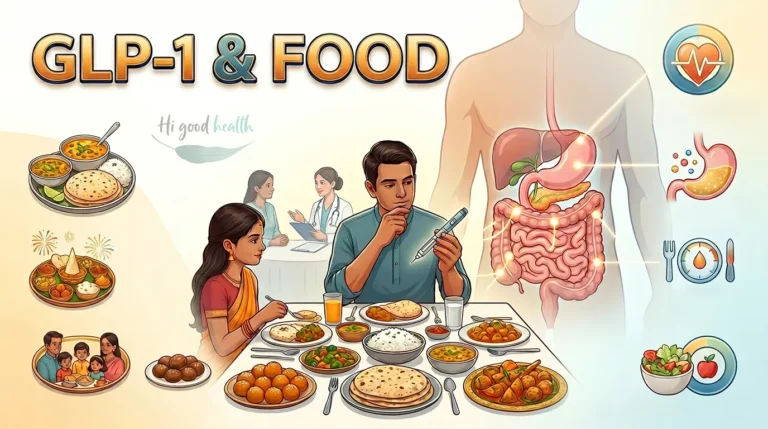
Can You Still Enjoy Indian Food While Taking GLP-1 Drugs?
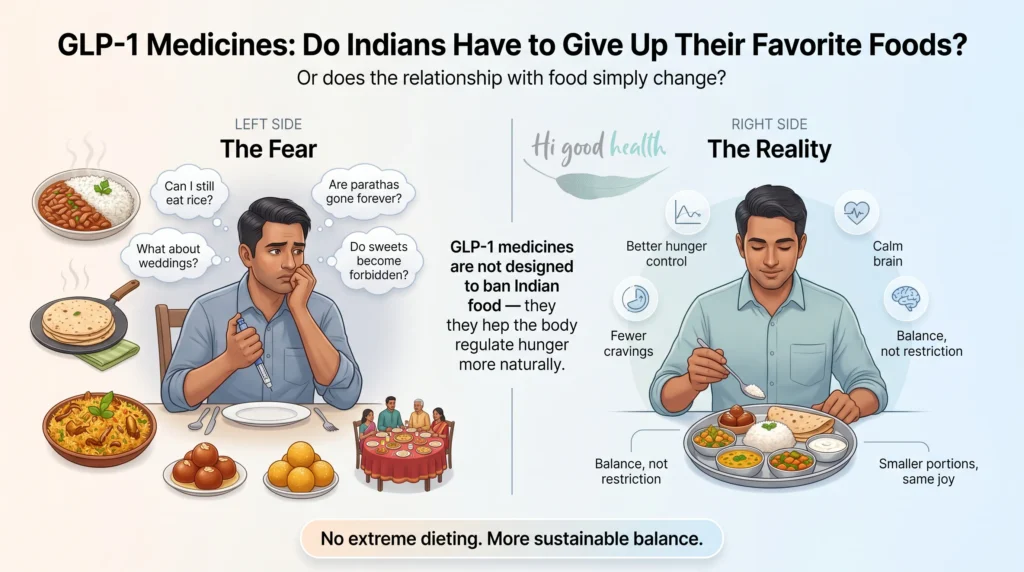
THE BIGGEST FEAR IN INDIA: “Is the Roti-chawal(rice) era officially over for me?”
For many Indians starting GLP-1 medicines like Ozempic, Wegovy, Mounjaro, or generic semaglutide, the first fear is not injections.
It is food.
“Can I still eat rice?”
“Will sweets become completely forbidden?”
“What about weddings, festivals, and family dinners?”
“Do I have to stop eating parathas forever?”
This anxiety is deeply emotional because Indian food is not just nutrition. It is identity, comfort, celebration, hospitality, religion, and family connection.
A grandmother offering laddoos during Diwali.
A wedding buffet overflowing with biryani and gulab jamun.
Sunday rajma chawal.
Hot rotis straight from the tawa.
Unlike Western diet culture, Indian eating patterns are collective and social. Refusing food can even feel disrespectful in many households.
The good news is that GLP-1 medicines are not designed to “ban” Indian food. They are designed to help the body regulate hunger, fullness, cravings, and blood sugar more naturally. Many people using these medications discover something unexpected: they no longer feel trapped in constant cravings or extreme dieting cycles.
At a glance
You do not have to give up roti, rice, or mithai on GLP-1 medicines like Ozempic, Wegovy, or Mounjaro. Portion size, protein, and fibre matter far more than banning any single food. You can also support your body’s own hormone: knowing how to increase GLP-1 naturally through high-fibre dals, whole grains, vegetables, and fermented foods like idli, dosa, and dahi makes the medicine’s appetite effect feel steadier. Eat slowly, start meals with protein, aim for about 1.0–1.5 g of protein per kg of ideal body weight, and treat festival sweets as small, mindful portions.
Why Indian diets are different — and why it matters
India faces a unique metabolic challenge often called the “Thin-Fat Indian” paradox. Many Indians develop diabetes, fatty liver disease, abdominal obesity, and insulin resistance at lower BMIs compared with Western populations. Even individuals who appear lean may carry high levels of visceral fat around the abdomen and liver.
Researchers believe this is influenced by a combination of genetics, lower muscle mass, sedentary lifestyles, stress, sleep disruption, and modern dietary patterns rich in refined carbohydrates and low in protein.[1] [2]
In many urban households, the daily pattern may involve chai with biscuits in the morning, carbohydrate-heavy breakfasts, rice- or roti-dominant lunches, evening fried snacks, and desserts or sweetened beverages later at night. None of these foods are inherently “bad.” The problem is often excessive quantity, frequent snacking, poor protein intake, low fibre, and metabolic overload over time.
GLP-1 medicines help interrupt this cycle by slowing digestion, increasing fullness, reducing cravings, and improving blood sugar regulation.
India is not one diet
One of the biggest mistakes in nutrition discussions is treating India as if everyone eats the same way.
India contains enormous dietary diversity shaped by geography, religion, economics, culture, and climate. A South Indian breakfast differs substantially from a Punjabi lunch, while coastal eating patterns differ from vegetarian Jain diets or tribal food systems.
For example:
- South Indian diets often include rice, idli, dosa, sambhar, fermented foods, coconut-based preparations, and curd rice.
- Eastern Indian meals may include rice, fish, mustard oil, sweets, and fermented foods.
- Western Indian diets frequently include farsan, poha, dal-based dishes, and snack-heavy eating patterns.
- Coastal regions naturally consume more seafood and coconut.
- North Indian meals are often wheat-heavy and may include richer gravies, dairy products, and larger portions during social gatherings.
GLP-1 medicines do not require abandoning these traditional food systems. Instead, the goal is improving meal balance, portion awareness, protein intake, fibre intake, and metabolic flexibility within existing cultural eating patterns.
Practical Regional Adjustments During GLP-1 Therapy
Region | Practical GLP-1-Friendly Adjustments |
South India | Pair dosa or idli with sambhar, curd, or protein-rich sides instead of relying mainly on refined carbohydrate portions |
East India | Reduce oversized rice servings and include fish, dal, vegetables, or curd for better satiety |
West India | Limit frequent fried farsan intake and increase protein-rich snacks |
North India | Balance roti or paratha meals with dal, paneer, curd, salads, and vegetables |
Coastal Regions | Use naturally available fish and fermented foods to improve protein intake |
What happens to your appetite on GLP-1 drugs?
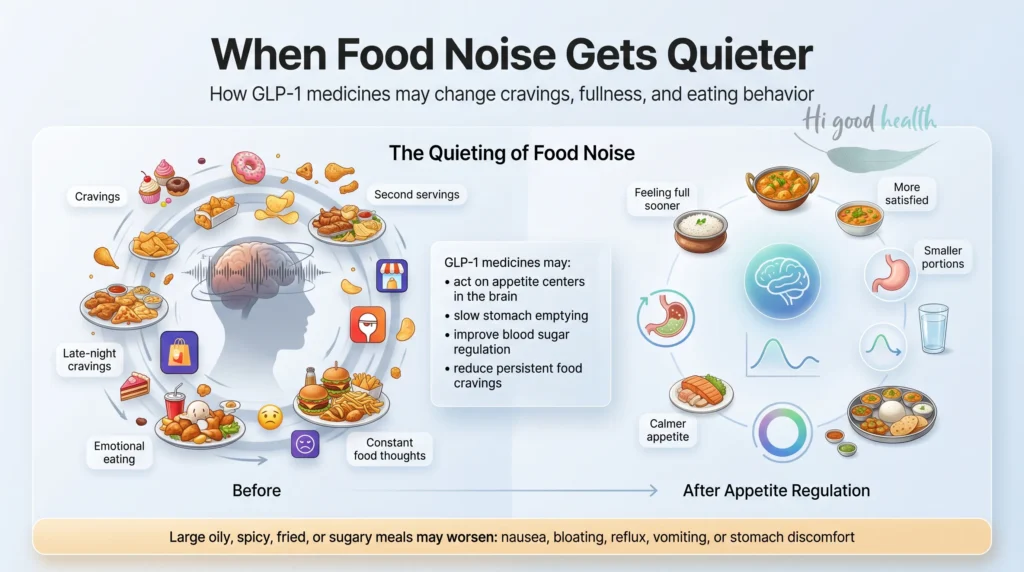
Many users describe the experience as: “Food noise becomes quieter.”
Constant thoughts about snacks, sweets, emotional eating, and second servings often reduce significantly while using semaglutide or tirzepatide.[2]
These medicines work by acting on the brain’s appetite centers, slowing stomach emptying, and improving blood sugar regulation.[3] Because food stays in the stomach longer, people tend to feel fuller earlier and remain satisfied for longer periods.
This can dramatically change eating behavior in Indian households. Many users naturally begin eating smaller portions, lose interest in overeating sweets, and find themselves unable to finish restaurant meals or buffet portions.
However, this effect also creates an important challenge.
Eating large amounts of oily, spicy, fried, or sugary foods while using GLP-1 medicines may worsen nausea, bloating, reflux, vomiting, or stomach discomfort.[8] How people eat becomes just as important as what they eat.
Heavy, oily festive meals can trigger significant nausea while on this therapy; learn how to adjust your diet to manage gastrointestinal side effects.”
Heavy, oily festive meals can trigger significant nausea while on this therapy; learn how to adjust your diet to manage gastrointestinal side effects.
How to increase GLP-1 naturally through Indian foods
Medicines are not the only way your body makes GLP-1. Your gut releases this hormone every time you eat, and some foods trigger a stronger, longer response than others. If you want to know how to increase GLP-1 naturally, the answer is mostly about fibre, protein, and fermented foods — and Indian kitchens are full of them.
Dietary fibre is the biggest lever. When fibre from whole dals, rajma, chana, vegetables, oats, barley (jau), and millets (ragi, bajra, jowar) reaches the large intestine, gut bacteria ferment it into short-chain fatty acids that signal the intestine to release more GLP-1. Protein-rich foods and healthy fats also nudge GLP-1 upward and slow digestion, which is why a protein-first plate keeps you full for longer.[11] [5]
Simple natural GLP-1 foods that fit everyday Indian meals include:
- High-fibre staples: whole dals, rajma, chana, sprouts, oats, barley, and millets instead of only refined rice or maida.
- Vegetables and salad with every main meal, plus fruit with the skin where possible.
- Fermented foods such as idli, dosa batter, dhokla, and dahi (curd), which support the gut bacteria that help GLP-1 release.
- Protein at each meal: paneer, tofu, eggs, fish, chicken, soy chunks, and Greek yogurt or hung curd.
- Healthy fats in modest amounts: nuts, seeds, and cold-pressed oils rather than deep-fried snacks.
Some people search for a natural GLP-1 inhibitor, but for weight and blood sugar the goal is usually the opposite: gently raising your own GLP-1 rather than blocking it. Building meals around natural GLP-1 support also works alongside your medicine. Whether you are learning the best diet on Mounjaro, planning a diet while on Mounjaro, or simply want a steadier appetite, the same fibre-first, protein-rich Indian plate applies. That is the practical link between Mounjaro and diet: food and medicine push in the same direction, and small daily habits like these are the most reliable way to increase GLP-1 naturally.[11]
Why do doctors start with low doses?
Most GLP-1 medicines are introduced gradually through a process called dose titration.
Doctors usually begin with a low dose and slowly increase it over several weeks or months to reduce side effects such as nausea, vomiting, bloating, constipation, reflux, and stomach discomfort. Rapid escalation or unsupervised dose increases may significantly worsen tolerability.
This gradual adjustment period becomes especially important in India, where meals may be spicy, oily, festive, or carbohydrate heavy. During the first few weeks, lighter meals and slower eating are often better tolerated. A gentle diet with Mounjaro or semaglutide in these early weeks — smaller portions, less oil, and more protein — usually keeps nausea in check.
Roti vs rice: do you really need to choose?
Probably not.
One of the biggest myths in Indian dieting is that rice is “bad” while roti is automatically “healthy.” Reality is more complicated.
The problem is usually oversized portions, low protein intake, low fibre, lack of movement, and excessive calorie intake overall.
For most people using GLP-1 medicines:
- Moderate rice intake is usually acceptable.
- One or two rotis are often manageable.
- Pairing carbohydrates with protein and fibre matters far more than completely eliminating rice or wheat.
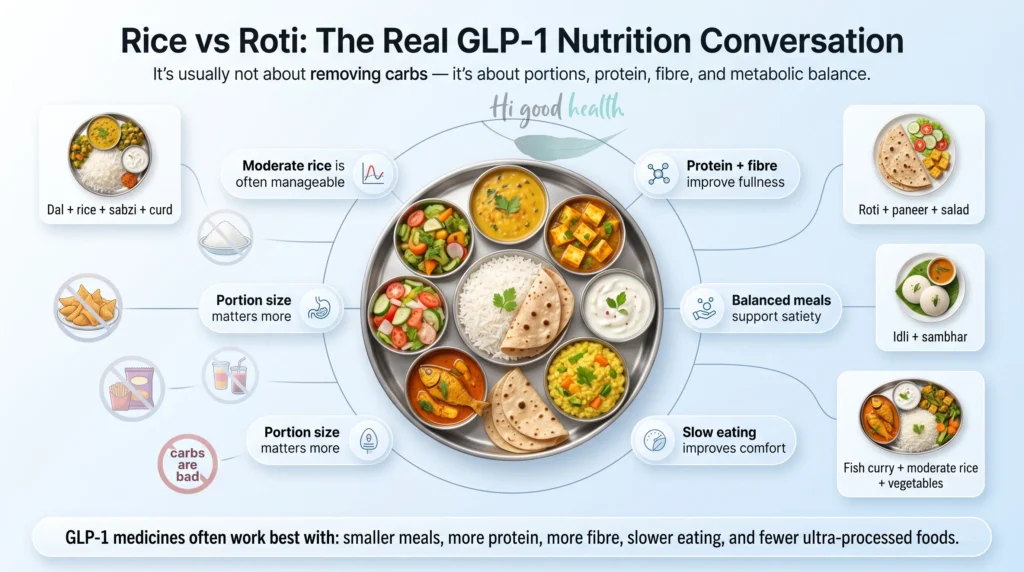
Examples of more balanced meals include:
The sweets question: can you still eat mithai?
Yes — but your relationship with sweets may change significantly.
Many users of semaglutide or tirzepatide report that sweets begin tasting “too sweet,” desserts feel heavier, and cravings become less intense. Some people even lose interest in binge eating entirely.
This is one reason GLP-1 medicines are transforming obesity treatment globally.[7]
Indian sweets, however, are deeply emotional and culturally embedded. Gulab jamun during weddings, kaju katli during Diwali, halwa during celebrations, or rasmalai at family dinners are tied to memory and tradition.
Completely banning sweets often backfires psychologically.
A more sustainable approach is the “festival portion” strategy: smaller servings, slower eating, mindful enjoyment, and balancing desserts with protein-rich meals instead of extreme restriction.
Many individuals find this becomes easier naturally on GLP-1 medications because appetite regulation improves.
Festivals, weddings, and Indian social eating
Indian celebrations are intensely food centered. During Diwali, Eid, Navratri, Lohri, Durga Puja, Onam, Christmas, weddings, and family gatherings, overeating becomes socially normalized.
For people using GLP-1 medicines, heavy festive eating can sometimes trigger nausea, bloating, reflux, stomach pain, diarrhea, vomiting, or severe fullness because these drugs already slow gastric emptying.
Practical strategies can help:
- Avoid arriving extremely hungry.
- Start meals with protein-rich foods such as paneer, dal, kebabs, sprouts, curd, fish, or eggs.
- Eat slowly because fullness develops earlier.
- Share desserts instead of eating multiple servings.
- Avoid excessive fried foods if they worsen symptoms.
- Learn to stop at “comfortable fullness” rather than cultural pressure to overeat.
This adjustment may feel emotionally difficult initially because many Indians are raised with the idea that finishing everything on the plate is respectful and loving.
The hidden risk: low protein and muscle loss
One of the most overlooked concerns during GLP-1–associated weight loss is muscle loss.
Rapid weight reduction without adequate protein intake or resistance exercise can lead to weakness, fatigue, reduced strength, and sarcopenia — the loss of muscle mass and function.
This issue is particularly relevant in India because many diets remain disproportionately carbohydrate heavy. Breakfasts consisting mainly of tea and biscuits, rice-dominant lunches, minimal dal intake, or inadequate intake of paneer, eggs, curd, legumes, or tofu may leave overall protein intake far below optimal levels.
Recent obesity medicine guidelines increasingly emphasize that preserving muscle mass during weight loss is just as important as reducing body fat.
Many adults may require approximately 1.0–1.5 grams of protein per kilogram of ideal body weight daily during active weight loss, depending on age, medical conditions, and physical activity levels.[11]
This becomes especially important for vegetarians, senior citizens, anemic women and individuals exhibiting rapid weight reduction during GLP-1/GIP receptor agonist therapy.
These people can include protein rich diet and the Indian protein sources are Paneer, Tofu, Dal, Rajma, Chole, Greek yogurt or hung curd, Soy chunks, Eggs, Fish, Chicken, Sprouts, Nuts and seeds.
Doctors also increasingly recommend resistance training or strength exercise during GLP-1 therapy to help preserve muscle mass.
Protecting muscle is vital for the ‘Thin-Fat’ phenotype; understand why protein-rich Indian staples are your best defense against metabolic decline.“
Can GLP-1 drugs cause nutrient deficiencies?
Because GLP-1 medicines suppress appetite and reduce overall food intake, some users may unintentionally consume fewer essential nutrients (protein and fibre) during rapid weight loss.
Emerging research and clinical observations suggest potential risks of:
- Inadequate vitamin B12, vitamin D and Iron levels
- Impairing digestion because of dehydration, electrolyte imbalance and constipation
According to Harvard Health Publishing, reduced calorie intake while using GLP-1 medications may increase the risk of nutrient deficiencies if meals become too small or nutritionally imbalanced.[5]
Recent reports discussed by The Indian Express and Indian metabolic health experts have also highlighted concerns around unsupervised GLP-1 use, crash dieting, and rapid weight-loss trends among urban users.[4] [6]
Doctors may sometimes recommend:
- Whey protein, vitamin D and fibre supplementation with hydration support
- Vitamin B12 monitoring or iron evaluation in susceptible individuals
However, supplements should ideally be individualized under medical supervision rather than self-prescribed excessively.
Protecting muscle is vital for the ‘Thin-Fat’ phenotype; understand why protein-rich Indian staples are your best defense against metabolic decline.
The future of Indian eating may change
GLP-1 medicines are not only changing obesity treatment.[10] They may gradually reshape eating behavior globally, including in India.
Restaurants internationally are already observing smaller portion preferences, reduced dessert demand, lower alcohol intake, and growing interest in protein-rich meals among some consumers using these medications.
In India, this may eventually influence food culture from home made food preferences to resturant or wedding catering trends and public conversations around obesity and metabolic health.[9]
But the deeper question is not whether Indians will stop eating roti, rice, or mithai.
The real question is whether Indians can rebuild a healthier relationship with food without losing its cultural identity.
That may become one of the most important public health discussions of this decade.
Key takeaways
- GLP-1 medicines do not require completely abandoning Indian food.
- Portion size, meal balance, fibre, and protein matter more than banning rice or roti.
- India has highly diverse dietary traditions, and GLP-1 strategies should adapt to regional eating patterns.
- Many users naturally experience reduced cravings for sweets and fried foods.
- Protein intake and resistance training are essential to reduce muscle loss during rapid weight reduction.
- Nutrient deficiencies may develop in some users if food intake becomes too restricted.
- Supplements such as protein, vitamin B12, vitamin D, or fibre may sometimes be helpful under medical supervision.
- Indian diets can absolutely be adapted successfully while using GLP-1 medications.
- Everyday Indian foods can help you increase GLP-1 naturally — high-fibre dals and millets, protein, and fermented foods like idli, dosa, and dahi.
Frequently Asked Questions (FAQs)
If you prefer a more visual version, check out our YouTube video here:
Can I eat rice while taking Ozempic or semaglutide?
Yes. Most people can still eat moderate rice portions. Pairing rice with dal, vegetables, curd, fish, or protein improves satiety and blood sugar stability.
Do GLP-1 drugs completely stop sugar cravings?
Not completely, but many users report significantly reduced cravings and earlier fullness with sweets.
Can I eat sweets during festivals while on GLP-1 medicines?
Usually yes, in moderation. Smaller portions and mindful eating are often better tolerated than binge eating.
Why do oily foods feel worse on GLP-1 drugs?
Because these medicines slow stomach emptying. Heavy oily meals may increase nausea, bloating, acidity, and discomfort.
Should vegetarians on GLP-1 drugs worry about protein?
Yes. Low protein intake may increase muscle loss during weight reduction. Paneer, tofu, dal, soy, curd, legumes, and supplements may become especially important.
Can GLP-1 medicines cause vitamin deficiencies?
Potentially yes, especially if appetite suppression becomes severe or food intake becomes nutritionally unbalanced.
Are Indian diets compatible with GLP-1 medicines?
Absolutely. The goal is meal balance, protein adequacy, portion awareness, and metabolic health — not abandoning cultural foods.
How can I increase GLP-1 naturally through diet?
You can raise your body’s own GLP-1 by eating more fibre, protein, and fermented foods. High-fibre dals, rajma, chana, oats, barley, and millets feed the gut bacteria that trigger GLP-1 release, while paneer, eggs, curd, and fish add protein. These natural GLP-1 foods work alongside your medicine, not against it.
What is the best diet while on Mounjaro or semaglutide?
There is no single best diet on Mounjaro, but a protein-first, fibre-rich Indian plate with smaller portions suits most people. A steady diet while on Mounjaro usually means dal, paneer or eggs, vegetables, and a moderate serving of rice or roti, with less fried and sugary food to ease nausea.
How long do you stay on Wegovy?
Wegovy duration of treatment is usually long term. Obesity is treated as a chronic condition, so many people stay on Wegovy for months or years under medical supervision, and weight often returns if the medicine is stopped suddenly. Your doctor decides how long treatment continues based on your response and health.
Glossary of Key Terms
Term | Meaning |
GLP-1 | A gut hormone involved in appetite and blood sugar regulation |
Satiety | The feeling of fullness after eating |
Insulin Resistance | Reduced ability of the body to respond properly to insulin |
Sarcopenia | Loss of muscle mass and strength |
Visceral Fat | Fat stored around internal organs |
Gastric Emptying | The speed at which food leaves the stomach |
Semaglutide | A GLP-1 receptor agonist used for diabetes and obesity |
Tirzepatide | A dual GIP + GLP-1 medication used for diabetes and obesity |
“GLP-1 medications should always be used under medical supervision. Individual dietary needs, side effects, and supplement requirements may vary depending on medical history and nutritional status.”
References
- Holst JJ. From the Incretin Concept and the Discovery of GLP-1 to Today’s Diabetes Therapy. Frontiers in Endocrinology, 2019.
- Drucker DJ. The GLP-1 Journey: From Discovery Science to Therapeutic Impact. Journal of Clinical Investigation, 2024.
- Cleveland Clinic. GLP-1 Agonists: Benefits, Mechanism and Side Effects.
- Government of India PIB Release: GLP-1 Drugs Use, Risks, and Regulation in India, 2026.
- Harvard Health Publishing. Taking GLP-1 drugs may increase risk of nutrient deficiencies.
- The Indian Express. Reports on GLP-1 use, nutrition, and obesity trends in India.
- PharmEasy. GLP-1 Agonists and Weight Management.
- Metropolis Healthcare. GLP-1 Agonists: How They Work and Side Effects.
- OC Academy. GLP-1 Agonists and Eating Habits in India.
- The Times of India. GLP-1 Drugs and Obesity Treatment Explained.
- Indian Council of Medical Research – National Institute of Nutrition (ICMR-NIN). Dietary Guidelines for Indians, 2024.
