
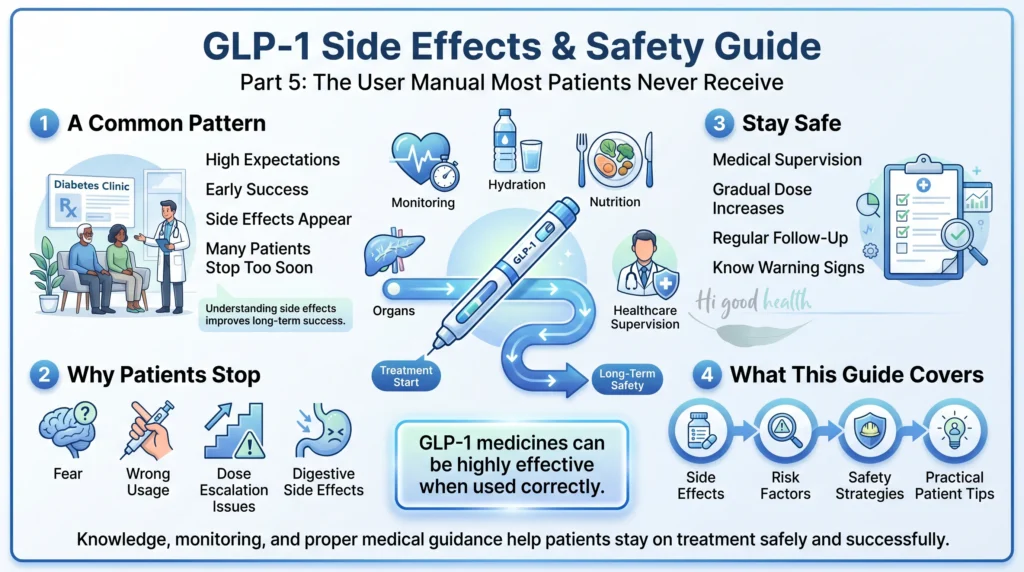
In diabetes clinics across Delhi, Mumbai, and smaller cities, the same pattern keeps appearing: patients feel excited about GLP-1 medicines for weight loss and sugar control, start them with high hopes, then stop within weeks because of side effects, fear, or wrong use. This guide is meant to change that story for you and your family.
This is Part 5 of our GLP-1 series for India, and it focuses only on GLP-1 side effects, the real risks, and smart ways to stay safe as an Indian patient. Think of it as the practical user manual you never got with the pen.
At a glance: are GLP-1 injections safe?
For most people who genuinely need them, GLP-1 medicines like Ozempic, Wegovy, and Mounjaro are considered reasonably safe when a doctor supervises the dose. The most common GLP-1 side effects are nausea, vomiting, constipation, and diarrhoea, and they usually settle after the first two to three months. Less common concerns include gallstones, a small rise in pancreatitis risk, semaglutide muscle loss during rapid weight loss, and cosmetic effects such as hair loss and facial volume loss (sometimes called Ozempic face). Serious problems are mostly linked to unsupervised use, buying the drug without a prescription, or pushing the dose up too fast. If you have a history of pancreatitis, gallstones, thyroid cancer, or a very low BMI, ask your doctor whether these medicines are safe for you before starting.
Why GLP-1 side effects can feel different for Indian patients
Most large GLP-1 trials were run in Western countries, although newer studies increasingly include Asian and Indian participants. But Indian bodies, diets, and health patterns are different. Indians develop diabetes, fatty liver, and heart disease at a lower BMI and often carry more fat around the belly with less muscle (the thin-fat phenotype). This means:
- Even small weight loss or poor eating for a few weeks can reduce muscle and strength.
- Many Indians start GLP-1s for cosmetic weight loss at a normal or near-normal BMI, so they may have less reserve to tolerate nausea, vomiting, or reduced calorie intake.
- Hot climate, dehydration risk, prolonged fasting patterns, and irregular meal timing may worsen gastrointestinal side effects in Indian settings.
Global data shows that nausea, vomiting, diarrhoea, and constipation are the most common GLP-1 side effects, affecting a large proportion of users [1][4]. But how severely you feel them, and how dangerous they become, depends a lot on muscle mass, hydration, heat, and diet, which are very Indian-specific issues.
Understanding the basic mechanism of how these drugs slow digestion can help you manage your expectations during the first few weeks of treatment.
The thin-fat Indian body: hidden risk behind side effects
Muscle loss (sarcopenia) and weakness
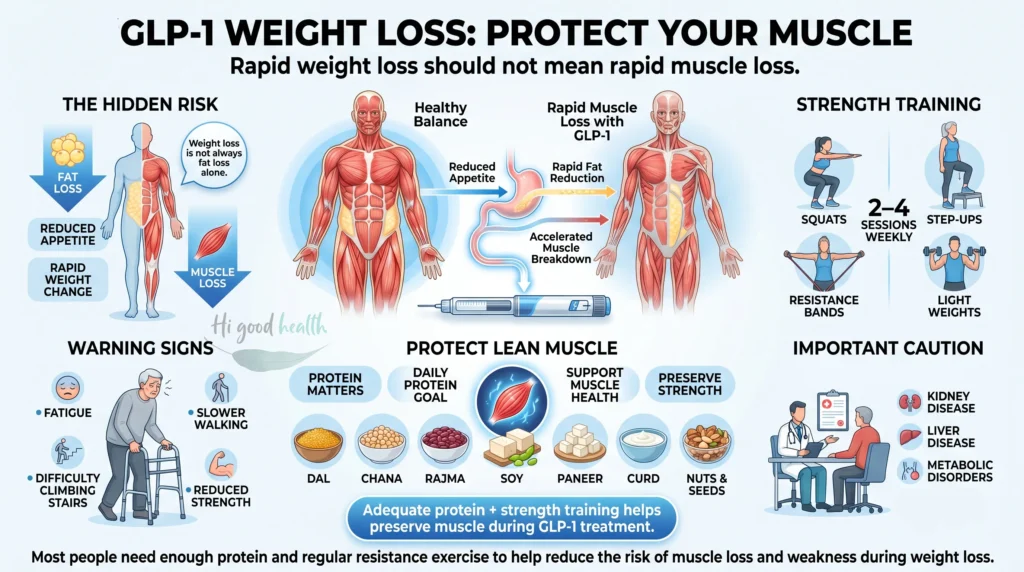
GLP-1 drugs reduce appetite and slow gastric emptying. This supports weight loss, but if you are not eating enough protein and your activity drops, you can lose lean body mass, or muscle, along with fat during rapid weight loss. Semaglutide muscle loss and similar effects with other GLP-1s are more about the speed of weight loss and low protein than the drug itself.
In older Indians, this can show up as fatigue and reduced physical function, such as slower walking or difficulty climbing stairs and getting up from a chair.
Some studies and clinical experience suggest that older people on GLP-1s need careful attention to muscle mass and protein intake to avoid functional decline.
Practical safeguards (for all adults, not just the elderly):
- Aim for around 1.2 g of protein per kg of body weight daily from sources like dals, chana, rajma, soy, paneer, curd, milk, sprouts, nuts, and seeds.
- Include strength training 2 to 4 times per week. Simple squats, step-ups, resistance bands, or light weights can help preserve muscle.
- People with advanced kidney disease, severe liver disease, certain metabolic disorders, or severe gout should not increase protein intake without medical advice.
- Most Indians need adequate, not excessive, protein during GLP-1 treatment to help prevent muscle loss and weakness.
Normal-BMI Indians using GLP-1 for cosmetic weight loss
Urban Indians with a BMI of 21 to 22 kg/m² who take GLP-1s purely to look thinner often tolerate side effects poorly because they have limited metabolic and nutritional reserve. These medicines do produce real weight loss even in people without diabetes [8], which is exactly why casual, unsupervised use has become so common.
They may:
- Feel washed out with even mild nausea
- Drop food intake too much
- Stop the medicine early or use it in unsafe ways
For this group, careful selection, slower dose increases, and strong nutrition planning matter far more than taking the strongest shot to get thin fast. The risk-benefit balance may be less favourable for people near a normal BMI than for those who are clearly obese.
Gastrointestinal (stomach and gut) side effects: the main hurdle
Across multiple studies, GI problems are the most common GLP-1 side effects: nausea, vomiting, diarrhoea, and constipation [4]. An observational Indian study in GLP-1 users reported that about 4 in 10 people experienced GI side effects, with nausea being the most common, followed by vomiting, diarrhoea, and constipation.
Rarely, severe constipation or intestinal slowing (ileus or bowel obstruction) can occur. Persistent abdominal swelling, an inability to pass stools or gas, or severe pain needs urgent medical review.
Why Indians may feel it more: the spice and oil combo
GLP-1s slow gastric emptying. When you combine this with:
- Spicy curries
- Deep-fried snacks
- Heavy festival meals
you increase the risk of gastritis, reflux, fullness, and indigestion. Many patients in Indian clinics report that they tolerate GLP-1s much better once they change their diet style, not just the dose.
Clinically, GI problems usually appear in the first 2 to 6 weeks and often improve after 2 to 3 months if doses are increased gradually.
Practical strategies to reduce GI side effects
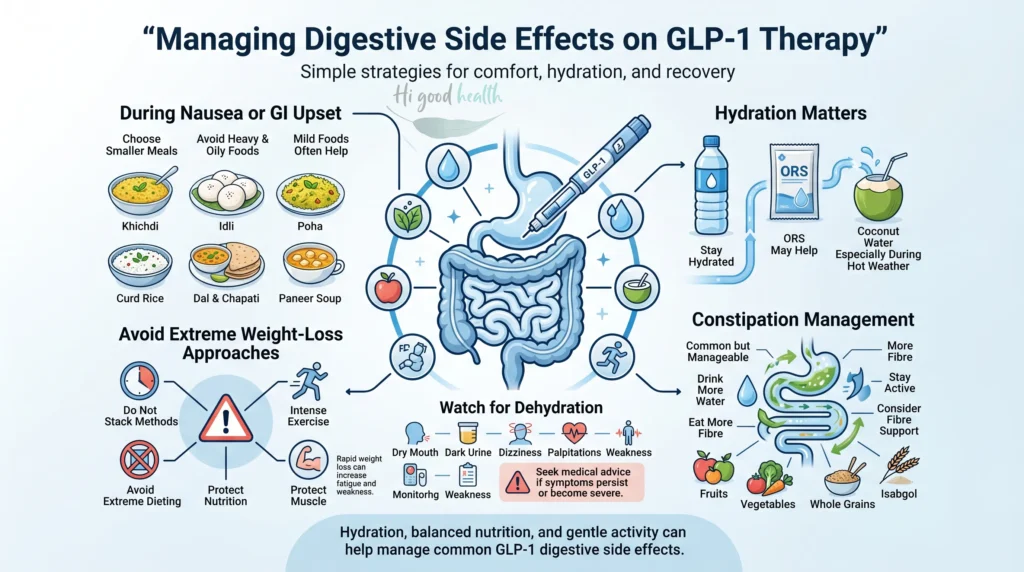
Simple habits make a big difference here, and they line up with what clinical reviews recommend for managing GLP-1 side effects [2]. During a bout of GI upset, eat smaller but balanced meals, since heavy, oily, or very spicy food can worsen nausea.
Better-tolerated options for some patients include moong dal khichdi, dalia, idli, poha, curd rice, soups with paneer or sprouts, and soft chapati with dal and sabzi.
Avoid stacking several aggressive weight-loss methods at once. Combining prolonged fasting, severe calorie restriction, intense exercise, and GLP-1 therapy at the same time can raise the risk of fatigue, dizziness, dehydration, poor nutrition, and lean muscle loss.
Stay well hydrated. Oral rehydration solution or coconut water can help offset diarrhoea-related losses, especially in Indian summers.
Vomiting or diarrhoea can lead to dehydration, particularly in hot weather. Watch for these symptoms:
- Dry mouth
- Dark urine
- Dizziness
- Palpitations
- Marked weakness
Seek medical advice if symptoms are persistent or severe.
To reduce nausea, many patients find relief by switching to lighter regional Indian meals; see our list of GLP-1-friendly food adjustments for every state.
Constipation: common but manageable
Constipation is frequently reported with GLP-1 therapy and may worsen with:
- Low fibre intake
- Reduced food intake
- Inadequate hydration
- A sedentary lifestyle
Helpful measures may include:
- Adequate water intake
- Fibre-rich fruits and vegetables
- Walking or light physical activity
- Isabgol or fibre supplementation if medically appropriate
To reduce nausea, many patients find relief by switching to lighter regional Indian meals and smaller portions during the first few weeks.
Hair loss and Ozempic face: the cosmetic side effects
Beyond the gut, two cosmetic GLP-1 side effects come up again and again in Indian WhatsApp groups: hair fall and a hollow, aged look in the face. It helps to know what is really going on.
Does Wegovy, Mounjaro, or Ozempic cause hair loss?
Hair thinning has been reported in weight-management trials of semaglutide [10] and is discussed with tirzepatide too. In most cases, wegovy and hair loss, mounjaro and hair loss, or tirzepatide hair loss are not caused directly by the drug. The more likely reason is telogen effluvium, a temporary shedding that follows rapid weight loss, low protein intake, and nutritional gaps. It usually settles on its own once weight stabilises and nutrition improves. Steady weight loss, enough protein, and adequate iron, vitamin D, and vitamin B12 (all commonly low in Indian diets) give hair the best chance to recover.
What is Ozempic face?
Ozempic face is the nickname for the loss of facial volume and mild sagging that can follow fast weight loss on any GLP-1, not just Ozempic. The fat pads that keep cheeks looking full shrink along with weight elsewhere, which can make the face look older or more tired. Losing weight more gradually, protecting muscle with protein and strength work, and staying well hydrated all reduce how noticeable this becomes.
Hypoglycaemia: when combinations make GLP-1s dangerous
On their own, GLP-1 receptor agonists have a low intrinsic risk of causing hypoglycaemia because they work in a glucose-dependent way. But in Indian practice, they are often added on top of:
- Sulfonylureas (like glimepiride, gliclazide)
- Or insulin
If the doses of these older drugs are not reduced when appetite drops, the combination can lead to dangerous blood sugar dips in patients who are now eating much less.
Signs you must never ignore:
- Sweating, tremors, palpitations
- Sudden intense hunger
- Confusion or drowsiness
Any such symptoms need immediate sugar intake and urgent contact with your doctor.
The unregulated market problem: pharmacy tourism and social media hype
In some Indian cities, GLP-1 drugs are being sold without a proper prescription, shared between friends, or sourced through informal channels, driven largely by weight-loss trends. This is risky for several reasons:
- Wrong patient selection, such as people with pancreatitis, gallstones, or severe kidney disease using them without screening
- Rapid, unsupervised dose escalation
- No monitoring of kidney, liver, pancreatic, or eye status
Complications seen with unsupervised use include pancreatitis, dehydration-induced acute kidney injury (especially in hot Indian summers with vomiting or diarrhoea), and even diabetic ketoacidosis in susceptible individuals.
Long-term and serious risks: what does science say?
Gallbladder and biliary disease
Several meta-analyses have found that GLP-1 agonists carry a modest increase in the risk of gallbladder or biliary disease (such as gallstones and cholecystitis), especially at higher doses, over longer durations, and when used mainly for weight loss [3]. Indians already have a higher tendency toward gallstones, so clinicians here are especially cautious, particularly in people with previous gallbladder problems.
Pancreatitis and pancreatic cancer
Early data raised concerns about pancreatitis risk. Newer systematic reviews and meta-analyses suggest a slight increase in pancreatitis overall, although this may not be significant once background medications are considered, and no clear increase in pancreatic cancer has been consistently shown. Interestingly, a recent large database study presented at ENDO 2024 suggested that GLP-1s may actually reduce the risk of recurrent pancreatitis in people with obesity and type 2 diabetes compared with some other diabetes drugs. This is an evolving area, and expert groups recommend individual risk assessment rather than blanket fear.
Thyroid C-cell tumours
In animal models, some GLP-1 drugs have been linked to C-cell tumours, but similar findings have not been clearly shown in humans so far. Because of this theoretical risk, they are generally avoided in people with a personal or family history of medullary thyroid carcinoma or MEN2.
Diabetic retinopathy worsening
Rapid improvements in blood glucose with GLP-1s can be linked to a temporary worsening of diabetic retinopathy in those with pre-existing advanced eye disease. That is why many guidelines suggest an eye check and careful monitoring if someone already has significant diabetic retinopathy.
Who should be extra careful, or avoid GLP-1s, unless closely monitored?
Reputable bodies such as the Endocrine Society and the American Diabetes Association stress careful patient selection and monitoring [5]. Extra caution is advised in people with:
- A history of pancreatitis
- Severe acidity or gastroparesis (very slow stomach emptying)
- Known gallstones or gallbladder disease
- Advanced kidney disease
- Significant diabetic eye disease (retinopathy)
- A very low BMI or a history of eating disorders
- Pregnancy, plans to become pregnant, or breastfeeding, since some GLP-1 medicines stay in the body for several weeks after stopping
- Significant depression, who should be monitored carefully
- Upcoming surgery, endoscopy, or a procedure needing anaesthesia or sedation, since delayed stomach emptying can raise aspiration risk and temporary stopping may be advised
How GLP-1 side effects usually progress: a typical timeline
Every person is different, but clinical practice and studies suggest a rough pattern [6]:
- First 2 to 6 weeks: nausea, early fullness, and constipation are most common. Some people also get vomiting or loose motions, especially if diet is not adjusted.
- Around 2 to 3 months: symptoms often improve a lot if dose increases have been slow.
- When doses are pushed too fast: side effects spike, leading to dropout, fear, and social media horror stories.
- Over time with rapid weight loss: facial volume loss (Ozempic face) or loose skin can appear, especially in people with a lower starting BMI.
Smart management strategies tailored to Indian life
Managing GLP-1 side effects is mostly about small, steady habits rather than any single trick. The four areas below, diet, hydration, muscle, and injection care, make the biggest difference for Indian patients.
Diet tweaks that actually work
To reduce nausea, GERD, and indigestion while on GLP-1s:
- Prefer smaller, lighter meals instead of heavy thalis or buffets
- Shift the plate so at least one-third to half comes from protein sources like dals, chana, rajma, soy products, paneer, curd, milk, sprouts, nuts, and seeds
- Choose steamed, grilled, sautéed, or home-cooked dishes over deep-fried snacks and heavy gravies
- Limit very spicy, oily street food, especially in the first months
For diarrhoea or loose motions, simple curd, buttermilk, and homemade ORS can help support gut health and hydration.
Hydration and Indian summers
Diarrhoea, vomiting, or reduced intake on GLP-1s can quickly lead to dehydration and kidney stress in hot weather. Plain water, ORS, lime water (without extra sugar for people with diabetes), and coconut water in moderation can help maintain electrolytes, especially when temperatures soar.
Protecting muscle and metabolism
Muscle is your metabolic engine. Protect it by:
- Getting daily protein from a variety of plant and dairy sources
- Adding 2 to 4 days a week of strength work (body-weight, resistance bands, or weights)
- Avoiding very low-calorie crash dieting on top of GLP-1s
Can a fitness band or smart ring tell you if you are losing muscle?
Short answer: no — and it is worth knowing why, because many patients now assume otherwise.
No consumer wearable measures muscle mass. Not a smart ring, not a fitness band, not a smartwatch. None of them can separate fat loss from lean-tissue loss. To actually measure body composition, the reference method is dual energy X ray absorptiometry (DEXA). Multi-frequency bioelectrical impedance (BIA) assessment, available at larger diagnostic centres in Indian metro, can also provide useful estimates when performed under standardised conditions, although it is less accurate than DEXA
What a wearable can do is track the behaviour that protects muscle, and flag changes worth mentioning to your doctor.
A 12-week observational study of 66 people starting GLP-1 medications, monitored entirely by consumer wearables, found something most patients do not expect. Participants lost an average of 10% of body weight — and their resting heart rate rose by about 3 beats per minute, while heart rate variability fell by about 6 milliseconds.
Losing weight usually lowers resting heart rate. Here it went up, because GLP-1 medicines have a modest heart-rate-raising effect of their own that outweighs the benefit of the weight loss in the early months.
The useful part of the same study: participants who were more physically active showed a smaller rise. Movement offsets it.
So if you already own a fitness band, use it for what it does well:
- Track whether you are actually doing the strength work described above. This is the part most often skipped. Protein alone does not protect muscle — the training is what tells your body to keep it.
- Watch resting heart rate as a trend over weeks, not as a daily number. A steady climb or a marked decline in exercise performance, is worth mentioning at your next appointment, as your nutrition, exercise programme, or medication regimen may need adjustment.
- Monitor sleep duration and quality, as sleep quality may worsen during dose escalation and can affect recovery and overall wellbeing.
- Do not treat daily recovery scores as medical measurements. They are not, and anxiety about them is a recognised problem in its own right.
And take a baseline if you can. Two weeks of resting heart rate and sleep data before your first dose makes everything afterwards far easier to interpret.
Remember, wearables are excellent for monitoring lifestyle habits, but they cannot tell you how much muscle you are gaining or losing. Regular resistance exercise, adequate protein intake, and follow-up with your healthcare provider remain the best ways to protect muscle while achieving healthy weight loss on GLP-1 therapy.
Injection technique and monitoring
For injectable GLP-1s:
- Rotate injection sites (abdomen, thighs) to reduce lumps and irritation.
- Do not reuse needles excessively.
Before and during therapy, many clinicians in India increasingly recommend:
- Baseline and periodic kidney and liver tests
- Pancreatic enzymes where indicated
- An eye examination in diabetic patients
- An abdominal ultrasound in those at higher gallbladder risk
What top experts and recent studies are saying
- Reviews in international journals stress that GI side effects are common but usually manageable, and that long-term benefits in diabetes and heart disease are substantial when the drugs are used correctly. Large trials of dulaglutide, for example, showed cardiovascular benefit in type 2 diabetes [7].
- Meta-analyses in leading journals highlight a modest increase in gallbladder disease risk, especially with higher doses and for weight loss.
- A 2025 meta-analysis suggested a slightly increased pancreatitis risk overall, but no strong evidence for increased pancreatic cancer, with some nuance around background medications.
- Tirzepatide (Mounjaro) has produced some of the largest weight-loss results seen with this class in obesity trials [9], though GI side effects can be strong early on.
- Newer data presented at ENDO 2024 surprisingly suggests that GLP-1s may reduce the recurrence of acute pancreatitis compared with some other diabetes drugs in certain high-risk groups.
Root cause of most GLP-1 problems in India: not the drug alone
When you look carefully, most GLP-1 horror stories in India trace back to a few root causes:
- Wrong choice of patient (very low BMI, eating disorders, high-risk medical history)
- Buying and using drugs without a proper prescription or follow-up
- Rapid dose escalation to chase quick weight loss
- Not adjusting older diabetes medicines like sulfonylureas and insulin
- No guidance on diet, hydration, and muscle protection
Fixing these root issues can sharply reduce GLP-1 side effects and make these medicines a safer, more useful ally in India’s diabetes and obesity epidemic.
Summary of common GLP-1 medicines and their side effects
Medicine | Common Side Effects | Serious / Rare Side Effects | Important Notes for Indians |
|---|---|---|---|
Semaglutide (Ozempic, Rybelsus, Wegovy) | Nausea, vomiting, constipation, diarrhoea, acidity, loss of appetite | Pancreatitis, gallstones, severe dehydration, kidney issues, worsening diabetic retinopathy | Indians may get more gastric side effects due to spicy and oily diets. Start low and go slow. |
Tirzepatide (Mounjaro, Zepbound) | Strong nausea, vomiting, constipation, burping, fatigue | Pancreatitis, severe low sugar (if used with insulin or sulfonylureas), gallstones | Often gives maximum weight loss, but GI side effects can be stronger initially in some Indian patients. |
Liraglutide (Saxenda, Victoza) | Nausea, headache, bloating, stomach pain, diarrhoea | Pancreatitis, gallbladder disease, increased heart rate, kidney injury | Daily injection; side effects often improve after 2 to 4 weeks. Useful in obesity with diabetes. |
Dulaglutide (Trulicity) | Nausea, diarrhoea, stomach discomfort, reduced appetite | Pancreatitis, allergic reactions, gallbladder problems | Once-weekly injection; often a little easier to tolerate than semaglutide for some people. |
Key takeaways
- The most common GLP-1 side effects are nausea, vomiting, constipation, and diarrhoea, and they usually ease after 2 to 3 months of slow dose increases.
- Semaglutide muscle loss and similar effects come mainly from rapid weight loss and low protein. Enough protein plus strength training protects muscle.
- Hair loss with Wegovy, Mounjaro, or tirzepatide is usually temporary telogen effluvium from fast weight loss, not the drug itself, and often recovers.
- Ozempic face (facial volume loss) is a side effect of rapid weight loss on any GLP-1 and eases with slower, steadier loss.
- Mounjaro, Wegovy, and other GLP-1s should be avoided or used only under close supervision by people with a history of pancreatitis, gallstones, medullary thyroid cancer, very low BMI, or during pregnancy.
- Most GLP-1 horror stories in India come from unsupervised use, not the medicine itself. A doctor, a plan, and good nutrition make them far safer.
FAQ: real questions Indians are asking
If you prefer a more visual version, check out our YouTube video here:
Are GLP-1 injections safe for long-term use?
Large clinical trials running for several years show that GLP-1s not only improve sugar and weight but also reduce heart and kidney risks in many people with type 2 diabetes, with an acceptable safety profile when monitored. However, gallbladder problems and GI issues remain important considerations, so long-term use should always be supervised.
Can I use them only for weight loss if I do not have diabetes?
Some GLP-1s are approved internationally purely for obesity treatment, and they help significantly with weight loss. But in India, access, regulation, cost, and proper evaluation are crucial. Using them casually for a few kilos without proper assessment and follow-up can be risky.
What happens if I stop the injection?
Many people regain some or all of the lost weight once GLP-1s are stopped, especially if diet and activity have not changed. This rebound is not a side effect of the drug but a natural result of going back to old habits without the appetite-controlling support of the medicine.
Do GLP-1 injections like Wegovy and Mounjaro cause hair loss?
Wegovy and hair loss, or mounjaro and tirzepatide hair loss, are usually not caused directly by the drug. The more common reason is telogen effluvium, a temporary shedding that follows rapid weight loss and low protein or nutrient intake. It generally recovers once weight stabilises and nutrition improves, so steady weight loss, enough protein, and adequate iron, vitamin D, and vitamin B12 help the most.
Can semaglutide cause muscle loss, and how do I protect my muscles?
Semaglutide muscle loss usually reflects rapid weight loss with too little protein rather than a direct drug effect. You can protect muscle by getting around 1.2 g of protein per kg of body weight from dals, paneer, curd, soy, and sprouts, and by doing strength work 2 to 4 days a week. People with kidney or liver disease should ask their doctor before raising protein.
What is Ozempic face and can I prevent it?
Ozempic face is the nickname for facial volume loss and mild sagging that can follow fast weight loss on any GLP-1, not only Ozempic. The facial fat pads shrink along with weight elsewhere. Losing weight more gradually, keeping up protein and strength training, and staying well hydrated all reduce how noticeable it becomes.
Who should not take Mounjaro or other GLP-1 medicines?
Mounjaro and other GLP-1s should be avoided or used only under close supervision by people with a history of pancreatitis, gallstones, medullary thyroid cancer or MEN2, severe kidney disease, a very low BMI or eating disorder, and during pregnancy or breastfeeding. Anyone facing surgery or endoscopy should tell their doctor, as the dose may need to be paused.
How do I manage nausea and other early GLP-1 side effects?
Ozempic side effects and other early GLP-1 side effects like nausea usually ease within a few weeks. Eat smaller, lighter meals, go easy on very spicy and oily food, sip water or ORS through the day, and let your doctor raise the dose slowly. Tell your doctor if vomiting, diarrhoea, or severe pain does not settle.
External references for further reading
All reference valid and accessible on July 2026
- Nauck MA, Meier JJ. Adverse effects of GLP-1 receptor agonists. Diabetes Obes Metab. 2019;21(Suppl 1):72-81.
- Wharton S, et al. Managing gastrointestinal side effects of GLP-1 receptor agonists in clinical practice. Diabetes Obes Metab. 2022.
- Association of GLP-1 Receptor Agonist Use With Risk of Gallbladder and Biliary Diseases. JAMA Intern Med.
- GLP-1 agonists and gastrointestinal adverse events. JAMA.
- Endocrine Society and ADA resources on GLP-1 safety and clinical use.
- Harvard Health Publishing: GLP-1 diabetes and weight-loss drug side effects.
- Gerstein HC, et al. Dulaglutide and cardiovascular outcomes in type 2 diabetes (REWIND): a double-blind, randomised placebo-controlled trial. Lancet. 2019;394:121-130.
- Pi-Sunyer X, et al. A Randomized, Controlled Trial of 3.0 mg of Liraglutide in Weight Management. N Engl J Med. 2015;373:11-22.
- Jastreboff AM, et al. Tirzepatide Once Weekly for the Treatment of Obesity. N Engl J Med. 2022;387:205-216.
- Wilding JPH, et al. Once-Weekly Semaglutide in Adults with Overweight or Obesity. N Engl J Med. 2021;384:989-1002.
- Heart and health behaviour responses to GLP-1 receptor agonists: a 12-week study using wearable technology and causal inference. American Journal of Physiology — Heart and Circulatory Physiology,
- WHOOP. Understanding GLP-1 Therapies Through WHOOP.
Glossary of common terms
- GLP-1 RA (Glucagon-Like Peptide-1 Receptor Agonist): A class of medicines that mimic the GLP-1 hormone to improve insulin secretion, reduce appetite, and slow stomach emptying.
- Sarcopenia: Loss of muscle mass and strength, often seen with ageing or poor nutrition.
- BMI (Body Mass Index): A simple ratio of weight to height used to classify underweight, normal, overweight, or obesity.
- Gastroparesis: A condition where the stomach empties more slowly than normal.
- Pancreatitis: Inflammation of the pancreas; can be serious if not treated promptly.
- Diabetic Retinopathy: Damage to the retina (back of the eye) due to long-standing diabetes.
- Telogen effluvium: Temporary hair shedding that can follow rapid weight loss, illness, or nutritional stress.
- Gallbladder Disease: Conditions like gallstones or inflammation of the gallbladder.
Disclaimer
This article is for general education only and is not a substitute for personal medical advice, diagnosis, or treatment. Medicines like GLP-1 receptor agonists should only be started, stopped, or adjusted under the guidance of a qualified healthcare professional who knows your full medical history and current medications. Never change your prescription based solely on information from the internet, including this article.
HiGood Health aims to provide clean, credible, and easy-to-understand health information to support better conversations with your own doctor, not to replace them. Please consult your doctor for decisions about your health.