Updated: 25 September 2026
Why spending thousands of crores on supplements isn’t solving our country’s hidden hunger crisis — and what actually works
At a glance
The minerals in food arrive packaged with the enzymes, fibre and cofactors your body needs to absorb them, which is the main reason a multivitamin cannot stand in for a mineral-rich diet. The gap is measurable in India: ICAR found 51.2% of soil samples deficient in zinc, and NFHS-5 puts anaemia at roughly 57% of women aged 15–49.
The practical answer is food first. Iron from ragi, bajra and soaked legumes; zinc from pumpkin seeds and chana; magnesium from almonds and leafy greens; iodine from iodised salt; and water that has not had every mineral stripped out of it. Soaking, sprouting and fermenting raise how much of those minerals in food you actually absorb.
Deficiency symptoms overlap with many other conditions, so confirm with a doctor and a blood test rather than self-diagnosing. Anyone pregnant, breastfeeding, on medication or managing thyroid disease should take advice before changing diet or starting supplements.
The ₹2,500 Pill That’s Lying to You
You take your multivitamin every morning. The label promises “complete nutrition” with 100% of your daily values.
For a deeper look at where these labels fall short, check our detailed blog (When Vitamins Go Wrong: The Most Commonly Misdosed Nutrients and How to Stay Safe)
Yet by 3 PM, you’re exhausted. Brain fog rolls in. You catch every cold. Your hair feels thin, nails chip easily.
Here’s the key issue:
Multivitamins are designed to supplement, not replace, a balanced diet — and they do not cover all nutritional needs. The minerals in food are absorbed differently from the isolated versions pressed into a tablet, and that difference is the whole story.
Our ancestors didn’t need a cabinet full of bottles because their food did the heavy lifting. By the time a whole food is boxed, bagged, or preserved, many of its natural mineral co-factors are stripped away.
Many multivitamins use synthetic mineral isolates that the body cannot easily recognise or absorb without the natural enzymes and cofactors found in whole foods.
The Hidden Hunger Crisis No One’s Talking About
Across the country, thousands of crores are spent on supplements every year, yet a large section of the population remains deficient in multiple micronutrients. The latest NFHS-5 and ICMR-NIN data reveal a striking Mineral Gap:
- Anaemia, Vitamin D deficiency, and iodine insufficiency are among the most common nutritional gaps.
- Vitamin D: Deficiency is widespread — studies show over 70–80% of adults in urban areas have insufficient Vitamin D levels, with higher prevalence in those with limited outdoor exposure.
- Iodine: Iodine deficiency remains a concern in several regions, particularly affecting women of reproductive age and children, despite national salt iodisation programmes.
- Iron: NFHS-5 data shows anaemia affects approximately 57% of women aged 15–49 and 67% of children under 5 — one of the highest burdens globally.
Prof. Shashank R. Joshi, Padma Shri-awarded Endocrinologist and Consultant at Sir H.N. Reliance Foundation Hospital, Mumbai, has consistently highlighted that India faces a “dual nutrition challenge” — undernutrition and micronutrient deficiencies coexisting alongside rising obesity and lifestyle diseases.
As he notes, addressing chronic disease in India requires going beyond calories to examine what’s truly missing in the diet.
Your grandmother’s carrots contained 40% more magnesium than today’s. Her spinach had twice the iron. And she never took a supplement.
How Our Ancestors Got 4X More Minerals Without Pills
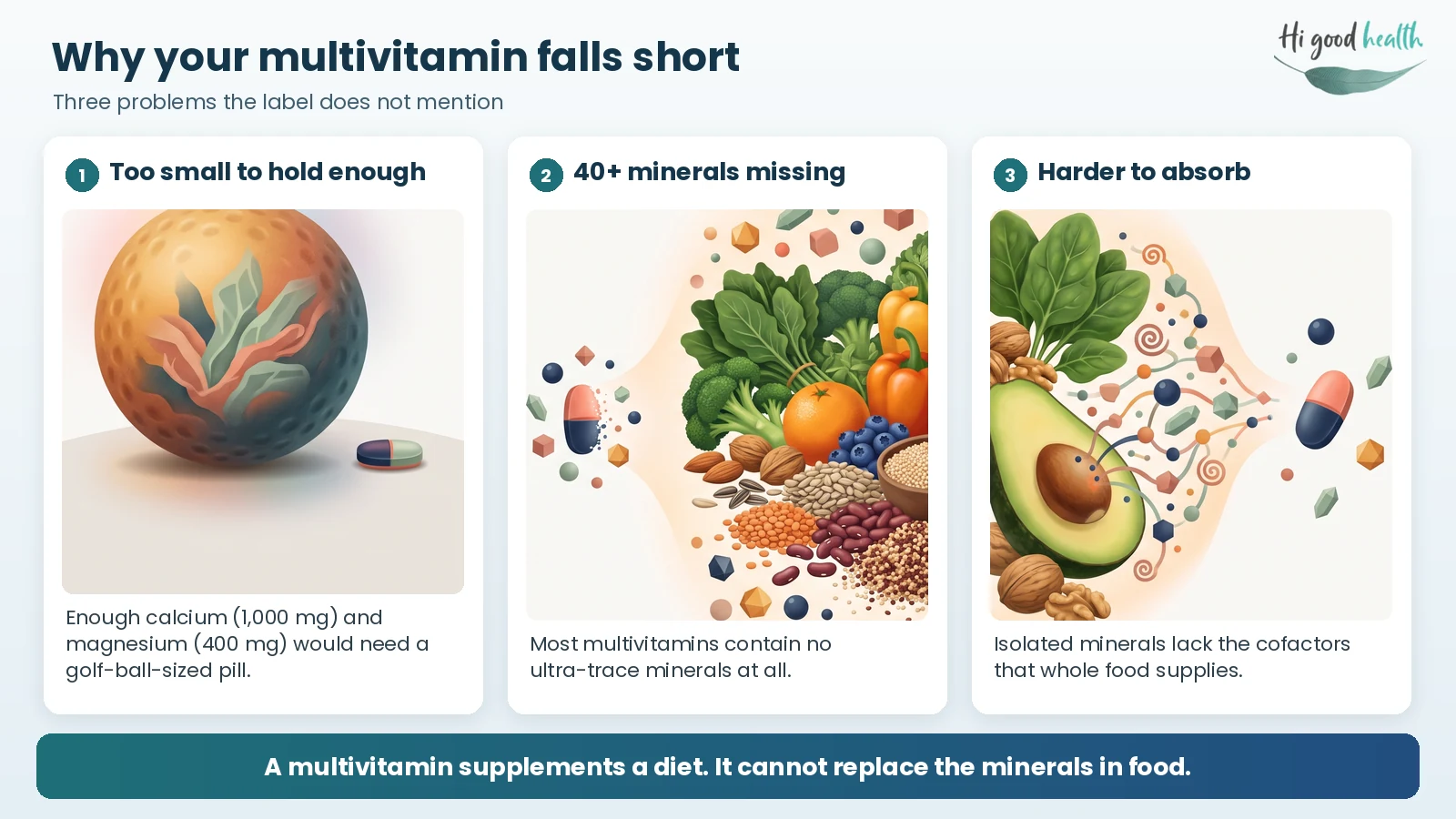
Modelled estimates put ancestral mineral intake at roughly 1.5 to 5 times modern levels — the researcher behind those estimates was careful to note this was “by no means megadoses” [7]. The minerals in food have not simply shrunk on their own — the water, the soil and the kitchen that once delivered them have all changed. Three key differences:
1. Mineral-Rich Water
They drank from springs and wells naturally containing calcium, magnesium, potassium, lithium, and boron. Every glass was a mineral supplement. Today? We filter it all out.
2. Living Soil, Not Dead Dirt
Agricultural soils across the subcontinent have lost significant mineral content over the past century.
ICAR (Indian Council of Agricultural Research) data from analysis of over 2.4 lakh soil samples across 615 districts found that 51.2% of soils are deficient in zinc and 44.7% in boron.
Industrial NPK fertilisers replace only 3 minerals — not the 60+ naturally present. Pesticides kill beneficial soil organisms. Modern crops were bred for yield, not nutrition. Result: produce today is measurably lower in protein, calcium, iron, and zinc compared to what our grandparents ate.
3. Traditional Food Preparation
Our traditional kitchens have long soaked, fermented, and sprouted grains and legumes — think idli-dosa batter, kanji, sprouts in chaat, and soaked rajma. These methods reduce phytates (mineral blockers) and increase mineral absorption by 30–50%. Modern convenience foods skip every step.
4. Nutrient Dilution
Emerging 2025 agricultural research suggests that breeding for high-yield crops and increased atmospheric CO₂ causes plants to grow faster but accumulate fewer minerals per gram of tissue, a phenomenon known as “The Great Dilution”.
Zinc showed the most significant drop, with protein and iron also decreasing across most species. [2]
Anthropologist Dr. Christina Warinner explains: “Our genes haven’t changed in 100,000 years, but our food system transformed in just 100 years. Our bodies haven’t adapted.”
Understanding the Mineral Spectrum: Major Minerals and Trace Minerals
Want to ensure your supplements match your dietary preferences? Click here: Which Vitamins Are Commonly Non-Vegetarian?
Your body operates on a three-tier mineral system:
Tier 1: Macro-Minerals (Calcium, magnesium, potassium)
Required by the body in amounts greater than 100 mg per day. They appear in multivitamins, but in token amounts, because a pill cannot physically hold an adequate dose — which leaves the minerals in food carrying most of the load.
Tier 2: Trace Minerals (Iron, zinc, selenium)
These are needed in much smaller amounts, typically less than 100 mg per day. Sometimes included, but synthetic forms absorb poorly.
Tier 3: Ultra-Trace Minerals (NEVER in multivitamins)
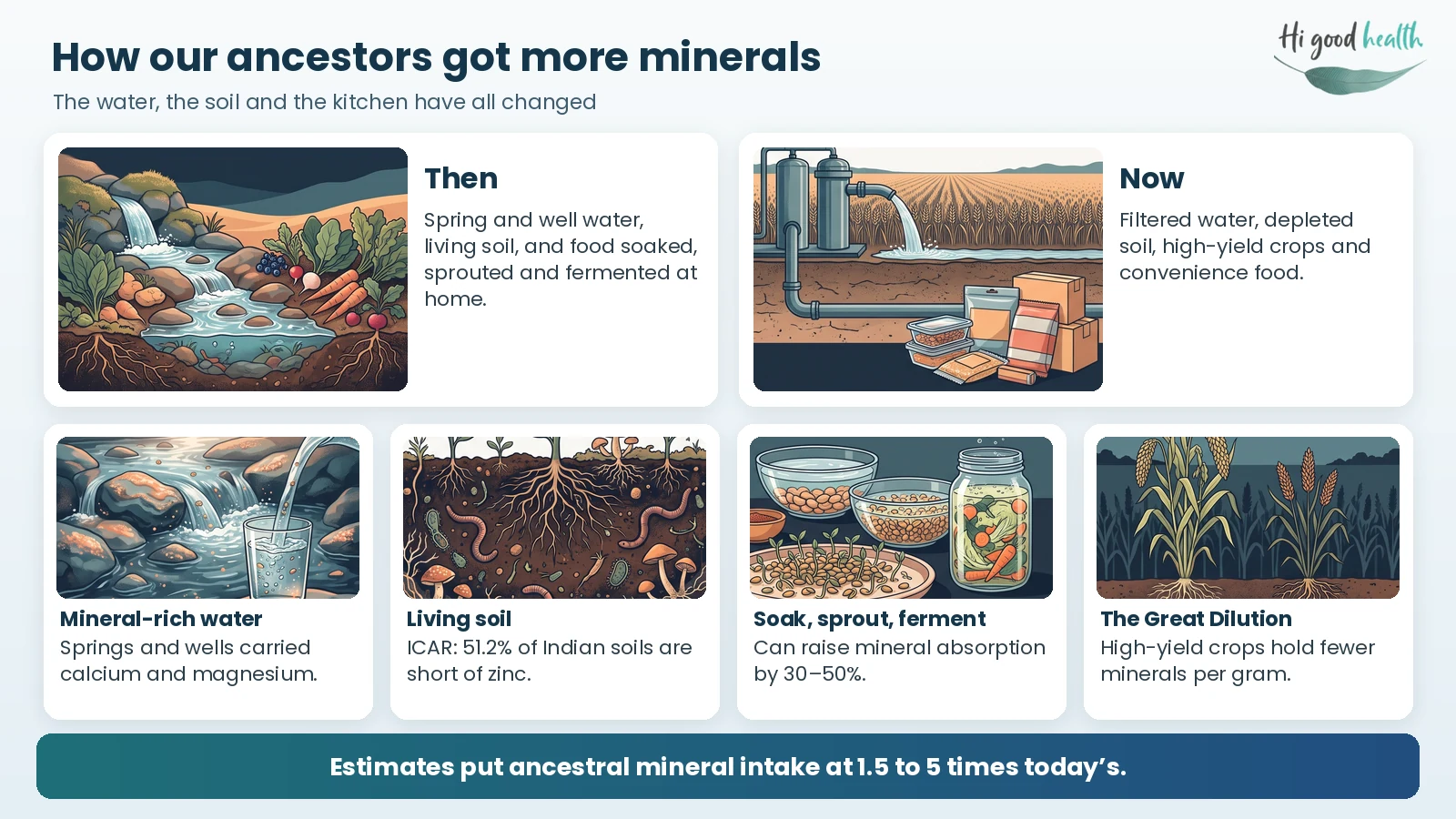
Elements needed in microgram amounts like Boron, silicon, vanadium, lithium, nickel.
These are elements used by the body in microgram amounts that, while lacking an official DRI (Dietary Reference Intake), are increasingly recognised for supporting complex enzymatic and hormonal functions.
Unlike processed foods that are stripped of nutrients, a varied diet of whole foods provides a natural spectrum of trace elements packaged with the cofactors needed for superior absorption.
The “Forgotten Five” Backed by Latest Science
Boron
- What it does: Bone health, hormone balance, brain function
- It is recognised as a supportive nutrient for bone and joint comfort, though it works best as part of a whole-food mineral complex rather than a high-dose isolate.
- Boron has no established RDA — NIH does not classify it as an essential nutrient, so there is no intake level to be “short” of. Typical adult intake is around 1 mg a day; the safe upper limit is 20 mg [8]. Munakka (dried grapes), almonds, legumes and leafy greens are good sources if you want more.
Silicon
- What it does: Collagen formation, bone strength, healthy skin/hair/nails
- Evidence is limited: one French cohort study (PAQUID) found higher dietary silica associated with lower dementia risk — but it measured silica in drinking water, not food, in a single observational study of 1,925 older adults, and the result was borderline; the study’s main purpose was investigating aluminium [3].
- There is no recognised silicon deficiency in humans — NIH’s position is that a biological role for silicon in human health has not yet been established.
Vanadium
- What it does: Acts as a trace element that may influence how the body processes carbohydrates.
- Dietary Target: You can easily meet your needs for this element by including mushrooms, shellfish, and black pepper in your weekly meals.
Lithium (trace amounts, not psychiatric doses)
- What it does: Mood regulation, neuroprotection, cognitive health
- An interesting signal, not an established benefit: several ecological studies find lower suicide rates in areas with more lithium in the water, but the pooled estimates vary widely between studies, most compare whole populations rather than individuals, and the one study that looked at individuals rather than areas found no association [4]. The studies have not been adjusted for confounders, so this cannot be read as lithium causing the reduction.
Nickel
- What it does: Enzyme cofactor, iron absorption support
- Often undiagnosed contributor to mineral imbalance
Why Your Multivitamin Cannot Replace the Minerals in Food
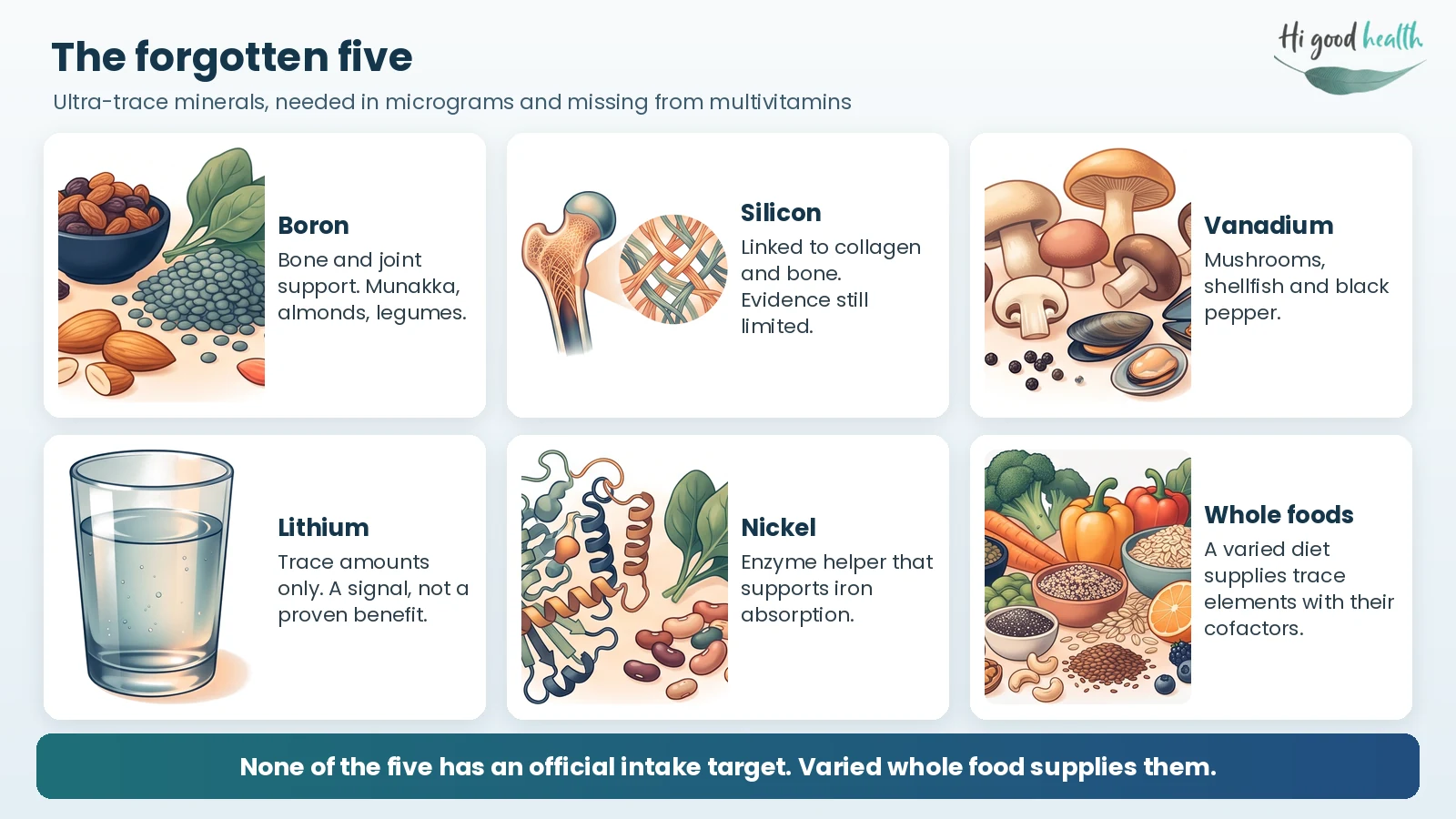
Three fundamental problems:
1. Size Constraints:
Adequate calcium (1,000 mg) + magnesium (400 mg) requires a golf ball-sized pill. Most multivitamins contain 10–20% of RDA.
2. Missing 40+ Minerals:
No ultra-trace minerals = massive gap.
3. Synthetic Forms Absorb Poorly:
Isolated minerals lack cofactors needed for absorption. Food-based minerals come with enzymes and phytochemicals enhancing bioavailability by 30–50%. Research shows food sources have 2–3X higher absorption than synthetic supplements.
In other words, the minerals in food are not simply the same compounds at a smaller dose — they arrive with the machinery needed to use them.
As Dr. Fuhrman often teaches, a vitamin pill can’t replace the complex synergy of whole foods
The Filtered Water Problem: How We Strip Minerals Daily
Reverse Osmosis and distillation remove 95–99% of minerals — including beneficial calcium, magnesium, potassium. This creates acidic, demineralised water (TDS below 50 ppm).
RO purifiers are now standard in most Indian homes — yet very few people realise what they are filtering out along with the contaminants. Drinking water was once a genuine contributor alongside the minerals in food, not an afterthought to them.
The WHO Warning
The World Health Organization’s report Health Risks from Drinking Demineralised Water found:
- Ionic Bioavailability — minerals in water are often easier for the body to absorb than those bound to complex fibres in food.
- Increases urinary loss of calcium, magnesium, potassium
- Long-term: Reduced bone density, osteoporosis risk, cardiovascular problems
- Critical: “Dietary minerals do NOT fully compensate for lack of minerals in water”
Symptoms: Headaches, muscle weakness, cramps during exercise, heart palpitations, chronic fatigue.
What the chapter actually concludes is narrower than the “Critical” line above suggests: demineralised water that has not been remineralised is not ideal drinking water and may not supply some beneficial nutrients. The risk it describes applies to people whose overall dietary mineral intake is already marginal, or to regions relying entirely on desalinated water — for someone on a normal, varied Indian diet, RO-filtered water on its own is not a health risk.
Better Solutions:
- Natural mineral water: TDS 150–300 ppm (Himalayan mineral water, Evion available at health stores and online)
- Remineralise filtered water: Add trace mineral drops (ConcenTrace available on Amazon India) — budget around ₹1,500–2,000 for 2–3 months’ supply
- Selective filtration: Carbon filters that remove contaminants but preserve minerals
Plant-Based Foods Delivering 15+ Minerals: Your Action Plan
Sea Vegetables (Most Complete Mineral Source)
Ocean water contains all 92 minerals. Seaweeds concentrate them — up to 36% mineral content. Few minerals in food arrive this densely packed.
- Dulse flakes: Iron, potassium, iodine, 60+ trace minerals — use as salt replacement. Start with ½ tsp daily.
- Spirulina: 57% protein, all amino acids, B vitamins, iron — ½–1 tsp in smoothies
- Nori sheets: High protein, B12, iron — snacks, salads, rolls
Where: Organic India, Amazon India, health food stores, select pharmacy chains like Apollo and MedPlus, and larger supermarkets in metro cities
Strategic Mineral Mix (Under ₹80/Day)
- 10 almonds (0.91 mg boron + 76 mg magnesium)
- 2 Brazil nuts (139% DRI selenium)
- 1 tbsp pumpkin seeds (2.2 mg zinc + 156 mg magnesium)
- 1 tbsp ground flax (boron + omega-3)
Critical: Soak nuts/seeds 4–8 hours to reduce phytates, improves bioavailability.
Legumes (Most Cost-Effective: ₹80–250/kg)
- Red kidney beans (rajma): 2.48 mg boron/cup (highest plant source)
- Lentils (masoor/moong dal): 1.47 mg boron/cup + 37% DRI iron
- Chickpeas (chhole): 1.05 mg boron/cup + 84% DRI manganese
Key: Soak dried legumes 12–24 hours before cooking.
Mineral-Dense Produce
- Avocados: 2.15 mg boron/cup + more potassium than bananas
- Dark leafy greens: Palak/kale (94 mg calcium/cup), spinach (157 mg magnesium/cup)
- Prunes (sukha alu bukhara): Excellent boron, proven bone benefits — eat 3–4 daily
- Mushrooms: Vanadium, selenium, copper, B vitamins
Absorption tip: Pair greens with vitamin C (nimbu juice) to help iron absorption. The often-quoted 300% figure comes from single-meal studies; across a whole day’s diet, the real-world gain is closer to about six percentage points of absorption [9] — still worth doing, just not a tripling.
Upgrade Your Salt
- Celtic Sea Salt
- Himalayan Pink Salt
- Saindhav Namak (rock salt) — widely available at grocery stores and Ayurvedic shops across India
While unrefined salts provide a spectrum of trace elements, they often lack the iodine found in fortified table salt. For the best approach, use unrefined salt for its mineral variety while ensuring you get iodine from natural sources like dulse flakes, seafood, or eggs.
Minerals in Food: The Best Vegetarian Sources in an Indian Diet
The list above works as a shopping plan. This section works the other way round — mineral by mineral, so you can see which of the minerals in food you are short of, and which everyday Indian ingredients carry it. Every item here is vegetarian unless marked otherwise.
Iron-Rich Vegetarian Foods You Already Cook With
Anaemia is the single largest mineral gap in the country, affecting about 57% of women aged 15–49 according to NFHS-5. The complication for vegetarians is that plant iron is non-haem iron, which the body absorbs far less readily than the iron in meat — typically a few per cent of what is on the plate.
Veg food rich in iron that most Indian kitchens already stock: ragi (finger millet), bajra, jowar, soaked and sprouted moong, chana, rajma, sesame seeds (til), garden cress seeds (halim or aliv), poppy seeds, dried apricots, anjeer and jaggery.
Among vegetables that contain iron, bathua, chaulai (amaranth leaves), drumstick leaves and methi outperform palak, which carries oxalates that block some of what it contains.
Two habits change the maths more than the food list does. Squeeze nimbu over cooked greens, because vitamin C converts non-haem iron into a form the gut can take up.
Cook in a cast-iron kadhai — acidic dishes such as tomato-based curries pick up measurable iron from the vessel. Skip tea and coffee for an hour on either side of a meal; the tannins bind iron.
If you have been told you are anaemic, treat that as a medical matter rather than a grocery one. Iron supplements can cause harm at the wrong dose and can mask other causes of low haemoglobin, so a doctor should set the plan.
Zinc-Rich Foods for Vegetarians
Zinc is the mineral India’s soil is shortest of — 51.2% of the samples ICAR analysed were deficient — and that shortfall carries through into the crops grown in it. Vegetarians face a second penalty on top: the phytates in dal, whole-wheat atta and unsoaked nuts bind zinc in the gut.
The strongest zinc rich foods for vegetarians are pumpkin seeds, hemp and sesame seeds, cashews, peanuts, chana and chhole, rajma, urad and moong dal, oats, whole-wheat atta, curd and paneer. ICMR-NIN’s 2024 guidelines note that a predominantly plant-based diet needs a meaningfully higher zinc intake than a mixed one to land at the same absorbed amount.
This is where traditional preparation earns its keep. Soaking dal overnight, sprouting moong, and fermenting batter for idli, dosa and dhokla all break down phytates — which is why the minerals in food prepared the old way go further than the same ingredients cooked straight from the packet.
Magnesium-Rich Foods in India
Magnesium sits behind more than 300 enzyme reactions, and it is one of the minerals most reliably lost when whole grains are refined. Wholemeal atta keeps it; maida does not.
Magnesium rich foods india-wide and easy to buy: almonds, cashews, peanuts, the pumpkin seeds already mentioned in the nut mix above, bajra, jowar, ragi, brown rice, kabuli chana, rajma, palak and other dark greens, bhindi, banana, anjeer, and unsweetened cocoa.
Among foods that have magnesium in useful amounts, seeds and millets are the two categories most Indian diets have quietly dropped over two generations.
Drinking water used to contribute here too. As the section on filtration explains, reverse osmosis strips magnesium out along with the contaminants, so the minerals in food have to cover a gap that hard water once filled.
Potassium, Iodine and Selenium: The Overlooked Three
Potassium rich foods are the easiest win on this page, because the same swap that raises potassium lowers sodium. Coconut water, banana, sweet potato, arbi, rajma, masoor, palak, curd, avocado, dried apricots and tomatoes all qualify.
Foods that contain potassium in quantity are worth prioritising for anyone watching blood pressure — though if you have kidney disease, potassium needs a doctor’s supervision rather than a self-directed increase.
Iodine rich foods matter more in India than most people assume, despite the national salt iodisation programme. Iodised salt remains the backbone of an iodine rich diet; curd, milk, paneer, eggs and sea vegetables add to it.
This is the trade-off behind the unrefined-salt advice above: rock salt and Himalayan salt bring trace minerals but almost no iodine, so one of the two has to come from somewhere else.
Selenium rich foods are largely a soil story — the selenium in any crop reflects the ground it grew in, and Indian soils vary widely. Brazil nuts are the outlier (two is a full day’s requirement, and more is genuinely too many), with wheat, rice, eggs, sunflower seeds, mushrooms and garlic making up the everyday supply.
Phosphorus, by contrast, is rarely short in an Indian diet: dal, milk, curd, paneer, nuts and whole grains supply it in abundance.
How to Detect Your Mineral Deficiencies
Method 1: Self-Observation — Common Deficiency Symptoms
Common symptoms:
- Chronic fatigue → Magnesium, iron, B vitamins
- Brain fog → Iron, zinc, B12, lithium
- Frequent infections → Zinc, selenium, vitamin D
- Muscle cramps → Magnesium, potassium, calcium
- Hair loss, brittle nails → Iron, zinc, silicon
- Joint pain → Calcium, magnesium, boron, silicon
- Mood swings, anxiety → Magnesium, lithium, B vitamins
Note: The symptoms listed are clinically associated with these deficiencies, but they are “non-specific”, meaning they can be caused by hundreds of different conditions.
Deficiency by Mineral: Magnesium, Zinc and Calcium
The list above reads symptom-first. Read it the other way and the three most common shortfalls have distinct signatures, and each points at a different set of minerals in food to prioritise.
Magnesium deficiency tends to show up as muscle cramps at night, a twitching eyelid, restless sleep, constipation and, at the more serious end, heart palpitations. It is also the hardest to confirm, because a standard blood test measures the roughly 1% of body magnesium that circulates rather than the bulk held in bone and muscle.
Heavy tea and coffee intake, alcohol, and long-term use of acid-reducing medicines all raise the risk.
Zinc deficiency symptoms are easier to spot: cuts and mouth ulcers that heal slowly, colds that arrive every few weeks, a dulled sense of taste or smell, thinning hair, and rough or acne-prone skin. Vegetarians on a high-phytate, low-seed diet are the group most likely to be quietly short.
The deficiency of calcium effects people notice most are late ones. Bone loses density over years without symptoms, which is why osteopenia and osteoporosis are usually found on a scan rather than felt; dental problems and, in severe cases, numbness or muscle spasms follow.
Calcium also depends on vitamin D to be absorbed at all, so a calcium-rich diet with no sun exposure only solves half the problem.
None of these signs is specific enough to act on alone. They overlap with thyroid disorders, anaemia, diabetes and ordinary sleep debt, so the sensible next step is a doctor and a test — not a supplement bought on the strength of a symptom list.
Method 2: Scientific Testing
Hair Tissue Mineral Analysis (HTMA)
- Measures 30+ minerals over 3–4 months
- Non-invasive (hair sample)
- Detects deficiencies AND toxic metals
- Best for chronic issues
- Cost: approximately ₹8,000–15,000
- Not a reliable test: split samples from the same person, sent to different commercial laboratories, have returned results differing more than tenfold, with conflicting supplement advice [10]. For a healthy person the more practical approach is to compare your diet against the recommended intake rather than buying a panel.
Blood Testing
- Current snapshot
- Blood tests are excellent for Iron (Ferritin), Vitamin D, and B12, but they are notoriously poor for Magnesium, as only 1% of the body’s magnesium is actually in the blood.
- Often covered by health insurance or available at affordable rates through government health schemes
Your 2-Week Mineral Makeover
Nothing here needs a new kitchen or a specialist shop. The plan simply reintroduces the minerals in food a few items at a time, so absorption improves gradually rather than all at once.
Week 1: Foundation
Days 1–2: Add 1 tbsp dulse flakes daily
Days 3–4: Create mineral nut mix; eat mid-morning
Days 5–7: Add 1 cup cooked legumes (soak overnight first)
Week 2: Expansion
Days 8–10: Add dark leafy greens + ½ avocado daily
Days 11–14: Add trace mineral drops to water; eat 3–4 prunes; try nori snacks
Bonus Actions
- Water upgrade: Remineralise filtered water or switch to mineral water
- Get tested: Schedule HTMA or blood work
- Start soaking: Soak nuts/seeds/grains overnight
The 30-Day Diversity Challenge
Eat 30 different plant foods in 30 days. Research shows people who eat 30+ plants weekly have dramatically healthier gut bacteria. Variety is also the simplest proxy for coverage: the wider the range of plants, the wider the spread of minerals in food you take in.
Sample Mineral-Rich Day
Breakfast: Green smoothie with spirulina (½ tsp) + ground flax (1 tbsp) + banana + almond butter + palak + chia seeds (1 tbsp)
Lunch: Dal (1 cup) + palak or methi salad with avocado (½), pumpkin seeds (1 tbsp), dulse flakes (½ tbsp), olive oil, nimbu
Dinner: Chickpea (chhole) curry with mushrooms + sautéed bathua or amaranth leaves + brown rice + roasted vegetables
Snacks: Mineral nut mix | 3–4 prunes | Nori snacks
Water: 8 glasses with trace mineral drops
This delivers 40+ minerals, roughly 1,700 calories, 60 g protein and 40 g fibre — all of it from the minerals in food rather than a tablet.
Latest Scientific Breakthroughs
Boron & Cognition: Older research found that about 3.25 mg/day was associated with better performance on some cognitive tests than 0.25 mg/day. NIH describes this evidence as limited rather than established — a hypothesis, not a proven benefit. [1]
Silicon & Alzheimer’s: The PAQUID cohort found an increase of 10 mg/day in dietary silica associated with an 11% lower dementia risk. Three qualifications: this measured silica in drinking water rather than dietary silicon, it was a single observational cohort of 1,925 older adults in France, the result was borderline, and the study’s main purpose was investigating aluminium, with which silica is entangled. [3]
Lithium & Public Health: A meta-analysis did produce a pooled figure equivalent to a 58% reduction in suicide for the general population. But thirteen of its fourteen studies compared whole populations rather than individuals, the studies disagreed with one another to an extreme degree, and the authors had not adjusted for confounders — an individual-level study found no association. This is an interesting signal, not an established protective effect. [4]
Minerals & Microbiome: Multiple 2024 studies show that trace minerals (zinc, selenium, copper, manganese) are essential for immune function, enzyme activity, and maintaining gut microbiota homeostasis. Research demonstrates that organic trace minerals enhance gut microbiota balance and immune function. [5]
India’s Soil Mineral Crisis: ICAR’s All India Coordinated Research Project analysed over 2.4 lakh soil samples across 615 districts and found widespread deficiency of zinc (51.2% of soils), boron (44.7%), and iron (19.2%) — directly linked to reduced mineral content in crops and human health outcomes. [6]
Expert Voices
ICMR-NIN Dietary Guidelines for Indians 2024: “Over 56% of India’s total disease burden is linked to unhealthy diets. Micronutrient deficiencies and anaemia prevail among children aged 1 to 19, alongside rising obesity rates, indicating the dual challenge of undernutrition and overnutrition.” — Indian Council of Medical Research & National Institute of Nutrition, 2024
Ishi Khosla, Clinical Nutritionist, Centre for Dietary Counselling, New Delhi: “Micronutrients are required for every basic metabolic function in our body. What we eat has a direct impact on how we feel, function, and heal. Food should not just fill us — it should nourish and protect us.”
Prof. Shashank R. Joshi, Padma Shri, Consultant Endocrinologist, Sir H.N. Reliance Foundation Hospital, Mumbai: A leading voice on India’s dual nutrition burden, Prof. Joshi has highlighted in multiple publications that addressing chronic non-communicable disease requires going beyond macronutrients to examine micronutrient adequacy — particularly in vegetarian and plant-predominant diets.
Nutritional neuroscience research: Research shows that deficiencies or excesses of essential minerals (such as iron, zinc, copper, magnesium) can impact brain structure and function, influence neuronal processes, and may play a role in conditions including Alzheimer’s and other neurodegenerative diseases. [3]
A Personal Story
Priya, a 42-year-old from Pune, was exhausted after visiting five doctors over two years. Blood work: “normal.” Diagnosed with stress, prescribed antidepressants. Nothing helped.
On testing her Hair Tissue Mineral Analysis: severely depleted magnesium, zinc, selenium. Low boron, silicon. She drank only RO water.
Doctors created a plan: mineral water, daily spirulina smoothie, soaked nuts, dulse flakes, targeted supplements.
Eight weeks later, she returned in tears: “I have my life back.” Energy returned. Brain fog lifted. Better sleep, stabilised mood, lost 5 kg naturally (proper minerals optimise metabolism).
This story is very frequent. The minerals aren’t magic — they’re essential.
Why Higoodhealth.com Exists
This article represents our core mission at Higoodhealth.com — cutting through marketing hype to provide clean, credible, science-based health information in simple language.
We’re tired of:
- Supplement companies making false promises
- Health influencers pushing products without evidence
- Medical systems treating symptoms instead of root causes
- Misinformation that confuses rather than clarifies
Our commitment:
- Every claim backed by peer-reviewed research
- No hidden agendas compromising integrity
- Practical, actionable advice you can implement today
- Information respecting your intelligence while remaining accessible
We need your voice: What health topics are you struggling with? Submit suggestions through our contact form. Your feedback shapes our content.
Take Action Now
Your ₹2,500 multivitamin is a backup plan, not a replacement for the minerals in food. You can reclaim the mineral advantage your ancestors had naturally — through whole plant foods, mineral-rich water, unrefined salt, and smart preparation methods.
Start today:
- Add dulse flakes to one meal
- Create your mineral nut mix
- Switch to unrefined sea salt or Saindhav Namak
- Add trace mineral drops to your water
- Get tested (HTMA or blood work) to identify your specific gaps
Your body is speaking. Are you listening?
Share this article with someone struggling with chronic fatigue, brain fog, or unexplained health issues. The mineral gap affects millions — but the solution is within reach.
Key Takeaways
- A multivitamin supplements a diet; it does not replace the minerals in food, which arrive with the cofactors that make them absorbable.
- The shortfall starts in the ground: ICAR found 51.2% of Indian soil samples deficient in zinc and 44.7% in boron, and crops reflect the soil they grow in.
- Vegetarian diets can cover iron, zinc and magnesium, but with the minerals in food, preparation matters as much as shopping — soaking, sprouting and fermenting cut the phytates that block absorption.
- Pair iron-rich foods with vitamin C, keep tea and coffee away from meals, and use a cast-iron kadhai for acidic dishes.
- Reverse osmosis removes 95–99% of the calcium, magnesium and potassium in water, so remineralise it or choose a filter that keeps them.
- Deficiency symptoms are non-specific. Confirm with a doctor and a blood test before supplementing, particularly during pregnancy, thyroid treatment or any ongoing medication.
Frequently Asked Questions
What minerals are missing from standard multivitamins?
Most multivitamins lack “ultra-trace” minerals like boron, silicon, and lithium because regulatory bodies have not set daily requirements for them. While pills provide basics like calcium, they miss over 40 essential minerals found in whole foods.
Is reverse osmosis (RO) water bad for my health?
For someone eating a varied diet, no. Drinking water is a minor contributor to calcium and magnesium intake, and filtering it does not create a deficiency. The concern in the WHO literature applies to people whose dietary intake is already marginal, or to regions relying entirely on desalinated water.
How can I add minerals back to my drinking water?
If you want more minerals from water, hard tap water or a natural mineral water will do it. There is no good evidence you need to buy mineral drops — the more reliable route is food.
What are the common signs of mineral deficiency?
Symptoms vary but often include chronic fatigue (low magnesium/iron), brain fog (low zinc/lithium), and brittle nails (low silicon). Muscle cramps and frequent infections are also common warning signs.
Why do I need to soak nuts and seeds?
Raw nuts and seeds contain phytates, which are compounds that block mineral absorption. Soaking them for 4–8 hours reduces these blockers and can increase your body’s nutrient absorption by 30–50%.
Is sea salt actually healthier than table salt?
Unrefined salts are less processed and retain dozens of trace minerals, but they lack the iodine fortification found in standard table salt. For the best approach, use unrefined salt for its mineral variety while ensuring you get iodine from natural sources like dulse flakes, seafood, or eggs.
How do I test for mineral deficiencies?
Blood tests are good for acute issues, but Hair Tissue Mineral Analysis (HTMA) is better for long-term data. HTMA measures mineral levels over 3–4 months and can detect deficiencies before they show up in blood work.
Are sea vegetables safe for everyone?
Seaweeds like dulse are nutrient-dense but high in iodine. Start with small amounts (½ teaspoon) to avoid issues. If you have thyroid disorders, consult your endocrinologist before adding them to your diet.
How long does it take to fix a deficiency?
Improvement varies, but many people feel better within weeks. In one case study, a patient experienced returned energy and lifted brain fog after eight weeks of a mineral-rich protocol. Bone density improvements can take 12 months.
Why can’t I just take a better supplement?
Absorption depends on the specific nutrient, not on a fixed food-versus-pill multiplier — for two well-studied nutrients the “food is always better absorbed” claim does not hold: synthetic folic acid is absorbed better than food folate, and supplemental calcium is absorbed about as well as dairy calcium. Food’s genuine advantages are different — the whole package of co-occurring nutrients and fibre, and a far lower risk of overshooting.
Which vegetarian foods are richest in iron?
Ragi, bajra, soaked and sprouted moong, chana, rajma, sesame seeds (til), garden cress seeds and dried apricots are among the strongest veg food rich in iron. Plant iron absorbs less readily than the iron in meat, so pair these with a vitamin C source such as nimbu, and keep tea or coffee away from the meal.
What are the best zinc rich foods for vegetarians?
Pumpkin seeds, sesame, cashews, peanuts, chana, rajma, urad and moong dal, oats, whole-wheat atta, curd and paneer. Because the phytates in dal and atta bind zinc, soaking, sprouting and fermenting — as in idli or dosa batter — raise how much of it you actually absorb.
Which magnesium rich foods are easy to find in India?
Almonds, cashews, pumpkin seeds, bajra, jowar, ragi, brown rice, kabuli chana, rajma, palak, bhindi, banana, anjeer and unsweetened cocoa. Refining strips most of it out, so wholemeal atta keeps the magnesium that maida loses.
Glossary
Bioavailability: Proportion of a nutrient absorbed and utilised after consumption. Food-based minerals typically have higher bioavailability than synthetic supplements.
CMP (Comprehensive Metabolic Panel): Standard blood test measuring glucose, electrolytes (sodium, potassium, calcium, chloride), kidney/liver function.
Fulvic Acid: Compound from microorganisms breaking down plants over millennia. Contains 70+ trace minerals in highly bioavailable form.
HTMA (Hair Tissue Mineral Analysis): Non-invasive test analysing hair mineral content to assess long-term status (3–4 months) and detect toxic metals.
Macro-minerals: Minerals needed in larger amounts (>100 mg daily): calcium, magnesium, potassium, sodium, phosphorus, chloride.
NFHS (National Family Health Survey): India’s flagship household survey capturing nutritional, health, and demographic data. NFHS-5 (2019–21) is the latest round, conducted by IIPS, Mumbai for the Ministry of Health and Family Welfare.
Phytates (Phytic Acid): Compounds in grains, nuts, seeds, legumes that bind minerals and reduce absorption. Reduced through soaking, sprouting, fermentation.
DRI (Dietary Reference Intake): Daily nutrient intake level established by ICMR-NIN to meet the needs of the Indian population. Set to prevent deficiency diseases, not optimise health.
TDS (Total Dissolved Solids): Measurement of dissolved minerals in water (parts per million/ppm). Optimal drinking water: 150–300 ppm.
Trace Minerals: Minerals needed in small amounts (<100 mg daily): iron, zinc, copper, manganese, iodine, selenium, chromium, molybdenum.
Ultra-trace Minerals: Minerals needed in very small amounts (<1 mg daily) without established DRIs: boron, silicon, vanadium, lithium, nickel, strontium. Often missing from modern diets/supplements despite proven benefits.
Medical Disclaimer
This information is for educational purposes only and not intended as medical advice. Do not use to diagnose, treat, cure, or prevent any disease.
Please note:
- Consult qualified healthcare providers before diet/supplement changes, especially with existing conditions or medications
- Individual nutritional needs vary
- Some supplements/foods interact with medications
- Nutritional science continues to evolve
- Product recommendations are informational, not endorsements
- Discontinue and consult providers if adverse symptoms occur
Specific warnings:
- Don’t exceed selenium (Brazil nuts), iodine (sea vegetables) without professional guidance
- Pregnant/breastfeeding: consult providers before changes
- Thyroid disorders: consult endocrinologist before sea vegetables
- Blood thinners: discuss vitamin K foods with physician
This doesn’t create a doctor-patient relationship. For personalised advice, consult licensed professionals.
Scientific References
[1] Penland et al. Boron and cognitive performance. PMC1566632
[2] CO2 Rise Directly Impairs Crop Nutritional Quality
[3] PAQUID cohort — silicon and dementia risk. PMC2809081
[4] Meta-analysis — trace lithium in water and suicide rates. Columbia University Statistical Modeling
[5] Frontiers in Veterinary Science 2024 — trace minerals and gut microbiota. Full paper
[6] ICAR-AICRP — Deficiency of micronutrients in soils of India (Scientific Reports, 2021). PMC8492626
[7] Eaton S. B., Konner M. (1985). Paleolithic nutrition: a consideration of its nature and current implications. New England Journal of Medicine, 312, 283–289. doi:10.1056/NEJM198501313120505
[8] National Institutes of Health, Office of Dietary Supplements. Boron — Fact Sheet for Health Professionals. ods.od.nih.gov
[9] Cook J. D., Reddy M. B. (2001). Effect of ascorbic acid intake on nonheme-iron absorption from a complete diet. American Journal of Clinical Nutrition, 73(1), 93–98. doi:10.1093/ajcn/73.1.93
[10] Seidel S., Kreutzer R., Smith D., McNeel S., Gilliss D. (2001). Assessment of commercial laboratories performing hair mineral analysis. JAMA, 285(1), 67–72. doi:10.1001/jama.285.1.67
NFHS-5 (2019–21) — National Family Health Survey, India Report
ICMR-NIN Dietary Guidelines for Indians 2024
NIH — Dietary Supplement Fact Sheet