Updated: 16 September 2026
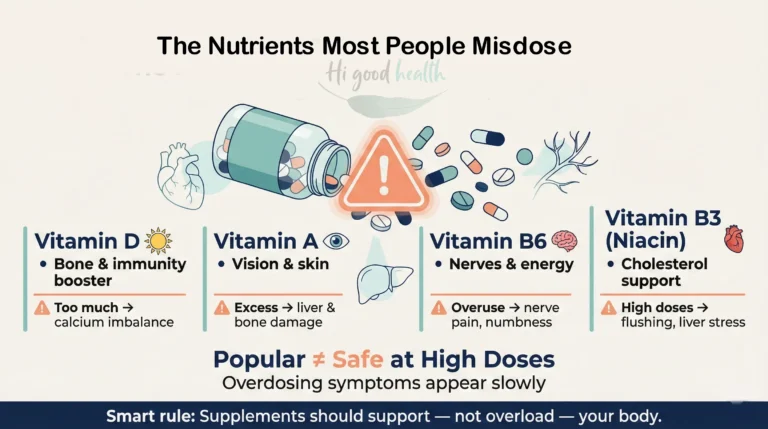
We all know vitamins are good for us, but did you know some of them are frequently consumed in the wrong amounts? Vitamins such as Vitamin D, Vitamin A, Vitamin B6 (pyridoxine), and Vitamin B3 (niacin) are among the most commonly misdosed nutrients.
At a glance: Can You Take Too Many Vitamins?
Yes, you can take too many vitamins, and it happens more often than most people expect. Water-soluble vitamins (like C and most B vitamins) are mostly flushed out in urine, but fat-soluble vitamins (A, D, E, and K) build up in the body and can cause vitamin toxicity, also called hypervitaminosis. Vitamin D toxicity is the form seen most often in India. In India, the nutrients most commonly misdosed are Vitamin D, Vitamin A, Vitamin B6, and Vitamin B3 (niacin). The safest approach is simple: test before you supplement, follow ICMR-NIN recommended intakes, and treat “more” with caution rather than assuming it is always better.
So, can you take too many vitamins? The short answer is yes. These vitamins are widely available, commonly recommended, and often seen as completely safe even at higher doses.
As a result, many people take extra supplements hoping to improve energy, boost immunity, or support skin health, without realising that going overboard can cause real too many vitamins side effects, from a simple multivitamin overdose to more serious vitamin toxicity.
Before choosing your supplements, it’s worth reading our blog: Which Vitamins Are Commonly Non-Vegetarian?
One tricky part is that the signs of vitamin excess (hypervitaminosis) are often subtle and build up slowly, making them easy to miss. Depending on the vitamin, too much can lead to toxicity that affects the liver, nervous system, or metabolic balance.
So it helps to know which vitamins are most often misdosed and why. Let us read on to find out.
India context — the Vitamin D paradox: Despite being a tropical country with plenty of sunshine, studies show that roughly 76%–90% of Indians are Vitamin D deficient.
The reasons include indoor lifestyles, skin pigmentation, air pollution, cultural practices that limit direct sun exposure, and the fact that dairy products in India are rarely fortified with Vitamin D. This makes Vitamin D both the most commonly deficient AND the most commonly over-supplemented (misdosed) nutrient in India, which is exactly why this topic matters so much here. [6][7]
Can You Take Too Many Vitamins? The Most Commonly Misdosed Nutrients
Not all vitamins are misdosed equally; some are far more likely to be taken in the wrong amounts, either too much or too little.
A key concern is that many people do not realise they are exceeding recommended limits, especially when they combine food with supplements. So can you overdose on vitamins without meaning to? Absolutely, and it usually happens quietly.
Let’s take a closer look at some of the most commonly misdosed vitamins:
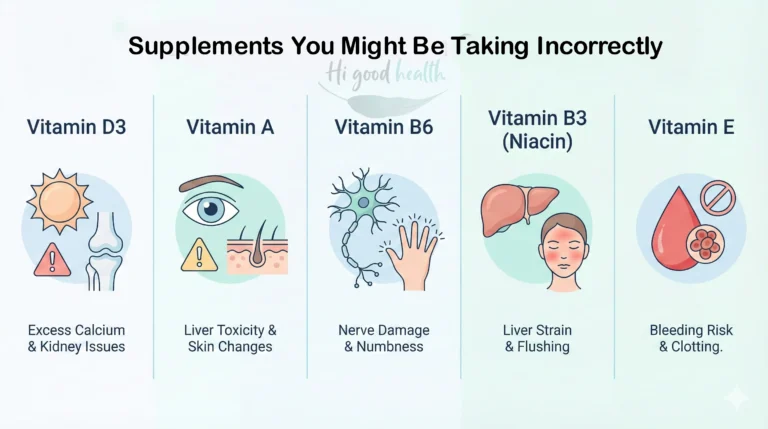
- Vitamin D3: Widely used for bone health and immune support, Vitamin D3 is one of the most commonly over-supplemented nutrients. A Vitamin D overdose can lead to hypercalcaemia (elevated blood calcium), which may cause nausea, vomiting, kidney dysfunction, and, in severe cases, calcification of soft tissues.
- Vitamin A: Commonly found in supplements for vision and skin health, Vitamin A is fat-soluble and builds up in the body. Chronic excessive intake can cause toxicity, leading to headaches, liver damage, dizziness, and blurred vision. [3]
- Vitamin B6 (Pyridoxine): Important for nerve function and metabolism, Vitamin B6 is often used to support mood and energy. However, prolonged intake of high doses can cause peripheral neuropathy, with tingling, numbness, or nerve damage.
- Vitamin B3 (Niacin): Used in certain cases to help manage cholesterol, niacin can cause flushing (warmth and redness of the skin) even at moderate doses. Higher doses may lead to liver toxicity, digestive upset, and impaired glucose tolerance.
- Vitamin E: Known for its antioxidant properties, Vitamin E is commonly taken for skin and heart health. Excessive intake may raise the risk of bleeding, particularly in people on anticoagulant therapy (blood thinners), and has been linked in some studies to a higher risk of haemorrhagic stroke.
Concerned about kidney health and supplements? Explore our blog: Your Kidney Guardians — What to Eat, What to Avoid, and Why It Matters.
These vitamins are essential, but they’re also the ones that are easiest to misdose. The key takeaway? More isn’t always better, especially when it comes to fat-soluble vitamins that stay in your system longer.
Aging bodies have different absorption rates, requiring a tailored approach to micronutrients. Read about essential nutritional requirements and plant-based strategies for seniors, for detailed information, read our article.
Read more: NIH / NCBI — Vitamin toxicity overview
Water-Soluble vs. Fat-Soluble: Why It Matters
Vitamins are broadly grouped into two categories: water-soluble and fat-soluble, and this difference plays a big role in how the body absorbs, uses, and gets rid of them. It also answers a common question: can you take too many vitamins of one type more easily than another? Yes, and fat-soluble ones top that list.
Water-soluble vitamins like Vitamin C and the B-complex group dissolve in water and are not stored much in the body, which means they leave through urine. So even if you take a bit more, your body usually flushes it out. The flip side is that they need to be topped up regularly to maintain healthy levels.
In contrast, fat-soluble vitamins like A, D, E, and K are absorbed along with dietary fats and stored in the liver and fat tissues. Because they are retained, taking too much over time can lead to build-up and increase the risk of toxicity or other health problems. That’s why fat-soluble ones need extra care.
Why Water-Soluble Vitamins Are Safer (But Not Risk-Free)
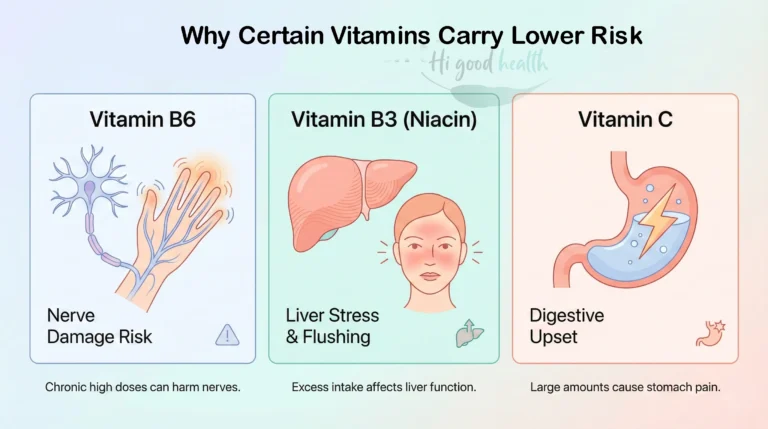
Although water-soluble vitamins are excreted through urine, that doesn’t mean they are completely risk-free. For instance, high doses of Vitamin B6 (pyridoxine) over long periods have been linked to sensory neuropathy, causing numbness, tingling, and difficulty walking.
Similarly, niacin (Vitamin B3) at doses above 1–3 grams per day can lead to liver toxicity and severe flushing, sometimes with nausea and abdominal pain.
Even Vitamin C, often seen as harmless, can cause digestive upset like diarrhoea, cramps, and nausea when taken in doses over 2,000 mg per day. In rare cases, extremely high doses may trigger migraines.
So while your body’s ability to flush out excess water-soluble vitamins generally protects you, consistently going over the recommended intake can still cause serious problems. It’s worth following dosing guidelines even for these “safer” vitamins.
Fat-Soluble Vitamin Toxicity: Small Overdose, Big Trouble
Unlike water-soluble vitamins that are readily excreted, even relatively small excesses of fat-soluble vitamins can cause significant problems because they accumulate in the body over time.
So can you take too many vitamins in this group and run into trouble quickly? Unfortunately, yes — this is the classic pattern behind fat soluble vitamin toxicity.
A Vitamin A overdose can cause headaches, nausea, dizziness, and, in severe cases, liver damage, bone pain, and increased pressure inside the skull. Too much Vitamin A during pregnancy can cause birth defects (more than 10,000 IU/day during pregnancy is linked to teratogenic effects). [3][4]
Taking too much Vitamin D can lead to hypercalcaemia (elevated blood calcium), which may cause nausea, vomiting, weakness, kidney dysfunction, and, in severe cases, cardiac arrhythmias and soft tissue calcification. This is why a Vitamin D overdose is one of the most reported forms of vitamin toxicity in supplement users. [1][2]
How much is too much vitamin D? For most healthy adults, safe supplement doses stay well below the tolerable upper intake level, and problems tend to appear only with consistently high daily doses well above what a doctor would prescribe. A 25(OH)D blood test is the reliable way to know where you stand before taking high-dose Vitamin D. [5]
Vitamin E in excess can interfere with normal blood clotting, raising the chance of bleeding problems and stroke, especially if you’re on blood thinners.
Because these vitamins are stored in the liver and fatty tissues, chronic intake above recommended levels, even if only slightly excessive, can gradually build up and turn toxic. So careful attention to dosage really matters when you use supplements.
If you experience symptoms of vitamin overdose, such as severe nausea, confusion, irregular heartbeat, or other concerning signs, seek immediate medical attention. In India, contact the National Poison Information Centre, AIIMS New Delhi on the toll-free number 1800-116-117 (available 24×7). You can also call the national emergency helpline 112. [9]
Read more: NIH / NCBI — Vitamin D toxicity overview
Verified Normal Blood Test Reference Ranges
Vitamin | Typical Reference Range | Units | Notes |
Vitamin D3 (25(OH)D) | 20–50 (sometimes 30–100) | ng/mL | Levels <20 ng/mL usually indicate deficiency; some labs set sufficiency at >30 ng/mL. |
Vitamin A | 20–60 | mcg/dL | Serum retinol levels; some labs report in μmol/L (0.7–2.2 μmol/L). |
Vitamin B6 | 5–50 | ng/mL | Measured as pyridoxal 5′-phosphate (PLP), the active form of B6. |
Vitamin E | 5.5–17 | mg/L | Typically measured as alpha-tocopherol. |
Vitamin B12 | 200–900 | pg/mL | Levels <200 pg/mL generally suggest a deficiency. |
Vitamin B3 (Niacin) | 0.5–8.45 | mcg/mL | Less commonly tested; clinically assessed by niacin metabolites in urine. |
Important Notes:
- Vitamin D: Serum 25-hydroxyvitamin D [25(OH)D] is the standard test. Some labs consider >30 ng/mL as optimal; below 20 ng/mL is usually deficient.
- Vitamin A: Measured as serum retinol. Units can vary (mcg/dL or μmol/L), so match your lab’s units.
- Vitamin B6: The active form, pyridoxal 5′-phosphate (PLP), is typically tested.
- Vitamin E: Labs measure alpha-tocopherol; values can vary by lab and population.
- Vitamin B12: Deficiency is generally below 200 pg/mL. Additional markers (such as methylmalonic acid or homocysteine) may be used for confirmation.
India note — Vitamin B12: Vitamin B12 deficiency is very common among India’s large vegetarian and vegan population, as B12 is found almost only in animal-derived foods. If you follow a vegetarian or vegan diet, regular B12 testing (serum B12 + homocysteine/MMA) is strongly recommended, especially for older adults, pregnant women, and breastfeeding mothers.
How to Know How Much Vitamin You Really Need
Not everyone needs the same amount of vitamins. Can you take too many vitamins just by following a generic label? Easily — which is why your ideal dose depends on your age, diet, medical conditions, and whether a true deficiency is present.
Relying on supplements based only on general advice, product labels, or trends can be misleading and, in some cases, harmful. Taking extra, especially without a confirmed deficiency, may raise the risk of side effects or toxicity. The safest way to find out what your body needs is to get tested. Here’s a simple guide to which blood tests help identify specific vitamin and mineral deficiencies.
Standardized clinical validation is the only way to confirm a true deficiency. Discover understanding the value and necessity of frequent diagnostic blood tests, for detailed information, read our article.
Nutrient | Blood Test | Deficiency Signs |
Vitamin D | 25(OH)D (25-hydroxyvitamin D) | Weak bones, fatigue, and low immunity |
Vitamin B12 | Serum B12 | Tingling hands/feet, memory issues |
Iron | Ferritin, Iron, TIBC | Fatigue, pale skin, short breath |
Folate (B9) | Serum folate | Mouth sores, poor concentration |
Magnesium | Serum magnesium | Muscle cramps, irregular heartbeat |
Calcium | Serum calcium | Muscle spasms, brittle nails |
Zinc | Plasma zinc | Hair loss, slow wound healing |
Omega-3 | Omega-3 Index or RBC EPA/DHA | Dry skin, brain fog, joint pain |
Iodine | Urinary iodine concentration | Thyroid issues, weight gain |
Read more: Vitamin and mineral supplements
How to Avoid Vitamin Misdosing in Daily Life
Knowing that you can take too many vitamins is one thing; avoiding it day to day is another. Overdosing is more common than people think, and it often happens by accident. To stay safe and get the full benefit of your supplements, here are a few medically sound tips:
1. Consult a Healthcare Professional
Before starting any supplement, speak to a healthcare professional. Your doctor may recommend blood tests to check your actual needs and avoid unnecessary intake.
Wondering which diagnostic tests are truly necessary? Explore our blog: Are Frequent Blood & Other Diagnostic Tests Really Necessary?
2. Avoid High-Dose Supplements Unless Prescribed
More is not always better. High doses of fat-soluble vitamins (A, D, E, K) can build up in the body and cause toxicity.
3. Track Your Supplement Intake
Keep a log of all vitamins, multivitamins, minerals, and herbal products you take. Overlapping ingredients are a common cause of an accidental overdose of multivitamin products and can quietly push you over safe limits.
Curious about what your multivitamin might be missing? Read our blog: 60+ Essential Minerals That Protected Our Ancestors but Are Missing from Your Multivitamin.
4. Check for Fortified Foods
In India, FSSAI’s national fortification programme mandates fortification of staple foods: wheat flour and rice are fortified with iron and folic acid; edible oil and milk with Vitamins A and D; and salt with iodine. Look for the ‘+F’ logo (a blue logo with a plus sign) on packaged food labels — it indicates FSSAI-certified fortification. When you combine such fortified staples with supplements, keep an eye on your total intake so you don’t accidentally exceed safe limits. [8]
5. Read Labels Carefully
In India, FSSAI-regulated food and supplement labels use % RDA (Recommended Daily Allowance) or % NRV (Nutrient Reference Value) instead of the US-style %DV. Watch for values above 100% RDA/NRV on any supplement — this should prompt a careful review with your healthcare provider unless it is medically indicated.
6. Reassess Regularly
Nutritional needs change with age, health conditions, diet, and lifestyle. Reviewing your supplements from time to time helps make sure they remain appropriate and necessary.
Beta-Carotene Is Not the Same as Vitamin A
This distinction matters more than almost anything else on this page, because without it a reader can come away afraid of vegetables.
The vitamin A ceiling applies to preformed vitamin A — retinol and retinyl esters, found in liver, fish liver oils, fortified foods and most vitamin A supplements. It does not apply to beta-carotene, the orange pigment in carrots, sweet potatoes, pumpkin, spinach, methi and other dark green leaves.
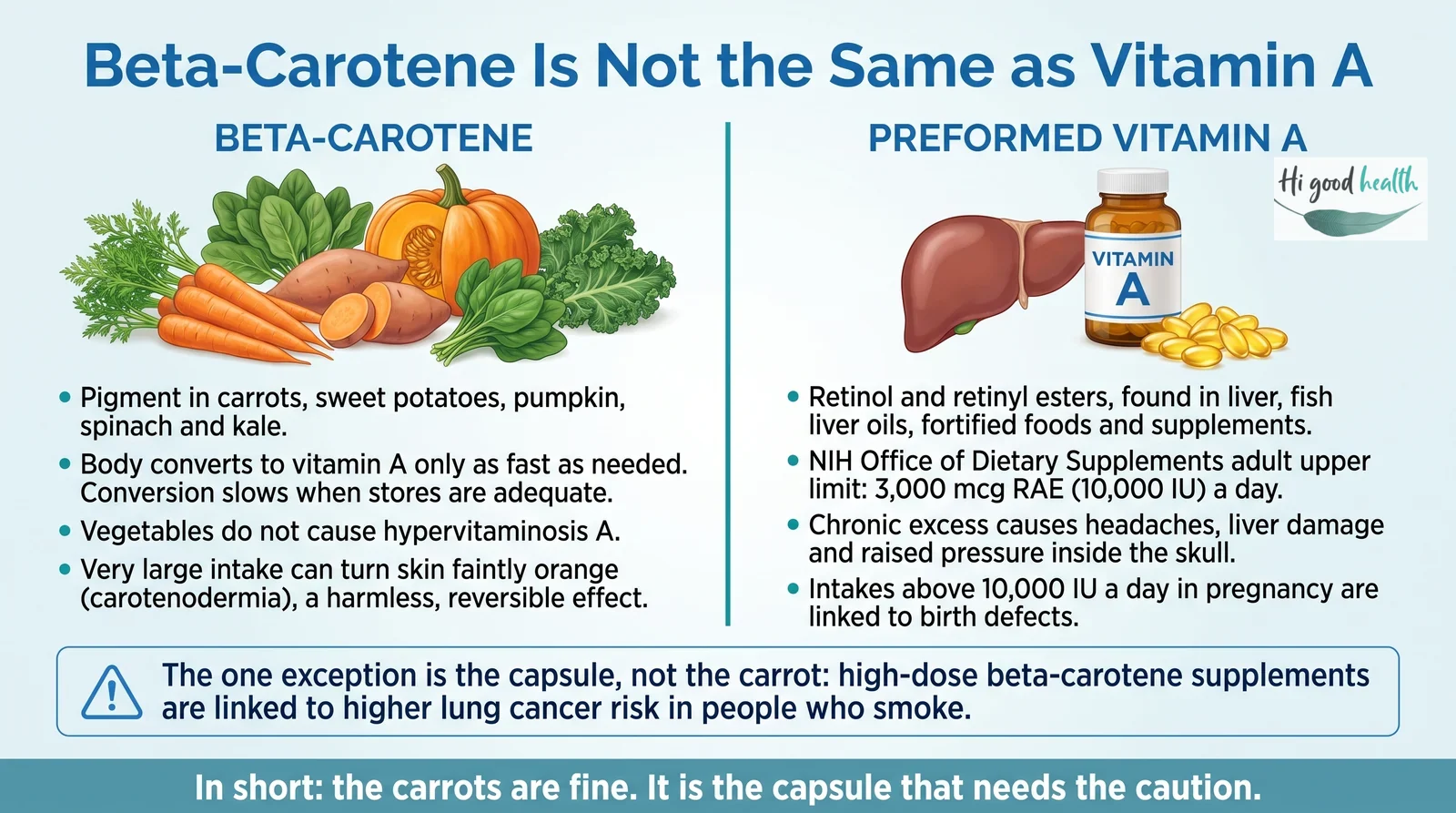
Your body converts beta-carotene into vitamin A only as fast as it needs it, and slows the conversion down when stores are adequate. That regulation is why eating carotenoid-rich vegetables does not cause hypervitaminosis A.
A very large intake can turn the skin faintly orange, a harmless and reversible effect called carotenodermia. It does not produce the liver damage or raised skull pressure seen with too much retinol.
One important exception applies to supplements rather than food. High-dose beta-carotene supplements have been linked in large trials to a higher risk of lung cancer in people who smoke or who have been exposed to asbestos. Beta-carotene from vegetables carries no such signal.
In short: the carrots are fine. It is the capsule that needs the caution.
Vitamin D and B12: The Two Indians Overdo Most
Of all the vitamins, vitamin D is the one Indians are most likely to over-supplement — often because a low report leads to high-dose weekly sachets that are then continued for too long.
Vitamin D toxicity (hypervitaminosis D) is uncommon but real. Too much raises blood calcium, which can cause nausea, excessive thirst and urination, constipation, kidney stones and, in severe cases, kidney damage. It comes from high-dose supplements, not from sunlight or food, so the fix is simply reviewing your dose with your doctor.
Vitamin B12 is water-soluble, so any extra is mostly passed out in urine and a true overdose is very rare. Very high doses from injections or supplements can occasionally trigger acne-like breakouts, but B12 is generally considered safe. Still, take it for a genuine deficiency rather than by default.
One important flip side: in India, vitamin D deficiency is far more common than overdose. If you have not been tested, low vitamin D is the more likely problem — so get a blood level checked before you either start or stop high-dose supplements.
Two Minerals That Belong in the Same Conversation
This article is about vitamins, but two minerals are so often taken alongside them, and so often overdone, that leaving them out would be misleading.
- Iron. ICMR-NIN’s 2020 recommended intake for Indian adults is 19 mg a day for men and 29 mg a day for women. Iron differs from the vitamins above in one important way: a large single dose is an acute emergency rather than a slow build-up, and iron tablets are a leading cause of poisoning in young children. Keep them out of reach and in child-resistant packaging. In India iron deficiency is far more common than iron excess, but a supplement started without a blood test is still the wrong way to treat it.
- Calcium. ICMR-NIN sets 1,000 mg a day for Indian adults. The NIH upper limit is 2,500 mg, falling to 2,000 mg after age 50. Because calcium is usually taken with vitamin D, and vitamin D increases calcium absorption, the two can push blood calcium up together. Excess from supplements has been linked to kidney stones; the same amount from food has not.
Vitamins That Interact With Medicines
A supplement that is safe on its own can still be a problem alongside a prescription. None of these interactions means you cannot take the vitamin. All of them are reasons to tell the doctor who prescribes for you.
| Vitamin or mineral | Interacts with | What happens |
|---|---|---|
| Vitamin K | Warfarin | Vitamin K opposes warfarin’s effect. Keep intake steady rather than avoiding it, and tell the clinician managing your dose before you change either |
| Vitamin E | Warfarin, aspirin and other blood thinners | Adds to the anti-clotting effect and raises bleeding risk |
| Vitamin B6 | Levodopa (taken without carbidopa) | Can reduce the medicine’s effect |
| Niacin, at cholesterol doses | Statins | Raises the risk of muscle injury when the two are combined |
| Calcium and iron | Levothyroxine, and some antibiotics | Bind the medicine in the gut and reduce absorption. Separate the doses by several hours |
What to Do If You Think You Have Taken Too Much
- Stop taking the supplement. That is the first step and often the only one needed, because most vitamin problems come from a dose taken repeatedly rather than from a single large one.
- Keep the bottles. The label tells a clinician the dose and the form, which matters more than the brand, and saves a great deal of guesswork.
- Do not try to make yourself vomit, and do not take anything else to counteract it.
- Be ready to say how much, and for how long. “Two capsules a day for eight months” is far more useful than “a lot”.
- When a prescribed course finishes, stop for eight weeks and then retest. Seeing where your level has actually landed is what keeps a correction from turning into an overdose.
- Expect fat-soluble vitamins to take time to clear. Because they are stored in the liver and fat tissue, levels fall over weeks to months after stopping, not overnight. Water-soluble vitamins clear much faster, though nerve damage from long-term high-dose B6 may recover slowly or incompletely.
If you notice severe nausea, confusion, an irregular heartbeat or any other worrying symptom, seek medical care straight away. In India, call the National Poison Information Centre (NPIC) at AIIMS New Delhi on the 24×7 toll-free number 1800-116-117, or the national emergency number 112.
Key Takeaways
- Yes, you can take too many vitamins — fat-soluble vitamins (A, D, E, K) carry the highest risk because they build up in the body.
- Water-soluble vitamins are safer but not risk-free: high-dose B6 can cause nerve damage and Vitamin C over 2,000 mg/day can upset digestion.
- Vitamin D toxicity is the one to watch: in India Vitamin D is both the most deficient and the most over-supplemented nutrient — get a 25(OH)D test before taking high doses.
- Test, track, and tailor: confirm a real deficiency with blood tests, log every supplement and fortified food, and follow ICMR-NIN and FSSAI guidance.
- Watch total intake from supplements plus FSSAI-fortified staples (the ‘+F’ logo) so you don’t quietly exceed safe limits.
FAQs
1. Can taking vitamins actually be harmful?
Yes. While vitamins are essential, too much of a good thing can actually be harmful. High doses, especially of fat-soluble vitamins, can accumulate in the body and cause toxicity, organ damage, or long-term health issues.
2. Which vitamins are most dangerous to overdose on?
Fat-soluble vitamins like A, D, E, and K are the riskiest because they are stored in fat tissues. However, water-soluble vitamins like B6 and Niacin can also cause nerve or liver damage if taken in high doses.
Toxic build-up from over-supplementation directly impacts your body’s primary filtration organs. Learn about protecting your kidney health through proper diet and metabolic management, for detailed information, read our article.
3. What are the common symptoms of vitamin overdose?
Symptoms often “creep in slowly” and can include nausea, headaches, weakness, and digestive upset. High doses of Vitamin B6 specifically can lead to a tingling sensation or numbness in the hands and feet.
4. Is it safe to take Vitamin C or B vitamins in large amounts?
Not necessarily. While the body flushes excess water-soluble vitamins, high doses are not risk-free. Vitamin C over 2,000 mg can cause cramps and nausea, while long-term high B6 intake is linked to nerve damage.
5. How do I know if I actually need supplements?
“The safest way to find out what your body needs is by getting tested” rather than guessing. Blood tests like 25(OH)D for Vitamin D can confirm actual deficiencies, preventing you from taking “random supplements” unnecessarily.
6. Can I take supplements if I eat fortified foods?
Be cautious. In India, FSSAI-fortified staples — wheat flour (iron, folic acid), edible oil (Vitamins A & D), milk (Vitamin D), and salt (iodine) — are increasingly common. Look for the ‘+F’ logo on packaging. If you combine these with supplements, you might unknowingly exceed safe limits, so it is vital to read labels carefully.
7. Should I take a supplement every day?
Not everyone needs the same amount. Your ideal dose depends on your “age, diet, medical conditions,” and deficiency status. Consult a doctor to tailor your intake rather than relying on general trends or “random supplements”.
8. What should I do if I suspect a vitamin overdose?
If you experience severe symptoms like confusion, irregular heartbeat, severe nausea, or other concerning signs after taking vitamins, seek immediate medical attention. In India, call the National Poison Information Centre (NPIC), AIIMS New Delhi on the 24×7 toll-free number: 1800-116-117 (Tel: 011-26589391 / 26593677). You can also call the national emergency number 112.
9. Can you take too many vitamins from food alone?
For most people, no. Vitamin toxicity almost always comes from high-dose supplements or from stacking fortified foods on top of a normal diet, not from ordinary meals. Fat-soluble vitamins such as A and D are the main exception to watch when supplements are involved.
10. How much vitamin D is too much?
For most healthy adults, routine supplement doses stay well below the tolerable upper intake level. Consistently high daily doses, well above what a doctor prescribes, can cause too much vitamin D and lead to hypercalcaemia. Always confirm your level with a 25(OH)D blood test before taking high-dose Vitamin D.
11. Can a daily multivitamin cause an overdose?
A standard multivitamin taken as directed is generally safe. A multivitamin overdose usually happens when you stack several products, add separate high-dose vitamins, or combine them with fortified foods. Track everything you take and keep your total intake within recommended limits.
All reference links valid and accessible on 30 April 2026
1. Hathcock, J. N., Shao, A., Vieth, R., & Heaney, R. (2007). Risk assessment for vitamin D. The American Journal of Clinical Nutrition, 85(1), 6–18.
2. Marcinowska-Suchowierska, E., Kupisz-Urbańska, M., Łukaszkiewicz, J., Płudowski, P., & Jones, G. (2018). Vitamin D toxicity — A clinical perspective. Nutrients, 10(3), 1–14.
3. Penniston, K. L., & Tanumihardjo, S. A. (2006). The acute and chronic toxic effects of vitamin A. The American Journal of Clinical Nutrition, 83(2), 191–201.
4. Institute of Medicine (US) Panel on Micronutrients. (2000). Dietary Reference Intakes for Vitamin A, Vitamin K, Arsenic, Boron, Chromium, Copper, Iodine, Iron, Manganese, Molybdenum, Nickel, Silicon, Vanadium, and Zinc. National Academies Press.
5. Institute of Medicine (US) Panel on Calcium and Vitamin D. (2011). Dietary Reference Intakes for Calcium and Vitamin D. National Academies Press.
6. [India-VitD] Ritu G, Gupta A. (2014). Vitamin D Deficiency in India: Prevalence, Causalities and Interventions. Nutrients. — “Prevalence of 70%–100% in the general population.” https://pmc.ncbi.nlm.nih.gov/articles/PMC3942730/
7. [India-VitD2] Tata 1mg Data Analysis (2022–23). Nearly 76% of Indians suffer from Vitamin D deficiency. Economic Times Health World. https://health.economictimes.indiatimes.com/news/industry/3-out-of-4-indians-suffer-from-vitamin-d-deficiency/97428533
8. [India-FSSAI] FSSAI Fortified Food Programme. +F Logo — Food Safety and Standards (Fortification of Foods) Regulations, 2018. https://fssai.gov.in/cms/fortified-food.php
9. [India-NPIC] National Poison Information Centre (NPIC), AIIMS New Delhi. Toll-Free: 1800-116-117 (24×7). https://aiims.edu/
Disclaimer
The content provided on higoodhealth.com is for general informational purposes only. While we strive to offer accurate and up-to-date content, much of the information is derived from publicly available sources and personal research. We do not make any warranties about the completeness, reliability, or accuracy of this information.