A clear guide to understanding the landscape, from big-pharma brands to affordable home-grown alternatives.
If you are trying to work out the real GLP-1 drugs cost in India — from the mounjaro injection price to what a plain generic semaglutide vial costs — this guide lays out the 2026 numbers in rupees you can actually plan around. Prices have moved fast since semaglutide went off-patent, so we cover the branded and generic options, where people really buy them, and how insurance fits in.
At a glance: GLP-1 drug prices in India (2026)
As of mid-2026, the mounjaro injection price in India runs about ₹13,000–₹26,000 a month — the highest of any GLP-1, because tirzepatide is still on patent.
The ozempic injection price now sits near ₹8,800–₹11,175 after Novo Nordisk’s April 2026 cut, while Indian generic semaglutide vials start around ₹1,250.
The wegovy injection price starts near ₹5,660, and oral semaglutide (Rybelsus) stays about ₹7,000–₹12,000.
Generic competition has pulled the overall GLP-1 drugs cost in India down sharply since semaglutide’s patent expired in March 2026.
1. The Global GLP-1 Revolution and Its Price Tag
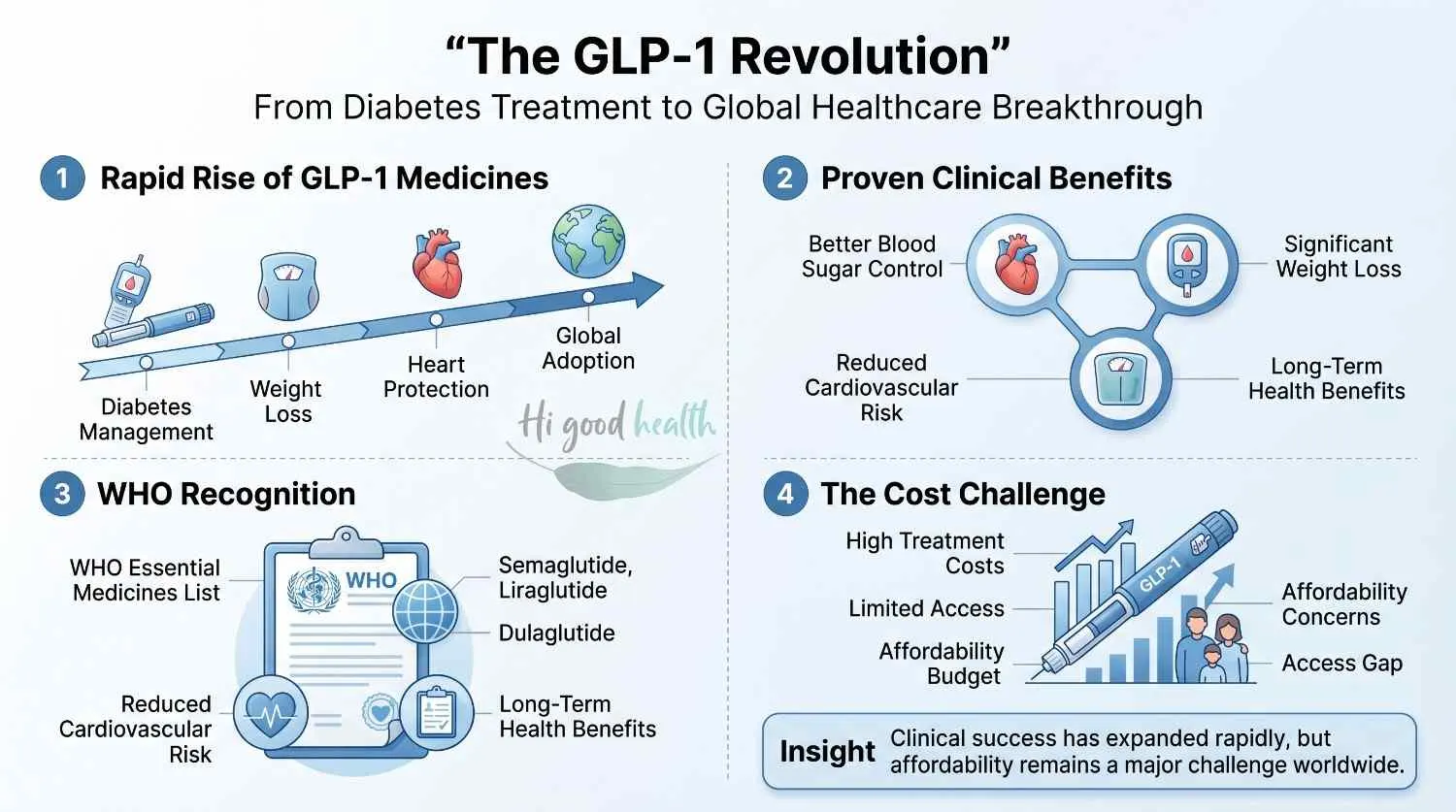
In less than a decade, GLP-1 drugs (medicines that mimic a natural gut hormone to help control blood sugar and appetite) have moved from niche diabetes treatments to global blockbusters for diabetes, obesity, and heart protection. Trials have shown meaningful weight loss, better sugar control, and fewer heart attacks, which is why semaglutide, liraglutide, dulaglutide, and tirzepatide have now been added to the WHO Model List of Essential Medicines. [8]
But there is a catch: in many high-income countries, a single month of branded GLP-1 therapy can cost more than a family’s monthly rent. Even in India, early access to innovator brands like Novo Nordisk Ozempic and Wegovy (both semaglutide), plus Rybelsus, Victoza, and Trulicity, meant bills of ₹10,000–20,000 per month for many patients, putting these drugs out of reach for the average middle-class household. [1]
2. The Indian Pharmaceutical Chessboard: Patents, Generics, and Biosimilars
India is not a passive buyer in this story – it is one of the world’s largest producers of generic medicines and complex injectables. GLP-1 access in India is shaped by three layers: patent timing, regulatory approvals, and the ability of Indian companies to manufacture high-quality peptide and biologic-like products at scale.[5]
2.1 How Indian Patent Law Shapes GLP-1 Access
Under Indian patent law, drug molecules get 20-year protection from the date of filing, but only for truly novel inventions, not for minor tweaks. Once key patents expire, Indian companies can launch generics or biosimilars (biologic medicines that are highly similar to the original, with no meaningful difference in safety or effect), provided the Central Drugs Standard Control Organisation (CDSCO) approves them after reviewing quality, safety, and efficacy. [2]
Indian rules allow:
- Small-molecule generics (for example, oral semaglutide tablets) once patents lapse.
- Biosimilars and similar biologics (for injectable GLP-1 analogues such as liraglutide, dulaglutide, and semaglutide) if companies can demonstrate comparability in structure, function, and clinical performance.[11]
This framework is what enabled India’s earlier waves of affordable insulin, cancer drugs, and biologics – and it is now being replicated for GLP-1 therapies.
2.2 Key Patent Expiry Dates and Early Launches
For GLP-1 drugs, patent timing has played a critical role:
- Indian government and ICMR documents note that, as a concrete milestone, the core patent for semaglutide expired on March 20, 2026, triggering immediate generic launches and a sharp price drop across India.[4] According to Business Standard, more than 40 Indian drugmakers — including Sun Pharma, Dr. Reddy’s, Glenmark, Natco, Zydus, and Alkem — had launched competing semaglutide brands within days of the expiry.[16]
- Liraglutide and dulaglutide also have staggered patent expiries; as those pass, more “similar biologics” can enter the market.[8]
- Tirzepatide, being newer, remains under stronger patent protection for longer, which is one reason the mounjaro injection price in India is still much higher than generic semaglutide — Eli Lilly’s patent has not yet expired. [8][13]
As seen previously with insulin analogues and oncology drugs, India typically sees a wave of 10–30 generic/biosimilar entrants within 1–3 years of patent expiry, which rapidly pulls prices down. That pattern has already started with semaglutide and is expected for other GLP-1s.[7][17]
3. The GLP-1 Line-up: Mounjaro Injection Price, Ozempic Cost, and Generic MRP
Pricing for the GLP-1 drugs cost in India follows a clear pattern: innovator brands at the top, Indian branded generics in the middle, and discounted hospital or online deals at the bottom.[14] The mounjaro injection price anchors the top of that range, and generic semaglutide the bottom. (Prices below are indicative as of May 2026 and change quickly as more generics launch — always confirm the current MRP with your pharmacist.)
| Drug | Main Use | Approx. Monthly Cost (India, verified May 2026) | Key points |
| Oral Semaglutide (Rybelsus) | Type 2 diabetes (not officially approved for weight loss in India) | ₹7,000–12,000 (innovator); no Indian generic of the oral tablet has launched yet — the price collapse seen in injectable semaglutide has not extended to Rybelsus as of May 2026 | Oral tablet; must be taken on an empty stomach for proper absorption. |
| Liraglutide (Victoza/Saxenda & Indian brands) | Type 2 diabetes; obesity (higher doses) | ₹4,000–12,000 | Once-daily injection; Indian brands are generally more affordable than innovator products |
| Semaglutide Injection (Ozempic & Indian generics) | Type 2 diabetes; cardiovascular protection; obesity (higher doses globally) | ₹8,800–11,175 (Ozempic, post the April 2026 Novo Nordisk price cut); ₹1,250–4,500 (Indian generics — from Natco/Eris vials to Zydus/Dr. Reddy’s pens) | Once-weekly injection; generic competition has cut prices by 50–90% since the 20 March 2026 patent expiry. |
| Wegovy (semaglutide, weight-management dose) | Obesity and weight management; approved in India for this indication | ₹5,660–16,400 (Novo Nordisk, post the November 2025 price cut, depending on dose) | Same molecule as Ozempic at higher, weight-focused doses; some domestic semaglutide brands (e.g. Zydus’s Semaglyn) also carry a dual diabetes-and-obesity approval. |
| Dulaglutide (Trulicity) | Type 2 diabetes; cardiovascular risk reduction in eligible patients | ₹3,500–8,000 | Once-weekly auto-injector; biosimilar availability is still limited. |
| Tirzepatide (Mounjaro) | Type 2 diabetes; obesity (in countries where approved) | ₹13,000–26,000 | Dual GLP-1/GIP agonist; highest weight-loss efficacy among current options but remains the costliest — no generic tirzepatide (mounjaro generic name is tirzepatide) is available in India yet, since Eli Lilly’s patent protection runs for several more years. |
Table 1. Approximate monthly costs and indications of GLP-1 receptor agonists available in India, verified as of May 2026.
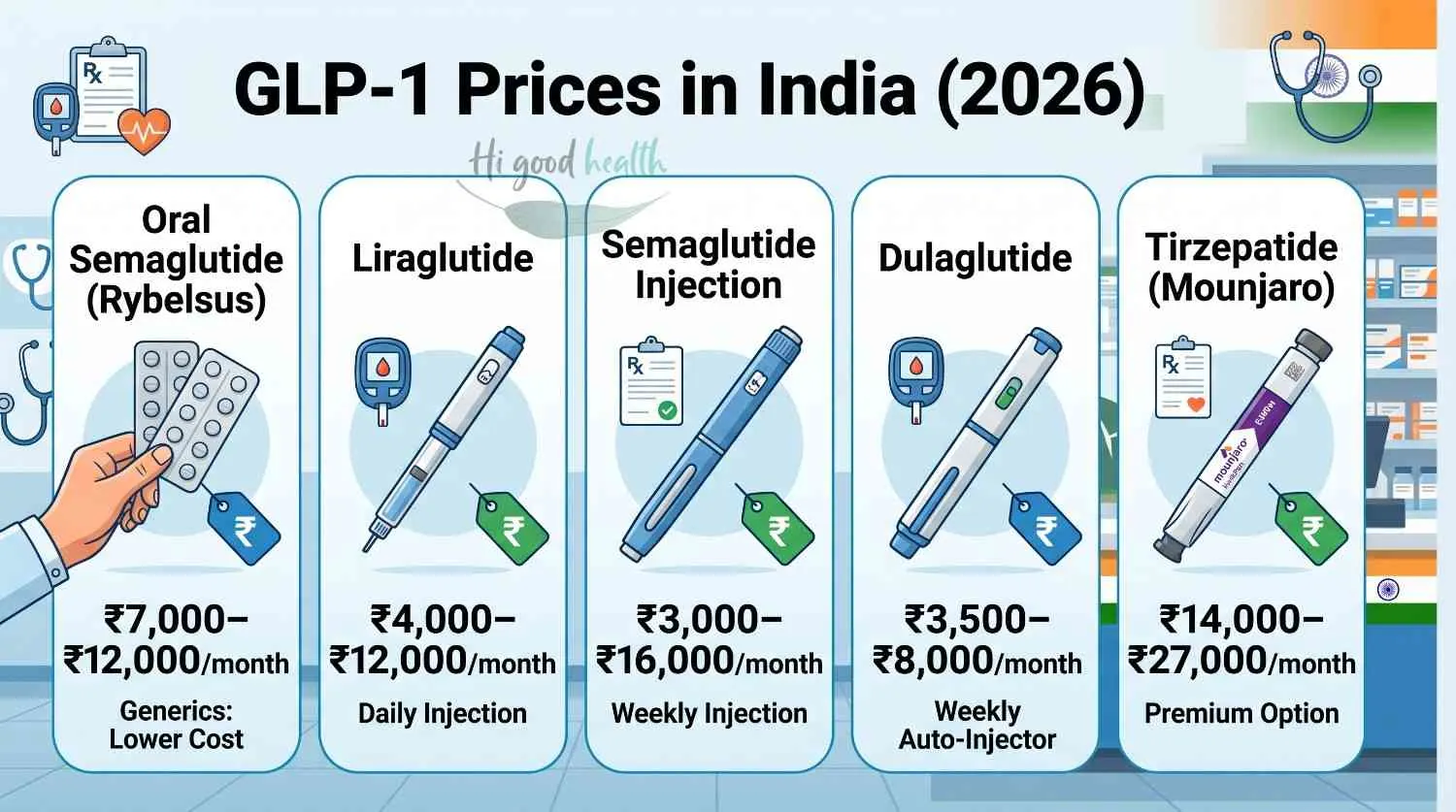
Reading down the table, the mounjaro injection price stands out: at ₹13,000–26,000 a month it is several times the price of a generic semaglutide vial. That gap exists because tirzepatide is still on patent, so no Indian generic yet undercuts the mounjaro injection price — the same reason the ozempic injection price fell after March 2026 while Mounjaro’s did not.
While Indian generics have slashed prices, your choice between branded Rybelsus and generic injections should depend on your daily routine; compare the two formats here.
4. Real-World Pricing: What Patients Actually Pay
The MRP on the box and the price actually paid are often very different in India. The real ozempic injection cost, or the mounjaro injection price a patient hands over at the counter, is shaped by where you buy, how much you buy, and whether any scheme or insurance is involved.
4.1 Local Chemist and Online Aggregators
- Local chemists: In metros and Tier-2 cities, major GLP-1 brands are often available with 5–15% discounts on MRP, sometimes more if patients are regular customers.
- Online platforms: Large e-pharmacies and marketplace apps often provide 15–25% discounts, plus cashback or wallet offers, especially on Indian generic brands.[14]
- Cold-chain concern: For injectables, patients must ensure the pharmacy maintains 2–8°C storage and uses proper insulated packaging for home delivery to avoid potency loss.[6]
Many Indian patients now “price-shop” between 1–2 nearby chemists and 1–2 online platforms before committing to a monthly purchase.
4.2 Hospital Pharmacies and Bulk Purchase
- Corporate and large hospitals: Often negotiate better institutional pricing with companies in exchange for volume, which can make their in-house pharmacy cheaper for GLP-1s than retail chemists.
- Bulk buying: Some patients buy 2–3 pens or packs at once to secure a lower price, but this needs careful planning for storage, expiry, and follow-up visits. For a high-cost option, trimming even 10% off the mounjaro injection price on a bulk pack adds up.
- Government hospitals: Where GLP-1s are available via tenders, they may be dispensed free or at heavily subsidised rates to selected high-risk patients, though this is still limited and uneven across states.[9]
4.3 Government Schemes and Insurance
- Ayushman Bharat (AB-PMJAY): As per recent parliamentary responses, there is currently no wide-scale inclusion of GLP-1 receptor agonists under AB-PMJAY packages.[5]
- State schemes: A few better-resourced state programmes and teaching institutions may provide GLP-1s to high-risk diabetes patients through special budgets or pilot projects, but this is not yet mainstream.[9]
- Private insurance: Most retail health insurance still focuses on hospitalisation, not long-term outpatient medicines; GLP-1 coverage is often ad-hoc and plan-specific.[10]
For many middle-class Indians, medication costs are paid out-of-pocket, which makes the difference between a roughly ₹8,800 innovator Ozempic pen and a ₹1,250 generic vial absolutely critical.[12]
4.4 Patient Support Programmes (PSPs)
Several manufacturers now offer structured support: Dr. Reddy’s SemaKare includes a digital app, injection training, and adherence monitoring; Glenmark’s Sankalp provides tele-support and onboarding guidance. Patients should ask their doctor or pharmacy about these programmes, which can improve the first-time user experience and long-term adherence.
5. Barriers to Access Beyond the Price Tag
Even with falling prices, there are non-financial barriers that block fair access.
5.1 Urban-Centric Availability
Most GLP-1 prescriptions and stock are concentrated in metros and Tier-1 cities where diabetologists and endocrinologists are based. Rural and semi-urban areas may have sporadic availability, long travel distances to specialists, and limited awareness among general practitioners.[6]
5.2 Off-Label Use and Regulatory Grey Areas
Social media has popularised GLP-1 as a “weight-loss injection” even for people without diabetes or clinical obesity. Regulators in India and globally have warned against off-label, cosmetic, or influencer-driven use because it can:
- Divert supply away from higher-risk patients.
- Increase side-effects when used without supervised dose titration.
- Encourage unsafe buying from unverified sources.[6]
5.3 Shortages and Supply Chain Hiccups
Global surges in demand have already led to temporary shortages of some GLP-1 brands in multiple countries. In India, this can show up as:[8]
- Stock-outs of certain doses at neighbourhood chemists.
- Delays in getting specific pens or strengths needed for fine-tuning therapy.
- Disruptions when a patient is forced to switch brands too often.
Careful supply forecasting, domestic manufacturing, and diversified suppliers will be key to reducing such disruptions.
5.4 Counterfeit and Fake-Product Warning
High-value injectables are a magnet for counterfeiters in any country. Warning signs include:[6]
- Deeply discounted imported pens obtained from unofficial or unlicensed online sellers or social media platforms, misprinted labels, poor-quality pens, or missing batch numbers.
- Vials or pens sold outside cold chain – for example, posted without insulation or ice packs.
Patients should buy only from licensed pharmacies, insist on GST invoices, and be wary of “clinic stock” offered without proper bills or prescriptions.[6]
6. The Engine of Change: Indian Generic Majors at the Forefront
India’s pharmaceutical companies have become central drivers of GLP-1 accessibility.
Key players include:
- Sun Pharma, Dr. Reddy’s Laboratories, Cipla, Lupin, Zydus Lifesciences, Biocon Biologics, Mankind Pharma, and Glenmark Pharmaceuticals [5] — several now sell semaglutide directly, under brand names such as Sun Pharma’s Noveltreat and Sematrinity, Dr. Reddy’s Obeda, Zydus’s Semaglyn, and Glenmark’s GLIPIQ.
CDSCO and Regulatory Nuance
For GLP-1 products, CDSCO must:
- Approve small-molecule generics (like oral semaglutide) based on bioequivalence data.
- Evaluate biosimilars for injectables (liraglutide, dulaglutide, semaglutide) using similarity studies for quality, safety, immunogenicity, and sometimes clinical trials.[11]
- Monitor post-marketing safety, especially when many brands enter the market in a short time.[6]
When done well, this approach gives India the best of both worlds: lower prices through Indian manufacturing, and safety through strong regulation.
6.1 Quality Assurance Behind the Price Drop
All approved manufacturers must meet rigorous standards: Alkem Laboratories received a ‘Certificate of GMP Compliance’ from the Malta Medicines Authority for its Daman facility, and many Indian facilities are USFDA or WHO-GMP certified. Dr. Reddy’s, the first Indian company to receive DCGI approval for generic semaglutide, conducted clinical comparison studies to demonstrate similarity. Patients can trust that low-cost generics are not inferior in quality when sourced from licensed channels.
7. Policy Levers and the Road Ahead
India now faces an important healthcare policy decision: should GLP-1 drugs remain high-cost, aspirational therapies, or be integrated systematically into diabetes and obesity care?
7.1 Bringing GLP-1 Drugs Under Price Control
- NPPA, under the Drugs (Prices Control) Order 2013, can cap prices of formulations that are included in the National List of Essential Medicines. [3][6]
- NLEM 2022 already emphasises the growing burden of diabetes and the need for key diabetes drugs in public systems, and official documents acknowledge GLP-1 RAs as important options.[15]
If liraglutide and semaglutide formulations used for diabetes are eventually brought under price control, MRPs could drop by another 20–30% beyond current generic competition, especially where innovator prices remain high. Past NPPA actions on other essential drugs have led to price reductions of 30–40% in some categories.[6] For now that scope centres on semaglutide and liraglutide, so the mounjaro injection price stays outside price control until tirzepatide comes off patent.
7.2 Inclusion in Public Health Programmes
The NP-NCD (earlier NPCDCS) programme aims to provide standard care for millions with diabetes and hypertension through public facilities. Inclusion of GLP-1s for selected high-risk patients could:[6]
- Prevent costly complications like heart attacks, strokes, and kidney failure.
- Gradually normalise GLP-1 use outside elite private hospitals.[1]
A realistic path is to start with tertiary centres and high-risk clinics, using pooled tenders for selected GLP-1 injections from Indian generic manufacturers, while tracking outcomes and side-effects.
The true value of these medications lies beyond weight loss; discover the long-term heart and kidney benefits that can prevent expensive hospitalizations in the future
7.3 Insurance Coverage for Obesity
IRDAI has already pushed insurers to cover bariatric surgery under clear clinical criteria. A similar conversation is now emerging around obesity medicines:
- GLP-1 and dual agonists are being recognised internationally as evidence-based treatments for obesity with cardiometabolic benefit.[8]
- Indian insurers may progressively consider coverage when obesity is severe and linked with diabetes, heart disease, or sleep apnoea, rather than for cosmetic weight loss alone.[10]
For families, this could mean negotiating group policies and reading the policy wording carefully to see if medically supervised GLP-1 therapy for obesity-with-complications is covered.
7.4 Strengthening the Generic Supply Chain and Competition
To make sure GLP-1 does not become another example of “metro-only” medicine, India will need to build a resilient supply chain:
- Improve cold-chain infrastructure from factories to rural chemists. This requires specialised production processes, quality controls, and cold-chain logistics.
- Support multiple reputable generic/biosimilar manufacturers to avoid over-dependence on one supplier.[7] This would improve the reliability of manufacturing and distribution systems.
- Strengthen pharmacovigilance to detect any brand-specific issues early. [11]
More competition, when balanced with quality oversight, usually means lower prices and better resilience during global shortages.
8. What This Means for Patients, Doctors, and Payers
For patients, this landscape means:
- Affordability depends not only on medicine prices but also on monitoring, consultations, and long-term treatment needs.
- GLP-1s are powerful tools, not magic bullets; diet quality, strength training, and sleep remain non-negotiable foundations.
For doctors, it means:
- Treatment decisions should be individualised and made in consultation with a qualified healthcare professional.
- Brand selection requires balancing cost, device comfort, GI side-effects, and a patient’s ability to store and use injectables safely.[11]
For payers and policymakers, it means:
- There is an opportunity to reduce the cardiometabolic disease burden in India by using medicines that address glucose, weight, and heart risk together.
- Smart use of NPPA, NLEM updates, NP-NCD inclusion, and selective insurance coverage can turn a global “blockbuster” into a large-scale public-health tool.[6]
9. From Breakthrough to Bedside, the Indian Way
India has already changed the global story once by making HIV drugs, TB medicines, and cancer biologics more affordable through generics. GLP-1 drugs are the next big test.
If India can combine strong science, careful regulation, and people-centred pricing, these medicines can shift from being Instagram headlines to everyday tools in PHCs, district hospitals, and family clinics across the country.[7]
HiGoodHealth exists to help families make sense of exactly these shifts – cutting through the hype, breaking down the science into simple language, and sharing best practices from India and the world so you can make informed choices for yourself and your loved ones.
Readers are encouraged to explore the other parts of this GLP-1 series – from basic mechanisms to South Asian risk, side-effects, diet, and muscle health – and to share topics they want covered next so that together we can build a healthier, better-informed India.
Key Takeaways
- Semaglutide’s Indian patent expired on 20 March 2026, and generic versions now cost roughly 50–90% less than branded Ozempic — a big part of why the GLP-1 drugs cost in India has fallen so fast.
- The ozempic injection price now sits near ₹8,800–₹11,175 after Novo Nordisk’s April 2026 cut, while Indian generic semaglutide vials can start around ₹1,250 a month.
- Wegovy is now sold in India from about ₹5,660, and some domestic semaglutide brands carry both a diabetes and an obesity approval.
- Tirzepatide (Mounjaro) stays the costliest option — the mounjaro injection price hasn’t dropped because its patent protection hasn’t expired yet.
- AB-PMJAY and most private insurance still don’t widely cover GLP-1 drugs, so most patients pay out of pocket.
- Buying only from licensed pharmacies and keeping injectables in the 2–8°C cold chain matters as much as chasing the lowest price.
Frequently Asked Questions About GLP-1 Drug Prices in India
If you prefer a more visual version, check out our YouTube video here:
What are GLP-1 drugs?
GLP-1 drugs help control blood sugar and reduce appetite. They are used in diabetes and, in some cases, obesity treatment.
Why are GLP-1 drugs expensive in India?
They are expensive because many are still sold as branded medicines and some are complex to manufacture. Prices are now starting to fall as Indian versions enter the market.
Which GLP-1 drugs are available in India?
Common options include semaglutide, liraglutide, dulaglutide, and tirzepatide. Availability depends on the city, pharmacy, and brand.
How much do GLP-1 drugs cost in India?
Monthly costs can range from around ₹1,250 to ₹27,000 depending on the drug and brand. Indian generics are usually cheaper than imported innovator brands, and generic semaglutide specifically has become far cheaper since its patent expired in March 2026.
Are GLP-1 generics safe in India?
Approved generics and similar biologics are required to meet regulatory standards. Patients should buy only from licensed pharmacies.
Do GLP-1 injections need refrigeration?
Yes, many GLP-1 injections need cold storage between 2°C and 8°C. Improper storage can reduce the medicine’s quality.
Are GLP-1 drugs covered by insurance?
Most insurance plans do not widely cover them yet. Coverage depends on the policy and the reason for use.
Can GLP-1 drugs be used for weight loss?
Some are approved for obesity treatment in certain settings. They should only be used under medical supervision.
Where can I buy GLP-1 medicines safely?
Buy from licensed pharmacies or trusted hospital pharmacies. Avoid unusually cheap or unverified online sellers.
Why is semaglutide so popular in India?
Semaglutide has strong demand because it is effective for diabetes and weight-related care. Lower-cost Indian versions have also increased interest.
Is Wegovy available in India now?
Yes. Wegovy injection price in India starts at around ₹5,660 a month for the starter dose, rising to roughly ₹16,400 at typical maintenance doses, after Novo Nordisk cut Wegovy prices in November 2025. Some Indian-made semaglutide brands, such as Zydus’s Semaglyn, also carry an obesity indication alongside diabetes, so patients have more than one option for weight-management use.
What is the Mounjaro injection price in India?
Mounjaro injection price in India runs from about ₹13,000 to ₹26,000 a month, depending on the dose, which makes the cost of Mounjaro the highest among GLP-1 drugs sold here. Unlike semaglutide, the tirzepatide injection price hasn’t dropped, because tirzepatide’s Indian patent hasn’t expired and no generic version exists yet.
How much does Ozempic cost per month in India?
Ozempic injection price and the broader cost of ozempic per month now sits between about ₹8,800 and ₹11,175, after Novo Nordisk’s April 2026 price cut. Indian generic semaglutide brands cost far less — the glp 1 injection cost for a generic vial can be as low as ₹1,250 a month, though the exact price depends on the brand, dose, and pen versus vial format.
What is the Rybelsus price in India?
The rybelsus 3 mg price and rybelsus 14 mg price for oral semaglutide currently fall within the innovator range of roughly ₹7,000–12,000 a month, since no Indian generic tablet has launched yet. This is different from injectable semaglutide, where generics are already widely available and much cheaper.
What is the Ozempic 1mg price in India?
The ozempic 1mg price in India now falls within Novo Nordisk’s post-April-2026 range of about ₹8,800 to ₹11,175 a month for the innovator pen. Indian generic semaglutide at a similar dose can cost far less, from roughly ₹1,250 to ₹4,500, though the exact ozempic injection cost depends on the pharmacy, the pack, and whether you buy a vial or a pre-filled pen.
What is the Wegovy 2.4 mg price in India?
At the full 2.4 mg maintenance dose, the wegovy 2.4 mg price in India is around ₹16,400 a month, while the lower starter dose begins near ₹5,660, following Novo Nordisk’s November 2025 price cut. Wegovy is the weight-management version of semaglutide, so the dose, and therefore the wegovy injection price, steps up gradually over the first few months.
Where can I find the lowest GLP-1 drugs cost in India?
The lowest GLP-1 drugs cost in India usually comes from Indian generic semaglutide brands bought through licensed local chemists or established e-pharmacies, where generic vials can start around ₹1,250 a month. Always compare a couple of licensed pharmacies, insist on a GST invoice, and check the cold-chain packing rather than chasing the cheapest unverified online listing.
Disclaimer: This article is for educational purposes only and does not replace personalised medical advice, diagnosis, or treatment. Always consult a qualified doctor before starting, stopping, or changing any medication, including GLP-1 drugs. Drug approvals, indications, and prices can change; readers should verify the latest information with their healthcare provider, pharmacist, and official government or regulatory websites.[6]
Glossary
Term | Meaning |
GLP-1 Receptor Agonist (GLP-1 RA) | A class of medicines that mimic the natural hormone GLP-1, helping regulate blood sugar, appetite, and weight. |
GIP | Glucose-Dependent Insulinotropic Polypeptide, a hormone involved in insulin release and appetite regulation. |
Tirzepatide | A dual GIP/GLP-1 receptor agonist used for type 2 diabetes and obesity management. |
Semaglutide | A GLP-1 receptor agonist available as oral tablets and weekly injections. |
Liraglutide | A once-daily injectable GLP-1 receptor agonist used for diabetes and obesity. |
Dulaglutide | A once-weekly injectable GLP-1 receptor agonist used primarily for type 2 diabetes. |
Biosimilar | A biological product highly similar to an approved reference biologic, with no meaningful differences in safety or effectiveness. |
Generic Medicine | A medicine containing the same active ingredient as the original branded drug and approved after patent expiry. |
CDSCO | Central Drugs Standard Control Organisation, India’s national drug regulatory authority. |
DCGI | Drug Controller General of India, the head of CDSCO responsible for drug approvals. |
NPPA | National Pharmaceutical Pricing Authority, which regulates prices of essential medicines in India. |
NLEM | National List of Essential Medicines, a list of medicines considered essential for public healthcare. |
AB-PMJAY | Ayushman Bharat Pradhan Mantri Jan Arogya Yojana, India’s flagship public health insurance scheme. |
Bioequivalence | Evidence showing that a generic medicine performs similarly to the original product in the body. |
Pharmacovigilance | The monitoring of medicines after approval to detect and evaluate adverse effects. |
Cold Chain | Temperature-controlled storage and transportation required to maintain the quality of medicines such as GLP-1 injections. |
References
All reference links valid and accessible on July 2026
- World Health Organization (WHO) – Model List of Essential Medicines
https://www.who.int/groups/expert-committee-on-selection-and-use-of-essential-medicines - Central Drugs Standard Control Organisation (CDSCO)
https://cdsco.gov.in - National Pharmaceutical Pricing Authority (NPPA)
https://nppaindia.nic.in - Indian Council of Medical Research (ICMR)
https://www.icmr.gov.in - Parliament Questions and Answers (Lok Sabha and Rajya Sabha)
https://sansad.in - Press Information Bureau (PIB), Government of India
https://pib.gov.in - GaBI Online (Generics and Biosimilars Initiative)
https://gabionline.net - Express Healthcare
https://www.expresshealthcare.in - National Health Mission (NHM Maharashtra)
https://nhm.maharashtra.gov.in - PubMed
https://pubmed.ncbi.nlm.nih.gov - PubMed Central (PMC)
https://pmc.ncbi.nlm.nih.gov - Novo Nordisk Product Information
https://www.novonordisk.com - Eli Lilly Product Information
https://www.lilly.com - Tata 1mg Drug Pricing Information
https://www.1mg.com - Indian Journal of Clinical Practice (IJCP)
https://ijcp.in - Business Standard — “Sun Pharma, Dr Reddy’s, Glenmark launch generic semaglutide in India” (21 March 2026) — https://www.business-standard.com/industry/news/sun-pharma-dr-reddy-s-glenmark-launch-generic-semaglutide-in-india-126032100221_1.html
- CNBC — “India is launching cheap weight-loss drugs” (23 March 2026) — https://www.cnbc.com/2026/03/23/novo-nordisk-cheap-weight-loss-drugs-india-generic-ozempic-wegovy-semaglutide.html
- Pearce IP — “Generic Semaglutide Launches in India” (21 March 2026) — https://www.pearceip.law/2026/03/21/generic-semaglutide-launches-in-india-including-by-dr-reddys-zydus-alkem-sun-pharma-glenmark/
Reference Disclaimer
References were accessed to provide educational information and may change as regulatory approvals, pricing, and treatment guidelines evolve. Readers should consult official government, regulatory, and manufacturer sources for the latest updates.