At a Glance
- Loneliness and social isolation are not the same thing, and the numbers differ sharply. In the Longitudinal Ageing Study in India — 31,390 adults aged 60 and over — 11.6% were socially isolated while 37.3% reported loneliness. Isolation is about how few people you see; loneliness is about how you feel.
- The health risk is real and measurable. Over six years, lonely over-60s had a 45% higher risk of death and a 59% higher risk of losing the ability to manage everyday tasks — independent of depression and of how large their social network was.
- Suicides among Indians aged 60 and over rose 40% between 2019 and 2022, from 11,013 to 15,339. The recorded causes are led by illness and mental-health conditions — this page does not claim loneliness as the cause, because the national data does not say so.
- The cost figure everyone quotes is American. US Medicare spends $1,608 more a year on a socially isolated older adult. There is no Indian equivalent, and anyone giving you a rupee figure is estimating.
- Living alone is not the same as being lonely. In the same LASI data, more than three times as many older Indians reported loneliness as were socially isolated. A parent surrounded by family can still be lonely; one living alone may not be. You cannot tell from the living arrangement — you have to ask.
Loneliness in elderly Indians — the hidden epidemic that’s costing families thousands while destroying health
The Shocking Reality Behind Closed Doors Sarla, 72, visits her doctor almost every month with new complaints — headaches, joint pain, sleepless nights. Her medical bills exceed ₹6.5 lakhs yearly. Her daughter assumes it’s normal ageing.
But it’s not.
Sarla hasn’t had a meaningful conversation with anyone in weeks.
Loneliness in Elderly Indians: A Silent Epidemic with a Financial Toll
In India, the situation is equally alarming. The best national data comes from the Longitudinal Ageing Study in India, which surveyed 31,390 adults aged 60 and over. It finds 11.6% socially isolated and 37.3% reporting loneliness. A separate LASI analysis using a stricter test — frequent loneliness rather than any — puts that figure at 13.4%. Those two numbers do not contradict each other; they are the difference between ever and often, and it is worth knowing which one you are being quoted. [India-Lon1][India-Lon2]
Lonely seniors generate healthcare costs significantly higher than their socially connected peers. A 2017 AARP and Stanford analysis found US Medicare spends $1,608 more per year on a socially isolated older adult than on a well-connected one — about $6.7 billion a year across roughly four million people. That is a United States figure and there is no Indian equivalent. It is quoted here because the mechanism travels, not because the number does.
Suicides among Indians aged 60 and over rose from 11,013 in 2019 to 15,339 in 2022 — a 40% increase, close to double the rise in suicides overall. The recorded causes are led by illness, particularly prolonged illness, and by mental-health conditions. National crime statistics do not record loneliness as a cause, so this page does not claim it as one. The figure establishes the scale of distress in this age group, not its mechanism. [India-Lon3]
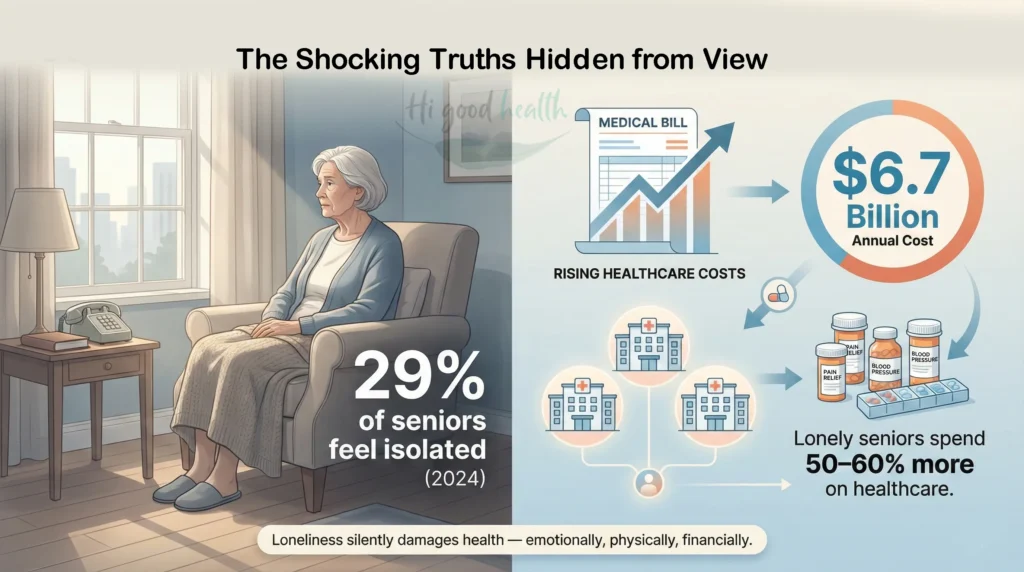
U.S. Surgeon General Dr. Vivek Murthy warns that “the degree to which our life is shortened is similar for loneliness as it is for smoking 15 cigarettes a day.” Yet unlike smoking, loneliness remains largely unrecognised and untreated.
At higoodhealth.com, we believe in sharing credible health information that empowers families to make informed decisions. This crisis affects millions of families — and understanding it could save both lives and money.
Why Loneliness Literally Makes Seniors Sick
The Medical Evidence
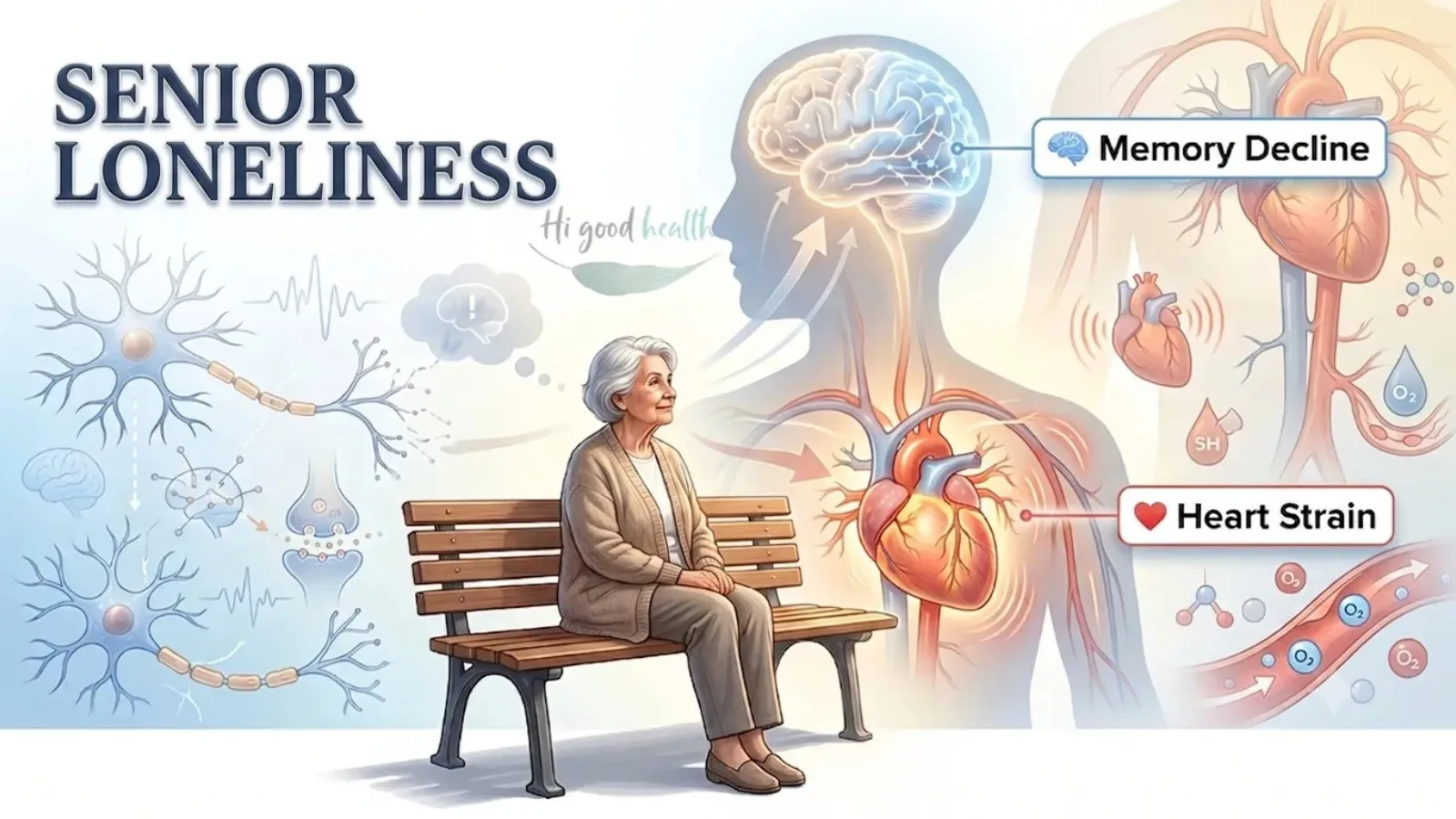
Loneliness isn’t just a feeling — it triggers measurable biological changes that damage health over time.
Inflammation Overload
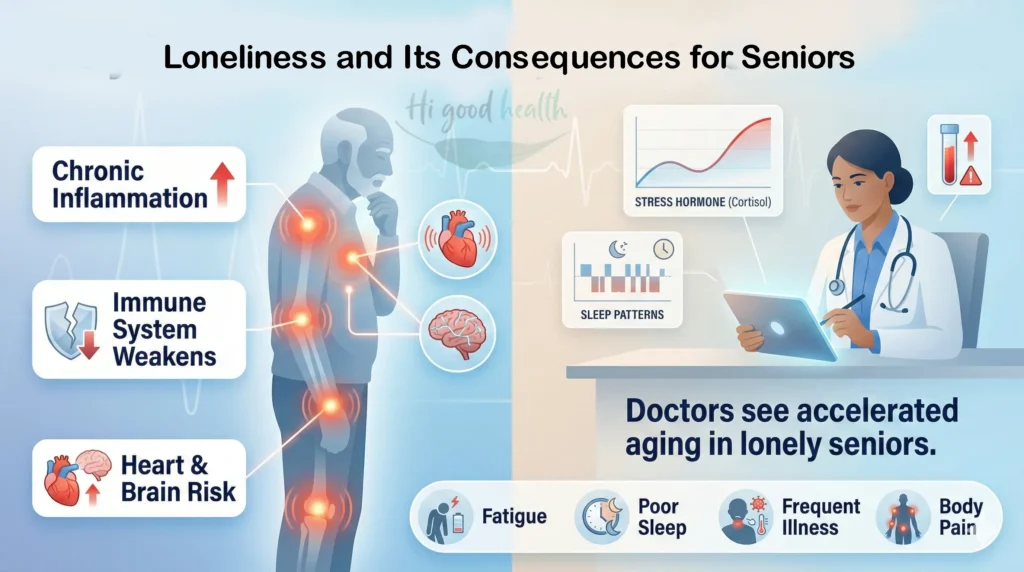
Chronic loneliness triggers persistent low-grade inflammation, elevating C-reactive protein and interleukin-6 levels similar to severe chronic diseases. These inflammatory markers stay elevated continuously, attacking tissues throughout the body and accelerating ageing at the cellular level.
Over time, this constant inflammatory state:
- Damages tissues
- Accelerates cellular ageing
- Increases vulnerability to chronic illness
Learn how your daily digital habits could be fuelling silent inflammation and affecting your long-term brain and gut health. Read our guide: Your Digital Life & Inflammation — Spot It, Stop It, Safeguard Your Brain & Gut & Immune System
Collapse of Body’s Defence System
Perissinotto and colleagues followed 1,604 adults aged 60 and over for six years. Those who felt lonely had a 45% greater risk of death (adjusted HR 1.45) and a 59% greater risk of functional decline — losing the ability to manage everyday tasks such as bathing, dressing or climbing stairs (RR 1.59). It is worth noting that these risks were found to be independent of clinical status, depression, and social network, which emphasises the fact that loneliness is a distinct biological risk factor.
Cardiovascular Damage
Dr. Murthy’s 2023 report on loneliness shows loneliness increases risks of cardiovascular disease, dementia, stroke, depression, and anxiety. Blood pressure remains elevated, blood vessels become stiffer, and heart attack risk increases dramatically.
Reduced Cognitive Reserve
Social connection does more than provide emotional support — it builds cognitive reserve. This is the brain’s capacity to improvise and utilise alternate neural pathways to complete tasks. Frequent social engagement functions as a “mental workout,” increasing synaptic density and strengthening these networks. Research indicates that many seniors who have a good social network maintain baseline cognitive function for years, even when physical markers of Alzheimer’s or dementia are present in the brain.
What Doctors See
In medical practice, lonely seniors present with accelerated ageing — their biological age appears decades older than their chronological age. Blood work shows elevated stress hormones, disrupted sleep patterns, and inflammatory markers matching patients with serious chronic conditions.
Physical Symptoms Include:
- Persistent headaches and muscle pain
- Digestive issues and appetite changes
- Sleep disturbances and chronic fatigue
- Frequent minor infections
Discover the latest nutritional science to help seniors maintain strength and effectively prevent muscle loss. Read our Guide: Senior Nutrition 2026: Prevent Muscle Loss with the Latest Science
The Hidden Financial Devastation
Healthcare Cost Explosion
The 2017 AARP and Stanford study of US Medicare data put the gap at $1,608 per person per year, across roughly four million socially isolated beneficiaries.
In India, where 70% of the elderly are financially dependent and the majority rely on out-of-pocket healthcare spending, this burden falls directly on families. [India-Lon4]
With India’s elderly population at close to 15 crore (149 million in 2022, UNFPA), the aggregate healthcare cost of loneliness-driven illness runs into thousands of crores annually — though comprehensive national data is still emerging.
For individual families, costs accumulate across multiple areas:
Emergency Visits
Recent studies indicate lonely seniors use emergency departments significantly more often than connected peers — up to 67.8 visits per 100 beneficiaries compared to 47.9 for connected seniors.
Specialist Referrals
Increased need for pain specialists, psychiatrists, and multiple consultations. Each appointment adds consultation fees, transportation costs, and time away from work for family caregivers.
Medication Costs
Higher prescriptions for sleep aids, pain relievers, and psychiatric medications. Monthly pharmacy bills climb as doctors try to address symptoms that stem from social disconnection.
Hospital Stays
Longer recovery times and more complications during treatment. Studies show isolated seniors experience more post-surgical complications and extended hospital stays.
Family Financial Impact
• Average Additional Costs: ₹2.5–4 lakhs annually per isolated senior in out-of-pocket healthcare expenses
• Out-of-Pocket Burden: Consultation fees, diagnostic costs, and medicines compound quickly — especially with multiple specialist visits across private hospitals and clinics
• Old-Age Home / Nursing Care Risk: Lonely seniors enter long-term care facilities at double the rate of connected peers, with old-age home costs in India ranging from ₹60,000 to ₹6 lakhs per year, depending on location and care level
Geographic Variations
Rural areas with limited social services see costs 40% higher than communities with robust senior programmes. Transportation barriers, fewer healthcare options, and geographical isolation compound the problem.
In India, rural elderly face compounded isolation — children migrating to cities leave older parents without support, while access to health and social services remains limited. Kerala (16.5% elderly population), Tamil Nadu (13.6%), and Himachal Pradesh (13.1%) have the highest proportions of elderly and face acute loneliness pressures. [India-Lon4]
Dr. Carla Perissinotto, geriatrician at UCSF, notes: “Social isolation is as predictive of early death as traditional medical risk factors, yet we rarely screen for it systematically.”
Breaking the Cycle: What Actually Works
Evidence-Based Solutions
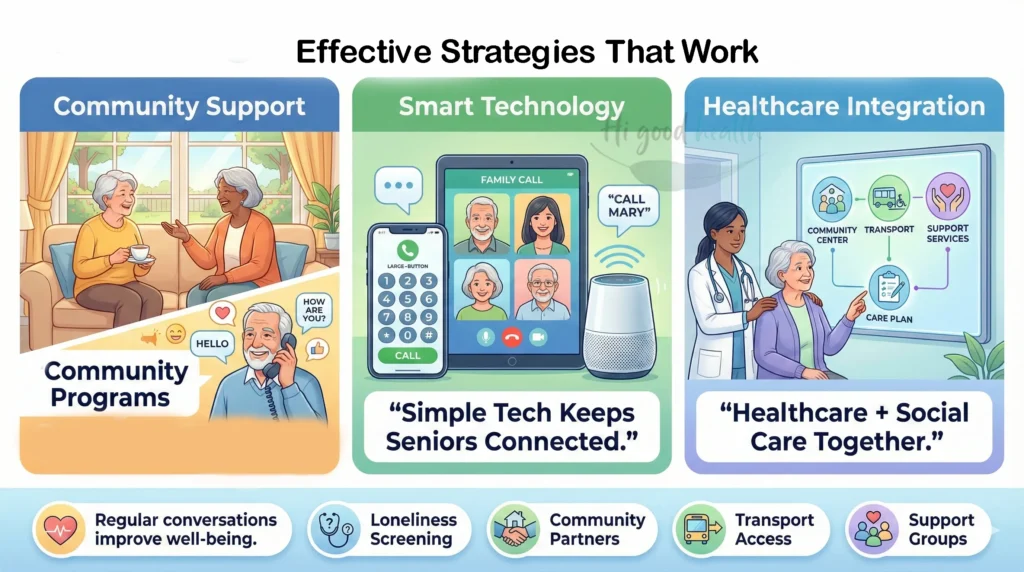
Community Programmes
In India, several helplines provide meaningful emotional support and crisis intervention for lonely and isolated seniors:
- Elderline 14567 — National Helpline for Senior Citizens (Government of India): Toll-free, available 8 AM–8 PM, 7 days a week. Provides emotional support, legal guidance, and connects callers to local resources.
- HelpAge India Helpline — 1800-180-1253 (toll-free): Provides support, counselling, and referrals to elder care services across India.
- KIRAN Mental Health Helpline — 1800-599-0019 (toll-free, 24/7): Free multilingual mental health support and counselling — particularly valuable for isolated, grief-stricken, or depressed seniors.
- iCALL (TISS) — 022-25521111: Psychosocial support and counselling helpline from Tata Institute of Social Sciences, Mumbai.
- Vandrevala Foundation — 9999 666 555: 24/7 crisis intervention and mental health support.
- Tele-MANAS — 14416: Government mental health helpline providing free teleconsultation with trained mental health professionals.
Regular callers to these helplines who initially expressed suicidal thoughts or severe distress due to loneliness often experience dramatic positive changes as they build rapport and feel genuinely heard.
Engaging with younger generations keeps the neural pathways for memory and attention sharp. Explore the cognitive benefits of social engagement and early signs of brain decline, for detailed information, read our article.
Technology That Works
When properly introduced with training, technology can bridge distance gaps:
- Large-button phones with pre-programmed contacts for easy family communication
- Tablets with simplified video interfaces for virtual visits with grandchildren
- Voice-activated emergency response systems that provide safety and peace of mind
Research shows older adults benefit most from technology training conducted by peers close to their age, delivered in group settings that provide both learning and social connection.
Intergenerational Programmes
Connecting seniors with school children or young families creates mutual benefit and purpose-driven relationships. Recent systematic reviews (PMC11341492) show intergenerational interventions produce significant reductions in older adult loneliness, with some programmes reporting loneliness scores dropping from 84.2% to 40% after just 6 weeks of participation.
These programmes work through various activities: shared mealtimes, committee meetings involving both generations, one-on-one leisure activities, and coordinated transportation that brings age groups together naturally.
Healthcare Integration
Progressive healthcare systems now include social prescribing — formal referrals to community programmes, volunteer networks, and social services as part of medical treatment. Social prescribing allows doctors to write a ‘prescription’ for non-medical activities, such as a community gardening group, a local bhajan or singing group, or a morning walking club, which are then facilitated by a ‘link worker’ who connects the senior to these resources. Evidence from Canada, the UK, and emerging programmes globally shows this holistic approach creates stronger integration between medical care and community support systems.
Successful Models Include:
- Routine loneliness screening during medical visits using validated tools
- Partnerships between hospitals and community centres for referrals
- Transportation programmes specifically for social activities
- Grief support groups integrated with healthcare systems
Latest Research Breakthroughs (2024–2026)
Biomarker Discovery
Recent research confirms that loneliness is not just psychological — it is measurable at the cellular level.
Telomere Shortening
Cellular ageing accelerates dramatically in isolated individuals. Telomeres — the protective caps on chromosomes — shorten faster, essentially making cells age more rapidly than chronological time would predict.
- Faster telomere shortening = accelerated biological ageing
- Cells behave as if they are older than the person’s actual age
- Increased risk of age-related diseases
Gene Expression Changes
Loneliness alters how genes function:
- Upregulates inflammatory pathways
- Suppresses antiviral immune responses
This creates a dangerous dual effect:
- Chronic inflammation damages tissues
- Reduced immunity increases infection risk
Cortisol Patterns
Chronic stress hormone elevation mimics severe trauma responses. In many cases of chronic stress or loneliness, the issue is not just constant elevation but a “flattening” of the diurnal cortisol slope, where the normal morning peak is lower and the evening decline is less pronounced. This contributes to high blood pressure, weight gain, and cognitive decline.
AI and Digital Interventions
Recent AI elder care studies show promising results in battling the loneliness crisis, with voice-activated companions providing medication reminders and basic social interaction. However, research emphasises these technologies work best as supplements to — not replacements for — human connection.
Emerging Technologies:
- Smart home monitoring for family peace of mind without intrusive surveillance
- Virtual reality social experiences designed specifically for seniors with mobility limitations
- Automated check-in systems for isolated adults that alert family members to unusual patterns
Prevention Research
New economic studies reveal that loneliness prevention programmes cost approximately $1,500 per senior annually while generating healthcare savings of $3,000–4,000 per person — a clear return on investment. Research published in 2025 (PMC12370830) shows positive social return on investment ratios ranging from $2.28 to $13.72 for every dollar spent on intervention programmes.
One cost-effectiveness study concluded that interventions to reduce severe loneliness in older adults are cost-effective but unlikely to be completely cost-saving, meaning society benefits economically even though some costs remain.
Warning Signs Families Must Know
Early Detection Checklist
Physical Red Flags:
- Increased medical complaints without clear causes or diagnoses
- Frequent requests for stronger pain medication when previous doses were adequate
- Changes in appetite or sleep patterns that can’t be explained medically
- Reluctance to end medical appointments — lingering in the clinic for conversation
Behavioural Changes:
- Avoiding previously enjoyed activities like temple/church/masjid visits, hobby groups, or community events
- Declining personal hygiene or home maintenance despite physical ability
- Increased alcohol consumption as a coping mechanism
- Personality changes or increased anxiety in social situations
Communication Patterns:
- Calling family members more frequently with minor concerns
- Expressing feelings of being a burden to family
- Talking about death or “giving up” more frequently
- Repeating the same stories as if forgetting previous conversations
Subtle memory shifts should be evaluated using clinical screening tools. Find out how to test for cognitive issues at home and professional diagnostic tools, for detailed information, read our article.
When to Act
Don’t wait for crisis.
Early intervention:
- Prevents deep isolation
- Reduces long-term healthcare costs
- Improves recovery and quality of life
The earlier the action, the greater the impact.
Cultural Considerations in India’s Diverse Elderly Population
India’s elderly population is not a monolithic group — their experiences of loneliness are shaped by geography, family structure, gender, language, and community. Understanding these dimensions is essential for effective support.
The Breakdown of the Joint Family: Historically, the Indian joint family system was the most powerful buffer against elderly loneliness. However, economic migration — both domestic (village to city) and international — has rapidly dismantled this structure.
Many elderly parents now live alone in towns and villages while their children work in metros or abroad. A 2024 study found India’s elderly population is increasingly shifting towards solo ageing — a trend that would have been virtually unthinkable a generation ago. [India-Lon4] This structural shift is the single most important driver of senior loneliness in India.
Rural Elderly: India’s rural elderly face compounded disadvantage. With limited access to healthcare, social programmes, and digital infrastructure — and with children having migrated to cities — they often go weeks without meaningful human contact.
Studies confirm that loneliness prevalence is significantly higher in rural settings than urban ones. [India-Lon2] Trusted community anchors — the local temple, mosque, or church; the village panchayat; or the neighbourhood tea stall — serve as crucial social touchpoints and should be actively engaged in outreach.
Women and Widows: Women — particularly widows — experience disproportionately higher levels of loneliness among India’s elderly. Cultural expectations that widows lead restricted social lives, combined with financial dependence and reduced mobility, create a perfect storm of isolation.
Research consistently shows women score higher on loneliness scales than men in the Indian context. [India-Lon1] Programmes that specifically reach homebound elderly women through community health workers (ASHAs, ANMs) and self-help groups (SHGs) show strong results.
Mental Health Stigma and the Digital Divide: In India, loneliness is rarely acknowledged as a health concern. Cultural norms around stoicism — “elders should not complain” — and deep-seated stigma around mental health prevent many seniors from seeking help.
Families may dismiss their parent’s distress as normal ageing or attention-seeking. Additionally, a significant digital divide leaves many elderly without access to video calls, apps, or online communities — the very tools that could bridge distance gaps. Programmes that use simple, familiar technology (basic mobile phones, WhatsApp voice notes) and are delivered in regional languages consistently achieve higher reach and acceptance.
Culturally Appropriate Solutions
Successful interventions acknowledge cultural values and communication styles. In India, faith-based settings — temples, mosques, gurudwaras, and churches — are among the most trusted and accessible community spaces for the elderly.
Senior groups, bhajan mandalis, namaaz gatherings, and satsang sessions are natural vehicles for structured social engagement and peer support that reach seniors who might never respond to a formal programme.
Family Action Plan: Steps That Save Lives and Money
Immediate Assessment (Week 1)
Loneliness often hides behind silence. The fastest way to uncover it is to ask directly.
Start with simple, powerful questions:
- “When did you last have a meaningful conversation with someone?”
- “Do you feel lonely more than once a week?”
- “Are you avoiding activities you used to enjoy?”
These simple questions, similar to the validated UCLA 3-Item Loneliness Scale, can reveal hidden isolation. Don’t assume silence means contentment.
Create Support Structure (Month 1)
Build Regular Contact Schedule
Consistency matters more than duration.
- Daily or alternate-day calls
- Weekly in-person visits (if possible)
- Scheduled video calls with family — WhatsApp and Google Meet work well on basic smartphones
Even brief, predictable interactions can significantly reduce loneliness by creating a sense of stability and belonging.
Address Practical Barriers
Many seniors aren’t isolated by choice — but by logistics.
Address:
- Transportation challenges
- Hearing or vision issues
- Financial limitations
Fixing these often leads to immediate improvements in social engagement.
Connect with Community
Senior centres, faith communities, and volunteer opportunities provide purpose and connection. In India, the following resources can identify support in your elderly family member’s area:
- Elderline 14567 — National Helpline for Senior Citizens: Call to be directed to local elder care resources in your district
- HelpAge India — helpage.org.in | 1800-180-1253: India’s leading NGO for elder welfare with outreach programmes nationwide
- Agewell Foundation — agewellfoundation.org: Provides research, advocacy, and community-based support for elderly in India
- NPHE Wellness Centres — District hospitals under the National Programme for Health Care of the Elderly offer medical, psychological, and social support for senior citizens
Long-term Monitoring (Ongoing)
Health Advocacy
Discuss loneliness with healthcare providers during visits. Request screening using standardised tools like the UCLA Loneliness Scale.
Resource Navigation
Connect with Elderline 14567 (Government of India) and HelpAge India (1800-180-1253) — both provide free assessments, guidance, and personalised resource connections based on your elderly family member’s specific situation and location.
Self-Care for Caregivers
Prevent family isolation while supporting seniors. Caregivers who become isolated themselves cannot effectively help others — build your own support network.
Professional Resources and Expert Insights
Healthcare Provider Training
Dr. Julianne Holt-Lunstad, Brigham Young University researcher, emphasises: “Social relationships should be considered a public health priority, particularly for prevention.”
Medical Screening Tools
Progressive healthcare systems now incorporate:
- UCLA Loneliness Scale (3-question version): Takes under 2 minutes, with 77% sensitivity and 61% specificity for detecting loneliness.
- Social isolation assessment: Integrated during routine medical visits
- Electronic health records integration: Flags at-risk patients automatically
Community Partnership Models
Successful Programmes Include:
- Elderline 14567 (Government of India): National helpline providing free assessments, emotional support, and connection to local elder care resources — 8 AM to 8 PM, 7 days a week.
- HelpAge India Digital Literacy Programmes: HelpAge India runs digital literacy sessions for seniors in multiple cities, helping them use smartphones, video calls, and health apps to stay connected. helpage.org.in
- Agewell Foundation: India’s dedicated elder welfare research and community outreach organisation, connecting seniors to local resources and volunteering networks. agewellfoundation.org
- KIRAN — 1800-599-0019: Government of India’s 24/7 free multilingual mental health helpline for crisis support, counselling, and referrals to mental health professionals.
Frequently Asked Questions
Key Takeaways for Families
Senior loneliness represents both crisis and opportunity. The crisis affects millions, costing thousands of crores in healthcare expenses while destroying quality of life. The opportunity lies in proven interventions that work when implemented systematically.
Action Steps
- Screen senior family members using direct questions about social connection
- Address practical barriers to social engagement like transportation and hearing
- Connect with community resources and healthcare providers who can help
- Monitor progress and adjust interventions based on results
Prevention Focus
Building social connections before crisis prevents both health deterioration and financial devastation. The economic evidence is clear: investing ₹1.2 lakhs annually in prevention programmes saves ₹2.5–3.5 lakhs in healthcare costs per senior.
Stop worrying about dangerous falls and discover the breakthrough 2026 strategies that keep seniors steady, safe, and independent at home. Read our insightful guide: Fall Prevention That Actually Works: Protecting Seniors in 2026
At higoodhealth.com, we’re committed to sharing evidence-based health information that empowers families to make informed decisions. We encourage you to explore our other resources on healthy ageing, community health, and preventive care strategies from leading healthcare systems worldwide.
Share your experiences and suggest topics you’d like us to cover. Together, we can build healthier communities for all generations.
What are the warning signs that an ageing parent is lonely?
Look for increased medical complaints like headaches without clear causes, changes in sleeping or eating habits, and behavioural shifts like avoiding activities they once enjoyed. Frequent calls about minor concerns can also signal a need for connection. Pay attention to whether they linger at the end of phone calls or doctor visits, reluctant to end the conversation.
Is social isolation really as dangerous as smoking?
Yes. The U.S. Surgeon General reports that the impact of loneliness on life expectancy is similar to smoking 15 cigarettes a day. Isolation creates biological stress that significantly increases risks for heart disease, stroke, dementia, and early death.
How much does senior loneliness cost families financially?
Families in India often bear an additional ₹2.5–4 lakhs annually per isolated senior in out-of-pocket healthcare expenses. These costs stem from higher prescription needs, more emergency visits to private hospitals, increased specialist consultations, and a doubled risk of requiring old-age home care (costing ₹60,000–6 lakhs per year) compared to socially connected seniors.
Can loneliness cause dementia or memory loss?
Loneliness significantly increases the risk of developing dementia, anxiety, and depression. While not a direct cause, isolation accelerates cellular ageing and cognitive decline, often mimicking or worsening early symptoms of dementia. The inflammation and stress hormones caused by chronic loneliness damage brain tissue over time.
How do I know if my parent is lonely or just introverted?
Loneliness involves distress about social disconnection, whereas introversion is a preference for solitude. If your parent exhibits anxiety, physical symptoms like unexplained fatigue or pain, or expresses feelings of being a burden, they are likely experiencing loneliness rather than enjoying healthy solitude. Introverts recharge through alone time; lonely people suffer from it.
Does technology actually help reduce senior loneliness?
Yes, when paired with proper training and support. Simple tools like large-button phones and tablets with simplified video interfaces are effective. However, technology should supplement human connection, not replace meaningful face-to-face conversations. Studies show best results when older adults receive group training from peers close to their age.
Discover which senior health trackers offer life-saving value and which ones are simply clever marketing. To know more about wearable tech options for senior safety, read our in-depth guide: Wearable Health Tech for Seniors in 2026 — Hype vs Reality
What is the difference between loneliness and depression?
Loneliness is specifically the distress felt from a lack of social connection, while depression involves persistent sadness and loss of interest in activities. Though loneliness increases the risk of developing depression, they are distinct conditions requiring different support approaches. Loneliness improves with social connection; depression typically requires professional mental health treatment.
Find out if your forgetfulness is just a sign of a tired brain or a critical early warning for Alzheimer’s and Parkinson’s that you can still act on today. To learn more, read our detailed guide: Is Your Brain Getting Tired — Spot Early Signs & Prevent Alzheimer’s & Parkinson’s
Glossary
- Biomarkers: Biological indicators measured in blood or tissue that show disease or health status
- C-reactive Protein (CRP): Blood marker indicating inflammation levels in the body
- Cortisol: Primary stress hormone that affects multiple body systems when chronically elevated
- Interleukin-6: Inflammatory protein that increases during stress and illness
- Social Prescribing: Healthcare approach that refers patients to community programmes for non-medical support — increasingly being piloted in India by progressive hospitals and NGOs
- Telomeres: Protective caps on chromosomes that shorten with age and stress
- UCLA Loneliness Scale: Validated tool for measuring subjective feelings of loneliness and social isolation
- Elderline 14567: India’s National Helpline for Senior Citizens — free, 8 AM–8 PM, 7 days. Provides emotional support, legal help, and referrals to local elder care resources
- KIRAN: Government of India’s 24/7 free multilingual mental health helpline (1800-599-0019) for counselling and crisis support
- Joint Family System: Traditional Indian multi-generational household structure — historically India’s most powerful buffer against elderly loneliness; rapidly eroding due to economic migration
Disclaimer
This article is for informational purposes only and does not constitute medical advice. Always consult qualified healthcare professionals for diagnosis and treatment of medical conditions. Individual experiences may vary, and readers should verify information with their healthcare providers before making health-related decisions.
All reference links valid and accessible on 1 May 2026
[1] AARP Public Policy Institute — Medicare Spends More on Socially Isolated Older Adults
[2] U.S. Department of Health & Human Services — Surgeon General’s Advisory on Social Connection
[3] Perissinotto, C.M., Stijacic Cenzer, I. & Covinsky, K.E. (2012). Loneliness in older persons: a predictor of functional decline and death. Archives of Internal Medicine, 172(14), 1078–1083. PMID 22710744. 1,604 adults aged 60+, followed 2002–2008; death HR 1.45, functional decline RR 1.59.
[4] University of Michigan — National Poll on Healthy Aging: Loneliness Among Older Adults
[5] Lines for Life — Senior Loneliness Line
[6] AARP Foundation Connect2Affect
[7] National Institutes of Health — Economic Costs of Loneliness and Social Isolation
[8] UCLA Loneliness Scale (Version 3)
[9] National Institute on Aging — Social Isolation and Loneliness Resources
[10] Centers for Disease Control and Prevention — Loneliness and Social Isolation
[11] World Health Organization — Social Isolation and Loneliness
[12] Administration for Community Living — Connect with Area Agencies on Aging
[13] Harvard Health Publishing — What is cognitive reserve?
[India-Lon5] Elderly Population in India Shifting Towards Solo Ageing — NDTV/Study, 2024.
[India-Help1] Elderline 14567 — National Helpline for Senior Citizens, Government of India.
[India-Help3] HelpAge India — Elder Welfare Programmes and Helpline 1800-180-1253.
[India-CS1] Loneliness among Senior Citizens in India: A Growing Concern — The CSR Journal, 2025.
[LASI-1] Ali, W.K. et al. (2026). Associations between migrant status, social isolation, and loneliness among older adults in India. BMC Geriatrics, 26:568. LASI Wave-1, 31,390 adults aged 60+: 11.58% socially isolated, 37.25% lonely.
[LASI-2] Srivastava, P. & Srivastava, M. (2023). Prevalence and correlates of loneliness in the later life — insights from LASI Wave-1. Indian Journal of Psychiatry, 65(9), 914–921. 30,394 adults aged 60+: 13.4% reported frequent loneliness.
[NCRB] Centre for Mental Health Law & Policy, on NCRB Accidental Deaths and Suicides in India. Suicide among India’s youth and elderly. Aged 60+: 11,013 deaths in 2019 to 15,339 in 2022, a 40% rise. Leading recorded causes are illness and mental-health conditions.
[AARP-2017] Flowers, L., Houser, A., Noel-Miller, C., Shaw, J., Bhattacharya, J. & Farid, M. (2017). Medicare Spends More on Socially Isolated Older Adults. AARP Public Policy Institute and Stanford University. $1,608 more per person per year; about $6.7 billion annually across roughly 4 million beneficiaries. United States data — no Indian equivalent exists.
[UNFPA] India Ageing Report 2023. UNFPA India. Population aged 60+ rising from 149 million (2022) to 347 million by 2050.
