
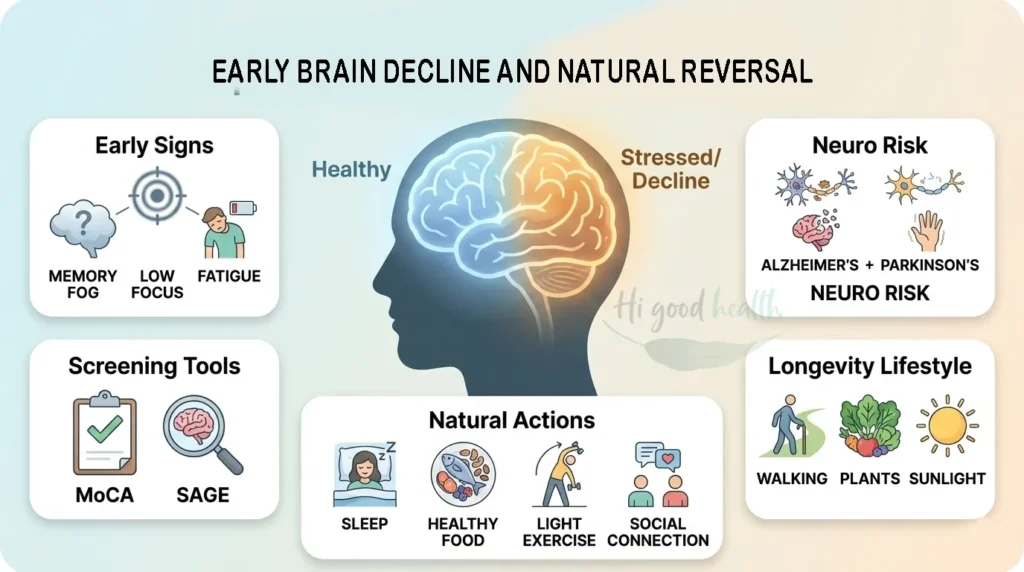
Memory fog, forgetting names mid-conversation, losing your train of thought — these aren’t just “senior moments.” They can be the earliest signs of cognitive decline. And here’s what makes this urgent: by the time Alzheimer’s is formally diagnosed, research suggests 60–70% of neuron damage may already be done.
India currently has 5.3 million people living with dementia — a number expected to nearly triple by 2050. The window to act is not at diagnosis. It is years before.
Early Warning Signs That Deserve Attention
According to global clinical guidelines, watch for:
- Forgetting names, appointments, or recent events more than your peers
- Persistent brain fog or mental fatigue without obvious cause
- Difficulty following multi-step tasks or losing track mid-conversation
- Mood changes or gradual withdrawal from social activities
Start with a free home screening — the SAGE Test from Ohio State University is a validated tool anyone can take with pen and paper. Also ask your doctor to check Vitamin B12 and Vitamin D — deficiencies are extremely common in India and are among the most reversible causes of brain fog.
What Actually Protects Your Brain
People in Blue Zone communities — the world’s longevity hotspots — have up to 75% lower dementia rates. Their habits aren’t complicated:
- Walk 30 minutes daily — boosts BDNF, your brain’s own growth protein
- Eat like a traditional Indian diet — dals, vegetables, turmeric, seasonal fruit
- Sleep 7–8 hours non-negotiably — the brain flushes toxic proteins only during deep sleep
- Stay socially connected — regular engagement may cut dementia risk by 30–40%
- Keep learning — new skills physically build new neural connections
A 2025 Karolinska Institutet study confirmed the brain continues growing new neurons even into your 90s. It is never too late — but earlier is always better.
All reference links valid and accessible on 1 May 2026
📖 For the full guide — Early Signs of Brain Decline & How to Slow It After 60—Naturally
