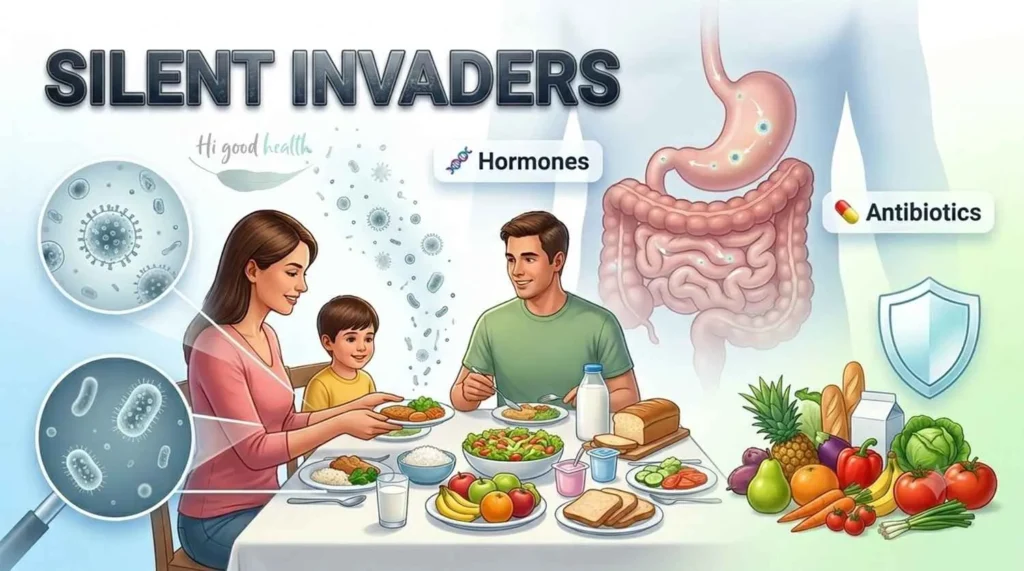
RECENT RESEARCH: Scientists Have Detected Microplastics in Human Brain Tissue — Raising New Concerns About Long-Term Neurological Effects*
Emerging research has uncovered a concerning development that extends beyond the digestive system. Studies published in 2024 and early 2025 reveal measurable quantities of microplastics accumulating in human brain tissue, with researchers actively investigating the health implications.
These microscopic plastic particles, especially from ultra-processed foods, are increasingly being investigated for their potential neurological effects. Experimental studies in laboratory and animal models suggest possible associations with inflammation and cognitive changes. However, researchers emphasize that direct connections to conditions like depression or dementia in humans require further study, and current evidence does not establish definitive causal relationships. The contamination pathway has extended beyond dietary intake to reach various organs, including brain tissue.
Introduction
You may be choosing fresh vegetables from your local mandi, boiling your milk, or even filtering your drinking water — yet invisible contaminants may still find their way into your home. In India, rapid urbanisation, high agricultural demand, and variable regulatory enforcement mean that trace amounts of antibiotics, hormones, pesticides, and microplastics can enter some parts of the food chain.
These are often called “silent invaders” because:
- They are not visible
- They are present in very small amounts
- But over time, research suggests they may have cumulative effects
This article explores:
- Where these contaminants come from in the Indian context
- What current research suggests about their health impact
- What regulations exist in India
- Practical, realistic steps Indian families can take
Addressing these challenges requires not only personal awareness but also stronger systems that prioritise food safety, environmental protection, and long-term public health.
1. Where These Contaminants Come From
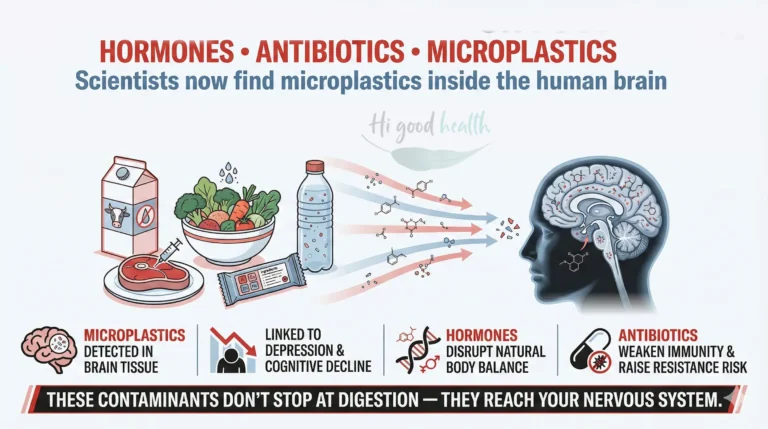
In India, food contamination may occur at multiple levels — from farming practices to storage and packaging.
Table 1: Common Sources of Food Contaminants
| Food/Source | Drugs & Chemicals Found | Why They Are Used | Explanation |
| Milk/Dairy | rBST (growth hormone), IGF-1, estrogen, antibiotics like amoxicillin and oxytetracycline | To boost milk production and treat infections like mastitis | Cows may be injected with hormones to increase milk yield and are often treated with antibiotics. |
| Meat (Poultry, Goat/Mutton | Growth hormones, tetracyclines, sulfonamides, penicillin | To accelerate animal growth and prevent disease in crowded spaces | In intensive farming systems (high-density environments), animals may require routine medication. |
| Fish (Farmed) | Antibiotics, estrogen-like chemicals | To prevent disease outbreaks in overcrowded tanks | Aquaculture farms often use medicated feed or water additives to reduce infections. |
| Vegetables & Grains | Pesticides, herbicides, soil-borne antibiotic residues | To kill pests, fungi, and weeds | These chemicals can seep into soil and water, potentially contaminating crops and produce. |
| Water Supply | Hormonal residues, antibiotics from farm runoff, and sewage | Byproducts of farming and waste disposal | These substances can enter groundwater and rivers, and may persist even after standard treatment. |
| Processed Foods/Packaging | Microplastics, Nanoplastics | From packaging degradation, processing equipment, and environmental contamination | Plastic particles from food containers, processing lines, and the environment can migrate into food, particularly ultra-processed items. |
Note: rBST is not approved for commercial use in the EU, Canada, Japan, and Australia, but is not similarly restricted in India.
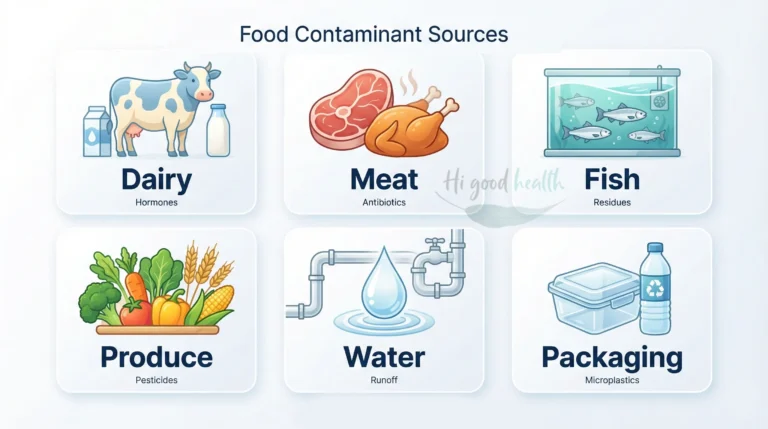
What Are Intensive Farming Systems?
In India, intensive farming refers to high-density animal rearing or crop production aimed at maximising output. While this helps meet food demand, it can sometimes lead to:
- Increased use of antibiotics
- Poor waste management
- Greater environmental contamination
This does not apply to all farms, but it is an important factor in large-scale production systems.
2. Evidence of Contamination: Organic vs. Conventional
Global studies provide useful context, though India-specific data is still emerging. International research has found:
- Higher detection rates of antibiotic residues in conventional milk
- Elevated levels of growth-related hormones
- Lower residue levels in certified organic products
In India, certified organic systems — such as India Organic or PGS (Participatory Guarantee System) certification — aim to reduce residue exposure, though availability and affordability vary across regions.
Packaging and storage materials are another major pathway for synthetic chemicals to enter our systems. Learn about the safety of plastic water bottles and potential chemical leaching risks, for detailed information, read our article.
Sources:
- PGS-India Module: https://nconf.dac.gov.in/uploads/books_manual/PGS_E-Module.pdf
3. Human Health Impacts: What Current Research Indicates
The following table summarises potential health concerns based on current scientific understanding:
Table 2: Potential Health Impacts of Food Contaminants
| Source | Potential Health Impact | Scientific Backing |
| Antibiotics (milk/meat) | Overuse in livestock is linked to antibiotic-resistant bacteria; allergic reactions possible in sensitive individuals | WHO; The Lancet |
| Residual Drugs | Long-term exposure to medications can alter gut microbiota; effects of trace food residues remain under study | NIH |
| Hormones (dairy/meat) | IGF-1 has been studied for associations with hormone-sensitive conditions, but direct causation from dietary dairy hormones is not established | EU & regulatory reviews |
| Contaminated Water | Continuous low-level exposure to pharmaceuticals may accumulate over time; health significance under investigation | Indian (PMC & India portal) & global studies |
| Microplastics | Detected in human brain tissue; experimental studies suggest possible effects on inflammation and cellular function | Peer-reviewed studies (2024–2025) |
Antibiotic Resistance
The World Health Organization identifies antimicrobial resistance (AMR) as one of the most serious global health threats. A significant contributing factor is widespread antibiotic use in food-animal production, which accelerates the development of drug-resistant infections.
- WHO fact sheet: https://www.who.int/news-room/fact-sheets/detail/antimicrobial-resistance
- The Lancet AMR Series: https://www.thelancet.com/series-do/antibiotic-resistance
Pharmaceuticals in Water
Studies have detected trace levels of pharmaceuticals — including antibiotics, painkillers, and hormones — in water sources near industrial and farming hubs in India. These typically enter water systems through:
- Discharge from pharmaceutical manufacturing units
- Hospital and household waste
- Agricultural runoff from livestock farms
In several regions, especially around industrial clusters, measurable levels of drug residues have been found in rivers and groundwater. Municipal treatment plants reduce many contaminants but are not always designed to eliminate all microscopic chemical residues.
The health significance of long-term, low-dose exposure through drinking water remains under investigation. Experts identify this as an emerging concern, particularly in countries like India where pharmaceutical production and population density are high.
Sources:
- https://pmc.ncbi.nlm.nih.gov/articles/PMC11554600/
- https://www.indiawaterportal.org/water-quality-and-pollution/pollution/drugged-and-poisoned-how-do-rivers-india-fare
Microplastics and the Brain
Research published in 2024 and early 2025 has confirmed the presence of microplastics and nanoplastics in human brain tissue, with concentrations appearing to increase over time. While laboratory and animal studies suggest possible associations with inflammation and oxidative stress, human health impacts remain under active investigation, and causal relationships have not been definitively established.
- Nature Medicine (2024): https://www.nature.com/articles/s41591-024-03453-1
The cumulative impact of these contaminants is being investigated as a driver for premature neural decline. Discover identifying early signs of brain fatigue and preventing neurodegenerative diseases, for detailed information, read our article.
Expert Perspective
Research in endocrinology has shown that long-term exposure to small amounts of hormone-like chemicals may interfere with the body’s natural hormonal balance, especially during sensitive stages like childhood and adolescence. In India, where dietary patterns, environmental exposure, and farming practices vary widely, these findings are especially relevant. While current evidence does not confirm direct health effects at typical exposure levels, it does highlight the need for continued research and greater awareness around food quality and safety.
4. What About Vegetarians and Vegans?
Many vegetarians and vegans assume that avoiding meat and dairy fully protects them from these contaminants. However, current research suggests that complete avoidance through diet alone may not be possible.
- Soil & water contamination: Pesticides, antibiotics, and hormone residues can seep into soil and irrigation water, which may affect vegetables and grains.
- Processed foods: Plant-based products may be grown using resources from contaminated environments.
- Environmental interconnection: Contaminants circulate through air, water, and soil, affecting the entire food system.
Research suggests that reducing exposure requires addressing contamination at the source, not just through individual dietary choices.
Explore our guide: “Are Plastic Bottles Safe for Drinking Water? What You Need to Be Aware Of.“
5. Government Response: Regulatory Actions
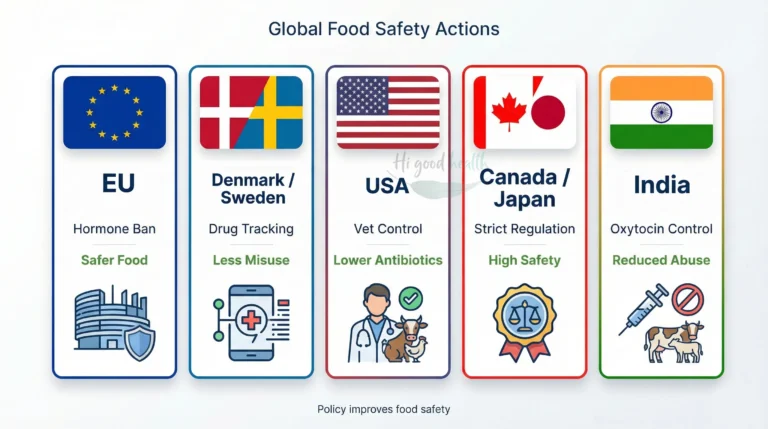
The following table outlines key regulatory measures:
Table 3: Government Regulatory Actions
| Country | Key Action | Impact |
| India | Oxytocin sale restricted to government-approved channels; FSSAI residue monitoring and MRLs. FSSAI’s 2024 amendment banned the use of antibiotics in food-animal production, effective April 1, 2025. | Reduced misuse in dairy; enforcement challenges persist in some regions |
| EU | Banned rBST & non-therapeutic antibiotic use in livestock | Reduced food contamination; lower AMR rates |
| Denmark/Sweden | Real-time digital drug tracking; strict farm penalties | Significant reduction in antibiotic misuse |
| USA | Veterinary feed directive (VFD) requiring prescriptions. | 30–50% reduction in animal antibiotic use, Resistant infections remain a public health concern |
| Canada/Japan | Ban rBST; veterinary prescription control | Enhanced food safety standards |
6. Measures to Curb Misuse in India
Regulatory bodies in India have introduced several measures to reduce pharmaceutical misuse in food production:
- Restrictions on oxytocin distribution — sale only through authorised channels
- Mandatory veterinary oversight for antibiotics and other medications in livestock
- Food safety regulations and residue monitoring by FSSAI
- Maximum Residue Limits (MRLs) set for pesticides, antibiotics, and contaminants
- Periodic inspections across dairy, poultry, and agricultural sectors
- Public awareness initiatives for farmers on responsible drug use
- FSSAI’s ban on antibiotic use in food-animal production (effective April 2025)
While these measures are in place, consistent implementation and regional monitoring remain key to ensuring food safety across the country.
7. Animal Welfare: An Important Consideration
Animal welfare plays a critical role in both food quality and pharmaceutical use. Misuse of oxytocin injections to stimulate milk release has been associated with animal stress and health concerns, leading to regulatory restrictions in India and several other countries.
Overuse of antibiotics is often linked to suboptimal housing conditions and hygiene in intensive farming systems. Research indicates that improved animal welfare standards can contribute to reduced pharmaceutical dependency while maintaining production. Animals raised in less stressful, more hygienic environments typically require fewer medical interventions, which may result in lower contamination levels in food products.
8. Evidence-Based Steps to Reduce Exposure
While systemic changes are essential, individuals can take practical steps to reduce everyday exposure.
Reducing Microplastics Exposure
- Minimise single-use plastics: Reduce plastic bottles, bags, and containers. Use reusable glass, stainless steel, or silicone alternatives.
- Avoid heating food in plastic: Never microwave in plastic containers. Transfer to glass or ceramic before heating.
- Choose minimally packaged foods: Select fresh fruits, vegetables, and grains that are not heavily processed or pre-wrapped.
- Filter drinking water: Install a quality RO (reverse osmosis) or activated carbon filter to reduce microplastic content.
- Choose natural fibre clothing: Prefer cotton, wool, or linen over polyester/nylon, which release microplastic fibres when washed.
Additional Protective Measures
- Purchase products with certified Indian organic labels (PGS-India, India Organic) or those bearing FSSAI-tested claims.
- Use water filtration systems with activated carbon or reverse osmosis technology.
- Support local, transparent farming operations when feasible.
- Prioritise whole foods over heavily processed products.
- Advocate for regulations limiting routine drug use in farming.
- Join Community Supported Agriculture (CSA) programmes for direct farm relationships.
- Share evidence-based information within your community.
Conclusion
Hormones, antibiotics, and microplastics in food represent a complex, emerging public health concern that extends from farming practices to household exposure. Current research suggests possible associations with immune function, hormonal balance, and antimicrobial resistance patterns. While these contaminants are not entirely within individual control, informed choices about food sourcing, preparation, and storage can help reduce exposure.
Every purchase decision — what you eat, where you buy, and which farming practices you support — can contribute to systemic change. Protecting the health of future generations requires both individual action and collective advocacy for stronger FSSAI enforcement and sustainable agricultural practices across India.
FAQ: Common Questions About Food Contaminants
1. Can microplastics affect my mental health?
Research from 2024–2025 confirms microplastics accumulate in human brain tissue. Lab and animal studies suggest potential neurological effects including inflammation and oxidative stress. However, scientists are still investigating whether this translates to specific conditions like depression or dementia in humans. No definitive causal relationships have been established yet.
2. Does cooking destroy hormones and antibiotics?
Not reliably. Many hormone and antibiotic residues are heat-stable, meaning standard cooking temperatures do not consistently eliminate them. Cooking kills bacteria but does not reliably remove chemical residues embedded in food tissue.
3. Is it safe to microwave food in plastic containers?
No. Heat accelerates the migration of microplastics and chemical additives into food. Always transfer food to glass or ceramic before heating.
Transitioning to inert storage materials is a simple way to modify your toxin exposure. Review how to choose safe, reusable water containers to minimize chemical exposure, for detailed information, read our article.
4. Do vegetables contain these contaminants?
Yes. Drug residues and chemicals from farming can seep into soil and irrigation water, and be absorbed by crops and vegetables. Vegetarians are not fully protected from all food-chain contaminants.
5. How effective are water filters?
Basic pitcher filters offer limited protection. RO systems or activated carbon block filters are more effective at reducing dissolved hormones, pharmaceuticals, and microplastics. Check product specifications for removal rates of specific contaminants.
6. What Indian certifications should I look for?
Look for PGS-India (Participatory Guarantee System), India Organic certification, and products that carry FSSAI-verified claims. These indicate reduced use of synthetic hormones and non-therapeutic antibiotics.
7. Is organic food completely free of contaminants?
Not completely. Organic standards prohibit synthetic hormones and non-therapeutic antibiotics, substantially reducing exposure. However, environmental contamination via air, water, and soil can still occur at lower levels.
8. Why are children more vulnerable?
Children’s immune and endocrine systems are still developing, making them potentially more sensitive to hormone-disrupting chemicals. Research suggests that early-life exposure during critical developmental windows may have a greater impact than adult exposure. Some studies have examined associations between early exposure and developmental changes, though direct causal relationships require further investigation
Glossary
- rBST — Recombinant Bovine Somatotropin (growth hormone)
- IGF-1 — Insulin-like Growth Factor-1, involved in growth processes
- AMR — Antimicrobial Resistance (drug-resistant bacteria)
- Oxytocin — Hormone that stimulates milk release in cows
- CSA — Community Supported Agriculture (direct farm-to-consumer)
- Intensive Systems — High-density farming requiring increased pharmaceutical use
- MRL — Maximum Residue Limit (regulatory contaminant threshold)
- PGS — Participatory Guarantee System (India’s organic certification)
- FSSAI — Food Safety and Standards Authority of India
All reference links valid and accessible on 10 April 2026
- Food Safety and Standards Act, 2006 — FSSAI: https://www.fssai.gov.in/cms/regulations.php
- PGS-India — Participatory Guarantee System: https://nconf.dac.gov.in/uploads/books_manual/PGS_E-Module.pdf
- WHO — Antimicrobial Resistance Fact Sheets: https://www.who.int/news-room/fact-sheets/detail/antimicrobial-resistance
- The Lancet AMR Series: https://www.thelancet.com/series-do/antibiotic-resistance
- Nature Medicine Microplastics Study (2024): https://www.nature.com/articles/s41591-024-03453-1
- India Water Portal — Pharmaceuticals in Rivers: https://www.indiawaterportal.org/water-quality-and-pollution/pollution/drugged-and-poisoned-how-do-rivers-india-fare
- PMC Study — Pharmaceuticals in Indian Water: https://pmc.ncbi.nlm.nih.gov/articles/PMC11554600/
- European Food Safety Authority — Food Contaminant Monitoring
- PubMed Research Portal — Peer-reviewed scientific studies
