
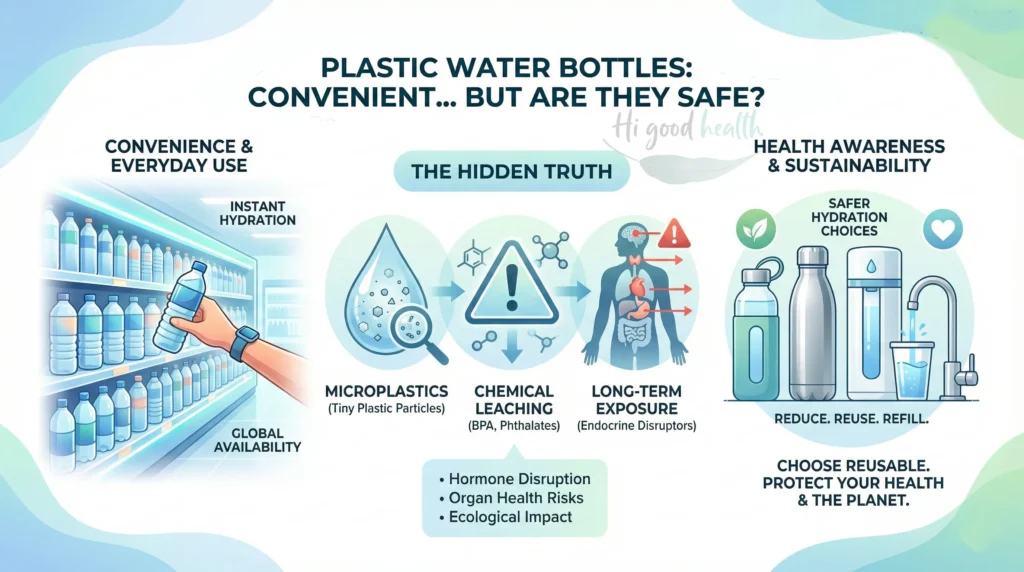
That Bisleri bottle sitting on your desk right now? It’s probably fine — once. The real question is what happens when plastic becomes your everyday habit.
Plastic water bottles are everywhere — in every kirana store, railway station, and office water cooler. But science is quietly building a case that how you use them matters far more than most of us realize.
The chemicals you didn’t sign up for
Most single-use bottles are made from PET plastic (#1). Under normal conditions, they’re considered safe. But leave one in a hot car this summer — and inside that car can hit 65°C — and the bottle starts leaching antimony, a heavy metal that the IARC recently classified as a probable human carcinogen. The chemical in your water bottle isn’t just a label concern; it’s a heat-triggered reality.
Then there’s the BPA question. Those older 20-litre bubble-top jars in Indian offices? Many were made from polycarbonate plastic containing BPA, a hormone-disrupting chemical. “BPA-free” alternatives aren’t automatically safer — substitutes like BPS and BPF show similar hormonal effects.
Microplastics from Plastic Bottles: Invisible, but Everywhere
A 2024 NEERI study tested Indian bottled water brands and found microplastics in 100% of samples — local brands averaged 212 particles per litre. A landmark study in the New England Journal of Medicine found patients with microplastics in their artery plaques had 4.5x higher risk of heart attack or stroke.
The easy switch that changes everything
You don’t need to panic — but you do need to act. Switch to a food-grade stainless steel (304/18-8) or glass bottle for daily use. Never refill single-use bottles. Never leave plastic in a hot car. Filter your tap water at home.
The biggest health risk isn’t the occasional bottle of water. It’s the slow accumulation of daily habits nobody warned you about.
All reference links valid and accessible on 1 May 2026
Stainless Steel: Which is Better.
👉 Want the full science — Are plastic bottles safe for drinking water – What you need to be aware of
