You’ve probably never given much thought to your soleus. It sits quietly beneath your calf, doesn’t look impressive, never gets mentioned in gym conversations. But researchers are now calling it one of the most metabolically powerful muscles in the human body — and for India, where over 100 million people have diabetes and 136 million are pre-diabetic, this discovery couldn’t be more timely.
The research that surprised the science world
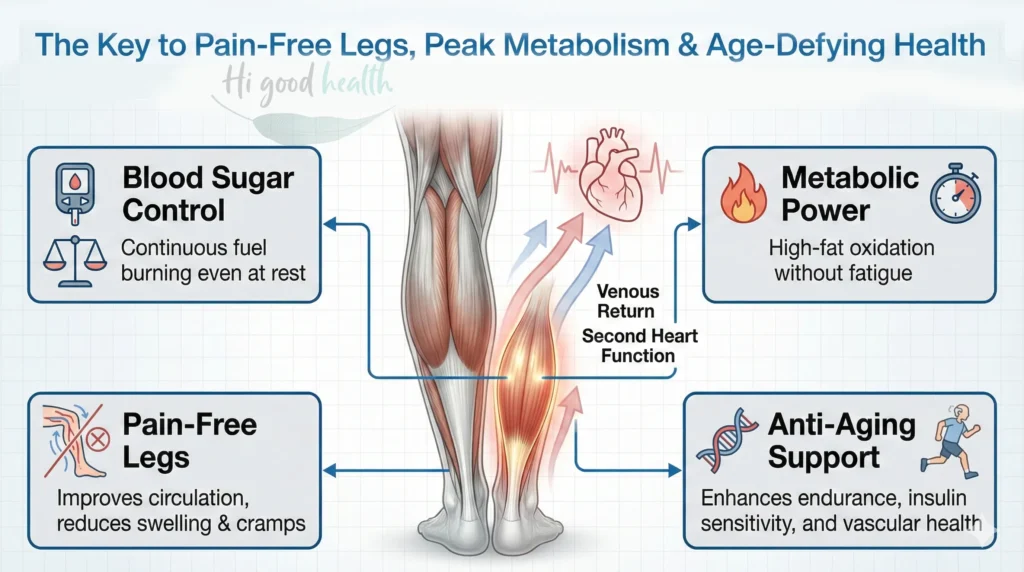
In 2022, Dr. Marc Hamilton at the University of Houston published a study in the peer-reviewed journal iScience showing something remarkable: when the soleus muscle is activated in a specific way while sitting, it can sustain elevated metabolic activity for hours without fatigue — something no other muscle in the body does quite like this.
In controlled experiments, this simple seated movement reduced post-meal blood sugar spikes by up to 52% and lowered insulin demand by 60% compared to sitting still. A 2024 follow-up study confirmed these effects with different protocols. The studies involved small sample sizes, and larger trials are still needed — but the science is genuinely compelling.
Why it’s called your “second heart”
Your heart pumps blood out. But getting blood back up from your legs against gravity is a separate challenge — and the soleus is a key part of that system. Every time it contracts, it pushes venous blood back toward your heart. When you sit for hours without moving, this pumping slows down, contributing to leg swelling, heaviness, varicose veins, and in vulnerable people, a higher risk of blood clots.
This is why office workers, long-distance commuters, and anyone spending 8–10 hours a day at a desk should pay attention. India’s rapidly growing urban workforce is sitting more than any generation before it.
The soleus push-up: the simplest health intervention you’ve never tried
Here’s how to do it, right now, at your desk:
- Sit with feet flat on the floor, hip-width apart
- Keeping your toes and the balls of your feet firmly on the ground, lift your heels slowly
- Hold for 2–3 seconds, then lower with control
- Repeat for 2–3 minutes every hour while working, watching TV, or reading
It should feel effortless — almost too easy. That’s the point. The soleus is built for sustained, low-intensity endurance. Unlike other muscles, it doesn’t fatigue with prolonged gentle activity.
India’s traditional wisdom already knew this: the after-dinner walk (post-khana walk), floor-sitting postures, and yoga poses like Tadasana naturally activate the soleus. Modern research is simply confirming what generations of Indians have practised intuitively.
All reference links valid and accessible on 15 May 2026
University of Houston. Discovery Unlocks Potential of ‘Special’ Muscle. UH News. 2022.
Want to learn the exact daily schedule researchers recommend, which Indian foods best support soleus function, and how this muscle connects to long-term metabolic and anti-ageing health? Read the full guide on HiGoodHealth — The Soleus: Your Silent Hero, Second Heart, and The Ultimate Key to Pain-Free Legs, Peak Metabolism & Age-Defying Health
