
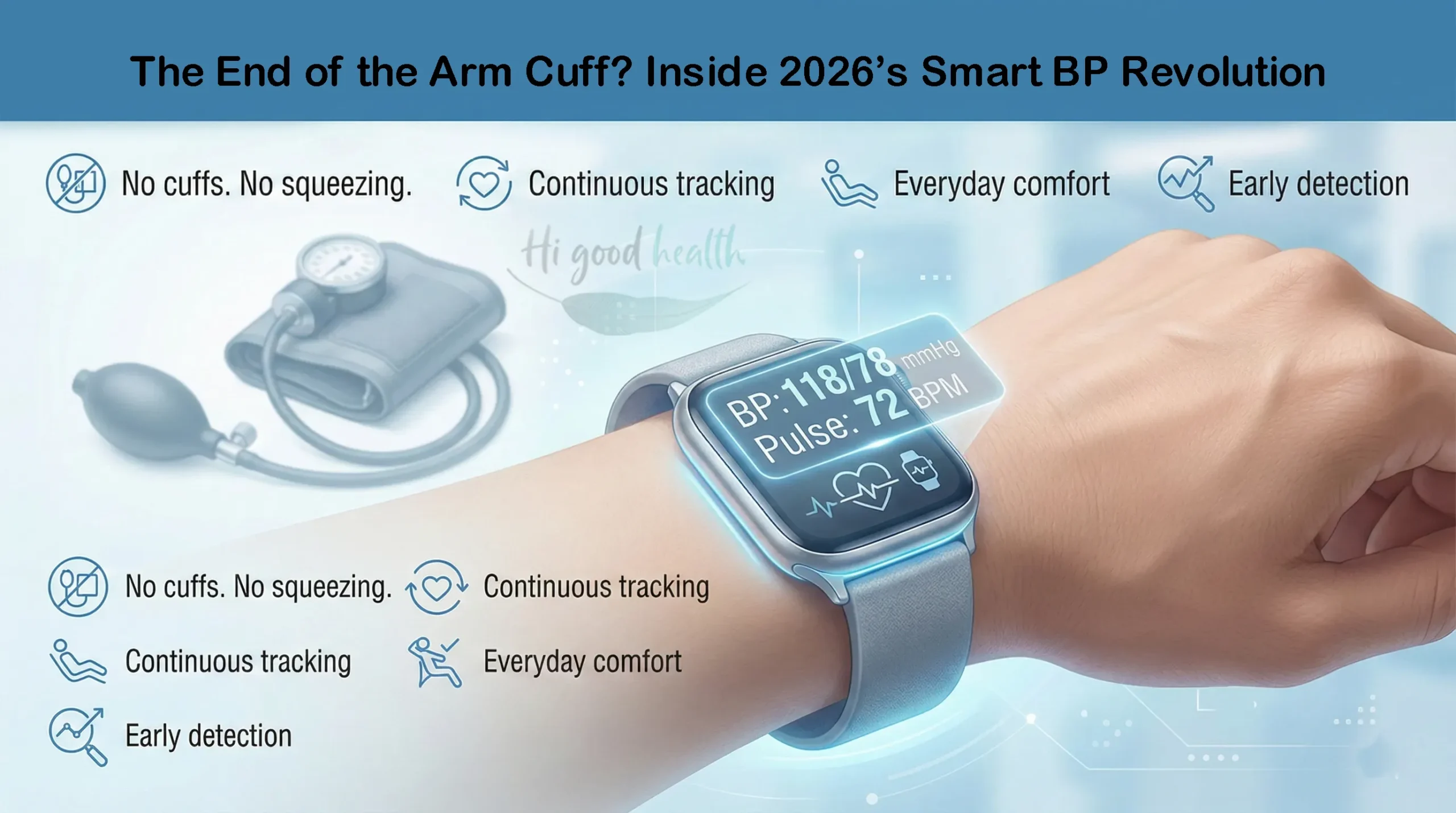
High blood pressure quietly damages your heart, kidneys, and brain for years before you feel a thing. The problem? Most people only check it once in a while at a clinic — and even that reading can be wrong. Studies show 15–30% of patients have “white coat hypertension” — their BP spikes from anxiety in the doctor’s room, leading to unnecessary treatment.
Enter cuffless blood pressure monitors: wristbands and rings that track your BP all day, every day, without squeezing your arm. In 2026, this technology has finally matured — but it comes with real caveats worth knowing.
How They Actually Work
These wearables use PPG (photoplethysmography) — a light sensor that measures blood flow changes through your skin — often combined with ECG or bioimpedance signals. Paired with AI, they estimate blood pressure continuously, even while you sleep, giving your doctor a far richer picture than a single clinic reading ever could.
The Top Devices in 2026
| Device | Best For | Key Limitation |
| Aktiia Hilo Band | Continuous 24/7 tracking; only FDA-cleared cuffless BP monitor | Monthly calibration required; nighttime readings can drift |
| Samsung Galaxy Watch 7 | On-demand readings in a smartwatch ecosystem | Not continuous; regional and phone pairing restrictions |
| CART BP Ring | Ease of use; ring-style comfort | Not yet FDA-cleared; sensitive to finger movement |
| Whoop 5.0 MG | Athletes and biohackers wanting trend data | Shows trends, not absolute numbers; high subscription cost |
The Aktiia Hilo Band stands out as the clear leader — it’s the first cuffless device validated to ISO-81060-2 standards (the same bar traditional BP monitors must meet) and the only one with FDA clearance for continuous monitoring.
What the Science Actually Says
Here’s the honest picture: a 2026 expert review in JAMA Cardiology warned that most cuffless devices have not yet been standardised for clinical diagnosis. Cardiologist Dr. Eugene Yang put it plainly: “We should not rely on data from unvalidated devices.”
Current expert consensus is clear — cuffless monitors are excellent for:
- Tracking long-term BP trends at home in a relaxed setting
- Detecting patterns your doctor never sees in a single visit
- Avoiding white coat hypertension misreadings
They are not yet replacements for a validated arm cuff — especially before adjusting medications. Always confirm major changes or high readings with a traditional cuff.
What This Means for Indians Managing Hypertension
India carries one of the world’s largest hypertension burdens, and most people only discover elevated BP accidentally. A wearable that catches a pattern of high readings over weeks — even if not clinically precise — could prompt a life-saving conversation with your doctor before a heart attack or stroke. Used smartly, these devices fill a genuine gap.
The bottom line: Use cuffless monitors as your daily health companion and trend tracker. Keep a standard cuff at home or at your pharmacy for confirmation. And always loop in your doctor before making any treatment decisions based on wearable data.
All reference links valid and accessible on 1 May 2026
Want and Read the full review — The Best Cuffless Blood Pressure Monitors of 2026 – Are these a game changer?
