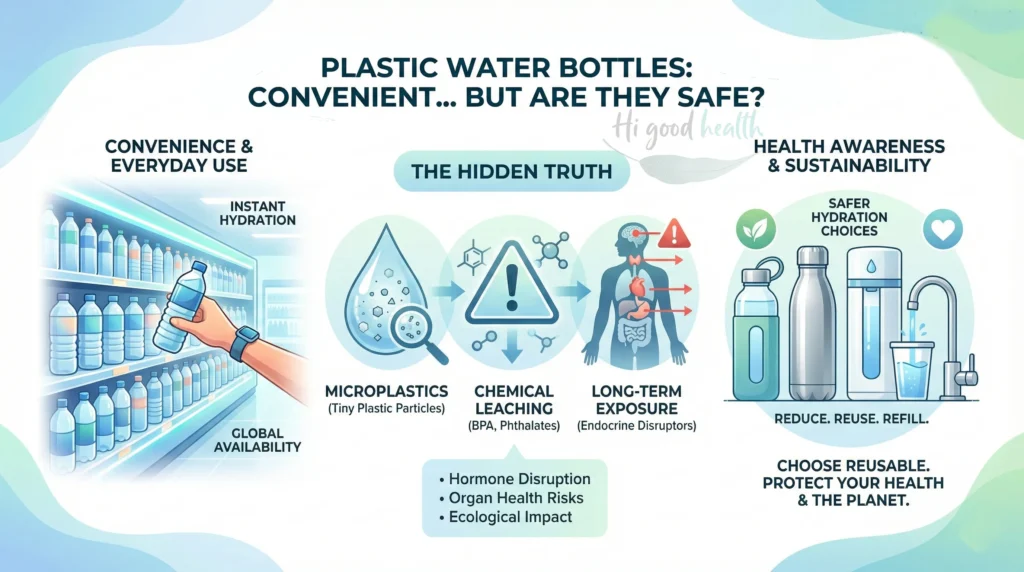
You grab a plastic water bottle from your hot car, take a long sip, and feel virtuous about staying hydrated. But what if the bottle itself is the problem?
Plastic water bottles are not universally dangerous — but the conditions we routinely expose them to change that equation fast.
What’s Actually Leaching Into Your Water Bottle
Most single-use bottles are made from PET (#1 plastic), which is considered safe for single use under normal conditions. The problem starts when heat enters the picture. Studies show that bottles stored above 50°C — easily reached inside a parked car in summer — can leach antimony, a heavy metal the IARC recently upgraded to a “Probable Human Carcinogen” (Group 2A). At 60°C over 12 weeks, antimony levels can exceed safety thresholds entirely.
Then there are microplastics. A 2024 Columbia University study found a staggering 240,000 plastic fragments per litre of bottled water — mostly nanoplastics small enough to penetrate cells. A separate study in the New England Journal of Medicine found that patients with microplastics in heart plaques had 4.5 times higher risk of heart attack or stroke.
And “BPA-Free”? Don’t be fooled. Replacements like BPS and BPF show similar hormone-disrupting effects — different chemical, same concern.
What to Do Instead
- Switch to 304 stainless steel or glass for daily use — zero leaching, proven safe
- Never drink from a bottle left in a hot car — discard it
- Don’t reuse single-use bottles — wear and washing accelerate chemical release
- Filter tap water at home — it’s safer, cheaper, and far lower in microplastics than bottled water
Occasional use of plastic bottles is unlikely to cause harm. The danger is the daily habit.
All reference links valid and accessible on 5 MaY 2026
Get the full guide — Are Plastic Bottles Safe? The Hidden Risks of Drinking Water from Plastic & What to Do
For educational purposes only. Consult a healthcare professional for personalized health advice.
