Updated: 25 September 2026
A Growing Threat to Pets in America
For years, flea and tick prevention was treated as a seasonal task — something to worry about during the summer and forget by the first frost. As we move into 2026, that approach no longer holds up.
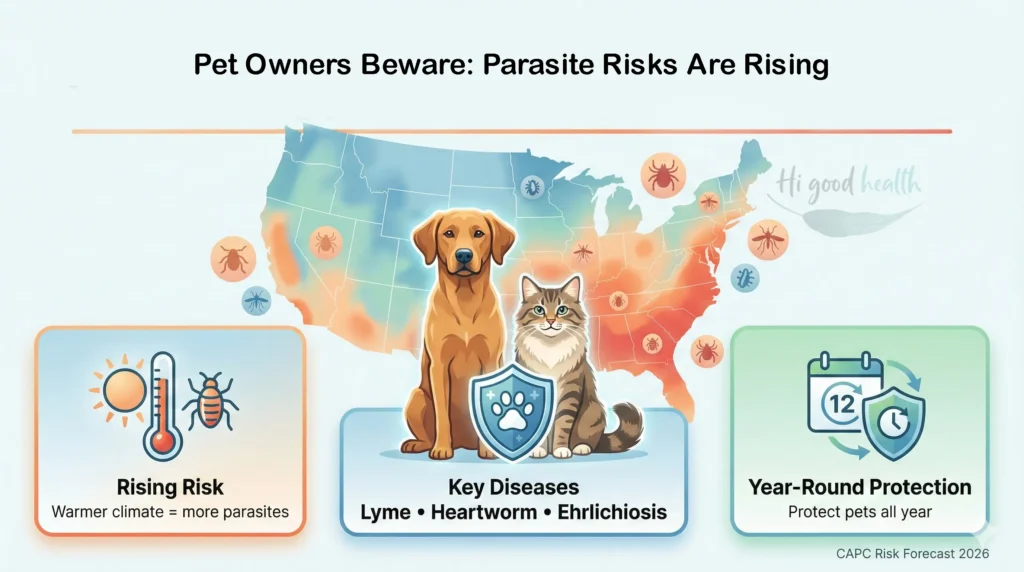
Milder winters, suburban expansion, and more pets travelling with their families have changed how, and where, parasites thrive in the United States. Tick borne disease in dogs is now a year-round concern, not a summer one.
At a glance
Tick borne disease in dogs — mainly Lyme disease, ehrlichiosis, anaplasmosis, and babesiosis — is spread when an infected tick attaches and feeds. Watch for fever, sudden lethargy, loss of appetite, limping, pale gums, or dark urine, usually 1–3 weeks after a tick bite.
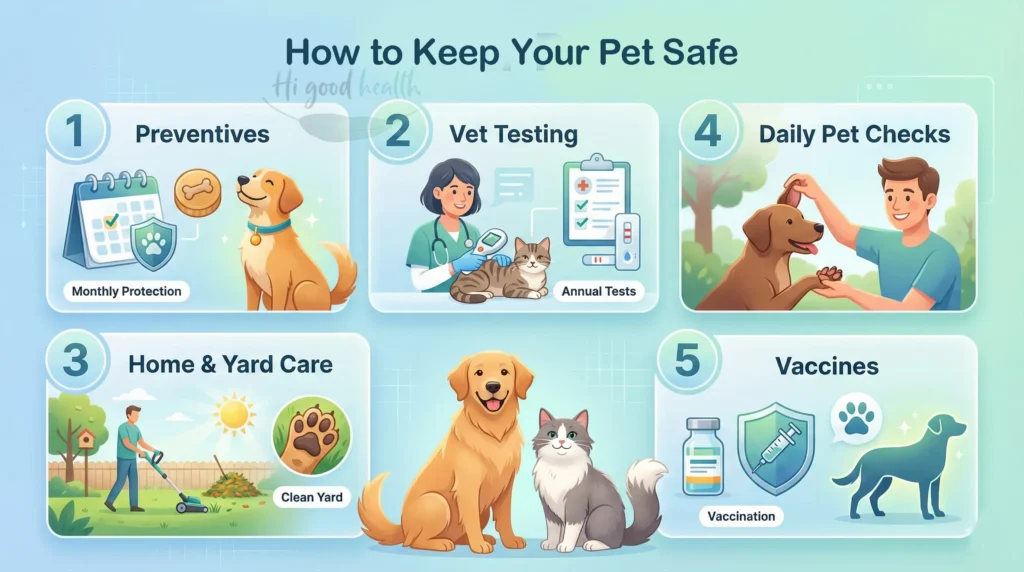
Most infections need 24–48 hours of attachment to spread, so daily tick checks plus a vet-approved, year-round preventive (an oral chew, spot-on, or collar) are the best protection. See a vet promptly if your dog shows any of these signs.
According to 2025 forecast data from the Companion Animal Parasite Council (CAPC)[1] — whose models have held roughly 94% accuracy since 2012 — Lyme disease, ehrlichiosis, anaplasmosis, and babesiosis are all projected to keep rising through 2026, with several states reporting record-high tick activity in both urban and suburban corridors.
For American pet parents, year-round protection is now a medical standard. “Flea season” is a thing of the past. This guide breaks down the 2026 parasite outlook and the evidence-based steps that keep your furry family members safe.
What a Tick Bite on a Dog Actually Does
Most of the time, nothing. A tick bite on a dog is usually just a bite — a small firm bump that settles within a few days. The danger is never the bite itself. It is what a minority of ticks are carrying.
Feeding time is the thing that matters
A tick has to attach and feed for a while before it can pass anything on. That is why finding one early beats every product on the shelf, and why a hand check after every walk in tick country is the most useful habit an owner can build.
What happens next, if anything happens at all
Infection does not announce itself. Ehrlichia and its relatives settle into the spleen and bone marrow and can stay quiet for weeks while the dog looks completely well. By the time signs appear, the tick is long gone and forgotten.
Dogs and tick bites: what not to look for
Do not wait for a rash. Dogs do not get the bullseye that people get with Lyme disease, and a ring-shaped mark on a dog is far more often a black fly bite — the American Kennel Club says those clear on their own in about a week. Watch appetite, energy and temperature instead.
The “Indoor” Myth: Why Your Apartment Isn’t a Fortress
The idea that high-rise living or paved city paths create a “fortress” against tick borne disease in dogs is one of the most common — and riskiest — beliefs among US pet owners. While the American Dog Tick usually waits on the grassy edges of suburban trails, its cousin, the Brown Dog Tick, has become a specialized urban hitchhiker.
This species is unique in the US for its ability to complete its entire life cycle indoors. It doesn’t need a forest to thrive; it only needs your baseboards. These pests are often “hand-delivered” into modern apartments via delivery boxes, shared elevators, or a neighbor’s dog in the lobby.
Once inside, our climate-controlled homes act as an incubator, shielding ticks from the natural winter “die-off” that would happen outdoors. Instead of blades of grass, these ticks seek out cracks in hardwood flooring, window sills, and electrical outlets to breed and wait for a host.
Small urban green spaces and communal dog runs also act as high-traffic hubs, where wildlife like squirrels and raccoons drop questing ticks daily. In this setting, pavement is no substitute for prevention. Without consistent protection, a city home can quickly shift from a safe haven to a breeding ground.
📍 2026 Watch: The Longhorned Tick (Haemaphysalis longicornis), an invasive species now established across 19+ US states, is expanding its range further in 2026. Unlike native ticks, it can reproduce without mating, so a single tick on your pet can start a new infestation. Ask your veterinarian about preventive strategies that work against emerging tick species.
Why “Tick Fever” Is More Than Just a Fever
In the US, “Tick Fever” is a catch-all term for a group of serious tick-borne infections — including Lyme disease, ehrlichiosis, anaplasmosis, and babesiosis — that can attack a dog’s blood cells, immune system, and overall vitality.
Affected dogs may show lethargy, reduced appetite, pale gums, fever, weakness, or changes in urine color. Some cases become life-threatening without prompt veterinary diagnosis and treatment. These are the signs and symptoms of tick fever in dogs that pet parents should never ignore.
⚠️ When to Call Your Vet Immediately:
- Gums appear white, pale yellow, or bluish
- Urine turns dark “cola” or “tea” colored
- Your dog collapses, cannot stand, or has difficulty breathing
- Fever above 104°F that does not resolve within 24 hours
- Sudden, unexplained bleeding from the nose or gums
Meet the Silent Thieves of Your Pet’s Health
Pet parents across the US often say, “My dog was fine yesterday, but today he just won’t get up.” That is one of the most common first signs of tick-borne illness in dogs.
These are not just medical terms — they are serious infections that can undermine your pet’s health within days of exposure. The main types of tick disease in dogs are worth knowing by name.
1. Lyme Disease (Borrelia burgdorferi)
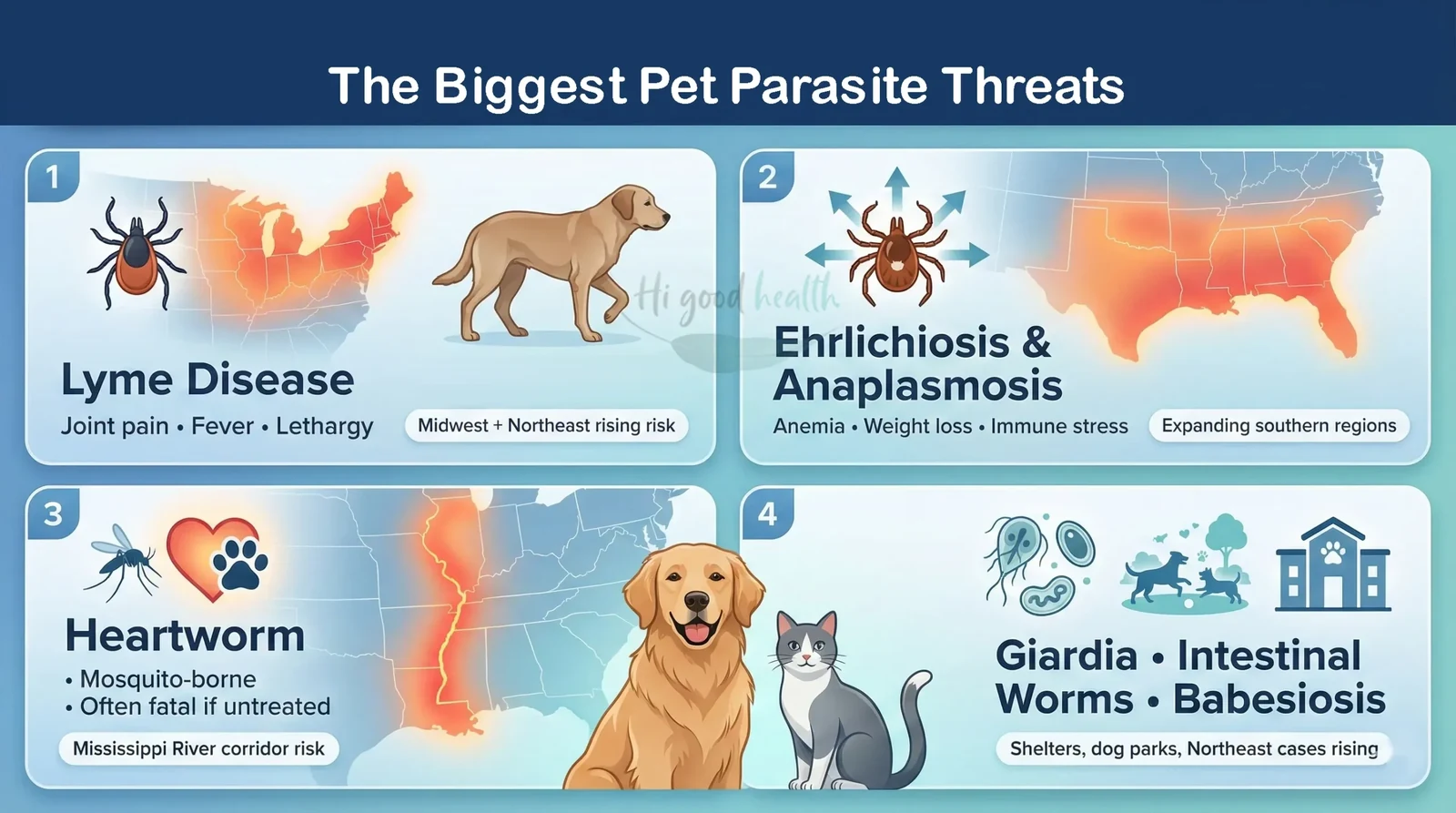
Geographic Risk: CAPC prevalence maps show elevated tick activity across the Northeast corridor, Wisconsin, Minnesota, Pennsylvania, and New York, with cases now confirmed as far south as Virginia and North Carolina. Lyme disease in dogs is one of the most widely tracked tick-borne infections in the country.
Transmission: Primarily spread by the Black-legged (Deer) Tick (Ixodes scapularis), which needs 24 to 48 hours of attachment to transmit the Borrelia bacteria — which is why early tick checks matter so much.
Clinical Signs in Dogs:
- Shifting Lameness: Limping that may move from one leg to another over days or weeks
- Joint Issues: Pain, stiffness, or visible swelling in one or more joints
- High Fever: Typically ranging from 103–105°F
- General Malaise: Lethargy and sudden loss of appetite
- In Severe Cases: Lyme Nephritis[9] — a serious and sometimes fatal kidney complication
🐱 Cat Note: While cats rarely show clinical signs of Lyme disease, they often act as “tick taxis,” bringing infected ticks into the home and raising the risk to humans and other pets. Regular tick checks after outdoor access are still essential.
2. Ehrlichiosis & Anaplasmosis
Transmission: Ehrlichiosis in dogs is primarily spread by the Lone Star Tick (Amblyomma americanum), while anaplasmosis in dogs is carried mainly by the Black-legged Tick (Ixodes scapularis).[3]
Geographic Expansion: These diseases show expanding ranges across the Southeast, Texas, Oklahoma, and increasingly the Midwest. The 2026 CAPC forecast projects above-average activity in states once considered low-risk, including parts of Ohio, Indiana, and Kansas.
Symptoms to Watch For: Sudden high fever, lethargy, decreased appetite, and “purple spotting” on the gums or skin (petechiae), which signals a drop in platelets and needs immediate veterinary attention.
🐱 Species Note: Though more common in dogs, cats can also be infected. Their symptoms are often subtle — a hidden fever or stiff joints — which makes regular vet screenings essential, especially for cats with outdoor access.
3. Babesiosis (Babesia canis / Babesia gibsoni)
Transmission: Babesiosis in dogs is spread by the American Dog Tick (Dermacentor variabilis) and Brown Dog Tick (Rhipicephalus sanguineus). Notably, it can transmit faster than Lyme disease — sometimes within hours of tick attachment — which makes removal speed especially important.[4]
Geographic Alert: Once considered rare, babesiosis is surging across the Northeast and is now reported more often in the Mid-Atlantic and Great Lakes regions. This protozoal infection attacks red blood cells, causing severe anemia.
Symptoms to Watch For:
- Dark or reddish-brown urine (hemoglobinuria)
- Pale or yellow gums (jaundice)
- Liver dysfunction (ascites)
- Rapid, labored breathing
- Weakness and collapse in advanced cases
🩸 This disease can mimic an autoimmune crisis and may require blood transfusions in moderate-to-severe cases.
4. Gastrointestinal & Emerging Parasites
While not tick-borne, these parasites often share the same environments as ticks and deserve a place in any full parasite prevention plan:
- Giardia: Common in dog shelters, dog parks, and areas with contaminated water
- Intestinal Worms: Roundworms, hookworms, and tapeworms stay prevalent, especially in puppies and kittens
- Action Plan: Regular fecal testing is recommended — especially for newly adopted pets or dogs with frequent outdoor or park exposure
📝 Note on Co-Infections: Dogs in high-risk areas can catch more than one tick-borne disease at once. A dog may test positive for both ehrlichiosis and anaplasmosis at the same time, which complicates treatment. Always request a comprehensive tick panel (such as the 4Dx SNAP test) rather than testing for a single disease.
🚨 One Set of Signs That Means Today, Not Tomorrow
Severe ehrlichiosis goes after the platelets that let blood clot, and a dog that cannot clot properly is in real danger.
The Merck Veterinary Manual lists bleeding tendencies — petechiation, ecchymosis, melena and epistaxis — among the signs of the acute phase. In plain terms: nosebleeds, pinpoint red spots on gums or belly, bruises with no cause, and black tarry stool.
Any one of those is a same-day veterinary visit. Do not wait to see whether it settles.
A Word on Antibiotics
Owners search for the drug by name, so here is the honest version. Tick-borne infection in dogs is treated with tetracyclines, usually doxycycline, and the Merck Veterinary Manual sets a 28-day course for ehrlichiosis.
We are not printing a dose. It is calculated from body weight, and the right length of course depends on which infection it is and how long it has been there. Both are veterinary decisions.
Leftover human antibiotics are not a shortcut. The wrong drug at the wrong strength can leave a dog looking better while the infection continues, and it makes the bacteria harder to treat next time.
The Economics of Tick Prevention: Prevention vs. Cure
When you compare the cost of a monthly prevention protocol with the potential cost of treating advanced tick borne disease in dogs, prevention is consistently the more predictable path.
The Cost of the Cure
Treating a full-blown case of Tick Fever in the US can escalate quickly, especially if the dog needs hospitalization or intensive supportive care:
- Diagnostics: Initial blood work, CBC, PCR, and 4Dx SNAP tests typically range from $150–$300, depending on the clinic and tests advised
- Hospitalization: Multi-day stays for IV fluids, medications, and monitoring can range from $500–$1,000 per day
- Blood Transfusions: If red blood cells or platelets crash, a transfusion may be life-saving but costly — often $800–$1,500 per unit due to limited canine blood banks
- Long-Term Recovery: Follow-up tests and liver/kidney support medications may add another $200–$500 over weeks or months
- Emergency/After-Hours Care: Visits to 24-hour emergency hospitals often carry higher consultation and service charges, typically adding $100–$300 or more to the total
The “Emotional” Tax
Beyond the financial toll, there is the emotional cost that never shows up on an invoice. Watching a pet struggle through severe illness — barely able to stand, needing transfusions, or spending days in intensive care — is something that lingers long after the bills are paid.
In 2026, many US pet insurance providers now cover tick-borne illnesses, but only if you can prove the pet was on a regular, vet-approved prevention protocol.
- The Cost of Neglect: ICU stays, transfusions, repeated blood tests, and organ-support medications can compound into a major financial and emotional crisis
- The Cost of Prevention: A monthly or quarterly preventive is a predictable “subscription”; the cure is a high-interest “emergency loan”
For more on protecting yourself from unexpected veterinary bills, read our article on Pet Insurance for US Dog Owners.
The Cost of Prevention
The US market has shifted heavily toward combination products that handle fleas, ticks, and intestinal parasites in a single monthly pill or quarterly dose.
Premium Oral “All-in-One” Chews
Product | Monthly Cost (Est.) | Annual Cost (Est.) | Coverage |
|---|---|---|---|
Simparica Trio | $38–$48 | $450–$550 | Fleas, 5 tick types, heartworm, hook/roundworms |
NexGard Plus | $45–$50 | $540–$600 | Newest formula; comprehensive internal/external |
Bravecto | $27–$32 | $320–$380 | Given every 12 weeks; very high compliance rate |
Mid-Tier Topical Solutions
Topicals (spot-ons) stay popular for dogs with sensitive stomachs or owners who prefer non-oral options:
- Frontline Shield / K9 Advantix II: $15–$25 per month ($180–$300/year)
- Pros: Repels ticks before they bite (unlike orals)
- Cons: Can wash off with frequent swimming or bathing
- Generic Fipronil: $10–$15 per month — the budget choice, though some regional resistance has been reported in the US
Budget-Friendly Collars
- Seresto Collar: $60–$85 per collar
- Duration: 8 months of continuous protection
- Daily Cost: Approximately $0.25–$0.35 per day
- Note: Highly cost-effective for tick and flea repulsion, but does not cover intestinal parasites — ask your vet about adding a dewormer
Pet Parent’s Tick-Free Action Plan
Knowing the risks is the first step, but small, consistent actions are what actually keep the “silent thieves” away. Here is a practical routine to help keep your pet safer during high-risk periods — and year-round.
The Post-Walk Ritual: The 30-Second Scan
Ticks are expert hitchhikers. After every outdoor walk, take 30 seconds to check these high-risk areas:
- Ears & Neck Line:
Check inside the ear flaps and under the collar where ticks often hide. - Toes, Armpits & Elbows:
Spread the toes to inspect between them. Feel around the armpits and elbows — warm, protected areas ticks prefer. - Tail Base & Groin:
Run your hands under the tail and along the inner thighs.
Why 30 seconds matters:
Most tick-borne infections need 24–48 hours of attachment to transmit. Removing ticks early can stop disease before it starts.
Set a “Tick Day” Reminder
Whether it is a monthly or 3-month tablet (such as Bravecto or Simparica Trio), set a recurring alarm on your phone and give it only under veterinary guidance and according to the product label. Compliance is the single biggest gap between good prevention intent and actual protection.
The “Never-Squeeze” Rule
If you find a tick, do not squeeze, burn, or apply kerosene or petroleum jelly. These methods can make the tick regurgitate into the wound, which can raise infection risk. Instead:
- Use fine-tipped tweezers or a proper tick-removal tool
- Grasp the tick as close to the skin surface as possible
- Pull upward with steady, even pressure — no twisting or jerking
- Clean the bite area with a pet-safe antiseptic or rubbing alcohol
- Save the tick in a sealed bag or photograph it for your vet if your dog develops symptoms within the next 2–3 weeks
- If you are unsure whether the whole tick was removed, or if your dog seems unwell afterward, schedule a veterinary check promptly
Home Defense
Ticks may hide in cracks, corners, bedding areas, kennels, balconies, and shaded outdoor spots. Once a month, ask your veterinarian whether a pet-safe environmental control product suits your home — especially if your pet has had repeated tick exposure, if you live near wooded areas, or if you own multiple pets.
The Weekly “Early Warning” Check
Once a week, do a 1-minute wellness check for the early signs of tick borne disease in dogs:
- Gums: They should look bubblegum pink. White, very pale, or yellow gums are a medical emergency
- Appetite: If your usually enthusiastic eater suddenly refuses food or treats, pay attention — this is often the earliest sign
- Urine: Watch for a change to dark “cola” or “tea” color, which can point to red blood cell destruction
- Energy & Temperature: If your pet seems unusually tired, weak, feverish, or unwilling to move, seek veterinary advice early rather than waiting for symptoms to worsen
🔗 Read our companion article: Recognizing the Signs: What Every US Pet Parent Must Watch For — covering subtle behavioral changes and physical red flags in greater detail.
Key Takeaways
- Tick borne disease in dogs is now a year-round threat across the US, not a summer-only one — indoor pets are not automatically safe.
- The four main tick illnesses in dogs are Lyme disease, ehrlichiosis, anaplasmosis, and babesiosis; a dog can catch more than one at once.
- Watch for fever, lethargy, poor appetite, limping, pale gums, or dark urine 1–3 weeks after possible tick exposure.
- Most infections need 24–48 hours of attachment, so daily post-walk tick checks and prompt removal genuinely prevent disease.
- A vet-approved, year-round preventive (oral chew, spot-on, or collar) costs far less than treating advanced disease.
Conclusion: Vigilance Is the Highest Form of Kindness
Tick-borne disease is a serious and expanding threat across the United States in 2026, yet it is also one of the most preventable. With the right knowledge, a consistent post-walk routine, and a vet-approved prevention plan, most cases can be avoided.
Beyond the money — prevention is a predictable subscription; the cure is a catastrophic bill — there is a deeper reason to act.
Tick borne disease in dogs like ehrlichiosis and babesiosis causes real, silent suffering: achy joints, chronic fatigue, and organ stress your pet cannot put into words. Preventing that suffering is not just practical. It is the right thing to do.
- Financial Logic: Prevention is a predictable “subscription”; the cure is a high-interest “emergency loan”
- Ethical Logic: Preventing the silent suffering of joint pain, organ stress, and transfusion-level anemia is the highest form of pet advocacy
The Bottom Line: Prevention is a decision you make routinely, month by month.
Treatment is a decision made in urgency — when time, cost, and outcomes are all uncertain.
Choose prevention — for their health, comfort, and quality of life.
Frequently Asked Questions (FAQs)
1. Can my dog get Tick Fever even if I don’t see a tick?
Yes, absolutely. Ticks are experts at hiding in hard-to-see spots like deep ear folds, between toes, under collars, or under the tail. A tick may attach, feed, and detach before you ever notice it — which is one reason dogs can develop tick-borne disease even when owners have not spotted an obvious tick.
2. How long does a tick need to be attached to transmit disease?
It depends on the disease. For Lyme disease, the tick generally needs to be attached for 24 to 48 hours before the bacteria transmit. However, Babesiosis can transmit in a shorter window — sometimes within a few hours of attachment. This is why removing ticks promptly after every walk is so important, even before full attachment occurs.
3. How do I know if my dog has been bitten by a tick?
You may not always find the tick. Watch for early warning signs: unexplained fever, sudden lethargy, reduced appetite, limping, or dark-colored urine appearing 1–3 weeks after outdoor activity. If you find a small, engorged bump on the skin during a body check, part the fur carefully — it may be an attached, feeding tick.
4. Can dogs get multiple tick diseases at the same time?
Yes. This is called a co-infection, and it is more common than most pet owners realize. A dog in a high-risk area may be bitten by multiple infected ticks and simultaneously contract, for example, both Ehrlichiosis and Anaplasmosis. Co-infections can complicate symptoms and treatment, which is why comprehensive tick panels (like the 4Dx SNAP test) are recommended over single-disease tests.
5. Is Lyme disease curable in dogs?
Most dogs treated early with antibiotics (typically doxycycline for 4 weeks) recover well. However, some dogs — particularly those with Lyme nephritis (kidney complications) — may have long-term health consequences even with treatment. Early detection is critical to achieving the best outcome.
6. Can my dog get tick diseases year-round, not just in summer?
Yes. This is one of the most important shifts in veterinary guidance. Ticks like the Black-legged Tick remain active in temperatures as low as 35°F (about 2°C). With milder winters becoming the norm across much of the US, year-round prevention is now the standard recommendation from most veterinary organizations, including the CAPC and the AVMA.
7. Is it safe for humans?
You cannot catch your dog’s tick-borne disease directly through normal contact, saliva, or touch. However, ticks themselves can carry pathogens that also affect humans — including the bacteria that cause Lyme disease and Rocky Mountain Spotted Fever. Keeping your pet free of ticks reduces household tick exposure and is a meaningful step in protecting the whole family.
8. Can my cat get Tick Fever?
Cats are generally affected differently from dogs, but they are not immune. Cats can suffer from tick infestation and some tick-borne illnesses, and they commonly act as “tick taxis,” carrying infected ticks indoors from outdoor excursions. Lethargy, pale gums, fever, or unexplained weakness in a cat should always be evaluated by a veterinarian.
9. What should I do if I find a tick on my dog?
Follow the Never-Squeeze Rule:
Use fine-tipped tweezers or a tick-removal tool
Grasp the tick as close to the skin as possible
Pull upward with steady, even pressure
Clean the bite area with a pet-safe antiseptic
Monitor your dog for signs of illness over the next 2–3 weeks
If your dog seems unwell, schedule a veterinary check and mention the tick exposure
10. What is the best tick prevention for dogs in 2026?
There is no single universal answer — the best product depends on your dog’s size, health history, tick species prevalent in your region, and your lifestyle. In 2026, combination oral chews like Simparica Trio and NexGard Plus offer the broadest coverage (fleas, multiple tick species, and intestinal worms) in one monthly dose. For owners who prefer non-oral options, topicals like K9 Advantix II repel ticks before they bite. Always consult your veterinarian before starting or switching prevention products.
11. Is Tick Fever treatment really that expensive in the US?
It can be significant. A mild case may be manageable with outpatient antibiotics. However, a severe case involving anemia, dehydration, bleeding issues, or organ complications can escalate rapidly — requiring hospitalization, repeated lab testing, IV fluids, and potentially blood transfusions. That is why a routine prevention budget, however it feels in the moment, is almost always smaller than a single emergency hospitalization bill.
12. What are the main types of tick borne disease in dogs?
The four most common tick borne diseases in dogs in the US are Lyme disease, ehrlichiosis, anaplasmosis, and babesiosis. Each is spread by a different tick species and can affect the joints, blood cells, or immune system. A single comprehensive tick panel can screen for several of these at once, which is why vets often recommend it over testing for just one disease.
13. What are the early signs and symptoms of tick fever in dogs?
The earliest signs are often subtle: sudden tiredness, a drop in appetite, mild fever, or limping that shifts between legs. As it progresses you may see pale or yellow gums, dark urine, or unexplained bruising. Because these signs usually appear 1–3 weeks after a tick bite, keep an eye on your dog for a few weeks after any known tick exposure and call your vet if anything seems off.
14. Can indoor dogs get tick borne illness?
Yes. Indoor dogs are not automatically safe. The Brown Dog Tick can complete its whole life cycle indoors, and ticks are often carried into apartments on shoes, delivery boxes, or other pets. Short potty walks, shared elevators, and communal dog runs are all common exposure points, so year-round prevention is recommended even for mostly-indoor dogs.
All reference links valid and accessible on 2 May 2026
- Companion Animal Parasite Council (CAPC). 2025 Annual Pet Parasite Forecasts.
- Moriello, Karen A. Ticks of Dogs. MSD Veterinary Manual.
- Cornell University Riney Canine Health Center. Anaplasmosis in Dogs.
- Ohio State University Veterinary Medical Center. Canine Babesiosis Fact Sheet.
- American Heartworm Society. Heartworms in Dogs.
- MSD Veterinary Manual. Rocky Mountain Spotted Fever (Tick Fever) in Dogs.
- MSD Veterinary Manual. Ehrlichiosis in Dogs.
- AKC Canine Health Foundation. Fighting Tick-Borne Disease: From One Dog’s Illness to a Global Opportunity.
- Mississippi State University College of Veterinary Medicine. Lyme Nephritis in Dogs.
- American Kennel Club. Preventing Tick-Borne Diseases in Dogs.
