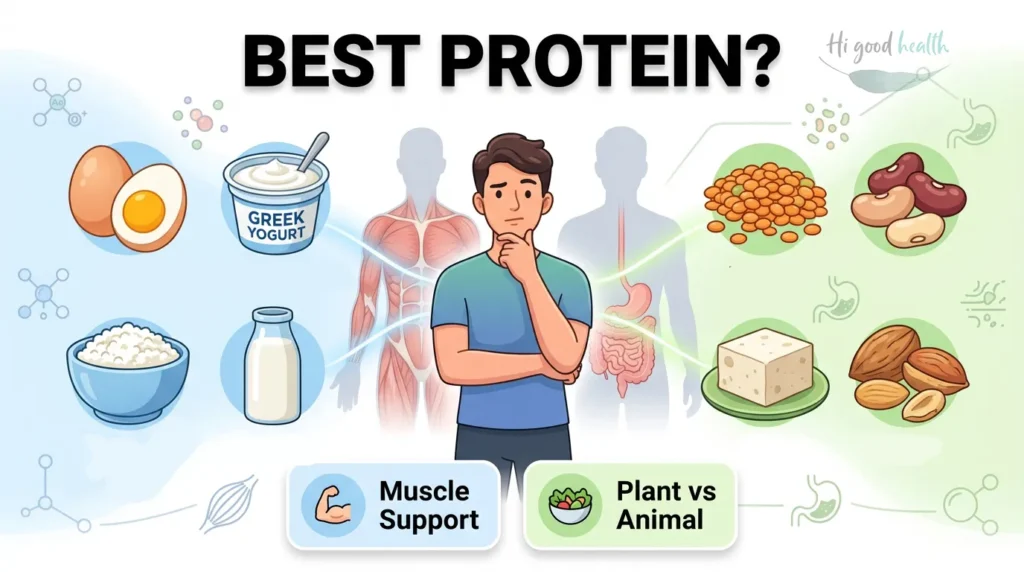
The Protein Puzzle—Why It Still Matters in 2026
From protein shakes and bars to high-protein pancakes and snacks, protein is everywhere in 2026. Yet, one question still lingers for many people: Am I taking the right kind of protein? When exactly should I consume it? And do I even need that much?
The truth is, protein is not a one-size-fits-all solution. Your ideal type, quantity, and timing depend on your lifestyle, age, health goals, and even your mental well-being.
This confusion isn’t just among gym-goers but also among seniors, vegetarians, pregnant women, weight-loss seekers, and wellness-conscious individuals.
This guide clears the fog with clarity, science, and personality—so you can match the right protein to your lifestyle, understand the best time to consume it, and stop falling for persistent myths that have little scientific backing.
Quick Answer
Which protein is best for you depends on your goal, diet, and how well you digest it – there is no single winner. Whey suits fast post-workout recovery, casein supports overnight repair, and pea, soy, or rice blends work well for plant-based eaters. What matters most is hitting your total daily protein target (about 1.6–2.2 g per kg of body weight for active adults) from a complete, well-digested source.

1. Types of Protein and Their Best Match (Whey, Casein, Plant-Based, and More)
Not all proteins are created equal. Each type differs in how quickly it’s absorbed, its amino acid profile, and how it supports your body. Choosing the right one depends on your goals, lifestyle, and dietary preferences.
Here’s a breakdown with their sources:
- Whey Protein (from milk)
Whey is a fast-digesting protein, rich in branched-chain amino acids (BCAAs)—especially leucine, which plays a key role in muscle protein synthesis. (Muscle protein synthesis is the process your body uses to repair and build new muscle tissue after exercise.) Because it is rapidly absorbed, it’s particularly effective for recovery after exercise.
Best for:
- Post-workout recovery
- Muscle building
- Busy individuals needing quick nutrition
Ideal timing:
Consume 20–30 g within 2 hours after training to support muscle repair and growth.
Important note:
While post-workout timing helps, your total daily protein intake (around 1.6–2.2 g/kg body weight)—spread across 3–5 meals—is far more important for long-term muscle growth.
- Casein Protein (from milk)
Casein is a slow-digesting protein that releases amino acids gradually over several hours. This steady release helps maintain a positive protein balance, especially during long periods without food—like sleep.
Best for:
- Overnight recovery
- Preventing muscle breakdown
- Long gaps between meals
Ideal timing:
Consuming 20–40 g about 30 minutes before bedtime can increase overnight amino acid availability and support whole-body protein synthesis.
Why it matters:
During sleep, your body goes into a fasting state. Casein helps provide a continuous supply of nutrients, supporting recovery and adaptation—especially after resistance training.
Source: Pre-sleep casein protein and overnight muscle protein synthesis (PubMed, 2020).
- Pea, Rice, and Soy Protein (from plants)
Plant-based proteins such as pea, rice, and soy can support muscle growth and strength gains that are comparable to whey protein when total protein intake is matched and resistance training is part of the routine. Studies have shown that pea protein combined with resistance training produced similar increases in muscle mass and strength as whey, and plant protein blends fortified with leucine can stimulate muscle protein synthesis at levels similar to whey.
Best for:
- Vegetarians and vegans
- Those with dairy intolerance
- Sustainable, long-term nutrition
If using plant proteins, aim for slightly higher intake or choose blends to ensure optimal amino acid balance.
Source: Plant vs. animal protein and resistance training outcomes (PMC review).
- Collagen Protein (from animal connective tissue like bovine or marine sources)
Contains glycine and proline which are important for skin, joints, and connective tissues.
What does the research suggest?
- Some clinical studies indicate collagen may help improve joint comfort and skin elasticity
- A 24-week study showed potential reduction in joint pain in active adults
- However, more recent trials (including on knee osteoarthritis) show mixed results
Important limitation:
Collagen is not a complete protein, meaning it lacks all essential amino acids needed for muscle building.
How to use it:
Pair collagen with other complete proteins (like whey, soy, eggs, or legumes) to meet overall protein needs.
Note: Collagen research is ongoing. While some studies show potential benefits for joint and skin health, effects are modest and individual responses vary. Consult a healthcare provider before using collagen for specific health concerns.
- Real Food Proteins
Examples: eggs, Greek yogurt, lentils, quinoa, tofu, chickpeas. Many like lentils and quinoa contain both protein and carbs—ideal post-workout.
- Amino Acids & Protein Status
This is where things get fascinating—and where conventional medicine leaves a massive gap.
- Why Test Amino Acids?
Research comparing plant-based and animal proteins reveals that essential amino acid contents vary significantly among plant proteins, with leucine ranging from 5.1% in hemp to 13.5% in corn, compared to 7.6% in human muscle protein.
- The Amino Acid Profile Test measures all nine essential amino acids:
- Histidine
- Isoleucine
- Leucine (the muscle-building trigger)
- Lysine
- Methionine
- Phenylalanine
- Threonine
- Tryptophan
- Valine
Why This Matters for Plant-Based Eaters:
Contrary to the “incomplete protein myth,” recent research shows that 14 of 17 popular plant-based protein foods contain all essential amino acids. However, the amounts and ratios differ.
A 2024 study published in Current Developments in Nutrition found that plant-based protein supplemented with leucine to match levels in whey protein stimulated muscle protein synthesis equally to whey in young adults.
Source: Leucine-matched plant protein and muscle protein synthesis (Current Developments in Nutrition, 2024).
Pro Tip: Don’t chase fads. Your body’s needs determine your best protein match.
Curious about the future of plant-based nutrition? Explore our blog: “Can Humanity Thrive Without Meat and Fish? The Abundant Promise of a Plant-Powered Future.”

2. How to Choose the Right Type and Quality of Protein
Step 1: Match to your lifestyle
- Dairy-friendly?
Go for whey or casein protein for high-quality, complete amino acid support.
- Vegan or lactose-intolerant?
Choose soy, pea, or rice protein blends to ensure a balanced amino acid profile.
- Looking for skin or joint benefits?
Add collagen, ideally paired with vitamin C to support collagen synthesis.
Step 2: Sensitive gut or bloating issues?
- Hydrolyzed proteins (pre-digested for easier absorption)
- Fermented plant proteins (gentler on digestion)
Step 3: Focus on Quality, Not just Quantity
- Look for NSF, Informed Sport, or Clean Label Project testing.
- Opt for products with a complete amino acid profile.
- Avoid excessive sweeteners, gums, or flavoring.
- Prefer organic, non-GMO, transparent sourcing.

Ask yourself:
- Do you digest dairy easily? If yes, whey or casein is fine. If no, choose plant-based or egg protein.
- Are you trying to lose weight? Go for protein with low carbs/fats and high satiety like whey isolate or pea.
- Are you vegetarian/vegan? Look for blends with B12, iron, and leucine-rich sources like soy and mung.
- Are you 50+? You may need more leucine to prevent muscle loss. Focus on high-leucine proteins like whey.
Wondering why changes in your appearance may not just be due to aging? Read our blog: “Sagging Face or Breasts After 35 – It Might Be Muscle Loss, Not Aging.”
- Are you pregnant or lactating? Protein needs increase during pregnancy and breastfeeding, with recommendations of approximately 1.1 g per kg of body weight per day to support fetal growth and maternal tissue changes. Prioritize high-quality, complete protein sources, along with adequate iron and calcium, and ensure sufficient DHA intake from algae-based supplements.
Struggling to get enough protein on a vegetarian diet? Read our blog: “Nutrition & Diet: A Beginner’s Guide to Vegetarianism.”
Harvard Health notes that protein needs increase during pregnancy to support fetal growth and maternal tissue changes.
Studies show that older adults who supplement with whey protein report improved energy levels and reduced muscle soreness. https://pubmed.ncbi.nlm.nih.gov/32698256/ found that casein consumed before bed may help reduce morning joint stiffness in adults over 60 by supporting overnight muscle repair and maintaining amino acid availability.
Protein Needs by Gender
- Men and women have slightly different needs based on lean mass. Women may require more during pregnancy or menopause.
- For general health: 0.8g/kg is the RDA, but active individuals may need 1.4–2.2g/kg.
Diagnostic Tools or Checklist
There’s no single test to determine the “best” protein, but you can:
- Track digestion (bloating, gas)
- Monitor energy and satiety
- Use food sensitivity panels if symptoms persist
- Log symptoms after different protein types to find patterns
A nutritionist may recommend amino acid blood panels, especially in athletes or recovering patients.
Tip: A good protein isn’t always expensive. It’s consistent, well-digested, and complete.
3. Sample Protein-Rich Diet Chart for Different Lifestyles
| Profile | Morning | Lunch | Evening Snack | Dinner | Notes |
| Sportsperson | Oats + whey shake | Quinoa + tofu salad | Peanut butter on whole wheat | Lentil soup + eggs | Add BCAAs post-training |
| Office Goer | Greek yogurt + fruit | Veg wrap + paneer | Roasted chickpeas | Rice + dal + sautéed veggies | Stay hydrated and move regularly |
| Aged Person | Moong dal pancakes + milk | Rice + soft veggies + curd | Paneer cubes | Steamed veggies + mashed lentils | Choose easy-to-digest protein |
| Pregnant Woman | Soy milk + toast | Kidney beans + brown rice | Smoothie with flax/chia | Tofu + roti + spinach | Focus on iron, calcium, DHA |
| Vegetarian | Sprouts + nuts | Vegetable biryani + yogurt | Hummus + veggies | Chickpeas + flatbread | Combine legumes with grains |
| Vegan | Almond butter + fruit | Chickpea curry + quinoa | Soy milk smoothie | Stir-fried tofu + rice | Ensure B12 & omega-3s via fortified foods |
| Schoolchild | Milk + egg / sprouts | Wrap + dal + veggies | Banana + peanut butter | Khichdi + yogurt | Protein supports cognitive development |
These are illustrative examples. Actual portion sizes, calorie targets, and macronutrient ratios should be personalized based on individual assessment by a qualified nutrition professional.
4. Does Protein Affect Mental Health and Wellness?
Yes—and significantly, Protein plays a central role in mental health through multiple mechanisms:
- Neurotransmitter production: Amino acids from protein build neurotransmitters like serotonin, dopamine, and norepinephrine, which regulate mood, sleep, focus, and appetite.
- Research shows that balanced protein intake supports better mental health by helping produce mood-regulating brain chemicals like serotonin and dopamine through the gut-brain connection. (Protein & cognitive health, PMC verified)
- Protein deficiency risks: A 2024 analysis in the British Journal of Nutrition found that insufficient protein intake increases risk of depressive symptoms and cognitive impairment due to reduced neurotransmitter production. Low-protein diets in older adults are linked to increased risk of cognitive decline and brain fog.
- Tryptophan pathway: Tryptophan, found in dairy, eggs, legumes, soy, and poultry, is a precursor to serotonin production and plays a key role in mood regulation.
Your gut may be shaping your mood more than you think—discover how in our blog: “How Is Your Gut Talking to Your Brain?”
- Low-protein diets and cognition in older adults: Observational evidence suggests that higher dietary protein intake is associated with better performance on some cognitive tests in older adults, while lower relative protein intake (compared with carbohydrates) is linked to increased risk of mild cognitive impairment or dementia. These associations are supported by population studies and systematic reviews https://pmc.ncbi.nlm.nih.gov/articles/PMC8182191
- Want to prevent muscle loss as you age? Discover science-backed strategies in our blog: “Senior Nutrition 2025 – Prevent Muscle Loss with the Latest Science.”
- Elderly and vegetarian populations may experience brain fog and low mood when protein intake is inadequate.
Wondering why changes in your appearance may not just be due to aging? Read our blog: “Sagging Face or Breasts After 35 – It Might Be Muscle Loss, Not Aging.”
5. Myths and Facts About Protein
Myth 1: High protein intake damages kidneys.
Fact: No proof in healthy individuals. High-protein diets are safe unless you already have kidney disease. Refer study in Journal of the International Society of Sports Nutrition (JISSN) (JISSN).
Myth 2: Vegetarian diets lack complete protein.
Fact: Combining legumes and grains gives all essential amino acids.
Myth 3: More protein always equals more muscle.
Fact: You need resistance training and recovery too.
6. Protein Suitability by Body Type & Gender
- Men: Tend to need more protein due to higher lean mass.
- Women: Require adequate protein, especially during pregnancy and menopause.
- Pregnancy: 75–100g/day recommended for fetal growth and maternal tissue.
- Older Adults: Need more protein per kg of body weight to counteract muscle loss.
Concerned about muscle loss with age? Learn about optimal protein requirements in our blog: “Senior Nutrition 2025 – Prevent Muscle Loss with the Latest Science.”
7. Inspiring Examples of Strong Vegetarians & Vegans
While individual nutritional needs vary, these athletes demonstrate that well-planned plant-based diets can support elite performance:
- Patrik Baboumian — German strongman and world record holder (vegan)
- Venus Williams — Tennis legend (predominantly plant-based)
- Kendrick Farris — US Olympic weightlifter (vegan since 2014)
Research from Stanford Medicine (2025) and multiple systematic reviews shows that plant-based diets are equivalent—or non-inferior—to omnivorous diets for athletic performance when protein intake is adequate (1.2-2.0g/kg/day) and diverse plant sources are consumed.
Both dietary patterns can support optimal performance; the choice depends on personal values, digestive tolerance, and nutritional planning. Athletes on plant-based diets may benefit from creatine supplementation and ensuring adequate B12, iron, and zinc intake.
8. The Ideal Timing: Pre/Post Workout, Bedtime, or Morning
- Total Daily Intake (most important): 1.6-2.2g/kg body weight
- Distribution: 20-40g protein across 3-5 meals
- Around Training: Within 1-2 hours pre- or post-workout
- Before Bed: 30-40g slow-digesting protein (casein) for overnight recovery
9. Diagnostic Tools or Checklist: What Protein Suits You Best?
Ask yourself:
- Do I tolerate dairy? → Try whey or casein.
- Am I plant-based? → Use pea, soy, or blended powders.
- Do I bloat with powders? → Try isolates or fermented protein.
- Want joint/skin benefits? → Consider collagen.
- Do I exercise often? → Prioritize complete proteins with leucine.
Optional Tests:
- Amino acid profile blood test
- Food sensitivity tests
- Dietitian-guided elimination plans
10. The Latest Scientific Studies Explained Simply
- Nutrients (2021): Higher protein = better muscle mass & strength, especially in 50+ adults.
Struggling to get all essential proteins on a vegetarian diet? Discover how in our blog: “How to Get All Your Essential Nutrients on a Vegetarian Plan.”
- Frontiers in Psychology (2023): Tryptophan intake linked to better sleep & lower anxiety.
- AJCN (2020): Plant + animal protein = better long-term metabolic health.
- JISSN: 1.6g protein/kg body weight recommended for optimal muscle gain.
- Protein Timing Meta-Analysis (2023): Reviewed 49 studies—no significant difference between timing, but total protein intake remains key. Best results seen when distributed across meals (PubMed).
- Bedtime Protein and Sleep Quality: A recent study from Maastricht University found that protein before bed does not interfere with sleep and improves overnight recovery (Frontiers in Nutrition).
- Collagen for Joint Health: Supplementing with hydrolyzed collagen improved joint comfort in active adults in as little as 8 weeks (Current Medical Research).
11. Quick Reference Chart: Protein Types vs. Goals
| Protein Type | Best For | Digestion | Complete? | Source |
| Whey | Muscle recovery | Fast | Yes | Milk |
| Casein | Overnight repair | Slow | Yes | Milk |
| Soy | Vegan strength | Medium | Yes | Soybeans |
| Pea/Rice | Dairy-free option | Medium | Yes (blended) | Peas, rice |
| Collagen | Skin/joint/gut | Slow | No | Bone, fish |
| Lentils/Quinoa | Real food protein | Medium | Yes (quinoa) | Plants |
12. Disclaimer
Protein needs can vary based on medical conditions; consult a healthcare professional if unsure.
Key Takeaways
- There is no single best protein – the right protein for you is the complete, well-digested source that fits your goal, diet, and daily target.
- Total daily intake matters more than timing: aim for about 1.6–2.2 g per kg of body weight for active adults, spread across 3–5 meals.
- Whey is fast-digesting for recovery; casein is slow-release for overnight repair; pea, soy, and rice blends let plant-based eaters match those results.
- Vegetarians and vegans can build muscle by combining legumes and grains or choosing leucine-rich blends – meat is not required.
- Protein also feeds mood and focus by supplying amino acids for serotonin and dopamine, so low intake can mean brain fog, especially in older adults.
- Adults over 50, pregnant women, and people with a sensitive gut have specific needs – choose quality, third-party-tested products and consult a professional when unsure.
FAQs
Here is the comprehensive FAQ section, combining your draft with high-intent search queries from the blog. These are prioritized by search volume and relevance to US readers.
If you prefer a more visual version, check out our YouTube video here:
1. Can protein shakes help me lose weight?
Yes. Protein increases satiety, which helps manage hunger and reduce cravings. For weight loss, choose protein sources with low carbohydrates and fats, such as whey isolate or pea protein.
2. Is a high-protein diet safe for my kidneys?
There is no proof that high protein intake damages kidneys in healthy individuals. High-protein diets are considered safe unless you already have pre-existing kidney disease.
3. When is the best time to consume protein?
Total daily protein intake matters most, but strategic timing can support specific goals – such as consuming 20-30g protein within 1-2 hours post-workout supports recovery, while casein before bed supports overnight repair. A protein-rich breakfast reduces cravings.
4. Can I build muscle on a vegetarian or vegan diet?
Absolutely. You don’t need meat to be strong; combining legumes and grains provides all essential amino acids. Plant sources like soy and pea protein are proven to build muscle effectively.
5. Why does protein powder sometimes cause bloating?
Bloating may result from dairy sensitivity or additives. If you have a sensitive gut, try whey isolate (less lactose), hydrolyzed proteins, or fermented plant proteins, which are easier to digest.
6. Does protein really affect my mood and mental health?
Yes. Protein builds neurotransmitters like serotonin and dopamine, which regulate mood, sleep, and focus. Inadequate protein intake is linked to brain fog, fatigue, and cognitive decline, particularly in older adults.
7. Do I need more protein as I get older?
Yes. Adults over 50 require more protein to counteract age-related muscle loss. Higher protein intake in this demographic is scientifically linked to better muscle mass and maintained physical strength.
8. How much protein do women need during pregnancy?
Pregnant women need at least 1.1g per kg of body weight to support fetal growth. Focus on complete proteins that are also rich in iron, calcium, and DHA for maternal and baby health.
9. How do I know which protein is best for me?
Start with three questions: What is my goal, can I digest dairy, and what is my daily protein target? If you tolerate dairy and want fast recovery, whey fits. For overnight repair, choose casein. If you are vegan, lactose-intolerant, or prefer plants, pick a pea, soy, or rice blend. Then make sure the product is complete, third-party tested, and helps you reach about 1.6 to 2.2 g per kg of body weight each day. The best protein for you is the one you digest well and can take consistently.
10. Is plant protein or whey better for me?
Neither is automatically better. When your total protein intake is matched and you do resistance training, plant blends such as pea and soy build muscle and strength comparable to whey. Whey digests faster and is naturally high in leucine, so it is convenient right after a workout. Plant proteins suit dairy-free diets and are easy on the planet. Choose based on your digestion, diet, and preference rather than hype.
11. How much protein do I actually need each day?
The general RDA is 0.8 g per kg of body weight, which prevents deficiency but is low for active people. Adults who exercise regularly generally do best with 1.6 to 2.2 g per kg per day, spread across three to five meals. Older adults and pregnant women often need more to protect muscle and support growth. If you have kidney disease or another medical condition, ask your doctor before raising your intake.
Glossary
- Whey/Casein – Dairy-based proteins with different digestion speeds
- Pea/Soy/Rice Protein – Plant-based options; often blended for completeness
- Collagen – Supports joints, gut, and skin; not complete
- BCAAs – Branched-chain amino acids: leucine, isoleucine, valine
- Tryptophan – Amino acid for serotonin; impacts mood
- Complete Protein – Contains all 9 essential amino acids
- Hydrolyzed Protein – Pre-digested for faster absorption
- Third-party testing – Ensures purity, label accuracy, and safety standards
Final Thoughts
Protein isn’t just a gym nutrient—it’s a vital building block for both physical and emotional well-being. From muscle and metabolism to memory and mood, protein touches almost every part of how we feel, think, and age.
Don’t rely on trends. Understand your body, choose quality sources, and eat with intention. It’s time we stopped asking “how much protein?” and started asking: “what’s the right protein—for me?”

