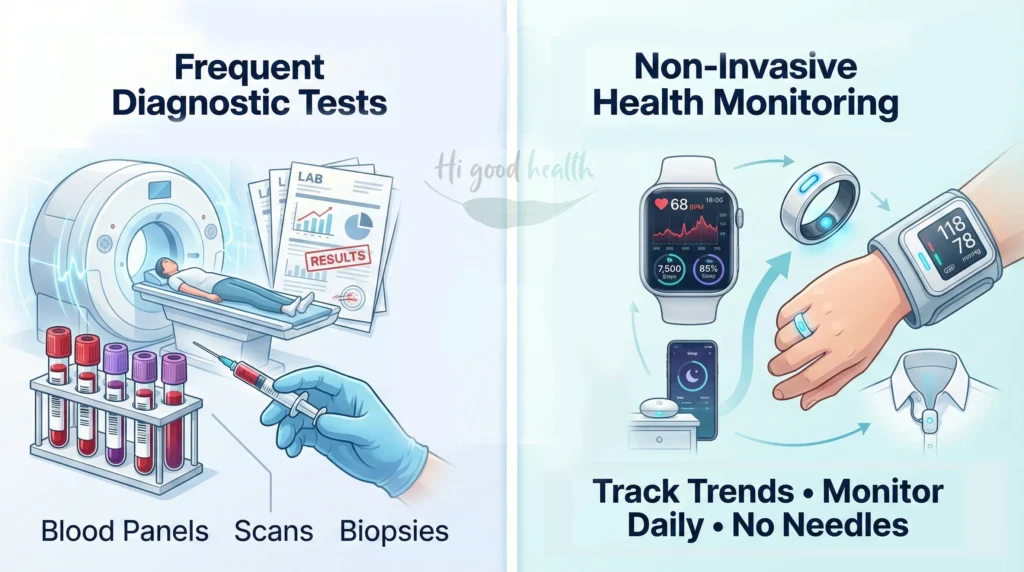
Blood tests, scans, panels, repeat tests at a new hospital — modern healthcare can feel like a conveyor belt of diagnostics. Some of it is essential. Some of it isn’t. Knowing the difference could save you money, stress, and the occasional unnecessary needle.
When Tests Help — and When They Don’t
Diagnostic tests are genuinely powerful when used with purpose: detecting disease early, tracking chronic conditions, guiding treatment. But more testing doesn’t always mean better health outcomes. Over-testing can lead to false positives, anxiety, unnecessary follow-up procedures, and real financial cost.
Key guidelines worth knowing:
- Healthy adults under 40 — most medical bodies don’t recommend annual routine blood panels. Targeted screenings (blood pressure, lipid panels every 4–6 years) are sufficient
- Adults over 40 — annual testing becomes more appropriate
- Chronic conditions (diabetes, thyroid, kidney) — every 3–6 months based on your doctor’s advice
- Are you merely “within range,” or truly healthy? Ask your doctor what optimal — not just normal — looks like for your results
The Repeat Test Problem
Changing hospitals or doctors? You may be asked to redo tests you just had. This is common — but often unnecessary. Before agreeing, simply ask: “Can my previous results be used?” Keep digital copies of all your reports. Proactive communication prevents duplicate costs and avoidable procedures.
Wearables: Useful, But Not a Diagnosis
Smartwatches, CGMs, and smart rings are excellent for tracking trends — heart rate, sleep, glucose, activity. But they are monitoring tools, not diagnostic tools. An anomaly on your watch is a signal to see your doctor, not a diagnosis itself.
The best healthcare is a partnership — your awareness plus your doctor’s expertise.
All reference links valid and accessible on 1 May 2026
Digital health – World Health Organization (WHO): For general health guidelines and information on medical technologies
American Academy of Family Physicians (AAFP): Offers patient-focused information and guidelines on preventive care
For educational purposes only. Always consult your healthcare provider for personalized medical advice.
Get the full guide — Are Frequent Blood & Other Diagnostic Tests Really Necessary? Here Are Some Better, Non-Invasive Ways to Monitor Your Body
