
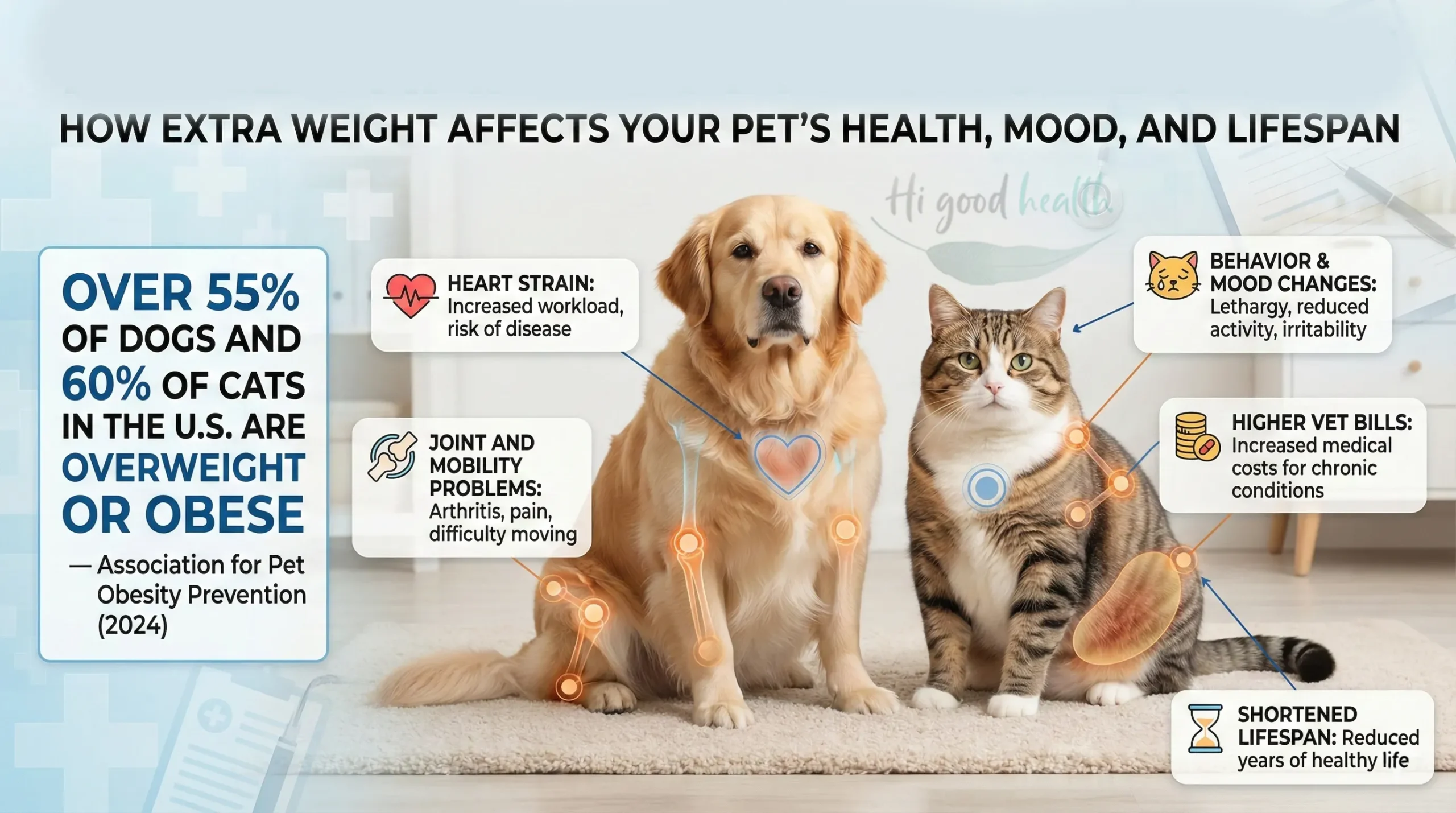
That round belly isn’t cute — it’s a warning sign. According to the Association for Pet Obesity Prevention’s 2024 survey, 35% of dogs and 33% of cats in the U.S. are overweight or obese. And most owners don’t even realize it — they’ve just never seen what a truly healthy, lean pet looks like.
What Excess Weight Actually Does
Pet obesity isn’t just about mobility. It opens the door to a cascade of serious conditions:
- Diabetes in cats — treatment alone can cost up to $1,200 a year
- Osteoarthritis in dogs — pain, inflammation, and up to $4,000+ in ongoing treatment
- Heart and lung disease — reduced stamina, breathing difficulties, lifelong medication
- Cancer — obesity is now linked to higher cancer risk and worse outcomes
- Shorter life — overweight pets may live up to 2 years less than lean ones
Surgery on an obese pet costs 20–50% more due to higher anesthetic risk. Meanwhile, prevention — portion control, regular checkups, simple exercise — costs less than $150 a year.
The Part Nobody Talks About
Obesity changes your pet’s personality. Overweight pets show more irritability, anxiety, and stress. They play less, bark more, and withdraw — which strains the family bond. Max, a 105-lb Labrador, lost 18 pounds on a vet-guided plan. His family said: “It’s like we got our happy dog back.”
The Quick Home Check
Run your fingers along your pet’s ribs. Can’t feel them without pressing hard? That’s a red flag. A healthy pet has a visible waist from above and a belly that tucks upward from the side.
Get the full vet-reviewed guide — diet plans, Body Condition Score charts, and breed-specific tips: 👉 The Hidden Cost of Pet Obesity: How It Impacts Your Wallet, Your Pet’s Happiness, and Your Family
For educational purposes only. Always consult your veterinarian before changing your pet’s diet or exercise routine.
