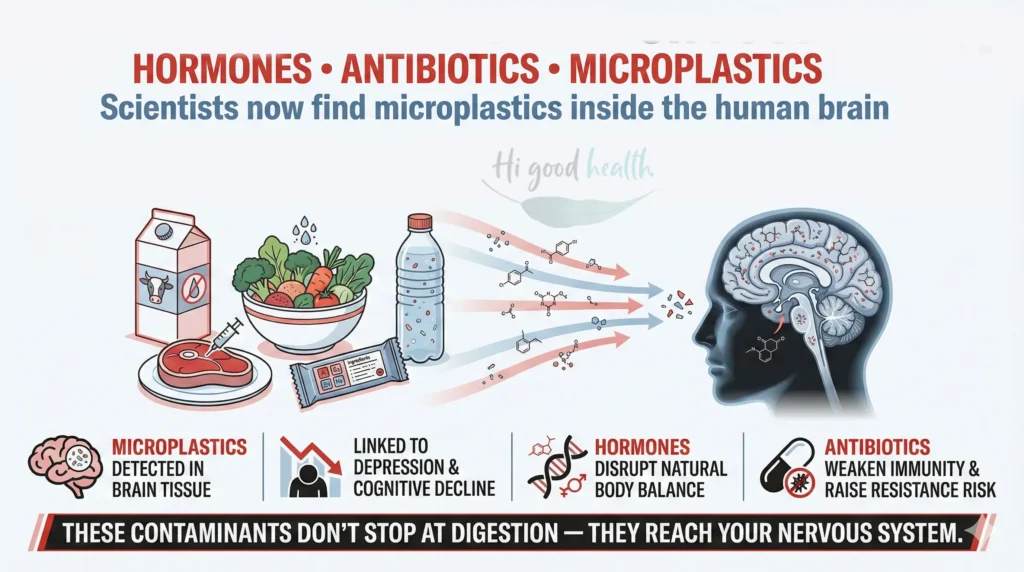
You cook from scratch, you read labels, you filter your water. And yet, invisible contaminants are still making it onto your family’s plates — in the meat, the milk, the vegetables, and even your tap water.
Scientists have a name for them: silent invaders.
What’s Actually Getting In
Modern food production routinely introduces substances that were never meant to be part of your diet:
- Dairy — conventional milk may contain growth hormone (rBST), IGF-1, and antibiotic residues. One peer-reviewed study found antibiotic residues in 26–60% of conventional milk samples — and none in organic
- Meat and poultry — animals raised in crowded conditions are routinely given tetracyclines, penicillin, and growth hormones to maximise output
- Farmed fish — antibiotics and estrogen-like chemicals are commonly used to prevent disease outbreaks in overcrowded tanks
- Vegetables and grains — antibiotic residues and pesticides seep into soil and irrigation water, meaning vegetarians are not exempt
- Plastics — microplastics have now been detected in human brain tissue in studies published in 2024–25, with concentrations approximately 50% higher than samples from 2016
Cooking doesn’t fix this. Most hormone and antibiotic residues are heat-stable — they survive standard cooking temperatures.
Why Children Are Most at Risk
Children’s developing hormone and immune systems are especially vulnerable during early-life exposure windows. Research consistently shows that the impact of endocrine-disrupting chemicals is greater during critical developmental stages than in adults.
What You Can Do Today
- Choose USDA Organic or “No Added Hormones” labelled meat and dairy — these specifically prohibit synthetic hormones and non-therapeutic antibiotics
- Install a reverse osmosis or activated carbon water filter — basic pitcher filters don’t reliably remove dissolved hormones or pharmaceuticals
- Never microwave in plastic — heat accelerates microplastic migration into food; always use glass or ceramic
- Minimise ultra-processed and heavily packaged foods — the primary route for microplastic ingestion
- Support local, transparent farms — direct relationships let you ask exactly what goes into the food you eat
All reference links valid and accessible on 4 May 2026
- University of New Mexico (2024): https://hscnews.unm.edu/news/hsc-newsroom-post-microplastics-human-brains
- Nature Medicine study (2024): https://www.nature.com/articles/s41591-024-03453-1
📖 Want the full picture — Silent Invaders – How Hormones & Antibiotics Sneak into Your Family’s Diet
