
You swapped sugar for a zero-calorie sweetener and thought you were making the healthy choice. But what if that switch is quietly disrupting your gut, confusing your hunger signals, and — in some cases — raising cardiovascular risk?
The sweetener debate has moved well beyond calories. Here’s what the latest science actually says.
The Artificial Sweetener Problem
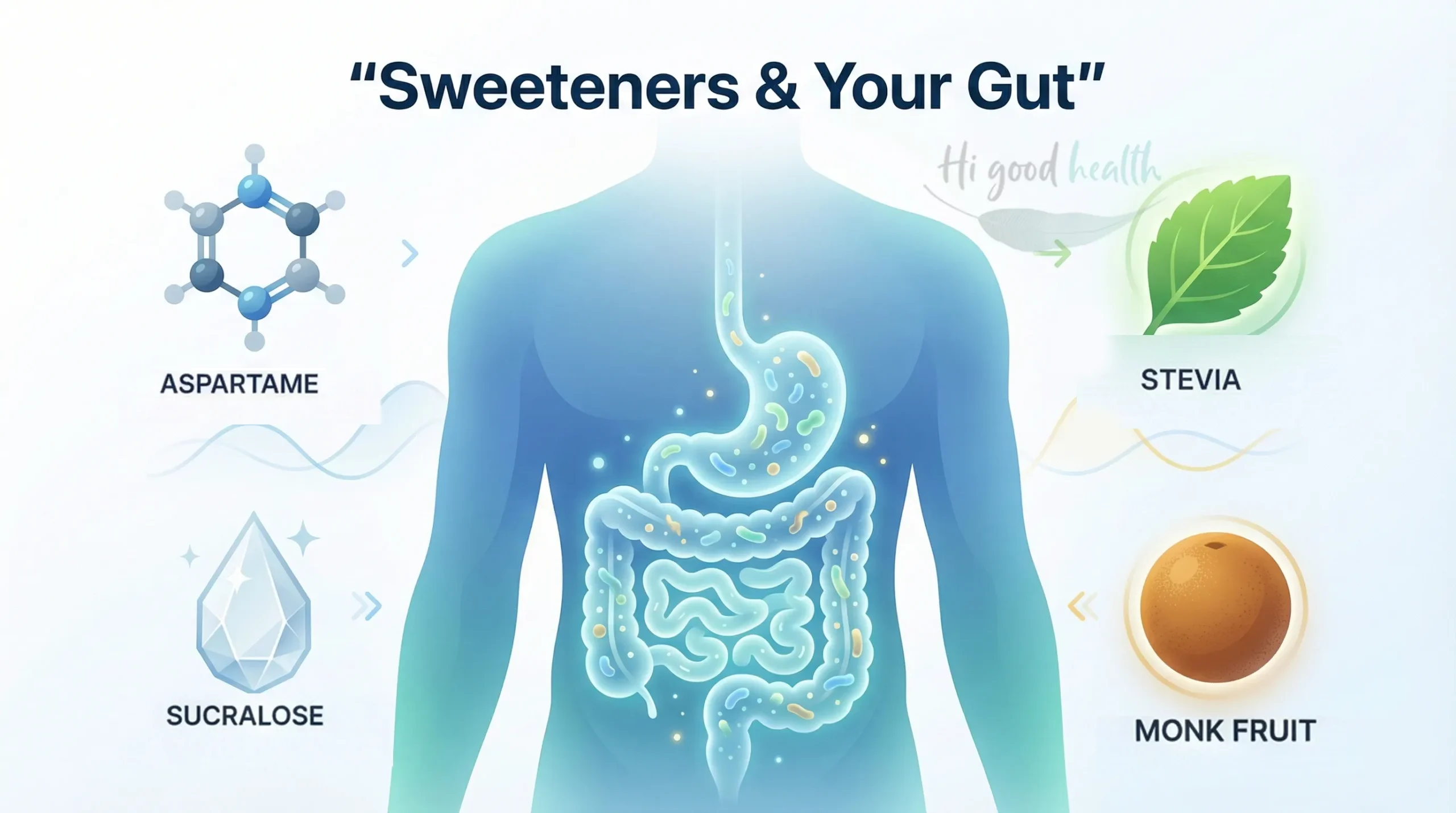
Calorie-free doesn’t mean consequence-free. A 2025 Cedars-Sinai study found that people consuming artificial sweeteners showed significant changes in gut microbiome diversity compared to those who didn’t. Aspartame specifically was linked to enrichment of a metabolic pathway associated with a liver and nervous system toxin.
Then there’s erythritol — wildly popular in keto products — which a 2023 study in Nature Medicine linked to increased cardiovascular event risk at high levels. And in July 2023, the WHO classified aspartame as “possibly carcinogenic,” though still within safe limits at normal consumption.
The deeper problem: artificial sweeteners may keep your brain craving sugar without ever satisfying it, potentially driving compensatory overeating.
The Natural Sweeteners Worth Knowing
Not all alternatives are equal. Three stand out for blood sugar and gut health:
- Allulose — a rare natural sugar (found in figs and jackfruit) with near-zero calories and a glycemic index of 0–5. Research shows it actively improves insulin sensitivity and reduces inflammation — it doesn’t just avoid harm
- Monk fruit — zero calories, zero glycemic index, with 2025 research showing it reduces post-meal glucose response by up to 18% and insulin response by up to 22%
- Stevia — plant-derived, FDA-approved, zero GI; generally gut-neutral in moderate amounts
Use very sparingly: honey (GI 50–60), coconut sugar (GI 35), jaggery — still raise blood sugar, just more slowly than white sugar.
The Simplest Rule
The more you can sweeten with whole foods — dates, berries, ripe banana in recipes — the better. Every sweetener, natural or artificial, works best used less, not more.
📖 Want the full guide — Natural vs Artificial Sweeteners – What’s Best for Gut Health, Appetite & Blood Sugar
