
Nearly half of all American adults have high blood pressure. Most don’t know it — until something goes wrong. Now a new generation of cuffless wrist bands and rings promises to change that. But should you actually trust them?
Why Cuffless Matters More Than You Think
Here’s a problem most doctors rarely mention: up to 30% of patients have artificially high readings in clinic — simply because they’re anxious. It’s called white coat hypertension, and it leads to real people being put on medication they don’t need.
Cuffless monitors worn at home, during sleep, during stress — that’s where blood pressure tells its true story. Traditional cuffs give you a snapshot. These devices give you a film.
How They Actually Work
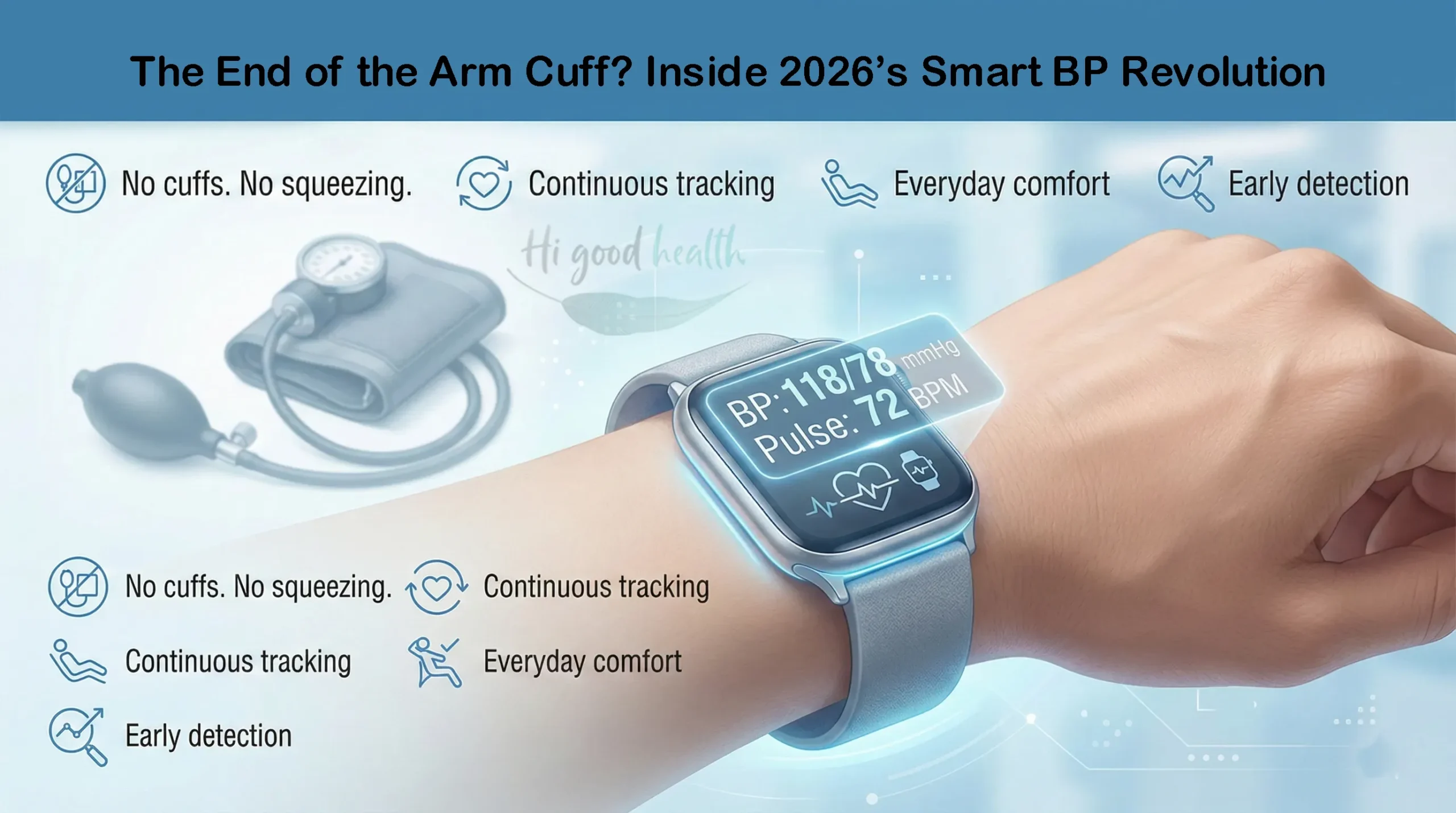
No inflating, no squeezing. These wearables use a technology called PPG — tiny lights that shine through your skin to detect blood flow changes. Combined with AI and ECG sensors, they estimate blood pressure continuously, even while you sleep.
The 2026 Devices Worth Knowing
- Aktiia Hilo Band — the standout pick. One of the first to receive FDA clearance for cuffless BP in the US. Validated to the same ISO standards as traditional cuffs. Best for continuous, day-and-night trend tracking. Requires monthly calibration
- Samsung Galaxy Watch 7 — popular for on-demand readings within a smart ecosystem, but not a continuous monitor
- Whoop 5.0 MG — gives BP insights and trends rather than exact numbers; best for athletes and biohackers
- CART BP ring — promising early trial data, but not yet FDA-cleared
The Honest Bottom Line
Cardiologist Dr. Eugene Yang puts it plainly: unvalidated cuffless devices risk both undertreatment and overtreatment. These tools are excellent for tracking trends and spotting patterns — not for diagnosing hypertension or adjusting medication. Always confirm significant readings with a validated arm cuff, and loop in your doctor before acting on the data.
📖 Want the full comparison — The Best Cuffless Blood Pressure Monitors of 2026 – Are These a Game Changer
