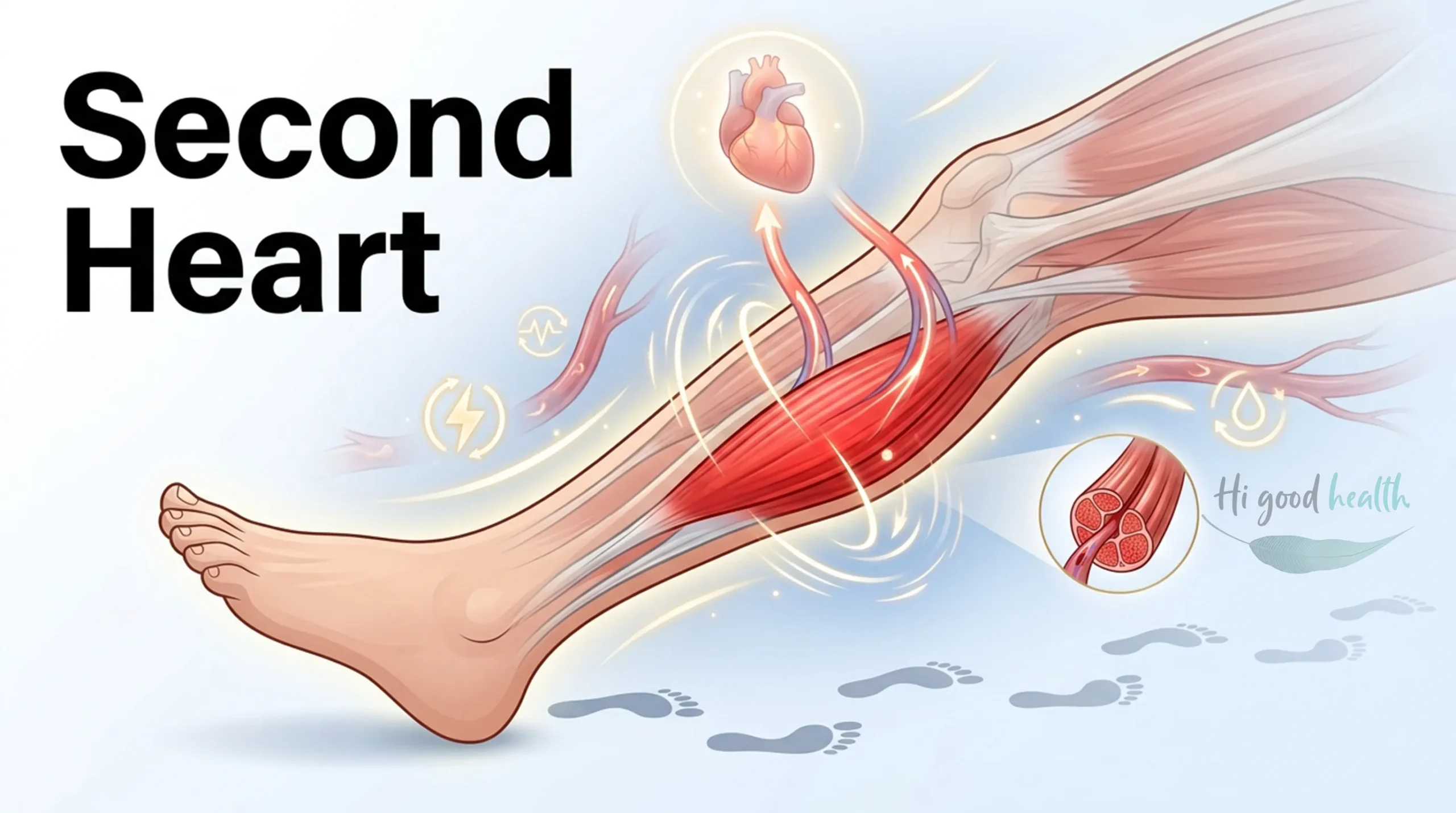
What if one small calf muscle could help steady your blood sugar, keep blood moving back toward your heart, and stay active even while you sit at a desk? A growing body of research points to exactly that muscle, the soleus, and to a simple seated soleus exercise you can do at your desk. It needs no gym, no weights, and no standing up.
At a glance
The soleus muscle is an often-overlooked postural muscle in the calf, the deep calf muscle that sits under the bulkier one you can see. When you activate it correctly, it may contribute meaningfully to blood sugar regulation, circulation, and long-term lower-limb health — even during the hours you spend sitting.
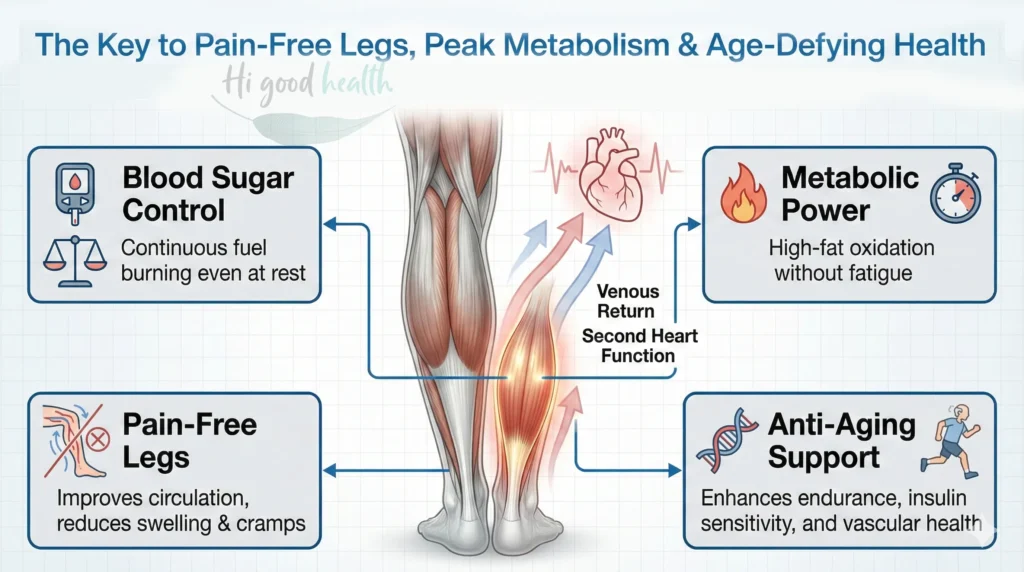
The soleus push up is a seated calf muscle exercise: you keep the balls of your feet on the floor and lift your heels to contract the deep calf (soleus) muscle. Research from the University of Houston, led by Dr. Marc Hamilton and published in the peer-reviewed journal iScience in 2022, found that this targeted activation kept the muscle’s oxidative metabolism (how cells use oxygen to turn fuel into energy) elevated for hours and lowered post-meal blood sugar and insulin in controlled lab tests. It needs no equipment, can be done while sitting, and worked even in people who do not normally exercise. The results come from small early studies, so treat the technique as a helpful add-on to medical care, not a replacement.
Meet the Soleus: The Calf Muscle You Never Knew You Had
You are sitting at your desk, phone in hand, completely still. But deep in your leg, one muscle has been working for you the whole time, pumping without a chamber, helping move blood back toward your heart, and quietly supporting your body without you noticing. Meet the soleus, your body’s most underestimated muscle.
The soleus is a deep calf muscle that sits beneath the gastrocnemius, the visible calf muscle. Your heart does not pump alone. Down in your legs, the soleus does related work — not with electrical impulses, but with movement. Unlike many skeletal muscles, it is built mostly from slow-twitch (Type I) oxidative fibers. These fibers run on oxidative metabolism, the slow, steady process cells use to burn glucose and fat with oxygen. That design makes the soleus highly resistant to fatigue and well-suited to long, low-intensity work — the very quality the exercise relies on.
Even when you sit for long stretches, the soleus can still support venous return, the flow of blood from your lower legs back toward your heart. For that reason it is sometimes called a “peripheral heart,” though that label is a description, not a formal anatomical term. Every time you walk, climb stairs, or rise onto your toes, the soleus switches on.
The Discovery That Changed Everything
In 2022, Dr. Marc T. Hamilton, a professor of Health and Human Performance at the University of Houston, published research in the peer-reviewed journal iScience showing that the soleus plays an outsized role in metabolism [2][3]. His team found that when the soleus is activated through a specific seated movement, the soleus push up, it can raise local oxidative metabolism to high levels for hours without fatigue, even in untrained, sedentary people [2]. That combination, high metabolic output with almost no perceived effort, is what made the finding so unusual.
Claim: Activating the soleus while seated can lower post-meal blood sugar. Evidence: In an oral glucose tolerance test, the original study reported reductions of up to 52% in glucose excursion and a 60% drop in hyperinsulinemia compared with sitting still. Source: Hamilton and colleagues, iScience, 2022 [2][3]. A 2024 bioRxiv preprint reported further glucose reductions of 37% and 26% with different SPU protocols [4].
Important context: This work was done in controlled lab settings with small samples (about 10 to 15 participants). The findings are promising, but larger trials in more diverse groups are still needed to confirm how well it works, and how safe it is, across different ages and health conditions [2].
The Circulation Champion and Pain Defender
The soleus lives in the back of your leg, hidden beneath the gastrocnemius [2]. Unlike its flashier neighbor, it is not explosive or fast. It is steady, firm, and built to sustain you for the long haul.
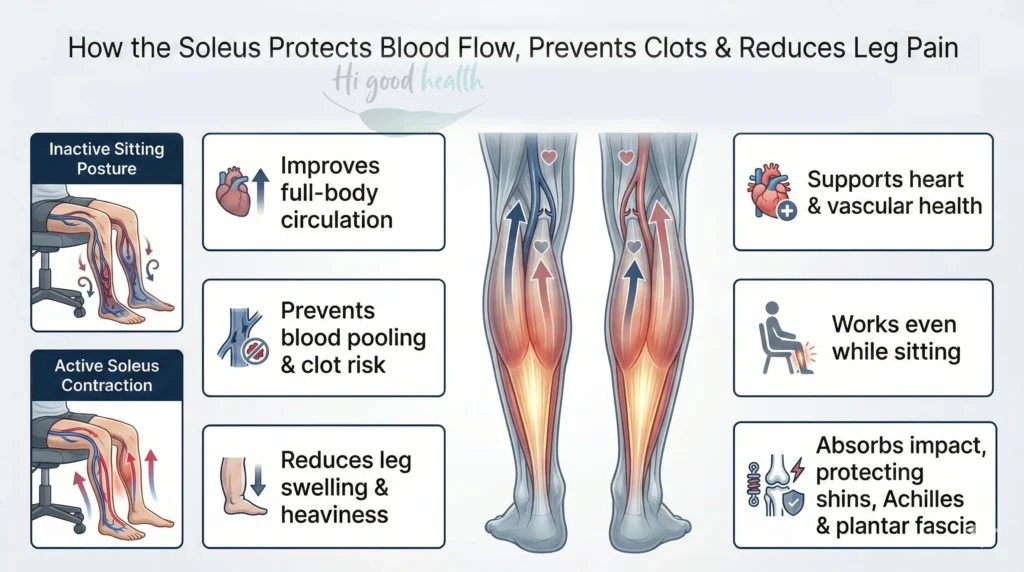
Why it is called your “second heart”: every time the soleus contracts, it creates a pumping action that pushes venous blood from your legs back to your heart, against gravity [2][5]. Long periods of sitting reduce this pump and can lead to venous stasis, the pooling of blood in the lower legs. Venous stasis is linked with:
- A higher risk of varicose veins
- Lower-limb edema (swelling)
- Discomfort, heaviness, or tiredness in the legs
- In some people, a higher risk of deep vein thrombosis (DVT) [5]
When you activate the soleus, research suggests it may help in several ways:
- Improve circulation throughout your body [2][5]
- Reduce risk factors tied to venous stasis (blood pooling) [5]
- Ease leg swelling and heaviness [5]
- Support cardiovascular health [2]
- Keep working even while you sit still [2]
- Act as a shock absorber, easing strain on your shins, Achilles tendon, and plantar fascia, which may help prevent shin splints, Achilles tendinitis, and plantar fasciitis [6]
Strong legs are a direct investment in fall prevention and staying independent. To learn more, read our guide to practical, evidence-based ways to prevent falls in later life.
Soleus Push Ups and Blood Sugar: The Metabolic Powerhouse
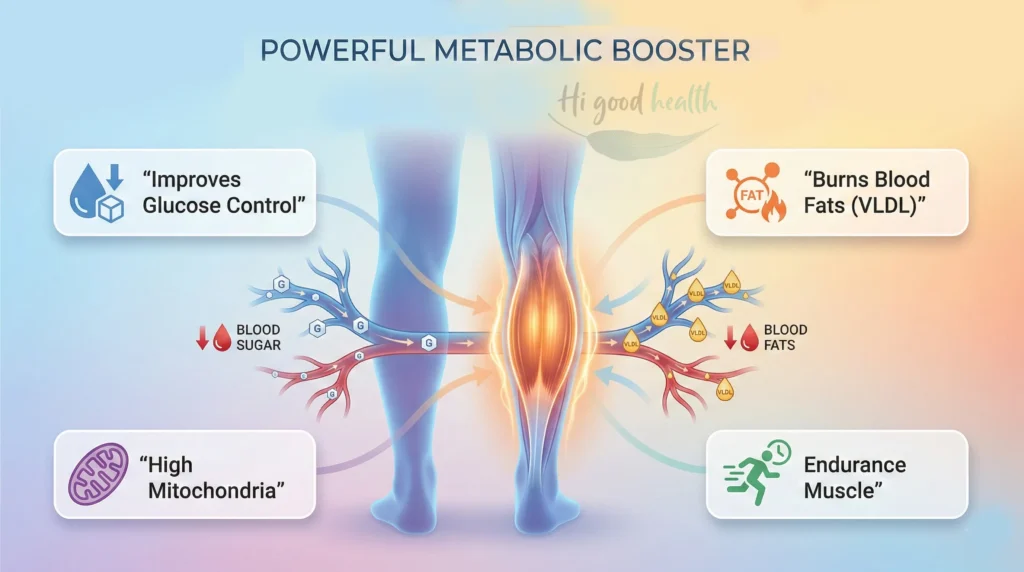
This is where the muscle shows potential that many clinicians are only beginning to recognize. The research results: according to the University of Houston team writing in iScience in 2022, holding muscle metabolism high through targeted soleus contractions was enough to improve glucose tolerance and cut postprandial (after-meal) insulin demand in controlled lab settings [2]. In those studies, soleus activation produced large drops in post-meal blood glucose and insulin compared with sitting still — reductions of up to 52% in glucose and 60% in insulin [2][3].
Important note: these results came from controlled lab conditions with healthy participants. If you have diabetes or pre-diabetes, talk with your healthcare provider before adding this technique to your plan. It should complement, not replace, your prescribed treatment [2].
To protect muscle strength as you age, pair movement with good nutrition. Learn more about preventing age-related muscle loss with the latest science.
What Makes the Soleus Muscle Special
The soleus is built for endurance and metabolic work, with roughly 80 to 90% Type I oxidative fibers. Type I fibers are slow-twitch fibers designed for sustained, low-intensity activity. This makeup supports continuous contractions and steady energy use. Key features include:
- High mitochondrial density, which fuels aerobic energy production
- Abundant oxidative enzymes, which help the muscle burn glucose and fatty acids efficiently
- The capacity for long activity without much fatigue
This same makeup turns the soleus into a strong fat metabolizer. In the University of Houston work, sustained soleus contraction helped clear fats from the blood, including very-low-density lipoprotein (VLDL), a type of “bad” cholesterol [2]. Regular activation may support more efficient metabolism when paired with healthy eating and daily movement [2]. A 2024 bioRxiv study in sedentary office workers later reported meaningful drops in post-meal glucose using practical seated soleus protocols, a sign the lab finding may translate to everyday desk settings [4].
The Anti-Aging Muscle: Mobility and Strength for Life
As you age, keeping muscle mass, strength, and mobility becomes central to staying independent. The soleus may play an under-recognized role here. Long periods of inactivity can cause the soleus to waste away faster than other leg muscles [7]. Keeping it active may help you:
- Prevent muscle loss: regular soleus activation may slow age-related decline and support leg strength [7]
- Support balance and stability: a strong soleus is foundational for good balance and may lower fall risk as you get older [7]
- Move comfortably: it can help smooth your walking and standing, supporting independence for years to come [7]
How to Do a Soleus Push Up: Dr. Hamilton’s Method
Dr. Marc Hamilton, professor of Health and Human Performance at the University of Houston, developed this seated exercise to get the most out of the muscle. Done right, the move raises soleus metabolism for hours, even while you stay seated [2][3]. Here is the step-by-step guide:
- Position: Sit in a chair with your feet flat on the floor, hip-width apart
- Movement: Lift your heels while keeping your toes and the balls of your feet pressed firmly on the ground
- Focus: Engage the soleus, the deep calf muscle, not the surface gastrocnemius
- Duration: Hold the lifted position for 2 to 3 seconds, then lower your heels slowly and under control
- Repetition: Continue for several minutes at a comfortable pace
A few things to keep in mind. This is not a standard calf raise; it is a specific soleus activation technique [2]. The movement should feel sustainable and controlled, never exhausting [2]. You can do it while working, watching TV, or reading [2]. Most people sit 8 to 10 hours a day, which makes this practical for desk-bound routines [2]. Safety first: if you feel pain, dizziness, cramping, or unusual discomfort, stop and check with a healthcare provider.
Do not perform without medical clearance if you have: active leg injuries or recent surgery; deep vein thrombosis (DVT) or a history of blood clots; severe peripheral artery disease; uncontrolled cardiovascular conditions; or severe diabetic neuropathy.
Soleus Push Ups vs Walking and Calf Raises
A common question is whether this seated move replaces a walk or an ordinary calf raise. It does not replace either; it fills a different gap.
Versus walking: Walking is a whole-body activity that supports your heart, mood, and overall fitness, and you should keep doing it. The trouble is that most of us cannot walk continuously through a workday. It is built for exactly those long sitting hours — it keeps one metabolically active calf muscle switched on while you stay seated, and in lab studies that lowered post-meal blood sugar during sedentary time [2][3]. Treat it as a tool for the hours you cannot walk, not a substitute for daily walking.
Versus a calf raise: A standing calf raise mostly recruits the gastrocnemius, the surface calf muscle, in short powerful bursts. The move is the opposite: a slow, seated, low-effort contraction designed to keep the deep soleus working for long stretches without fatigue [2]. The goal is sustained metabolic activity, not a strength burn, which is why it can feel almost effortless and still do useful work.
Do you need any equipment? No. One of the practical advantages of this exercise is that it works with no equipment at all — just a chair and your own body weight. Some people add a light hand weight on the thighs or a resistance band once the basic movement feels easy, but neither is required to get started.
Nutritional Support for Muscle Function
Good muscle function rests on a balanced, nutrient-dense diet. A few nutrients stand out:
- Magnesium-rich foods: Spinach, almonds, and pumpkin seeds support muscle function [8]
- Potassium sources: Bananas, sweet potatoes, and avocados aid muscle contractions [8]
- Antioxidant-rich berries: Blueberries and cherries may support muscle recovery [8]
- Cinnamon: May support healthy blood sugar levels [9]
- Turmeric: Contains anti-inflammatory compounds that may benefit muscle health [10]
Supplements should not replace a balanced diet or prescribed medicine. Check with your healthcare provider before adding anything new, especially if you take medication.
How Many Soleus Push Ups a Day? Your Daily Action Plan
How many soleus push ups a day is enough? There is no single official number, so use this suggested schedule as a starting point and adjust it to your fitness level and medical clearance:
- Morning (5 minutes): About 50 gentle reps alongside your breakfast routine
- Workday (every hour): 2 to 3 minutes of soleus activation during calls or meetings
- Evening (10 minutes): A longer session while watching TV or reading
Want more of a challenge, or an alternative for variety? Once you have the basics down, try single-leg variations, add a resistance band, or pair the move with other circulation-boosting exercises. Build up slowly: start with 2 to 3 sessions daily in the first week, then add frequency and time. Listen to your body and never push through pain.
Expert Perspective on the Soleus Push Up
As Dr. Hamilton puts it, “The soleus pushup looks simple from the outside, but sometimes what we see with our naked eye isn’t the whole story. It’s a very specific movement that right now requires wearable technology and experience to optimize the health benefits” [3]. His work may mark a real shift in how we handle metabolic health and the challenges of a sedentary lifestyle.
Warning Signs Your Soleus May Need Attention
See a healthcare provider if you notice: frequent leg swelling, heaviness, or cold feet; afternoon energy crashes or unexplained fatigue; trouble with blood sugar control (if you are diabetic or pre-diabetic); restless legs at night; persistent shin splints, Achilles pain, or plantar fasciitis; unexplained weight struggles despite your efforts; subtle balance problems; or pain and cramping during or after exercise.
Get immediate medical care for: sudden, severe leg pain or swelling, especially in one leg; chest pain, shortness of breath, or dizziness; or any signs of blood clots or a circulatory emergency.
Key Takeaways
- The soleus push up is a seated heel-lift that activates a deep calf muscle and can be done with no equipment.
- University of Houston research found it lowered post-meal blood glucose by up to 52% and insulin by 60% in controlled lab tests [2].
- The soleus works as a “second heart,” pushing blood from your legs back up against gravity and supporting healthy circulation [5].
- For routine use, many people aim for short bouts each hour plus a couple of longer daily sessions, adjusted to their own fitness and medical advice.
- Evidence comes from small, early studies, so use it alongside, not instead of, your regular medical care [2].
Frequently Asked Questions
If you prefer a more visual version, check out our YouTube video here:
1. How do I correctly perform the Soleus Push Up (SPU)?
Sit with your feet flat on the floor, hip-width apart. Lift your heels while keeping your toes pressed down firmly, hold for 2 to 3 seconds, then lower slowly and with control. Focus on engaging the deep calf muscle (soleus), not the surface gastrocnemius. The movement should feel sustainable [2].
2. Can soleus push ups help lower blood sugar and support diabetes management?
Research from the University of Houston shows that activating the soleus during sitting may significantly reduce post-meal blood glucose excursions and lower insulin demand compared with sitting still [2][3]. In controlled studies, reductions of up to 52% in glucose excursion were observed [2]. These came from small lab studies, so individual results vary and larger trials are still needed. The technique should complement, not replace, prescribed diabetes medicine. Always consult your healthcare provider first.
3. Why is the soleus muscle often called the “second heart”?
Every time the soleus contracts, it pushes venous blood from your legs back to your heart, working against gravity [2][5]. This pumping action helps prevent blood pooling, may reduce swelling, and supports healthy circulation, which is why it earns the nickname [5].
4. How many soleus push ups a day should I do?
There is no single official number. Based on the research protocol, many people aim for 2 to 3 minutes of activation every hour during sedentary periods, plus one or two longer sessions each day [2]. A common starting routine is roughly 50 gentle reps in the morning, short hourly bouts at work, and a 10-minute evening session. Start slowly, build up over time, and adjust to your fitness level, age, and health. Ask a healthcare provider or exercise physiologist for a personalized plan.
5. Soleus push ups vs walking: which is better for blood sugar?
They do different jobs and work well together. Walking is a whole-body activity that benefits your heart, mood, and overall fitness, but it is hard to do continuously through a workday. The soleus push up is designed for exactly those long sitting hours: it keeps one metabolically active muscle switched on while you stay seated, and in lab studies it lowered post-meal glucose during sedentary time [2][3]. Think of it as a practical tool for the hours you cannot walk, not a replacement for daily walking.
6. How do soleus push ups help with blood sugar after a meal?
When the soleus contracts repeatedly, it pulls glucose from your bloodstream to fuel its slow-twitch fibers, and it keeps doing so for hours because it resists fatigue [2]. In University of Houston tests, this lowered the after-meal blood sugar spike and reduced the insulin needed to manage it, compared with sitting still [2][3]. Doing them during or after a meal, while seated, is the window the research focused on. It is a supportive habit, not a substitute for prescribed care.
7. Will I feel tired or sore after doing these exercises?
Usually not. The soleus is an endurance muscle made to work for long stretches without fatigue, thanks to its high share of Type I oxidative fibers [2]. The movement should feel sustainable, not exhausting. If you do feel significant fatigue or soreness, you may be doing the move incorrectly or overdoing the effort; check your form with a physical therapist or exercise professional.
8. Is the soleus push up safe for everyone?
It is generally low-impact and worked even for sedentary people in research settings [2], but it is not right for everyone. Always consult your healthcare provider first, especially if you have leg injuries or recent surgery, circulatory issues or a history of blood clots, diabetes or cardiovascular conditions, neuropathy, balance disorders, or any chronic condition. A physical therapist can tailor the approach to your needs.
Glossary
- Soleus Muscle: Deep calf muscle that supports circulation and metabolism, made mostly of Type I slow-twitch fibers
- Postprandial: After eating; usually refers to blood sugar after meals
- Glucose Excursion: The rise in blood sugar that occurs after eating
- Venous Stasis: Blood pooling in the veins from poor circulation or long immobility
- Type I Fibers: Slow-twitch muscle fibers built for endurance and sustained activity
- Oxidative Metabolism: The process by which cells use oxygen to turn nutrients into energy
- Hyperinsulinemia: Higher-than-normal insulin levels in the blood
Our Mission
We bring you evidence-based, credible health information in plain language. We weigh health claims with scientific rigor, share useful global health practices, and make complex research understandable. All our content undergoes medical review and is updated to reflect current evidence.
Take Action: Discover Your Soleus Potential
Your soleus has been working quietly for you all along. The research is promising, the method is simple, and the possible benefits reach across circulation, metabolic health, comfort, and long-term mobility [2]. Your next steps: talk with your healthcare provider, especially if you have any health condition; try a first soleus session with proper form; set gentle hourly reminders to move; and keep a simple journal of your energy and comfort. Remember, this is one tool in your overall health toolkit. It works best alongside regular activity, balanced nutrition, good sleep, stress management, and routine medical care.
References (all links valid and accessible on 29 April 2026)
[1]General muscle physiology and function. Multiple established sources on soleus anatomy and function.
[2]Hamilton MT, Hamilton DG, Zderic TW. A potent physiological method to magnify and sustain soleus oxidative metabolism improves glucose and lipid regulation. iScience. 2022;25(9):104869. https://pubmed.ncbi.nlm.nih.gov/36034224/
[3]University of Houston. Discovery Unlocks Potential of ‘Special’ Muscle. UH News. 2022. https://stories.uh.edu/2022-soleus-pushup/
[4]Paterson C, Fryer S, Stone K, et al. The effects of soleus push-up on glucose tolerance among sedentary workers. bioRxiv. 2024. https://www.biorxiv.org/content/10.1101/2024.11.14.623602v1
[5]Medical literature on venous return and muscle pump mechanisms. Established circulatory physiology texts.
[6]Sports medicine literature on soleus function in injury prevention. Multiple peer-reviewed sources.
[7]Age-related muscle atrophy research. Gerontology and muscle physiology literature.
[8]National Institutes of Health, Office of Dietary Supplements. Magnesium and Potassium fact sheets. https://ods.od.nih.gov/
[9]Research on cinnamon and blood glucose regulation. Multiple nutritional science studies.
[10]Research on curcumin and turmeric anti-inflammatory properties. Multiple peer-reviewed studies.
Additional resources:
DISCLAIMER: This article is for educational purposes only and is not intended to replace professional medical advice, diagnosis, or treatment. Always seek the advice of your physician or other qualified health provider with any questions about a medical condition or exercise program. Never disregard professional medical advice or delay seeking it because of something you have read here. If you think you may have a medical emergency, call your doctor or emergency services immediately. The authors and publishers of this content are not responsible for any adverse effects or consequences resulting from the use of any suggestions or procedures described in this article.
