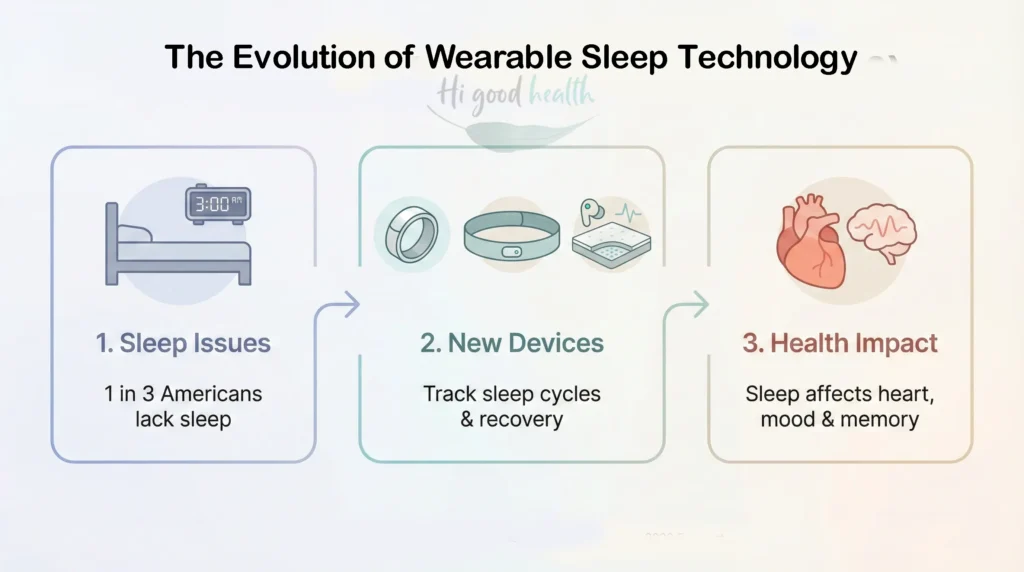
Wearable Sleep Tech is rapidly changing how we track rest and recovery. One in three American adults doesn’t get enough sleep. We know this. What’s changing fast is how we track it — and the tech has moved well beyond your average smartwatch.
Your Smartwatch Has Limits
Here’s something the marketing won’t tell you: current sleep wearables are over 97% accurate at knowing when you’re asleep — but correctly identify specific stages like REM or deep sleep only 50–65% of the time. Many devices also mistake lying still for light sleep, inflating your total sleep time. Good for trend-watching, not medical decisions.
The New Players in 2026
The market has exploded past the wrist. Here’s how the main options stack up:
| Device Type | Best For | Key Limitation |
| Smart Rings (Oura, Ultrahuman) | Comfortable nightly wear, HRV & temperature tracking | $300–400+ upfront; monthly subscription required |
| EEG Headbands (Muse S, Dreem) | Highest sleep stage accuracy (up to 65%) | Less comfortable; $400–600+ |
| Sleep Earbuds (Kokoon Nightbuds) | Travel; noise masking; relaxation | Uncomfortable for side sleepers; no EEG |
| Under-Mattress Mats (Withings) | Passive, no-wear monitoring; FDA-cleared for apnea screening | Not portable; limited to bedroom |
| Smart Beds (Eight Sleep, Sleep Number) | Automatic temperature/firmness adjustment | $1,000–5,000+; not portable |
The Honest Truth About Accuracy
None of these devices replace a clinical sleep study (polysomnography). The American Academy of Sleep Medicine is clear: consumer trackers are wellness tools, not diagnostic instruments. If you snore loudly, feel exhausted despite 8 hours, or a partner notices you stop breathing at night, see a doctor — don’t just upgrade your ring.
Wearable Sleep Tech Risks Like Orthosomnia
Obsessive sleep tracking can actually worsen your sleep. Anxiety over bad scores creates a stress loop that undermines the rest you’re trying to protect. Experts recommend focusing on weekly trends, not nightly numbers — and taking tracking breaks when the data starts stressing you out.
All reference links valid and accessible on 5 May 2026
- American Academy of Sleep Medicine. Consumer Sleep Technology: Position Statement.
https://aasm.org/
- Journal of Clinical Sleep Medicine (NIH/PMC), Effect of Wearables on Sleep in Healthy Individuals: A Randomized Crossover Trial and Validation Study: https://pmc.ncbi.nlm.nih.gov/articles/PMC7849816/
For the full breakdown — The Future of Wearable Sleep Tech: Beyond Smartwatches
