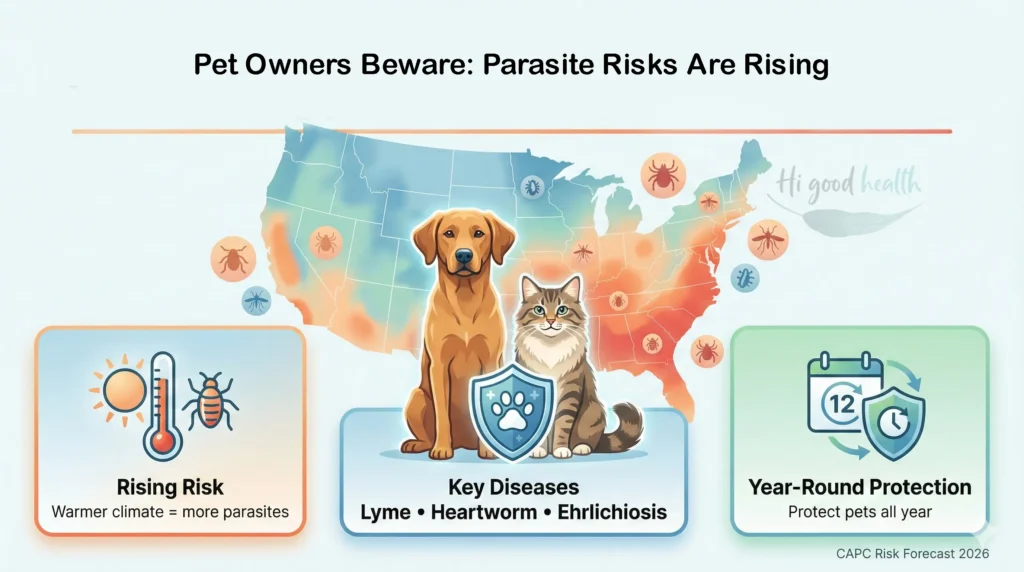
Most pet parents think ticks are a summer, trail-hiking problem. They’re not — and that assumption is quietly putting millions of dogs at risk.
Flea Season Is Over. Tick Season Is Year-Round.
Milder winters, urban sprawl, and more pets traveling with families have fundamentally changed how parasites operate across the US. The Companion Animal Parasite Council’s 2026 forecast shows surging rates of Lyme disease, ehrlichiosis, anaplasmosis, and babesiosis — with record tick activity even in cities and suburbs that previously felt low-risk.
Here’s what surprises most people: the Brown Dog Tick can complete its entire life cycle indoors. It doesn’t need a forest. It needs your baseboards. It can arrive via a delivery box, a shared elevator, or a neighbor’s dog in your apartment lobby.
When “Just Tired” Becomes a Crisis
Tick-borne illness in dogs often starts with symptoms that look minor — a dog that seems a little off, won’t finish their food, or is slower on walks. By the time more obvious signs appear, like pale gums, dark-colored urine, or collapse, the disease has already progressed significantly.
Some of the most important early red flags to watch for:
- Unexplained limping that shifts from leg to leg
- Sudden loss of appetite or unusual fatigue
- Gums that look pale, yellowish, or bluish
- Dark, tea-colored urine — a sign of red blood cell destruction
These aren’t just unsettling symptoms. A severe case can require hospitalization, IV fluids, and blood transfusions costing $800–$1,500 per unit — with total treatment bills sometimes running into the thousands.
Prevention Costs a Fraction of the Cure
A modern combination preventive — like an oral chew covering fleas, multiple tick species, and intestinal parasites — runs roughly $27–$50 a month. A single emergency hospitalization for tick fever can dwarf that in days.
The 30-second post-walk tick check (ears, toes, armpits, tail base, groin) costs nothing and can stop transmission before it starts — most tick-borne infections require 24–48 hours of attachment to transmit.
And if you do find a tick? Never squeeze, burn, or apply anything to it. Use fine-tipped tweezers, pull steadily upward, and clean the area with antiseptic.
Want the full breakdown — The Silent Threat: A 2026 Guide to Tick-Borne Diseases for US Pet Parents
All reference links valid and accessible on 15 MaY 2026
Companion Animal Parasite Council (CAPC). 2025 Annual Pet Parasite Forecasts.
Moriello, Karen A. Ticks of Dogs. MSD Veterinary Manual.
