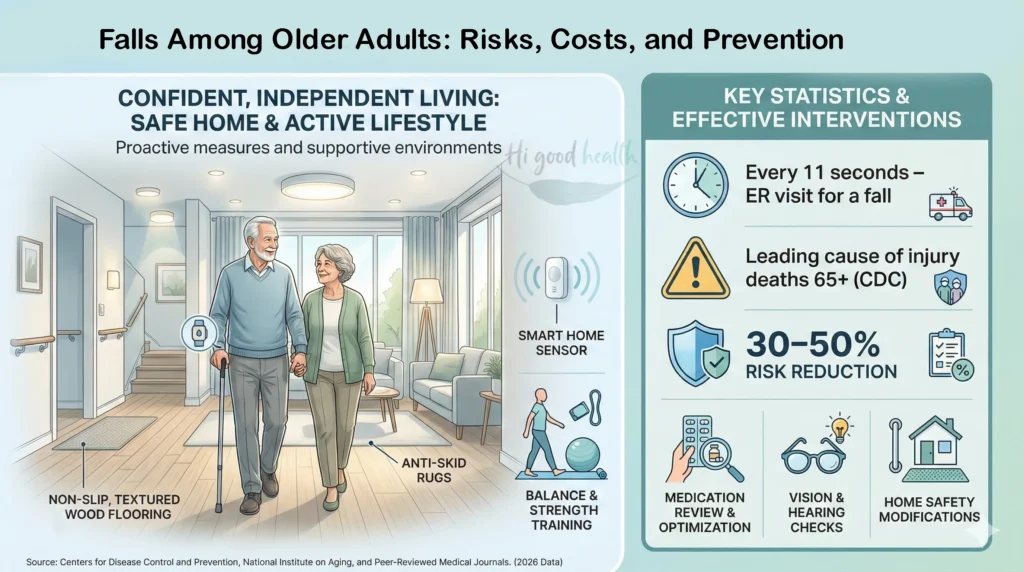
Every second of every day, an older American falls. That’s not a dramatic statistic — it’s a quiet crisis playing out in living rooms, bathrooms, and driveways across the country.
The truth is, most falls aren’t random accidents. They happen because of muscle loss that crept in silently, medications that nobody flagged for dizziness side effects, a throw rug nobody thought to remove, or lighting that seemed fine until it wasn’t. Understanding these hidden triggers is the first step to Fall Prevention.
What really works for Fall Prevention ?
Gentle but consistent movement. Programs like Tai Chi cut fall risk by up to 50%. The Otago Exercise Program — simple home-based strength and balance drills — reduces falls by 35-40%. Even 10-15 minutes daily of heel raises or one-leg stands while holding a counter builds real, protective stability over time.
Home changes matter just as much. Grab bars in bathrooms, motion-sensor night lights in hallways, secured rugs, and better lighting in stairways are small investments that pay off enormously. A single fall hospitalization costs $30,000-$40,000 on average — a grab bar costs $75-150.
Medications are an overlooked risk. Nearly 4 in 10 older adults take five or more prescriptions daily. Drugs for blood pressure, anxiety, or sleep can quietly cause dizziness or sudden blood pressure drops. A simple review with your pharmacist could make a significant difference.
Modern technology adds a new layer of safety too — fall-detection smartwatches, motion-sensor lighting, and medical alert systems mean help is never far away for seniors living independently.
Falls are not inevitable. They are preventable. And prevention doesn’t require a major lifestyle overhaul — just the right knowledge and a few well-placed changes.
All reference links valid and accessible on 11 MaY 2026
Want to know exactly which exercises, home fixes, and tech tools make the biggest difference? Explore the full guide for practical, step-by-step details you can act on today.
