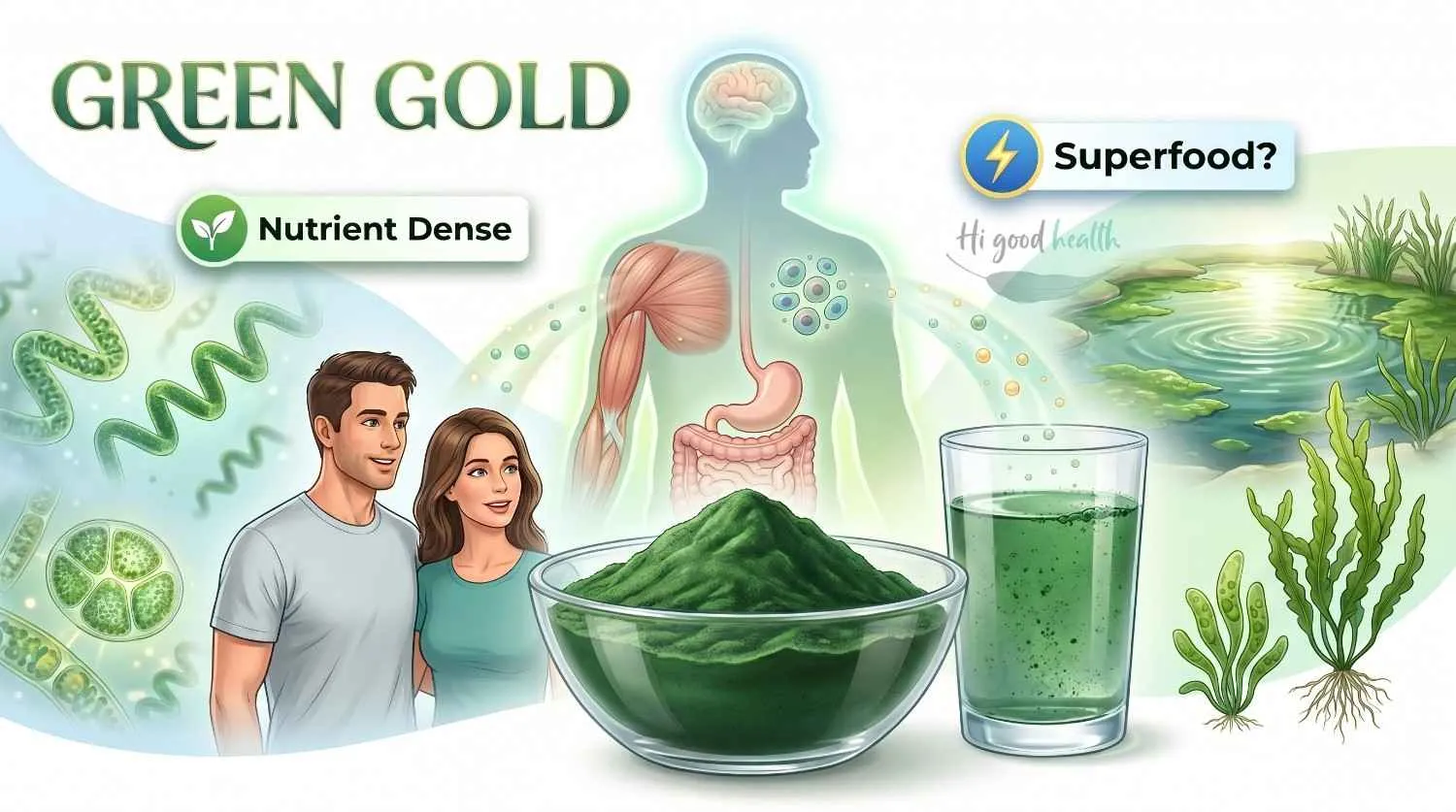
Spirulina and algae have moved from health-food shelves into serious nutrition research, and the reason is simple: gram for gram, few foods pack in as much protein, iron, and antioxidants. This guide walks through the real, evidence-based spirulina and chlorella benefits, what the science actually supports, where the hype falls apart (the B12 myth is a big one), and how to use these blue-green algae safely.
At a glance
Spirulina is a protein-rich blue-green algae (60–70% protein by weight) that supplies iron, antioxidants like phycocyanin, and all nine essential amino acids. Research suggests it may support energy, immune function, and healthy aging, which is what people usually mean when they ask what spirulina is good for. The main spirulina and chlorella benefits differ: spirulina leads on protein and is easier to digest, while chlorella is valued for detoxification support. One caution stands out—spirulina is not a reliable source of vitamin B12 for humans. Take 1–3g a day of a third-party-tested product, and check with your doctor first if you take medication.
What Are Algae and Spirulina?
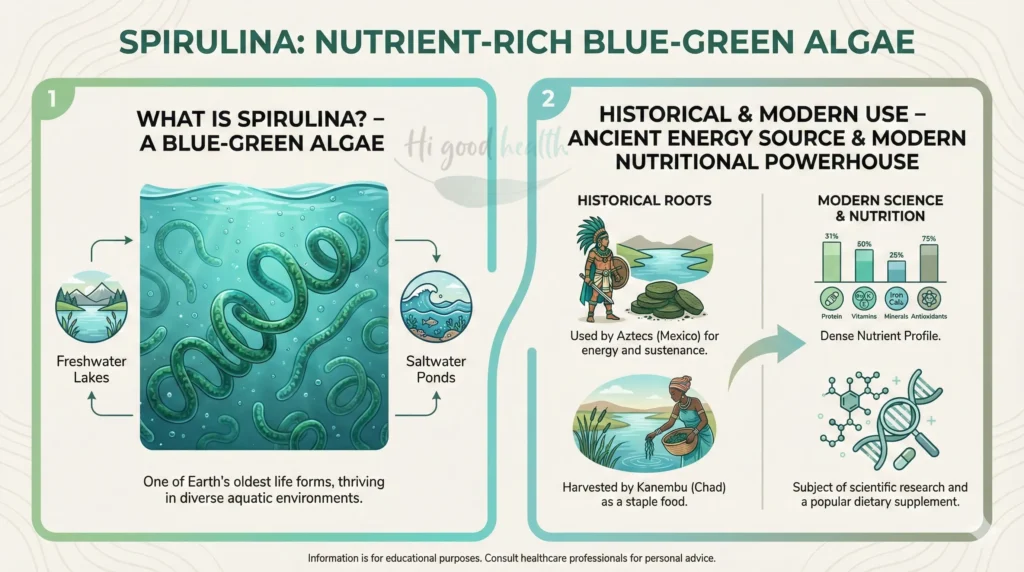
Spirulina is a type of blue-green algae (technically a cyanobacterium) that grows in both fresh and saltwater environments. It’s one of Earth’s oldest life forms—historically used by the Aztecs and African tribes like the Kanembu for energy and sustenance[1].
Modern scientific research has identified spirulina as a nutrient-dense food source with various bioactive compounds that may support overall health and wellness[2][3].
Nutritional Profile: Why Spirulina Is Called “Green Gold”
Spirulina stands out for its exceptional nutrient density. The nutritional benefits of spirulina start with what it packs into each gram. Research suggests spirulina contains[2][3]:
- 60-70% protein by weight—comparable to or exceeding eggs and soy
- Rich in iron, B vitamins (excluding B12—see important note below), calcium, magnesium, and potassium
- High in phycocyanin, a rare antioxidant compound
- Abundant in chlorophyll, which may support detoxification processes
- Contains all 9 essential amino acids, making it a complete protein source
Potential Health Benefits of Spirulina & Algae
Important Note: The following benefits are based on preliminary research. While studies show promising results, spirulina should complement—not replace—a balanced diet and proper medical care.
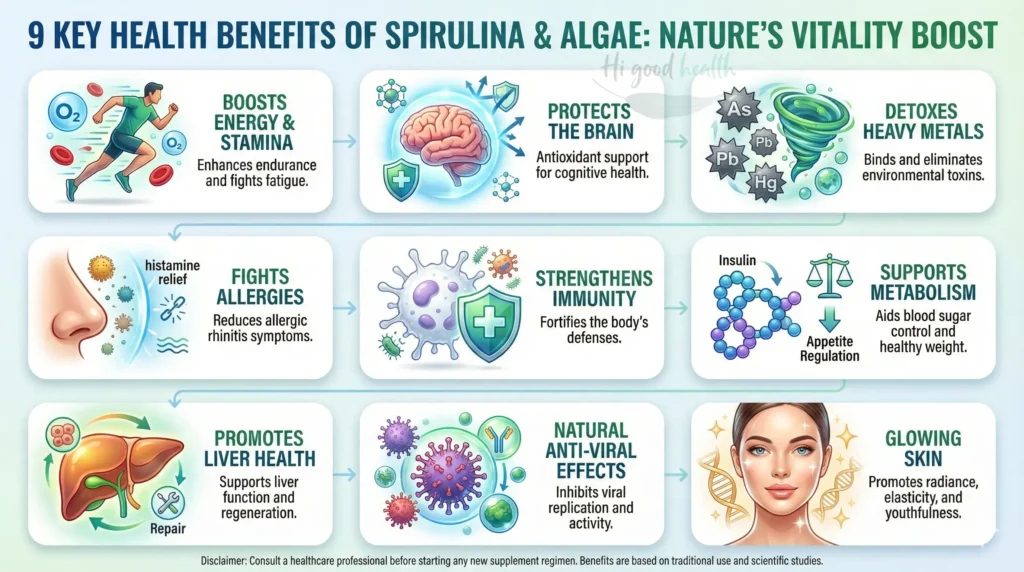
1. May Support Energy & Stamina
Research suggests spirulina supplementation may improve oxygen uptake and support healthy red blood cell production, which could contribute to better energy levels for both men and women[4][5].
2. May Support Brain Health
Laboratory and animal studies indicate that the antioxidants in spirulina, particularly phycocyanin, may help protect brain cells from oxidative stress and support cognitive function[6]. Human clinical trials are needed to confirm these effects.
3. May Support Natural Detoxification
Some studies suggest spirulina may help support the body’s natural detoxification processes by binding to certain heavy metals like arsenic and lead[7].
A clinical trial found that spirulina extract combined with zinc helped reduce arsenic levels in people with chronic arsenic poisoning – one of the few studies to test this effect in humans.[19]
However, spirulina is not a treatment for heavy metal poisoning—seek immediate medical attention for suspected toxicity.
4. May Help With Allergy Symptoms
Some research suggests spirulina may help reduce histamine response and nasal inflammation in people with allergic rhinitis[8]. Results vary, and more research is needed.
5. May Support Immune Function
Studies show spirulina supplementation may support white blood cell production and immune system activity, particularly in older adults[4][9].
6. May Support Metabolic Health
Some research indicates spirulina may help improve insulin sensitivity and support healthy appetite regulation, though more human studies are needed[10].
7. May Support Liver Health
Animal studies suggest spirulina may help support healthy liver enzyme levels and liver tissue repair[11]. Human clinical evidence is limited.
8. Shows Antiviral Activity in Laboratory Studies
Important clarification: Laboratory (in vitro) studies show that spirulina extracts can inhibit certain viruses including influenza, HIV-1, and herpes viruses in test tubes[12]. However, there is no human clinical evidence that spirulina treats or prevents viral infections. Do not use spirulina as a substitute for proven antiviral medications or vaccines.
9. May Support Skin Health
Emerging research suggests spirulina peptides may support collagen synthesis and reduce oxidative stress in skin cells, potentially offering anti-aging benefits[13]. More human studies are needed.
Superfoods like algae provide concentrated antioxidant compounds that support cellular protection. To know how antioxidants act as your body’s first line of defense against disease, for detailed information, read our article.
Special Benefits for Seniors and Those With Limited Dietary Intake
Spirulina may be particularly beneficial for older adults who have difficulty consuming adequate nutrition through diet alone[4][14][15].
Evidence-Based Benefits for Elderly Populations
A landmark 12-week study from UC Davis examined spirulina supplementation in 40 adults over age 50 with a history of anemia[4]. Key findings included:
For Anemia Support:
- Gradual increase in mean corpuscular hemoglobin (MCH) in both men and women
- Improvements in mean corpuscular volume (MCV) and mean corpuscular hemoglobin concentration (MCHC) in male participants
- Older women (ages 71+) showed benefits more rapidly, with improvements visible at 6 weeks
- Effects occurred without changes in regular dietary intake
For Immune Function:
- Over 50% of participants showed increased white blood cell counts
- Over 75% of male participants showed improved immune enzyme (IDO) activity
- Benefits were most pronounced in adults over 60 years of age
The researchers concluded: “Our data suggest that spirulina may counteract anemia and immunosenescence [age-related immune decline]”[4].
Why Spirulina May Help Seniors With Limited Appetite
As people age, meeting nutritional needs can become challenging due to:
- Reduced appetite and smaller meal portions
- Difficulty chewing or swallowing
- Age-related changes in nutrient absorption
- Multiple medications affecting appetite
- Chronic conditions limiting food choices
Key Advantages of Spirulina for Seniors
- High nutrient density in small doses: 1-3 grams (1 teaspoon) provides substantial nutrition
- Easily digestible: No cellulose cell wall, unlike some plant foods
- Complete protein: All essential amino acids in highly bioavailable form
- Multiple formats: Can be taken as powder (in smoothies), capsules, or mixed into soft foods
- Low calorie: Provides nutrients without excess calories for those with reduced activity levels
- Rich in iron: May support iron levels in older adults, though not all age-related anemia is caused by iron deficiency. Always have a blood test first to confirm the type of anemia before using spirulina as a support strategy.[4]
Nutrition gaps are consistently found in senior diets, but superfoods can help bridge those deficiencies. Explore essential nutrition for seniors to maintain muscle and cognitive function, for detailed information, read our article.
Consultation Required: Seniors should consult their healthcare provider before starting spirulina, especially if taking blood thinners, immunosuppressants, or medications for chronic conditions.
Ancient Roots, Global Legacy
Historical Use
Aztecs & Kanembu Tribes
Historical records indicate spirulina was harvested and consumed for sustenance and energy support.
Ayurveda & Traditional Chinese Medicine (TCM)
Various algae species have been used in traditional medicine systems for their cooling properties and to support blood health.
NASA Space Nutrition Research
Spirulina has been studied by NASA as a potential compact nutrition source for long-duration space missions due to its nutrient density and ease of cultivation[2].
Spirulina vs Other Nutrient-Dense Foods
| Nutrient | Spirulina | Spinach | Eggs | Chia Seeds |
| Protein (g/100g) | 60g | 2.9g | 13g | 17g |
| Iron (mg) | 28.5 | 2.7 | 1.2 | 7.7 |
| B12 | Pseudo-B12* | None | High | None |
| Chlorophyll | High | Moderate | None | None |
| Antioxidants | Very High | High | Low | High |
Table 1: Nutritional comparison per 100g. *See important B12 note below.
CRITICAL: Vitamin B12 Clarification
Spirulina is NOT a reliable source of vitamin B12 for humans.
While spirulina contains B12-like compounds (cobalamins), research shows that approximately 83% of these are pseudovitamin B12—a biologically inactive form that humans cannot utilize[16][17].
What this means:
- Pseudovitamin B12 does not support human B12 requirements
- It may compete with true B12 for absorption, potentially worsening deficiency
- Vegans and vegetarians should NOT rely on spirulina for B12 needs
Recommended B12 sources for plant-based diets:
- Fortified nutritional yeast
- Fortified plant milks and cereals
- B12 supplements (methylcobalamin or cyanocobalamin)
- Regular blood testing to monitor B12 levels
How Many Types of Algae Are There—and Which Ones Can You Eat?
There are over 30,000 scientifically described species of algae, with estimates suggesting up to 1 million species globally. Algae are classified based on their pigments and cell structure:
| Algae Group | Color | Examples | Key Compounds |
| Chlorophyta | Green | Chlorella, Sea Lettuce | Chlorophyll, lutein |
| Rhodophyta | Red | Nori, Dulse, Irish Moss | Phycobiliproteins, carrageenan |
| Phaeophyceae (Brown) | Brown | Kelp, Wakame | Fucoidan, iodine |
| Cyanobacteria (Blue-Green) | Blue-Green | Spirulina, AFA | Phycocyanin |
Table 2: Major edible algae groups and their characteristics
Edibility & Commercial Production
- Around 150-200 species are considered edible
- Fewer than 20 species are commercially produced for human consumption
- Most popular edible algae: Spirulina, Chlorella, Kelp, Nori, Dulse, Sea Moss, Wakame
Why Spirulina Is Highlighted—And Other Options You Can Try
Spirulina receives significant attention due to:
- Extremely high protein content (60-70% by weight)
- Easy digestibility (no cellulose cell wall to break down)
- High iron and antioxidant content
- Extensive scientific research supporting various health applications
However, other algae offer unique benefits depending on your health goals:
| Algae Type | Primary Benefits |
| Chlorella | Heavy metal detox support, gut health, high chlorophyll |
| Kelp | Thyroid support (iodine), metabolic health |
| Irish Moss (Sea Moss) | Skin health, joint support, gut lining |
| Red algae (Nori, Dulse) | Minerals, especially iron and magnesium |
| AFA (Wild Blue-Green) | Cognitive support, mood (limited research) |
Table 3: Different algae types and their traditional uses
Cost vs. Benefit Comparison
| Food/Supplement | Avg. Cost/100g | Key Nutrients | Effective Dose | Notes |
| Spirulina | $3-6 | Protein, iron, antioxidants | 1-3g/day | High value |
| Multivitamin | $2-4 | Broad vitamins | 1 tablet/day | Lacks phytonutrients |
| Spinach | $1.50 | Iron, folate | Large portions | Perishable |
| Chia Seeds | $2.50-3 | Omega-3, fiber | 15-20g/day | Lower iron |
| Kelp (dried) | $1-2 | Iodine, minerals | 1-2g/day | Excess iodine risk |
| Chlorella | $4-7 | Detox, chlorophyll, iron | 2-5g/day | Must be cracked-cell |
Table 4: Cost and benefit comparison of nutrient-dense foods
While spirulina is nutrient-dense, it is vital to follow safety guidelines regarding nutrient dosing to avoid toxicity. To better understand how incorrect vitamin dosing can affect health, for detailed information, read our article.
How to Use Spirulina Safely
Spirulina can be incorporated into your routine in multiple ways. The key is to start low, monitor tolerance, and choose quality sources.
• Common Forms & Usage
- Powder form: 1 teaspoon (approximately 3g) mixed into smoothies, juices, or yogurt
- Capsules/tablets: 1-3g per day, typically 2-6 capsules depending on dosage
- Topical applications: In face masks or creams for skin benefits
- Protein bars: Spirulina-enriched snack bars (check total content)
Starting recommendations:
- Begin with 1g (approximately 1/4 teaspoon) to assess tolerance
- Gradually increase to 3g per day over 1-2 weeks
- Take with food to minimize potential digestive discomfort
- Stay well-hydrated when consuming spirulina
Buyer Safety & Quality Standards
Not all spirulina products are created equal. Quality and safety depend heavily on sourcing and testing. When purchasing spirulina, prioritize products with:
- Certified Organic (USDA, EU Organic) – ensures no synthetic pesticides or fertilizers
- GMP Certified (Good Manufacturing Practices) – ensures quality production standards
- Third-party tested – verification for heavy metals (lead, mercury, arsenic), microcystins, and other contaminants
- Reputable sources – India (Tamil Nadu, Andhra Pradesh), Hawaii, Japan, EU producers
Avoid:
- Unverified bulk powders from unknown suppliers
- Products without third-party testing certificates
- Spirulina sourced from areas with known water pollution
- Products making exaggerated health claims (e.g., “cures cancer,” “reverses disease”)
- Microcystin Contamination Risk – Spirulina can occasionally be contaminated with microcystins, which are toxins that can harm the liver. Always choose brands that publish third-party lab results confirming no microcystins or cyanotoxins are present.
How Is Spirulina Grown?
Spirulina is cultivated using carefully controlled methods to ensure nutrient quality, safety, and purity. Commercial spirulina cultivation involves:
- Raceway ponds or photobioreactors: Large-scale cultivation systems
- Alkaline water conditions: pH 8-11, mimicking natural habitat
- Sunlight or controlled lighting: For photosynthesis
- Temperature control: Optimal growth at 35-37°C (95-99°F)
- Harvesting and processing: Filtration, low-heat drying to preserve nutrients
- Quality control: Testing for contamination throughout production
Where It’s Grown
Spirulina is produced globally, but quality can vary depending on environmental conditions and regulations. Major spirulina production regions include:
- India: Tamil Nadu, Andhra Pradesh (major global supplier)
- China: Largest producer and exporter worldwide
- Hawaii, USA: Premium quality, ocean-source minerals
- Thailand: Significant commercial production
- Japan: High-quality, strictly regulated production
- Chad, Africa: Traditional wild harvesting continues
Organic vs Non-Organic Spirulina
Spirulina is naturally resistant to most pests due to its alkaline growing environment. However, certified organic spirulina ensures:
- No synthetic chemical fertilizers used
- No pesticide contamination from surrounding areas
- Adherence to organic production standards
- Regular third-party audits
Non-organic spirulina may still be safe if:
- Produced by reputable manufacturers
- Third-party tested for contaminants
- Sourced from clean water environments
When in doubt, choose certified organic products, especially for long-term daily use.
Key Takeaways
- Spirulina is 60–70% complete protein and rich in iron and antioxidants, which is why the spirulina health benefits get so much attention.
- The core spirulina and chlorella benefits are different: spirulina wins on protein and digestibility; chlorella is used more for detoxification support and gut health.
- Spirulina is NOT a reliable B12 source—about 83% is inactive pseudovitamin B12, so vegans and vegetarians still need a true B12 source.
- Research is most promising for older adults, showing support for age-related anemia and immune function at 1–3g per day.
- Quality matters most: choose organic, GMP-certified, third-party-tested products to avoid heavy metals and microcystin contamination.
Frequently Asked Questions (FAQ)
1. Can spirulina help with weight management?
Some research suggests spirulina may support healthy metabolism by improving insulin sensitivity and supporting appetite regulation[10]. However, spirulina is not a weight loss product. Sustainable weight management requires a balanced diet, regular physical activity, and lifestyle modifications.
For weight management support
other algae like Kelp may also be beneficial due to their iodine content, which supports thyroid function. However, too much iodine can disrupt thyroid health. If you have any thyroid condition or take thyroid medication, do not take kelp without speaking to your doctor first.[14]
2. What is the difference between spirulina and chlorella?
Spirulina is known for its high protein content (60-70%), easy digestibility, and extensive research backing. It has no cellulose cell wall.
Chlorella is particularly valued for supporting the body’s natural detoxification processes and gut health[14]. It has a tough cell wall that must be “cracked” for human digestion. Chlorella typically contains more chlorophyll than spirulina.
Both are nutritious; choice depends on individual health goals.
3. Is spirulina safe to take every day?
For most healthy adults, daily spirulina consumption at recommended doses (1-3g) appears safe based on current research[4][9]. The UC Davis study showed benefits with 12 weeks of continuous supplementation without adverse effects[4].
However:
Always choose GMP-certified, third-party tested brands
Consult a healthcare provider before starting, especially if you have autoimmune conditions, phenylketonuria (PKU), or take immunosuppressant medications
Monitor for any unusual reactions when starting
4. How do I consume spirulina if I don’t like the taste?
Spirulina has a strong, earthy flavor that some find unpleasant. Options include:
Powder in smoothies: Blend 1 teaspoon with banana, berries, and mango to mask the taste
Capsules or tablets: No taste, convenient for daily use (1-3g/day)
Protein bars: Pre-made spirulina snacks with added flavors
Mixed with juice: Strong-flavored juices like orange or pineapple can help
5. Is spirulina a good protein source for vegans and vegetarians?
Yes, spirulina is a complete plant-based protein containing all 9 essential amino acids. At 60-70% protein by weight, it exceeds most plant sources including soy[2][3].
However: Do NOT rely on spirulina for vitamin B12. It contains mostly pseudovitamin B12, which is biologically inactive for humans[16][17]. Vegans must supplement with true B12 or consume fortified foods.
6. Does spirulina contain heavy metals?
High-quality spirulina from reputable sources actually helps support the body’s natural processes for eliminating certain heavy metals like arsenic and lead[7].
However, spirulina grown in contaminated water can accumulate toxins. This is why third-party testing is essential.
Always avoid unverified bulk powders from unknown sources
Choose brands that publish third-party test results
7. Is spirulina safe for children or during pregnancy?
Consult a healthcare provider first. Safety during pregnancy and for children has not been extensively studied.
If your doctor approves:
Strictly choose Certified Organic brands with third-party testing
Ensure no contamination with microcystins (liver toxins produced by some cyanobacteria)
Start with very small amounts (0.5g or less for children)
Monitor for any allergic reactions
Pregnant and nursing women should be especially cautious about supplement purity.
8. Can spirulina interact with medications?
Spirulina may interact with:
Immunosuppressants: Spirulina may stimulate immune function, potentially counteracting these medications
Blood thinners: Spirulina contains vitamin K, which can affect how your blood clots. If you’re on a blood thinner, ask your doctor before starting spirulina and keep your INR monitored.
Diabetes medications: May affect blood sugar levels, requiring dose adjustments
Blood pressure medications: Spirulina may have a mild blood pressure-lowering effect. If you’re on antihypertensives, monitor your readings when you first start taking it.[20]
Thyroid medications: Take spirulina at least 1–2 hours away from your thyroid pill, as high-fiber supplements can reduce medication absorption.
Always inform your healthcare provider about all supplements you’re taking.
9. How should spirulina be stored?
Store in a cool, dry place away from direct sunlight
Keep container tightly sealed to prevent oxidation
Refrigeration can extend shelf life but is not required for quality products
Check expiration dates and discard if color, smell, or texture changes significantly
10. Are there any side effects?
Most people tolerate spirulina well. Possible side effects may include:
Mild digestive upset (especially when starting)
Nausea (usually from taking on empty stomach)
Headache (rare)
Allergic reactions (rare but possible, especially if allergic to seafood or seaweed)
Discontinue use and consult a healthcare provider if you experience:
Severe digestive symptoms
Rash or hives
Difficulty breathing
Unusual fatigue or jaundice (yellowing of skin/eyes)
11. What is the difference between spirulina and chlorophyll?
Answer: They are not the same thing. Spirulina is a whole blue-green algae you eat as a food or supplement. Chlorophyll is a single green pigment found inside spirulina (and inside chlorella and green plants). So spirulina contains chlorophyll, but chlorophyll on its own is just one compound, not a complete food. If you want protein, iron, and antioxidants, you want the whole algae, not an isolated chlorophyll drop.
12. What is the difference between blue spirulina and green spirulina?
Answer: Green spirulina is the whole dried algae, so it keeps the full nutrient profile: protein, iron, chlorophyll, and antioxidants. Blue spirulina is an extract of just one compound, phycocyanin, the pigment that gives it a bright blue color. Blue spirulina is popular for coloring smoothies and has a milder taste, but because it is an isolated extract it does not carry the same protein and iron content as whole green spirulina.
13. Is the spirulina B12 claim a myth?
Answer: Yes, largely. The idea that spirulina is a great vitamin B12 source is a common myth. About 83% of the B12-like compounds in spirulina are pseudovitamin B12, a form the human body cannot use, and it may even compete with real B12 for absorption. Vegans and vegetarians should not count on spirulina for B12 and should use fortified foods or a true B12 supplement instead.
Final Thoughts
Spirulina and other edible algae offer an impressive array of potential benefits—from dense nutrition to antioxidant support to possible benefits for age-related health concerns. Current research suggests particular promise for older adults experiencing reduced appetite and age-related anemia or immune decline[4][14][15].
By choosing clean, tested, and high-quality algae supplements from reputable sources, you can safely explore one of the most nutrient-dense natural foods available today.
Remember: Spirulina is a supplement that may support overall health, but it is not a cure for any disease and should not replace medical treatment, a balanced diet, or healthy lifestyle practices.
Think your multivitamin covers everything? Discover the hidden mineral gaps in our blog: “60+ Essential Minerals That Protected Our Ancestors — but Are Missing from Your Multivitamin.”
All reference links valid and accessible on 30 April 2026
[1] Ciferri, O. (1983). Spirulina, the edible microorganism. Microbiological Reviews, 47(4), 551-578.
[2] NASA Technical Reports Server. (1988). Characterization of Spirulina biomass for CELSS diet potential. https://ntrs.nasa.gov/citations/19890016190
[3] Khan, Z., Bhadouria, P., & Bisen, P. S. (2005). Nutritional and therapeutic potential of Spirulina. Current Pharmaceutical Biotechnology, 6(5), 373-379.
[4] Selmi, C., Leung, P. S., Fischer, L., German, B., Yang, C. Y., Kenny, T. P., Cysewski, G. R., & Gershwin, M. E. (2011). The effects of Spirulina on anemia and immune function in senior citizens. Cellular & Molecular Immunology, 8(3), 248-254. https://pmc.ncbi.nlm.nih.gov/articles/PMC4012879/
[5] Kalafati, M., et al. (2010). Ergogenic and antioxidant effects of spirulina supplementation in humans. Medicine & Science in Sports & Exercise, 42(1), 142-151.
[6] Carrizzo, A., et al. (2022). Phycocyanin: Anti-inflammatory effect and mechanism. Biomedicine & Pharmacotherapy, 153, 113318. https://pubmed.ncbi.nlm.nih.gov/36076518/
[7] Sharma, M. K., et al. (2007). Spirulina in health management of arsenic toxicity in Helianthus annuus L. Ecotoxicology and Environmental Safety, 66(1), 26-33.
[8] Cingi, C., Conk-Dalay, M., Cakli, H., & Bal, C. (2008). The effects of Spirulina on allergic rhinitis. European Archives of Oto-Rhino-Laryngology, 265(10), 1219-1223.
[9] Mao, T. K., Van de Water, J., & Gershwin, M. E. (2005). Effects of a Spirulina-based dietary supplement on cytokine production from allergic rhinitis patients. Journal of Medicinal Food, 8(1), 27-30.
[10] Parikh, P., Mani, U., & Iyer, U. (2001). Role of Spirulina in the control of glycemia and lipidemia in type 2 diabetes mellitus. Journal of Medicinal Food, 4(4), 193-199.
[11] Torres-Duran, P. V., Miranda-Zamora, R., Paredes-Carbajal, M. C., Mascher, D., Diaz-Zagoya, J. C., & Juarez-Oropeza, M. A. (1998). Spirulina maxima prevents induction of fatty liver by carbon tetrachloride in the rat. Biochemistry and Molecular Biology International, 44(4), 787-793.
[12] Hayashi, K., Hayashi, T., & Kojima, I. (1996). A natural sulfated polysaccharide, calcium spirulan, isolated from Spirulina platensis: in vitro and ex vivo evaluation of anti-herpes simplex virus and anti-human immunodeficiency virus activities. AIDS Research and Human Retroviruses, 12(15), 1463-1471.
[13] de Jesus Raposo, M. F., de Morais, A. M., & de Morais, R. M. (2025). Identification and evaluation of antioxidant and anti-aging peptide fractions from enzymatically hydrolyzed proteins of Spirulina platensis and Chlorella vulgaris. Marine Drugs, 23(4), 145. https://pmc.ncbi.nlm.nih.gov/articles/PMC12028799/
[14] Lordan, R. (2016). Algae as functional foods for the elderly. Advances in Food Technology and Nutritional Sciences, 2(2), 56-64. https://www.scirp.org/journal/paperinformation?paperid=71474
[15] NutraIngredients USA. (2011). Spirulina shows immune boosting power for seniors. https://www.nutraingredients-usa.com/Article/2011/02/17/Spirulina-shows-immune-boosting-power-for-seniors/
[16] Watanabe, F., Takenaka, S., Kittaka-Katsura, H., Ebara, S., & Miyamoto, E. (1999). Pseudovitamin B12 is the predominant cobamide of an algal health food, spirulina tablets. Journal of Agricultural and Food Chemistry, 47(11), 4736-4741. https://pubs.acs.org/doi/10.1021/jf990541b
[17] Watanabe, F., & Bito, T. (2018). Vitamin B12 sources and microbial interaction. Experimental Biology and Medicine, 243(2), 148-158.
[18] Deng, R., & Chow, T. J. (2010). Hypolipidemic, antioxidant and antiinflammatory activities of microalgae Spirulina. Cardiovascular Therapeutics, 28(4), e33-e45.
[19] Misbahuddin, M., et al. (2006). Efficacy of spirulina extract plus zinc in patients of chronic arsenic poisoning: A randomized placebo-controlled study. Clinical Toxicology, 44(2), 135-141. https://pubmed.ncbi.nlm.nih.gov/16615668/
[20] Martínez-Galero, E., et al. (2025). Effects of spirulina supplementation alone or with exercise on cardiometabolic risk factors: A systematic review and meta-analysis. Frontiers in Nutrition, 12, 1522879. https://pmc.ncbi.nlm.nih.gov/articles/PMC12245695/
Medical Disclaimer: This article is for informational and educational purposes only and does not constitute medical advice. Always consult with a qualified healthcare professional before starting any new supplement regimen, especially if you have existing health conditions, are pregnant, nursing, or taking medications.
