
About this series. Oral Hygiene is an eleven-part series on looking after teeth and gums at every age, from brushing and flossing to children’s teeth, gum disease and toothache.
This is Part 11: Medicine for Toothache.
Toothache is one of the most common reasons people search for quick dental relief.
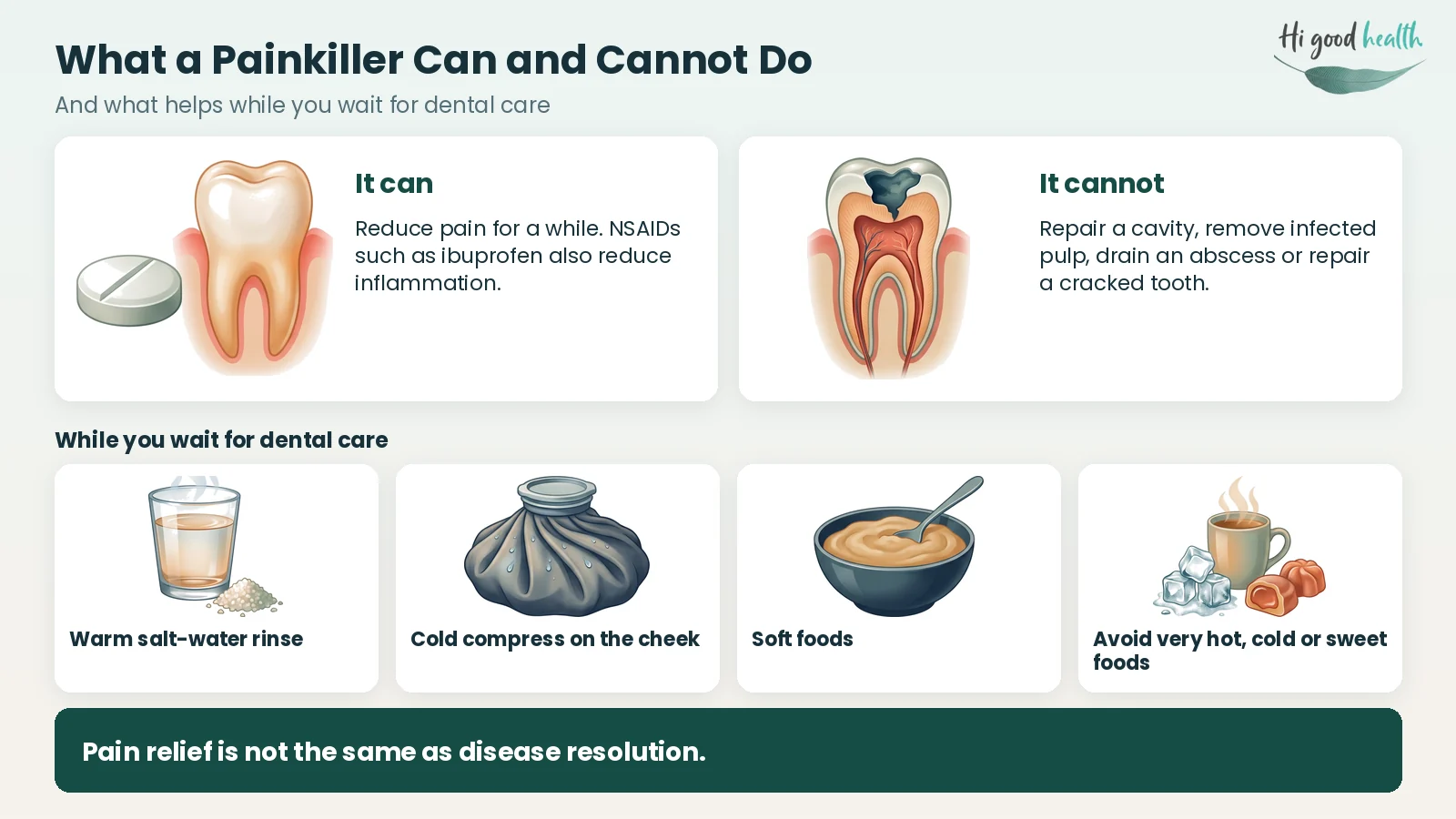
But there is one important thing to understand: a painkiller can reduce tooth pain, but it usually does not treat the underlying cause.
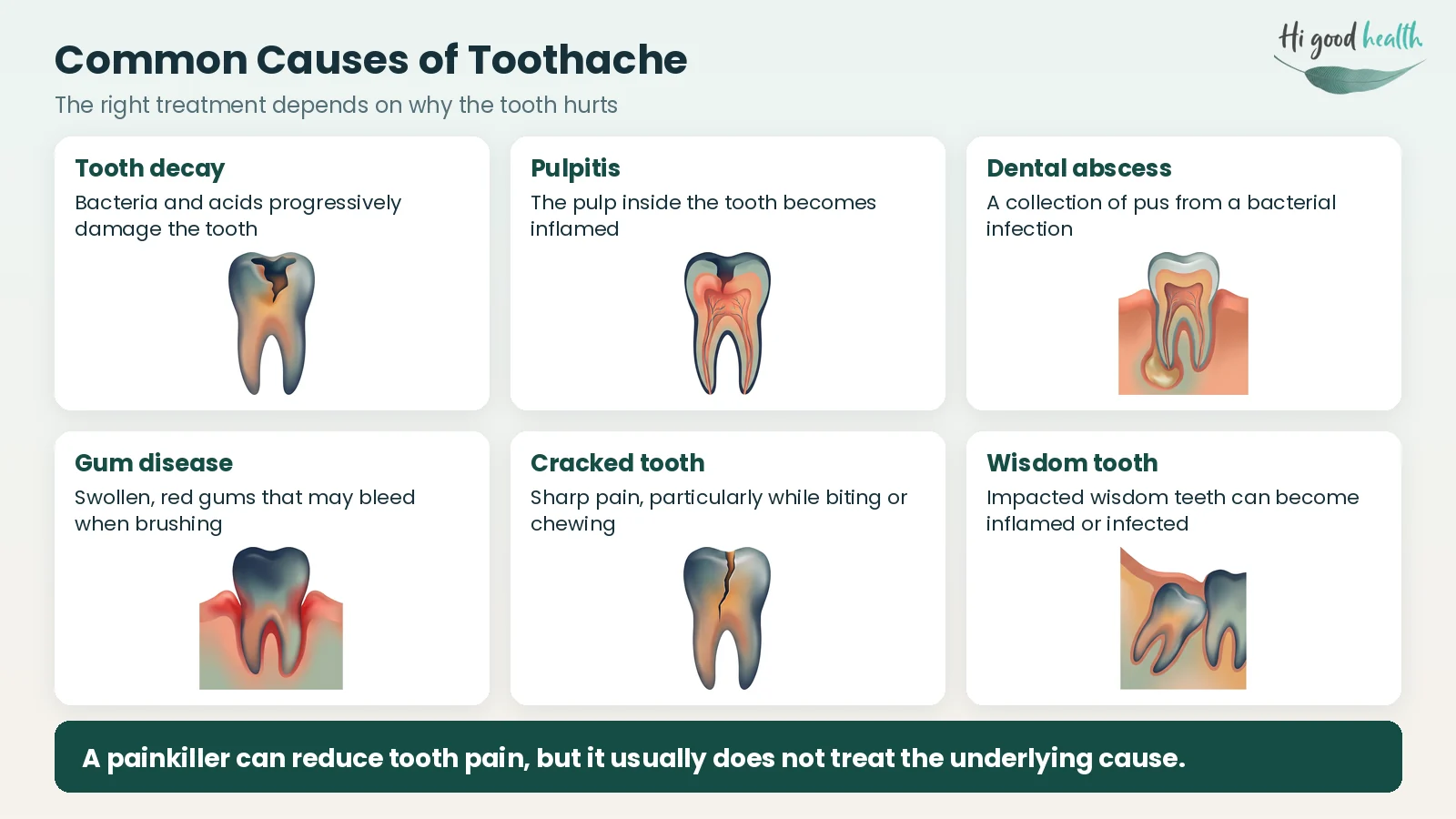
Toothache can result from tooth decay, pulp inflammation, a dental abscess, gum disease, a cracked tooth, wisdom tooth problems or other dental conditions. The appropriate treatment depends on the cause.
This article explains the common causes of toothache, medicines that may provide temporary relief, when antibiotics are appropriate, home-care measures, definitive dental treatments and when tooth pain requires urgent attention.
At a Glance
A painkiller can reduce tooth pain, but it usually does not treat the underlying cause. There is no single best medicine for every person with toothache.
For many adults, NSAIDs such as ibuprofen or naproxen, alone or combined with acetaminophen, are evidence-supported options for temporary acute dental pain relief when medically appropriate.
Not every toothache requires antibiotics. Children should not be given adult doses of painkillers. Seek urgent medical or dental care if toothache is accompanied by rapidly increasing facial swelling, swelling around the eye, neck swelling, or difficulty breathing, swallowing or speaking.
What Causes Toothache?
Tooth pain can have several causes. Some of the most common include:
1. Tooth Decay and Cavities
Dental caries occurs when bacteria and acids progressively damage the tooth.
Early decay may cause sensitivity to:
- Cold foods and drinks
- Hot foods and drinks
- Sweets
- Acidic foods
As decay progresses deeper into the tooth, pain can become more persistent or spontaneous.
If the decay reaches the dental pulp, root canal treatment may eventually be required.
2. Pulpitis
The dental pulp contains nerves and blood vessels.
When the pulp becomes inflamed, a condition known as pulpitis can cause significant tooth pain.
Symptoms may include:
- Severe toothache
- Spontaneous pain
- Pain that becomes worse at night
- Sensitivity to hot or cold
- Pain that continues after the stimulus is removed
Depending on the type and severity of pulp inflammation, treatment may involve root canal treatment or extraction if the tooth cannot be restored.
3. Dental Abscess
A dental abscess is a collection of pus associated with a bacterial infection.
It may cause:
- Severe toothache
- Gum swelling
- Facial swelling
- Pus or a bad taste in the mouth
- Fever
- Tenderness when biting
A dental abscess generally requires definitive dental treatment, such as drainage, root canal treatment or extraction, depending on the affected tooth.
4. Gum Disease
Gingivitis and periodontitis can cause:
- Swollen gums
- Red gums
- Bleeding during brushing
- Gum tenderness
- Bad breath
- Gum recession
- Tooth sensitivity
Advanced periodontitis can damage the tissues and bone supporting the teeth.
5. Cracked or Fractured Tooth
A cracked tooth may cause sharp pain, particularly while:
- Biting
- Chewing
- Releasing a bite
The treatment depends on the location and extent of the crack.
6. Wisdom Tooth Problems
Partially erupted or impacted wisdom teeth can cause inflammation and infection around the tooth. When a wisdom tooth keeps getting infected, an oral surgeon may remove it; antibiotics may be added if the infection is spreading.
This may result in:
- Pain at the back of the mouth
- Gum swelling
- Difficulty opening the mouth
- Bad taste or bad breath
- Difficulty chewing
7. Dental Procedures
Temporary pain or sensitivity may occur after procedures such as:
- Tooth extraction
- Root canal treatment
- Dental fillings
- Implant surgery
- Periodontal procedures
Persistent, severe or worsening pain after a procedure should be discussed with the treating dentist.
What Is the Best Over-the-Counter Pain Relief for Toothache?
There is no single best medicine for every person with toothache.
For adults and adolescents, evidence-based dental pain guidelines identify non-opioid pain medicines, particularly NSAIDs such as ibuprofen or naproxen, alone or combined with acetaminophen, as effective options for temporary management of acute dental pain when appropriate.
The choice depends on factors such as:
- Age
- Medical history
- Pregnancy
- Allergies
- Kidney or liver disease
- History of stomach ulcers
- Current medications
- Other health conditions
Therefore, patients should not simply copy someone else’s prescription.
Ibuprofen for Toothache
Ibuprofen is a non-steroidal anti-inflammatory drug (NSAID).
It can help reduce both:
- Pain
- Inflammation
NSAIDs are recommended as first-line options for many forms of acute dental pain when there are no contraindications.
However, ibuprofen may not be suitable for everyone.
Medical advice should be obtained before using it if you have conditions such as:
- Stomach ulcers or gastrointestinal bleeding
- Kidney disease
- NSAID allergy
- Certain types of asthma
- Certain cardiovascular conditions
- Use of blood-thinning medicines
- Pregnancy, particularly later pregnancy
Common Side Effects of Ibuprofen
Most people tolerate short-term ibuprofen use well, but side effects can occur.
Common or relatively mild effects may include:
- Indigestion
- Stomach discomfort
- Nausea
- Vomiting
- Heartburn
- Headache
- Dizziness
Taking ibuprofen with or after food may reduce stomach irritation for some people, although this does not eliminate the risk of gastrointestinal complications.
Can Ibuprofen Be Taken With Other Painkillers?
It depends on the medicine.
Do not combine ibuprofen with another NSAID unless specifically instructed by a healthcare professional.
Examples of medicines that may also belong to the NSAID group include:
- Naproxen
- Diclofenac
- Aspirin when used as an analgesic
Combining NSAIDs can increase the risk of side effects, particularly gastrointestinal bleeding and kidney problems.
Acetaminophen for Toothache
Acetaminophen (paracetamol) can provide pain relief and may be an appropriate option for some patients.
Unlike ibuprofen, acetaminophen is not an NSAID and does not have the same anti-inflammatory effect. Its primary role is to reduce the perception of pain and lower fever.
However, acetaminophen must be taken within recommended limits.
Taking excessive amounts can cause serious liver damage.
Patients should also check combination cold, flu and pain medicines because some already contain acetaminophen.
Can You Take Ibuprofen and Acetaminophen Together for Toothache?
In appropriate adults, ibuprofen and acetaminophen can be used together because they work through different mechanisms.
Evidence-based dental guidelines support NSAIDs alone or in combination with acetaminophen for many cases of acute dental pain.
However, this does not mean that everyone should automatically take both medicines. The appropriate medication and dosage depend on individual circumstances.
Patients should:
- Follow recommended dosing instructions.
- Avoid taking more than the recommended amount.
- Check combination products for hidden acetaminophen or NSAIDs.
- Seek professional advice if they have underlying medical conditions.
Taking several painkillers without checking their active ingredients can result in accidental overdose.
Who Should Be Particularly Careful With Acetaminophen?
Acetaminophen is generally well tolerated when used correctly, but extra caution may be required in people with:
Liver disease. People with existing liver disease should discuss acetaminophen use with their healthcare professional.
Regular heavy alcohol consumption. Regular heavy alcohol consumption may increase the risk of liver injury in certain circumstances.
Low body weight or malnutrition. People with very low body weight or poor nutritional status may require individualized advice.
Multiple medicines. Patients taking several medicines should check whether any of them already contain acetaminophen.
Previous liver problems. Anyone with a history of significant liver disease should obtain medical advice before using acetaminophen regularly.
Can Acetaminophen Be Taken During Pregnancy?
Acetaminophen is commonly used during pregnancy when pain or fever requires treatment and is generally considered the preferred analgesic option when clinically appropriate.
However, pregnancy does not mean that unlimited amounts are safe.
Pregnant patients should:
- Use the lowest effective dose
- Use it for the shortest necessary duration
- Follow professional or product guidance
- Seek dental care for persistent toothache
A pregnant patient with significant tooth pain should not simply continue taking painkillers without identifying and treating the underlying dental problem.
Common Mistakes to Avoid
❌ Taking more because the pain is severe. A higher dose does not necessarily provide proportionally greater pain relief and can increase the risk of toxicity.
❌ Taking multiple combination medicines. Several products may contain acetaminophen without the patient realizing it.
❌ Taking someone else’s prescription. Medication should be selected based on the individual’s medical history.
❌ Using acetaminophen for several days instead of seeing a dentist. Pain relief does not treat the underlying dental problem.
❌ Assuming that no pain means the tooth is healthy. Dental disease can continue even when symptoms temporarily improve.
Do You Need Antibiotics for Toothache?
Not every toothache requires antibiotics.
This is one of the most important points patients should understand.
Antibiotics generally do not treat uncomplicated dental pain caused by conditions such as irreversible pulpitis. In many cases, the priority is definitive dental treatment together with appropriate pain relief.
Depending on the condition, definitive treatment may include:
- Dental filling
- Root canal treatment
- Drainage of an abscess
- Periodontal treatment
- Tooth extraction
When Are Antibiotics Used for Dental Infections?
Antibiotics may be considered when a dental infection is associated with systemic involvement or spreading infection, such as:
- Fever
- Malaise
- Significant swelling
- Spreading infection
The choice of antibiotic, dose and duration should be determined by a qualified healthcare professional.
Do not start leftover antibiotics or someone else’s prescription.
Unnecessary antibiotic use contributes to antimicrobial resistance and can expose patients to unnecessary side effects.
Home Remedies for Toothache
Some simple measures may provide temporary comfort while waiting for dental care.
Warm Salt-Water Rinse
A gentle warm salt-water rinse may help soothe the mouth temporarily.
It does not, however, cure a cavity or dental infection.
Cold Compress
If swelling is present, applying a cold compress externally to the cheek for short periods may help reduce discomfort.
Eat Soft Foods
Choose softer foods and avoid chewing on the painful side.
Avoid Pain Triggers
Very hot, cold, sweet or acidic foods may worsen sensitivity in some patients.
The NHS also recommends measures such as pain relief, salt-water rinsing and eating soft foods while awaiting dental care.
Does Clove Oil Cure Toothache?
Clove contains eugenol, which has analgesic and antiseptic properties and is used in some dental materials.
However, clove oil does not cure the underlying cause of toothache.
Applying concentrated clove oil directly to the gums repeatedly may cause irritation or tissue damage.
Therefore, it should not replace professional dental treatment.
Should You Put Aspirin Directly on a Tooth?
No.
Placing an aspirin tablet directly against a painful tooth or gum does not treat the cause of toothache.
It can irritate or chemically burn the oral tissues.
Pain medicines should be taken through the recommended route and at the appropriate dose.
When Should You See a Dentist for Toothache?
You should arrange a dental examination if:
- Toothache lasts more than a day or two
- Pain repeatedly returns
- Pain interferes with sleep
- Pain occurs while biting
- Pain does not improve adequately with appropriate pain relief
- Your gums are swollen
- You notice pus or a bad taste
- You develop fever
- Your cheek or jaw becomes swollen
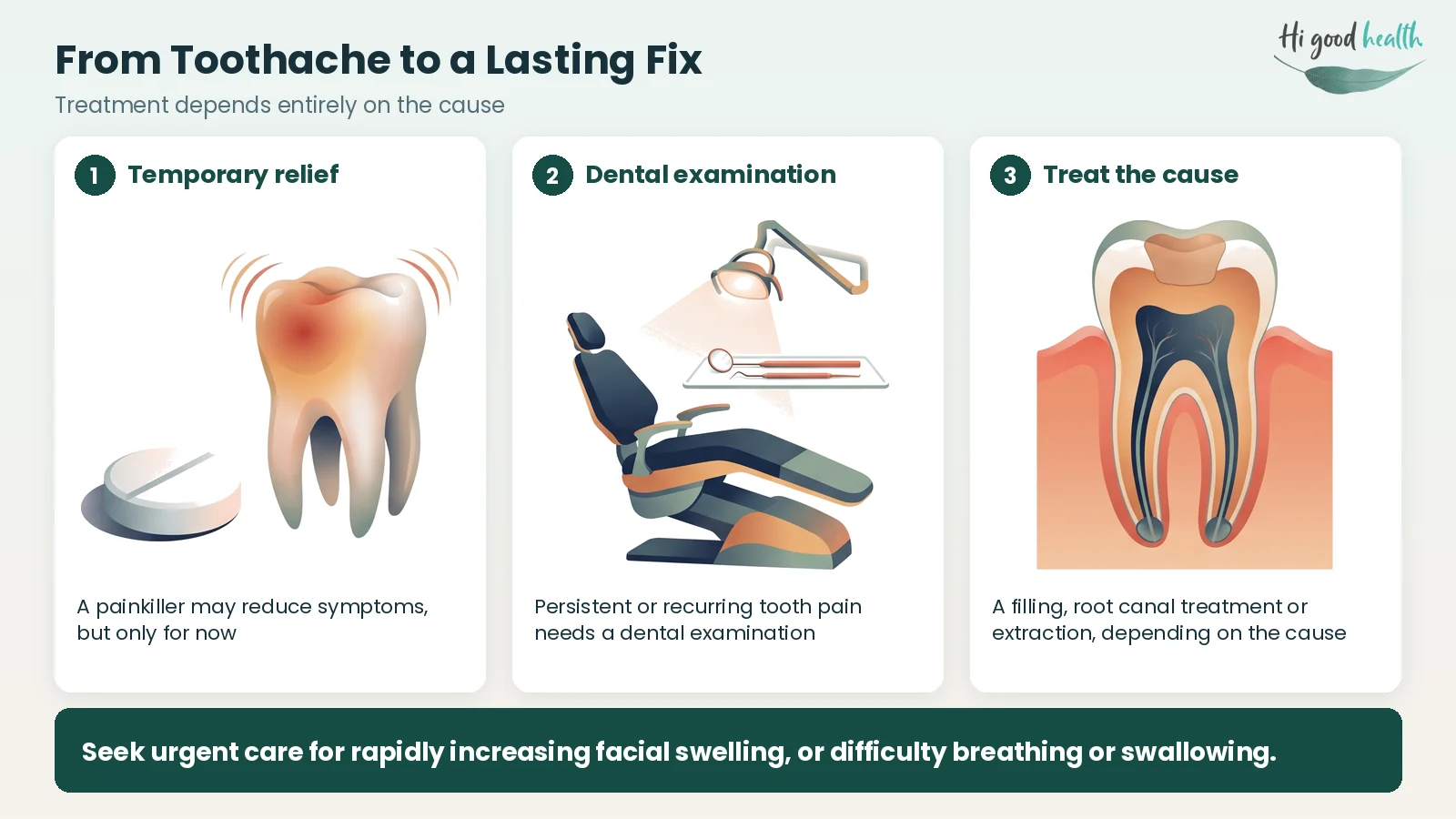
Persistent tooth pain should not simply be masked with repeated painkillers.
When Is Toothache a Dental Emergency?
Seek urgent medical or dental care if toothache is accompanied by:
- Rapidly increasing facial swelling
- Swelling around the eye
- Neck swelling
- Difficulty breathing
- Difficulty swallowing
- Difficulty speaking
- Severe or rapidly spreading infection
These symptoms may indicate a potentially serious spreading dental infection.
Can Toothache Go Away on Its Own?
Sometimes tooth pain can temporarily disappear.
However, this does not necessarily mean that the underlying problem has healed.
For example, a severely damaged dental pulp may eventually lose its ability to respond normally, causing the pain pattern to change. The infection or damage may still remain.
Therefore: pain relief is not the same as disease resolution.
If toothache keeps returning, a dental examination is important.
What Is the Permanent Treatment for Toothache?
Treatment depends entirely on the cause.
| Cause | Possible treatment |
|---|---|
| Early tooth decay | Preventive/restorative dental care |
| Cavity | Dental filling |
| Deep decay affecting pulp | Root canal treatment or extraction, depending on restorability |
| Dental abscess | Drainage and definitive dental treatment |
| Gum disease | Professional periodontal treatment and improved oral hygiene |
| Cracked tooth | Restoration, crown, root canal or extraction depending on the crack |
| Wisdom tooth infection | Local treatment and, in selected cases, extraction |
| Non-restorable tooth | Extraction |
A painkiller may reduce symptoms, but it cannot restore damaged tooth structure or eliminate an infected pulp.
Toothache Medicine for Children
Children should not be given adult doses of painkillers.
Medication selection and dosing in children depend on factors such as:
- Age
- Body weight
- Medical history
- Other medicines being taken
Appropriate non-opioid analgesics can be used for pediatric dental pain under appropriate guidance, but parents should obtain dosing advice from a dentist, pediatrician or other qualified healthcare professional.
A child with persistent toothache should also receive a dental examination because dental infection and decay require treatment of the underlying cause.
Toothache During Pregnancy
Pregnant patients should not automatically avoid necessary dental care.
However, medication choices during pregnancy require particular consideration.
The safety of individual painkillers can vary depending on the stage of pregnancy and the patient’s medical circumstances.
Therefore, pregnant patients should consult their dentist and healthcare provider before taking pain medication, particularly NSAIDs.
A suspected dental infection should also not be ignored simply because the patient is pregnant.
Why Is Toothache Worse at Night?
Many people report that toothache feels worse at night.
Possible contributing factors include:
- Inflammatory dental conditions
- Increased awareness of pain when there are fewer distractions
- Lying down and changes in blood flow/pressure perception
- Eating or drinking triggering an already sensitive tooth
- Advanced inflammation of the dental pulp
A toothache that repeatedly wakes you at night should be evaluated by a dentist.
How Can You Prevent Toothache?
The best way to prevent toothache is to prevent and treat dental disease early.
Follow a consistent oral-hygiene routine:
- Brush twice a day with fluoride toothpaste.
- Clean between the teeth regularly using floss or an appropriate interdental cleaner.
- Limit frequent sugary snacks and drinks.
- Avoid tobacco products.
- Have regular dental examinations.
- Treat cavities and gum problems early.
- Do not ignore persistent sensitivity or tooth pain.
The World Health Organization emphasizes prevention and management of dental caries and periodontal disease as important components of oral health.
The Oral Hygiene Series
Eleven articles on looking after your teeth and gums, at every age.
- Complete Oral Hygiene Guide for Every Age — the whole routine, age by age
- Brushing Technique: Bass, Modified Bass and Fones — which method suits which mouth, and how long two minutes really is
- Electric vs Manual Toothbrush — what the evidence shows, rather than what the manufacturers claim
- How to Floss Correctly — step by step, including the C-shape wrap and how far below the gumline to go
- Water Flosser for Tonsil Stones — what pressure is safe, and when not to try it at all
- Interdental Brushes and Bleeding Gums — choosing the right size, and why bleeding usually stops within two weeks
- Early Childhood Caries — causes, symptoms, prevention and treatment in children under six
- Milk Teeth Falling Out — the age, order and timeline, and what parents should know
- Pyorrhea (Gum Disease) — causes, symptoms, treatment and prevention
- Gum Swelling, Bleeding and Dry Mouth — how underlying diseases affect your gums and oral health
- Medicine for Toothache — what to take, what causes the pain, and how it is treated (you are here)
Key Takeaways
Searching for “medicine for toothache” is understandable when dental pain strikes, but the right treatment depends on why the tooth hurts.
For appropriate adults, evidence-based guidelines support non-opioid pain medicines such as NSAIDs alone or in combination with acetaminophen for temporary management of acute dental pain.
However, painkillers do not repair cavities, remove infected pulp, drain an abscess or repair a cracked tooth.
Antibiotics are also not a routine treatment for every toothache. They are generally reserved for specific dental infections, particularly when systemic or spreading infection is present.
If your toothache is persistent, severe, recurrent or associated with swelling or fever, see a dentist rather than repeatedly treating the pain at home.
Seek emergency care if toothache is accompanied by: difficulty breathing, difficulty swallowing, rapidly increasing facial/neck swelling or swelling around the eye.
Frequently Asked Questions About Medicine for Toothache
What is the best over-the-counter pain relief for toothache?
There is no single medicine that is best for everyone. For many adults, NSAIDs such as ibuprofen or naproxen, alone or combined with acetaminophen, are evidence-supported options for temporary acute dental pain relief when medically appropriate.
Can I take acetaminophen for toothache?
Yes, acetaminophen can provide pain relief. However, it must be taken within the recommended dose limits, and patients should avoid accidentally taking multiple products containing acetaminophen.
Is ibuprofen good for toothache?
Ibuprofen can be effective for acute toothache because it reduces both pain and inflammation. However, it is not appropriate for everyone.
Do I need antibiotics for toothache?
Not necessarily. Most uncomplicated dental pain does not automatically require antibiotics. Antibiotics may be indicated when there are signs of systemic involvement or spreading infection.
Can a painkiller cure a cavity?
No. A painkiller can reduce pain temporarily, but it cannot repair a cavity. The tooth may require a filling or other dental treatment.
What should I do if toothache causes swelling?
Arrange urgent dental assessment. Facial swelling can indicate a dental infection. If swelling is rapidly increasing or affects breathing or swallowing, seek emergency care.
Can children take toothache medicine?
Children require age- and weight-appropriate medication and dosing. Do not give a child an adult dose without professional advice.
What is the fastest way to get rid of toothache?
The fastest long-term solution is to identify and treat the underlying cause. Pain medication may provide temporary relief, but a cavity, infected pulp, abscess or cracked tooth may require specific dental treatment.
Glossary
- Dental caries: Dental caries occurs when bacteria and acids progressively damage the tooth.
- Dental pulp: The dental pulp contains nerves and blood vessels.
- Pulpitis: When the pulp becomes inflamed, a condition known as pulpitis can cause significant tooth pain.
- Dental abscess: A dental abscess is a collection of pus associated with a bacterial infection.
- NSAID: Ibuprofen is a non-steroidal anti-inflammatory drug (NSAID). It can help reduce both pain and inflammation.
- Eugenol: Clove contains eugenol, which has analgesic and antiseptic properties and is used in some dental materials.
References
All links checked and working on 28 September 2026.
- American Dental Association. Acute Pain Management: Toothache – Living Clinical Guideline. ADA Toothache Pain Management Guideline
- American Dental Association. Oral Analgesics for Acute Dental Pain. ADA Oral Analgesics for Acute Dental Pain
- American Dental Association. Antibiotics for Dental Pain and Swelling. ADA Antibiotics for Dental Pain and Swelling
- Carrasco-Labra A, Polk DE, Urquhart O, et al. Evidence-based clinical practice guideline for the pharmacologic management of acute dental pain in adolescents, adults, and older adults. Journal of the American Dental Association. 2024;155(2):102-117. doi:10.1016/j.adaj.2023.10.009
- NHS. Toothache – Symptoms and Treatment. NHS Toothache Guidance
- World Health Organization. Oral Health. WHO Oral Health
Disclaimer
This content is for educational purposes only and is not a substitute for professional medical or dental advice. Always consult a dentist or other qualified healthcare provider about tooth pain and before taking any medicine.
