
At a glance
Good oral hygiene comes down to four habits: brush twice a day for two minutes with fluoride toothpaste, clean between the teeth once a day, keep sugar to mealtimes, and see a dentist regularly. Consistency beats occasional deep cleaning.
Almost every common dental problem starts as plaque. Left alone for about 24 to 72 hours it hardens into tartar, which no toothbrush can remove — that is the point at which cavities, gum disease and bad breath become likely rather than possible.
What good oral hygiene looks like changes with age. An infant needs a parent wiping their gums; a teenager needs help around braces; an older adult often needs to manage dry mouth caused by medication. The principle stays the same, the method does not.
Bleeding gums, persistent bad breath, tooth sensitivity or a tooth that hurts when you bite are all reasons to see a dentist rather than wait. None of them improve on their own.
Introduction
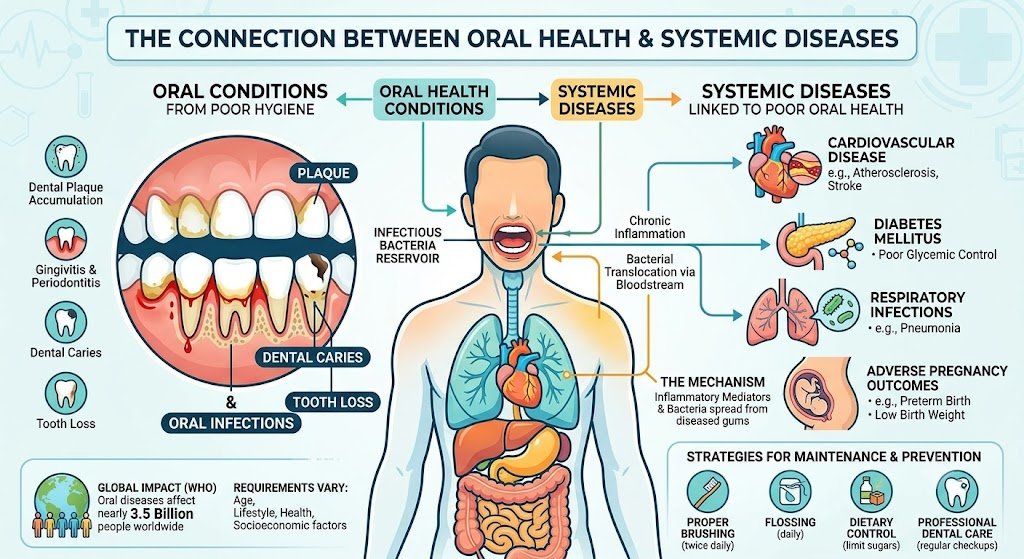
Oral health is a fundamental part of overall health and quality of life. According to the World Health Organization (WHO), oral diseases affect nearly 3.5 billion people worldwide.
Poor oral hygiene contributes to dental plaque accumulation, gingivitis, periodontitis, dental caries, tooth loss, and oral infections. In addition, increasing evidence links poor oral health with systemic diseases such as cardiovascular disease, diabetes mellitus, respiratory infections, and adverse pregnancy outcomes.
Maintaining oral hygiene requires proper brushing, flossing, dietary control, and professional dental care. The oral hygiene requirements differ according to age, lifestyle, systemic health, and socioeconomic factors.
The Oral Hygiene Series
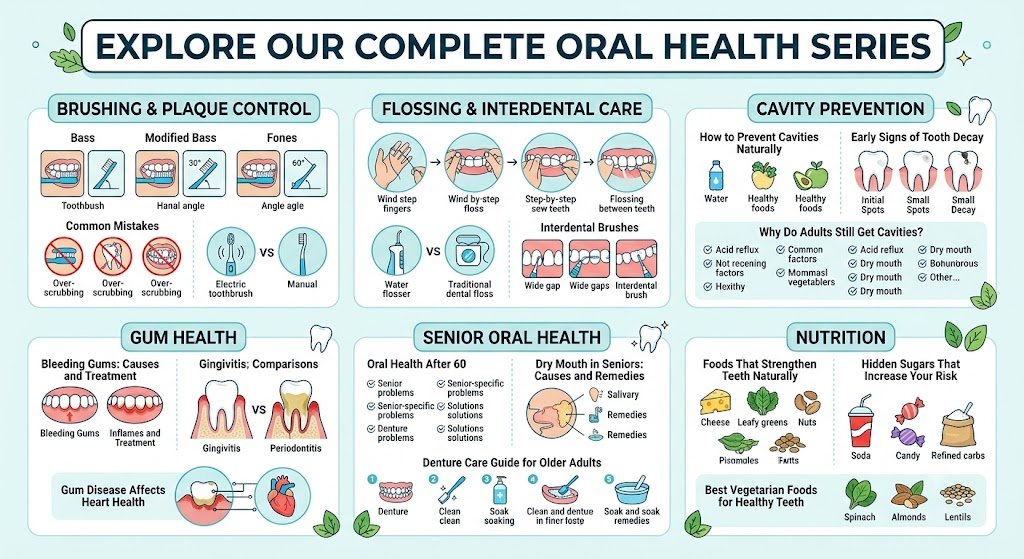
This guide is Part 1. Each part below takes one piece of the routine and covers it properly.
- Complete Oral Hygiene Guide for Every Age — you are reading this
- Brushing Technique: Bass, Modified Bass and Fones — which method suits which mouth, and how long two minutes really is
- Electric vs Manual Toothbrush — what the evidence shows, rather than what the manufacturers claim
- How to Floss Correctly — step by step, including the C-shape wrap and how far below the gumline to go
- Water Flosser for Tonsil Stones — what pressure is safe, and when not to try it at all
- Interdental Brushes and Bleeding Gums — choosing the right size, and why bleeding usually stops within two weeks
- Early Childhood Caries — causes, symptoms, prevention and treatment in children under six
- Milk Teeth Falling Out — the age, order and timeline, and what parents should know
- Pyorrhea (Gum Disease) — causes, symptoms, treatment and prevention
- Gum Swelling, Bleeding and Dry Mouth — how underlying diseases affect your gums and oral health
- Medicine for Toothache — what to take, what causes the pain, and how it is treated
Why Oral Hygiene Matters?
Good oral hygiene is more than maintaining a bright smile. It helps prevent tooth decay, gum disease, bad breath, and tooth loss while contributing to overall systemic health.
Research has shown strong associations between oral health and conditions such as diabetes, cardiovascular disease, respiratory infections, and adverse pregnancy outcomes.
Benefits of maintaining good oral hygiene include:
- Prevention of dental caries
- Reduced risk of periodontal disease
- Fresher breath
- Improved appearance and confidence
- Better chewing and speech function
- Reduced risk of systemic complications
Best Daily Oral Care Routine: Brushing and Flossing
An ideal oral hygiene routine includes brushing twice daily for two minutes with fluoridated toothpaste, cleaning between teeth once daily using floss or interdental aids, cleaning the tongue, limiting sugary foods, maintaining hydration, and attending regular dental examinations.
Consistency is more important than occasional intensive cleaning. A daily routine helps interrupt plaque accumulation and reduce disease risk.
Oral Hygiene by Age Group: What Changes and When
1. Infants and Toddlers (0–3 Years)
Oral Hygiene Recommendations
- Oral cleaning should begin even before tooth eruption.
- Parents should clean the infant’s gums using a soft, moist gauze or cloth.
- Once teeth erupt, brushing should begin with a soft-bristled infant toothbrush.
- A smear layer of fluoridated toothpaste is recommended for children below 3 years.
Preventive Measures
- Avoid prolonged bottle feeding, especially during sleep.
- Limit sugary liquids and juices.
- Encourage cup feeding after 1 year of age.
Common Oral Problems
- Early Childhood Caries (ECC)
- Teething discomfort
- Oral candidiasis
2. Preschool and School-age Children (3–12 Years)
Oral Hygiene Recommendations
- Brush twice daily using fluoridated toothpaste.
- Supervised brushing is essential until adequate manual dexterity develops.
- Introduce flossing once adjacent teeth contact each other.
Preventive Measures
- Pit and fissure sealants for molars.
- Fluoride varnish applications.
- Healthy dietary habits with reduced sugar intake.
Common Oral Problems
- Dental caries
- Malocclusion
- Traumatic dental injuries
3. Adolescents (13–19 Years)
Oral Hygiene Recommendations
- Brush twice daily for at least 2 minutes.
- Daily flossing should be emphasized.
- Orthodontic patients require special cleaning aids such as interdental brushes and water flossers.
Risk Factors in Adolescents
- Increased consumption of sugary beverages
- Poor dietary habits
- Tobacco and vaping habits
- Hormonal gingivitis
Preventive Measures
- Regular dental check-ups
- Sports mouthguards
- Oral hygiene education
4. Adults (20–60 Years)
Oral Hygiene Recommendations
- Use proper brushing techniques and interdental cleaning methods.
- Replace toothbrushes every 3 months.
- Professional dental cleaning every 6 months.
Common Oral Problems
- Gingivitis
- Periodontitis
- Dental caries
- Halitosis
- Tooth wear and sensitivity
Special Considerations
- Stress-related bruxism
- Tobacco-associated lesions
- Pregnancy-related gingival changes
5. Elderly Population (>60 Years)
Oral Hygiene Challenges
- Reduced manual dexterity
- Xerostomia due to medications
- Root caries
- Denture-related infections
Oral Hygiene Recommendations
- Soft toothbrushes or powered toothbrushes
- Denture hygiene maintenance
- Saliva substitutes for dry mouth
- Regular oral cancer screening
Common Oral Problems
- Periodontal disease
- Oral cancer
- Tooth loss
- Denture stomatitis
“Understand how aging changes gums, teeth, and saliva production” read our blog Oral Health After 60: Common Problems and Solutions.
Plaque on Teeth: How Plaque and Tartar Cause Oral Disease
Dental plaque is a biofilm composed of bacteria, salivary proteins, and food debris. If not removed regularly, plaque mineralizes into calculus and initiates inflammatory reactions leading to gingivitis and periodontal disease.
Plaque bacteria metabolize dietary sugars to produce acids that demineralize enamel and cause dental caries.
In plain terms: plaque is the soft, colorless film you can feel with your tongue a few hours after brushing. It re-forms constantly, which is why brushing is a daily job rather than an occasional one.
The 24–72 hour window is what matters. While plaque is soft, a toothbrush and floss remove it completely. Left in place, minerals from saliva harden it into calculus — the hard plaque build-up most people call tartar.
Once that happens, no amount of brushing will shift it. Tartar can only be removed by a dental professional with instruments, and its rough surface collects fresh plaque faster than smooth enamel does, so the problem accelerates.
Where plaque and tartar build up first:
- The inside surfaces of the lower front teeth, directly opposite a salivary gland opening
- The outside surfaces of the upper back molars, for the same reason
- The gum line, where bristles are most often angled away rather than into the sulcus
- Between the teeth, which a brush cannot reach at all — this is the entire argument for flossing
- Around crowns, bridges, braces and crowded teeth, where the surface is harder to clean
Two visible signs are worth knowing. Plaque is soft and pale; tartar is hard, rough and usually yellow or brown, and it sits closest to the gum line. If you can see a hard deposit you cannot brush off, that is tartar, and it needs a scale and polish rather than a better toothpaste.
Tooth Brushing Techniques That Actually Remove Plaque
Proper brushing technique is crucial for effective plaque control.
1. Bass Technique (Sulcular Brushing Technique)
This is considered the gold standard for plaque removal near the gingival margin.
Method
- Hold the toothbrush at a 45-degree angle to the gingiva.
- Use gentle vibratory strokes.
- Move bristles into the gingival sulcus.
Advantages
- Excellent plaque removal
- Effective in preventing gingivitis
2. Modified Bass Technique
A combination of the bass technique with sweeping strokes.
Advantages
- Better plaque removal
- Easier for patients to perform
3. Fones Technique
Circular brushing motion commonly recommended for children.
Advantages
- Simple and easy to learn
4. Stillman Technique
Recommended for patients with gingival recession.
Method
- Bristles are partly on the gingiva and partly on the cervical tooth area.
- Gentle vibratory strokes are used.
5. Charter’s Technique
Useful in orthodontic patients and after periodontal surgery.
Method
- Bristles directed toward the occlusal surface.
- Vibratory motion applied.
If you want the technique itself in detail, we compare the Bass, Modified Bass and Fones methods — including which one suits braces and receding gums — in Part 2, our full guide to brushing technique.
Advanced Oral Hygiene Aids
Powered Toothbrushes
Electric toothbrushes improve plaque removal and are beneficial for:
- Elderly patients
- Orthodontic patients
- Individuals with limited dexterity
Interdental Brushes
Used for cleaning larger interdental spaces and around implants.
Water Flossers
Useful for orthodontic patients and periodontal maintenance.
Tongue Cleaners
Help reduce halitosis and bacterial load.
If you are choosing between an electric and a manual brush, Part 3 sets out what the evidence actually shows, rather than what the manufacturers claim.
How to Floss Correctly
Flossing removes plaque and food particles from interdental areas inaccessible to toothbrush bristles.
Types of Dental Floss
- Waxed floss
- Unwaxed floss
- Dental tape
- Super floss
Proper Flossing Technique
- Use approximately 18 inches of floss.
- Wrap around the middle fingers.
- Guide floss gently between teeth.
- Curve into a “C” shape around the tooth.
- Move vertically to clean tooth surfaces.
Benefits of Flossing
- Prevents interdental caries
- Reduces gingivitis
- Controls halitosis
Flossing is the step most people do without ever being shown how. Part 4 takes it step by step, including the C-shape wrap and how far below the gumline the floss should go.
Water Flosser vs Dental Floss
Traditional floss remains highly effective for direct plaque removal from tooth surfaces. Water flossers use pulsating streams of water to flush debris and reduce gingival inflammation. They are particularly useful for orthodontic patients, implant patients, and individuals with reduced dexterity. The ideal approach depends on the patient’s needs, compliance, and oral condition.
How hidden plaque buildup leads to cavities, gum disease, and bad breath learn more about floss and which is best technique in our blog Water Flosser vs Dental Floss: Which Removes More Plaque?
Understanding Dental Caries
Dental caries is a multifactorial infectious disease characterized by demineralization of tooth structure due to acid-producing bacteria.
Etiology
- Streptococcus mutans
- Lactobacillus species
- Frequent sugar intake
- Poor oral hygiene
- Reduced salivary flow
Stages of Dental Caries
- Initial enamel demineralization
- Enamel cavitation
- Dentinal caries
- Pulpal involvement
- Periapical infection
A water flosser has one use most people never hear about — shifting tonsil stones. Part 5 covers what pressure is safe, and when not to try it at all.
How to Prevent Cavities and Tooth Decay
Caries prevention relies on reducing cariogenic challenges and strengthening tooth structure. Strategies include twice-daily brushing with fluoride toothpaste, daily interdental cleaning, limiting sugar frequency, drinking fluoridated water where available, professional fluoride applications, pit and fissure sealants, and regular dental examinations.
Periodontal Diseases and Gum Health
Periodontal diseases affect the supporting structures of teeth.
Gingivitis
Inflammation is limited to the gingiva.
Clinical Features
- Bleeding gums
- Redness
- Swelling
Periodontitis
Destruction of the periodontal ligament and alveolar bone.
Clinical Features
- Mobility
- Pocket formation
- Tooth loss
Management
- Scaling and root planing
- Surgical periodontal therapy
- Maintenance therapy
Learn how to spot a cavity before it turns into a painful dental problem.read or full blog on How to prevent caries naturally.
Gum Disease: Signs of Gingivitis and When It Becomes Serious
Gum disease is the most under-treated condition in oral hygiene, because its early stage is painless. Most people who have it do not know.
Gingivitis is the reversible stage. Plaque sitting along the gum line inflames the gum tissue. The gums look redder or puffier than usual and bleed when brushed or flossed.
Bleeding when you brush is not normal and it is not a sign of brushing too hard. It is the single most reliable early signal of gingivitis, and it is the one most often ignored — people brush more gently instead, which makes the inflammation worse.
At this stage the damage undoes itself. Thorough daily plaque removal along the gum line, plus a professional clean to take off the tartar you cannot reach, usually resolves gingivitis within a couple of weeks.
Periodontitis is the stage that does not reverse. If inflammation continues, it spreads below the gum line and begins destroying the bone that holds the teeth in place. Bone does not grow back.
Signs that gum disease has moved past gingivitis:
- Gums receding, so teeth look longer than they used to
- Persistent bad breath or a bad taste that brushing does not fix
- Teeth that feel loose, or a bite that has changed
- Pus or tenderness around the gum margin
- Gaps opening between teeth that were previously tight
Treatment at this stage is a deep clean below the gum line — scaling and root planing — carried out by a dentist or hygienist, sometimes over more than one appointment. It halts the disease; it does not restore what has been lost, which is the reason the early signs are worth acting on.
Who is at higher risk: smokers, people with diabetes, those on medications that reduce saliva, people going through pregnancy or menopause, and anyone with a family history of early tooth loss. Smoking also masks the warning sign, because it reduces the bleeding that would otherwise alert you.
If your gums bleed when you clean between your teeth, Part 6 explains which brush size to use and why the bleeding usually stops within two weeks — the point at which most people wrongly give up.
Bad Breath (Halitosis): Causes and What Actually Fixes It
Bad breath is treated as a hygiene embarrassment when it is usually a diagnostic signal. Roughly 85 to 90 percent of persistent halitosis originates in the mouth itself, which means it is fixable — but only once the source is identified.
The tongue is the most common source. The rough surface at the back of the tongue traps bacteria, dead cells and food residue, and those bacteria release volatile sulfur compounds. Brushing the teeth alone does not touch it.
A tongue scraper used gently from back to front, once a day, removes far more of that coating than a toothbrush does. It is the single highest-yield change most people can make, and it takes about ten seconds.
Other common oral causes:
- Gum disease — bacteria in periodontal pockets produce a characteristic persistent odor
- Dry mouth — saliva is the mouth’s natural rinse, so anything that reduces it (medications, mouth breathing, sleep) concentrates odor. This is why morning breath is normal and not a sign of poor hygiene
- Untreated cavities and food traps — including under bridges, around crowns and beneath partial dentures
- Smoking — both directly and by drying the mouth and driving gum disease
What does not work: alcohol-based mouthwash masks odor for around twenty minutes and then dries the mouth, which makes the underlying problem worse. Mints and gum do the same thing with sugar added. Sugar-free gum is genuinely useful, but because it stimulates saliva rather than because it smells of mint.
When bad breath is not a mouth problem. If your oral hygiene is genuinely good, the tongue is clean and a dentist has ruled out gum disease and decay, persistent halitosis is worth raising with a doctor.
Tonsil stones, sinus and throat infections, reflux, uncontrolled diabetes and liver or kidney disease can all present this way, and some produce a distinctive smell a clinician will recognize.
Other Diseases Linked to Poor Oral Hygiene
1. Cardiovascular Disease
Periodontal pathogens may contribute to endothelial dysfunction and atherosclerosis.
2. Diabetes Mellitus
Poor glycemic control worsens periodontal disease, while periodontal inflammation negatively affects blood glucose control.
3. Respiratory Infections
Oral bacteria may be aspirated into the lungs, causing pneumonia, especially in elderly patients.
4. Adverse Pregnancy Outcomes
Periodontal disease has been associated with:
- Preterm birth
- Low birth weight
5. Oral Cancer
Risk factors include:
- Tobacco
- Alcohol
- HPV infection
- Poor oral hygiene
Warning Signs
- Non-healing ulcers
- Red or white patches
- Difficulty swallowing
Diet and Oral Health
Foods Beneficial for Oral Health
- Dairy products
- Fibrous fruits and vegetables
- Nuts
- Water
Harmful Dietary Habits
- Frequent sugary snacks
- Carbonated beverages
- Sticky candies
Preventive Strategies for Good Oral Health
- Brush twice daily using fluoridated toothpaste.
- Floss daily.
- Limit sugar intake.
- Visit the dentist regularly.
- Avoid tobacco and excessive alcohol.
- Maintain hydration.
- Use mouthguards during sports.
Role of Dentists in Oral Health Promotion
Dentists play a major role in:
- Patient education
- Preventive care
- Early diagnosis
- Disease management
- Community oral health awareness
Conclusion
Oral hygiene is vital throughout life and significantly influences systemic health. Proper brushing techniques, flossing, healthy dietary habits, and regular dental visits are the foundation of preventive oral care.
Dental caries and periodontal diseases remain major public health concerns but are largely preventable through education and early intervention.
Modern preventive and restorative dentistry provides multiple treatment modalities to preserve oral health and improve the quality of life across all age groups.
Key Takeaways
- Brush twice daily for two minutes with fluoride toothpaste, clean between the teeth once a day, and keep sugar to mealtimes. Consistency matters more than intensity.
- Almost everything starts as plaque. You have roughly 24 to 72 hours to remove it before it hardens into tartar, which only a dental professional can take off.
- Gums that bleed when you brush are not brushing too hard — that is gingivitis, and at that stage it is fully reversible. Once it becomes periodontitis, the bone loss is permanent.
- Most persistent bad breath comes from the tongue. A tongue scraper, used back to front once a day, does more than any mouthwash — and alcohol-based rinses make it worse by drying the mouth.
- How to prevent cavities: fluoride, less frequent sugar rather than simply less sugar, cleaning between the teeth, and regular check-ups. Frequency of sugar exposure matters more than quantity.
- Oral hygiene needs change with age — a parent wiping an infant’s gums, help around a teenager’s braces, dry mouth from medication in later life. The principle stays constant, the method does not.
- Bleeding gums, persistent bad breath, sensitivity or pain on biting all warrant a dental appointment. None of them resolve on their own, and the early stage is always the cheap one to treat.
Frequently Asked Questions
1. How often should I brush my teeth?
You should brush your teeth twice daily for at least two minutes using fluoridated toothpaste.
2. Is flossing really necessary?
Yes. Flossing removes plaque and food particles from areas where toothbrush bristles cannot reach, helping prevent cavities and gum disease.
3. What is the best brushing technique?
The Modified Bass Technique is widely recommended because it effectively removes plaque along the gumline while being easy for most people to perform.
4. How often should I replace my toothbrush?
Replace your toothbrush or toothbrush head every three months or sooner if the bristles become frayed.
5. Are electric toothbrushes better than manual toothbrushes?
Electric toothbrushes can remove plaque more effectively and are especially beneficial for children, elderly individuals, orthodontic patients, and those with limited hand dexterity.
6. What causes bad breath (halitosis)?
Common causes include:
Poor oral hygiene
Tongue coating
Gum disease
Dry mouth
Dental infections
Smoking and tobacco use
7. Can poor oral hygiene affect overall health?
Yes. Poor oral health has been linked with diabetes, cardiovascular disease, respiratory infections, and adverse pregnancy outcomes.
8. What foods are best for healthy teeth?
Foods beneficial for oral health include:
Milk and dairy products
Cheese and yogurt
Fresh fruits and vegetables
Nuts
Water
9. How can I prevent dental caries?
To prevent cavities:
Brush twice daily
Floss daily
Use fluoride toothpaste
Limit sugary foods and drinks
Visit the dentist regularly
10. At what age should a child start brushing?
Oral hygiene should begin even before tooth eruption by cleaning the gums. Brushing should start as soon as the first tooth appears.
11. Is mouthwash necessary?
Mouthwash can be a useful adjunct to brushing and flossing, but should not replace mechanical plaque removal.
12. Why do gums bleed during brushing?
Bleeding gums are often an early sign of gingivitis caused by plaque accumulation. Persistent bleeding should be evaluated by a dentist.
13. How often should I visit the dentist?
Most individuals should undergo a dental examination and professional cleaning every six months, although some patients may require more frequent visits.
14. Can gum disease lead to tooth loss?
Yes. Untreated periodontitis destroys the supporting tissues and bone around teeth, eventually leading to tooth mobility and tooth loss.
15. How can elderly individuals maintain oral health?
Older adults should:
Use soft or powered toothbrushes
Maintain denture hygiene
Manage dry mouth
Attend regular dental check-ups
Undergo routine oral cancer screening
16. How do I remove hard plaque build-up (tartar) from my teeth?
You cannot. Once plaque hardens into tartar it bonds to the tooth and only a dentist or hygienist can remove it. Brushing harder, whitening toothpaste and home scrapers will not shift it and can damage enamel. Prevention is what you control: plaque takes 24 to 72 hours to harden, so daily cleaning stops it forming.
17. Can gum disease be reversed?
Gingivitis, the early stage, is fully reversible — daily plaque removal along the gum line plus a professional clean usually resolves it within a couple of weeks. Periodontitis is not, because it destroys the bone supporting the teeth and bone does not regrow. Treatment halts the damage rather than undoing it.
18. How can I prevent cavities beyond brushing?
How often you eat sugar matters more than how much. Every exposure starts an acid attack lasting around 20 minutes, so one dessert does less harm than sipping a sweet drink all afternoon. Beyond that: fluoride toothpaste, cleaning between the teeth daily, water after meals, sugar-free gum, and regular check-ups.
Glossary
Understanding common dental terms can help you make informed decisions about your oral health.
Dental Plaque
A sticky, colorless film of bacteria that constantly forms on teeth. If not removed regularly, plaque can lead to cavities and gum disease.
Calculus (Tartar)
Hardened dental plaque that attaches firmly to teeth and can only be removed by professional dental cleaning.
Dental Caries (Cavities)
Areas of tooth decay caused by acid-producing bacteria that damage the tooth structure.
Gingivitis
The earliest stage of gum disease, characterized by red, swollen, and bleeding gums. It is usually reversible with proper oral hygiene.
Periodontitis
An advanced form of gum disease that damages the tissues and bone supporting the teeth, potentially leading to tooth loss.
Halitosis
The medical term for persistent bad breath.
Fluoride
A naturally occurring mineral that strengthens tooth enamel and helps prevent cavities.
Tooth Enamel
The hard, protective outer layer of a tooth. It is the strongest substance in the human body but can be damaged by acids and decay.
Dentin
The layer beneath the enamel that contains microscopic tubules. When exposed, it can cause tooth sensitivity.
Interdental Cleaning
Cleaning between teeth using dental floss, interdental brushes, or water flossers to remove plaque and food particles.
Water Flosser
A device that uses a pressurized stream of water to help clean between teeth and along the gumline.
Interdental Brush
A small brush specifically designed to clean spaces between teeth that are difficult to reach with a regular toothbrush.
Xerostomia (Dry Mouth)
A condition characterized by reduced saliva production, often caused by medications, aging, or certain medical conditions.
Root Caries
Tooth decay that develops on exposed tooth roots, commonly seen in older adults with gum recession.
Bruxism
The habit of grinding or clenching teeth, often occurring during sleep or periods of stress.
Malocclusion
Misalignment of the teeth or jaws that can affect chewing, speech, and oral hygiene.
Periodontal Pocket
A deepened space between the tooth and gum caused by periodontal disease.
Scaling and Root Planing
A deep-cleaning dental procedure used to remove plaque and tartar below the gumline and smooth root surfaces.
Dental Sealants
Protective coatings applied to the chewing surfaces of teeth to help prevent cavities.
Oral Cancer Screening
A routine examination performed by a dental professional to detect early signs of oral cancer and precancerous changes.
References
- World Health Organization. Oral Health Fact Sheet. WHO, 2024.
- Petersen PE, Bourgeois D, Ogawa H, Estupinan-Day S, Ndiaye C. The global burden of oral diseases and risks to oral health. Bulletin of the World Health Organization. 2005;83(9):661-669.
- Newman MG, Takei HH, Klokkevold PR, Carranza FA. Carranza’s Clinical Periodontology. 13th ed. Elsevier; 2019.
- Fejerskov O, Nyvad B, Kidd E. Dental Caries: The Disease and Its Clinical Management. 3rd ed. Wiley Blackwell; 2015.
- American Dental Association. Brushing Your Teeth. ADA Guidelines. 2023.
- American Academy of Pediatric Dentistry. Guideline on Infant Oral Health Care. AAPD; 2022.
- Lindhe J, Lang NP. Clinical Periodontology and Implant Dentistry. 6th ed. Wiley Blackwell; 2015.
- Marsh PD. Dental plaque as a biofilm and a microbial community. BMC Oral Health. 2006;6(Suppl 1):S14.
- Tonetti MS, Greenwell H, Kornman KS. Staging and grading of periodontitis. Journal of Periodontology. 2018;89(Suppl 1):S159-S172.
- Nazir MA. Prevalence of periodontal disease, its association with systemic diseases, and prevention. International Journal of Health Sciences. 2017;11(2):72-80.
- Glick M. Burket’s Oral Medicine. 13th ed. PMPH USA; 2021.
- Axelsson P. Diagnosis and Risk Prediction of Dental Caries. Quintessence Publishing; 2000.
- Kidd EA. Essentials of Dental Caries. 4th ed. Oxford University Press, 2005.
- Oral Health Foundation. Flossing and Interdental Cleaning Guidelines. 2023.
- Slots J. Periodontitis: facts, fallacies and the future. Periodontology 2000. 2017;75(1):7-23.
