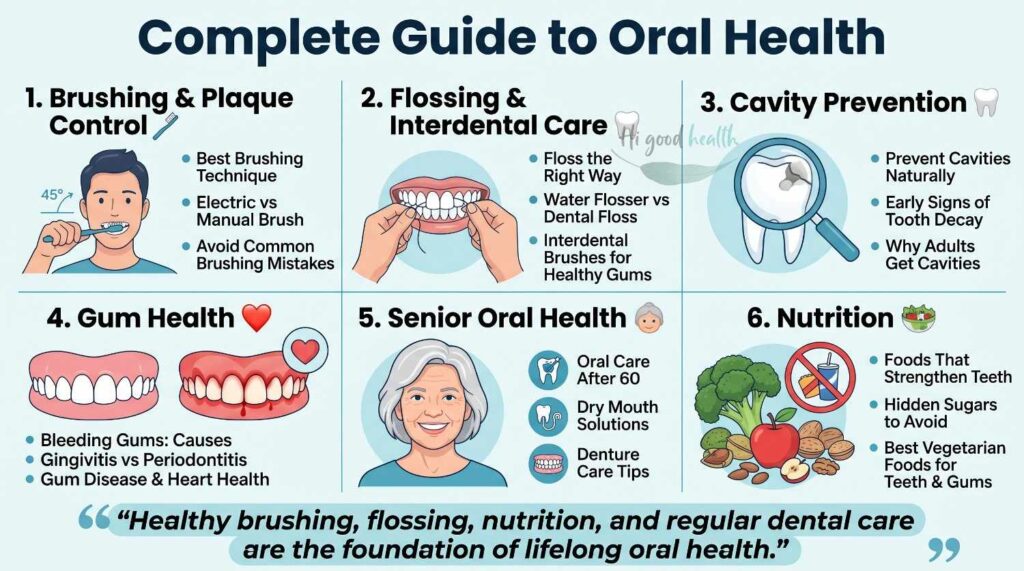
About this series. Oral Hygiene is an eleven-part series on looking after teeth and gums at every age, from brushing and flossing to children’s teeth, gum disease and toothache.
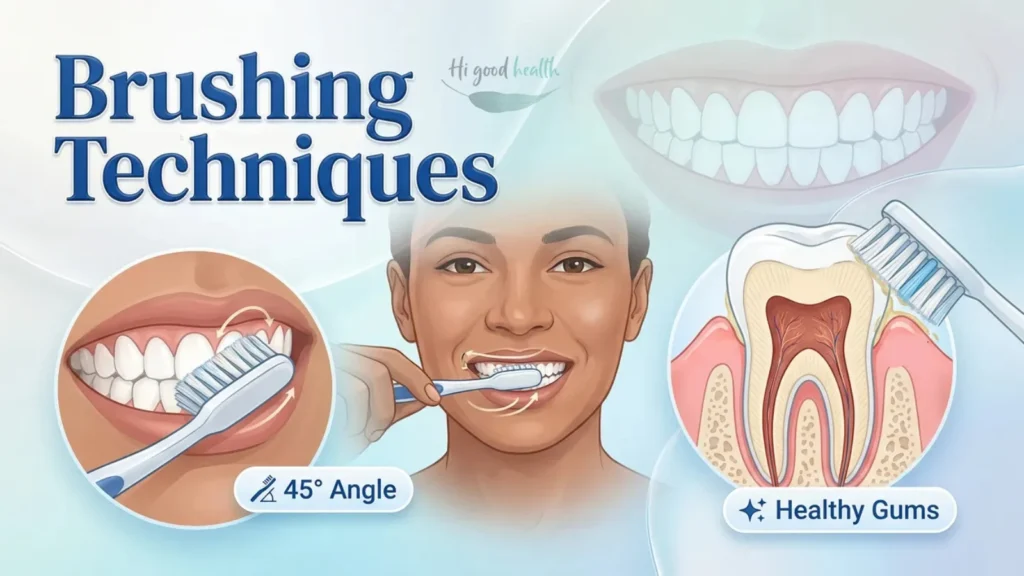
This is Part 2: Brushing Technique: Bass, Modified Bass and Fones.
Are You Brushing Your Teeth the Wrong Way? What Science Really Says About Bass, Modified Bass, and Fones Brushing Techniques
You brush your teeth every day, probably twice a day, maybe without thinking much about it. But here’s a question worth asking: Are you actually brushing the right way?
For many people, brushing is done on autopilot: a quick scrub, a rinse, and done. The problem is that how you brush matters almost as much as whether you brush at all. The wrong technique can leave plaque sitting quietly along the gum line, the exact area where gingivitis and early gum disease often begin.
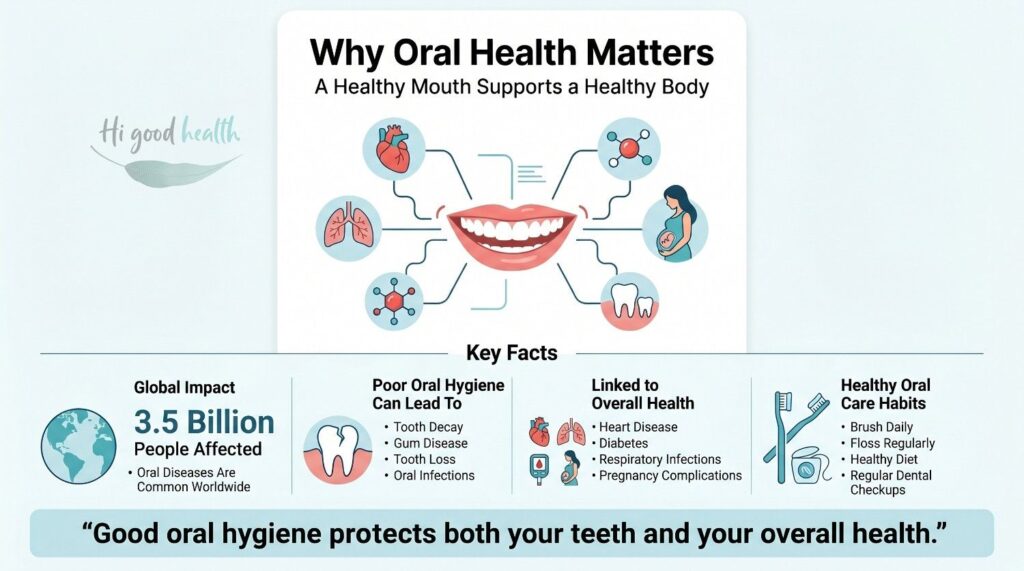
And oral health is not just about cavities or fresh breath. Poor oral hygiene has been linked to a wide range of health problems, including heart disease, diabetes complications, respiratory illness, and adverse pregnancy outcomes. In other words, the humble toothbrush does more for your health than most people realize.
This article breaks down the three most commonly recommended manual toothbrushing techniques: Bass, Modified Bass, and Fones. You’ll learn what each method is, who it may suit best, and what current research says about plaque control and gum health.
At a glance
- Technique matters more than the brand of brush. Plaque starts at the gumline, and that is where technique decides the outcome.
- Three named methods: Bass aims the bristles into the gum sulcus, Modified Bass adds a sweep, and Fones uses large circles and is easiest for children.
- Plaque is a sticky film that rinsing alone will not shift. It has to be disturbed mechanically.
- Pressure is the common mistake. Aggressive horizontal scrubbing can damage gums rather than clean them.
- Brushing does not replace cleaning between the teeth, and it does not replace a dental checkup.
What You Need to Know First
- The three main manual toothbrushing techniques, Bass, Modified Bass, and Fones, each target different needs.
- For most adults, Modified Bass is the most practical all-around choice because it cleans both the gumline and the tooth surface.
- According to the American Dental Association (ADA), brushing twice daily for two minutes with a soft-bristle toothbrush and fluoride toothpaste remains the foundation of good preventive dental care.
Why Brushing Technique Matters More Than You Think
Good preventive dental care tips start with something deceptively simple: the right brushing technique, used consistently every day. Your mouth is home to hundreds of species of bacteria. Many are harmless, but when oral hygiene slips, certain bacteria form a sticky film on the teeth called dental plaque.
Plaque is not just leftover food. It is a living bacterial biofilm that clings tightly to tooth surfaces and the gumline. If it is not removed regularly, it can trigger:
- Tooth decay (cavities)
- Gingivitis (early gum disease marked by redness, swelling, and bleeding gums, often painless at first)
- Periodontitis (advanced gum disease)
- Bad breath
- Tooth loss over time
According to the National Institute of Dental and Craniofacial Research (NIDCR), the connection between oral hygiene and heart disease is real: chronic gum inflammation may raise the body’s systemic inflammatory burden, contributing to cardiovascular risk.
That is why brushing well is not just a cosmetic habit. It is one of the simplest daily steps you can take for long-term preventive health.
What Exactly Is Plaque and Why Can’t You Just Rinse It Away?
Think of plaque as a microscopic city built by bacteria on your teeth. It sticks to the enamel, settles around the gumline, and can creep into the tiny groove where the tooth meets the gum.
Water alone cannot dislodge it. Mouthwash can help reduce bacteria, but it cannot replace the mechanical action of brushing. If plaque is not disrupted daily, it can harden into tartar (calculus) within a relatively short time. Once tartar forms, it cannot be removed at home and usually needs professional dental cleaning.
According to the American Dental Association (ADA), good oral hygiene instructions include the following daily habits:
- Brushing twice a day for at least 2 minutes.
- Using a fluoride toothpaste.
- Using a soft-bristle toothbrush.
But technique matters too, especially if your goal is not just to polish the visible tooth surface, but to clean the gumline, where inflammation often begins.
A Quick History: Why Were Different Brushing Techniques Invented?
Not all brushing methods were designed for the same purpose. Over time, dentists developed different techniques to improve plaque removal while reducing trauma to the gums.
- The Fones Technique: Introduced by Dr. Alfred Fones in the early 20th century, this method uses large circular motions and was designed to be simple enough for children to learn.
- The Bass Technique: Later, Dr. Charles C. Bass developed a method specifically designed to clean the gingival sulcus—the tiny groove where the tooth meets the gum. This area is important because plaque often accumulates there first.
- The Modified Bass Technique: The Modified Bass technique evolved from the Bass method. It keeps the gumline-focused vibratory cleaning of Bass, but adds a sweeping stroke across the tooth surface, making it more comprehensive for day-to-day brushing.
Today, Bass, Modified Bass, and Fones remain among the most commonly discussed manual toothbrushing methods in preventive dentistry.
The 3 Main Brushing Techniques Explained
1) The Bass Technique
What it is
The gingival sulcus is the tiny groove where the tooth meets the gum, the first place plaque typically accumulates. The Bass technique is specifically designed to clean this area. It targets the gingival margin and sulcus, where gum inflammation often starts.
How to do it
- Hold the toothbrush at a 45-degree angle toward the gumline.
- Aim the bristles into the small groove between the tooth and gum.
- Use gentle, short back-and-forth vibratory strokes.
- Cover 2–3 teeth at a time.
- Repeat around the mouth systematically.
Why dentists value it
The Bass technique is often recommended when gumline cleaning is a priority, because it targets the area where gingivitis and periodontal disease begin.
- Advantages: Good at cleaning the gumline; may help improve plaque control in people with gum inflammation; targets areas often missed by casual scrubbing.
- Limitations: Technique-sensitive and not always easy to learn; can be difficult for children or anyone with limited hand coordination; if done too aggressively, it may irritate sensitive gums.
- Best suited for: Adults with gum concerns; people who have been advised by a dentist to pay extra attention to the gumline; motivated brushers willing to learn a more precise technique.
2) The Modified Bass Technique
What it is
The Modified Bass technique begins like the Bass technique but adds a sweeping motion toward the chewing edge of the tooth after the small vibratory strokes. That means it tries to do two jobs at once: clean the gumline where plaque builds up, and clean the broader tooth surface more effectively.
How to do it
Learning how to brush teeth properly takes a little practice, but even a few focused sessions can meaningfully improve your results.
- Place the toothbrush at a 45-degree angle toward the gumline.
- Use small vibratory strokes at the gumline.
- Then sweep the brush away from the gum toward the biting surface.
- Move around the mouth in a consistent order.
Why it is often recommended
For many adults, Modified Bass offers a practical balance between gumline cleaning and overall plaque removal. It is commonly recommended in preventive dental advice because it addresses both the sulcus area and the visible tooth surface.
- Advantages: Cleans both the gumline and the tooth surface; may offer more complete plaque removal than simple horizontal scrubbing; useful for people concerned about gingivitis, plaque build-up, or gum health.
- Limitations: Still requires instruction and practice; can feel slower than casual brushing; some people may not maintain the technique consistently unless they make it a habit.
- Best suited for: Most adults; people with healthy gums who want a thorough brushing; adults prone to plaque build-up or mild gum irritation; individuals wearing orthodontic appliances (along with interdental cleaning aids, maintaining oral hygiene with braces requires extra attention at the gumline and between brackets). Modified Bass combined with an interdental brush is highly effective for orthodontic care.
3) The Fones Technique
What it is
The Fones technique is the simplest of the three. It uses large circular motions with the teeth gently together and is often taught to children because it is easy to understand and remember.
How to do it
- Bring the upper and lower teeth together gently.
- Place the toothbrush perpendicular to the outer tooth surfaces.
- Use large circular motions over the teeth and gums.
- Repeat over all accessible surfaces.
Why it remains useful
Not everyone needs a technique that is highly detailed or sulcus-focused. For children, older adults, or people with reduced dexterity, a simpler technique done well may be better than a technically superior method done badly.
- Advantages: Easy to learn; good for children, beginners, and people with limited hand coordination; encourages compliance because it feels simple and manageable.
- Limitations: Less effective at cleaning deeply into the gumline groove; may not clean between teeth or around the gum margin as thoroughly as Bass or Modified Bass; usually not the first choice for people with periodontal concerns.
- Best suited for: Children; older adults with reduced dexterity; people who struggle with more technique-sensitive brushing styles.
Quick Comparison: Bass vs Modified Bass vs Fones
Feature | Bass | Modified Bass | Fones |
|---|---|---|---|
Ease of learning | Difficult | Moderate | Easy |
Focus of cleaning | Gumline / sulcus | Gumline + tooth surface | General tooth surfaces |
Gumline cleaning | Excellent | Excellent | Limited |
Overall plaque removal | Good | Very good | Good when done consistently |
Best for children | Not ideal | Not ideal for younger children | Excellent |
Best for gum concerns | Strong option | Strong option | Less suitable |
Best for limited dexterity | Difficult | Can be challenging | Best fit |
Typical use case | Focused gumline care | Best all-round adult option | Simple brushing for children / older adults |
Which Brushing Technique Should You Actually Use?
The best brushing technique is not always the most technical one. It is the one that fits your age, gum health, dexterity, motivation, and ability to do it consistently.
A Practical Recommendation Guide
Who You Are | Technique Often Recommended |
|---|---|
Young child | Fones |
Teenager / young adult | Modified Bass |
An adult with healthy gums | Modified Bass |
Adult with gingivitis or gum concerns | Bass or Modified Bass |
Older adult with reduced dexterity | Fones or a simplified Modified Bass approach |
Person with braces | Modified Bass + interdental cleaning aids |
Rules of Thumb
- If you want the simplest technique, Fones is easiest.
- If your main concern is gumline cleaning, Bass can be useful.
- If you want a well-rounded everyday technique for adult brushing, Modified Bass is often the most practical choice.
What Does the Latest Science Actually Say?
No single manual brushing technique has proven dramatically superior for every person in every situation, and researchers are clear on this point. Research comparing Bass, Modified Bass, Fones, and other manual techniques has often been small, varied, and influenced by how well participants were taught.
In other words, the outcome depends not just on the named technique, but on whether people actually learn it properly and use it consistently.
What Current Evidence Suggests
- Modified Bass is often viewed favorably because it combines gumline cleaning with broader tooth-surface cleaning.
- Bass remains useful when sulcus-focused plaque control is the priority.
- Fones may be perfectly reasonable for children or people who need a simpler method.
- Patient instruction, brushing time, and consistency may matter as much as the technique itself.
The Practical Takeaway: For most adults, Modified Bass is a sensible place to start, but it is not magic. A simple technique done carefully for 2 full minutes every day can outperform a “better” technique done carelessly.
Why the Gumline Matters So Much
Plaque loves the gumline. The visible front of the tooth is not the only place that needs cleaning. The narrow area where the tooth meets the gum is one of the first places plaque settles and one of the first places gingivitis begins.
That is why Bass and Modified Bass receive so much attention in dentistry: they are designed to direct the bristles toward the gingival margin instead of just polishing the middle of the tooth.
If you have ever brushed enthusiastically but still been told you have plaque near the gums, the issue may not be how often you brush, but where your bristles are actually reaching.
5 Common Brushing Mistakes Most People Make
Even the best brushing technique can fail if everyday habits are off. These are some of the most common mistakes:
- Brushing too hard: Aggressive scrubbing does not clean better. It may actually contribute to gum irritation, gum recession, and enamel wear over time.
- Brushing for less than 2 minutes: Many people think they brush for 2 minutes but stop much earlier. A timer can help.
- Missing the gumline: Brushing only the visible tooth surface is one of the biggest reasons plaque remains behind.
- Using an old toothbrush for too long: Frayed bristles clean less effectively. Replace your toothbrush or brush head roughly every 3 months, or sooner if it looks worn. Keep your bathroom stocked with the right oral hygiene items: a spare soft-bristled brush, fluoride toothpaste, dental floss or interdental brushes, and an ADA-accepted mouthwash if you choose to use one.
- Brushing immediately after acidic foods or drinks: If you have just had citrus juice, soda, or another acidic food, it may be wise to wait a little while before brushing because enamel can be temporarily softened.
Your Daily Oral Care Routine
If you want to make your brushing routine meaningfully better starting tonight, focus on these basics:
- Brush twice daily
- Brush for at least 2 minutes
- Use a soft-bristle toothbrush
- Use fluoride toothpaste
- Angle the bristles toward the gumline
- Avoid harsh scrubbing
- Clean all surfaces of the teeth, not just the front
- Replace the brush every 3 months
- Add floss or interdental cleaning once a day if possible
- Visit a dentist regularly for professional cleaning and review
Use the right oral hygiene tools daily: a soft-bristled toothbrush, fluoride toothpaste, and floss or interdental brushes are your non-negotiable essentials. This checklist matters because even the best-named technique works poorly if brushing is rushed, forceful, or inconsistent.
Clinical Bottom Line: Which Method Is Best?
For most adults, the Modified Bass technique is often the most practical all-round choice. It aims to clean both the gumline (where plaque and gingivitis begin) and the tooth surface (where plaque and food debris collect).
However, that does not mean everyone should use the same method:
- Bass can be useful if gumline cleaning is the main priority.
- Fones remains a smart choice for children and some older adults.
- Modified Bass is a great adult default, but only if you can do it comfortably and consistently.
The “best” technique is not always the most advanced one. It is the one you can perform correctly, gently, and every day.
Key Takeaways
- Modified Bass is the best all-around technique for most adults because it cleans both the gumline and the tooth surface.
- Plaque builds up first at the gumline, so that is the area your brush needs to reach most.
- Brush twice a day for two minutes with a soft-bristle toothbrush and fluoride toothpaste.
- Consistency matters as much as technique; a simple method done well is better than a perfect method done badly.
- If you have braces, gum disease, or sensitive gums, use a more tailored brushing approach and add interdental cleaning.
- Good oral hygiene supports overall health, since gum disease has been linked with heart disease and other systemic conditions.
The Oral Hygiene Series
Eleven articles on looking after your teeth and gums, at every age.
- Complete Oral Hygiene Guide for Every Age — the whole routine, age by age
- Brushing Technique: Bass, Modified Bass and Fones — which method suits which mouth, and how long two minutes really is (you are here)
- Electric vs Manual Toothbrush — what the evidence shows, rather than what the manufacturers claim
- How to Floss Correctly — step by step, including the C-shape wrap and how far below the gumline to go
- Water Flosser for Tonsil Stones — what pressure is safe, and when not to try it at all
- Interdental Brushes and Bleeding Gums — choosing the right size, and why bleeding usually stops within two weeks
- Early Childhood Caries — causes, symptoms, prevention and treatment in children under six
- Milk Teeth Falling Out — the age, order and timeline, and what parents should know
- Pyorrhea (Gum Disease) — causes, symptoms, treatment and prevention
- Gum Swelling, Bleeding and Dry Mouth — how underlying diseases affect your gums and oral health
- Medicine for Toothache — what to take, what causes the pain, and how it is treated
Key takeaways
- Aim at the gumline, not only at the face of the tooth.
- Gentle beats hard. If the bristles are splaying, the pressure is too high.
- Children usually do better with the Fones circles until their coordination develops.
- An electric brush helps people who struggle with technique, but a manual brush used correctly is still effective.
- Braces, sensitive teeth or gum disease raise the stakes on technique — worth having a dentist watch you brush.
Frequently Asked Questions
1. Is an electric toothbrush better than a manual toothbrush?
Electric toothbrushes often show a small advantage in plaque removal in some studies, especially for people who struggle with manual technique. But a manual toothbrush used correctly can still be very effective.
2. Can the wrong brushing technique damage gums?
Yes. Brushing too hard or using an aggressive horizontal scrubbing style may contribute to gum recession and enamel wear over time.
3. Should children use the same brushing technique as adults?
Not necessarily. Younger children usually do better with Fones because it is simpler. As coordination improves, they can transition toward a more gumline-focused approach.
4. If I brush properly, do I still need dental checkups?
Yes. Brushing is essential, but it does not replace professional cleanings, dental exams, and advice tailored to your mouth.
5. What if I have braces or gum disease?
Brushing technique matters more when you have braces or active gum disease. People with braces generally do best with Modified Bass combined with interdental cleaning aids such as orthodontic flossers or interdental brushes. Those with gum disease may benefit from the Bass technique’s focused gumline action. In both cases, ask your dentist or hygienist for personalized oral hygiene instructions.
6. What oral hygiene items do I actually need every day?
The essential oral hygiene items are straightforward: a soft-bristled toothbrush, fluoride toothpaste, and an interdental cleaner like floss, interdental brushes, or a water flosser. The ADA recommends brushing twice daily and cleaning between teeth once a day. A consistent routine with these basics outperforms an elaborate routine done carelessly. For targeted concerns like sensitivity or gum disease, ask your dentist about oral hygiene products suited to your needs.
7. What are the best oral hygiene tips for people with braces?
Oral hygiene with braces requires extra attention because brackets and wires create additional surfaces where plaque hides. Use Modified Bass angled at 45 degrees to the gumline, with small strokes above and below each bracket. Add an interdental brush or orthodontic flosser to clean between brackets. Fluoride mouthwash helps protect enamel during treatment. Brush after every meal if possible and keep up regular dental cleanings.
8. Can poor oral hygiene cause bad breath?
Yes. Bad breath (halitosis) is one of the most common effects of poor oral hygiene. When plaque and food debris are not cleared regularly, bacteria release sulfur compounds that cause odor. Oral hygiene products for bad breath, such as antibacterial mouthwash or a tongue scraper, help, but work best as supplements to brushing and flossing, not replacements. Persistent bad breath despite good hygiene is worth discussing with your dentist to rule out gum disease.
9. How does oral hygiene affect heart disease risk?
Research consistently shows a connection between oral hygiene and heart disease. Chronic gum inflammation (periodontitis) may raise systemic inflammatory burden, associated with cardiovascular disease. According to the NIDCR, people with gum disease may face a higher risk of heart disease than those with healthy gums. Good daily oral hygiene, brushing, flossing, and regular dental cleanings are one practical step toward reducing that risk.
10. Should I brush differently if I have sensitive gums?
Yes. Reduce pressure first; most people brush far harder than needed. Use a soft-bristled toothbrush and Modified Bass with gentle vibratory strokes rather than scrubbing. Sensitivity can also signal early gingivitis or gum recession, so mention it at your next dental visit. Gentle, correct technique is almost always more effective than brushing forcefully.
11. What’s the easiest brushing technique I can actually stick to?
The Fones technique (large circular motions over the teeth and gums) is the simplest to learn. However, for most adults, Modified Bass is worth the small learning curve because it cleans the gumline where problems typically start. If it feels complex at first, start with Fones and focus on two full minutes with good gumline coverage. A simpler technique done consistently beats a better technique done carelessly.
12. Do I still need to floss if I brush properly every day?
Yes. Even thorough brushing cannot reach the tight spaces between teeth. Flossing or using an interdental brush or water flosser removes plaque from areas no toothbrush can access. Both the ADA and NIDCR recommend daily interdental cleaning as part of a complete oral care routine. Think of it as two separate jobs: brushing cleans the surfaces, and interdental cleaning cleans the gaps.
Take Action Tonight
If you are not sure where to begin, try this tonight:
- Test the Modified Bass technique.
- Set a 2-minute timer.
- Angle your brush 45 degrees toward the gumline.
- Use small, gentle strokes.
- Then sweep away from the gumline.
- Repeat systematically around the mouth.
If that feels too technical, don’t give up and go back to random scrubbing. Instead, simplify the routine and focus on the basics: gentle brushing, good coverage, 2 full minutes, and attention to the gumline. That alone can make a real difference.
Glossary
- Biofilm: A structured layer of microorganisms that sticks to a surface. Dental plaque is a biofilm.
- Calculus / Tartar: Hardened plaque that cannot be removed by regular brushing and usually requires professional cleaning.
- Dental Plaque: A sticky bacterial film that forms on the teeth and gumline.
- Fluoride Toothpaste: Toothpaste containing fluoride that helps strengthen enamel and reduce the risk of tooth decay.
- Gingiva: The gums.
- Gingival Margin: The edge of the gum tissue around the tooth.
- Gingivitis: Early gum disease marked by inflammation, redness, and bleeding of the gums.
- Gingival Sulcus: The tiny groove between the tooth and the surrounding gum tissue.
- Interdental Cleaning: Cleaning between the teeth using floss, interdental brushes, or similar aids.
- Periodontitis: Advanced gum disease involving deeper inflammation and possible damage to the tissues and bone supporting the teeth.
- Plaque Control: The daily removal of plaque to reduce the risk of tooth decay and gum disease.
- Subgingival: Below the gumline.
- Supragingival: Above the gumline.
References
- Deinzer R, Weik U, Eidenhardt Z, Leufkens D, Sälzer S. Manual toothbrushing techniques for plaque removal and the prevention of gingivitis: A systematic review with network meta-analysis. PLOS One. 2024.
- Worthington HV, MacDonald L, Poklepovic Pericic T, et al. Oral hygiene care for the prevention of periodontal diseases. Cochrane Database of Systematic Reviews. 2019.
- Ganesh M, Shah S, Parolia A. Comparison of Modified Bass, Fones, and routine toothbrushing techniques for plaque control in young adults. Journal of Clinical and Experimental Dentistry. 2020.
- Poyato-Ferrera M, Segura-Egea JJ, Bullón-Fernández P. Comparison of Modified Bass technique with routine brushing practices for plaque control. Journal of Clinical Periodontology.
- Janakiram C, Taha F, Joe J. The efficacy of plaque control by various toothbrushing techniques: A systematic review and meta-analysis. Journal of Clinical and Diagnostic Research. 2018.
- Harnacke D, Mitter S, Lehner M, et al. Influence of brushing techniques on plaque removal and gingival health. Clinical Oral Investigations.
- Löe H. The Gingival Index, the Plaque Index, and methods of plaque assessment. Journal of Periodontology.
- American Dental Association. Brushing Your Teeth. MouthHealthy / ADA guidance.
- National Institute of Dental and Craniofacial Research (NIDCR). Healthy Mouth, Healthy Body.
Disclaimer
This article is for educational purposes only and does not replace personalized veterinary advice. Vaccine decisions should always be made with a licensed veterinarian who can assess a dog’s age, medical history, local disease patterns, and lifestyle risk.
