
Part of the HiGoodHealth oral health series. Our Complete Oral Hygiene Guide for Every Age covers the whole family; this article is about children under six.
At a glance
- Early childhood caries is tooth decay in children under six. Most parents know it as bottle rot, or baby bottle tooth decay. It can start soon after the first tooth comes through and can progress quickly.
- It is not simply a sign that a child has not been brushed properly; diet, fluoride, feeding patterns, and how often teeth are exposed to sugar all interact.
- The first sign of bottle rot is usually a dull, chalky white spot near the gumline — not a hole, and not pain. Caught at that stage, decay can sometimes be stopped or reversed. Once a cavity has formed, the lost tooth structure does not grow back.
- Most prevention is four things. Clean the teeth from the day the first one appears, use the right amount of fluoride toothpaste twice a day, keep sugary food and drink to mealtimes rather than spread them throughout the day, and see a dentist early, within six months of the first tooth and no later than the first birthday.
- Baby teeth are worth treating. They are needed for eating, speech and holding space for the adult teeth, and untreated decay in them causes pain, infection and disturbed sleep in a small child.
What is early childhood caries?
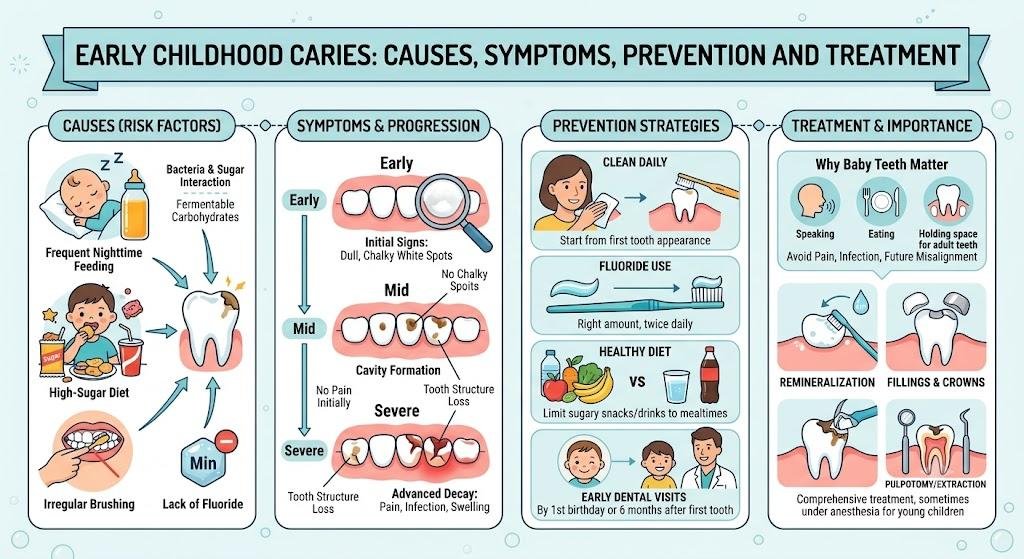
- Early childhood caries is decay in the primary (baby) teeth of young children. Bottle rot, baby bottle tooth decay, and nursing bottle caries all describe the same condition; the clinical name and the everyday ones point to one thing.
- It is multifactorial: plaque bacteria, fermentable carbohydrates, fluoride exposure, how susceptible the teeth are, feeding practices, and wider social and environmental factors all contribute.
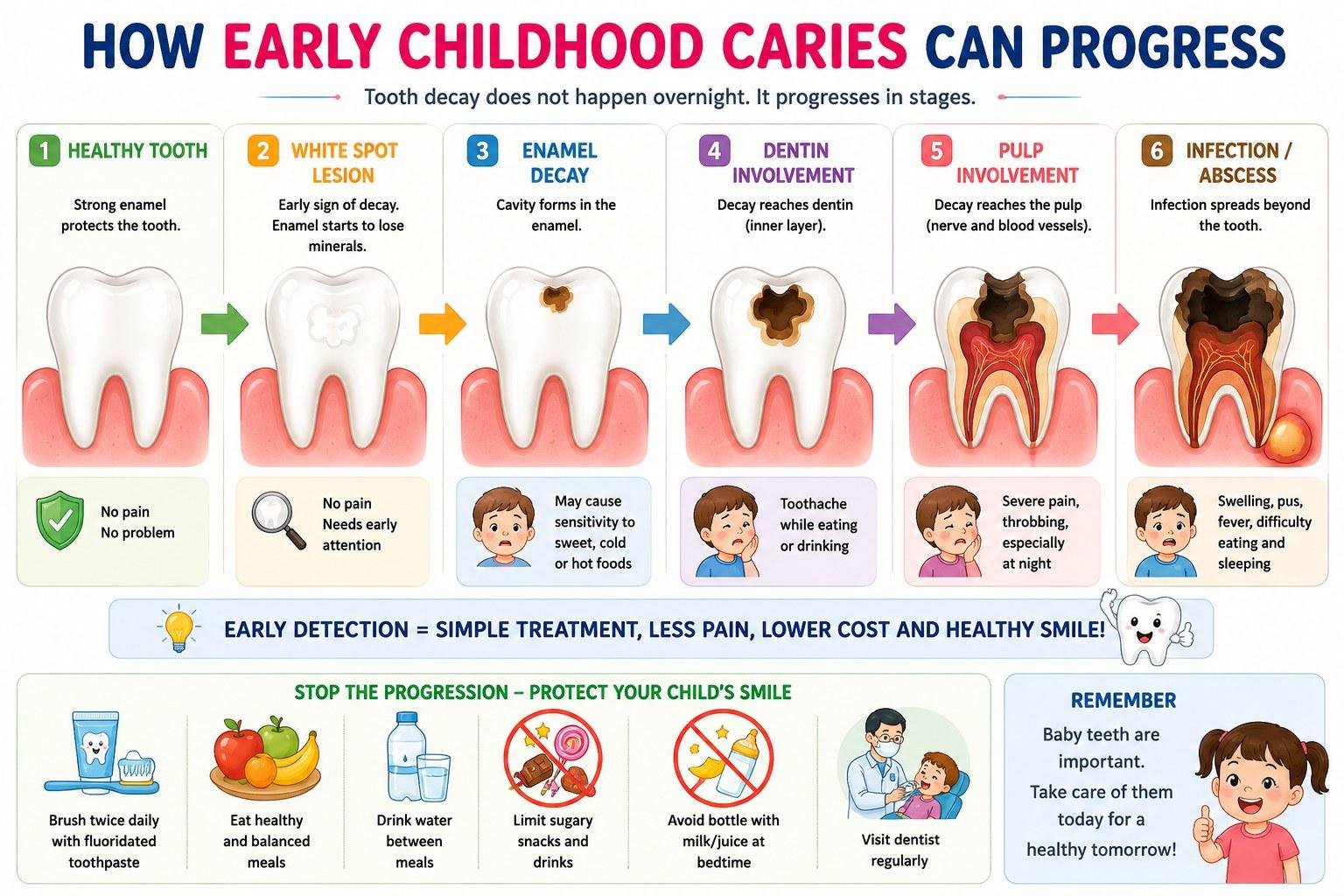
- The earliest visible change is often a dull, chalky white-spot lesion. At that stage, the process can sometimes be arrested or reversed without drilling. Once a true cavity forms, restorative care may be needed.
Why baby teeth matter
Primary teeth are used for chewing and speech, keep the child comfortable, and hold space for the permanent teeth developing underneath.
Untreated decay causes pain and infection, and it interferes with eating and sleeping. “They will fall out anyway” is the single most expensive assumption a parent can make. A lost baby tooth can also allow neighboring teeth to drift into the space meant for an adult tooth.
How ECC develops
The pathway is short, and it repeats: frequent carbohydrate exposure, plaque bacteria breaking it down, acid production, mineral loss from enamel, a white-spot lesion, then cavitation and deeper involvement.
Caries is a dynamic process, not a one-way slide. Enamel loses minerals during an acid attack and regains them afterwards, from saliva and from fluoride. The goal is to tip that balance back — fewer acid attacks, more protection.
What causes early childhood caries?
Frequent sugar exposure
Sweets, biscuits, cakes, candy and sweetened drinks all raise risk. Frequency matters more than quantity, because each exposure restarts the acid attack and leaves less recovery time in between.
Prolonged or repeated night-time exposure
The name “bottle rot” comes from this risk factor, and it is slightly misleading. The concern is not the bottle itself. It is repeated or prolonged contact between erupted teeth and carbohydrate-containing drinks, particularly around sleep, when saliva flow drops and cleaning has usually stopped for the day.
A cup does the same thing if it is used the same way.
Inadequate plaque removal
Young children cannot reliably clean every surface. Parents and caregivers need to do it for them, and then with them.
Inadequate fluoride
Fluoride supports remineralization and makes enamel more resistant to acid. A child’s total fluoride exposure and their caries risk should both be considered when planning prevention.
Delayed dental care
An early visit allows caries-risk assessment, dietary advice, fluoride guidance and detection of lesions before they hurt.
White spots on baby teeth: what bottle rot looks like
- Bottle rot often begins as a white or chalky area near the gumline, most visibly on the upper front teeth. As it progresses, the area may turn yellow, brown, or black, and eventually cavitate.
- A white spot is an early warning sign, not a harmless stain. Some are only obvious when the enamel is dry; more established lesions are visible on wet teeth. Do not wait for pain — pain usually means the decay is already deep.
- Will white spots on baby teeth go away? Sometimes, and that is the honest answer. Enamel that has lost minerals but not yet broken down can take them back, given fluoride, less frequent sugar, and proper cleaning. Enamel that has cavitated cannot.
- Which of the two you are looking at is a judgement for a dentist, and it is worth making early rather than late.
- Signs worth an appointment: white or chalky spots · brown or black discoloration · visible holes or broken teeth · food catching in one spot · sensitivity or pain · toothache at night · gum swelling or an abscess · difficulty chewing.
How can ECC be prevented?
Start with the first tooth
Almost everything that prevents bottle rot happens at home, and it starts earlier than most parents expect. Begin cleaning as soon as the first tooth appears, with a small soft brush, twice a day. Our guide to brushing technique covers the mechanics; for a small child, the adult does the work.
Use the right amount of fluoride toothpaste
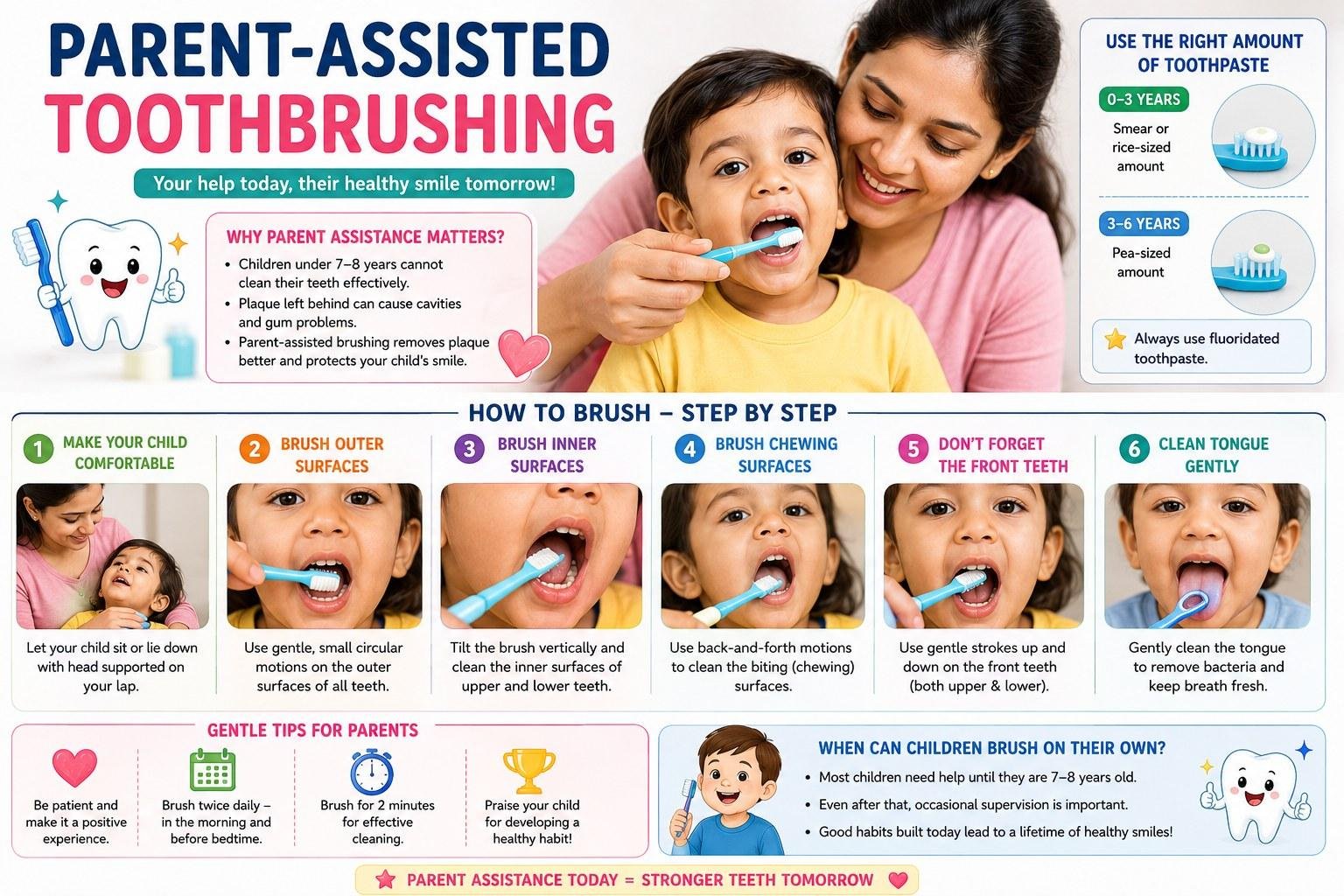
The American Dental Association advises a smear the size of a grain of rice from the first tooth until age three, and a pea-sized amount from three to six.
- Supervise brushing, and teach the child to spit rather than swallow.
Limit free sugars
Cut the number of sugary snacks and drinks across the day rather than only the amount at each one. Water is the best drink between meals.
Establish a dental home early
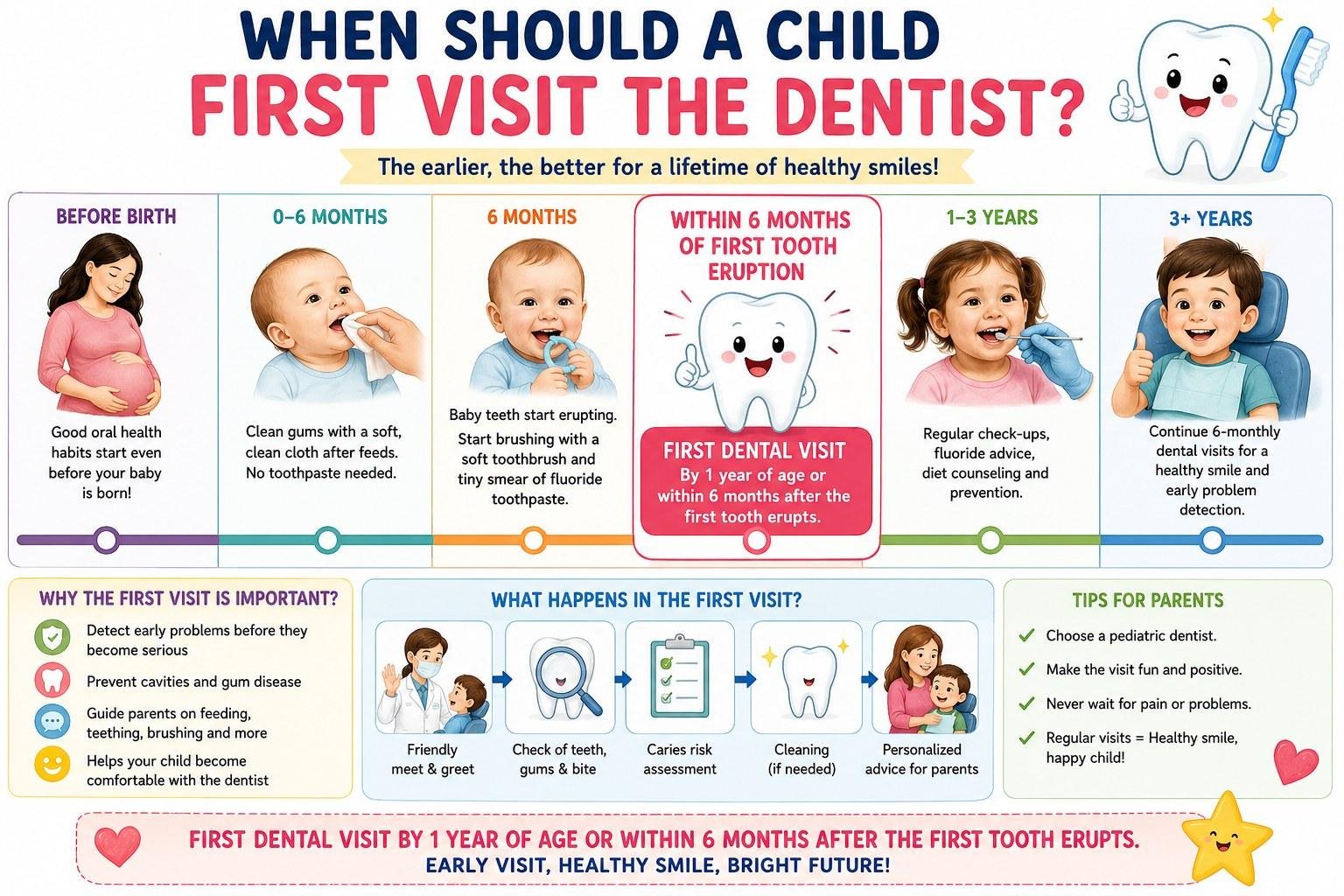
The American Academy of Pediatric Dentistry recommends a dental home within six months of the first tooth erupting, and no later than 12 months of age. The first visit is about prevention and risk assessment, not treatment.
Professional fluoride
Children at higher risk may benefit from professionally applied fluoride varnish as part of an individual prevention plan.
Sealants where appropriate
Pit-and-fissure sealants protect susceptible surfaces. The dentist decides which teeth are suitable.
Parent-assisted toothbrushing
- Brush twice daily with an age-appropriate fluoride toothpaste. Position the child so you can see every surface — many parents find sitting the child on their lap with the head supported works best.
- Brush gently along the gumline and across all reachable surfaces. Supervise rather than delegate: most children cannot clean their own teeth properly until around seven or eight. Once the back teeth touch each other, cleaning between them matters too — our step-by-step flossing guide explains the technique.
Treatment of early childhood caries
Treatment depends on the child’s age, how many lesions there are and how severe, whether there are symptoms, how cooperative the child is, overall risk, and the prognosis of the affected teeth.
Early, non-cavitated lesions
These can often be managed without drilling — dietary change, plaque removal, fluoride toothpaste, professional fluoride varnish, and close monitoring, with the aim of arresting the lesion.
Silver diamine fluoride
Silver diamine fluoride (SDF) is a minimally invasive option that can arrest many active lesions in selected children. The main trade-off is appearance: arrested decay turns dark or black permanently.
Restorative care
- Cavitated lesions with significant structural damage may need restoring — adhesive restorations, glass ionomer materials, stainless steel crowns, or other pediatric approaches, depending on the tooth.
Pulp therapy or extraction
If decay has reached the pulp, or the tooth cannot be reliably kept, pulp therapy or extraction may be needed. Space management may follow if a primary tooth is lost early.
What happens if ECC is left untreated?
- Decay progresses from a small lesion to a larger cavity, then to pulpal involvement, pain and infection, and in severe cases, premature tooth loss.
- The consequences parents notice first are pain and sensitivity, difficulty eating, and disturbed sleep. Untreated bottle rot is one of the more common reasons a small child needs dental treatment under general anesthesia.
- What follows can include a dental abscess or facial swelling, early tooth loss, space-management problems, and a measurable effect on the child’s quality of life. A dental infection in a child is not something to manage with home remedies.
Common parent mistakes
Assuming baby teeth do not need treating. Allowing sugary drinks or snacks throughout the day rather than at mealtimes. Settling a child to sleep repeatedly with a carbohydrate-containing drink. Letting a young child brush entirely unsupervised.
Waiting for the child to complain of pain. Treating the visible cavity without changing the diet, plaque control, and fluoride behind it. Skipping preventive visits between problems.
A simple daily routine
Morning: breakfast, then brush with fluoride toothpaste. Daytime: structured meals and snacks, with water in between. Evening: limit sugary exposures and clean the teeth. Bedtime: brush again, and nothing sugary afterwards. Regularly: dental examinations and preventive care matched to the child’s risk.
When should parents see a dentist?
Book an examination for white spots, brown or black areas, holes, broken teeth, sensitivity, pain, swelling, pus, persistent bad breath, or difficulty eating.
Facial swelling, significant pain, fever, or difficulty swallowing needs prompt assessment, not an appointment next week.
Key takeaways
- Bottle rot — early childhood caries — is preventable and treatable, and the earlier it is caught, the less invasive the treatment. A dull white spot near the gumline is the first sign, and at that stage the process can sometimes be arrested. Once a cavity forms, the tooth structure does not grow back.
- Prevention rests on four habits. Clean the teeth from the first one, use a rice-grain smear of fluoride toothpaste up to age three and a pea-sized amount from three to six, keep sugar to mealtimes rather than spread across the day, and establish a dental home by the first birthday.
- Baby teeth should not be written off because they will fall out. They are needed for eating, speech, and holding space for the adult teeth, and untreated decay causes pain, infection, and lost sleep. Treating the risk behind the cavity matters as much as treating the cavity.
Frequently asked questions
Is bottle rot the same as early childhood caries?
Yes. Bottle rot, baby bottle tooth decay and nursing bottle caries are everyday names for the condition dentists call early childhood caries. The name points to night-time bottles, but any drink containing carbohydrates can contribute, and a cup used the same way carries the same risk.
Can white spots on baby teeth go away?
Enamel that has lost minerals but has not broken down can sometimes recover, with fluoride, less frequent sugar, and proper cleaning. Once the surface has cavitated, it cannot regrow. Telling the two apart needs a dentist, which is why an early look matters.
When should I start brushing my baby’s teeth?
As soon as the first tooth appears, twice a day, with a small soft brush and a smear of fluoride toothpaste. An adult does the brushing at this age.
Does milk or breastfeeding at night cause cavities?
Neither is a simple cause on its own. What raises risk is repeated or prolonged contact between erupted teeth and any carbohydrate-containing drink around sleep, combined with inadequate cleaning. The overall feeding pattern, oral hygiene, and fluoride all matter.
My child has no pain, can I wait?
No. Pain usually means the decay is already deep. White spots, brown areas, and holes are all reasons to have the teeth looked at before symptoms start.
What is silver diamine fluoride?
A liquid applied by a dentist that can arrest many active cavities without drilling. It works well in young or anxious children, and the trade-off is that treated decay turns dark or black permanently.
Why does my child keep getting cavities when I brush their teeth?
Brushing is one factor among several. How often sugar is eaten, how much fluoride the child gets, how well plaque is actually removed, the shape and susceptibility of the teeth, and any previous decay all contribute.
When should my child first see a dentist?
Within six months of the first tooth appearing, and no later than 12 months of age, per the American Academy of Pediatric Dentistry.
Glossary
- Bottle rot: the everyday name for early childhood caries, also called baby bottle tooth decay or nursing bottle caries.
- Early childhood caries (ECC): the clinical name for tooth decay in the primary teeth of children under six.
- Primary teeth: the first set of teeth, sometimes called baby or milk teeth.
- White-spot lesion: a dull, chalky patch of enamel that has lost minerals — the earliest visible stage of decay.
- Cavitation: the point at which the surface breaks down and a hole forms. Not reversible.
- Remineralization: enamel regaining minerals from saliva and fluoride, which can arrest early lesions.
- Fluoride varnish: a fluoride coating applied by a dental professional to reduce caries risk.
- Silver diamine fluoride (SDF): a liquid that arrests active decay without drilling; it stains treated decay dark.
- Dental home: an ongoing relationship with a dentist who knows the child, rather than one-off visits when something hurts.
References
All reference links checked on 11 September 2026.
- American Academy of Pediatric Dentistry — Policy on Early Childhood Caries (ECC): consequences and preventive strategies, The Reference Manual of Pediatric Dentistry: https://www.aapd.org/research/oral-health-policies–recommendations/early-childhood-caries-classifications-consequences-and-preventive-strategies/
- American Academy of Pediatric Dentistry — Policy on the Dental Home: https://www.aapd.org/research/oral-health-policies–recommendations/dental-home/
- American Dental Association — Toothpastes, including fluoride toothpaste amounts for young children: https://www.ada.org/resources/ada-library/oral-health-topics/toothpastes
- Centers for Disease Control and Prevention — Preventing Oral Diseases and Conditions in Communities: https://www.cdc.gov/oral-health/prevention/index.html
- Centers for Disease Control and Prevention — About Fluoride: https://www.cdc.gov/fluoridation/about/index.html
- National Institute of Dental and Craniofacial Research — Tooth Decay: https://www.nidcr.nih.gov/health-info/tooth-decay
- World Health Organization — Ending childhood dental caries: WHO implementation manual, 2020: https://www.who.int/publications/i/item/9789240000056
- Scottish Dental Clinical Effectiveness Programme — Prevention and Management of Dental Caries in Children: https://www.sdcep.org.uk/published-guidance/caries-in-children/
Disclaimer
This article is for general education and is not medical or dental advice. Recommendations on fluoride amounts and preventive care vary by country and by a child’s individual risk. Speak to a dentist about your own child, and seek prompt care for facial swelling, significant pain, fever, or difficulty swallowing.
