You’ve been breathing your whole life. But do you actually know what you’re breathing?
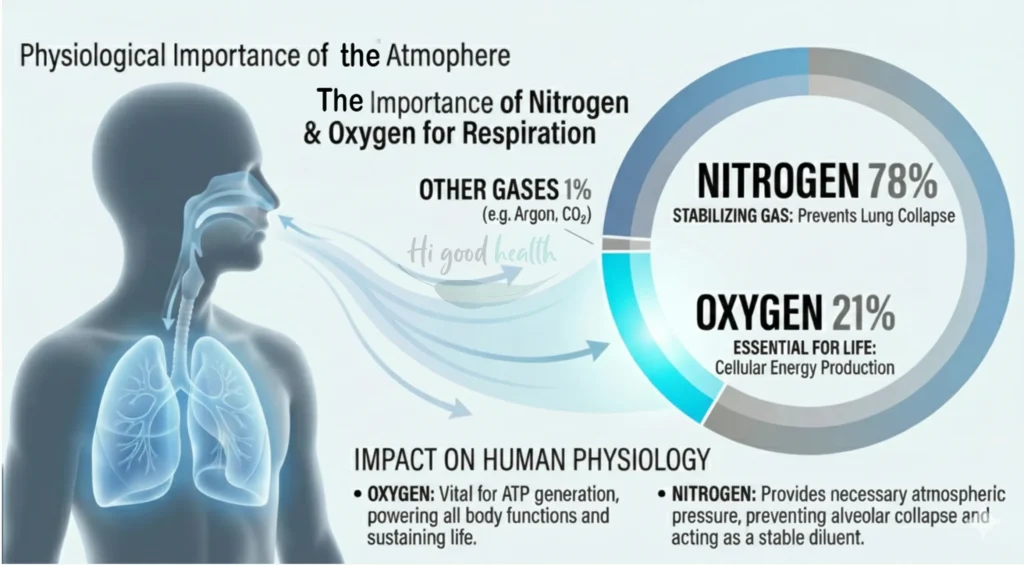
Most people assume oxygen is the star of the show. It is — but it’s only 21% of the air around you. The invisible majority, a full 78%, is nitrogen. And it turns out, that’s not a coincidence. It’s the reason you’re still alive.
Why Nitrogen Is the Unsung Hero
Nitrogen acts as nature’s buffer. Without it diluting the air, oxygen would be dangerously reactive — igniting fires more easily and causing oxidative damage inside your cells. Nitrogen keeps oxygen at just the right concentration for human life: efficient enough to power your cells, but controlled enough not to destroy them.
And nitrogen isn’t passive in your body either. Through the nitrogen cycle, soil bacteria convert atmospheric nitrogen into compounds that plants absorb. You eat those plants (or animals that did), and your body uses that nitrogen to build every protein, every strand of DNA, and every enzyme you have.
When More Oxygen Backfires
Here’s the part most wellness ads won’t tell you: breathing 100% oxygen is actually harmful. Medical research shows that prolonged exposure to pure oxygen causes lung inflammation, cellular damage from reactive oxygen species, and in extreme cases, seizures. Your body evolved for 21% — not more.
Hyperbaric oxygen therapy (HBOT) has real medical uses for specific conditions like decompression sickness and non-healing wounds — but only under strict clinical supervision. The commercial “wellness oxygen” trend lacks peer-reviewed backing.
What You Should Actually Monitor
You don’t need to measure nitrogen or oxygen at home — those levels are stable everywhere on Earth. What does vary, and what does affect your health, is indoor air quality: VOCs from furniture, carbon monoxide from gas stoves, and fine particulate matter (PM2.5) that enters your bloodstream. A HEPA air purifier and checking your local Air Quality Index (AQI) on high-pollution days are practical, evidence-backed steps anyone can take.
All reference links valid and accessible on 30 May 2026
NASA Climate Science – Earth’s Atmosphere Composition
NOAA – Atmospheric Composition Datah
📖 Want the full science — Is Oxygen Overrated for Humans? Nitrogen – The Unsung Hero
