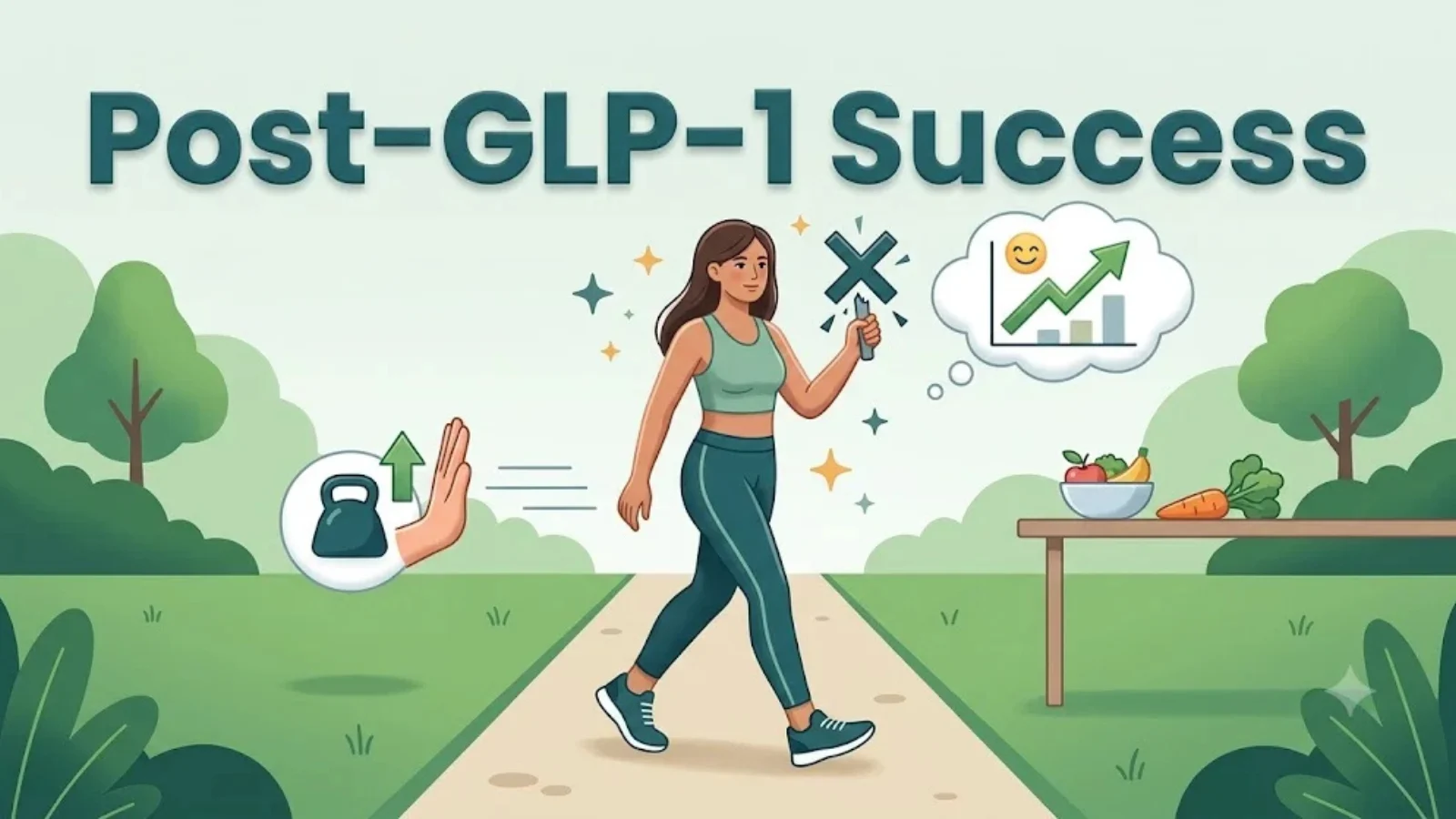
Stopping a GLP-1 medicine isn’t the finish line — it’s a new phase of treatment that requires nearly as much planning as starting it. Skipping that planning is one of the biggest reasons people regain weight.
At some point in nearly every patient’s journey with Ozempic, Mounjaro, or Rybelsus, the question comes up: “Can I stop now?” Maybe the target weight is reached. Maybe the side effects have become tiresome.
Maybe the cost has stretched the budget for too many months — a concern we address in detail in Part 7 on GLP-1 cost and access in India.
No matter the cause, this is Part 10 of our GLP-1 series for India, and it walks through exactly what happens in your body after you stop, and how to come out the other side without losing the progress you worked hard for.
At a glance
- Stopping a GLP-1 medicine is not the finish line. It is a new phase that needs nearly as much planning as starting one.
- Calorie needs change after weight loss, so the body you are feeding at the end is not the one you started with.
- The evidence on what happens after stopping is clear enough to plan around, and weight regain is the common outcome without a plan.
- Tapering, knowing the common mistakes, and knowing when to seek medical advice are the three things that decide how it goes.
- Exercise alone does not prevent regain — that question is answered directly in the FAQ.
Are You Actually Ready to Stop?
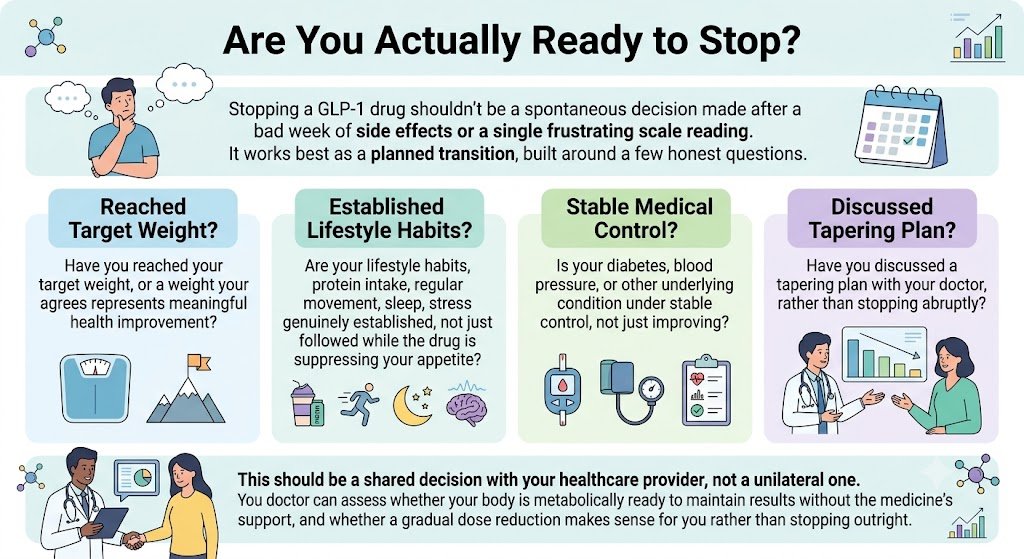
Stopping a GLP-1 drug shouldn’t be a spontaneous decision made after a bad week of side effects or a single frustrating scale reading. It works best as a planned transition, built around a few honest questions.
- Have you reached your target weight, or a weight your doctor agrees represents meaningful health improvement?
- Are your lifestyle habits, protein intake, regular movement, sleep, stress management genuinely established, not just followed while the drug is suppressing your appetite?
- Is your diabetes, blood pressure, or other underlying condition under stable control, not just improving?
- Have you discussed a tapering plan with your doctor, rather than stopping abruptly?
This should be a shared decision with your healthcare provider, not a unilateral one. Your doctor can assess whether your body is metabolically ready to maintain results without the medicine’s support, and whether a gradual dose reduction makes sense for you rather than stopping outright.
Should You Taper the Dose?
There’s no universal rule here, and this is one of the areas where individual physician guidance genuinely matters. Some clinicians recommend gradually reducing the dose over several weeks rather than stopping abruptly, particularly for patients who have been on higher doses for a long duration, according to guidance from Klarity Health, Tapering Off GLP-1s: A Step-by-Step Guide, 2025.
Tapering may help ease the return of appetite more gradually, giving you more time to reinforce habits before hunger signals fully return. This decision should always be made with your prescribing doctor, factoring in your dose, duration of use, and overall health picture.
Why Your Calorie Needs Change After Weight Loss
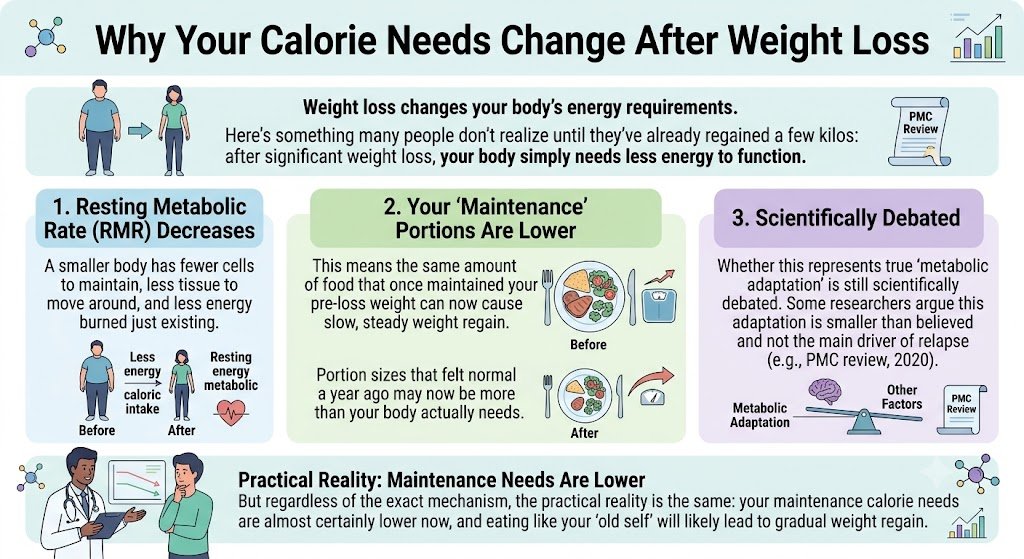
Here’s something many people don’t realize until they’ve already regained a few kilos: after significant weight loss, your body simply needs less energy to function.
A smaller body has a lower resting metabolic rate — fewer cells to maintain, less tissue to move around, less energy burned just existing.
This means the same amount of food that once maintained your weight before treatment can now cause slow, steady weight regain after you stop the medicine. Portion sizes that felt normal a year ago may now be more than your body actually needs.
Whether this represents true “metabolic adaptation” — the body actively fighting to regain lost weight — remains scientifically debated. Some researchers argue this adaptation is smaller than commonly believed and not the main driver of relapse, according to a review in PMC, Metabolic Adaptation and Weight-Loss Relapse, 2020.
But regardless of the exact mechanism, the practical reality is the same: your maintenance calorie needs are almost certainly lower now than before you started treatment, and eating like your “old self” will likely lead to gradual weight regain.
What Actually Happens When You Stop: The Evidence
This isn’t guesswork — it’s been directly studied. The STEP 1 trial extension followed people who lost an average of 17.3% of their body weight on semaglutide over 68 weeks, then stopped the medicine and were tracked for another year.
By one year after stopping, participants regained roughly two-thirds of the weight they had lost , according to the trial data published in Diabetes, Obesity and Metabolism, STEP 1 Extension Trial, 2022. Blood pressure, cholesterol, and blood sugar improvements seen during treatment also drifted back toward pre-treatment levels over that same year.
A more recent systematic review and meta-analysis, published in The Lancet eClinicalMedicine, Trajectory of Weight Regain Meta-Analysis, 2026, confirmed this pattern held true across multiple GLP-1 drugs and patient populations — most people who stop GLP-1 therapy regain a majority of the weight they lost.
Clinical experts have since argued that stopping a GLP-1 drug should be treated as a high-risk clinical transition requiring structured follow-up, not simply an endpoint where treatment quietly ends, a view detailed in Clinical Management of Weight Regain After GLP-1 Discontinuation, 2026.
Weight regain is neither inevitable nor the same for everyone. People who maintain healthy eating habits, stay physically active, consume adequate protein, and continue regular medical follow-up are more likely to preserve their weight loss than those who discontinue both the medication and healthy lifestyle practices.
None of this means stopping is the wrong choice for you. The real risk isn’t stopping — it’s stopping without a plan. For a fuller picture of how these drugs work biologically, see Part 1 of this series.
Common Mistakes That Lead to Weight Regain
Most weight regain after stopping GLP-1 therapy isn’t random bad luck — it tends to follow a fairly predictable pattern of avoidable mistakes.
- Stopping exercise at the same time as stopping the medicine, removing two supports at once instead of one
- Neglecting protein intake, which becomes even more important once appetite-suppressing effects fade and muscle needs extra protection (see Part 5 for more on protecting muscle mass during and after GLP-1 use)
- Sliding back into pre-GLP-1 eating habits and portion sizes without adjusting for lower calorie needs
- Ignoring early, small weight increases, assuming they’ll self-correct rather than addressing them while they’re still minor
- Expecting appetite to remain permanently suppressed, As the medicine gradually leaves your body, its appetite-suppressing and stomach-emptying effects wear off, so hunger signals naturally begin to return.
- Believing the medication alone “fixed” obesity, rather than viewing it as one tool that worked alongside — not instead of — lifestyle change
- Monitoring instead of waiting- Weigh yourself once a week under similar conditions. A gradual increase over several weeks is easier to reverse than waiting until substantial weight has returned.
How to Maintain Your Weight After Stopping GLP-1
- Include protein with every meal to stay full and protect muscle.
- Watch your portion sizes as your calorie needs are now lower.
- Build a balanced plate: half vegetables, one-quarter protein, one-quarter whole grains or millets.
- Stay active with at least 150–300 minutes of exercise each week.
- Do strength training twice a week to maintain muscle.
- Choose fibre-rich foods like vegetables, fruits, pulses, and whole grains.
- Limit sugary drinks, ultra-processed foods, and frequent snacking.
- Weigh yourself once a week and act early if your weight starts to increase.
- Get enough sleep and manage stress to help control hunger and cravings.
- Keep regular follow-up appointments with your healthcare provider.
(See diet section in Part 4)
When to Seek Medical Advice
A small amount of weight fluctuation after stopping is normal and doesn’t require panic. But certain patterns are worth a conversation with your doctor rather than waiting it out.
- Rapid or persistent weight regain that continues month after month rather than stabilizing
- Uncontrolled hunger that feels different from normal appetite and disrupts daily life
- Return of diabetes symptoms or other metabolic complications, such as rising blood sugar or blood pressure readings
- Emotional eating or binge-eating patterns emerging or worsening after stopping
- Genuine uncertainty about whether restarting medication, switching to a different long-term strategy, or trying a structured maintenance plan makes sense for you
Many clinicians recommend reviewing weight, waist circumference, blood sugar and blood pressure within the first three to six months after stopping treatment.
There’s no single “acceptable” amount of regain that applies to everyone — this depends on your starting point, your health conditions, and what your doctor considers a meaningful safety margin.
Restarting medication is not a failure; for many people with obesity, GLP-1 treatment functions similarly to blood pressure or cholesterol medication — something that may need to be long-term or resumed periodically, a concept explored in Part 8 of this series on the broader organ-protective role of these drugs.
These findings reinforce an important message: stopping GLP-1 therapy is not the end of obesity treatment but the beginning of a maintenance phase. The goal shifts from losing more weight to preserving the health benefits you have already achieved.
Key Takeaways
- Stopping GLP-1 should be planned, not abrupt.
- Expect appetite to increase after stopping.
- Prioritise protein and strength training.
- Adjust portion sizes to your new calorie needs.
- Monitor your weight weekly.
- Seek medical advice early if weight regain becomes persistent.
Myths vs Facts
Myth | Fact |
I’ll regain all the weight. | Not necessarily — regain averages around two-thirds of what was lost, but the amount varies widely depending on habits built during treatment. |
I have to stay on GLP-1 forever. | It depends on the individual. Some people maintain results with strong lifestyle habits alone; others need ongoing or periodic treatment, similar to other chronic conditions. |
Stopping means I failed. | False. Obesity is a chronic condition, and needing ongoing support is no different from needing ongoing treatment for high blood pressure or high cholesterol. |
Diet alone is enough for everyone. | Not always. Biology, genetics, and metabolic history all affect how much diet and exercise alone can sustain weight loss without medication. |
Frequently Asked Questions
How much weight regain after stopping GLP-1 is considered normal?
Some regain is expected and common — clinical data shows an average of around two-thirds of lost weight returning within a year without continued intervention. What matters more than the number itself is the trend: steady, continuing regain over several months is a signal to talk to your doctor, while a small, stable fluctuation usually isn’t cause for alarm.
Can I switch to a lower maintenance dose instead of stopping completely?
Yes, this is a strategy some doctors use, keeping patients on a reduced dose for maintenance rather than stopping entirely. Whether this suits you depends on your original dose, response to treatment, and any side effects — always a discussion for your prescribing doctor.
Will exercise alone prevent weight regain after stopping Ozempic or Mounjaro?
Exercise helps significantly, especially for preserving muscle mass and supporting metabolic rate, but it works best combined with adjusted portion sizes and adequate protein intake. Relying on exercise alone while eating the same portions as before treatment often isn’t enough to prevent gradual regain.
Glossary
- Tapering: Gradually reducing a medicine’s dose over time rather than stopping it abruptly
- Resting metabolic rate (RMR): The amount of energy your body burns at complete rest just to maintain basic functions
- Metabolic adaptation: A theoretical slowing of metabolism in response to weight loss, thought by some researchers to contribute to weight regain
- Weight regain: The return of lost weight after treatment or a diet ends, commonly studied after stopping GLP-1 medicines
External References
- Wilding JPH, et al. Weight regain and cardiometabolic effects after withdrawal of semaglutide: The STEP 1 trial extension. Diabetes Obes Metab, 2022. https://pubmed.ncbi.nlm.nih.gov/35441470/
- Budini B, et al. Trajectory of weight regain after cessation of GLP-1 receptor agonists: a systematic review and meta-analysis. The Lancet eClinicalMedicine, 2026. https://www.thelancet.com/journals/eclinm/article/PIIS2589-5370(26)00043-X/fulltext
- MedCentral. Weight Maintenance after GLP-1 RA Withdrawal Exposes Critical Research Gaps, 2025. https://www.medcentral.com/endocrinology/obesity/weight-maintenance-after-glp-1-ra-withdrawal-exposes-critical-research-gaps
- Clinical Management of Weight Regain and Metabolic Decline After GLP-1RA Discontinuation, 2026. https://pubmed.ncbi.nlm.nih.gov/41889156/
- Metabolic adaptation is not a major barrier to weight-loss maintenance. PMC, 2020. https://pmc.ncbi.nlm.nih.gov/articles/PMC7458773/
- Klarity Health. Tapering Off GLP-1s: A Step-By-Step Guide With Medical Input, 2025. https://my.klarity.health/tapering-off-glp-1s-a-step-by-step-guide-with-medical-input/
A Note From HiGoodHealth
HiGoodHealth exists to give Indian readers clean, credible, myth-busting health information for every stage of the GLP-1 journey — including the part nobody talks about enough: what happens after you stop.
Explore the rest of our GLP-1 series, including Part 1 on the basics, Part 5 on side effects and protecting muscle mass, Part 7 on cost and access in India, and Part 8 on heart and kidney benefits, and write to us with topics you’d like covered next.
Disclaimer: This article is for general education only and is not a substitute for personal medical advice, diagnosis, or treatment. Never start, stop, taper, or restart any GLP-1 medicine without guidance from a qualified doctor who knows your full medical history.