
One teaspoon. That’s all it takes to get more protein per gram than eggs, more iron than spinach, and a rare antioxidant that scientists are only beginning to understand. Spirulina — the blue-green algae that ancient Aztecs harvested from lakes — is having a very modern moment, and the science behind it is surprisingly compelling.
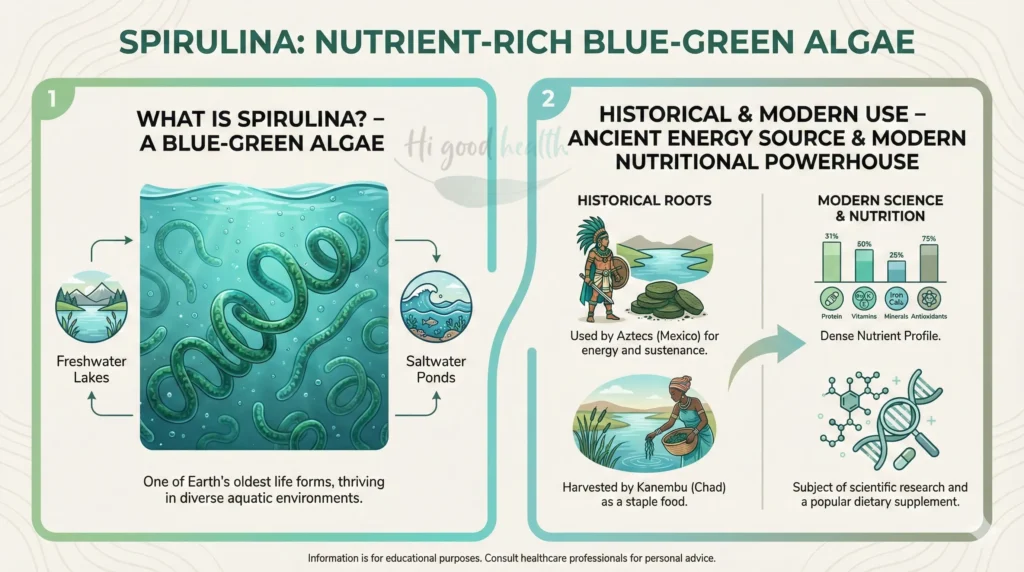
At 60-70% protein by weight, spirulina is one of the most nutrient-dense foods on the planet. It contains all 9 essential amino acids, making it a complete protein — rare for a plant-based source. It’s also packed with iron, B vitamins, magnesium, and phycocyanin, a powerful antioxidant that gives spirulina its striking blue-green color and is being studied for brain and immune protection.
But what does it actually do?
A UC Davis study of adults over 50 found that 12 weeks of spirulina supplementation improved markers of anemia and immune function, with over 50% of participants showing increased white blood cell counts. Seniors over 60 saw the strongest benefits — meaningful news for those with reduced appetite or difficulty meeting nutritional needs through food alone.
Beyond seniors, research suggests spirulina may reduce allergy symptoms, support healthy blood sugar levels, and even help the body process certain heavy metals. For anyone asking “is spirulina worth taking?” — the honest answer is: for many people, yes, with a few important caveats.
One of the biggest misconceptions?
That spirulina covers your vitamin B12. It doesn’t. About 83% of its B12-like compounds are biologically inactive pseudovitamin B12. Vegans especially should supplement B12 separately.
Quality also matters enormously. Not all spirulina is clean — contamination with heavy metals or toxins is a real risk with unverified bulk powders. Always choose third-party tested, GMP-certified brands.
Curious about the right dose, how to use it daily, which other algae are worth trying, and what to look for on a label?
The full guide breaks it all down in practical, easy-to-follow detail. Green Gold: How Spirulina & Algae Are Supporting Preventive Health
