The boom nobody expected
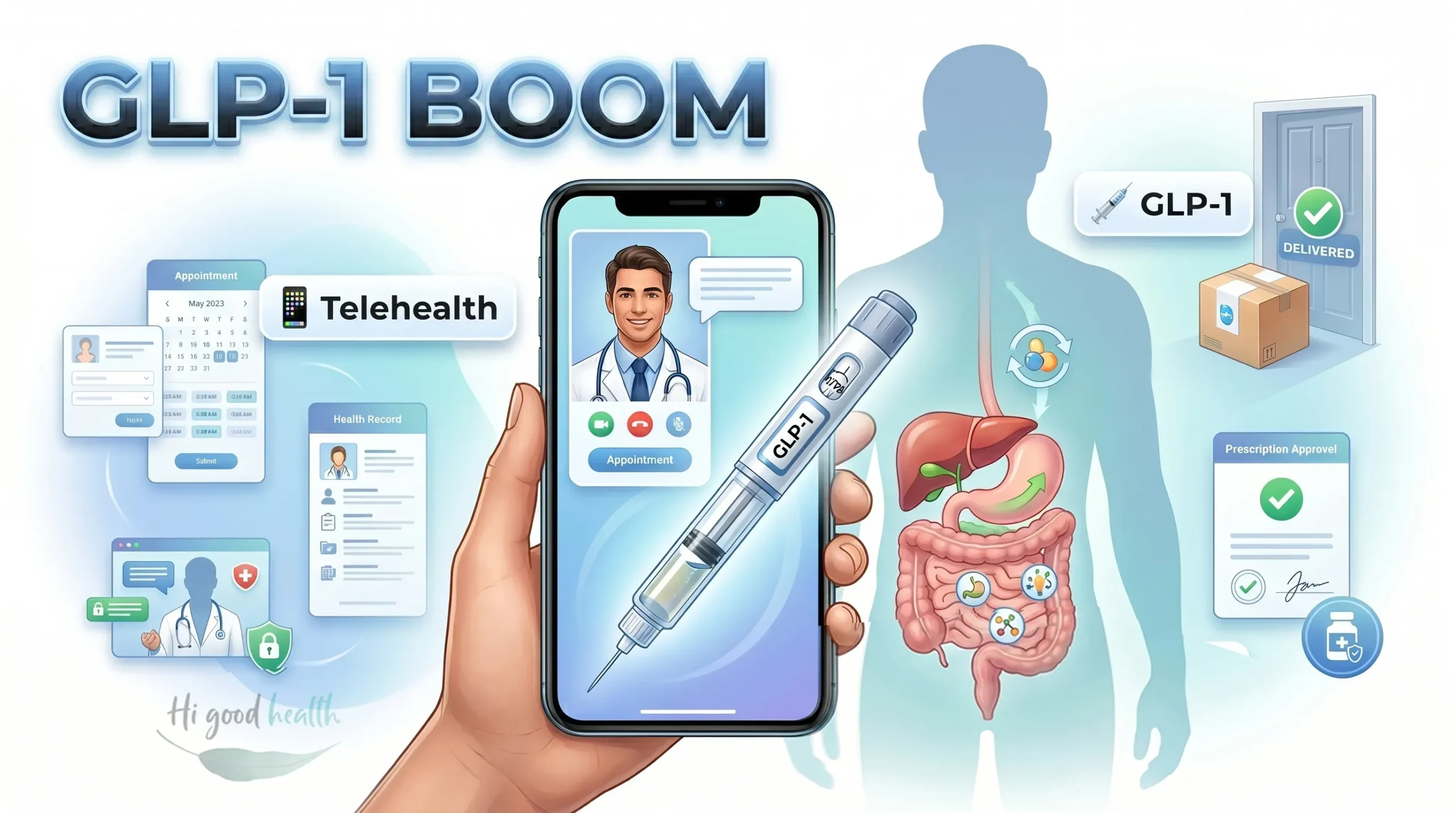
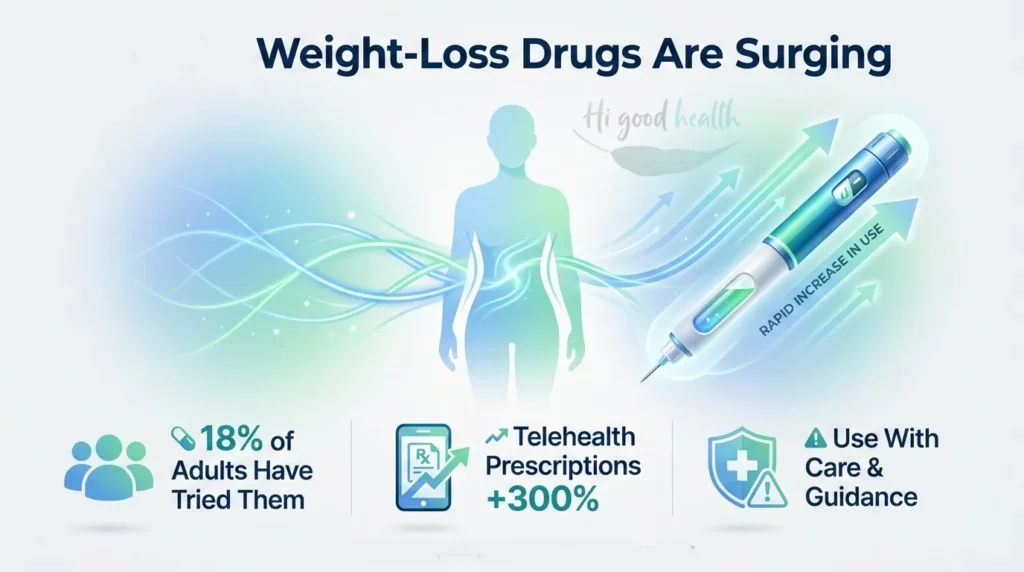
GLP-1 weight-loss drugs didn’t just grow in popularity — they exploded into mainstream health care conversation. Recent U.S. survey data from the Kaiser Family Foundation (KFF) suggests that approximately 1 in 8 American adults (about 12.5%) report currently taking a GLP-1 drug for weight loss, diabetes, or another condition.
At a glance
GLP-1 weight loss drugs like semaglutide and tirzepatide can produce major, sustained weight loss, and GLP-1 telehealth has made them far easier to access. They are safe and effective mainly when prescribed after a real medical screening, backed by lab monitoring and a long-term plan — not ordered from sites that skip exams or sell no-prescription products.
These highlights how widely these medications are now used beyond their original role in diabetes treatment [1].
At the same time, GLP-1 telehealth and direct-to-consumer platforms have become major access points for these weight loss drugs, with companies like Hims & Hers, Ro, LifeMD, PlushCare, and others incorporating GLP-1 consultations and prescriptions into their services — often making access feel faster and more convenient than traditional routes.
Pricing and delivery models vary significantly across providers, and patients are increasingly comparing options online as demand continues to grow.
But here’s the part that increasingly worries clinicians:
This boom is moving faster than patient education, long-term safety planning, and regulatory oversight can keep up.
GLP-1 drugs can be transformative — but only when used with care, context, and continuity.
Semaglutide for weight loss: what it is, and who it is actually for
Semaglutide is one drug sold under different names for different jobs. MedlinePlus lists what semaglutide injection is approved to do: “to control blood sugar levels in certain patients with type 2 diabetes… to reduce the risk of a heart attack, stroke, or death in adults with type 2 diabetes… to assist with weight loss in certain people who are obese or overweight… to treat noncirrhotic metabolic dysfunction-associated steatohepatitis (MASH)” [MedlinePlus].
Harvard Health identifies Wegovy as the semaglutide brand “FDA-approved for weight loss” [Harvard Health]. That distinction matters when you read about someone’s results online, because the brand named in the story tells you which use was being prescribed.
Who it is for is decided by a clinician, not by a website. The approvals above are written around specific patient groups, and this article does not and cannot tell you whether you are in one of them.
Ozempic for type 2 diabetes: the part most people have backwards
The public conversation treats these as weight-loss drugs that happen to help diabetes. It is the other way round. Semaglutide arrived as a type 2 diabetes treatment, and the weight-loss approval came later, under a different brand name and for a different group of patients.
That history explains two things readers find confusing. It explains why a diabetes drug is being discussed as a weight-loss product at all, and it explains why the supply of it has been squeezed — the people it was designed for are competing for it with people using it for something else.
It also explains why the honest answer to “is this safe for me?” depends entirely on which of those two people you are.
How much weight do people actually lose?
Roughly 10 to 15 percent of body weight over a year. Harvard Health reports that “in some studies, participants using GLP-1s have lost an average of 10% to 15% of their body weight over a year” [Harvard Health].
Put that against a real starting weight rather than a photograph. For a 100 kg adult it is 10 to 15 kg across a full year, not across the six weeks between two pictures. It is a substantial result and a slow one, and the before-and-after images that circulate rarely mention which of those two things they are showing.
An average also has two sides. Some people lose considerably more, and some lose very little.
Side effects, and what happens if you stop
Harvard Health lists the common ones plainly: “nausea, vomiting, diarrhea, constipation, abdominal discomfort” [Harvard Health]. They are digestive, they are common, and for many people they ease over time — but they are also the usual reason people give up.
⚠️ On stopping, MedlinePlus is unambiguous: “Continue to use semaglutide injection even if you feel well. Do not stop using semaglutide injection without talking to your doctor.” And on what the drug is doing while you take it: “Semaglutide injection helps to control diabetes and weight loss, but does not cure it” [MedlinePlus].
Read that second sentence twice. Controlling something is not curing it, which is why stopping is a medical decision rather than a personal one, and why it belongs with the doctor who prescribed it.
This article carries no doses and no schedules on purpose. Semaglutide is a prescription medicine, the starting amount and any increase are set by a clinician for the individual, and getting that wrong causes harm.
How GLP-1s evolved: from diabetes therapy to metabolic medicine
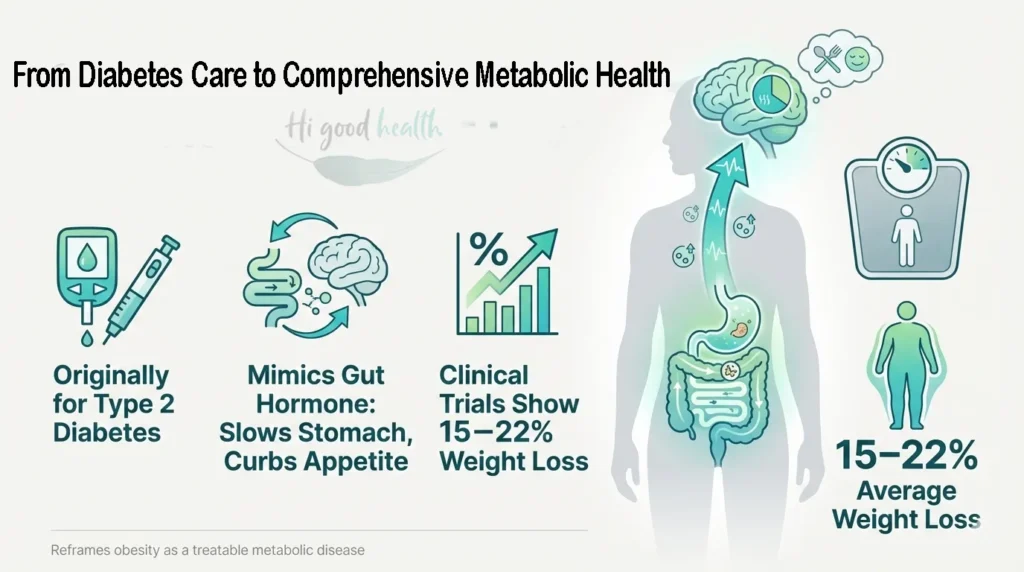
GLP-1 receptor agonists were originally developed to treat type 2 diabetes, not obesity. Researchers discovered that these medications mimic a naturally occurring gut hormone that enhances glucose-dependent insulin release, slows gastric emptying, and reduces appetite signals in the brain.
As large clinical trials progressed, consistent and clinically meaningful weight loss emerged as a secondary effect. Over time, repeated findings across studies suggested that these medications could influence metabolic regulation far beyond blood sugar control.
Between 2021 and 2023, several landmark trials published in The New England Journal of Medicine and JAMA reported average weight loss ranging from approximately 15% to over 20%, significantly outperforming older weight-loss medications.
Tirzepatide (studied in the SURMOUNT-1 trial, NCT04184622) demonstrated average weight reductions of 15-20.9% depending on dose in adults with obesity[2]. Semaglutide has demonstrated similarly meaningful weight reductions in people with obesity and related metabolic conditions[3].
In the semaglutide vs tirzepatide for weight loss comparison, both produce clinically meaningful results, with tirzepatide trials reporting the larger average reductions. This body of evidence helped reframe obesity as a chronic, treatable metabolic disease rather than a failure of willpower — marking a pivotal shift in modern medical thinking.
Why telehealth GLP-1 programs took off so fast
Telehealth programs expanded rapidly not because patients were looking for shortcuts, but because traditional healthcare systems often struggled to meet the growing demand for obesity care.
Many patients faced long wait times, insurance denials, or a lack of obesity-focused care. For people weighing the GLP-1 cost without insurance, telehealth filled that gap.
The real advantages
- Faster access in areas with few obesity specialists
- Lower upfront costs for uninsured or underinsured patients
- Reduced stigma around seeking weight-loss
- Convenience for people managing work, caregiving, or mobility limits
Before starting a weight-loss regimen, use objective data to determine which diagnostic tests your body actually needs. To develop a better understanding of which diagnostic tests you really need, for detailed information, read our article.
That matters.
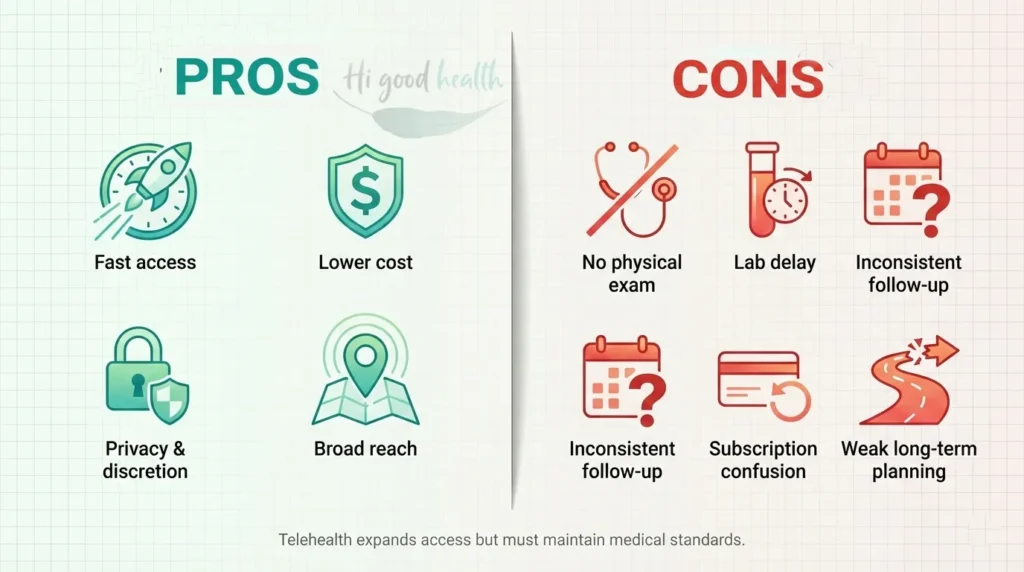
GLP-1 telehealth: the real pros vs cons
Pros
- Faster access to treatment compared with traditional clinic wait time.
- Lower initial cost for those without insurance coverage.
- Privacy and discretion
- Broader geographic reach
Cons
- No physical examination which may limit full clinical assessment.
- Laboratory testing may be skipped, incomplete or delayed in some programs.
- Inconsistent follow-up
- Subscription based billing methods that may be unclear or difficult for some patients.
- Limited long-term planning for stopping medication and dose adjustment.
Bottom line: Telehealth can expand access — but it must not dilute medical standards.
Top GLP-1 telehealth platforms in the U.S. (snapshot comparison)
| Platform | Cost Range | FDA-Approved | Coaching | Notes |
| Ro | $$$ | Yes | Limited | Strong branding, higher cost |
| PlushCare | $$ | Yes | Minimal | PCP-style visits |
| LifeMD | $ | Yes | Limited | Budget-friendly |
| Sequence (WW) | $$$ | Yes | Strong | Best lifestyle integration |
| Hims & Hers | $$ | Yes | Limited | Heavy marketing focus |
Table 1: Comparison of major telehealth platforms offering GLP-1 services
Note: As of December 30, 2025, the FDA ended the drug shortage allowance for compounded semaglutide and tirzepatide. Compounded GLP-1 products may no longer be legally available through these platforms. Verify current offerings directly.
Listings are illustrative, not endorsements. Availability, pricing, and prescribing practices change frequently — always verify directly.
Telehealth vs in-person care: which route makes sense?
Many patients face a practical decision: Should they use telehealth—or pursue GLP-1 therapy through my local doctor and their insurance plan?
In general:
Telehealth may make sense if:
- Insurance coverage is denied or delayed
- Access to obesity medication and endocrinology specialist is limited in that particular area.
- You prefer faster initiation and are willing to self-advocate on monitoring
In-person care may be preferable if:
- Your insurance covers FDA-approved GLP-1s
- You have complex medical conditions requiring physical examination or closer clinical supervision.
- You prefer integrated care with labs, imaging, and physical exams
Some patients use a hybrid approach—initiating therapy via telehealth while coordinating labs and long-term planning with their primary care physician. The key factor is not the platform, but continuity and medical oversight.
FDA-approved vs compounded GLP-1s: not the same, not “generic”
This distinction is widely misunderstood and carries important regulatory and safety implications. A common question is whether GLP-1 is the same as Ozempic: Ozempic is one branded semaglutide product within the wider GLP-1 class, so in the glp1 vs Ozempic comparison the drug is a type of GLP-1, not a separate category.
FDA-approved GLP-1 medications
Examples include Wegovy, Ozempic, Zepbound, and Mounjaro.
Important points:
- There is no FDA-approved generic semaglutide or tirzepatide
- These drugs are patent-protected
- Delivered via pre-filled pens
- Standardized dosing
- Backed by large safety datasets from clinical trials
Compounded GLP-1 medications: Critical 2026 Update
Patients searching for Wegovy alternatives or asking how to get compounded semaglutide should understand what “compounded” actually means. Compounded drugs are custom-made formulations made by licensed compounding pharmacies. Unlike FDA-approved GLP-1 drugs, compounded versions are not evaluated by the FDA for safety, effectiveness, or quality, and their potency and purity can vary widely.
Important regulatory change: As of December 30, 2025, the FDA officially ended the drug shortage designation for semaglutide and tirzepatide.
This means compounding pharmacies may no longer legally compound these medications under the federal shortage exemption. Patients should verify with their provider whether compounded versions remain available and legal at the time of prescribing[4].
The FDA has issued multiple warnings and enforcement actions regarding compounded GLP-1 products:
- Some compounded products use salt forms (such as semaglutide sodium or semaglutide acetate) that are not chemically or pharmacologically equivalent to FDA-approved drugs
- As of 2025, the FDA received over 520 adverse event reports for compounded semaglutide and more than 480 for compounded tirzepatide, with some cases requiring hospitalization
- Dosing errors with injectable compounded products have led to serious adverse events
- Federal regulators have issued warning letters to compounders marketing these alternatives as “generic” versions of FDA-approved medications
So is compounded tirzepatide safe? Because these versions are not FDA-evaluated and their potency can vary, there is no blanket guarantee — this list is not exhaustive, and individual risk assessment should always be done by a licensed clinician.
Who should think twice before starting GLP-1 therapy
To ensure patient safety, clinical guidelines emphasize that GLP-1 therapy should only be initiated after a thorough medical screening.
Absolute contraindications
- Personal or family history of Medullary thyroid carcinoma (MTC) or Multiple Endocrine Neoplasia Type 2 (MEN 2) [FDA Black Box Warning]
- History of allergy to GLP-1 drugs
- Pregnancy or breastfeeding
- Severe Gastroparesis (delayed gastric emptying)
Relative Contraindications – Caution needed before initiating therapy
- History of pancreatitis
- Diabetic retinopathy
- History of eating disorders
- Active gallbladder disease
- Kidney disease
- Patients on Oral Contraceptives
- Type 1 Diabetes – Risk of Diabetic Ketoacidosis
Who GLP-1 therapy tends to help most
While GLP-1 medications are not appropriate for everyone, they may be highly effective for the right patients when used responsibly under medical supervision.
GLP-1 therapy tends to benefit individuals who:
- Have a BMI ≥ 30, or BMI ≥ 27 with metabolic conditions such as prediabetes, type 2 diabetes, hypertension, or dyslipidemia
- Have made repeated, sustained attempts at lifestyle change without durable weight loss
- Show signs of insulin resistance or metabolic syndrome
- Experience persistent appetite dysregulation that interferes with healthy eating patterns
- Are willing to view GLP-1s as a long-term medical tool, not a short-term fix
Importantly, evidence suggests that the best outcomes are seen in patients who combine medication with nutrition education, resistance training, and ongoing monitoring, rather than relying on appetite suppression alone.
What proper monitoring should actually look like
A safe GLP-1 medication requires baseline evaluation and follow-up monitoring, especially in the first 6–12 months.
At minimum, patients should discuss with their healthcare provider:
- Kidney function (serum creatinine, estimated glomerular filtration rate/eGFR)
- Liver enzymes (ALT, AST)
- Blood glucose or HbA1c (glycosylated hemoglobin)
- Electrolytes if nausea or vomiting occurs
- Weight, muscle mass, and hydration trends
- Lipid panel for cardiovascular risk assessment
Many telehealth platforms rely heavily on self-reported data. That may be convenient — but it shifts medical responsibility onto the patient and may not meet the standard of care for chronic disease management.
Dehydration from nausea can reduce kidney filtration, making it vital to protect your organs during weight loss. For insights on kidney-friendly foods and dietary habits that support kidney health, for detailed information, read our article.
What the latest science (2026) tells us
Cardiovascular benefits
Beyond weight loss and glucose control, GLP-1 receptor agonists are increasingly recognized for their cardiovascular and metabolic benefits. Meta-analyses of large cardiovascular outcome trials show that drugs like semaglutide and other GLP-1 receptor agonists are associated with statistically significant reductions in major adverse cardiovascular events (MACE) such as heart attack and stroke, as well as improvements in blood pressure and lipid markers — indicating benefits that extend well beyond simple weight reduction[5].
Emerging brain health research
On the brain health front, emerging research suggests these medications may improve insulin signaling in the brain and reduce systemic inflammation. Large observational cohort studies have reported associations with lower rates of dementia, though definitive causal evidence from randomized controlled trials is still pending[6]. These findings are preliminary and require further investigation.
Some early evidence also suggests improvements in appetite-related reward processing and mental well-being — sometimes described as a reduction in “food noise” — but more research is needed to confirm how these effects translate into clinical practice.
Emerging research suggests these medications may improve insulin signaling in the brain, offering a new frontier for dementia prevention. To learn how to recognise the early signs of cognitive decline and take proactive steps, for detailed information, read our article.
Known risks and the ones people rarely mention
Common side effects
- Nausea (approximately 40% of patients)
- Vomiting, constipation, diarrhea
- Fatigue and dizziness
- Abdominal discomfort, dyspepsia
Understanding GLP-1 side effects long term matters as much as the short-term ones, because many patients stay on these medications for years.
Less discussed but important
- Lean muscle loss during rapid weight reduction
- Bone density decline without resistance training
- Kidney stress from dehydration can lead to Acute Kidney Injury (AKI)
- Gallbladder complications including gallstones and cholecystitis
- Increased gout risk
- Rare but serious: pancreatitis, severe hypoglycemia (when combined with other diabetes medications)
According to clinical guidelines, most of these risks are manageable with proper dosing, hydration, adequate nutrition, and appropriate follow-up care.
Protecting muscle and bone during GLP-1 driven weight loss
Rapid weight loss—especially when driven by appetite suppression—can lead to loss of lean muscle and bone density, not just fat.
This risk increases when:
- Protein intake drops unintentionally
- Resistance training is absent
- Weight loss exceeds 1-2% of body weight per week
- Caloric intake becomes severely restricted
To reduce these risks, clinicians increasingly recommend:
- Adequate protein intake (typically 0.55–0.75 g/lb of ideal body weight per day), often higher than traditional dieting norms
- Resistance or strength training 2–3 times per week
- Monitoring muscle mass trends using DEXA scans or bioimpedance analysis, not just scale weight
- Ensuring adequate vitamin D and calcium intake
The number on the scale alone does not reflect metabolic health. Preserving muscle is essential for long-term weight maintenance, glucose control, and physical independence—especially as people age.
Why GLP-1s can stress the kidneys and pancreas
GLP-1 drugs slow gastric emptying and suppress appetite. When nausea or vomiting reduces fluid intake, dehydration can develop gradually.
Dehydration can reduces kidney filtration, concentrates waste products, and increases the risk of acute kidney injury. Rapid changes in digestive signaling may also irritate the pancreas or gallbladder in susceptible individuals.
These risks are manageable — but only when recognized early and monitored properly. Patients should be educated about maintaining adequate hydration and recognizing early warning signs of complications.
The rebound reality: what happens when you stop?
GLP-1s suppress appetite by modulating gut-brain signaling — they do not permanently change underlying metabolic regulation.
When treatment is discontinued:
- Hunger signals
- Metabolic rate may remain suppressed if significant muscle mass was lost
- Research indicates that a substantial portion of lost weight may return in many patients without structured maintenance support
Studies suggest that up to two-thirds of weight lost may be regained within 1-2 years of discontinuation without ongoing lifestyle intervention.
Exit-strategy planning matters as much as starting therapy.
Clinical trials vs real life: the effectiveness gap
Clinical trials of GLP-1 based therapies often report substantial weight loss. Research published in 2025 shows real-world patients often lose 40–50% less weight than clinical trial participants.
This gap exists because trials include:
- Structured lifestyle counseling and coaching
- Frequent medical follow-ups and monitoring
- Strict adherence protocols
- Comprehensive lifestyle interventions
In routine clinical practice , many of these supportive components may be less consistent or absent together.
Because of this medication tends to work best when combined with:
- Evidence-based nutrition education
- Behavior change support
- Resistance training programs
- Ongoing medical monitoring
What’s next: beyond today’s GLP-1s
Research in metabolic medicine is advancing rapidly. Several next gen therapies aim to target multiple hormonal pathways involved in appetite, metabolism and energy balance .
Retatrutide, a triple agonist targeting GLP-1, GIP, and glucagon receptors, has shown even greater fat loss in early-phase clinical trials however it comes with a higher risk of cardiac and GI side effects.
Other investigational agents are also in development, targeting additional metabolic pathways.
However, long-term safety data for these newer agents is still emerging. Progress must be balanced with caution and rigorous evaluation.
Safe steps if you’re considering GLP-1 telehealth
- Verify pharmacies using NABP’s .pharmacy checker: https://safe.pharmacy
- Start at the lowest effective dose and titrate gradually under medical supervision
- Ensure baseline and ongoing monitoring of kidney function, liver enzymes, and metabolic markers
- Pair medication with evidence-based nutrition and behavior coaching
- Avoid platforms promising “guaranteed” results or requiring no medical evaluation
- Confirm FDA-approved medication status — ask specifically whether you’re receiving FDA-approved or compounded drugs
- Verify the provider is licensed in your state and offers ongoing medical support
Questions to ask any GLP-1 telehealth provider
- Is this an FDA-approved medication or a compounded formulation?
- What is the exact formulation and salt form of the medication?
- How will side effects be monitored and managed?
- What baseline labs are required, and how often will follow-up labs be ordered?
- What happens if I experience severe side effects after hours?
- What is your discontinuation and maintenance plan?
- Who do I contact if symptoms worsen?
- Are you licensed to practice in my state?
- What is the total monthly cost including medication, consultations, and labs?
A warning about non-prescription GLP-1 products online
As demand for GLP-1 grows Many websites now sell “oral semaglutide drops,” “GLP-1 peptides,” or “no-prescription Ozempic alternatives.”
These products are:
- Not FDA-approved for any indication
- Often illegally marketed under federal law
- Sometimes chemically unrelated to real GLP-1 drugs
- Of unknown safety, purity, and potency
Critical warning: If a website claims no prescription is needed for GLP-1 medications, that alone is a red flag indicating illegal activity.
If you plan to buy semaglutide online, only do so through a licensed provider — legitimate GLP-1 medications always require a valid prescription from a licensed healthcare provider.
Regulation, lawsuits, and rising scrutiny
The FDA has issued multiple warnings and enforcement actions against unapproved GLP-1 compounds. The Federal Trade Commission (FTC) is investigating deceptive weight-loss marketing practices. Lawsuits have already emerged over billing practices, informed consent failures, and safety lapses.
Until regulatory oversight matures, patients must be informed advocates for their own health and safety.
Key Takeaways
- About 1 in 8 U.S. adults now use a GLP-1 drug, and telehealth is a leading way people start treatment.
- FDA-approved GLP-1s (Wegovy, Ozempic, Zepbound, Mounjaro) are not the same as compounded versions, which the FDA does not evaluate for safety or potency.
- As of December 30, 2025, the FDA ended the shortage exemption, so legally compounded semaglutide and tirzepatide may no longer be available.
- Real-world weight loss is often 40-50% lower than in clinical trials, and up to two-thirds of lost weight can return after stopping without a maintenance plan.
- Protecting muscle and bone with adequate protein and resistance training is as important as the medication itself.
- Any site offering GLP-1 medications with no prescription is a red flag for illegal, unverified products.
Frequently Asked Questions
1. Is it safe to order weight-loss drugs online?
It can be safe if you use legitimate providers that require valid prescriptions and appropriate medical evaluation. However, risky sites often skip necessary physical exams or labs. Always verify pharmacies using the NABP’s website (https://safe.pharmacy) and ensure the platform offers ongoing medical monitoring by licensed providers.
2. Is compounded semaglutide the same as generic Ozempic?
No. There is currently no FDA-approved generic semaglutide. Compounded versions are custom-made by pharmacies, are not FDA-approved, and lack the rigorous safety data and standardized dosing of patent-protected drugs like Wegovy or Ozempic. As of December 30, 2025, compounded GLP-1s may no longer be legally available due to the end of the FDA drug shortage designation.
3. Will I gain weight back if I stop taking the medication?
Likely, yes. GLP-1s suppress appetite but do not permanently change your underlying metabolic regulation. Without long-term maintenance or a structured transition plan involving nutrition and exercise, research suggests up to two-thirds of lost weight often returns within 1-2 years.
4. Can I buy GLP-1 medications without a prescription?
No. Legitimate GLP-1 drugs always require a prescription from a licensed healthcare provider. Websites selling “no-prescription” alternatives are marketing unregulated or illegal products that may not contain real medication or may be contaminated. This is a major safety red flag.
5. What are the most common side effects of GLP-1 drugs?
Nausea affects about 40% of patients, along with potential vomiting, constipation, or diarrhea. Less commonly discussed risks include the loss of lean muscle and bone density during rapid weight loss, making resistance training and adequate protein intake essential during treatment.
6. How much do online GLP-1 weight-loss programs cost?
Costs vary significantly. Some telehealth platforms advertise monthly fees starting around $79–$299 for consultations and support, but the medication cost is typically separate and can range from $25/month for compounded versions (when legally available) to $1,000+/month for FDA-approved drugs without insurance coverage.
7. Who should avoid taking GLP-1 medications?
Avoid these drugs if you have a personal or family history of medullary thyroid carcinoma (MTC), Multiple Endocrine Neoplasia syndrome type 2 (MEN2), history of pancreatitis, severe gallbladder disease, severe gastrointestinal issues, or eating disorders. A rushed online intake form may not adequately screen for these risks, so be thorough and honest with your provider.
Why we publish this at Hi Good Health
At Hi Good Health, our mission is to cut through hype, translate complex science into accessible language, share global best practices based on peer-reviewed evidence, and empower readers to make informed health decisions.
Editorial Standards
- All health content is reviewed by licensed medical professionals
- We cite primary sources and peer-reviewed research
- We disclose any conflicts of interest
- We update content regularly as new evidence emerges
Conflicts of Interest: The authors and reviewers of this article have no financial relationships with any telehealth platforms, pharmaceutical companies, or GLP-1 manufacturers mentioned in this content.
Final takeaway
GLP-1 drugs are powerful medical tools — not magic solutions.
Use them wisely, under appropriate medical supervision, and with realistic expectations about long-term commitment.
Monitor them carefully with regular labs and clinical follow-up.
And never outsource your health decisions to marketing promises or unverified online sources.
If this guide helped you, share it — and explore our other evidence-based articles to build a safer, smarter health journey.
Medical Disclaimer
This content is for educational and informational purposes only and does not constitute medical advice, diagnosis, or treatment. GLP-1 medications may not be appropriate for everyone, and not all risks—especially with long-term or off-label use—are fully known. Individual responses to medication vary.
Always consult a qualified, licensed healthcare professional before starting, adjusting, or stopping any medication. If you experience severe side effects such as severe abdominal pain, persistent vomiting, vision changes, or signs of pancreatitis, seek immediate medical attention.
The information in this article is current as of February 2026 but is subject to change as new research and regulatory guidance emerge.
All reference links valid and accessible on 3 June 2026
