
Introduction: The Financial Strain of Pet Ownership
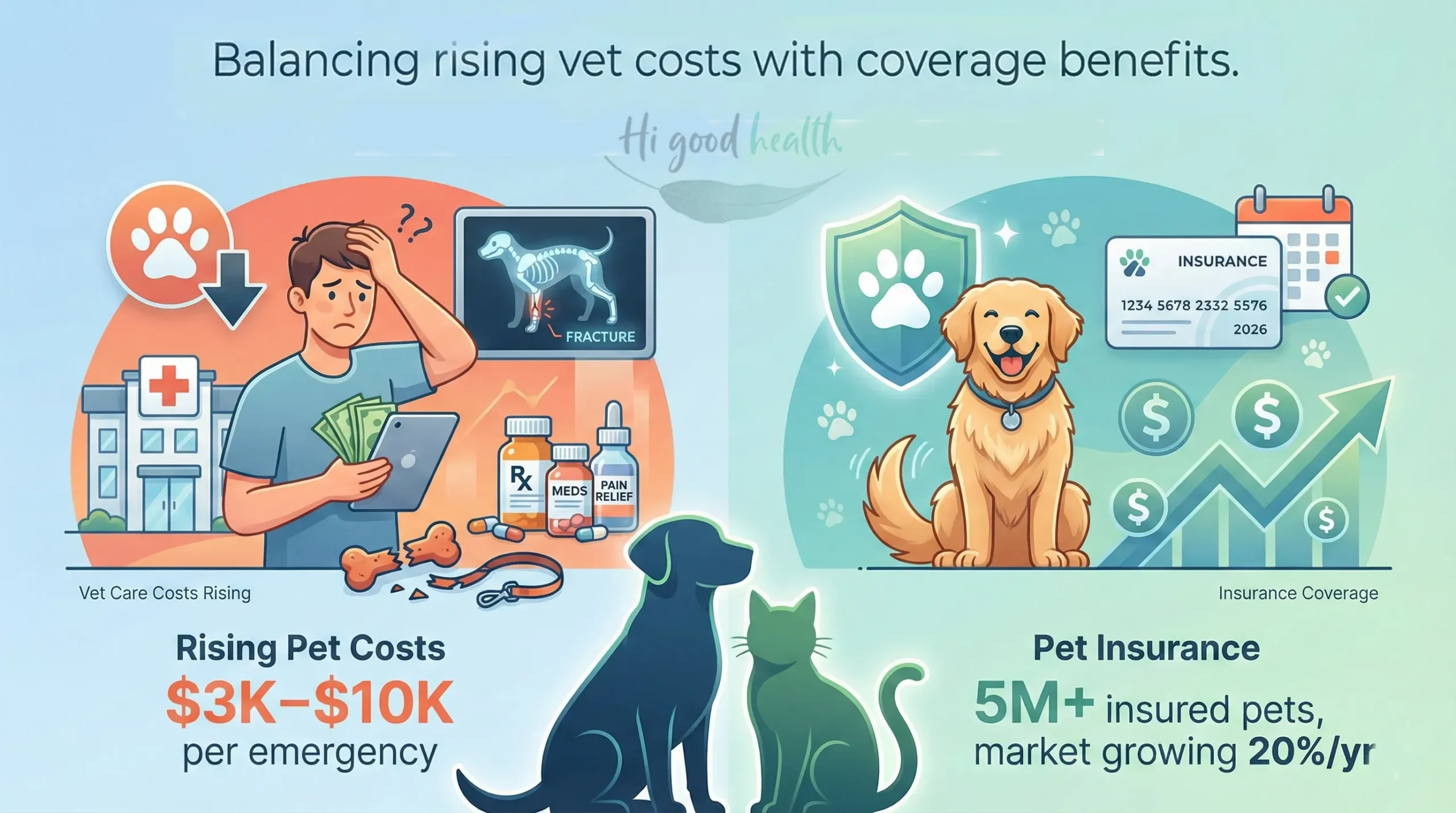
According to industry data, U.S. pet owners spent approximately $152 billion on pets in 2024, marking continued growth in the pet care industry[1]. Total veterinary care and product expenses topped $40 billion and continue rising year over year, driven by inflation and increasingly advanced treatment options[2].
At a glance
Is pet insurance worth it? For most owners, yes, if you would struggle to pay a sudden $3,000 to $10,000 vet bill out of pocket. Pet insurance is worth it when you enroll a young, healthy pet early, before any condition becomes pre-existing, and choose an accident-and-illness plan with reimbursement of 70 to 90 percent. It is less useful if your pet is already older with existing health issues, or if you have savings set aside for emergencies. The honest answer to “pet insurance, is it worth it” depends on your pet’s age, breed risk, and how comfortable you are with financial surprises.
A single emergency—such as surgery for a swallowed foreign object, a broken bone, or ongoing cancer treatment—can easily cost several thousand dollars, creating a sudden financial shock that many families are unprepared for. It was found that animal health insurance can reduce price discussions, but reaches its limits as soon as an animal owner can afford neither the veterinary costs nor a monthly insurance premium.[6]
According to the North American Pet Health Insurance Association (NAPHIA), there were approximately 7 million insured pets in North America at the end of 2024, and the market exceeded $5.2 billion in written premiums, reflecting strong year-over-year growth of approximately 20% in premium volume[3].
But is pet insurance a smart investment—or just another monthly bill?
How Pet Insurance Works in the US
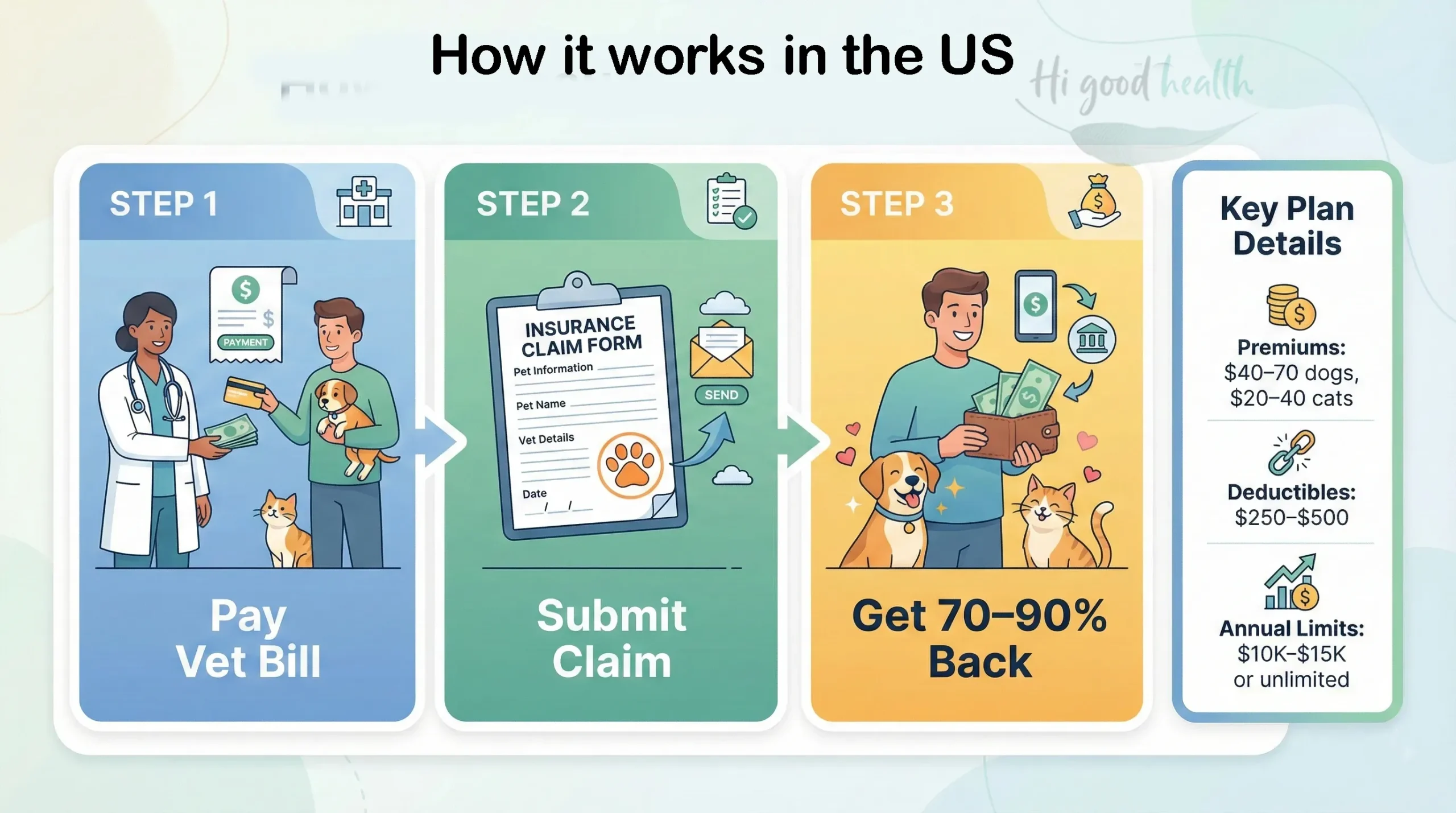
Unlike human health insurance, pet insurance in the United States typically follows a reimbursement model:
- Step 1: You pay the veterinary bill upfront at the time of service.
- Step 2: File a claim with your insurance provider (typically online or via mobile app).
- Step 3: Receive reimbursement based on your policy terms (usually 70-90% of covered costs).
Key Components
- Premiums: Monthly or annual payments that vary based on factors including pet species, breed, age, location, and coverage level. Typical ranges vary widely by these factors.
- Deductibles: The amount you pay out-of-pocket before insurance reimbursement applies, commonly ranging from $250-$500 per year or per incident, depending on the plan.
- Reimbursement rate: The percentage of covered veterinary expenses the insurer pays after the deductible is met, typically 70-90%.
- Annual limits: Some plans cap total payouts at $10,000-$15,000 per year; others offer unlimited annual coverage.
“Pro-Tip: Some providers (like Trupanion and Pets Best) now offer ‘Direct Pay’ technology. If your vet uses their software, the insurer pays the clinic directly at checkout, meaning you only pay your 10-20% co-pay out of pocket.”
What’s Covered (and What’s Not)
Usually Covered
- Accidents and injuries (fractures, lacerations, foreign body ingestion)
- Surgeries and hospitalizations
- Diagnostic tests (X-rays, MRIs, CT scans, bloodwork, urinalysis)
- Prescription medications
- Chronic conditions, if the pet is insured before the condition is diagnosed
Usually Not Covered
- Pre-existing conditions (any health issue diagnosed or showing symptoms before coverage begins)
- Preventive care (routine vaccinations, flea/tick prevention, routine dental cleanings, wellness exams)
- Elective procedures (cosmetic procedures, tail docking, ear cropping)
- Breeding-related conditions
- Many behavioral issues
Important Note: Some insurance providers offer optional wellness add-ons for preventive care at additional cost. Additionally, some insurers like Nationwide offer specialized coverage options for exotic pets including birds, reptiles, and rabbits, though most standard policies cover only dogs and cats.
The Cost of Veterinary Care in 2025-2026
Veterinary care costs have risen significantly in recent years. Owners often feel the cost of veterinary care is too high, as there remains a limited understanding of the cost of health care in human and veterinary medicine alike.[6] While specific costs vary considerably by geographic region, veterinary practice, and individual case complexity, industry sources and consumer finance analyses indicate approximate ranges for common procedures:
- Emergency surgery for orthopedic injuries (such as ACL/CCL repair): Several thousand dollars, often in the $3,000-$7,000+ range
- Cancer treatment (surgery, chemotherapy, or radiation therapy): Can range from $5,000-$15,000+ depending on cancer type and treatment protocol
- Hospitalization for acute conditions (such as pancreatitis): Often $2,000-$5,000+ for multi-day stays with intensive care
- Routine dental cleaning (under anesthesia): Typically $400-$800+, though usually not covered by standard insurance plans
- Emergency care visits: Can start at $100-$200 just for the examination, with additional costs for diagnostics and treatment
According to consumer finance analyses, veterinary care—especially emergency and specialized treatments—continues to climb, with unexpected bills often reaching several thousand dollars[4].
Veterinary Perspective- Clinician’s Corner
Without insurance or adequate savings, many families face what veterinarians sometimes refer to as “economic euthanasia“—the deeply difficult situation in which a medically treatable pet must be euthanized because the cost of care exceeds the owner’s financial capacity.
Dealing with financially limited clients can quickly become a burden for veterinary surgeons and increase the stress level at work[7][8]. This is in part due to veterinary surgeons wanting to provide the best possible care for each individual animal, which clashes with owners’ financial constraints and the misconception of some owners that veterinary surgeons are mainly motivated by making a profit.[6] This represents not a failure of love or responsibility, but rather a reflection of rising medical costs and the challenge of financial preparedness for unexpected veterinary emergencies.
The prime goal of veterinarians is to provide ‘Gold Standard’ of care. Without insurance, owners often opt for “symptomatic treatment” (e.g., just antibiotics for vomiting) rather than “definitive diagnosis” (bloodwork and imaging).Insurance removes the ‘financial friction’ from the exam room, allowing vets to focus on the best medical outcome rather than the bottom line.
Insurance often allows for better pain management and physical therapy (rehabilitation) which are frequently the first things cut from a budget-constrained treatment plan thus quality of life is maintained.
Managing chronic, obesity-related diseases can quickly drain several years’ worth of savings. To understand the hidden costs of pet obesity and its impact on family health expenses, for detailed information, read our article.
Hypothetical Case Examples: Understanding Real-World Scenarios
The following are hypothetical examples created for illustrative purposes to demonstrate how pet insurance might work in various scenarios:
Hypothetical Case 1: Bailey the Golden Retriever (Denver, CO)
Bailey, a 3-year-old Golden Retriever, tore her ACL while playing fetch at the park. The surgical repair cost $6,500. Her owners had been paying $55/month in premiums for two years. With a $500 deductible and 80% reimbursement rate, they were reimbursed $4,800 of the surgery cost. While they had paid $1,320 in premiums over two years, the insurance made the difference between manageable expenses and significant financial stress during an emergency.
Hypothetical Case 2: Max the Cat (Chicago, IL)
Max, a 5-year-old domestic shorthair cat, developed recurring urinary blockages, requiring multiple emergency room visits totaling $4,200. Without insurance, his retired owner would have faced difficult financial decisions. With pet insurance providing 80% reimbursement after a $300 deductible, the owner received $3,120 back, making ongoing urinary health management financially feasible.
Hypothetical Case 3: Luna the French Bulldog (New York, NY)
French Bulldogs are genetically predisposed to brachycephalic airway syndrome and breathing difficulties. Luna required soft palate surgery costing $8,000 at age 4. Her insurance covered 70% after deductible, reimbursing approximately $5,250. However, premiums had risen to $90/month due to her breed’s elevated health risks. Luna’s owner considered the insurance essential given the breed’s well-documented predisposition to multiple health issues.
Pet Insurance vs Alternatives
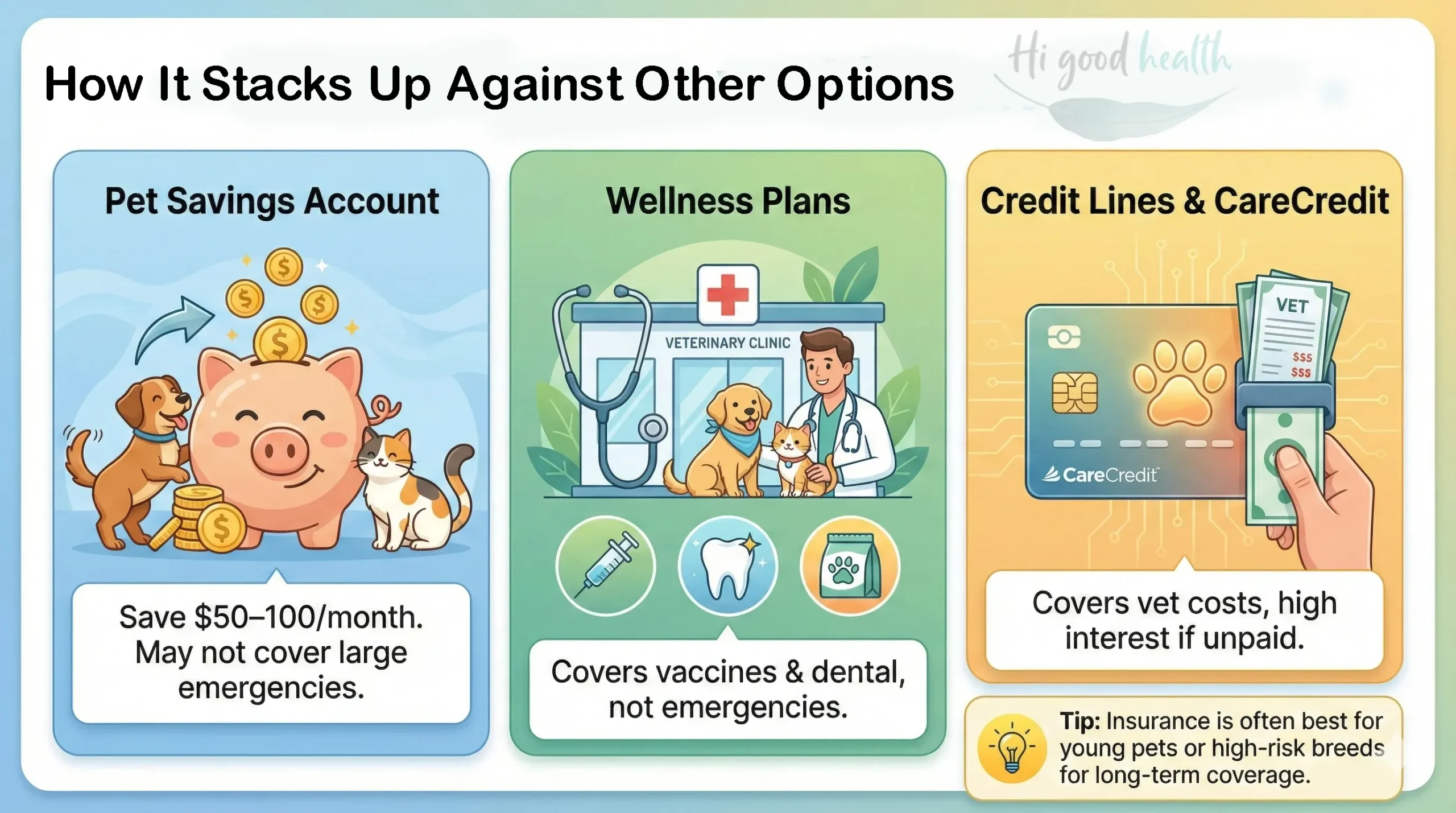
1. Pet Savings Account (Self-Insurance)
Setting aside $50-$100 per month in a dedicated savings account can be effective if your pet remains relatively healthy and major emergencies don’t occur early in life. However, a single $5,000-$7,000 emergency during a pet’s first few years can quickly drain several years’ worth of savings, leaving you vulnerable to subsequent issues.
Best for: Disciplined savers with multiple pets who can build substantial emergency funds over time.
2. Veterinary Wellness Plans
Offered by veterinary chains such as Banfield (affiliated with PetSmart), VCA, and independent practices, wellness plans typically cover routine preventive care like vaccinations, routine exams, and sometimes dental cleanings for a monthly or annual fee. Important distinction: These plans do not cover accidents, emergencies, illnesses, or surgeries, and should not be confused with comprehensive pet insurance.
Best for: Pet owners seeking to budget for routine preventive care costs.
3. Veterinary Credit Lines and CareCredit
Veterinary-specific credit options, including CareCredit and similar financing programs, can help cover unexpected costs when you don’t have immediate funds available. However, these credit lines often carry high interest rates (sometimes 25%+ APR) if balances are not paid off within promotional periods, potentially increasing the overall cost of care significantly.
Best for: Short-term financing needs when combined with a plan to pay off balances quickly.
Insurance Consideration: Pet insurance is often most valuable for young pets, large breed dogs, or breeds with known genetic health predispositions, where the likelihood of costly medical care over a lifetime is statistically higher.
Industry Trends in 2025-2026
- Market Growth: NAPHIA reports approximately 20% annual growth in premium volume, with strong year-over-year increases in the number of insured pets, indicating growing awareness and adoption [3].
- Technology Integration: Major insurers now offer mobile apps enabling digital claim submission, instant photo uploads of veterinary invoices, and faster reimbursement processing—some within days rather than weeks.
- Plan Customization: Insurers increasingly offer policies tailored by breed-specific risks, geographic location (reflecting regional veterinary cost differences), and lifestyle factors (indoor vs. outdoor pets, activity levels).
- Premium Concerns: Rising premiums for certain popular breeds with known health issues (bulldogs, retrievers, certain toy breeds) have sparked consumer discussion about affordability and breed-specific pricing.
- Insurance plans like pumpkin/lemonade provides telehealth consultation 24/7 free access to a vet via video chat, a huge selling point for “is it worth it?” because it saves the $150 emergency exam fee just to be told it can wait until morning.
Short-Term vs Long-Term Considerations
Short-Term Benefits
- Provides Financial peace of mind during unexpected emergencies enabling immediate decision-making without delay.
- Reduces reliance on high-interest credit or depletion of emergency funds
- Potential to encourage proactive veterinary
visits intervention when owners don’t fear costs
- Offers protection during the highest-risk periods (young, active pets prone to accidents)
Long-Term Considerations
- If your pet remains relatively healthy throughout life, total premiums paid may exceed total veterinary costs incurred
- However, most pets develop at least one chronic condition by age 8-10 (such as arthritis, dental disease, kidney issues, or cancer), when comprehensive coverage often proves its value
- Premium escalation with age reflects increasing morbidity risk and actuarial adjustments
- Coverage purchased early (when pets are young and healthy) locks in protection before pre-existing conditions develop.
- Suggestion: A table can be added for comparison
Emerging diseases in 2026 are making financial planning for veterinary care more critical than ever. To learn about emerging tick-borne and parasitic diseases threatening pets in 2026, for detailed information, read our article.
Step-by-Step: Deciding If Insurance Is Right for You
To figure out whether pet insurance is worth it for your situation, work through these five checks. Each one shifts the answer to “is pet insurance worth it” toward yes or no based on your specific pet.
1. Assess Breed-Specific Health Risks
Certain breeds have well-documented genetic predispositions to costly health conditions:
- Bulldogs and pugs: Brachycephalic syndrome, skin issues, joint problems
- Golden Retrievers and Labradors: Hip dysplasia, cancer (higher rates), obesity-related issues
- Siamese and Persian cats: Dental disease, kidney issues, respiratory problems
- German Shepherds: Hip and elbow dysplasia, degenerative myelopathy
Research your pet’s breed-specific health risks through reputable sources like the American Kennel Club or breed-specific health foundations.
Puppy digestive issues can spiral into a life-threatening crisis in hours, making emergency coverage essential. To know when puppy vomiting and diarrhea is a genuine life-threatening emergency, for detailed information, read our article.
2. Evaluate Your Financial Situation
Ask yourself: “Could I comfortably cover a $5,000-$7,000 veterinary bill tomorrow without depleting emergency savings or taking on high-interest debt?” If the answer is no, or if such an expense would create significant financial stress, insurance is worth serious consideration.
3. Compare Major Providers
Different insurers offer varying coverage models and pricing:
- Trupanion: Known for no annual payout caps (unlimited coverage) but typically higher premiums; offers direct payment to vets in some cases
- Healthy Paws: Strong reputation for accident and illness coverage with high customer satisfaction ratings
- Nationwide: Offers exotic pet coverage and wellness plan add-ons
- Embrace: Offers diminishing deductible rewards for wellness visits
- Pets Best: Multiple plan tiers allowing budget flexibility
Recommendation: Obtain quotes from at least 3-4 providers and compare not just premiums, but deductibles, reimbursement rates, annual limits, and exclusions.
4. Review Policy Fine Print Carefully
- Exclusions matter more than coverage lists: Pay particular attention to what’s NOT covered
- Waiting periods: Most policies have waiting periods (often 14 days for illness, 2-3 days for accidents) before coverage begins
- Hereditary and congenital condition coverage: Some policies exclude breed-specific genetic conditions—crucial to verify
- Annual vs. per-incident deductibles: Understand whether you pay the deductible once per year or once per separate condition
- Reimbursement based on: Actual vet bill vs. “usual and customary” costs (which may be lower)
Related Reading: To learn more about emerging tick-borne and parasitic diseases threatening pets in 2026, read our in-depth blog: Tick-Borne and Parasite Diseases in Pets – 2026 Outlook for US Pet Parents
Key Takeaways
- Pet insurance is worth it mainly as protection against large, unexpected vet bills, not as a way to save money on routine care.
- Enroll early. Once a condition appears, it becomes pre-existing and is excluded for life, which is the single biggest factor in whether pet insurance is worth it for you.
- Most plans reimburse 70 to 90 percent of covered costs after you meet a deductible, and you pay the vet upfront first.
- Average accident-and-illness premiums run roughly $30 to $60 a month for dogs and $15 to $30 for cats, though breed, age, and location shift the price.
- If you have solid emergency savings and a healthy pet, self-insuring can be a reasonable alternative to a monthly premium.
Frequently Asked Questions
1. Is pet insurance worth the cost?
Answer: Pet insurance helps cover unexpected, high veterinary expenses (often $3,000–$10,000+). While it may not always save money if your pet stays healthy, it provides financial security and ensures you don’t have to compromise on treatment during emergencies.
2. Does pet insurance cover pre-existing conditions?
Answer: No. Any illness or condition present before the policy starts is excluded. However, diseases that develop after enrollment including chronic conditions are usually covered, which is why early enrollment is beneficial.
3. How does the reimbursement model work?
Answer: You pay the veterinary bill upfront, submit a claim with invoices, and receive reimbursement (typically 70–90%) after meeting the deductible. Processing time usually ranges from a few days to a couple of weeks.
4. Are routine dental cleanings and vaccines covered?
Answer: Standard accident and illness insurance plans typically exclude preventive care including routine vaccinations, annual wellness exams, flea/tick prevention, and routine dental cleanings (which can cost $400-$800). To cover these routine expenses, you generally need to purchase a separate “wellness” or “preventive care” add-on, which increases your monthly premium but provides reimbursement for scheduled preventive services.
5. Can I get insurance for an older pet?
Answer: Yes, many insurers accept older pets, but premiums are higher due to increased health risks. Also, existing health issues are not covered, making insurance less comprehensive compared to early enrollment.
6. Is insurance necessary for indoor-only cats?
Answer: Yes. Indoor cats can still develop serious conditions like kidney disease, cancer, or urinary blockages, and may face accidental injuries. Insurance helps manage these unexpected costs.
7. Can I keep my current veterinarian?
Answer: Yes. Because pet insurance operates on a reimbursement model where you pay the veterinarian directly and are reimbursed later, you can use any licensed veterinarian in the United States, including specialists, emergency hospitals, and referral centers, without worrying about “in-network” or “out-of-network” restrictions. This provides complete freedom in choosing your pet’s healthcare providers.
8. Will my premiums increase over time?
Answer: Yes. Premiums generally rise due to your pet’s aging, inflation in veterinary costs, and breed-related health risks. Annual increases of around 5–15% are common.
9. What is the average cost of pet insurance for a dog?
Answer: The average cost of pet insurance for a dog runs about $30 to $60 per month for an accident-and-illness plan in the United States. Your exact premium depends on the dog’s breed, age, and your ZIP code. Large breeds and breeds prone to hip or heart problems cost more, and premiums rise as your dog gets older.
10. Is there cheap pet insurance that covers everything?
Answer: No single plan covers everything cheaply. Low-cost plans keep premiums down by using higher deductibles, lower reimbursement rates, or annual payout caps. To get close to full coverage, including illness, accidents, and a wellness add-on for routine care, you pay a higher monthly premium. The best value comes from enrolling a young pet early and choosing a mid-tier accident-and-illness plan rather than the cheapest option.
Final Thoughts
For American pet parents in 2025-2026, the decision about pet insurance is both financial and emotional. So, pet insurance, is it worth it? The honest answer is that it depends on your pet and your finances. Pet insurance typically won’t “save money” in the traditional sense if your pet remains healthy, but it serves as crucial financial protection ensuring you never have to choose between your financial stability and your pet’s medical care.
Insurance is likely most valuable if:
- Your pet is young and healthy (maximizing coverage before pre-existing conditions develop)
- Your pet’s breed has known genetic health predispositions
- A $5,000+ emergency veterinary bill would cause significant financial hardship
- You want predictable monthly costs rather than unpredictable large expenses
Alternatives may work better if:
- You have substantial emergency savings (at least $10,000+ dedicated to pet care)
- You have multiple pets and can self-insure
- Your pet is already older with multiple pre-existing conditions (which would be excluded)
Key Takeaway: The most important financial preparation is making an intentional decision—whether that’s purchasing insurance, building a dedicated pet emergency fund, or a combination approach. Understanding the costs and risks empowers you to protect your furry family member appropriately.
Glossary of Pet Insurance Terms
- Deductible: The amount you pay out-of-pocket before insurance reimbursement applies; can be annual (one deductible per policy year) or per-incident (separate deductible for each new condition).
- Reimbursement Rate: The percentage of covered veterinary expenses the insurance company pays after the deductible is met, typically ranging from 70-90%.
- Pre-existing Condition: Any injury, illness, or health condition that first occurred or showed symptoms before coverage began or during a waiting period; universally excluded from coverage.
- Wellness Plan: A separate coverage option (often an add-on to insurance or standalone plan) that covers routine preventive care such as vaccinations, annual exams, and dental cleanings.
- Economic Euthanasia: A term used in veterinary medicine describing situations where owners must euthanize pets with treatable conditions due to financial constraints rather than medical futility.
- Waiting Period: The time period after policy purchase before coverage becomes active (typically 2-3 days for accidents, 14 days for illness, 6-12 months for orthopedic conditions).
- Annual Limit: The maximum amount an insurance policy will pay out per policy year; some policies have limits (e.g., $10,000-$15,000), while others offer unlimited coverage.
- Per-Incident Limit: Some policies cap reimbursement per specific condition or illness rather than annually.
All reference links valid and accessible on 20 March 2026
[1] American Pet Products Association (APPA). (2025). State of the Industry Report 2025: Pet Industry Trends and Statistics. https://americanpetproducts.org/news/the-american-pet-products-association-appa-releases-2025-state-of-the-industry-report
[2] PetDesk. (2025). 2025 Veterinary Industry Stats in the US: What You Need to Know. https://petdesk.com/blog/2025-veterinary-industry-stats
[3] North American Pet Health Insurance Association (NAPHIA). (2025). State of the Industry Report 2025. https://naphia.org/news/naphia-news/soi-report-2025
[4] Kiplinger. How to Save Money: How to Save on Pet Insurance. https://www.kiplinger.com/personal-finance/how-to-save-money/how-to-save-on-pet-insurance
[5] American Veterinary Medical Association (AVMA). Pet Insurance Guidance for Pet Owners. https://www.avma.org/resources-tools/pet-owners/petcare/do-you-need-pet-insurance
[6] Becker, M., Volk, H., & Kunzmann, P. (2022). Is Pet Health Insurance Able to Improve Veterinary Care? Why Pet Health Insurance for Dogs and Cats Has Limits: An Ethical Consideration on Pet Health Insurance. Animals, 12(13), 1728. https://doi.org/10.3390/ani12131728 https://www.mdpi.com/2076-2615/12/13/1728
[7] Kipperman, B.S.; Kass, P.H.; Rishniw, M. Factors that influence small animal veterinarians’ opinions and actions regarding cost of care and effects of economic limitations on patient care and outcome and professional career satisfaction and burnout. J. Am. Vet. Assoc. 2017, 250, 785–794. [Google Scholar] [CrossRef] [PubMed] https://avmajournals.avma.org/view/journals/javma/250/7/javma.250.7.785.xml
[8] Batchelor, C.E.M.; McKeegan, D.E.F. Survey of the frequency and perceived stressfulness of ethical dilemmas encountered in UK veterinary practice. Vet. Rec. 2012, 170, 19. [Google Scholar] [CrossRef] [PubMed] https://bvajournals.onlinelibrary.wiley.com/doi/abs/10.1136/vr.100262
Medical Disclaimer
This article is for informational and educational purposes only and does not constitute veterinary medical advice, diagnosis, or treatment, nor does it constitute financial or insurance advice. The information provided is based on industry data and consumer finance research current as of early 2026. Pet health needs vary significantly, and treatment costs depend on many factors including location, provider, and individual pet health status. Always consult a licensed veterinarian for specific medical guidance regarding your pet’s health. For insurance and financial decisions, consider consulting with a qualified financial advisor or insurance professional. The case studies presented are hypothetical examples created for illustrative purposes and do not represent specific real individuals.
