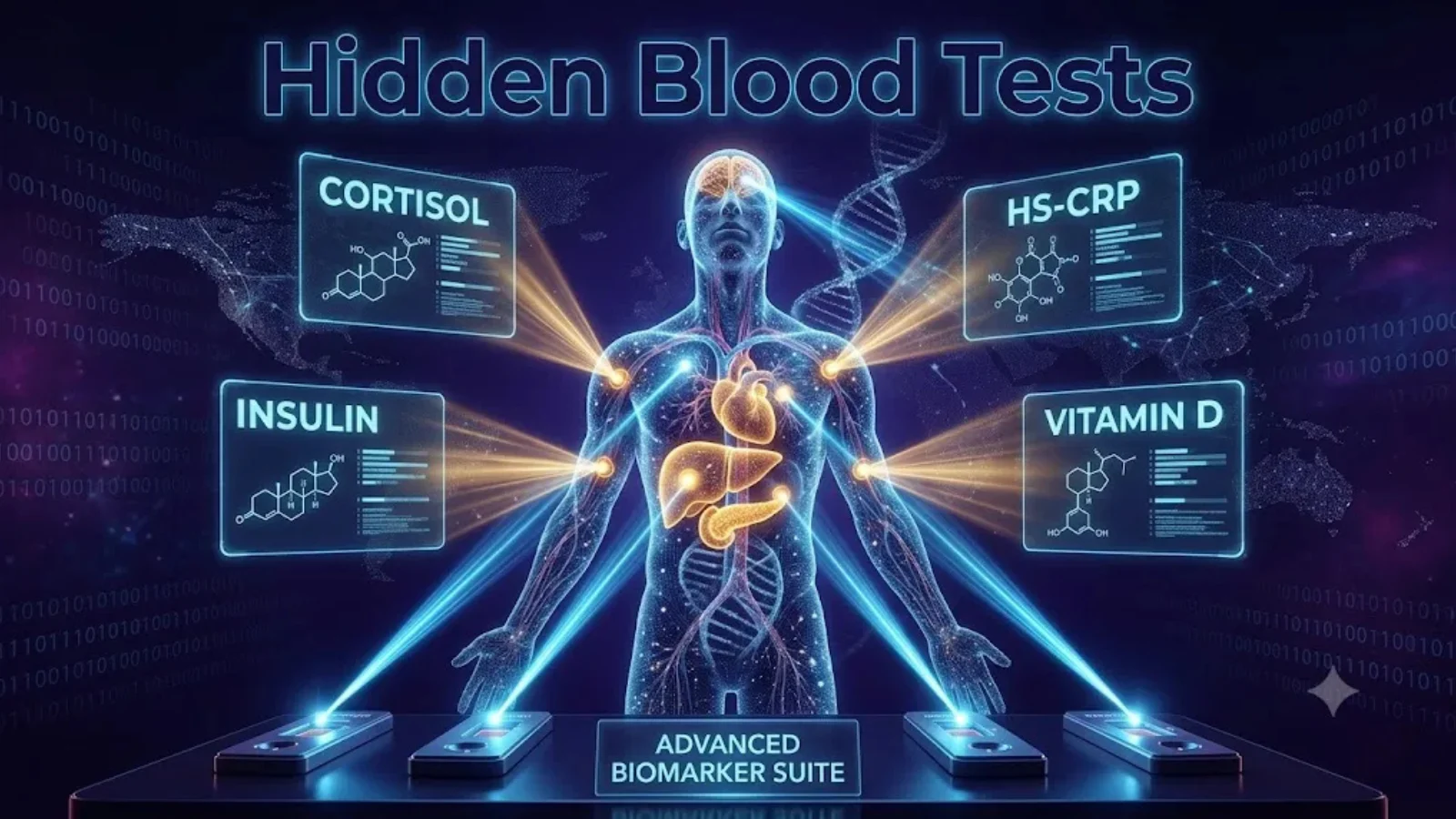
To know more about Blood Tests, click here (How to Get $2,000 Blood Tests for Under $500)
From “Normal” to Optimal: Your Testing Blueprint
In Part 1, you discovered why standard physicals miss 85+ critical biomarkers. Now let’s explore exactly which tests reveal peak health—and the optimal ranges that separate thriving from merely surviving.
At a Glance
- The article organises tests into five categories rather than one long list.
- Sex hormones, micronutrients, cardiovascular markers, metabolic health and protein status.
- RBC magnesium is the meaningful test — serum magnesium is not.
- ApoB is a better risk marker than standard cholesterol, and Lp(a) is largely genetic.
- B12 needs a two-test approach; B12 alone can read falsely normal.
- Optimal ranges are given alongside standard reference ranges throughout.
Category 1: Complete Hormone Assessment
Test 1: Full Thyroid Panel (6 Markers, Not Just TSH)
Standard Testing: TSH only
What You Actually Need:
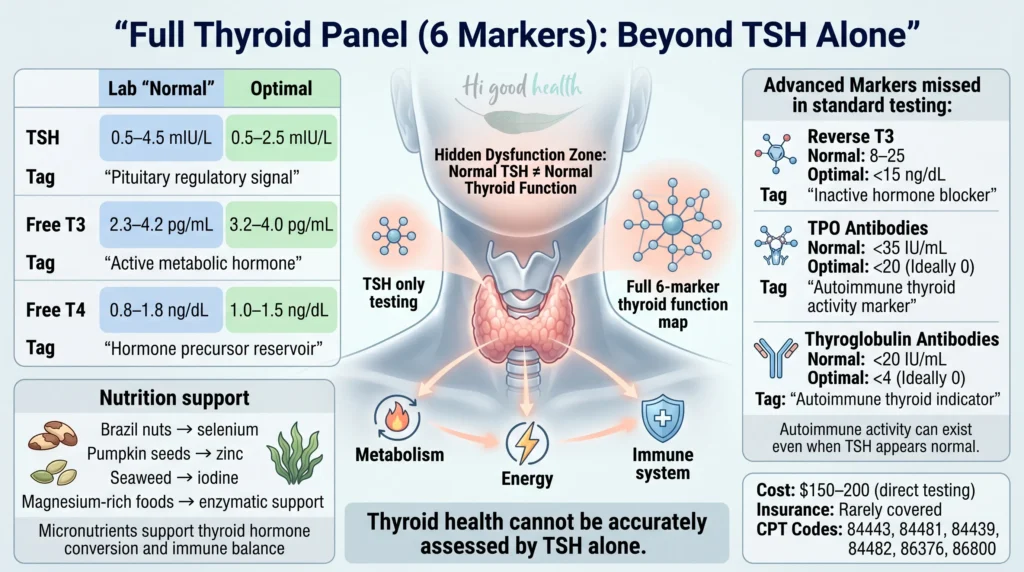
Test | Lab “Normal” | Optimal | Why It Matters |
|---|---|---|---|
TSH | 0.5-4.5 | 0.5-2.5 mIU/L | Pituitary signal |
Free T3 | 2.3-4.2 | 3.2-4.0 pg/mL | Active hormone (what counts) |
Free T4 | 0.8-1.8 | 1.0-1.5 ng/dL | Hormone precursor |
Reverse T3 | 8-25 | <15 ng/dL | Inactive blocker |
TPO Antibodies | <35 | <20 IU/mL | Autoimmune marker |
Thyroglobulin Ab | <20 | <4 IU/mL Ideally 0 | Autoimmune marker |
Why All 6 Matter: You can have “normal” TSH with low Free T3—hypothyroid but missed by standard testing.
Plant-Based Support: Brazil nuts (2 daily for selenium), pumpkin seeds (zinc), seaweed (iodine), plus magnesium-rich foods.
Cost: $150-200 (DTC) | Insurance: Rarely covered
CPT Codes: 84443, 84481, 84439, 84482, 86376, 86800
IMAGE 1
Test 2: Sex Hormones (Essential for Energy & Vitality)
For Women: Estradiol, Progesterone, FSH, LH, DHEA-S, Testosterone
For Men: Total & Free Testosterone, SHBG, Estradiol, DHEA-S
Biomarkers | Normal Range | Optimal Range | Why It Matters |
Total Testosterone (Men) | 250-1100 ng/dL | 600–900 ng/dL | Energy, libido, muscle mass, motivation |
Free Testosterone (Men) | 5–21ng/dL | 15–21 ng/dL | Vitality, mood, libido, poor muscle building |
Estradiol (Women) | 27–246 pg/mL | 60–120 pg/mL (luteal 80–180 pg/mL) | Mood, bone density, heart, and vaginal health |
Progesterone (Women) | 2.0–23.9 ng/mL | 10–20 ng/mL (mid-luteal phase) | Cycle regulation, sleep, calm, fertility |
Total Testosterone (Women) | 8–60 ng/dL ( Declines with age) | 35–45 ng/dL | Energy, sexual desire, strength |
Free Testosterone (Women) | 0.10–0.85 ng/dL | 0.32-0.46 ng/dL | Vitality, mood, libido |
Key Insight: Free testosterone matters more than total. You can have total testosterone of 700 ng/dL but if SHBG is high, your free (usable) testosterone might be 6 ng/dL—causing fatigue, low libido, poor muscle building.
Plant-Based Support: Healthy fats (20-30% calories from nuts, seeds, avocado), zinc-rich foods, cruciferous vegetables for estrogen balance.
Cost: $200-300 | Insurance: Only for fertility issues
CPT Codes: 82627, 84402, 84403, 84270, 82670, 83001, 83002
Category 2: Micronutrients—The Hidden Performance Limiters
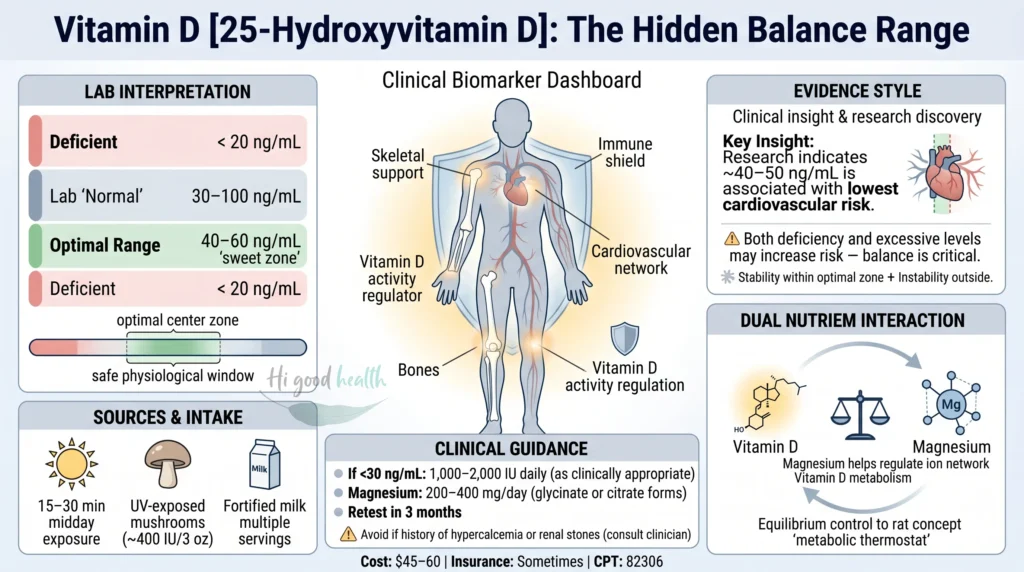
Test 3: Vitamin D [25-Hydroxyvitamin D]
Lab “Normal”: 30-100 ng/mL
Optimal: 40–60 ng/mL
Deficient: <20 ng/mL
Why it matters: important for bone health and immunity
Critical Discovery: Research from Vanderbilt shows vitamin D at 40-50 ng/mL linked to lowest cardiovascular disease risk. Both low AND very high levels increase risk—the sweet spot matters.
Why Supplementation Often Fails: A randomized trial by Vanderbilt-Ingram Cancer Center revealed that magnesium acts as a metabolic thermostat. Supplementation helps raise Vitamin D levels to the optimal range in those who are deficient, while simultaneously helping lower concentrations in those with unintentionally high levels to maintain a safe, physiological window.
Plant Sources: Midday sun (15-30 min), UV-exposed mushrooms (400 IU per 3 oz), fortified plant milk (need 3+ cups)
Protocol: If <30 ng/mL, supplement 1,000–2,000 IU daily. For most adults, the recommended dose is 200–400 mg of elemental magnesium daily, taken with your Vitamin D. Stick to Magnesium Glycinate or Citrate for better absorption and fewer digestive issues.
Retest in 3 months.
Ensure you have no history of renal stones or hypercalcemia.
Cost: $45-60 | Insurance: Sometimes | CPT: 82306
IMAGE 2
Test 4: RBC Magnesium (NOT Serum)
The Critical Mistake: Standard labs test serum magnesium (1% of body’s total). Only RBC magnesium reveals true cellular status.
Optimal RBC Magnesium: 5.0-6.5 mg/dL
The Stats: 79% of US adults don’t meet magnesium RDA. Serum can read “normal” while you’re severely deficient cellularly.
Signs You Need Testing: Muscle cramps, poor sleep, anxiety, heart palpitations, vitamin D won’t rise despite supplementation, difficulty building muscle.
Top Plant Sources:
- Pumpkin seeds: 156mg per oz
- Spinach (cooked): 157mg per cup
- Black beans: 120mg per cup
- Quinoa: 118mg per cup
- Dark chocolate: 64mg per oz
Daily Target: 400-420mg men, 310-320mg women
Cost: $50-75 | Insurance: Rarely | CPT: 83735 (specify RBC)
Test 5: Complete Iron Panel (4 Markers)
What Standard Testing Checks: Hemoglobin only (catches Stage 3 iron deficiency—anemia)
What You Need:
Test | Lab “Normal” | Optimal |
|---|---|---|
Ferritin (Men) | 30–400 ng/mL | 75–150 ng/mL |
Ferritin (Women – Premenopause) | 11–150 ng/mL | 50–100 ng/mL |
Ferritin (Women – Postmenopause) | 12–263 ng/mL | 70–150 ng/mL |
Serum Iron | 50-170 | 90-130 µg/dL |
TIBC | 250-450 |
|
Transferrin Sat | 15-50% | 25-35% |
Why Ferritin is Critical: Your iron savings account. Below 50 ng/mL (women) or 100 ng/mL (men) causes crushing fatigue, hair loss, poor exercise recovery, brain fog—yet labs call 12-15 ng/mL “normal.”
Ferritin levels rise naturally during infection or illness, which can hide a true iron deficiency on a blood test. To get an accurate reading, you should also test Transferrin Saturation to see how much iron is actually available for your body to use. This prevents a misleadingly high ferritin score from masking a hidden iron shortage.
Plant Iron Strategy:
- Top Sources: Lentils (6.6mg per cup), tofu (6.6mg), fortified cereals (18mg), spinach (6.4mg)
- Triple Absorption: Pair with vitamin C (bell peppers, tomatoes, citrus)
- Avoid With Iron Meals: Tea/coffee blocks 70% of iron absorption—wait 2 hours
- Pro Tip: Cast iron cookware adds 1-2mg per serving
Cost: $50-80 | Insurance: Sometimes
CPT: 82728, 83540, 83550, 84466
Test 6: B12 + Methylmalonic Acid (The Two-Test Protocol)
Why Both Required: B12 serum can look fine while you’re functionally deficient. MMA reveals the truth.
Test | Lab “Normal” | Optimal |
B 12 | 200 – 950 pg/mL | 500 – 900 pg/mL |
MMA | 87 – 400 nmol/L | Under 200 nmol/L |
Why it matters: Vitamin B12 enables DNA synthesis, red blood cell production, and nerve health, while MMA serves as a sensitive metabolic marker that rises specifically when cells lack enough B12 to process nutrients
Plant-Based Reality: B12 doesn’t exist in plants. Must supplement or use fortified foods.
Reliable Sources:
- Fortified nutritional yeast: 8µg per 2 tbsp
- Fortified plant milk: 1-3µg per cup
- B12 supplement: 1,000-2,000µg daily (only absorb 1-2% orally, so high doses needed) – for correcting a deficiency. A daily maintenance dose for someone with no absorption issues is 2.4–50µg.
Cost: $50-100 | CPT: 82607, 83921
Category 3: Advanced Cardiovascular & Inflammatory Markers
Test 7: High Sensitivity C Reactive Protein (hs-CRP)
Optimal: <1.0 mg/L | High Risk: >3.0 mg/L
Why It Matters: Inflammation drives virtually every chronic disease. You can have perfect cholesterol with deadly inflammation. CLEAR Outcomes Trial (2023-2024) confirmed that reducing inflammation (measured by hs-CRP) was a critical component of preventing heart attacks, independent of how much the cholesterol was lowered.
Plant-Based Anti-Inflammatory Protocol:
- Berries, leafy greens, cruciferous vegetables
- Turmeric with black pepper (increases absorption 2,000%)
- Walnuts, flaxseeds (omega-3 sources)
- Algal oil (provides direct EPA and DHA from marine algae, bypassing the body’s poor conversion of seeds and nuts to offer a pure, potent, and vegan alternative to fish oil).
- Extra virgin olive oil (use cold or at low heat to preserve benefits)
- Minimize: refined sugar, refined grains, excessive omega-6 oils
Cost: $40-60 | CPT: 86141
Test 8: Apolipoprotein B (ApoB) — Better Than LDL
Optimal: <90 mg/dL | High Risk: >130 mg/dL
Why Superior: LDL-C measures the total weight (mass) of cholesterol, whereas ApoB measures the number of atherogenic (plaque-forming) particles. You can have “normal” LDL with dangerously high ApoB (many small, dense particles).
Reducing Your Atherogenic Risk
- Increase Soluble Fiber: Aim for 10–20g daily (from psyllium, beans, or oats). This acts as a “sponge” that forces the liver to pull ApoB particles out of the blood to create bile.
- Swap Saturated Fats: Replace butter and coconut oil with polyunsaturated fats like walnuts or algal oil. This keeps your liver’s “clearance receptors” active.
- Consistent, moderate aerobic exercise improves insulin sensitivity, which helps the liver package lipids into fewer, larger, and less dangerous particles.
- Limit Refined Sugars
Cost: $40-80 | CPT: 82172
Test 9: Lipoprotein(a) [Lp(a)] — The Genetic Wild Card
Test Once: Lipoprotein(a) is a highly inflammatory, genetically inherited type of cholesterol particle that significantly increases the risk of heart attacks and strokes regardless of a healthy lifestyle.
Because this is genetic, if your level is high, the clinical focus shifts to aggresively lowering your other controllable risks (like ApoB and Blood Pressure) to compensate for this “Wild Card.”
Optimal: <30 mg/dL | High Risk: >50 mg/dL (3-4x higher cardiovascular risk)
Why Critical: 20% of people have elevated Lp(a)—powerful risk factor that standard lipid panels completely miss.
Cost: $50-100 | CPT: 83695
Test 10: Homocysteine
Homocysteine measures how well your body “recycles” proteins and uses B-vitamins.
Optimal: 5-9 µmol/L | Elevated: >10 µmol/L
What It Reveals: B-vitamin status (B12, B6, folate), methylation function, cardiovascular risk, cognitive decline risk.
Plant-Based Solution:
- Folate: Lentils (358µg per cup), spinach, asparagus
- B6: Chickpeas, potatoes, bananas
- B12: Supplement (see Test 6)
Cost: $50-75 | CPT: 83090
Category 4: Metabolic Health (Early Diabetes Detection)
Test 11: Fasting Insulin — The 10-Year Early Warning
The Timeline:
- Insulin rises (10-15 years before diabetes) ← Rarely tested
- HbA1c rises (5-10 years before) ← Sometimes tested
- Glucose rises (you’re prediabetic) ← Standard testing catches here
- Diabetes diagnosis (too late)
Optimal: <5 µIU/mL | Concerning: >8 µIU/mL | Insulin Resistance: >15 µIU/mL
Plant-Based Prevention:
- Ceylon Cinnamon (1-2 tsp daily)
- Legumes, whole grains (not refined)
- Vinegar before meals (blunts glucose spike)
- 150 min/week exercise
Cost: $25-50 | CPT: 83525
Test 12: HbA1c
Optimal for Longevity: <5.3% | Prediabetes: 5.7-6.4% | Diabetes: ≥6.5%
Even in “normal” range, lower is better for cardiovascular health and longevity.
Cost: $30-50 | CPT: 83036
Category 5: Protein Status (Critical for Plant-Based Eaters)
Test 13: Plasma Amino Acid Analysis
What It Tests: All 9 essential amino acids that our body unable to synthesize including leucine (muscle-building trigger)
2024 Research Breakthrough: Plant-based protein with leucine enrichment stimulates muscle protein synthesis equally to animal protein. But amounts and ratios differ among plant sources—leucine ranges from 5.1% (hemp) to 13.5% (corn).
Leucine-Rich Plant Foods:
- Soybeans, lentils (highest among whole foods for muscle-building amino acids)
- Pumpkin seeds, hemp seeds
- Chickpeas
When to Test: If serious about muscle building/athletic performance or have unexplained fatigue despite adequate protein intake.
Cost: $300-400 (specialty labs) | Insurance: Rarely
Alternative: Ensure 1.6-2.2g protein per kg body weight, vary sources, strategic combining (beans + rice, hummus + pita).
Interpreting Results: Optimal vs. Normal
The Critical Concept: Lab “normal” = middle 95% of tested population. If population is unhealthy, “normal” means “average,” not “optimal.”
Examples:
Marker | Lab “Normal” | Optimal | Action if “Normal” but Suboptimal |
|---|---|---|---|
Vitamin D | 30-100 ng/mL | 40-60 ng/mL | Supplement + magnesium |
Ferritin (women) | 12-150 ng/mL | 50-100 ng/mL | Iron-rich foods + vitamin C |
Free T3 | 2.0-4.4 pg/mL | 3.2-4.0 pg/mL | Investigate root causes |
Fasting Insulin | <25 µIU/mL | <5 µIU/mL | Diet/lifestyle intervention |
The Test-Then-Supplement Protocol
Step 1: Baseline testing (while NOT supplementing except B12 if plant-based)
Step 2: Identify deficiencies using optimal ranges
Step 3: Food-first approach (4-6 weeks)
Step 4: Add targeted supplements only for confirmed deficiencies:
The mineral gap in your modern diet. To know more about supplements, click here (60+ Essential Minerals That Protected Our Ancestors — but Are Missing from Your Multivitamin)
- Vitamin D: 4,000-5,000 IU if <40 ng/mL
- Iron: 25-50mg bisglycinate with vitamin C if ferritin <50
- Magnesium: 300-400mg glycinate if RBC deficient
- B12: 1,000-2,000µg if <500 pg/mL
Step 5: Retest at 3 months (non-negotiable!)
Step 6: Adjust based on results
Latest 2024-2025 Research Highlights
Multi-Omics Integration: AI and machine learning are revolutionizing biomarker identification. The digital biomarker market projected to reach $604.6 million by 2025.
Magnesium-Vitamin D Connection: Vanderbilt study proved magnesium differentially affects vitamin D metabolism based on baseline levels—explaining why many people supplement D with zero improvement.
Plant Protein Adequacy: 2024 Current Developments in Nutrition study confirmed plant proteins with leucine optimization match animal protein for muscle synthesis.
Liquid Biopsy Technology: Non-invasive biomarker detection through blood samples becoming standard by 2025 for markers previously requiring tissue biopsies.
Diagnostic AI & CRISPR-GPT: Researchers launched CRISPR-GPT, a specialized generative transformer model that automates gene-editing workflow designs, calculates off-target mutation risks, and compresses months of manual lab planning into a single algorithmic output.
Next-Generation Metabolic & Biologic Therapeutics: The Lancet (Orforglipron Phase III): Multi-center clinical evaluation of small-molecule, non-peptide oral GLP-1 receptor agonists (such as orforglipron) confirmed they deliver identical metabolic and weight-loss efficacy to injectable peptides, while maintaining absolute ambient stability.
Real Success Stories (Condensed)
Michael (Marathon Runner): Ferritin 28 ng/mL causing slow times. Optimized to 85 ng/mL through lentils + supplementation. Marathon time improved 18 minutes.
Jennifer (Teacher): TSH “normal” at 2.8, but Free T3 low at 2.1, Reverse T3 elevated. Addressed root causes. “Brain fog completely lifted in 6 months.”
David (Vitamin D Mystery): Supplemented 5,000 IU daily for a year, levels stayed at 28-32 ng/mL. Tested RBC magnesium: deficient. Added 400mg magnesium. Three months later vitamin D jumped to 62 ng/mL—same D dose.
Coming in Part 3
You now know WHAT to test. Part 3 reveals HOW to get these tests without breaking the bank:
- Three testing pathways compared (doctor, DTC, functional MD)
- Real 2025 pricing: $2,000 hospital vs. $500 DTC strategy
- Insurance coverage hacks and appeal letter templates
- Doctor conversation scripts with CPT codes
- 90-day implementation timeline
- State-by-state DTC testing guide
[Read Part 3: How to Get $2,000 of Blood Tests for Under $500]
Quick Action Checklist
✅ Bookmark this guide
✅ Review symptoms—which test categories align?
✅ Note current supplements (stop before baseline testing except B12)
✅ Budget $500-800 for comprehensive initial testing
✅ Subscribe for Part 3 (the action plan)
Frequently Asked Questions
Key Takeaways
- Test, then supplement — not the other way round.
- A normal result inside a wide reference range can still be far from optimal.
- Plant-based eaters have specific gaps worth testing for by name.
- Retest after changing anything, or you are guessing.
- Interpretation belongs with a clinician who knows your history.
1. Why do I feel tired even if my doctor says my labs are “normal”?
“Normal” ranges reflect the statistical average of the population, which includes many unhealthy people. You might fall in the “normal” range but miss the narrower “optimal” range required for peak energy and symptom relief.
2. Will health insurance cover these advanced blood tests?
Rarely for proactive wellness. Insurance typically covers basic screenings like TSH or glucose but may deny coverage for advanced markers like ApoB or full thyroid panels. Many patients use Direct-to-Consumer (DTC) labs to bypass these restrictions.
Stop guessing and start testing for the 2026 clinical standards. To know more about blood tests your insurance may not cover, click here (Hidden Blood Tests for Peak Health (That Your Insurance Won’t Cover) – Part 1 of 3)
3. My Vitamin D level won’t go up despite taking supplements. Why?
You likely have a magnesium deficiency. Vitamin D requires magnesium for activation. Research shows that without adequate cellular magnesium (best tested via RBC Magnesium), Vitamin D supplements often remain metabolically ineffective.
4. Why do I need a full thyroid panel if my TSH is normal?
TSH is merely a pituitary signal, not a thyroid hormone. A full panel checks Free T3 and Free T4—the actual active hormones. You can have normal TSH but low active hormones, causing hypothyroid symptoms like fatigue.
5. I’m not anemic, so why should I test Ferritin?
Hemoglobin tests only detect late-stage anemia. Ferritin measures your stored iron “savings account.” Low ferritin (below 50-100 ng/mL) causes severe fatigue, brain fog, and hair loss long before it shows up as anemia.
6. Can I really get all necessary amino acids on a plant-based diet?
Yes, 2024 research confirms that plant proteins containing leucine (like soy, lentils, and pumpkin seeds) stimulate muscle synthesis effectively. Strategic food combining ensures you get all essential amino acids for muscle repair and growth.
7. I can’t afford all these tests. Which ones should I prioritize?
Focus on the “essential” deficiency markers that most frequently impact daily energy: Vitamin D, RBC Magnesium, Ferritin (Iron), B12, and hs-CRP. This baseline typically costs around $250 via affordable direct-to-consumer options.
8. How often should I repeat these blood tests?
Retest 3 months after starting any new supplement or diet protocol to track progress. Once your levels are optimized and stable, annual testing is generally sufficient for maintenance and long-term monitoring.
9. Are online “Direct-to-Consumer” (DTC) lab results accurate?
Yes. DTC services use the same CLIA-certified major labs (like Quest or LabCorp) that doctors use. The equipment and accuracy are identical; the only difference is that you place the order yourself instead of a physician.
Why We Created This Resource
At Higoodhealth.com, we translate complex science into actionable health strategies. This series represents 120+ research hours, reviewing 100+ peer-reviewed studies, to give you something genuinely unique.
Our mission:
- Accessible health information without jargon
- Plant-based solutions backed by evidence
- Myth-busting outdated medical dogma
- Community-driven content
Medical Disclaimer
This article is for educational purposes only and does not constitute medical advice. Always consult qualified healthcare providers before ordering tests, starting supplements, or making health decisions. Individual needs vary based on age, sex, genetics, medical history, and medications. Lab results must be interpreted within complete health context. Never self-diagnose based solely on lab values.
See [Full Medical Disclaimer] for complete information.
Key References
- Dai Q, et al. “Magnesium status and supplementation influence vitamin D status.” AJCN, 2018.
- Costello RB, et al. “Evidence-Based Reference Interval for Serum Magnesium.” Adv Nutr, 2016.
- Mazzulla M, et al. “Plant protein with leucine vs whey for muscle synthesis.” Curr Dev Nutr, 2024.
- Garner CD, et al. “Nutrient Adequacy of Plant-Based Diets.” Nutrients, 2024.
- National Institutes of Health, Office of Dietary Supplements.
- Vitamin D for the Prevention of Disease Guideline Resources
- AHA – Inflammation and Cholesterol as Predictors of Cardiovascular Events
- NIH – Lipoprotein(a) as a Causal Risk Factor for Cardiovascular Disease
- NIH – HbA1c variability and all-cause mortality in type 1 and type 2 diabetes:
- Qu Y et al., “CRISPR-GPT for agentic automation of gene-editing experiments. Nat Biomed Eng. 2026.
- Horn DB et al., “Orforglipron, an oral small-molecule GLP-1 receptor agonist, for the treatment of obesity in people with type 2 diabetes (ATTAIN-2): a phase 3, double-blind, randomised, multicentre, placebo-controlled trial. Lancet, 2026.
Part 2 of 3 in the Peak Health Testing Series
Previous: Part 1 – Why Your ‘Healthy’ Labs Mean Nothing
Next: Part 3 – How to Get $2,000 Tests for Under $500
