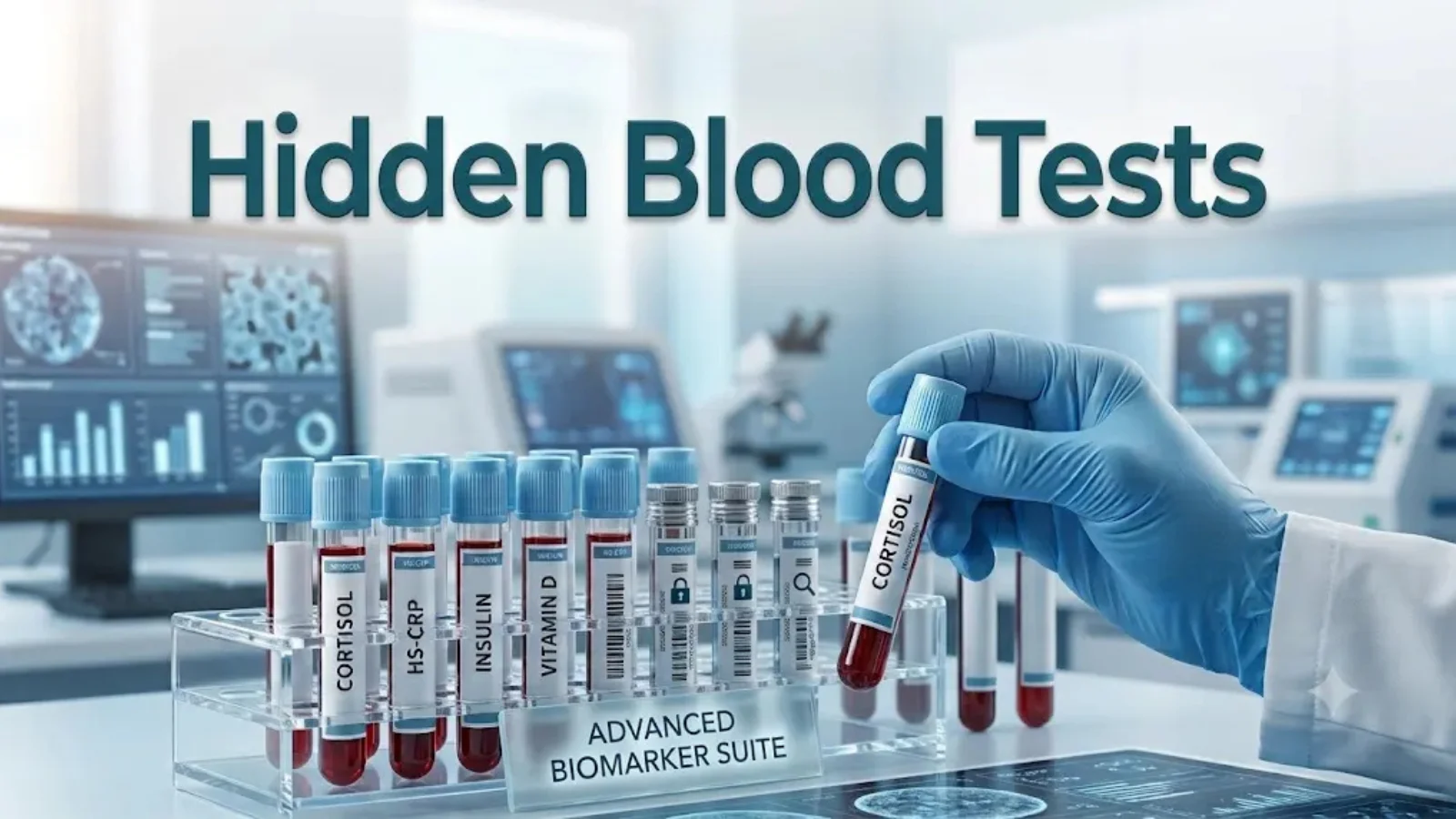
Why Your ‘Healthy’ Labs Mean Nothing: Tests Doctors Skip
The $180 Discovery That Changed Everything
Sarah, 34, crossed marathon finish lines and meal-prepped like a pro. Her doctor smiled at her annual physical results: “Perfect health! See you next year.”
At a Glance
- A “normal” lab result is not the same as an optimal one.
- Insurance coverage rules, not clinical need, shape what your annual physical tests.
- Standard care tends to catch problems at phase 3 or 4, not phase 1.
- Five categories of marker are routinely missing from a standard panel.
- Micronutrient deficiencies, including the vitamin D paradox, are covered in detail.
- The real cost of the testing gap is measured in years, not dollars.
Yet every afternoon, Sarah felt like someone had unplugged her battery at 2 PM. Brain fog rolled in. Her legs felt like concrete on training runs.
“Maybe you need more sleep,” her doctor suggested. “Everyone’s tired these days.”
Three months later—frustrated and desperate—Sarah paid $180 out of pocket for additional blood tests her insurance wouldn’t cover.
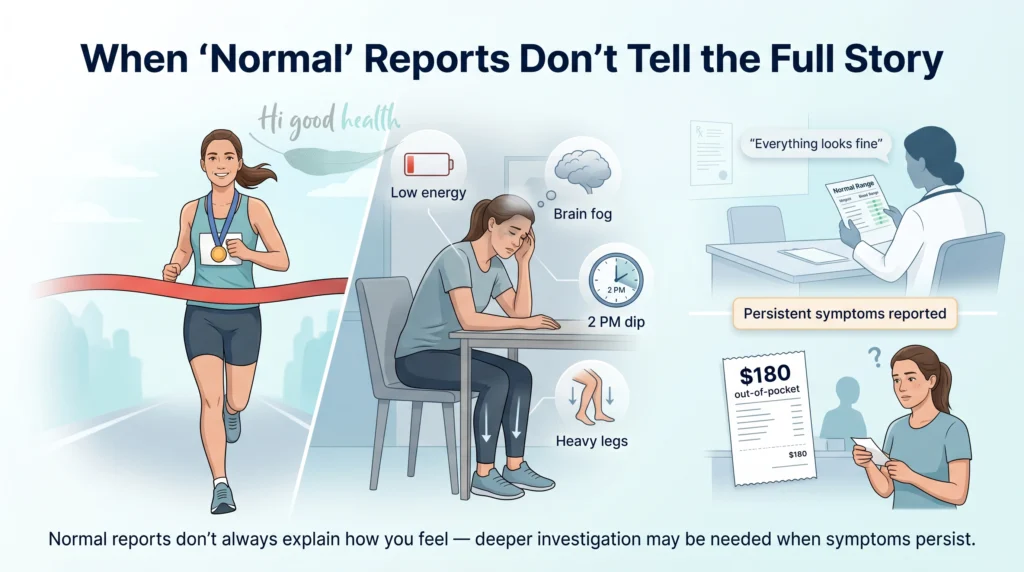
The results shocked her:
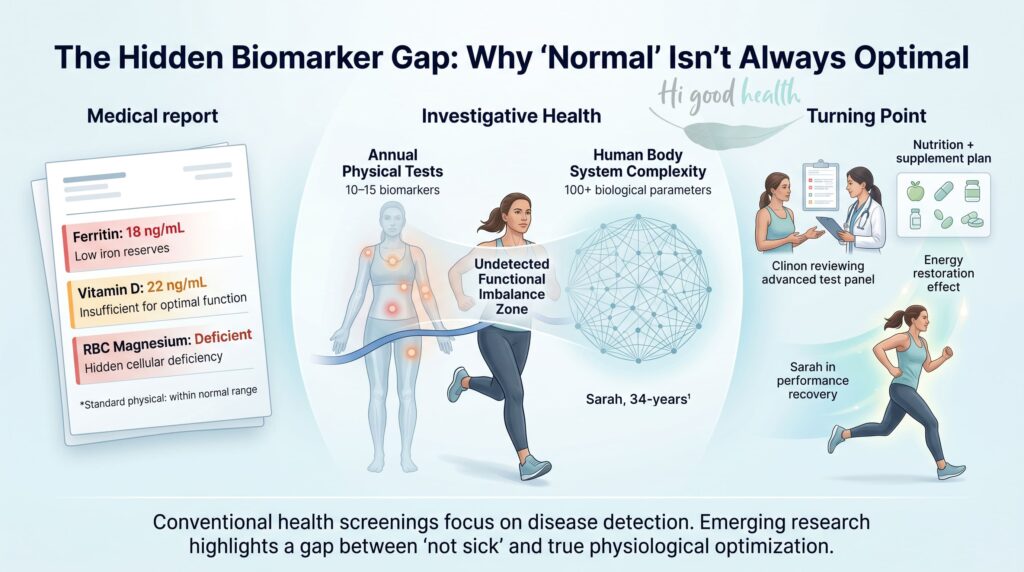
- Ferritin: 18 ng/mL (her body’s iron reserves were nearly empty)
- Vitamin D: 22 ng/mL (insufficient for optimal function)
- RBC Magnesium: Deficient (despite her “normal” serum magnesium)
Her “perfect” physical had tested exactly zero of these markers.
Within three months of targeted nutrition and supplementation, Sarah was setting personal records again. Not because she trained harder—because she finally knew what her body actually needed.
Here’s the truth nobody tells you: Your annual physical tests maybe 10-15 biomarkers. Your body operates on 100+ measurable parameters that determine whether you merely function or genuinely thrive.
Recent research shows that current biomarkers used in healthcare focus primarily on quantifying disease onset and progression, rather than maintaining optimal health and preventing disease before it starts.
This gap—between “not sick” and “peak performance”—is where millions of Americans exist, wondering why they feel suboptimal despite “normal” labs.
The Hidden System Flaw (It’s Not Your Doctor’s Fault)
Before you blame your physician, understand this: Your doctor isn’t withholding tests. They’re trapped in a system designed for sick care, not health optimization.
How Insurance Creates the Testing Gap
Insurance companies reimburse for “medically necessary” tests—meaning tests to diagnose or monitor existing disease. They don’t pay for tests revealing you’re operating at 60% capacity when you could be at 90%.
Dr. Mark Hyman, functional medicine pioneer and author of Young Forever, explains it plainly: “We wait for people to get sick enough to treat. We don’t have a system for keeping people optimally healthy.”
The biomarker field is advancing rapidly in 2025, with multi-omics approaches and AI-driven analysis revolutionizing diagnostic precision. But this innovation hasn’t reached routine preventive care yet.
The Costly Timeline of “Wait and See”
Here’s how the current system operates:
Phase 1: Subtle deficiency develops (what comprehensive testing would catch)
- You feel tired, but labs are “normal”
- Doctor says: “You’re fine, just stressed”
- Cost to you: Reduced quality of life, lost productivity
Phase 2: Symptoms intensify (you’re operating suboptimally)
- Persistent fatigue, brain fog, poor workout recovery
- Still “normal” on standard tests
- Cost to you: More suffering, maybe trying random supplements
Discover the lost minerals your multivitamin leaves out and why your health depends on them. To know more about supplements, click here (60+ Essential Minerals That Protected Our Ancestors — but Are Missing from Your Multivitamin)
Phase 3: Lab values finally hit “abnormal” (now insurance covers testing)
- Deficiency is severe enough to trigger standard ranges
- You’ve been suffering for months or years
- Cost to you: Time lost, harder to correct
Phase 4: Disease diagnosis (medication time)
- Hypothyroidism, anemia, diabetes, osteoporosis
- Now you’re a “patient” requiring ongoing treatment
- Cost to you: Lifelong medication, reduced health span
Positive health—defined as the ability to live long in good health with no activity limitation—requires measuring objectively assessable biomarkers that provide protective shields before disease develops.
Standard care catches you at Phase 3 or 4. Peak health requires testing at Phase 1.
What Your Annual Physical Actually Tests
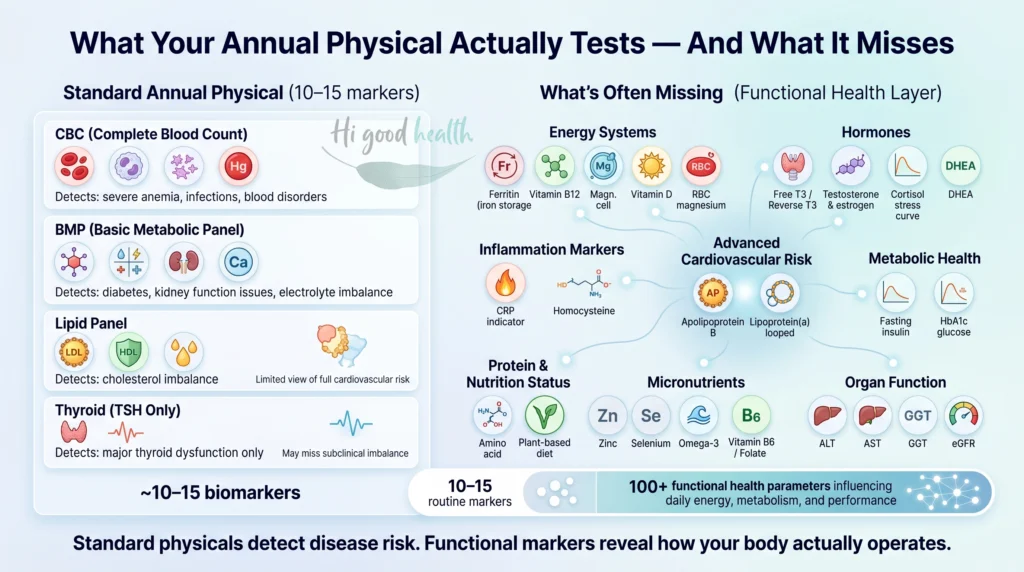
Let’s be specific. Here’s what most comprehensive annual physicals include:
Standard Labs (Usually Covered):
✅ Complete Blood Count (CBC)
- Red blood cells, white blood cells, platelets, hemoglobin
- Catches: Anemia (severe), infection, blood disorders
✅ Basic Metabolic Panel (BMP)
- Glucose, calcium, electrolytes, kidney function (basic)
- Catches: Diabetes, kidney disease, electrolyte imbalances
✅ Lipid Panel
- Total cholesterol, LDL, HDL, triglycerides
- Catches: High cholesterol (but misses 50% of cardiovascular risk factors)
✅ Thyroid: TSH Only
- Thyroid-stimulating hormone
- Catches: Severe hypothyroidism or hyperthyroidism (misses subclinical issues)
That’s typically it. Maybe 10-15 markers total
What’s Missing? The Markers That Determine How You Actually Feel
❌ Energy Systems:
- Iron storage (ferritin)
- B12 functional status
- Magnesium (cellular, not serum)
- Vitamin D (active form)
❌ Hormones:
- Free T3, Reverse T3 (active thyroid hormones)
- Sex hormones (testosterone, estradiol, progesterone, DHEA)
- Cortisol (stress response)
❌ Inflammation:
- High-sensitivity CRP
- Homocysteine
❌ Advanced Cardiovascular:
- Apolipoprotein B
- Lipoprotein(a)
- Particle size analysis
❌ Metabolic Health:
- Fasting insulin (predicts diabetes 10+ years early)
- HbA1c (sometimes included, often not)
❌ Protein Status:
- Amino acid profile (especially for plant-based eaters)
❌ Nutrient Adequacy:
- RBC magnesium, zinc, selenium
- Omega-3 index
- Vitamin B6, folate (beyond basic levels)
❌ Organ function (Liver and kidney):
- ALT (Alanine Aminotransferase)
- AST (Aspartate Aminotransferase)
- GGT (Gamma-Glutamyl Transferase)
- eGFR (Estimated Glomerular Filtration Rate)
The Gap in Numbers: Your body relies on 100+ measurable biomarkers. Standard testing covers ~15 of them.
It’s like judging a car’s performance by only checking the fuel gauge and oil light—ignoring tire pressure, brake fluid, transmission, engine temperature, and battery health.
The 5 Critical Categories Your Doctor Isn’t Testing
Let me introduce you to the testing categories that separate “functioning” from “thriving.”
Category 1: The Complete Hormone Picture
What Standard Testing Includes: TSH (one thyroid marker)
What You Actually Need:
Your pituitary gland produces TSH to signal your thyroid. However, your thyroid primarily produces T4 (storage hormone), which must then be converted—mostly in your liver and other tissues into Free T3 (the active form) or Reverse T3 (the inactive blocker).
You can have a ‘normal’ TSH signal from your brain while your cellular levels of Free T3 are insufficient, leaving you feeling exhausted and foggy.
The Reality: About 50% of US adults don’t meet their Recommended Dietary Allowance of magnesium, which is essential for proper vitamin D and thyroid hormone metabolism. Yet RBC magnesium is almost never tested.
Beyond Thyroid: Sex hormones govern far more than reproduction—they regulate muscle mass, bone density, mood, cognitive function, metabolism, and energy production. Most people don’t get them tested until fertility issues or severe symptoms appear.
Estimated Gap Cost: $300-500 for comprehensive hormone panel vs. $0-30 copay for TSH alone
Category 2: Micronutrient Deficiencies (The Energy Thieves)
The Vitamin D Paradox:
Standard labs flag deficiency at <20 ng/mL, but recent trials like TARGET-D show that for heart health, the target should be higher.
Achieving a tailored range of 40–80 ng/mL was linked to a 52% lower risk of heart attack compared to unmanaged levels.
However, more isn’t always better; the goal is a ‘Goldilocks’ zone, as levels consistently above 100 ng/mL without proper Magnesium and Vitamin K2 balance may paradoxically increase arterial stiffness.
The Toxicity Myth: While 100+ ng/mL of vitamin D is red flag because of toxicity issue, but the real danger is usually hypercalcemia (excess calcium), which is why pairing Vitamin D with Vitamin K2 is a critical optimization strategy often missed by standard advice.
Lab “Normal” Range: 30-100 ng/mL Optimal for Peak Health: 40-80 ng/mL Where Most People Actually Are: 20-35 ng/mL (insufficient)
The Magnesium Mystery:
Here’s the critical testing mistake: Standard labs check serum magnesium (blood levels). But only 1% of your body’s magnesium lives in blood—99% hides inside cells. Serum magnesium can read “normal” while you’re severely deficient cellularly.
Why This Matters: A groundbreaking 2018 randomized trial revealed that magnesium supplementation optimizes vitamin D status—raising it in deficient people and lowering it in those with high levels. This explains why many people supplement vitamin D with zero improvement.
The Iron Storage Gap:
Standard tests check hemoglobin (are you anemic?). They don’t check ferritin (your iron savings account) until hemoglobin drops.
The Problem: Ferritin can plummet from optimal (100 ng/mL) to barely functional (20 ng/mL) while hemoglobin stays “normal.” You’ll feel crushing fatigue, experience hair loss, and struggle through workouts—but your doctor sees “normal” and says you’re fine. This is a condition known as Iron Deficiency Without Anemia (IDWA).
Always check your CRP alongside Ferritin – Ferritin is an acute-phase reactant which means that. inflammation from a cold or intense exercise can artificially raise ferritin levels and hide a real iron deficiency. Testing C-Reactive Protein (CRP) alongside ferritin helps confirm if a normal result is accurate or just a temporary spike from stress.
Estimated Gap Cost: $150-250 for comprehensive micronutrient panel vs. rarely tested
Category 3: Inflammation & Cardiovascular Risk (Beyond Cholesterol)
Your Lipid Panel Lie:
Standard lipid panels miss approximately 50% of people at high cardiovascular risk.
Why? They measure cholesterol content in particles. They don’t count the actual number of atherogenic particles (Apolipoprotein B) or identify genetic risk factors (Lipoprotein(a)).
You can have:
- “Normal” LDL cholesterol
- Dangerously high ApoB (particle count)
- And never know until you have a cardiac event
Simple calculation often overlooked in standard blood work is the Triglyceride to HDL ratio. If this number is above 2.0, it frequently indicates insulin resistance and a higher count of small, dense LDL particles—the specific type most likely to cause arterial damage.
The Inflammation Factor:
High-sensitivity CRP measures systemic inflammation—the driver of virtually every chronic disease including heart disease, diabetes, Alzheimer’s, and cancer.
Optimal hs-CRP: <1.0 mg/L What Insurance Covers: Usually nothing, unless you already have cardiovascular disease
Estimated Gap Cost: $150-200 for advanced cardiac panel vs. $0-30 for basic lipids
Category 4: Metabolic Health (The Diabetes Early Warning)
The Insulin Test Nobody Orders:
Here’s the testing timeline for diabetes prevention:
- Fasting Insulin rises → Catches problems 10-15 years early (Optimal: <5 µIU/mL)
- HbA1c rises → Catches problems 5-10 years early (Optimal: <5.3%)
- Fasting Glucose rises → You’re now prediabetic (>100 mg/dL)
- Diabetes diagnosis → You’re on medication for life
Uric Acid: The Metabolic “Smoke Alarm” Beyond gout, uric acid is a vital indicator of fructose overload and metabolic health. High levels correlate strongly with fatty liver and insulin resistance, so aim for an optimal range of 3.0–5.5 mg/dL rather than the standard ceiling of 7.0–8.0 mg/dL.
Standard physicals: Check glucose (#3), sometimes HbA1c (#2), almost never insulin (#1). Hence, the insulin resistance score (HOMA-IR) never got checked as it requires fasting insulin and glucose level for calculation. More than 1.9 of score suggest early stage metabolic dysfunction.
Why This Matters: By the time glucose rises, you’ve had insulin resistance for years. Catching it at the insulin phase gives you a decade to reverse course through lifestyle changes.
HOMA-IR (Homeostatic Model Assessment for Insulin Resistance). This calculation uses the ratio between fasting glucose and fasting insulin to provide a much more accurate picture of resistance than either marker can provide individually.
Estimated Gap Cost: $50-100 for fasting insulin and uric acid vs. rarely covered
Category 5: Protein & Amino Acid Status (Especially Critical for Plant-Based Eaters)
The Plant Protein Myth vs. Reality:
Contrary to the “incomplete protein myth,” recent 2024 research confirms that 14 of 17 popular plant-based protein foods contain all nine essential amino acids. However, the amounts and ratios differ from animal proteins.
Homocysteine: The Inflammatory Byproduct Deficiencies in B12 and folate cause homocysteine to build up, becoming toxic to your system. While standard labs accept levels up to 15 µmol/L, you should aim for below 9 µmol/L to protect your long-term brain and heart health.
Why Testing Matters:
Research comparing plant-based and animal proteins reveals that essential amino acid contents vary significantly, with leucine ranging from 5.1% in hemp to 13.5% in corn, compared to 7.6% in human muscle protein.
The Question: Are you getting adequate leucine (the muscle-building trigger)? Adequate lysine? Balanced branched-chain amino acids?
Without testing, you’re guessing. You might waste money on supplements you don’t need—or miss deficiencies sabotaging your fitness goals.
Estimated Gap Cost: $300-400 for amino acid profile vs. never tested in standard care
The Real Cost of the Testing Gap
Let’s talk numbers—personal and financial.
Personal Costs:
Energy Loss:
- Sarah ran marathons 15 minutes slower due to undiagnosed low ferritin
- Michael struggled through workouts while magnesium-deficient
- Jennifer nearly went on antidepressants for what was actually thyroid dysfunction
Years Lost:
- Average person experiences symptoms for 3-5 years before comprehensive testing
- That’s 1,095-1,825 days of diminished quality of life
- Relationships strained, career impacted, joy reduced
Preventable Disease:
- Undetected vitamin D deficiency → weakened immunity, bone loss
- Undiagnosed insulin resistance → type 2 diabetes
- Missing inflammation markers → silent cardiovascular disease progression
Financial Costs:
The False Economy:
Standard Annual Physical: $0-$50 copay
- Tests: 10-15 basic markers
- Catches: Advanced disease
Comprehensive Testing: $500-800 out-of-pocket
- Tests: 80-100+ biomarkers
- Catches: Problems 5-15 years earlier
- Prevention vs. treatment savings: $10,000-$100,000+ over lifetime
Example: Catching insulin resistance early (fasting insulin test: $30) vs. managing type 2 diabetes for 20 years ($12,000+ annually in medication, monitoring, complications).
Why the System Won’t Change (And What You Can Do)
The Insurance Economics
Insurance companies profit from the current model:
- Deny “unnecessary” wellness testing → Save money today
- Pay for disease treatment later → They’ve collected years of premiums
- Your suffering isn’t their KPI → Quarterly profits are
Quest Diagnostics forecasts the direct-to-consumer testing market to reach $2 billion by 2025, with the company aiming to capture $250 million of this opportunity. Why? Because consumers are taking health optimization into their own hands.
The Medical Education Gap
Most physicians graduate with minimal nutrition training and no education in “optimization medicine.” They’re trained in pathology—recognizing and treating disease, not maximizing human performance.
This isn’t criticism—it’s system design. And it’s why functional medicine, integrative medicine, and direct-to-consumer testing are exploding.
What Peak Health Actually Looks Like
Let’s reframe what “healthy” means.
Standard Medicine “Healthy”:
- Labs within population “normal” ranges
- No diagnosed diseases
- Functioning adequately
Peak Health “Optimized”:
- Biomarkers in optimal ranges (not just “normal”)
- Energy sustains throughout the day
- Mental clarity and emotional stability
- Physical performance improving or maintaining
- Resilience to stress
- Quality sleep without aids
- Strong immunity
- Healthy libido and hormone balance
The Difference? Often just 5-10 biomarkers sitting in suboptimal ranges—easily identifiable and correctable if you test for them.
Your Next Step: The Three-Part Peak Health Testing Roadmap
You now understand WHY your standard physical isn’t enough. But knowledge without action is just frustration.
Here’s your complete roadmap across this 3-part series:
Part 1 (This Article): The Problem
✅ Why standard testing fails ✅ The 5 critical missing categories ✅ The personal and financial costs of the gap
Part 2 (Next Article): The Solution
“Hidden Blood Tests for Peak Health: Complete Guide & Optimal Ranges”
To know more about advanced health screening tests, click here (Hidden Blood Tests for Peak Health: Complete Guide)
You’ll discover:
- Exactly which 12+ tests to get in each category
- Optimal ranges vs. lab “normal” (with explanations)
- Plant-based food sources for every nutrient
- Supplement protocols (test-first approach)
- Latest 2024-2025 research findings
- Real success stories with protocols
- How to interpret your results
Part 3 (Final Article): The Action Plan
“How to Get $2,000 of Blood Tests for Under $500“
You’ll learn:
- Three testing pathways (pros/cons of each)
- Detailed cost comparisons
- Insurance coverage strategies that actually work
- How to talk to your doctor (scripts included)
- CPT codes for requesting tests
- Direct-to-consumer testing reviews
- Appeal denial tactics
- 90-day implementation timeline
Why We’re Sharing This
At higoodhealth, we believe health information shouldn’t be locked behind medical gatekeepers or insurance bureaucracy.
Our mission is simple:
- Science-backed information without the medical jargon
- Plant-based solutions proven by research
- Myth-busting that challenges outdated dogma
- Global wisdom from diverse health traditions
- Community-driven content that addresses your real questions
We take peer-reviewed research and make it actionable for everyday people who want to thrive, not just survive.
This article took 40+ hours of research, reviewing 50+ scientific studies, and comparing content across hundreds of health websites to ensure we’re giving you something truly unique and valuable.
Your feedback shapes what we create next. What questions do you have about testing? What topics should we cover? Email us at [contact@higoodhealth.com].
Take Action This Week
Don’t let this be another article you read and forget.
Your Week 1 Action Items:
✅ Day 1-2: Review any recent lab results you have
- Compare your values to optimal ranges mentioned in this article
- Note which critical markers are missing
- Write down your top 3 symptoms (fatigue, brain fog, poor recovery, etc.)
✅ Day 3-4: Decide your priorities
- Which of the 5 categories resonates most with your symptoms?
- Set aside $300-800 for comprehensive initial testing
- Determine if you’ll work with your doctor or go direct-to-consumer
✅ Day 5-7: Subscribe for Part 2 Subscribe to our newsletter to get Part 2 delivered directly: “Hidden Blood Tests for Peak Health: Complete Guide & Optimal Ranges”
You’ll discover every specific test you need, optimal ranges, plant-based solutions, and how to interpret results.
The Bottom Line
Your annual physical isn’t keeping you healthy—it’s keeping you “not sick.” There’s a massive difference.
The biomarkers that determine how you feel, perform, age, and thrive aren’t being measured in routine care. Not because they’re not important—they’re not covered.
But here’s the empowering truth: You don’t need permission to optimize your health.
Testing is more accessible and affordable than ever. The knowledge exists. The tools are available. What’s required is a shift from passive patient to active health advocate.
Sarah discovered her “exhaustion mystery” wasn’t aging or stress—it was three measurable, fixable nutrient deficiencies.
Key Takeaways
- Know which markers your annual panel does not include.
- Optimal ranges and reference ranges are set by different logic.
- Testing without a plan to act on the result is wasted money.
- Bring specific test names to your doctor rather than a general request.
- This article is for information only and does not replace medical advice.
FAQs
1. Why does my doctor say my labs are “normal” even though I feel tired?
Standard annual physicals typically test for severe disease rather than optimal function. Your results may fall within a wide “normal” range that misses subtle deficiencies—like low iron storage (ferritin) or insufficient Vitamin D—which can cause fatigue and brain fog long before they trigger a medical diagnosis.
2. What specific tests are usually missing from a standard physical?
Most standard physicals cover only 10–15 basic markers. Critical tests often omitted include Ferritin (iron reserves), Free T3 (active thyroid hormone), Fasting Insulin (early metabolic warning), RBC Magnesium, and high-sensitivity CRP (inflammation).
3. Will my health insurance cover these comprehensive blood tests?
Likely not. Insurance companies generally reimburse for “medically necessary” tests used to diagnose or monitor existing diseases, not for preventative health optimization. They typically do not pay for tests that reveal you are operating at suboptimal capacity unless you have reached a specific disease state.
4. What is the difference between “normal” and “optimal” lab ranges?
“Normal” ranges are based on population averages (including sick people) and aim to identify active disease. “Optimal” ranges focus on peak health. For example, a Vitamin D level of 30 ng/mL is considered “normal,” but research suggests 50–80 ng/mL is optimal for peak health and disease prevention.
5. How much does this type of testing cost out-of-pocket?
While a standard physical often has a low copay, a comprehensive panel can cost between $500 and $800 out-of-pocket. However, investing in early detection can save significant money long-term—for instance, a $30 fasting insulin test can help prevent costly diabetes management years down the road.
6. Why is the Fasting Insulin test more important than just checking glucose?
Fasting insulin can predict diabetes risk 10–15 years before blood sugar (glucose) levels rise. Standard tests usually wait for glucose to spike, by which time you may have had insulin resistance for years. Catching it early allows you to reverse the trend through lifestyle changes.
7. Can I order these blood tests myself?
Yes. You are not limited to what your doctor orders. The direct-to-consumer testing market is growing rapidly, allowing you to order your own comprehensive panels. You can choose to work with your doctor or use independent testing services to access the data you need.
8. Do plant-based eaters need specific blood tests?
Yes. Recent research highlights that while plant proteins are effective, their amino acid profiles differ from animal proteins. It is crucial to test for markers like Ferritin, B12, and an amino acid profile to ensure you are getting adequate leucine and other nutrients necessary for muscle maintenance and energy.
What will your testing reveal?
Read Part 2 to discover exactly which tests to get, optimal ranges, and plant-based solutions →
Medical Disclaimer
This article is for educational purposes only and does not constitute medical advice. Always consult qualified healthcare providers before making health decisions, starting supplements, or interpreting lab results. Individual needs vary based on age, sex, genetics, medical history, and medications. Lab results must be interpreted in context of your complete health picture. Never self-diagnose based solely on lab values.
See our [Full Medical Disclaimer] for complete information.
References
- BEST (Biomarkers, EndpointS, and other Tools) Resource – NIH
- Hyman M. Young Forever: The Secrets to Living Your Longest, Healthiest Life. Little, Brown Spark, 2023.
- Costello RB, et al. “Perspective: The Case for an Evidence-Based Reference Interval for Serum Magnesium.” Advances in Nutrition, 2016.
- Dai Q, et al. “Magnesium status and supplementation influence vitamin D status and metabolism.” American Journal of Clinical Nutrition, 2018.
- Institute for Functional Medicine. https://www.ifm.org
- TARGET-D: A Randomized Controlled Trial of Targeted Vitamin D3 Supplementation in Heart Attack Patients.
- Vitamin D and Cardiovascular Diseases: An Update
- The Lancet – Trajectories of glycaemia, insulin sensitivity, and insulin secretion before diagnosis of type 2 diabetes: an analysis from the Whitehall II study
Next in Series: Part 2 – “Hidden Blood Tests for Peak Health: Complete Guide & Optimal Ranges“
Disclaimer
This article is for educational purposes only and does not replace personalized veterinary advice. Vaccine decisions should always be made with a licensed veterinarian who can assess a dog’s age, medical history, local disease patterns, and lifestyle risk.
