At a Glance: My Dog Is Not Eating — What Now?
- A healthy adult dog skipping one or two meals, still bright, still drinking, is usually not an emergency. A cat skipping meals is a different matter entirely.
- A cat that has not eaten for 24 hours needs a vet, even if it seems fine. Cats can develop hepatic lipidosis — fatty liver disease — very quickly when they stop eating, and overweight cats fastest of all.
- Not eating but drinking normally and behaving normally is the most reassuring version of this problem — and it is still worth a vet call once it passes 24 hours in a dog, and sooner in a cat, a puppy or a senior.
- Not eating and not drinking is a different problem. So is not eating with vomiting, diarrhoea, pale gums, a hunched posture or obvious pain. Those go to a vet now.
- Puppies, kittens and seniors have no reserves. The clock is much shorter for them — hours, not days.
- Check the mouth before you blame the food. Dental pain is one of the most common and most missed causes of a pet that approaches the bowl and then walks away.
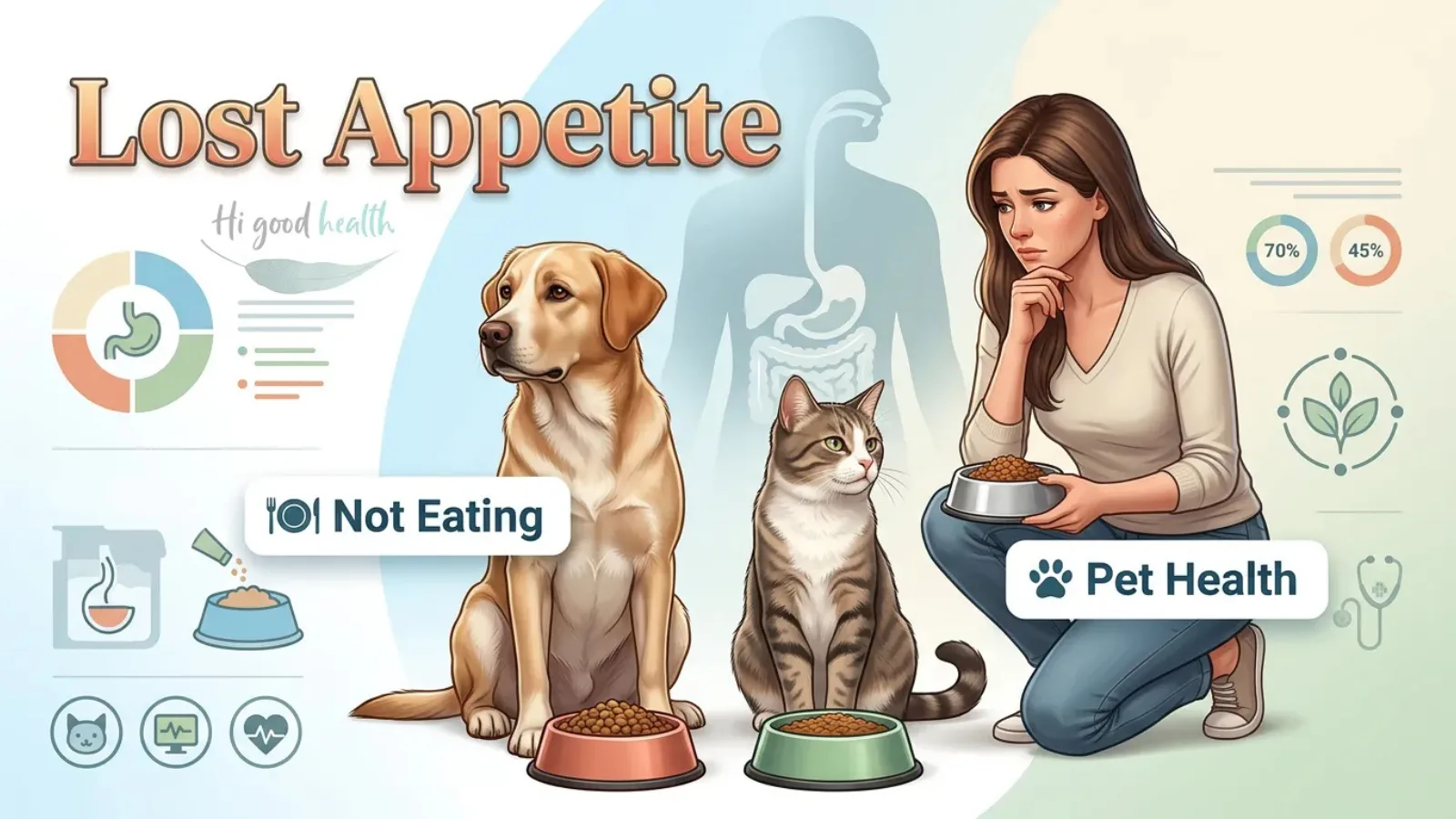
When your dog or cat sniffs the bowl, walks away, and doesn’t come back, it hits you in the gut. The big question always follows: Are they truly unwell, or is this just a “food tantrum”? Appetite loss (inappetence) is one of the top reasons pet parents call their vet, and the stakes are very different for a 4-month-old puppy, a 3-year-old indoor cat, and a 12-year-old senior. This research-backed guide helps you spot red flags, implement safe at-home care, and provide proactive strategies to prevent appetite crashes before they start.
The Core Question: Picky or Poorly?
The biggest challenge for any pet owner is figuring out if your pet is just holding out for a piece of your dal-chawal or roti or if there is a medical “red flag” waving in the background.
Because pets can’t tell us where it hurts, they use their appetite as a primary communication tool. A “food tantrum” usually involves a pet who is still energetic, drinking water, and willing to eat high-value treats. However, a true medical issue often comes with other quiet clues, like sleeping more than usual or a change in their personality.
Why Pets Stop Eating: Simple Science
When a pet stops eating, it isn’t just a “mood”—it is a physiological response. Understanding the science behind inappetence helps pet parents distinguish between a picky eater and a medical priority.
1. The Physiological “Shut-Down”
When a pet is ill, their body undergoes a metabolic shift. Digestion is an energy-intensive process. If the immune system is fighting a “silent infection”—such as a tick fever (very common across India, especially during and after the monsoon season ( read our read our article – Part 1 – Tick-Borne & Parasite Diseases in Pets – 2026) or a viral load—the brain’s hypothalamus redirects energy away from the gut and toward the immune response. Hence the inappetence.[7,9]
2. The Olfactory & Sensory Science
For dogs and cats, eating is 90% about scent.
- The Humidity Factor: In our warm, humid weather—particularly during monsoon and summer months, the aromatic fats in kibble can oxidise (go rancid) within hours of being exposed to air. While we might not smell the spoilage, a dog’s nose—which is up to 100,000 times more sensitive than ours—detects the chemical change and flags the food as “unsafe.”[1]
- Congestion: If a pet has a minor respiratory infection, their nasal passages become blocked. If they can’t smell the food, their brain often fails to trigger the salivation and hunger response.
3. The “Pain-Avoidance” Loop
Sometimes a pet is hungry but physically cannot eat. This is known as “pseudo-anorexia.”[7]
- Dental Biomechanics: A fractured tooth or an abscess creates a sharp pain signal the moment it touches a hard biscuit. The pet learns to associate the bowl with pain and will eventually stop approaching it altogether.
- Gastrointestinal Stretching: If a pet has gastritis or an obstruction, the simple act of the stomach expanding to hold food causes intense pressure. The pet will often sniff the food (showing hunger) but then back away (fearing the pain of expansion).[1,3]
4. Psychological & Environmental Stress
The “Amygdala” (the brain’s fear centre) can completely override the “Hypothalamus” (the hunger centre).[8]
- Cortisol Spikes: When a pet is stressed—due to boarding, shifting to a new house, or loud noises—the body enters “Fight or Flight” mode. In this state, cortisol levels spike, and the body suppresses the digestive tract to prepare for a perceived threat. Loud crackers during Diwali or other festivals are a common trigger.[8]
- Hormonal Influence: During a female pet’s heat cycle (oestrus), or when a male senses a female in heat nearby, reproductive instincts can temporarily silence the drive for food.
Quick Red Flag Checklist: When Is “Not Eating” an Emergency?
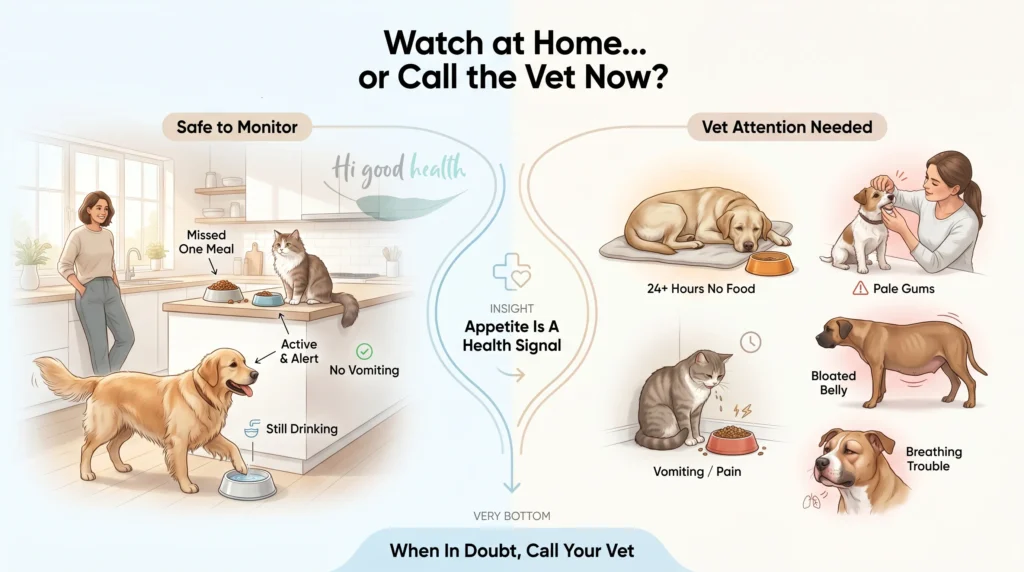
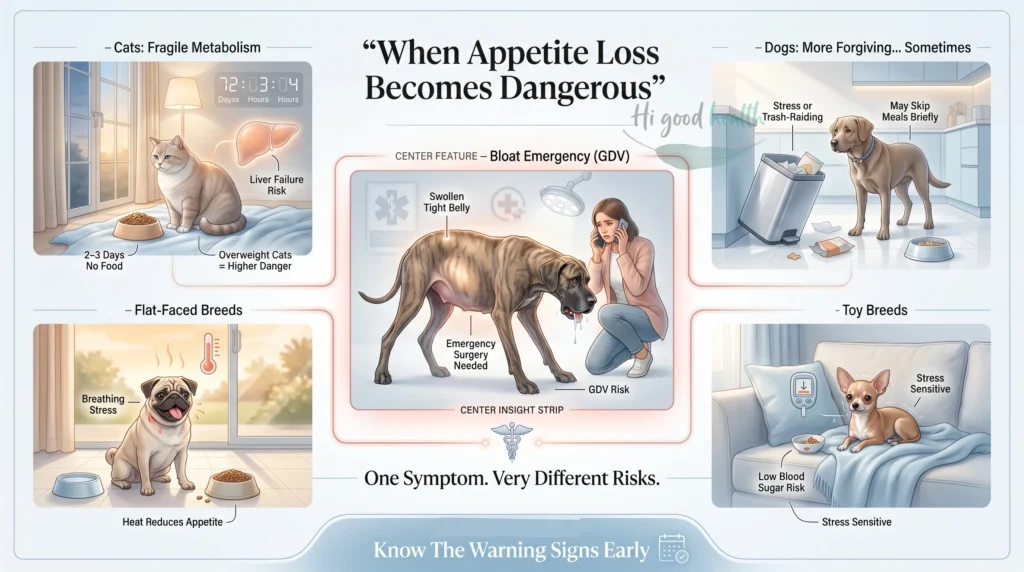
Before anything else, sort your pet into one of two buckets: “can watch for a short time” vs “call or go in now.”
Call or go to a vet immediately if:
- Your pet has eaten no food for 24+ hours and seems tired (lethargic) or has pale/white gums. This can signal dehydration, shock, or serious infection.[1,3,4]
- Your cat has not eaten for 24 hours—even if they act normal. Cats can develop hepatic lipidosis (fatty liver disease) very quickly when they stop eating, especially if overweight.[5,6,9]
- Your pet has vomiting, diarrhoea or is hunched over in pain. Think pancreatitis, foreign body obstruction, or toxins.[1,4]
- Your senior pet (8+ years) skips food for 12–24 hours and is drinking and peeing more than usual.
- Your pet develops facial swelling, hives, or breathing trouble after a vaccine, new food, or medication. This can be anaphylaxis and needs emergency care.
- Your large or giant-breed dog refuses food and has a hard, bloated abdomen or tries to vomit but nothing comes up. This could be bloat (GDV), a true emergency.
You can usually monitor at home for up to 24 hours if:
- Your adult dog or cat misses one meal but is bright, interactive, and drinking normally.
- There is no vomiting, diarrhoea, coughing, limping, or major behaviour change.
- There has been no recent tick exposure, major trauma, or foreign-object risk (like socks or toys).
Dog Not Eating but Drinking Water and Acting Normal: How Long Can You Wait?
This is the most common version of the problem and the most reassuring one. The pet refuses food but drinks, greets you, wants the walk, and is otherwise entirely itself. That combination genuinely does rule a lot out — a pet in real trouble usually stops drinking too, or stops being interested in you.
It does not, however, mean wait indefinitely. How long you can reasonably watch depends far more on species and age than on how cheerful the animal looks. Some sources will tell you a healthy adult dog can go several days without food. That is true of survival; it is not a useful threshold for deciding when something is wrong, and this article uses the more conservative one.
| Who | Reasonable to watch at home for | Call a vet if |
| Healthy adult dog — bright, drinking, normal behaviour | Up to 24 hours | Still refusing at 24 hours, or anything else appears at any point |
| Adult cat — even a bright, normal-seeming one | 24 hours | Any refusal past 24 hours |
| Puppy or kitten under 6 months | 12 hours | Sooner if flat, wobbly or cold — blood sugar falls fast |
| Senior, 8 years and older | 12–24 hours | Sooner if drinking or urinating more than usual |
| Any pet that is not drinking either | Do not watch | Now |
Why the cat rule is so much stricter
Cats are not small dogs about this. When a cat stops eating, its body mobilises fat faster than the liver can process it, and fat accumulates in the liver itself — hepatic lipidosis. It typically follows around three to four consecutive days of eating little or nothing, and overweight cats are at the highest risk, which is the counter-intuitive part: the cat with the most reserves is the one in the most danger.
So why does the table say 24 hours rather than three days? Because in more than 90% of cases there is an underlying condition that stopped the cat eating in the first place. The 24-hour rule is not about the liver failing on day one. It is about finding that underlying cause while it is still small, and before the liver problem is stacked on top of it. Untreated hepatic lipidosis is fatal; treated early it is usually survivable, but recovery can mean weeks of assisted feeding.
What “acting normal” does not rule out
Dogs and cats are both built to conceal illness, and behaviour is a weak signal in an animal with that instinct. A pet that is bright and playful can still have dental pain, early kidney disease, low-grade nausea or a slow-growing mass. Normal behaviour buys you time to observe. It does not close the question.
Check the mouth before you change the food
The most useful thirty seconds you can spend. A pet that walks to the bowl, starts, then backs away — or chews on one side, or drops food — is showing you a mouth problem, not a food problem. Look for a broken tooth, a splinter of bone wedged across the roof of the mouth, red or bleeding gums, or a bad smell. Dental pain is one of the most common causes of appetite loss and one of the most consistently missed, because the obvious response is to try a different food.
Four India-Specific Causes Worth Ruling Out
Heat
In most of India, a summer drop in appetite is ordinary and not a disease. Dogs eat less when it is hot, and they eat less in the middle of the day than in the early morning or after dark. Before assuming something is wrong, try moving the meal to the coolest part of the day and check that fresh water is genuinely available and not sitting warm in the sun.
Tick fever
Tick-borne infection — ehrlichiosis, babesiosis and their relatives — is common in Indian dogs and is one of the causes most worth having in mind, because its early picture is exactly this: off food, low energy, generally unwell, sometimes a fever or a limp. One study of 442 dogs in Andhra Pradesh found 9.28% carrying three tick-borne pathogens at once — and that is the triple co-infection rate, not the overall infection rate.
Signs typically appear one to three weeks after the tick attaches, and a tick can transmit infection within a few hours of attaching — so “I removed it quickly” is not reassurance. Most Ehrlichia infections respond well to doxycycline, which is a good reason to catch it early rather than wait it out. If your dog is off food and you have seen a tick in the last month, say so to the vet — it changes which blood test they run.
Worms
A heavy worm burden causes appetite changes in both directions — some pets go off food, others eat constantly and still lose condition. Deworming schedules slip easily. If you cannot remember the last dose, that is the answer: see Deworming in Dogs and Cats in India.
A recent vaccination
A quiet 24 to 48 hours with reduced appetite after a vaccination is common and expected. What is not expected is facial swelling, hives, vomiting, collapse or difficulty breathing — those are a reaction and need a vet immediately. For what is due and when, see Understanding Canine Immunisations.
And if the appetite loss comes with vomiting or diarrhoea rather than on its own, this is the wrong article. That combination — especially in a puppy — has its own emergency framework: Puppy Vomiting and Diarrhoea: When Is It an Emergency?
Age Matters: Who Is at Risk?
Puppies and Kittens (Under 6 Months)
The risk: High. They have tiny energy reserves and very fast metabolisms. Skipping even one meal can cause their blood sugar to crash, leading to weakness, wobbliness, or even seizures in severe cases.[1,3]
Common causes: Worms (intestinal worms are extremely common in our conditions due to environmental exposure), viral infections (like Parvovirus), rapid diet changes or overfeeding, or eating things they shouldn’t (toys/plants).
Prime Adults (1–7 Years)
The risk: Moderate. Healthy adult dogs and cats can tolerate brief dips in appetite better, and many short-term causes are manageable:
Common causes: Stress (boarding/ festival crackers), a sudden change in food brand, dental pain, or mild stomach upset.
Seniors (8+ Years)
The risk: HIGH. This is where “slowing down” is often mistaken for “just old age.” In reality, ongoing appetite loss in seniors often points to:[1,2,3]
- Dental disease: Over 60% of senior pets have meaningful dental issues.[2]
- Chronic kidney disease (CKD): which causes nausea, weight loss, and increased thirst.[1,4]
- Arthritis pain: making it uncomfortable to walk to the bowl or stand to eat.
- Cancer: which can suppress appetite through inflammatory chemicals.
Seniors also lose some sense of smell and taste, which makes bland or cold food less appealing. Appetite decline in any senior should trigger a vet visit and, ideally, bloodwork and a dental check.[1,9]
Dogs vs Cats: The Key Differences
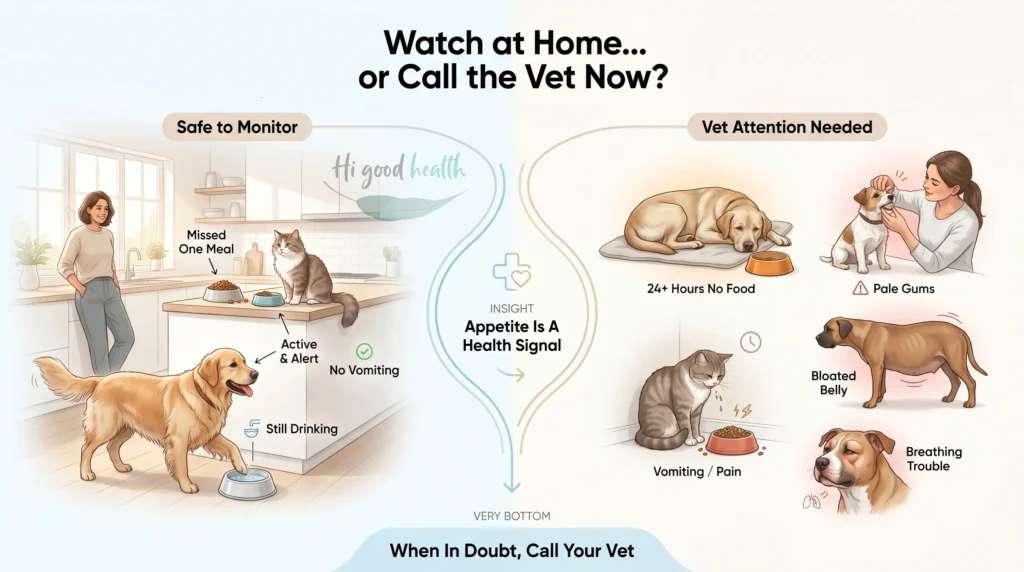
- Cats are more fragile: Because of how their bodies process fat, a cat that goes 2 or 3 days without food can face life-threatening liver failure. Overweight cats are at the highest risk.[5,6,9]
- Dogs are more “forgiving”: They often skip meals due to getting into garbage or eating off the road or anxiety. However, for large breeds, a sudden refusal to eat combined with a swollen belly is a red flag for Bloat (GDV).
Breed-specific notes:
- Giant breeds (Great Danes, Mastiffs, Saint Bernards): sudden refusal to eat plus a swollen, tight belly can mean bloat, which is rapidly fatal without emergency surgery.
- Flat-faced breeds (Pugs, Bulldogs, Shih Tzus): breathing issues and overheating can reduce appetite, especially in hot weather. This is particularly relevant during scorching summers.
- Toy breeds: more prone to drops in blood sugar and stress-induced anorexia.[8]
Safe Home Checklist: What to Do If Your Pet Won’t Eat
If your pet has no red-flag signs, you can try a short, structured home plan.
Step 1: Observe and Write It Down
Spend 5 minutes capturing details:
- When did they last finish a normal meal?
- Are they drinking normally? Urinating and defecating as usual?
- Any vomiting, diarrhoea, coughing, sneezing, limping, or obvious pain?
- Any recent changes (new food, boarding, shifting homes, loud construction nearby, new pet or baby)?
This “mini history” is gold for your vet if you do need to go in.
Step 2: Quick At-Home Check
As long as your pet tolerates gentle handling:
- Gums: should be bubblegum pink and moist—not white, blue, yellow, or very dark red.
- Mouth: look for broken teeth, red or bleeding gums, foreign objects, or bad odours that could indicate dental disease or infection.
- Body: feel the belly lightly; it should be soft, not rock-hard or extremely painful.
If anything looks “off,” especially pale or yellow gums or severe belly pain, skip home remedies and go straight to the vet.
Step 3: Make Food More Appealing (12–24 Hours Only)
If your pet is otherwise stable:
- Warm their usual food slightly (never hot). Heat boosts smell.
- Add a small amount of plain low-sodium chicken stock, a small spoon of plain curd (for dogs), or tuna water (for cats), or a bit of boiled chicken to tempt them.
- For seniors, offer softer textures—canned food, moistened kibble, or vet-approved recovery diets.
Avoid constant food switching; it can upset the stomach further and create picky habits.
Step 4: Offer Gentle Activity
For pets who still have normal energy:
- A 10–15 minute sniff walk or light play can lower stress and gently stimulate appetite through improved gut motility.
- Keep it calm—no intense fetch or overheating, especially in the summer heat.
If your pet seems weak, painful, or short of breath, do not push activity.
Step 5: What Not to Do
- Don’t force-feed using syringes or by prying the mouth open—this can cause aspiration pneumonia if food goes into the airway.
- Don’t stuff them with rich human foods, fatty meats, or table scraps like biryani, fried snacks, or heavily spiced food; these can trigger pancreatitis or serious GI upset.[1,4]
- Don’t give over-the-counter human medications (like antacids or painkillers) without veterinary guidance; many are toxic to pets.
If your pet still refuses food after 24 hours of careful home monitoring—or sooner if any red flags appear—call your vet.
Vaccines, Medications, and Supplements: When They Affect Appetite
Post-Vaccination
- What to Expect: It is normal for a dog or cat to skip one meal and nap for 24 hours after a vaccination.
(want to know more about vaccination in cats and dogs? Then read our articles on canine and feline immunisations)
- The Red Flag: If they develop facial swelling, hives, or have trouble breathing, this is an allergic reaction (anaphylaxis) and requires an immediate trip to the emergency vet.
Prescription Medications
Many common medications used by vets across the country can temporarily turn a pet off their food:
- Antibiotics: These can sometimes disrupt gut bacteria, leading to nausea.[1]
- Pain medications: especially opioids, which may slow gut movement.
- Non-steroidal anti-inflammatory drugs (NSAIDs): can irritate the stomach lining.
- Chemotherapy agents: known appetite suppressants.
Supplements
Omega-3s, probiotics, and antioxidant mixes can support overall health but can also cause GI upset if started at high doses or on an empty stomach. High-quality Omega-3 supplements are great, but the strong scent can be a turn-off for some picky cats or dogs.
Pro-Tip: Always introduce new supplements slowly. Start with a tiny amount and build up to the full dose over a week so your pet doesn’t associate their “real food” with a weird new taste.
Long-Term Prevention: Protecting Your Pet’s Appetite
You can’t prevent every illness, but you can make appetite crashes much less likely and catch problems early.
- Dental care: Professional cleanings and daily brushing dramatically reduce painful dental disease, a major cause of chronic inappetence.[2]
- Parasite prevention: Year-round flea, tick, and worm control reduces infections that can sap energy and appetite, especially in high-risk areas like tropical and semi-arid regions, which includes much of our country.
- Senior screening: For pets 8+, annual or twice-yearly bloodwork (including kidney markers like SDMA) and urine tests can catch CKD and other diseases before appetite falls off a cliff.[1,4]
- Smart feeding in hot/humid climates: Store kibble in airtight containers, avoid keeping food bowls in direct heat, and toss uneaten wet food after 20–30 minutes to avoid rancidity and mould. This is especially important in our hot and humid conditions—open packets of kibble can go stale or rancid very quickly.
- Stress management: Use predictable feeding times, quiet eating areas, and gradual changes in routine to reduce anxiety-related appetite dips.[8]
- Slow diet transitions: When changing foods, mix new and old over 7–10 days to prevent stomach upset and refusal.
These small habits build “appetite resilience,” especially in seniors and medically fragile pets.
Final Thoughts: Your Pet’s Appetite is Their Voice
Understanding why your pet has stopped eating is one of the most vital skills you can develop as a pet parent. Whether it is a simple case of “summer slowdown” due to our intense humidity or a silent signal of a more complex medical issue like tick fever or dental pain, your observation is the first line of defence. By distinguishing between a temporary “food tantrum” and a genuine medical red flag, you can provide the right care at the right time.
Remember, while at-home tips like warming food or adding a bit of plain curd can help for minor dips, they are never a substitute for professional diagnosis. Appetite is the ultimate barometer of health; when it shifts, your pet is telling you something important. Trust your instincts—if you are worried, a quick consultation with your veterinarian is always the safest choice. Proactive care today ensures many more years of happy, healthy mealtimes ahead.
Want more pet health tips? Browse our library of expert-backed articles to learn how to spot early warning signs of illness and ensure your pet is getting the nutrition they need.
Key Takeaways
- The species matters more than the mood. A bright dog can be watched for up to 48 hours. A bright cat cannot be watched past 24.
- Overweight cats are the highest risk, not the safest. Hepatic lipidosis follows three to four days of eating little or nothing, and body fat is what drives it.
- Still drinking is genuinely good news. Not drinking is not a milder version of the same problem — it is a different, faster one.
- Look in the mouth first. Approaching the bowl and backing away is a dental sign, and it is the cause most often mistaken for fussiness.
- In India, add heat, tick fever and worms to the list before concluding your pet has simply become picky.
- Puppies, kittens and seniors run out of reserve in hours, not days.
- Do not starve a pet into eating. Withholding food to “win” against a fussy eater is the one home strategy that can turn a behaviour problem into a medical one, particularly in cats.
Frequently Asked Questions
My dog is not eating but is drinking water — should I worry?
If your adult dog is bright, drinking well, and has no vomiting or diarrhoea, you can usually monitor for 24 hours and try gentle food-tempting steps. If the appetite loss persists, or other symptoms appear, call your vet.[1,3,4]
My cat has not eaten in 24 hours — can I wait?
No. Cats are not small dogs. Any cat that hasn’t eaten for a full day should be seen or at least spoken about with a vet the same day due to the risk of fatty liver disease.[5,6,9]
Can stress alone make my pet stop eating?
Yes. Moving, travelling, boarding, construction noise, or new family members can temporarily reduce appetite, especially in anxious dogs and indoor cats. If it lasts more than a day or overlaps with other symptoms, involve your vet.[8]
Do I need an appetite stimulant, or will my pet start eating on their own?
If your vet finds a medical cause, treating that often improves appetite. Appetite stimulants are reserved for cases where appetite remains low or where weight loss is dangerous and only be given when prescribed by your vet.
Why is my dog not eating dog food but will still eat treats or roti?
Selective refusal usually points at the food or the routine rather than at illness — a genuinely unwell dog turns down treats too. Common reasons are a bag that has gone stale or rancid, a recent recipe change, food left out all day so it has no novelty, too many treats between meals, or heat. But there is one important exception: a dog with dental pain will often accept something soft and refuse hard kibble, so check the mouth before you conclude it is fussiness.
My dog is not eating but is acting completely normal. Is that OK?
It is the most reassuring version of the problem and it still has a time limit. Normal behaviour and normal drinking rule a lot out, but dogs and cats are both built to conceal illness, so behaviour is a weak signal. Watch a bright, drinking adult dog for up to 24 hours. Call a vet if it passes that, if anything else appears, or straight away if the pet is a puppy, a senior or a cat.
My puppy is not eating. How urgent is that?
More urgent than in an adult dog. Puppies under six months have almost no energy reserve and their blood sugar can fall dangerously within hours, especially in toy and very small breeds. Twelve hours of refusing food is enough to warrant a call, and sooner if the puppy is flat, wobbly, cold or has not finished its vaccination course.
What can I feed a dog that will not eat?
Warm the food slightly to release its smell, offer small amounts by hand, and try something plain and bland such as boiled rice with a little plain boiled chicken or unsweetened curd. Feed in the cooler part of the day. Keep this short: tempting food is a bridge to a vet visit, not a treatment. If it takes more than a day, the question is why the appetite went, not what to put in the bowl.
Can I give my dog roti, curd or home food to get them eating?
In small amounts and plain, yes. What matters is what must not be in it. No onion or garlic, which are toxic to dogs and cats and are in almost every Indian gravy. No chilli, no heavy spice, no extra salt, no sugar, no chocolate, and nothing fried. Plain roti, plain rice, plain curd, plain boiled chicken or plain boiled vegetables are fine as a short-term temptation. Leftover sabzi or dal from the family meal is not.
My cat is not eating and is also throwing up. What should I do?
Treat that as a same-day veterinary problem rather than something to watch. Vomiting plus appetite loss in a cat both points to an underlying cause and accelerates the fatty-liver risk that makes feline appetite loss dangerous in the first place. Do not try home remedies and do not withhold food to rest the stomach without a vet telling you to.
Could a tick be why my dog stopped eating?
It could, and in India it is worth raising. Tick-borne infections such as ehrlichiosis and babesiosis are common here and their early picture is exactly this — off food, low energy, generally unwell, sometimes a fever or a limp. Signs usually appear one to three weeks after a tick attaches, and a tick can pass on infection within hours of attaching, so removing it quickly is not a guarantee. If you have seen a tick on your dog in the last month, tell the vet, because it changes which blood test they run.
Should I starve my dog until it eats its proper food?
No. Waiting out a fussy eater is the one home strategy that can turn a behaviour problem into a medical one. It is unsafe in cats, in puppies, in seniors and in any pet whose appetite loss has a medical cause you have not found yet. If you want to correct genuine fussiness, do it with routine and portion control while the pet is well, not while it is refusing food.
Glossary: Fast Definitions
- Inappetence: Reduced appetite or eating less than normal.
- Anorexia: Complete loss of appetite (no food intake). Different from human anorexia nervosa.
- CKD (Chronic Kidney Disease): Progressive loss of kidney function, common in older cats and dogs and a major cause of appetite loss.
- Hepatic lipidosis: Fatty liver disease in cats caused by prolonged fasting or severe undereating; can be fatal without aggressive treatment.
- SDMA (Symmetric Dimethylarginine): Blood marker that detects kidney disease earlier than traditional creatinine.
- Cachexia: Severe weight and muscle loss due to chronic disease.
References
1. PetMD. “Why Is My Dog Not Eating? Causes and What To Do.”
2. Commerce City Veterinary Hospital. “Understanding Sudden Loss of Appetite in Dogs and Cats.”
3. Pet Vet Fishers. “Is Your Pet Not Eating? Causes and When to Call a Vet.”
4. WebMD. “Dog Not Eating? Possible Causes and Appetite Solutions.”
6. Vetic. “Why Is My Cat Not Eating Food? Causes, Vomiting Concerns and Treatment.”
7. VCA Hospitals. “Anorexia in Dogs.”
9. The Webinar Vet. “Whetting the Appetite: A Deep Dive into Feline Inappetence.”
10. Juno Veterinary. “Dog Not Eating or Drinking? What to Do and When to Get Treatment.”
11. Catskill Veterinary Services. “Anorexia, or Lack of Appetite, in Dogs and Cats.”
Disclaimer
The content provided on higoodhealth.com is for general informational purposes only. While we strive to offer accurate and up-to-date content, much of the information is derived from publicly available sources and personal research. We do not make any warranties about the completeness, reliability, or accuracy of this information.
