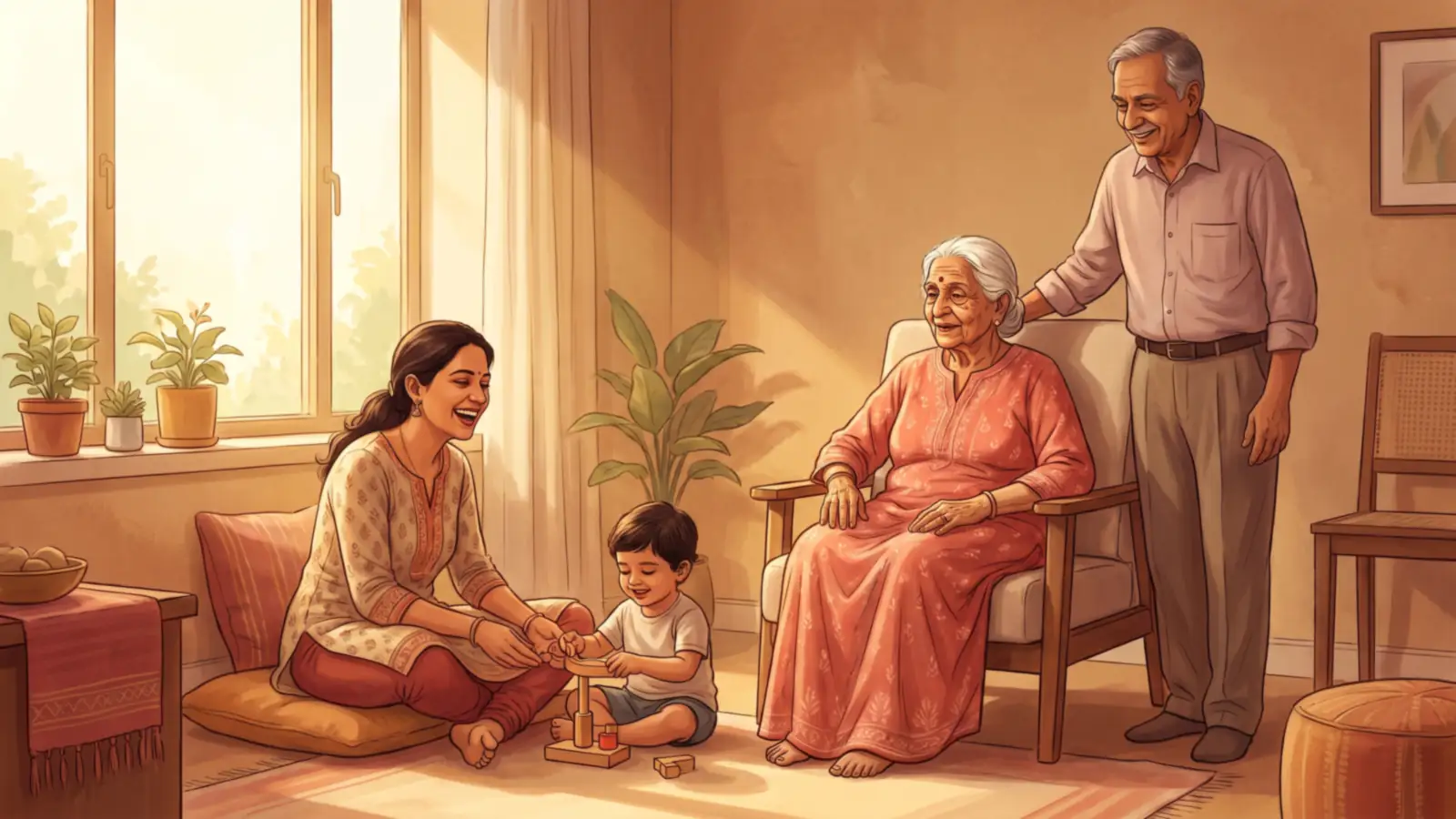
About this series. Reverse Ageing is a ten-part series on what ageing science can do today, what it cannot do yet, and what longer, healthier lives would mean for work, money and family. This is Part 2: how long we might actually live, and whether the extra years would be healthy ones.
India has already run this experiment once. Between 1950 and today we added roughly thirty years to the average life. The question nobody asked at the time was what condition those extra years would be in.
We are finding out now.
At a glance
Slowing ageing, delaying ageing and reversing ageing are three different claims, and only the first two are anywhere near a clinic. Reversal has been shown in cells and in mice, not in people.
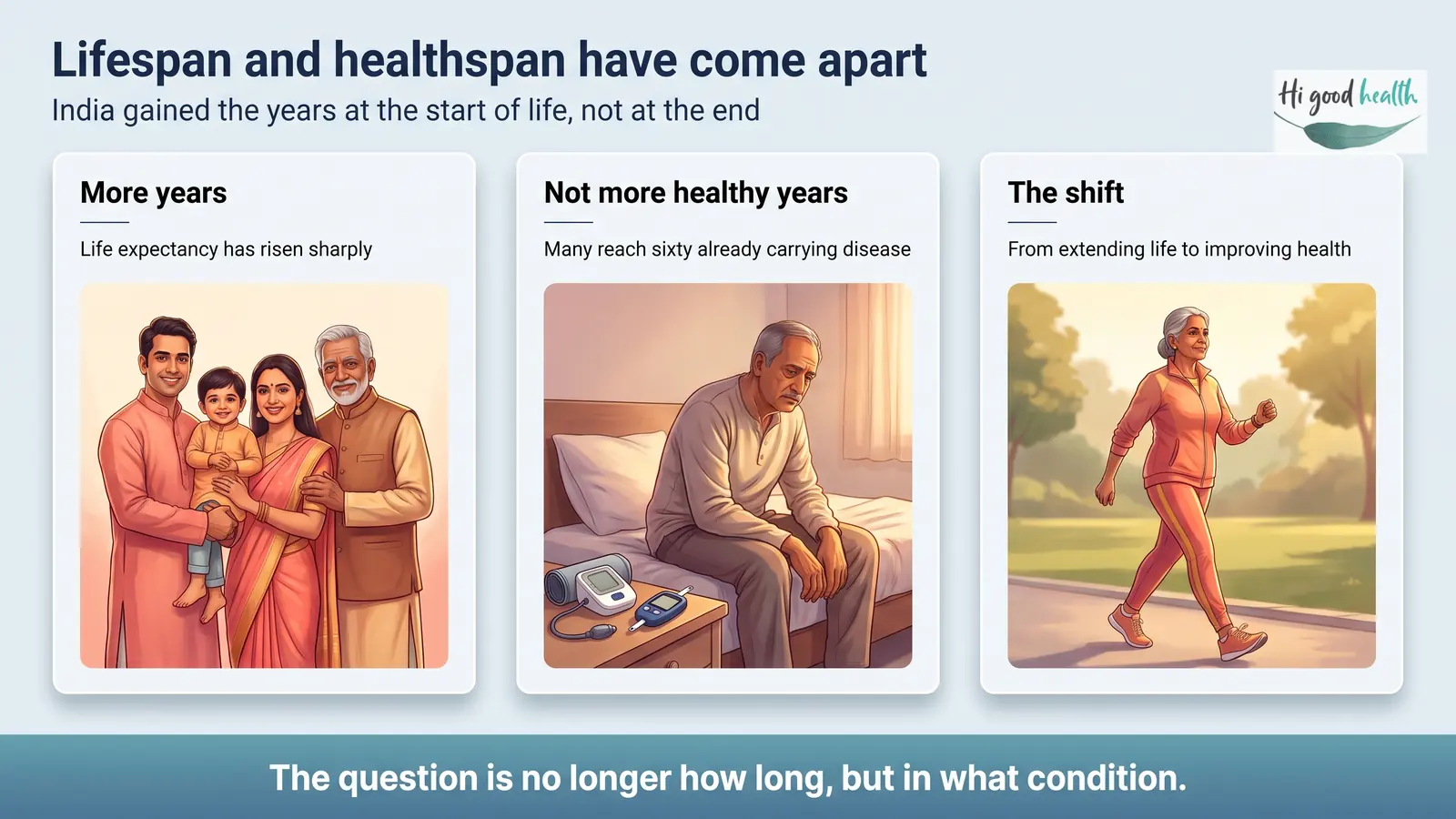
Lifespan and healthspan have come apart in India more sharply than in most countries. We gained the years at the start of life, and a large share of the population now reaches sixty already carrying diabetes, high blood pressure or heart disease.
Blue Zones are worth learning from, though the demographic data behind them has been questioned. What has not been questioned is the habits, and those habits look a great deal like ordinary Indian life before it urbanised.
Nothing on the supplement shelf has been shown to extend healthy human life. What works is exercise, food, sleep, blood-sugar control and staying connected to people, and none of it is for sale.
Slowing, delaying or reversing ageing: three different claims
These get used interchangeably, and they are not the same thing.
Slowing ageing means damage accumulates more slowly, so you stay healthier for longer.
Delaying ageing means pushing back the age at which disease and frailty arrive, even if the underlying process carries on.
Reversing ageing means taking cells or tissues back to a more youthful state. In the laboratory, partial cellular reprogramming has moved some markers in that direction. It does not mean turning an older person into a younger one, and it has not been done in a human body.
So when a clinic or a headline says reversal, ask which of the three they mean. Usually they mean the first, and often they mean nothing at all.
The more useful question researchers now ask is not how to extend lifespan but how to extend healthspan: the years you stay physically capable, mentally sharp and free of serious disease.
In Part 1 we looked at how ageing is being taken apart as a biological process. This part moves out of the laboratory and into ordinary life.
Why we are already living longer, and why it did not feel like progress
The big increase in Indian life expectancy did not come from any anti-ageing therapy. It came from hundreds of unglamorous public-health wins.
In the early 1900s tuberculosis, pneumonia, cholera and influenza killed people long before they were old enough to develop heart disease. Antibiotics, vaccines, clean water, safer childbirth, better maternal care and more food pushed those deaths back.
Survival from heart attacks, strokes and several cancers then improved too, through earlier diagnosis, better surgery and preventive medicine.
Globally, the World Health Organization puts the increase in life expectancy since 1950 at more than 25 years. India’s own gain has been larger than that.
Here is the part that gets left out. Living longer does not mean ageing well.
A great many people now spend the last ten to twenty years of life managing chronic disease, reduced mobility or cognitive decline. That is why longevity research stopped counting years and started counting healthy years.
Lifespan and healthspan, and why the gap is wider here
Lifespan is how long you live. Healthspan is how much of it you spend in good physical, mental and functional health.
Picture two people in the same building, both of whom will reach 95.
One still walks in the morning, manages his own accounts, travels to see grandchildren, and lives independently until the last year or two.
The other is diagnosed with diabetes at 58, develops heart disease at 68, has knees that stop him walking at 78, and does not recognise the family by 88.
Same lifespan. Completely different life.
Closing that gap is the actual goal of longevity medicine. Researchers call it compressing morbidity: keeping people well for almost all of their lives and shortening the period of decline at the end.
Why India’s gap is unusually wide
This is where the international version of this article stops being ours.
The Longitudinal Ageing Study in India, the country’s first large national survey of older adults, found chronic disease and functional limitation to be widespread among Indians over 60 rather than a late-life exception.
Set that against the ICMR-INDIAB survey in The Lancet Diabetes and Endocrinology, which counted 101 million Indians living with diabetes and a considerably larger group with prediabetes.
And against the UNFPA’s projection that the over-60s will pass 20% of the population by 2050, and will outnumber children by 2046.
Put together: a very large older population, arriving with chronic disease already established, in a health system built mainly around treating illness once it appears. That is the Indian version of the longevity problem, and it is not the same problem the West is solving.
The rise of the centenarian
People over 100 are no longer freakish. Japan, Italy, France, Spain and the United States have all seen steady increases.
India’s centenarian counts are less reliable, for a simple reason: birth registration was patchy for the generation now reaching that age, so a claimed age of 105 often cannot be checked against a document. This is worth knowing before believing any village-of-centenarians story, in India or anywhere else.
What the research on genuine centenarians shows is interesting. Many of them do not avoid disease so much as postpone it, staying well into their nineties and then declining quickly.
Genetics plays a part. Variations in genes governing cholesterol handling, inflammation, DNA repair and cellular stress turn up more often in the very long-lived.
But genetics is the smaller half. Population studies consistently find that behaviour and environment account for more of healthy ageing than inherited genes do. You cannot change your DNA. You can change most of what determines how it behaves.
What the Blue Zones actually tell us, and the Indian version of the question
Few ideas have travelled as far as the Blue Zones: Okinawa, Sardinia, Ikaria, Nicoya, and the Seventh-day Adventist community in Loma Linda.
The shared habits researchers described were a plant-heavy diet, physical work built into the day, strong family ties, tight communities, very little smoking, a sense of purpose, and unhurried lives.
The science has since become more careful. Some researchers have questioned the birth records behind the centenarian counts in several of these regions, and migration and socioeconomic differences make direct comparisons hard.
But look at that list of habits again.
A plant-heavy diet. Physical work built into the day. Extended family under one roof. A tight neighbourhood. Purpose and status that do not end at 60.
That is a description of an Indian village fifty years ago, and to a large extent of an Indian small town today.
No Indian population has ever been studied the way Okinawa was, so we do not have the data.
What we do have is an uncomfortable observation: urban Indian life has been removing every item on that list at once. Less walking. More refined flour and sugar. Nuclear households, longer commutes, and a retirement that cuts a person off from their role.
The Blue Zone question for India is not how to import a lifestyle. It is how much of ours we have already thrown away.
Can lifestyle really slow biological ageing?
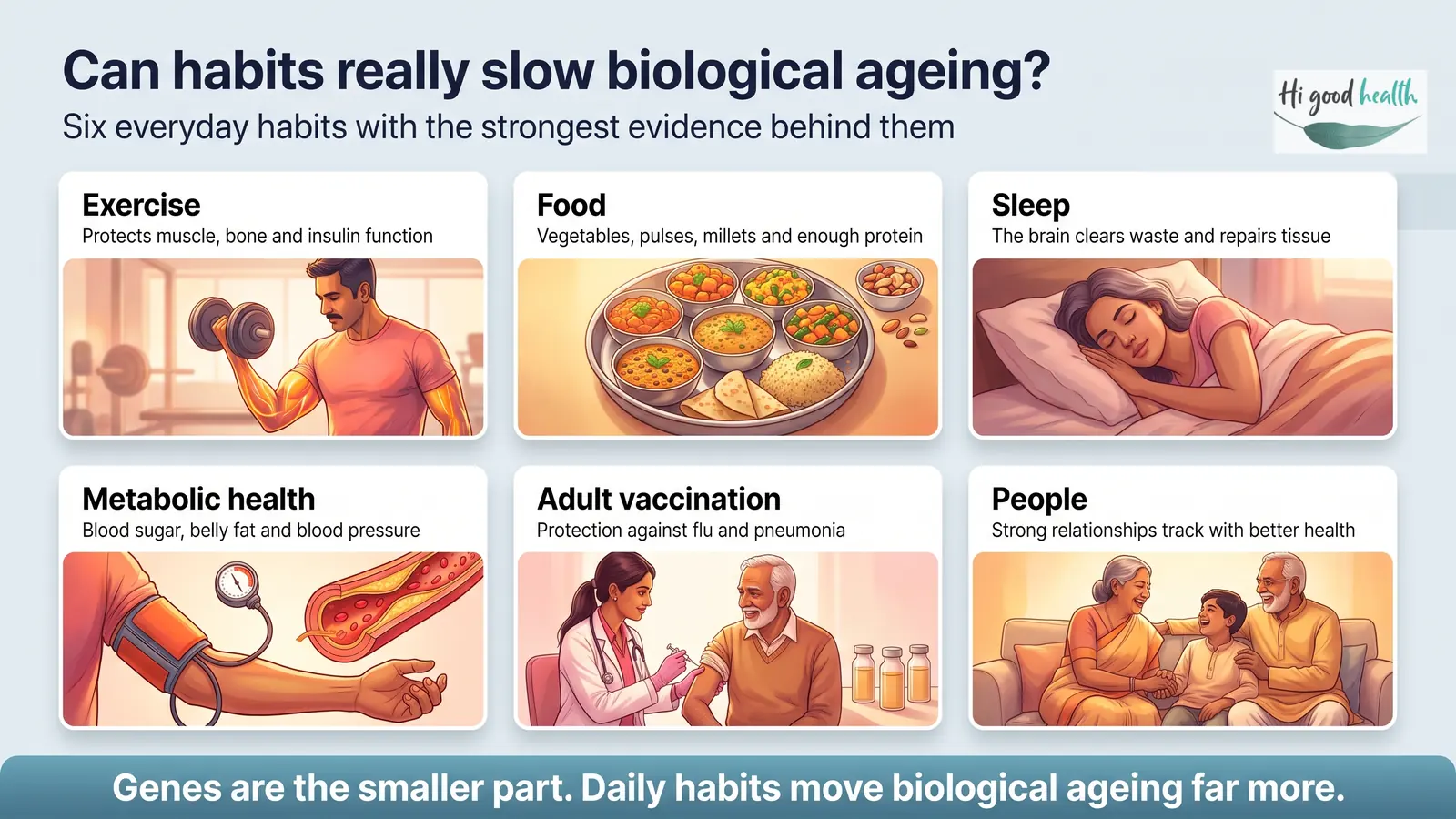
One finding comes up again and again: daily habits move biological ageing more than most people expect.
Biological age reflects the accumulated effect of genetics, food, movement, sleep, stress, infection, pollution and disease on cells and tissues. Researchers call the lifetime total of those environmental exposures the exposome, and it is a large part of why two people born the same week can be in very different condition at 60.
Exercise has the strongest evidence of anything on this list. Resistance training preserves muscle, improves insulin sensitivity, strengthens bone and cuts the risk of falls later. Aerobic exercise supports the heart, improves mitochondrial function and is associated with lower rates of dementia and depression.
Muscle matters for more than strength. The age-related loss of muscle mass and function is called sarcopenia, and skeletal muscle is increasingly understood as a regulator of healthy ageing in its own right, not just a way of lifting things.
Food. Vegetables, fruit, dal and other legumes, whole grains such as bajra, jowar and unpolished rice, nuts, and enough protein.
Protein gets harder and more important after 50, and the usual Indian vegetarian diet is easy to get wrong here. Dal alone is rarely enough. Curd, paneer, soya, eggs where acceptable, and a wider mix of legumes matter more than most people are told.
Sleep. During deep sleep the brain clears metabolic waste, tissue is repaired, appetite hormones reset and immune function recovers. Chronic short sleep is associated with obesity, heart disease, poorer thinking and faster biological ageing.
Metabolic health, which in India is the whole ballgame. Raised blood sugar, insulin resistance, abdominal fat and high blood pressure damage vessels and organs silently for years. Given how early these start here, this is the single highest-return item on the list.
Vaccination in adults, which India largely ignores. Influenza, pneumococcal disease and shingles vaccines are available here and are taken up by a very small fraction of older adults. A serious chest infection at 70 is often the event that ends independence, and some of them are preventable.
People. Long-running studies keep finding that those with strong social connection have less depression, less heart disease, slower cognitive decline and lower mortality. In India this is usually framed as a family duty. It is also a health intervention.
Can eating less help you live longer?
Few areas have produced as much argument as calorie restriction. The idea is simple: eat less, without becoming malnourished, and some of the biology of ageing may slow down.
It started nearly a century ago with rodents that lived markedly longer on restricted diets. Similar results have since appeared in yeast, worms, flies and non-human primates, usually with delayed disease, better metabolic health and less inflammation.
Does it work in people?
The honest answer is that nobody knows about lifespan, because the study would take fifty years. Shorter trials of supervised calorie restriction do show improvements in insulin sensitivity, blood pressure, cholesterol and inflammatory markers.
Intermittent fasting and time-restricted eating are the practical versions: eating within an eight to ten hour window, or fasting on some days. These may switch on autophagy, the cell’s recycling process, in which damaged proteins and worn-out parts are broken down and replaced. The cellular evidence is interesting; the long-term human evidence is not settled.
India has been fasting for a long time, and that cuts both ways
Vrat, Ekadashi, Navratri, Jain fasting, Ramzan, and the ordinary habit in many households of a light or skipped evening meal are all forms of time-restricted eating that long predate the research.
So the practice is familiar here, which is an advantage. But two Indian cautions matter more than the international ones.
First, a fast that ends in fried food and sweets is not calorie restriction. The overnight window may be doing something; the feast at the end of it is doing more, in the other direction.
Second, and seriously: if you take medication for diabetes, particularly sulphonylureas or insulin, fasting without adjusting your dose can cause dangerous hypoglycaemia. This is a common, avoidable emergency in India around festival fasting. Talk to your doctor before a fast, not after.
Fasting is also unsuitable for children, pregnant women, and anyone with a history of disordered eating.
Measuring age beyond the calendar
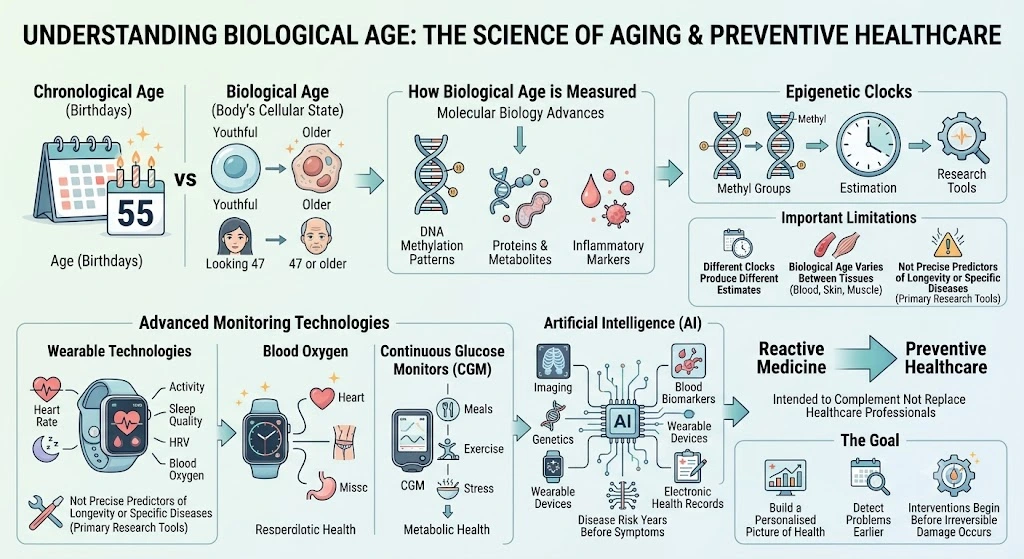
Imagine being told that you are 55 but your body looks 47. Or the reverse.
That is the promise of biological age testing. It estimates how fast you are ageing at cell level using DNA methylation, proteins, metabolites and inflammatory markers.
The best-studied are epigenetic clocks, which read chemical tags on DNA that change predictably with age. They are genuinely useful research tools, and they have real limits: different clocks give different answers for the same person, and blood, skin and muscle can disagree with each other.
These tests are sold directly to consumers in India now, usually through private labs and wellness clinics. They are research instruments in a retail wrapper. A single reading is close to meaningless; a trend over years might mean something; neither will tell you anything about what to do next that a blood-sugar reading and a walk would not.
Wearables are the other half of this. Smartwatches track heart rate, activity, sleep and heart-rate variability, and continuous glucose monitors, once only for people with diabetes, are now sold to anyone curious about their meals.
In a country where so much diabetes is undiagnosed, a CGM can be genuinely revealing. It can equally become an expensive way to worry about a rice-shaped spike that means nothing.
AI is being trained to pull imaging, blood markers, genetics and wearable data together to predict disease years ahead. It is meant to support a doctor’s judgement, not replace it.
The aim is not to collect numbers. It is to catch a problem while it is still reversible.
Will gene editing help us reach 100?
If lifestyle is the foundation, genetic technology may be the next storey up.
CRISPR-Cas9 lets scientists edit specific stretches of DNA with real precision, and it has already produced approved treatments for inherited blood disorders. Casgevy, developed by Vertex Pharmaceuticals and CRISPR Therapeutics, is FDA-approved for sickle cell disease and transfusion-dependent beta thalassaemia.
That is not a distant foreign story for India. Both conditions are common here.
The government launched the National Sickle Cell Anaemia Elimination Mission from Shahdol in Madhya Pradesh in July 2023, aimed largely at tribal districts, and had crossed six crore screenings by mid-2025. Thalassaemia major is a heavy burden in several communities, managed for most families through lifelong transfusion.
So the first real gene-editing cure arrived for two diseases India has in large numbers, and the obstacle here is not science. It is that a one-time therapy priced in crores does not reach a district hospital. That gap, not the biology, is what will decide whether Indians benefit from genetic medicine this decade.
Could the same technology slow ageing?
Researchers are studying genes linked to exceptional longevity, including FOXO3, involved in stress resistance and cellular maintenance, and APOE, which affects Alzheimer’s risk. Others are looking at DNA repair, inflammation, mitochondrial function and senescence.
In theory, adjusting those pathways could reduce vulnerability to age-related disease.
In practice it is nowhere close. There is no single ageing gene; ageing emerges from thousands of interacting pathways shaped by a lifetime of exposure. Move one and you move others, not always in the direction you wanted.
The ethical questions are unresolved everywhere. Should editing treat disease only, or also enhance? Who gets it? How does a country regulate a technology that changes biology permanently? For now, gene editing is a powerful research tool and not a longevity strategy.
A reality check, and what is being sold here
The longevity industry has grown fast, and with it the exaggeration.
Every few months brings a breakthrough supplement, a miracle diet, or a therapy that reverses ageing. Influencers sell regimens of two dozen daily capsules, private testing panels and treatments available only through clinics that do not publish results.
Bryan Johnson’s “Don’t Die” project is the most visible version: extensive monitoring, strict protocols and experimental interventions, with the data published. It is a personal experiment, not evidence, and should be read that way.
Professor David Sinclair of Harvard has done more than anyone to popularise the idea that ageing may become treatable, working on sirtuins, NAD metabolism and epigenetic change. Much of what he discusses is still experimental.
The reality is duller. No supplement has been shown to make humans live meaningfully longer. NMN, nicotinamide riboside, resveratrol, spermidine, metformin, rapamycin and senolytics are all under genuine study, and none can currently be recommended to a healthy person.
In India there is an extra layer. Longevity and anti-ageing supplements are sold here as nutraceuticals, which are regulated by FSSAI as food rather than assessed as medicines for efficacy. A product being legally on sale in India says nothing about whether it works. Neither does an imported label.
The strongest evidence still sits with the boring list: move daily, eat real food, sleep properly, keep weight and waist in range, do not use tobacco, go easy on alcohol, manage stress, stay connected. Together they beat anything in a bottle.
What a country of healthy 90-year-olds would actually mean here
Suppose large numbers of people do stay well into their nineties.
Education would stop being something that finishes at 22. Careers would run longer and change more often. Retirement would become a slope rather than a cliff.
Families could hold four or five generations at once, which India is culturally better prepared for than most countries, and financially worse prepared for than it thinks.
That is the part worth dwelling on. Most Indians have no pension at all. The formal-sector arrangements, EPF and NPS, cover a minority; the majority work in the informal economy, where there is no retirement age because there is no retirement. For them, healthspan is not a wellness goal. It is the difference between working and destitution.
So the Indian version of the longevity question is not how to fund a longer retirement. It is whether people will still be physically able to earn at 70, and who supports them if they are not.
Healthcare would have to shift from treating advanced disease to detecting it early, which is a much bigger change for India than for a country with universal primary care.
These are not future philosophical questions. They are the policy arguments already underway.
What you can do today
Nothing here requires waiting for a therapy.
Walk every day, and add resistance work twice a week: bodyweight, resistance bands, or whatever is available. Muscle is the asset that decides whether you are independent at 75.
Eat enough protein, which for most Indian vegetarian diets means paying deliberate attention to dal, curd, paneer, soya, eggs where acceptable, and a wider variety of legumes rather than the same one daily.
Sleep seven to eight hours, at roughly the same time each night.
Get blood pressure, fasting sugar or HbA1c, and a lipid profile checked from your thirties, not your fifties, and act on the first abnormal result rather than the third.
Ask your doctor about influenza, pneumococcal and shingles vaccination if you are over 60. Almost nobody in India does, and it is one of the cheapest protections of independence available.
Stay in work, purpose or community in some form after 60. Retirement that removes a person’s role is a health event, not just a financial one.
And treat every anti-ageing product with the same question: what trial is this based on, and in whom?
The Reverse Ageing Series
Ten articles on what longer, healthier lives would actually change.
- How Close Are We to Reversing Ageing in Humans? — the biology of ageing, and what has actually been reversed
- Will We Really Live to 100+ and Stay Young While Doing It? — lifespan, healthspan and what the evidence supports (you are here)
- If Ageing Slows Down, Will Retirement Even Exist? — work, pensions and the hundred-year life
- Will Longer Lives Take Away Jobs from the Younger Generation?
- If Parents Stay Healthy Till 90, Will Children Feel Less Responsibility?
- Will We Have Two or Three Careers in One Lifetime?
- Can Science Really Make 80 the New 40?
- Who Will Benefit — Everyone, or Only the Wealthy?
- The Longevity Economy
- The Future of Being Human
Key takeaways
There is no magic formula, and anything advertised as one in India is regulated as food, not as medicine, which means nobody has assessed whether it works.
India’s problem is not lifespan, it is healthspan. We added thirty years and a great many of us now reach sixty already carrying diabetes or heart disease, which is why prevention from the thirties matters more here than the international advice suggests.
The habits that show up in every long-lived population are the ones urban India has been steadily discarding: daily physical work, a plant-heavy diet, extended family, community and a role that does not end at 60.
Gene editing has produced a real cure for sickle cell disease and beta thalassaemia, both common in India. The barrier here is cost and access, not science.
Frequently asked questions
1. What is the difference between lifespan and healthspan?
Lifespan is how many years you live. Healthspan is how many of them you spend in good physical and mental health, without major disease or disability. India has added a lot of lifespan and much less healthspan, which is the gap this article is about.
2. Is fasting safe if I have diabetes?
Not automatically. If you take insulin or sulphonylureas, fasting without adjusting your dose can cause dangerously low blood sugar, and this is a common emergency around festival fasting in India. Speak to your doctor before you fast, not afterwards.
3. Are Blue Zones scientifically proven?
The centenarian counts behind some Blue Zones have been questioned because old birth records are unreliable. The habits associated with them, plant-heavy diets, daily movement, close community and purpose, are independently well supported. No Indian population has been studied this way.
4. Do longevity supplements sold in India actually work?
No supplement has been shown to extend healthy human life. In India they are sold as nutraceuticals and regulated by FSSAI as food, so being legally on sale says nothing about effectiveness. Lifestyle has far stronger evidence than anything on the shelf.
5. Are biological age tests worth buying in India?
They are research tools sold at retail. Different clocks give different answers for the same person, a single reading tells you very little, and the result will not change what you should be doing about sleep, movement, food and blood sugar.
6. Is the CRISPR cure for sickle cell disease available in India?
Casgevy is approved in the United States and elsewhere for sickle cell disease and transfusion-dependent beta thalassaemia. Both are common in India and are the focus of the National Sickle Cell Anaemia Elimination Mission, but the therapy’s cost puts it far out of reach of routine Indian care today.
7. At what age should an Indian start getting checked?
Earlier than the international guidance suggests. Because metabolic disease begins earlier here, blood pressure, fasting sugar or HbA1c and a lipid profile from the thirties is reasonable, and any accredited lab will do them without a referral.
Abbreviations
- APOE: Apolipoprotein E
- CGM: Continuous Glucose Monitor
- CRISPR: Clustered Regularly Interspaced Short Palindromic Repeats
- DNA: Deoxyribonucleic acid
- FOXO3: Forkhead Box O3
- FSSAI: Food Safety and Standards Authority of India
- HbA1c: Glycated haemoglobin
- ICMR: Indian Council of Medical Research
- LASI: Longitudinal Ageing Study in India
- NAD: Nicotinamide Adenine Dinucleotide
- NMN: Nicotinamide Mononucleotide
- NR: Nicotinamide Riboside
- SCD: Sickle Cell Disease
- TDT: Transfusion-Dependent Beta Thalassaemia
References
- International Institute for Population Sciences. Longitudinal Ageing Study in India (LASI), Wave 1. Mumbai: IIPS; 2020.
- Anjana RM, et al. Metabolic Non-Communicable Disease Health Report of India: the ICMR-INDIAB National Cross-Sectional Study. The Lancet Diabetes and Endocrinology. 2023.
- United Nations Population Fund. India Ageing Report 2023.
- Ministry of Health and Family Welfare, Government of India. National Sickle Cell Anaemia Elimination Mission. Launched July 2023.
- World Health Organization. Decade of Healthy Ageing 2021-2030. Geneva; 2021.
- Lopez-Otin C, Blasco MA, Partridge L, Serrano M, Kroemer G. Hallmarks of Ageing: An Expanding Universe. Cell. 2023;186(2):243-278.
- Campisi J, Kapahi P, Lithgow GJ, Melov S, Newman JC, Verdin E. From discoveries in ageing research to therapeutics for healthy ageing. Nature. 2019;571:183-192.
- Buettner D, Skemp S. Blue Zones: Lessons From the World’s Longest Lived. American Journal of Lifestyle Medicine. 2016;10(5):318-321.
- Kreouzi M, Theodorakis N, Constantinou C. Lessons Learned From Blue Zones, Lifestyle Medicine Pillars and Beyond. American Journal of Lifestyle Medicine. 2024.
- Food Safety and Standards Authority of India. Food Safety and Standards (Health Supplements, Nutraceuticals, Food for Special Dietary Use) Regulations, 2016.
Disclaimer
This article is for general information and does not replace medical advice. Decisions about tests, medication, fasting or any therapy marketed for ageing should be made with a qualified doctor who knows your medical history.
