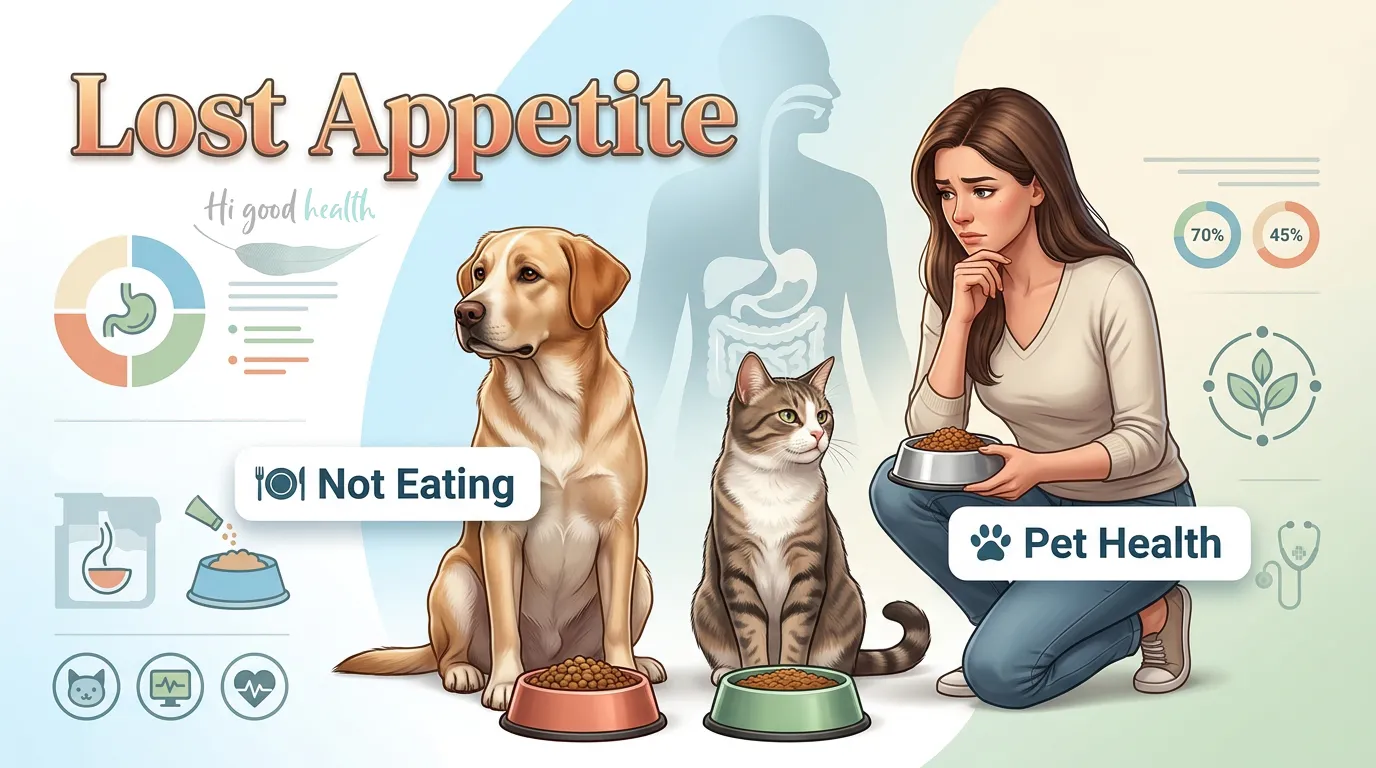
When your dog or cat sniffs the bowl, walks away, and doesn’t come back, it hits you in the gut. The big question always follows: Are they truly unwell, or is this just a “food tantrum”?
At a glance
Appetite loss (inappetence) is one of the top reasons pet parents call their vet, and the stakes are very different for a 4‑month‑old puppy, a 3‑year‑old indoor cat, and a 12‑year‑old senior. This research‑backed guide helps you, spot red flags, implement safe at-home care, and provide proactive strategies to prevent appetite crashes before they start.
If you are asking why is my dog not eating, the first thing that matters is how long it has been and whether anything else has changed. A healthy adult dog skipping one meal is usually fine. A cat is not — cats should never go more than about 24 hours without food.
Cats are the urgent case. Going without food for a day or two can trigger hepatic lipidosis, a serious liver condition. If your cat is not eating but drinking water and is otherwise bright, that still needs a vet call within 24 hours, not a wait-and-see.
If your dog is not eating but acting normal — playing, drinking, alert, normal toilet habits — the likely causes are minor: a change of food, hot weather, a recent vaccination, or simple pickiness. Give it 24 hours and watch.
Go to a vet now, not tomorrow, if there is vomiting or diarrhea alongside it, the belly looks bloated or tense, the gums are pale, breathing is labored, they are trying to eat but cannot, or a puppy or kitten has missed even one meal.
Why Is My Dog Not Eating? Picky or Poorly?
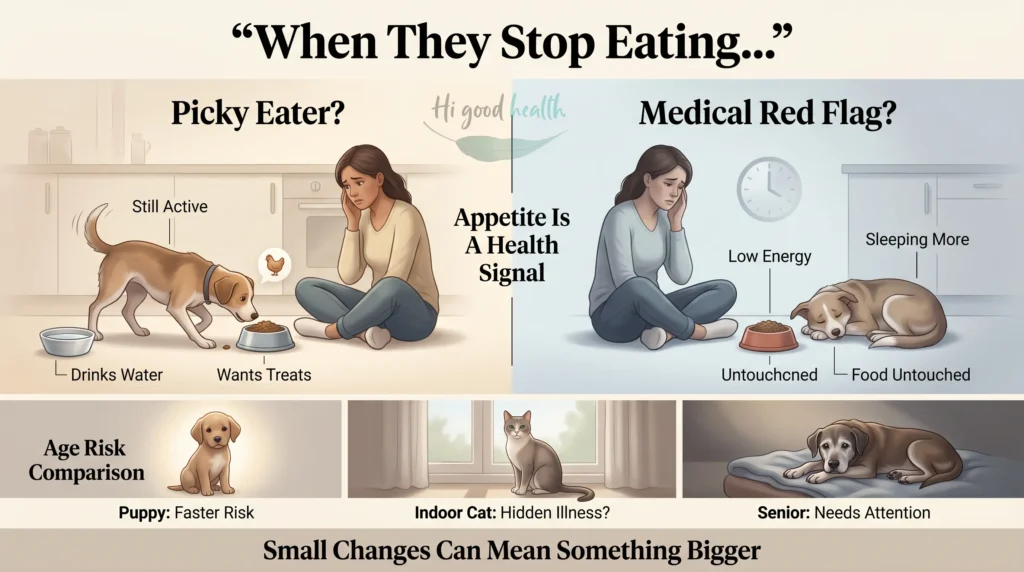
The biggest challenge for any pet owner is figuring out if your pet is just holding out for a piece of your chicken dinner or if there is a medical “red flag” waving in the background.
Because pets can’t tell us where it hurts, they use their appetite as a primary communication tool. A “food tantrum” usually involves a pet who is still energetic, drinking water, and willing to eat high-value treats. However, a true medical issue often comes with other quiet clues, like sleeping more than usual or a change in their personality
Why Pets Stop Eating: The Simple Science
When a pet stops eating, it isn’t just a “mood”—it is a physiological response. Understanding the science behind inappetence helps pet parents distinguish between a picky eater and a medical priority.
The Physiological “Shut-Down”
When a pet is ill, their body undergoes a metabolic shift. Digestion is an energy-intensive process.
If the immune system is fighting a “silent infection”—such as a tick fever , read our article (Part 1- Tick-Borne & Parasite Diseases in Pets – 2026) or a viral load—the brain’s hypothalamus redirects energy away from the gut and toward the immune response. Hence the inappetence.
For the 2026 parasite outlook and protection strategies for US pet parents, for detailed information, read our article.
2. The Olfactory & Sensory Science
For dogs and cats, eating is 90% about scent.
- The Humidity Factor: In warm, humid climates, the aromatic fats in kibble can oxidize (go rancid) within hours of being exposed to air. While we might not smell the spoilage, a dog’s nose—which is up to 100,000 times more sensitive than ours—detects the chemical change and flags the food as “unsafe.”
- Congestion: If a pet has a minor respiratory infection, their nasal passages become blocked. If they can’t smell the food, their brain often fails to trigger the salivation and hunger response.
3. The “Pain-Avoidance” Loop
Sometimes a pet is hungry but physically cannot eat. This is known as “pseudo-anorexia.”
- Dental Biomechanics: A fractured tooth or an abscess creates a sharp pain signal the moment it touches a hard biscuit. The pet learns to associate the bowl with pain and will eventually stop approaching it altogether.
- Gastrointestinal Stretching: If a pet has gastritis or an obstruction, the simple act of the stomach expanding to hold food causes intense pressure. The pet will often sniff the food (showing hunger) but then back away (fearing the pain of expansion).
4. Psychological & Environmental Stress
The “Amydgala” (the brain’s fear center) can completely override the “Hypothalamus” (the hunger center).
- Cortisol Spikes: When a pet is stressed—due to boarding, a new move, or loud noises—the body enters “Flight or Fight” mode. In this state, cortisol levels spike, and the body suppresses the digestive tract to prepare for a perceived threat.
- Hormonal Influence: During a female pet’s heat cycle (estrus), or when a male senses a female in heat nearby, reproductive instincts can temporarily silence the drive for food.
Red-Flag Checklist: When Is Not Eating an Emergency?
Before anything else, sort your pet into one of two buckets: “can watch for a short time” vs “call or go in now.”
Call or go to a vet immediately if:
- Your pet has eaten no food for 24+ hours and seems tired ( lethargic) or has pale/white gums. This can signal dehydration, shock, or serious infection.
- Your cat has not eaten for 24 hours—even if they act normal. Cats can develop hepatic lipidosis (fatty liver disease) very quickly when they stop eating, especially if overweight.
- Your pet has vomiting, diarrhea or are hunched over in pain .Think pancreatitis, foreign body obstruction, or toxins.
- Your senior pet (8+ years) skips food for 12–24 hours and is drinking and peeing more than usual.
- Your pet develops facial swelling, hives, or breathing trouble after a vaccine, new food, or medication. This can be anaphylaxis and needs emergency care.
- Your large or giant‑breed dog refuses food and has a hard, bloated abdomen or tries to vomit but nothing comes up. This could be bloat (GDV), a true emergency
.
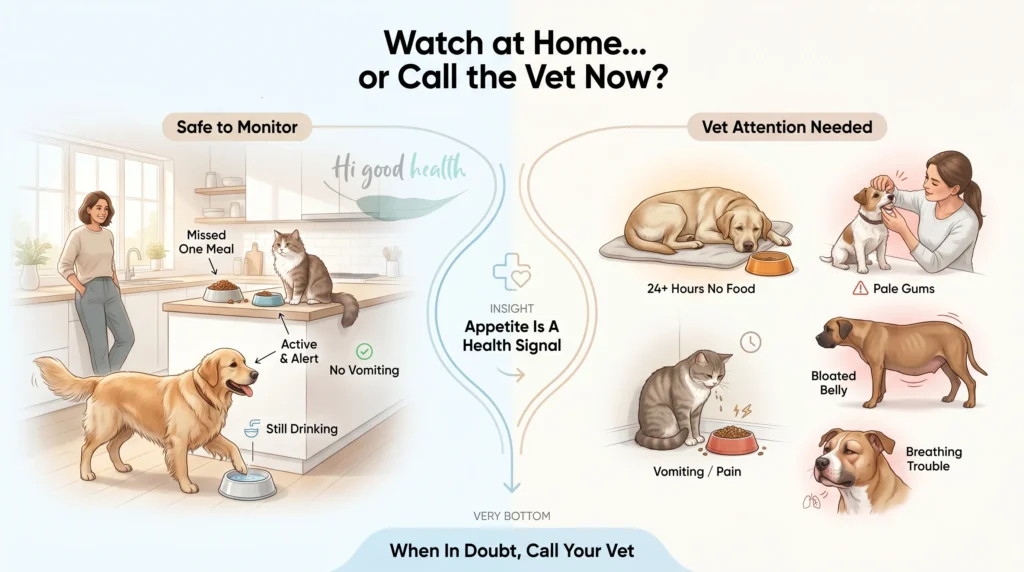
You can usually monitor at home for up to 24 hours if:
- Your adult dog or cat misses one meal but is bright, interactive, and drinking normally.
- There is no vomiting, diarrhea, coughing, limping, or major behavior change.
- There has been no recent tick exposure, major trauma, or foreign‑object risk (like socks or toys).
Age Matters: who is at risk
Puppies and Kittens (Under 6 Months)
The risk: High. They have tiny energy reserves and very fast metabolisms. Skipping even one meal can cause their their blood sugar to crash, leading to weakness, wobbliness, or even seizures in severe cases.
Common causes: Worms, viral infections (like Parvo), Rapid diet changes or overfeeding or eating things they shouldn’t (toys/plants).
Prime Adults (1–7 Years)
The risk: Moderate. Healthy adult dogs and cats can tolerate brief dips in appetite better, and many short‑term causes are manageable:
Common causes: Stress (boarding/fireworks), a sudden change in food brand, dental pain or mild stomach upset.
Seniors (8+ Years)
The risk: HIGH. This is where “slowing down” is often mistaken for “just old age.” In reality, ongoing appetite loss in seniors often points to:
- Dental disease (over 60% of senior pets have meaningful dental issues).
- Chronic kidney disease (CKD), which causes nausea, weight loss, and increased thirst.
- Arthritis pain, making it uncomfortable to walk to the bowl or stand to eat.
- Cancer, which can suppress appetite through inflammatory chemicals.
Seniors also lose some sense of smell and taste, which makes bland or cold food less appealing. Appetite decline in any senior should trigger a vet visit and, ideally, bloodwork and a dental check.
When an appetite crash signals a medical emergency, having financial protection ensures you can choose the “Gold Standard” of care. To get the 2026 verdict on whether pet insurance is worth the investment, for detailed information, read our article.
Why Is My Cat Not Eating? Dogs vs Cats, the Key Differences
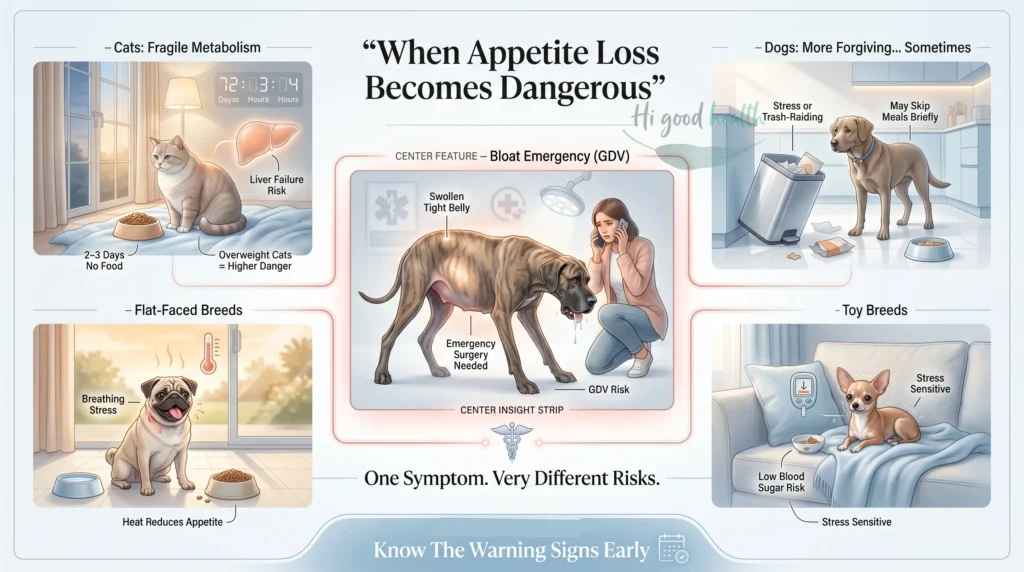
- Cats are more fragile: Because of how their bodies process fat, a cat that goes 2 or 3 days without food can face life-threatening liver failure. Overweight cats are at the highest risk.
- Dogs are more “forgiving”: They often skip meals due to “trash-raiding” or anxiety. However, for large breeds, a sudden refusal to eat combined with a swollen belly is a red flag for Bloat (GDV).
Breed‑specific notes:
- Giant breeds (Great Danes, Mastiffs): sudden refusal to eat plus a swollen, tight belly can mean bloat, which is rapidly fatal without emergency surgery.
- Flat‑faced breeds (Pugs, Bulldogs, Boston Terriers): breathing issues and overheating can reduce appetite, especially in hot weather
- Toy breeds: more prone to drops in blood sugar and stress‑induced anorexia.
Safe Home Checklist: What to Do If Your Pet Will Not Eat
If your pet has no red‑flag signs, you can try a short, structured home plan.
Step 1: Observe and Write It Down
Spend 5 minutes capturing details:
- When did they last finish a normal meal?
- Are they drinking normally? Urinating and defecating as usual?
- Any vomiting, diarrhea, coughing, sneezing, limping, or obvious pain?
- Any recent changes (new food, boarding, move, loud renovations, new pet or baby)?
This “mini history” is gold for your vet if you do need to go in.
Step 2: Quick At‑Home Check
As long as your pet tolerates gentle handling:
- Gums: should be bubble‑gum pink and moist—not white, blue, yellow, or very dark red.
- Mouth: look for broken teeth, red or bleeding gums, foreign objects, or bad odors that could indicate dental disease or infection.
- Body: feel the belly lightly; it should be soft, not rock‑hard or extremely painful.
If anything looks “off,” especially pale or yellow gums or severe belly pain, skip home remedies and go straight to the vet.
Step 3: Make Food More Appealing (12–24 Hours Only)
If your pet is otherwise stable:
- Warm their usual food slightly (never hot). Heat boosts smell.
- Add a small amount of low‑sodium chicken or bone broth, tuna water (for cats), or a bit of boiled chicken to tempt them.
- For seniors, offer softer textures—canned food, moistened kibble, or vet‑approved recovery diets.
Avoid constant food switching; it can upset the stomach further and create picky habits.
Step 4: Offer Gentle Activity
For pets who still have normal energy:
- A 10–15 minute sniff walk or light play can lower stress and gently stimulate appetite through improved gut motility.
- Keep it calm—no intense fetch or overheating, especially in hot weather.
If your pet seems weak, painful, or short of breath, do not push activity.
Step 5: What Not to Do
- Don’t force‑feed using syringes or by prying the mouth open—this can cause aspiration pneumonia if food goes into the airway.
- Don’t stuff them with rich human foods, fatty meats, or leftovers; these can trigger pancreatitis or serious GI upset.
- Don’t give over‑the‑counter human medications (like antacids or painkillers) without veterinary guidance; many are toxic to pets.
If your pet still refuses food after 24 hours of careful home monitoring—or sooner if any red flags appear—call your vet.
Senior Dog Not Eating: What Changes With Age
An older pet losing interest in food is common, and that is exactly why it gets missed. Age is not itself a reason to stop eating — it changes what the likely reasons are.
Dental disease is the most common and most treatable cause. A senior dog not eating hard food but still taking soft food or treats is almost always telling you their mouth hurts. The same applies to cats, who often start dropping food or chewing on one side.
Smell fades with age, and pets eat largely by smell. Warming food slightly to body temperature releases aroma and often restores interest on its own — one of the few home measures that reliably works.
Kidney disease is the one to rule out in older cats. An elderly cat drinking more than usual and eating less is a classic early picture, and it is found on a simple blood and urine test. Nausea from kidney disease is treatable, and cats feel considerably better once it is managed.
Arthritis matters more than people expect. If bending to a floor-level bowl hurts, a pet may simply stop bothering. Raising the bowl is free and occasionally solves the whole problem.
Cognitive decline can also disrupt routine in older pets — forgetting they have been fed, or losing track of where the bowl is. Keeping feeding times and locations consistent helps.
The rule for seniors is a lower threshold. In an older pet, appetite loss lasting more than a day warrants a vet visit rather than a wait, because the conditions behind it are more likely to be serious and are more treatable when caught early.
Vaccines, Medications and Supplements: When They Affect Appetite
Post Vaccination
- What to Expect: It is normal for a dog or cat to skip one meal and nap for 24 hours after a vaccination.
- The Red Flag: If they develop facial swelling, hives, or have trouble breathing, this is an allergic reaction (anaphylaxis) and requires an immediate trip to the emergency vet.
Prescription Medications
Many common medications used in the US can temporarily turn a pet off their food:
- Antibiotics: These can sometimes disrupt gut bacteria, leading to nausea.
- Pain medications: especially opioids, which may slow gut movement.
- Non‑steroidal anti‑inflammatory drugs (NSAIDs): can irritate the stomach lining.
- Chemotherapy agents: known appetite suppressants.
Supplements
Omega‑3s, probiotics, and antioxidant mixes can support overall health but can also cause GI upset if started at high doses or on an empty stomach. High-quality Omega-3 supplements are great, but the strong scent can be a turn-off for some picky cats or dogs.
Pro-Tip: Always introduce new supplements slowly. Start with a tiny amount and build up to the full dose over a week so your pet doesn’t associate their “real food” with a weird new taste.
You can’t prevent every illness, but you can make appetite crashes much less likely and catch problems early.
- Dental care: Professional cleanings and daily brushing dramatically reduce painful dental disease, a major cause of chronic inappetence.
- Parasite prevention: Year‑round flea, tick, and worm control reduces infections that can sap energy and appetite, especially in endemic U.S. regions.
- Senior screening: For pets 8+, annual or twice‑yearly bloodwork (including kidney markers like SDMA) and urine tests can catch CKD and other diseases before appetite falls off a cliff.
- Smart feeding in hot/humid climates: Store kibble in airtight containers, avoid keeping food bowls in direct heat, and toss uneaten wet food after 20–30 minutes to avoid rancidity and mold.
- Stress management: Use predictable feeding times, quiet eating areas, and gradual changes in routine to reduce anxiety‑related appetite dips.
- Slow diet transitions: When changing foods, mix new and old over 7–10 days to prevent stomach upset and refusal.
These small habits build “appetite resilience,” especially in seniors and medically fragile pets.
Key Takeaways
- A cat that stops eating is the urgent case: 24 hours without food can begin hepatic lipidosis, and overweight cats are the most vulnerable.
- Why is my dog not eating usually comes down to a handful of causes: dental pain, nausea, a recent vaccination, hot weather, fussiness reinforced by treats, or genuine illness.
- A dog that stays bright, playful and drinking can normally be watched for about 24 hours; one that is lethargic, vomiting, straining or hiding should be seen the same day.
- Stop the treats and table scraps before you judge the appetite, otherwise you are measuring the snacks rather than the meal.
- Senior pets have a shorter safe window: painful teeth, kidney disease, arthritis and a fading sense of smell all suppress appetite, and there is less reserve to lose.
- Refusing water as well as food, a swollen abdomen, unproductive retching or pale gums are emergencies, not wait-and-see situations.
- Appetite stimulants such as capromorelin and mirtazapine treat a diagnosed problem under veterinary direction; they are not a first response at home.
Frequently Asked Questions
1. “My dog isn’t eating but is drinking water—should I worry?”
If your adult dog is bright, drinking well, and has no vomiting or diarrhea, you can usually monitor for 24 hours and try gentle food-tempting steps. If the appetite loss persists, or other symptoms appear, call your vet.
2. “My cat hasn’t eaten in 24 hours—can I wait?”
No. Cats are not small dogs. Any cat that hasn’t eaten for a full day should be seen or at least spoken about with a vet the same day due to the risk of fatty liver disease
3. “Can stress alone make my pet stop eating?”
Yes. Moving, traveling, boarding, renovations, or new family members can temporarily reduce appetite, especially in anxious dogs and indoor cats. If it lasts more than a day or overlaps with other symptoms, involve your vet.
4. “Do I need an appetite stimulant, or will my pet start eating on their own?”
If your vet finds a medical cause, treating that often improves appetite. Appetite stimulants like capromorelin (dogs) and mirtazapine (cats) are reserved for cases where appetite remains low or where weight loss is dangerous and only be given when prescribed by your vet.
5. Why is my dog not eating but acting normal?
A dog that skips a meal but is bright, playful and drinking normally is usually less urgent than one that is also lethargic. The common explanations are boredom with the same food, hot weather, a change in routine, too many treats or table scraps earlier in the day, or mild nausea that passes on its own. Offer the usual food at set times rather than leaving a bowl down all day, and stop the extras so you can see the real appetite. If your dog still refuses food after 24 hours, or starts vomiting, straining or hiding, book a vet appointment: dogs mask pain well, and dental disease in particular is easy to miss.
6. Why is my senior dog not eating?
Age by itself does not remove appetite, so something has usually changed. In older dogs the frequent causes are painful teeth or gums, a duller sense of smell, kidney or liver disease, arthritis that makes bending down to a floor-level bowl uncomfortable, medication side effects, and cognitive decline that disrupts the daily routine. Because senior pets have less reserve and are more likely to have an underlying illness, the safe threshold is shorter: contact your vet after about 24 hours rather than waiting to see if it settles.
7. Why is my cat not eating but still drinking water?
Drinking is reassuring for hydration, but it does not make the situation safe. A cat that stops eating while still drinking remains at risk of hepatic lipidosis, the fatty liver condition that can develop within a few days of poor food intake, and increased thirst alongside a poor appetite is itself a warning sign of kidney disease, diabetes or an overactive thyroid. If your cat has eaten nothing for 24 hours, call your vet whatever the water bowl says.
8. How long can a dog or cat safely go without eating?
As a working rule, an otherwise healthy adult dog that misses one or two meals but stays bright and keeps drinking can be watched for about 24 hours. A cat should not be left longer than 24 hours without food because of the hepatic lipidosis risk, and overweight cats are the most vulnerable. Puppies, kittens, senior pets, pregnant animals and any pet with a diagnosed illness need to be seen sooner. Any pet that refuses water as well as food should be seen the same day.
Glossary:
- Inappetence: Reduced appetite or eating less than normal.
- Anorexia: Complete loss of appetite (no food intake). Different from human anorexia nervosa.
- CKD (Chronic Kidney Disease): Progressive loss of kidney function, common in older cats and dogs and a major cause of appetite loss.
- Hepatic lipidosis: Fatty liver disease in cats caused by prolonged fasting or severe under-eating; can be fatal without aggressive treatment. Fatty liver disease in cats caused by prolonged anorexia, in which fatty acid mobilization overwhelms hepatic processing capacity. Potentially fatal; requires aggressive nutritional support and treatment of the underlying cause
- SDMA (Symmetric Dimethylarginine): Blood marker that detects kidney disease earlier than traditional creatinine
- Cachexia: A complex metabolic syndrome associated with chronic disease (especially cancer) characterized by loss of skeletal muscle mass, not fully reversible by caloric supplementation alone.
- BCS (Body Condition Score): A standardized 9-point scale for assessing a pet’s weight relative to ideal. A score of 4–5/9 is generally considered ideal.
- GDV (Gastric Dilatation-Volvulus): Life-threatening emergency in dogs in which the stomach fills with gas and rotates on its mesenteric axis. Requires emergency surgical intervention.
All reference links valid and accessible on 30 April 2026
1 Catskill Veterinary Services. Anorexia or Lack of Appetite in Dogs and Cats: Clinical Overview. catskillvetservices.com. [General clinical reference for red flag signs and home assessment guidelines].
2 Wallace OP, Jablonski SA, Thomas JS, Bock JH. Association of time to start of enteral nutrition and outcome in cats with hepatic lipidosis. Journal of Veterinary Internal Medicine. 2024;38(6):3144–3152. doi:10.1111/jvim.17200. [Michigan State University College of Veterinary Medicine; Ryan Veterinary Hospital, University of Pennsylvania School of Veterinary Medicine]
3 Webb CB. Hepatic lipidosis: Clinical review drawn from collective effort. Journal of Feline Medicine and Surgery. 2018;20(3):217–227. doi:10.1177/1098612X18758591. [Colorado State University Veterinary Teaching Hospital]
4 Center SA. Hepatic Lipidosis (Fatty Liver Disease). Cornell University College of Veterinary Medicine Feline Health Center. vet.cornell.edu/feline-health. [Cornell University College of Veterinary Medicine]
5 Kongtasai T, et al. Renal biomarkers in cats: A review of the current status in chronic kidney disease. Journal of Veterinary Internal Medicine. 2022;36(2):384–396. doi:10.1111/jvim.16377. [SDMA sensitivity: detects approximately 40% loss of renal function before creatinine rises outside the reference interval]
6 ISFM Consensus Guidelines on the Diagnosis and Management of Feline Chronic Kidney Disease. Journal of Feline Medicine and Surgery. 2023. PMC11148907. [International Society of Feline Medicine consensus; supports SDMA use in CKD staging, mirtazapine for feline CKD inappetence]
7 Glickman LT, Glickman NW, Schellenberg DB, Raghavan M, Lee T. Incidence of and breed-related risk factors for gastric dilatation-volvulus in dogs. Journal of the American Veterinary Medical Association. 2000;216(1):40–45. doi:10.2460/javma.2000.216.40. [Purdue University, Department of Veterinary Pathobiology; prospective cohort study n=1,914 dogs across 11 breeds]
8 Bell JS. Inherited and predisposing factors in the development of gastric dilatation volvulus in dogs. Topics in Companion Animal Medicine. 2014;29(3):60–63. [Breed-specific GDV incidence: Great Danes 53/1,000 dog-years, Bloodhound 39/1,000, Irish Wolfhound 26/1,000, Irish Setter 24/1,000, Standard Poodle 24/1,000, Weimaraner 21/1,000]
9 Rhodes L, Zollers B, Wofford JA, Heinen E. Capromorelin: a ghrelin receptor agonist and novel therapy for stimulation of appetite in dogs. Veterinary Medicine and Science. 2018;4(1):3–16. doi:10.1002/vms3.83. PMC5813110. [Review of capromorelin pharmacology, mechanism, safety and efficacy data]
10 Zollers B, Rhodes L, Heinen E. Capromorelin oral solution for the stimulation of appetite in dogs: A prospective, randomized, masked, placebo-controlled clinical study. Journal of Veterinary Internal Medicine. 2017;31(2):402–408. doi:10.1111/jvim.14659. PMC5115193. [Multicenter RCT: 68.6% capromorelin vs. 44.6% placebo treatment success, P=0.008]
11 Bradshaw JW, Goodwin D, Legrand-Defrétin V, Nott HM. Food selection by the domestic cat, an obligate carnivore. Comparative Biochemistry and Physiology Part A: Physiology. 1996;114(3):205–209. doi:10.1016/0300-9629(95)02133-7.
12 Zoran DL. The carnivore connection to nutrition in cats. Journal of the American Veterinary Medical Association. 2002;221(11):1559–1567. doi:10.2460/javma.2002.221.1559.
13 Wu G, et al. Amino acid nutrition and metabolism in domestic cats and dogs. Journal of Animal Science and Biotechnology. 2023;14:19. doi:10.1186/s40104-022-00827-8. PMC9942351. [Cats remain obligate carnivores; dogs adapted to omnivorous diets; distinct amino acid metabolic requirements]
14 Verbrugghe A, Hesta M. Cats and carbohydrates: The carnivore fantasy? Veterinary Sciences. 2017;4(4):55. doi:10.3390/vetsci4040055. PMC5753635. [Ghent University Faculty of Veterinary Medicine; feline protein metabolism and obligate carnivore physiology]
15 Grauer GF. Treatment guidelines for chronic kidney disease in dogs and cats. Today’s Veterinary Practice. 2022. [Kansas State University College of Veterinary Medicine; SDMA-based early CKD detection, treatment staging, appetite management]
16 Quimby JM, Lunn KF. Mirtazapine as an appetite stimulant and anti-emetic in cats with chronic kidney disease: A masked placebo-controlled crossover clinical trial. Veterinary Journal. 2013;197(3):651–655. doi:10.1016/j.tvjl.2013.05.048. [Colorado State University College of Veterinary Medicine and Biomedical Sciences; n=11 CKD cats; significant appetite increase P=0.02, weight gain P=0.002, vomiting decrease P=0.047]
17. Quimby JM, Benson KK, Summers SC, et al. Assessment of compounded transdermal mirtazapine as an appetite stimulant in cats with chronic kidney disease. Journal of Feline Medicine and Surgery. 2020;22(4):376–383. doi:10.1177/1098612X19851303. PMC7099811. [The Ohio State University Department of Veterinary Clinical Sciences; two sequential double-blind placebo-controlled crossover prospective studies; significant weight gain, BCS improvement, appetite increase at both 3.75 mg and 1.88 mg doses]
18. Center SA. Feline hepatic lipidosis. Vet Clin North Am Small Anim Pract. 2005;35(1):225–269.
19. Armstrong PJ, Blanchard G. Hepatic lipidosis in cats. Vet Clin North Am Small Anim Pract. 2009;39(3):599–616.
20. Biourge V, et al. Nutrition and hepatic disease in cats. J Vet Intern Med. 1994;8(3):154–160.
21. Ettinger SJ, Feldman EC. Textbook of Veterinary Internal Medicine. 8th ed. Elsevier; 2017.
22. Glickman LT, et al. Incidence of and breed-related risk factors for gastric dilatation-volvulus in dogs. J Am Vet Med Assoc. 2000;216(1):40–45
23. Fossum TW. Small Animal Surgery. 5th ed. Elsevier; 2018.
24. Nelson RW, Couto CG. Small Animal Internal Medicine. 6th ed. Elsevier; 2019.
25. Quimby JM, et al. Evaluation of the safety and efficacy of capromorelin in dogs with inappetence. J Vet Intern Med.2017;31(4):1052–1059.
26. Quimby JM, Lunn KF. Mirtazapine as an appetite stimulant and anti-emetic in cats. J Vet Intern Med.2013;27(3):483–489.
27. PetMD. “Why Is My Dog Not Eating? Causes and What To Do.” https://www.petmd.com/dog/symptoms/why-my-dog-not-eating
28. Commerce City Veterinary Hospital. “Understanding Sudden Loss of Appetite in Dogs and Cats.” https://www.commercecityvet.com/blog/understanding-sudden-loss-of-appetite-in-dogs-and-cats
29. Pet Vet Fishers. “Is Your Pet Not Eating? Causes and When to Call a Vet.” https://www.petvetfishers.com/blog/is-your-pet-not-eating-causes-and-when-to-call-a-vet
30. WebMD. “Dog Not Eating? Possible Causes and Appetite Solutions.” https://www.webmd.com/pets/dogs/dog-not-eating-possible-causes-and-appetite-solutions
31. Hepatic Lipidosis: A Serious Problem When Cats Stop Eating https://vetmed.illinois.edu/pet-health-columns/hepatic-lipidosis-when-cats-dont-eat/
33. https://vcahospitals.com/know-your-pet/anorexia-in-dogs
34. Stress-induced and emotional eating in animals: A review of the experimental evidence and implications for companion animal obesity https://www.sciencedirect.com/science/article/abs/pii/S1558787812002018
35. Whetting the Appetite: A Deep Dive into Feline Inappetence https://thewebinarvet.com/blog/whetting-the-appetite-a-deep-dive-into-feline-inappetence
36. Dog not eating or drinking? What do to and when to get treatment https://www.junovet.com/post/why-is-my-dog-not-eating-or-drinking
37. Anorexia, or Lack of Appetite, in Dogs and Cats https://catskillvetservices.com/anorexia-or-lack-of-appetite-in-dogs-and-cats/
Additional Recommended Reading
- Quimby JM, Gustafson DL, Lunn KF. Pharmacokinetics of mirtazapine in cats with chronic kidney disease and in age-matched control cats. Journal of Veterinary Internal Medicine. 2011;25(5):985–989. doi:10.1111/j.1939-1676.2011.00780.x. [Colorado State University; CKD prolongs mirtazapine half-life; dose adjustment guidance]
- Identification of Genetic Susceptibility Factors Associated with Canine Gastric Dilatation-Volvulus. Genes. 2020;11(11):1345. PMC7694454. [Tufts University Cummings School of Veterinary Medicine; inter-breed GWAS of 147 GDV cases; GI motility gene associations]
- Cornell University Feline Health Center. Chronic Kidney Disease. vet.cornell.edu. [SDMA detects CKD when approximately 40% of kidney function is lost, versus creatinine which does not rise until approximately 75% is lost]
- Washington State University Veterinary Teaching Hospital. Gastric Dilation and Volvulus (GDV) and Bloat in Dogs. hospital.vetmed.wsu.edu. 2025.
- American College of Veterinary Surgeons (ACVS). Gastric Dilatation-Volvulus. acvs.org. [Prophylactic gastropexy recommendations; mortality rate approximately 15%]
- Valtolina C, Favier RP. Feline hepatic lipidosis. Veterinary Clinics of North America: Small Animal Practice. 2017;47(3):683–702. doi:10.1016/j.cvsm.2016.11.014.
- IRIS (International Renal Interest Society) CKD Staging and Treatment Guidelines. 2022 Update. iris-kidney.com. [SDMA incorporated into CKD staging; inappetence management recommendations]
