Updated: 12 September 2026
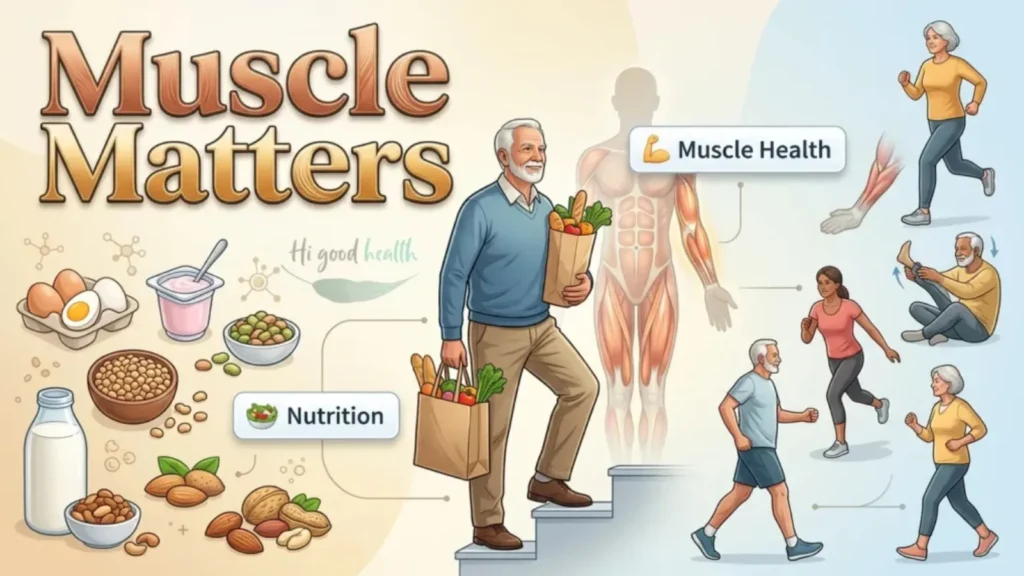
When climbing a single flight of stairs starts to feel like climbing a mountain, that’s not “just getting older.”
It may reflect a gradual loss of muscle mass and strength called sarcopenia — a common but potentially preventable part of aging. Newer research is helping us better understand how nutrition, resistance exercise, and targeted supplementation may support healthy aging and independence.
At a Glance
Sarcopenia is the age-related loss of muscle mass and strength, and it is not inevitable. Most healthy adults over 65 need 1.0 to 1.2 grams of protein per kilogram of body weight a day, rising to 1.2 to 1.5 g/kg for those who are active or recovering from illness — noticeably more than the general adult figure of 0.8 g/kg.
Spreading that protein across three meals matters as much as the daily total, because ageing muscle responds poorly to small amounts. Protein alone does not work: resistance exercise two or three times a week is the other half, and the half most people skip.
Unintentional weight loss, difficulty rising from a chair without using your arms, or a noticeably slower walking pace are reasons to see a doctor rather than to try harder at home.
Introduction
Consider a composite example drawn from clinical experience: a woman of 72 who enjoys gardening and time with her grandchildren, and who has stayed active.
Recently, stairs have become difficult and getting up from a chair feels slower. A medical evaluation shows no major heart or joint disease. One likely contributor: age-related muscle loss combined with inadequate protein intake and uneven meal patterns.
For years, many older adults were advised to eat relatively modest amounts of protein. However, current evidence suggests that seniors often require higher protein intake — along with resistance exercise and adequate micronutrients — to maintain muscle function, mobility, and quality of life.
This article provides a practical, evidence-based, plant-forward approach to supporting muscle health in older adults using updated nutrition science from recent clinical reviews and consensus statements.
Did you know that eating the right kind of protein can actually stop your muscles from shrinking as you age? See our detailed blog (Senior Nutrition in 2026 – Protein, Supplements) on protein and supplement needs for seniors.
To know more about senior safety and mobility, read our related article on fall prevention: Fall Prevention That Actually Works: Protecting Seniors in 2026 — practical strategies to reduce falls, improve balance, and maintain independence in older adults.
Topline summary
- Older adults generally require more protein than younger adults to maintain muscle mass and function.
- Seniors generally need more protein than earlier guidelines suggested (about 1.0–1.5 g/kg/day, higher if active or recovering from illness). The PROT-AGE Study Group recommends 1.0–1.2 g/kg/day for healthy older adults and 1.2–1.5 g/kg/day for those who are physically active or recovering [1].
- Seniors need a per-meal leucine threshold (≈ 2.5–3 g leucine per meal) to trigger muscle building. [2]
- Creatine (3–5 g/day) shows promise for both muscle and brain health in older adults. [3] It is not suitable for everyone — see the section on supplements below.
- A plant-first approach works — if meals are planned to meet amino-acid and micronutrient needs. Large cohort research from the Harvard T.H. Chan School of Public Health links higher plant-protein intake in midlife with a greater likelihood of healthy ageing in women, defined as reaching older age free of major chronic disease and with good physical and cognitive function [4].
Why Muscle Loss After 60 Happens Faster Than People Expect
As we age, muscles become less responsive to normal protein amounts — this is called anabolic resistance.
To maintain strength and prevent frailty we must change how much, when, and what kind of protein is eaten, and support it with a few targeted supplements and resistance exercise. The scientific consensus and recent reviews now back higher protein targets and per-meal strategies. [2]
The human cost: falls, longer hospital stays, loss of independence. The fix is not heroic — it’s strategic.
Sarcopenia is also a nutrition problem that hides in plain sight. It can occur in someone whose weight has not changed at all, because muscle is replaced by fat rather than lost outright — which is why weight alone is a poor guide and grip strength or chair-rise speed tell you more.
Muscle loss increases fall risk – learn more about it through our blog (Fall Prevention That Actually Works) on prevention strategies.
What Actually Causes Age-Related Muscle Loss
Protein Requirements
Expert groups including the PROT-AGE Study Group recommend:
- 1.0–1.2 g/kg/day protein for healthy older adults
- 1.2–1.5 g/kg/day for physically active seniors or recovery states
Example Calculation
A 150-lb adult: 150 ÷ 2.2 = ~68 kg; 68 × 1.0–1.2 = 68–82 g protein/day [1]
Leucine and Muscle Protein Synthesis
Leucine is an essential amino acid that plays a major role in stimulating muscle protein synthesis. Older adults generally require approximately 2.5–3 g leucine per meal, usually achieved with 25–35 g of high-quality protein or carefully combined plant protein sources.
Plant-based diets can absolutely support healthy aging, but meal planning becomes especially important to ensure adequate amino acids and micronutrients. [2]
Vitamin D and muscle
Vitamin D appears later in this article as a supplement, but it belongs in the science section too, because its role here is not only about bone.
Vitamin D receptors are present in skeletal muscle, low levels are associated with weakness in the large muscles of the thigh and hip, and correcting a genuine deficiency is one of the few interventions that improves both muscle function and fall risk. It is not a muscle-building supplement for someone whose level is already adequate.
Creatine
Creatine Monohydrate is one of the most studied supplements in sports and aging research. Evidence suggests it may improve muscle strength, support lean body mass, enhance exercise response, and potentially support aspects of cognition in older adults. Typical dose: 3–5 g/day. Creatine works with resistance training, not instead of it — the strength gains in trials come from the combination.
Anyone with kidney disease, anyone taking a medicine that affects the kidneys, and anyone who has not discussed it with their doctor should not start it. It can also raise blood creatinine slightly without any change in kidney function, which matters if you are having kidney bloods taken — tell whoever ordered the test [3].
Plant proteins: Large cohort studies link higher plant protein in midlife with healthier aging and lower frailty risk — so a plant-first strategy works when we plan complete meals and add simple supplements as needed. [4]
To know more about healthy aging and emotional well-being in older adults, read our related article: Senior Loneliness: America’s $6.7 Billion Healthcare Crisis That’s Killing Our Parents — exploring how social isolation affects physical and mental health in seniors and what families can do to help.
How to Stop Losing Muscle After 60: A Five-Step Plan
Step 1 — Calculate your personal target (do this today)
Weight (lbs) × 0.45–0.55 = grams protein per day. Example: 150 lb → 150 × 0.45 = 67.5 g → target 68–83 g/day. (Round to a simple number.) This is the same as the 1.0–1.2 g/kg figure above; if you are active or recovering from illness, use 0.55–0.68 per pound instead, which is 1.2–1.5 g/kg.
Step 2 — Use the 30-30-30 rule (spread protein across 3 meals)
- Breakfast: 25–30 g protein
- Lunch: 25–30 g protein
- Dinner: 25–30 g protein. This avoids dumping most protein at dinner and increases the chance each meal reaches the leucine trigger. [2]
Step 3 — Supplements to consider (doses included) (Always check with your clinician before starting supplements.)
- Vitamin B12: 100–250 mcg daily (sublingual or spray if absorption is a concern). B12 is vital for nerve and blood health.
- Vitamin D3 + K2: D3 1000–2000 IU/day (dose individualized based on labs). K2 supports bone mineralization. ⚠ If you take warfarin – an anticoagulant, do not start a vitamin K2 product without speaking to the clinician who manages your dose — vitamin K is what warfarin works against.
- Algae-based Omega-3 (DHA/EPA): 500–1,000 mg DHA (or 1000–2000 mg combined DHA+EPA if advised) for brain and heart support. Higher intake of Omega-3 is associated with improved hand grip strength.
- Leucine-enriched protein: Use a powder providing 2.5–3 g leucine if a meal doesn’t reach the threshold. (Many plant blends list leucine or EAA content.) [2]
- Creatine monohydrate: 3–5 g/day; evidence supports both muscle and cognitive gains in older adults (for kidney-healthy people). Consult a physician before starting. [3]
Step 4 — Build complete, plant-first plates (no meat/fish/eggs suggested)
- Breakfast idea: Warm quinoa porridge with hemp hearts, ground flax, a scoop of pea-protein powder (to hit 25–30 g), berries, and fortified plant milk + a B12 tablet.
- Lunch idea: Hearty lentil & walnut “Bolognese” over whole-grain pasta or buckwheat + a side salad (add nutritional yeast for extra B vitamins).
- Dinner idea: Tofu-tempeh stir fry with broccoli, edamame and tahini sauce on quinoa or farro.
- Snacks: Roasted chickpeas, edamame, hummus with seeded crackers, pumpkin seeds, Greek-style plant yogurt (fortified) + hemp hearts. These meal examples hit per-meal protein and leucine targets while delivering micronutrients. See recipe ideas on our plant protein page.
Step 5 — Move (resistance exercise) and time protein like medicine
Pair protein with resistance training 2–3×/week (bodyweight, bands or light weights). Eat protein within 2 hours of waking, after exercise, and consider a small pre-sleep slow protein (plant yogurt or pea protein mixed with milk) to reduce overnight breakdown.
If you have not trained before, start smaller than you think. Sitting down and standing up from a firm chair, ten times, twice a day, is resistance training for someone who is deconditioned — and it targets exactly the muscles that decide whether you can get out of a chair in five years’ time.
Add bands or light weights once that is comfortable, and stop and seek advice for chest pain, dizziness or a new joint pain that does not settle.
Hydration deserves a line here too. Older adults feel thirst less reliably, and dehydration causes weakness and confusion that can look like sudden muscle decline. Drink to a routine rather than to thirst, and take fluid intake seriously in hot weather and during any illness.
Quick reference (for print or fridge)
Daily protein targets by weight (approx):
- 120 lb → 54–66 g/day
- 140 lb → 63–77 g/day
- 160 lb → 72–88 g/day
- 180 lb → 81–99 g/day
Top plant & vegetarian protein powerhouses (per serving)
- Lentils — ~18 g/cup cooked
- Tofu (firm) — ~20 g/cup
- Tempeh — ~18–20 g/serving (¾–1 cup)
- Edamame — ~17 g/cup shelled
- Hemp hearts — ~10 g / 3 Tbsp
- Seitan — ~21 g/3 oz (if tolerated)
- Pea protein powder — 20–25 g / scoop (check leucine content)
Signs you should seek help (red flags)
- Unintentional weight loss >5% in 6 months
- Trouble rising from a chair without using arms
- Walking speed <0.8 m/s (slow)
- Frequent infections, slow wound healing
- New leg/foot swelling
- Muscle loss that is rapid, or affects one side of the body more than the other — that is not ordinary ageing and needs investigating
You can also learn about monitoring mobility, activity levels, heart rate, sleep, and fall risk using smart devices in our related article: Wearable Health Tech for Seniors — exploring how wearable technology may help older adults stay safer, more active, and independent.
What the Latest Research Says About Muscle Loss in Older Adults
(1) Protein needs are higher than old RDAs. The PROT-AGE group recommends ~1.0–1.2 g/kg/day for older adults to preserve muscle and function; higher amounts are advised for active or recovering seniors. [1]
(2) Per-meal leucine matters. Research shows meals providing about 2.5–3 g leucine (roughly 25–35 g protein of good quality) are necessary to trigger muscle protein synthesis in older adults. That’s why the 30-30-30 rule works. [2]
(3) Creatine helps brain + muscle. Systematic reviews and trials in adults show creatine monohydrate can improve muscle performance and may help aspects of cognition such as memory and processing speed. Evidence specifically in the over-60s is still limited, so treat the cognitive benefit as unproven in that age group. [3]
(4) Plant protein can protect against frailty. Cohort studies from large datasets indicate higher plant-protein intake in midlife links with healthier aging and reduced frailty risk later. This supports plant-first diets — when well planned. [4]
(5) Hydration matters more than it looks. Cell volume is one of the signals that influences whether muscle tissue is being built up or broken down, and dehydration is common in older adults because thirst becomes a less reliable guide with age.
The practical point is simple and well supported even where the cellular mechanism is still being worked out: staying properly hydrated protects strength, and dehydration causes weakness that can be mistaken for muscle loss [5].
What the Experts Say
Dr. Stuart Phillips (McMaster), a leading researcher on protein and aging, has long emphasized higher protein per meal and pairing protein with resistance training to preserve muscle mass. His work supports per-meal strategies and higher daily targets in older adults. [6]
The pattern clinicians describe is consistent and undramatic: adding protein to breakfast, a short resistance session two or three times a week, and correcting a genuine vitamin D or B12 deficiency produce measurable gains in balance and energy over months rather than weeks. There is no single intervention that does it alone.
Practical shopping & pantry checklist
- Pea / mixed plant protein powder (check leucine content)
- Hemp hearts, ground flax, chia seeds
- Dried lentils, chickpeas, black beans
- Firm tofu, tempeh, edamame (frozen)
- Quinoa, farro, buckwheat
- Fortified plant milk & fortified plant yogurt
- Pumpkin seeds, sunflower seeds, walnuts
- Vitamin B12 (sublingual), Vitamin D3 + K2, algae DHA, creatine monohydrate
Key Takeaways
- Sarcopenia is not inevitable, but preventing it takes protein and resistance work together — neither alone is enough.
- Protein at every meal matters more than protein totals for the day.
- Resistance work two to three times a week is the part most people skip.
- Unintentional weight loss is a red flag, not a success.
- Appetite falls with age — plan around it rather than ignoring it.
- Creatine and vitamin D have real evidence behind them, and both have people who should not take them without medical advice.
- Speak to a clinician before major dietary change, especially on medication.
FAQ
1. How much protein do older adults need to prevent sarcopenia?
Most older adults need 1.0–1.2 grams of protein per kilogram of body weight to preserve function. Active seniors may need 1.2–1.5 g/kg/day. For a 150-lb person, this targets roughly 68–83 grams daily.
2. What are the warning signs of sarcopenia?
Key red flags include unintentional weight loss, walking slower than usual, or difficulty rising from a chair without using your arms. Frequent infections and slow wound healing can also indicate nutritional issues.
3. What is the 30-30-30 rule?
This rule suggests eating 25–30 grams of protein at breakfast, lunch, and dinner rather than one large meal. Spreading intake evenly helps aging muscles overcome resistance to growth triggers throughout the day.
4. Is creatine safe for seniors?
For seniors with normal kidney function, 3–5 grams of creatine monohydrate daily is generally safe and supports muscle strength and cognition. Always consult a doctor before starting, especially if you have kidney concerns. Creatine can also raise measured blood creatinine slightly without affecting kidney function, so tell whoever orders your blood tests that you take it.
5. Can a plant-based diet prevent muscle loss?
Yes. Studies link higher plant-protein intake in midlife with healthier aging. To succeed, ensure every meal hits the “leucine threshold” (about 2.5–3 grams) using sources like pea protein, lentils, or tofu.
6. Is a high-protein diet safe for older kidneys?
For older adults with normal kidney function, increasing protein to recommended levels is generally safe. However, if you have chronic kidney disease, high protein can be harmful; always review diet changes with your physician.
7. Can you rebuild muscle after 70?
Yes. Trials in adults well into their eighties and nineties show measurable gains in strength and walking speed from resistance training combined with adequate protein. The rate of gain is slower than in a younger person, but the direction is the same, and the functional benefit — getting out of a chair, climbing stairs, avoiding a fall — is larger.
To better understand which protein source may suit your lifestyle, fitness goals, and nutritional needs, explore our detailed guide: Which Protein Is Best for You — a science-based comparison of plant and animal proteins, protein quality, digestibility, muscle health benefits, and how to choose the best option for healthy aging and overall wellness.
Creatine Monohydrate may also support muscle preservation as we age, which can indirectly help maintain body firmness and reduce age-related sagging associated with muscle loss. Read more in our blog: Sagging Face or Breasts After 35? It Might Be Muscle Loss—Not Aging.
Glossary
- Sarcopenia: Age-related loss of muscle mass and strength.
- Anabolic resistance: Muscles become less responsive to protein stimulus with age.
- Leucine: An essential amino acid that triggers muscle protein synthesis.
- Creatine monohydrate: A supplement that supports rapid energy use by muscle and brain.
References
1. Bauer J. et al. (2013). Evidence-based recommendations for optimal dietary protein intake in older people: a position paper from the PROT-AGE Study Group. Journal of the American Medical Directors Association, 14(8), 542–559.
2. Layman D. K. (2024). Impacts of protein quantity and distribution on body composition. Frontiers in Nutrition, 11, 1388986. doi:10.3389/fnut.2024.1388986
3. Luo L., Xu C., Bi S., Zhang W. (2024). The effects of creatine supplementation on cognitive function in adults: a systematic review and meta-analysis. Frontiers in Nutrition, 11, 1424972. doi:10.3389/fnut.2024.1424972
4. Ardisson Korat A. V., Shea M. K., Jacques P. F., et al. (2024). Dietary protein intake in midlife in relation to healthy aging — results from the prospective Nurses’ Health Study cohort. The American Journal of Clinical Nutrition, 119(2), 271–282. doi:10.1016/j.ajcnut.2023.11.010
5. Lorenzo I., Serra-Prat M., Yébenes J. C. (2019). The Role of Water Homeostasis in Muscle Function and Frailty: A Review. Nutrients, 11(8), 1857. doi:10.3390/nu11081857
6. Phillips S. M. et al. — protein requirements, distribution and resistance exercise in older adults.
Take one action today: pick one meal and add a reliable 25–30 g protein — for example, make quinoa porridge with hemp hearts + a scoop of plant protein for breakfast tomorrow.
Disclaimer
This article is educational only and does not replace medical advice. Always consult your healthcare provider before starting new supplements or making dramatic diet changes, especially if you have chronic conditions or kidney disease.
