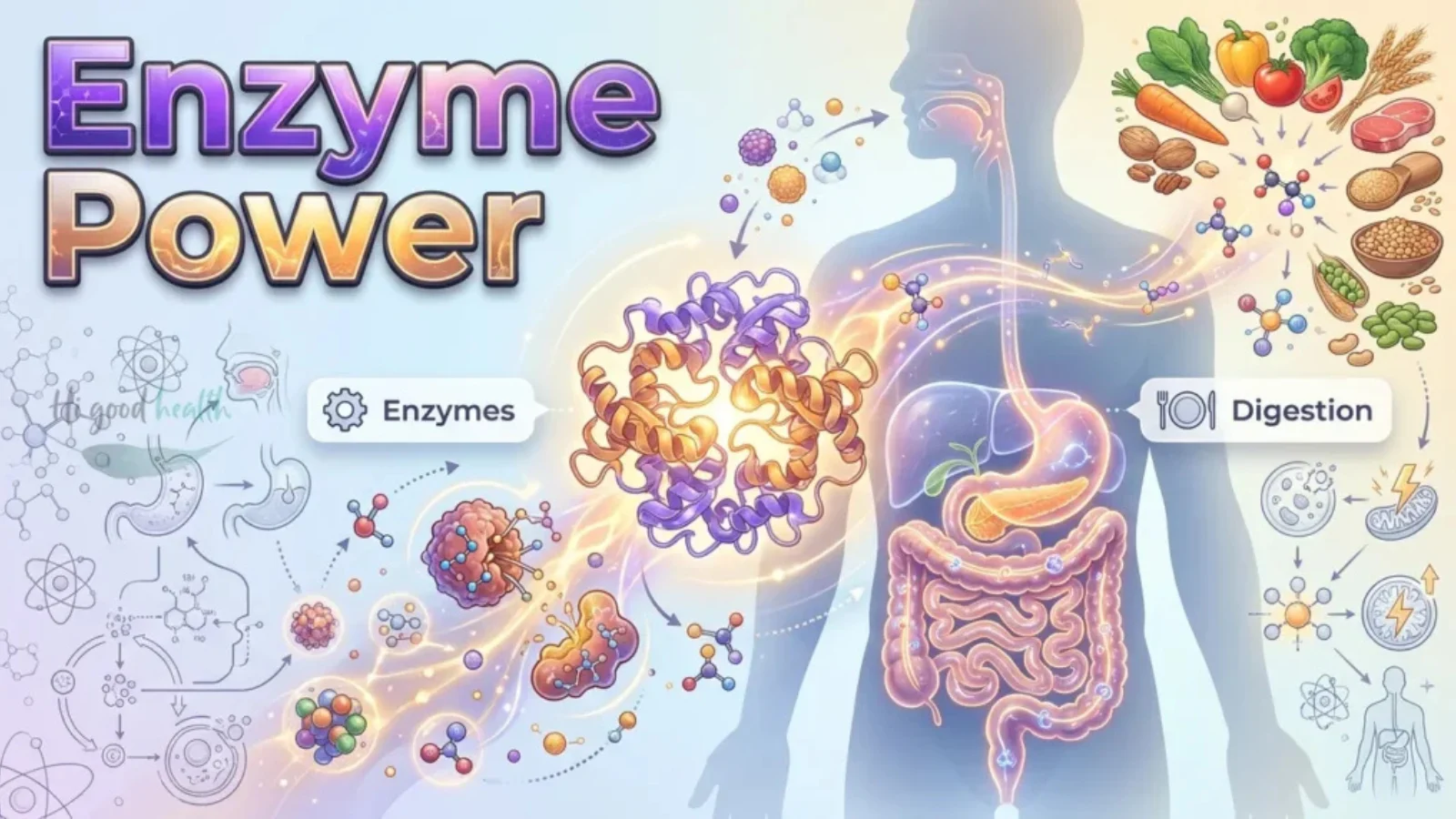
Ever wondered about the tiny assets working tirelessly inside you? We often hear about vitamins, minerals, and proteins, but a lesser-known, yet equally vital, group of biological molecules — enzymes — are the true unsung heroes of our physiology.
At a glance
What are enzymes? They are the body’s catalysts — specialised proteins that make chemical reactions happen fast enough to keep you alive. Digestion is the most visible example, but enzymes also drive energy production, DNA repair and detoxification, and the human body is thought to produce them in the thousands.
Three digestive enzymes are worth knowing by name: amylase for starches, protease for proteins and lipase for fats. Most everyday complaints — bloating after a heavy meal, gas, a leaden feeling after fried food — involve one of those three struggling to keep pace.
Genuine enzyme deficiency is a medical diagnosis, not a supplement category. Exocrine pancreatic insufficiency, lactose intolerance and coeliac disease need testing and treatment. For everything milder, what you eat and how you eat it does more than a capsule will.
They orchestrate nearly every biochemical reaction that keeps us alive and thriving, from energy production to detoxification. While their functions are vast, their role in digestion is particularly critical for your overall gut health. Let’s delve into the indispensable world of enzymes.
What Are Enzymes, and What Is Their Role in the Human Body?
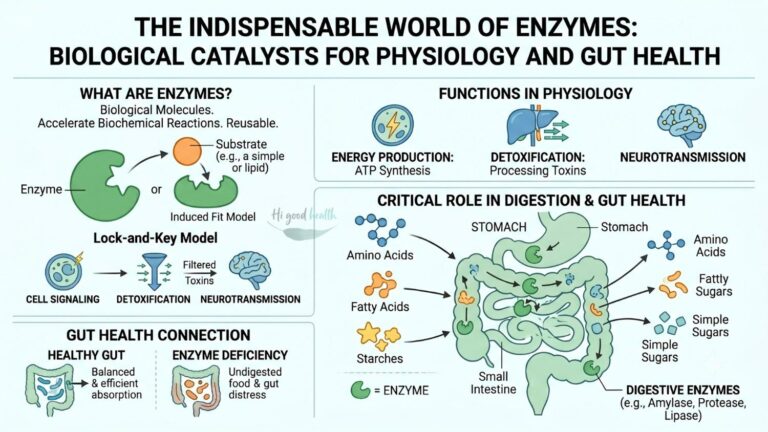
At their core, enzymes are biological catalysts — specialised proteins that significantly speed up the rate of chemical reactions within living organisms without being consumed in the process. Research published in the National Institutes of Health (NIH) database confirms that enzymes reduce the activation energy required for biochemical reactions, making them essential for life [1].
Imagine your body as a massive factory with countless assembly lines. Enzymes are the efficient managers and workers ensuring each process — from repairing tissues and fighting infections to converting food into energy — happens quickly and precisely. Without enzymes, these reactions would occur too slowly to sustain life, making them fundamental to every bodily function.
Curious to explore digestion further? Read our blog: How Is Your Gut Talking to Your Brain?
Types of Enzymes: How Many Does the Human Body Produce?
The human body is an astonishingly complex chemical laboratory, producing thousands of different types of enzymes, each meticulously designed for a highly specific task. These enzymes are broadly categorised by their function:
- Digestive Enzymes: Focus on breaking down food (e.g., amylase, protease, lipase)
- Metabolic Enzymes: Involved in cellular processes like energy production, detoxification, and tissue repair (e.g., superoxide dismutase, catalase)
- Food Enzymes: Found naturally in raw foods, contributing to initial food breakdown (e.g., lactase, papain)
This vast array ensures that every intricate biochemical pathway, from the simplest cellular activity to complex system functions, runs smoothly and efficiently.
How Enzymes Work: The Lock and Key Behind Every Reaction
An enzyme works by binding the molecule it acts on — the substrate — at a specific pocket called the active site. The fit is so particular that the classic description is a lock and key, although the modern refinement is induced fit: the enzyme flexes slightly to close around its substrate rather than sitting rigidly waiting for it.
Once bound, the enzyme lowers the energy needed for the reaction to proceed, and the reaction runs thousands to millions of times faster than it otherwise would.
The enzyme itself is released unchanged and immediately does it again — a single enzyme molecule can process thousands of substrate molecules every second. That is why the body needs only tiny quantities of each one.
Two things break the fit: temperature and pH. Heat denatures enzymes, unfolding them permanently, which is why a high fever disrupts digestion and why cooking destroys the enzymes present in raw food.
Each enzyme also has a narrow pH range it works in — pepsin needs the stomach’s acidity at around pH 2, while pancreatic enzymes need the alkaline conditions of the small intestine at around pH 8.
Many enzymes cannot work alone. They need a non-protein helper called a coenzyme, and most coenzymes are derived from vitamins — the B-complex group in particular. Minerals such as zinc, magnesium and iron act as cofactors in the same way.
This is the practical reason a B-vitamin deficiency shows up as tiredness: the metabolic enzymes that release energy from food are trying to work without their helpers.
Stomach and Gut Enzymes: The Architects of Nutrient Absorption
While enzymes play myriad roles, their contribution to digestion is perhaps the most direct and impactful on our daily well-being. According to the National Institute of Diabetes and Digestive and Kidney Diseases (NIDDK), digestive enzymes act as microscopic scissors meticulously cutting large food molecules into smaller, absorbable pieces [2].
- Amylase breaks down complex carbohydrates (starches) into simpler sugars
- Protease tackles proteins, breaking them down into amino acids
- Lipase works on fats, converting them into fatty acids and glycerol
These crucial enzymes are produced in various locations, including your salivary glands, stomach, and most significantly, your pancreas. Without sufficient digestive enzymes, your body cannot properly absorb vital nutrients, leading to uncomfortable symptoms and long-term health implications.
Reasons for Enzyme Deficiency and Associated Issues
Enzyme deficiencies are more common than many realise and can significantly impact digestion and overall health. Common causes include:
- Ageing: Natural enzyme production tends to decrease with age, with studies showing pancreatic enzyme secretion can decline by approximately 10% per decade after age 40.
- Chronic Stress: Prolonged stress elevates cortisol levels, which can redirect blood flow away from the digestive system and impair enzyme production.
- Medical Conditions: Conditions like chronic pancreatitis, cystic fibrosis [3], coeliac disease [4], or Crohn’s disease can significantly reduce enzyme output. Gastric bypass or other digestive surgeries can also be a factor.
- Lifestyle Factors: A diet high in processed foods (which lack natural enzymes), excessive alcohol consumption, and even prolonged use of antacids can strain your body’s enzyme reserves.
- Genetic Mutations: Inborn errors of metabolism are inherited from parents. For example, Phenylketonuria (PKU), resulting from deficiency of the enzyme phenylalanine hydroxylase (PAH). PKU is associated with growth failure, microcephaly, seizures, and intellectual impairment caused by the accumulation of toxic by-products of metabolism [5].
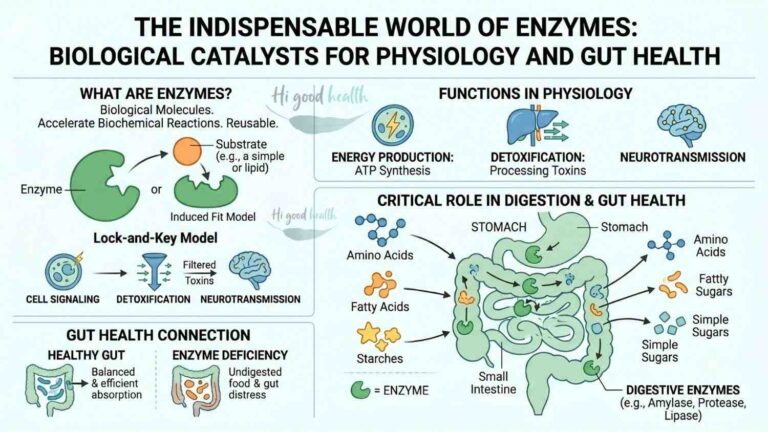
When deficient, undigested food ferments in the gut, leading to familiar symptoms such as bloating, gas, abdominal pain, loose motions, or constipation. Over time, this chronic malabsorption can cause broader nutrient deficiencies, impacting energy, immunity, and overall vitality, even if you eat a healthy diet.
Want to understand how sweeteners impact your gut microbiome? Read our blog: Natural vs Artificial Sweeteners: What’s Best for Gut Health, Appetite & Blood Sugar?
How to Identify an Enzyme Deficiency: Signs and Symptoms
Recognising an enzyme deficiency often begins with noticing persistent digestive symptoms, especially after meals. Common signs to watch for include:
- Consistent bloating, excessive gas, or abdominal discomfort after meals, particularly those rich in fats or certain carbohydrates.
- Undigested food particles in stool or stools that are greasy, fatty, or float (steatorrhea).
- Chronic loose motions or constipation.
- Feeling overly full quickly or a sensation of food “sitting heavily” in your stomach.
For a precise diagnosis, your doctor might recommend a faecal elastase test to measure pancreatic enzyme output [5] or a comprehensive digestive stool analysis to assess overall gut health [6].
The American Gastroenterological Association (AGA) provides guidelines for diagnosing exocrine pancreatic insufficiency (EPI), a severe form of enzyme deficiency [6]. Keeping a detailed food and symptom diary can provide valuable clues for your doctor.
Natural Ways to Address Enzyme Deficiency
For milder enzyme deficiencies, several natural approaches can significantly improve your digestive enzyme status. However, it’s important to note that severe enzyme deficiency conditions like EPI require prescription pancreatic enzyme replacement therapy (PERT) and medical supervision.
Enzyme Rich Foods: Dietary Strategies That Work in India
- Embrace Raw and Whole Foods: Raw fruits like pineapple (rich in bromelain) and papaya (containing papain) provide natural proteolytic enzymes that aid protein digestion — both are widely available and affordable across India [8]. Raw mango contains amylases that help break down carbohydrates, and raw banana is also a good source of digestive enzymes [9].
- Incorporate Fermented Foods: Foods like idli, dosa, kanji, and homemade curd as well as are not only rich in probiotics but also contain enzymes produced during their fermentation process. Harvard T.H. Chan School of Public Health highlights the digestive benefits of fermented foods.
- Enhancing Digestion Naturally by using Spices: Use ginger, cumin, cardamom, and fennel to stimulate natural enzyme secretion.
Lifestyle Modifications
- Chew Thoroughly: This simple habit mechanically breaks down food and stimulates the cephalic phase of digestion, which signals your body to release digestive enzymes more effectively through neural and hormonal pathways.
- Manage Stress: Practices like mindfulness, yoga, or meditation can support enzyme production, as chronic stress diverts resources away from optimal digestion. Take a brief 15-minute walk after eating to boost gut motility. Ensure adequate sleep to give your body time to properly absorb nutrients. The parasympathetic nervous system (“rest and digest” mode) enhances digestive enzyme secretion.
- Eat Mindfully: Smaller, more frequent meals can ease the digestive burden on your system. Focusing on a nutrient-dense, plant-rich diet naturally supports your body’s innate enzyme production, contributing to better gut health. Consume your largest meal at midday when your digestive fire (Agni) is strongest.
- Check vitamin and mineral levels: Many vitamins (vitamin B family) and minerals (Zinc) act as coenzymes and cofactors respectively — like a key that turns on an engine. Without them, several enzymes remain inactive [1].
- Limit Alcohol: Alcohol is a major cause of chronic pancreatitis, which directly leads to enzyme deficiency.
Supplementation Considerations
Probiotics are a different question from enzymes, and they are covered separately in Enzymes vs. Probiotics: Choosing Your Allies for Optimal Gut Health, which goes into probiotic foods, prebiotics, and what to look for on a capsule label.
While this article focuses on natural approaches, digestive enzyme supplements are available for those with more significant deficiencies. According to a comprehensive review published in Current Gastroenterology Reports, enzyme supplementation can be beneficial for specific conditions, though individual responses vary [10].
In India, digestive enzyme supplements are regulated as nutraceuticals under the FSSAI Health Supplements & Nutraceuticals Regulations — always choose FSSAI-licensed brands and consult a registered dietitian or gastroenterologist before starting any supplement regimen [11].
Now that you understand the crucial role of enzymes, are you curious about how they differ from probiotics, and which supplements might be right for your specific digestive needs?
Explore the difference between enzymes and probiotics in our next article: “Enzymes vs. Probiotics: Choosing Your Allies for Optimal Gut Health.”
Key Takeaways
- Enzymes are specialised proteins that speed up reactions the body could not otherwise run fast enough. Digestion is only the most visible of their jobs.
- Amylase, protease and lipase handle starches, proteins and fats respectively — the three names worth remembering.
- Enzymes are denatured by heat and work only within a narrow pH range, which is why fever upsets digestion and why cooking removes the enzymes from raw food.
- Most enzymes need a coenzyme, usually derived from a B vitamin, or a mineral cofactor such as zinc or magnesium. A deficiency in those shows up as fatigue long before anything else.
- Enzyme rich foods are cheap and widely available in India — raw papaya (papain), pineapple (bromelain), raw mango, curd and other fermented foods.
- Persistent bloating, pale or greasy stools, unexplained weight loss or fat in the stool are not ordinary indigestion. They point towards exocrine pancreatic insufficiency and need a doctor, not a supplement.
- Slow eating, thorough chewing and managing stress do more for day-to-day digestion than any over-the-counter enzyme product.
Frequently Asked Questions
1. What are enzymes, and why are they vital?
Enzymes are biological catalysts that speed up chemical reactions like digestion and energy production. Without these specialised proteins, essential bodily processes would occur too slowly to sustain life.
2. What are the main types of digestive enzymes?
The primary types are amylase, which breaks down carbohydrates; protease, which targets proteins; and lipase, which converts fats. These “microscopic scissors” are vital for properly absorbing nutrients.
3. How do I know if I have an enzyme deficiency?
Watch for persistent bloating, gas, and abdominal pain, particularly after eating fats or carbohydrates. Other indicators include greasy, floating stools (steatorrhea), chronic loose motions, or feeling overly full quickly. Consult a doctor for proper diagnosis.
4. Which foods are naturally high in digestive enzymes?
Raw fruits like pineapple (bromelain) and papaya (papain) are rich in natural enzymes — both are easily available and affordable. Raw mango contains amylases. Fermented foods such as homemade curd, idli, dosa batter, and kanji are also excellent sources, as the fermentation process produces beneficial enzymes.
5. Why does a high fever cause a complete loss of appetite and indigestion?
Enzymes are highly temperature-sensitive globular proteins. When body temperature rises significantly during a fever, the heat disrupts the weak hydrogen bonds stabilizing the enzyme’s three-dimensional active site. Hence, deactivates their active sites, preventing them from binding to food. As a result, chemical reactions slow down, causing indigestion and a loss of appetite.
6. Can drinking water during meals weaken my digestive enzymes?
Drinking large amounts of water can dilute gastric juices and slow down enzymes. It is best to sip small amounts of warm water or take liquids 30 minutes before or after a meal.
7. How does chronic stress affect my digestion?
Prolonged stress can significantly impair your body’s ability to produce digestive enzymes. By elevating cortisol and diverting resources away from digestion, stress often leads to malabsorption and uncomfortable symptoms like bloating.
8. Does cooking or processing food destroy enzymes?
Yes, heat above 118°F (48°C) can denature food enzymes. Diets high in processed foods often lack natural enzymes, which can strain your body’s reserves. Incorporating raw, whole foods provides “food enzymes” that contribute to the initial breakdown of your meals.
9. How can I boost my enzyme levels naturally?
Chewing food thoroughly is a simple habit that mechanically breaks down food and signals enzyme release. Eating smaller, nutrient-dense meals, incorporating raw and fermented foods, and practising stress management all support your body’s natural enzyme production.
10. What is the difference between enzyme deficiency and exocrine pancreatic insufficiency (EPI)?
EPI is a severe medical condition where the pancreas doesn’t produce enough digestive enzymes, often due to chronic pancreatitis, cystic fibrosis, or pancreatic cancer. It requires prescription enzyme replacement therapy. General low enzyme production may be milder and can often be addressed through dietary and lifestyle changes.
11. How do enzymes actually work?
An enzyme binds the molecule it acts on, called the substrate, at a pocket named the active site. The fit is highly specific, which is why the classic description is a lock and key, refined in modern biochemistry to induced fit because the enzyme flexes to close around the substrate. Once bound, the enzyme lowers the energy the reaction needs and then releases unchanged, ready to repeat. A single enzyme molecule can process thousands of substrate molecules a second, which is why the body needs only tiny amounts of each one.
12. What is amylase and what does it do?
Amylase is the enzyme that breaks down starches into simpler sugars. It is unusual in starting its work in the mouth, where salivary amylase begins acting on rice, roti, potato and other starchy foods while you chew, which is the reason a plain piece of roti starts to taste faintly sweet if you hold it in your mouth. The pancreas then produces more amylase to finish the job in the small intestine. Blood amylase is also the test doctors use when they suspect a problem with the pancreas.
13. What is a coenzyme, and why do enzymes need one?
A coenzyme is a small non-protein helper molecule that many enzymes cannot work without. Most coenzymes are derived from vitamins, particularly the B-complex group, and minerals such as zinc, magnesium and iron play a similar role as cofactors. This is the practical link between diet and energy: when B vitamins are short, the metabolic enzymes that release energy from food are working without their helpers, and persistent tiredness is often the first sign.
Curious about choosing the right supplement? Read our blog: Which Protein Is Best for You — Find Your Match, Ideal Timing & Mental Wellness.
Disclaimer: The information provided in this blog post is for educational purposes only and is not intended to be a substitute for professional medical advice, diagnosis, or treatment. Always seek the advice of your doctor or other qualified health provider with any questions you may have regarding a medical condition. The content should not be used as a basis for diagnosing or treating any health condition. Individual results may vary, and what works for one person may not work for another.
References
[1] National Center for Biotechnology Information. (n.d.). Enzymes. In Biochemistry (5th ed.). https://www.ncbi.nlm.nih.gov/books/NBK9921/
[2] National Institute of Diabetes and Digestive and Kidney Diseases. (n.d.). Your digestive system & how it works. U.S. Department of Health and Human Services. https://www.niddk.nih.gov/health-information/digestive-diseases/digestive-system-how-it-works
[3] Mayo Clinic. (2024). Cystic fibrosis. https://www.mayoclinic.org/diseases-conditions/cystic-fibrosis
[4] Mayo Clinic. (2024). Celiac disease. https://www.mayoclinic.org/diseases-conditions/celiac-disease
[5] Williams RA, Mamotte CD, Burnett JR. Phenylketonuria: an inborn error of phenylalanine metabolism. Clin Biochem Rev. 2008;29(1):31–41. https://pmc.ncbi.nlm.nih.gov/articles/PMC2423317/
[6] American Gastroenterological Association. (n.d.). AGA clinical practice guidelines. https://gastro.org/
[7] National Center for Biotechnology Information. (2016). Bromelain as a treatment for osteoarthritis: A review of clinical studies. Evidence-Based Complementary and Alternative Medicine. https://www.ncbi.nlm.nih.gov/pmc/articles/PMC4998156/
[8] Harvard T.H. Chan School of Public Health. (n.d.). Fermented foods. The Nutrition Source. https://www.hsph.harvard.edu/nutritionsource/fermented-foods/
[9] Times of India / Economic Times. (2025). Papaya and pineapple: enzyme powerhouses for digestion. https://economictimes.com (enzyme-rich foods, India context)
[10] National Center for Biotechnology Information. (2016). Digestive enzyme supplementation in gastrointestinal diseases. Current Gastroenterology Reports, 18(4), 35. https://www.ncbi.nlm.nih.gov/pmc/articles/PMC4923703/
[11] FSSAI Health Supplements & Nutraceuticals Regulations (2022, updated). Food Safety and Standards Authority of India. https://fssai.gov.in | Enzyme/protein permissibility governed under FSS Regulations for Nutraceuticals (operative directions 2022–2023).
Disclaimer
The content provided on higoodhealth.com is for general informational purposes only. While we strive to offer accurate and up-to-date content, much of the information is derived from publicly available sources and personal research. We do not make any warranties about the completeness, reliability, or accuracy of this information.