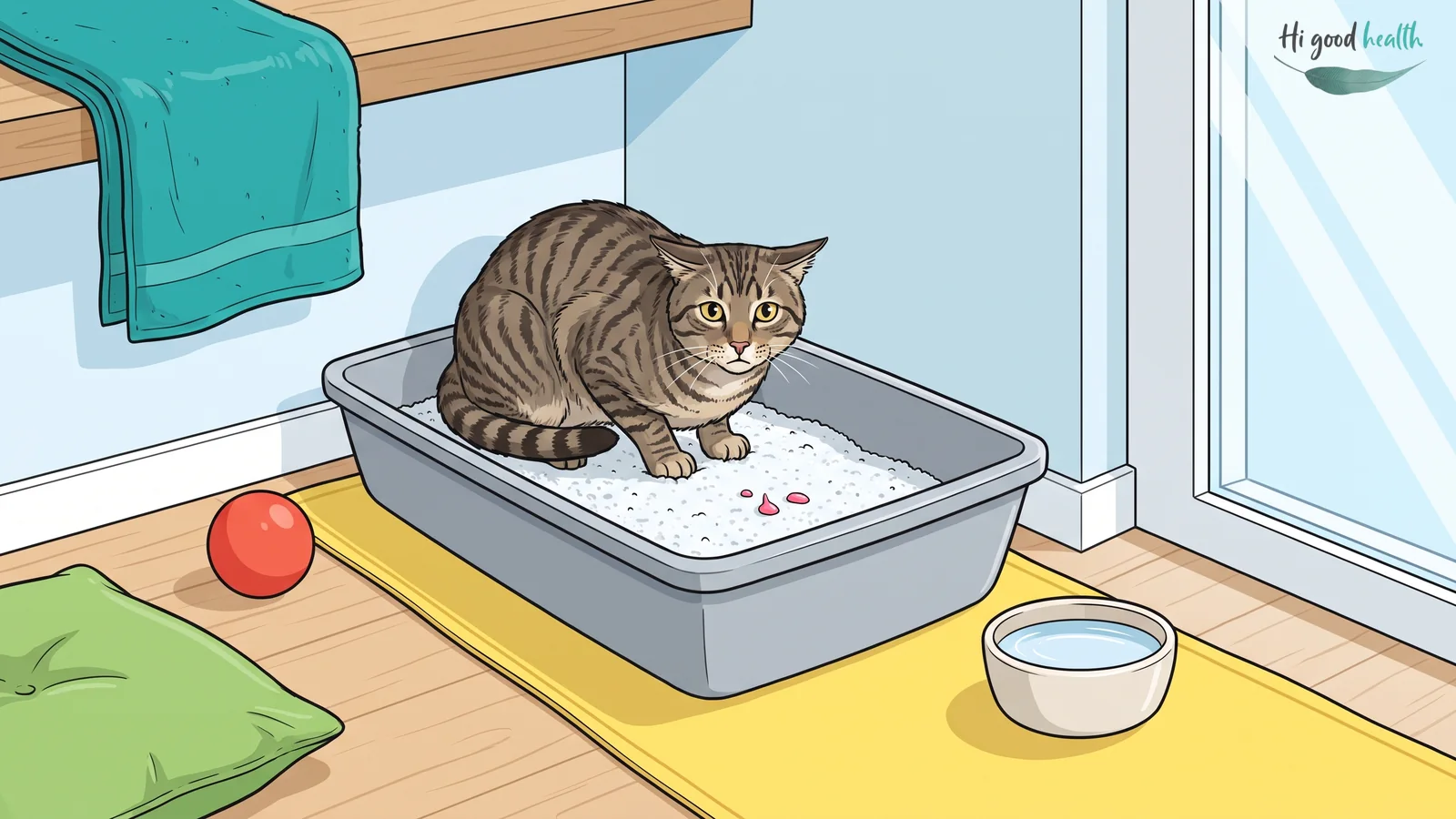
You notice a pink tinge in your cat’s litter box—is your cat peeing blood? Perhaps there are a few drops of blood, repeated trips to the litter box, or your male cat keeps squatting and straining—but nothing comes out. What every cat parent should know about blood in cat urine, urinary blockage, warning signs, and when it becomes an emergency.
At a glance
Bloody cat pee, or a cat bleeding when peeing, is a sign, not a diagnosis. Bladder inflammation, urinary tract infections, bladder stones, injury to the urinary tract and other underlying conditions can all be behind it. Infection is not always the reason for the blood.
A male cat’s urethra is longer and narrower than a female’s, so males face a higher risk of a life-threatening urethral blockage. A blocked male may keep going back to the litter box, strain and pass only a few drops—or nothing at all. The straining is easily mistaken for constipation.
When the urethra becomes completely blocked, the kidneys become less able to filter waste products and potassium can accumulate in the bloodstream. High potassium levels can interfere with the pumping activity of the heart. Help should be sought before the cat collapses or loses consciousness.
Treatment is not one-size-fits-all when a cat has blood in its urine. The vet decides on it according to the cause and, above all, whether the cat is obstructed. Home care, or antibiotics followed by a wait-and-see approach, is never the answer for a blocked male cat.
Seeing Blood in Your Cat’s Urine? Don’t Ignore It
- What haematuria means: The presence of blood in your cat’s urine is called haematuria, sometimes visible and sometimes only detectable through a urine test.
- What blood in urine may look like:
- Pink/red urine: Urine may appear with a pink or red tinge due to blood.
- Orange or tea-coloured urine: Dark or unusual urine colour may indicate oxidised blood.
- Blood drops after urination: Dribbles of blood after urination may also be noticeable.
- Blood in urine is a sign, not a diagnosis.
It may be associated with bladder inflammation, urinary tract infections, bladder stones, urinary tract injury or other underlying conditions. Your veterinarian will need to identify the actual cause before recommending treatment.
What Can Cause Blood in a Cat’s Urine?
Blood in the urine can result from bladder inflammation, urinary stones, urethral plugs, trauma and other conditions.
- Feline idiopathic cystitis (FIC): FIC is one of the most common causes of lower urinary tract signs in cats. It involves inflammation of the urinary bladder without an identifiable underlying cause. Affected cats may pass blood in their urine, urinate frequently, strain in the litter box or urinate outside it. Stress, environmental changes and inadequate water intake may contribute to flare-ups in susceptible cats. [1]
- Urethral plugs: Urethral plugs are accumulations of inflammatory material, mucus and mineral crystals that obstruct the urethra. This is particularly concerning in male cats because their narrower urethra makes them more susceptible to blockage. Affected cats may repeatedly strain to urinate but pass little or no urine. [2]
- Uroliths/urinary stones: Mineral stones can develop in the bladder or other parts of the urinary tract. They may irritate the bladder lining, causing bleeding, discomfort and frequent urination. Some stones can also obstruct urine flow and require urgent treatment, sometimes surgical intervention. [3]
- Bacterial urinary tract infection: Although bacterial infections can cause blood in the urine, they are more likely to occur in older cats and those with underlying conditions, such as chronic kidney disease or diabetes. A veterinarian may recommend urinalysis and urine culture to confirm an infection before selecting appropriate antibiotics. [4]
- Trauma: An injury involving the abdomen, pelvis or urinary tract may cause blood to appear in the urine. If blood is noticed after a fall, road accident or other traumatic incident, seek veterinary attention promptly. [1]
- Neoplasia: Tumours affecting the bladder or other parts of the urinary tract are less common but may cause blood in the urine, particularly in older cats. [2]
- Important pet-parent message: “Blood in the urine does not automatically mean infection.”

Which Cats Are More Prone to Urinary Problems?
Sex: Why a Male Cat Peeing Blood Is at Greater Risk
- Male cats are at greater risk of life-threatening urethral obstruction because their urethra is longer and narrower than that of females. [1] [5]
- Both male and female cats can develop feline lower urinary tract disease (FLUTD), cystitis, urinary stones and haematuria.
- Castrated male cats are not protected from urinary disease; body condition, hydration, diet and environmental factors can also contribute to risk.
Age
- Middle-aged adult cats and overweight cats are commonly affected by FIC. [5]
- Older cats are more likely to have other underlying causes, including urinary tract infection, urolithiasis, kidney disease or neoplasia, so investigation becomes particularly important.
Breed
Some breeds have reported associations with particular urinary conditions. [6] For example:
- Persian and Himalayan cats have been associated with increased risk of certain urinary stone types, although individual risk varies. [8]
- British Shorthair and other breeds may also develop urolithiasis; breed alone does not establish the cause. [9]
- Mixed-breed cats can absolutely develop urinary obstruction and FIC—this is not a disease limited to pedigree cats.
Signs of Urinary Blockage in Cats
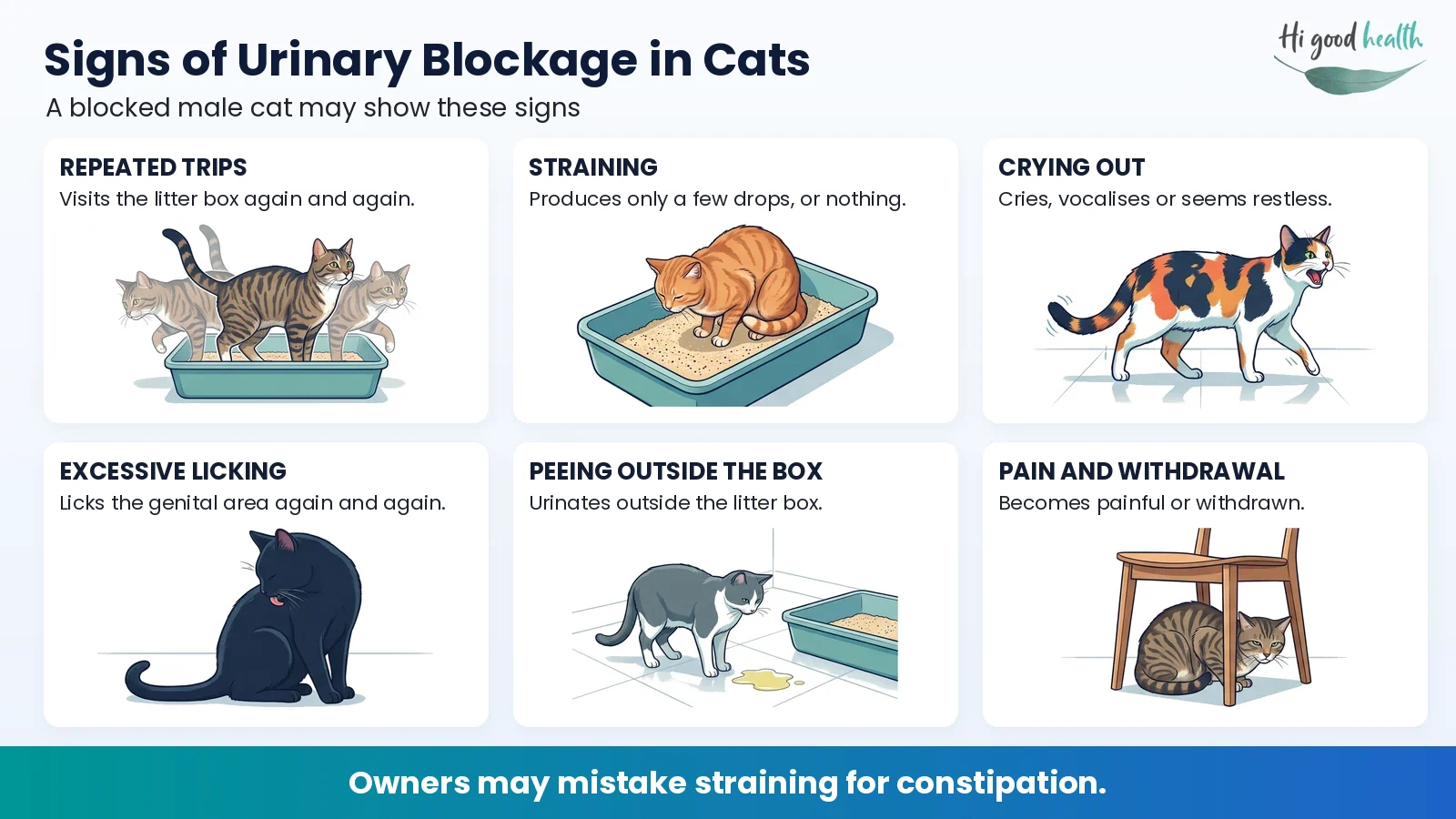
Urethral obstruction is the major emergency. A blocked male cat may:
- Repeatedly visit the litter box
- Strain to urinate
- Produce only a few drops—or nothing
- Cry, vocalise or appear restless
- Lick their genital area excessively
- Urinate outside the litter box
- Become increasingly painful or withdrawn
A key warning: Owners may mistake straining for constipation.
Male Cat Urinary Blockage: Why a Complete Blockage Is an Emergency
When the urethra becomes completely blocked, urine continues to accumulate in the bladder, causing it to stretch and increasing pressure within the urinary tract. As the pressure rises, the kidneys become less able to filter waste products and maintain the body’s normal fluid and electrolyte balance.
One of the most dangerous consequences is the accumulation of potassium in the bloodstream (hyperkalaemia). High potassium levels can interfere with the pumping activity of the heart, potentially causing life-threatening cardiac arrhythmias.
Do not wait until the cat becomes collapsed or unconscious.

Diagnosis: Finding Out Why Your Cat Has Blood in Its Urine
A veterinarian may recommend several tests depending on the cat’s age, clinical signs and whether feline urinary obstruction is suspected.
Blood Profile
- Complete blood count: looks for anaemia, inflammation and other systemic abnormalities.
- Serum biochemistry: evaluates kidney parameters such as BUN and creatinine, along with other parameters.
- Electrolytes: particularly potassium, which can become dangerously elevated in a blocked cat.
- Blood glucose may also be assessed depending on the clinical situation.
Urine Examination
- Blood and protein: May indicate bleeding or inflammation within the urinary tract, although other conditions can also cause these findings.
- Urine specific gravity (USG): Indicates how concentrated the urine is and helps assess the kidneys’ ability to concentrate urine.
- Urine pH: Provides information about acidity or alkalinity, which can influence the formation of certain urinary crystals.
- Glucose: May help identify glucose in the urine, which can be associated with diabetes.
- Urinary sediment: Microscopic examination can reveal red and white blood cells, crystals, casts, bacteria and other material.
Ultrasonography
Ultrasonography can help evaluate:
- Bladder wall: Thickening, irregularity and other changes that may accompany urinary disease.
- Bladder contents: Sediment, debris, blood clots and certain abnormal structures.
- Urinary stones: Many bladder stones can be visualised, although detection depends on their size and location.
- Kidneys: Changes in size, architecture or the collecting system that may indicate urinary or renal disease.
- Other abnormalities: Masses, anatomical changes and certain signs of cat urinary tract obstruction.
X-ray/Radiography
Abdominal radiographs can help detect and locate radiopaque urinary stones, particularly those containing minerals that are readily visible on X-rays.
However, some stones are poorly visible or radiolucent on routine radiographs. Therefore, a normal X-ray does not exclude urinary stones. Ultrasound or additional imaging may be needed, depending on the suspected condition.
Treatment: It Depends on What Is Causing the Urinary Problem
There is no single treatment for blood in a cat’s urine. Your veterinarian will choose treatment based on the cause and, most importantly, whether the cat is obstructed.
If the Cat Is Blocked
- Immediate stabilisation with IV fluids and correction of dehydration/electrolyte abnormalities
- Analgesia to control significant pain
- Sedation or anaesthesia when required for safe urinary catheterisation
- Urethral catheterisation and flushing to relieve the obstruction
- Monitoring of urine output, kidney values and electrolytes
- Hospitalisation may be required until the cat is passing urine adequately and is clinically stable
A blocked male cat should never be treated at home or simply given antibiotics and observed.
If Urinary Stones Are Present
- Treatment depends on the type, size and location of the stone
- Some stones may be managed with a veterinary therapeutic urinary diet when dissolution is possible according to the size of the stones.
- Stones that cannot be dissolved and are causing obstruction may need surgical intervention.
- Dietary management and increased water intake are advised to reduce recurrence risk
If Bacterial UTI Is Confirmed
Appropriate antimicrobial therapy is required, ideally guided by urine culture and sensitivity when indicated. Any underlying condition that predisposes the cat to infection should also be treated. Follow-up may be recommended in recurrent or complicated cases.
If the Cat Has Feline Idiopathic Cystitis (FIC)
Treatment is generally aimed at controlling pain and reducing bladder/urinary tract inflammation while addressing factors associated with recurrence. Depending on the individual cat, this may include:
- Pain relief
- Increasing water intake
- Wet-food or veterinarian-recommended dietary strategies
- Improving litter-box access and hygiene
- Environmental enrichment and stress reduction
- Maintaining a healthy body weight and encouraging activity
Antibiotics are not routinely indicated for FIC when there is no evidence of bacterial infection.
Can FIC Come Back?
Unfortunately, some cats experience recurrent episodes. Long-term management therefore focuses on treating the current episode and also on hydration, environmental management, appropriate nutrition, weight control and recognising urinary warning signs early.
Common Factors That Can Contribute to Urinary Problems
- Low water intake: Concentrated urine can increase urinary irritation and, in susceptible cats, contribute to crystal/stone formation.
- Diet: An inappropriate or poorly balanced diet can affect urine composition and urinary health.
- Mostly dry food: Provides less moisture than wet food, so encouraging water intake can be beneficial.
- Obesity & inactivity: Associated with increased risk of feline lower urinary tract problems.
- Stress: An important contributor in cats with feline idiopathic cystitis (FIC).
- Poor litter-box management: Dirty, crowded or poorly placed litter boxes can contribute to urinary and behavioural problems.
- Male sex: Male cats are particularly vulnerable to urethral blockage because of their narrower urethra.
Vet tip: Adequate hydration, a complete balanced diet, healthy body weight, clean litter boxes and stress reduction can all support urinary health.
What Studies Suggest
- Multimodal environmental management: [7] For recurrent FIC, current evidence increasingly supports addressing stress, cat–cat conflict, litter-box setup, enrichment and predictable routines alongside medical treatment.
- Higher-moisture therapeutic diets: [7] Therapeutic urinary diets, particularly when combined with increased dietary moisture, currently have some of the strongest evidence for recurrent FIC management.
- Reconsidering routine medications: [7] Drugs such as prazosin and glycosaminoglycan supplements have been widely discussed, but current evidence does not establish routine benefit for FIC; a 2025 systematic review found insufficient evidence for several commonly used therapies.
- Surgical options for recurrent obstruction: [1] Cats with repeated episodes despite appropriate medical management may be evaluated for perineal urethrostomy (PU), which changes the anatomy of the urethral outlet to reduce the likelihood of future life-threatening obstruction.
- Better emergency management of hyperkalaemia: [10] Recent research suggests that, in cats with urethral obstruction and hyperkalaemia, prompt relief of the obstruction, IV fluids and calcium gluconate are key components of treatment. Additional potassium-lowering medications may not provide significant added benefit in every case, but treatment should be guided by the cat’s clinical condition, serum potassium concentration and ECG findings.
Key Takeaways
Blood in a cat’s urine points to a problem but does not name it, and it is not proof of an infection. The actual cause has to be found by your veterinarian before any treatment is advised.
Urethral blockage is a particular danger for male cats, whose urethra is longer and narrower than a female cat’s, and it can be life-threatening. Straining at the litter box is often wrongly put down to constipation.
Never manage a blocked male cat at home, and never rely on antibiotics alone while watching and waiting. Get your cat to a vet before it collapses or becomes unconscious.
Plenty of water, a complete and balanced diet, a healthy weight, clean litter boxes and less stress all help keep the urinary tract healthy.
Frequently Asked Questions About Blood in a Cat’s Urine
1. Is blood in a cat’s urine always a sign of infection?
No. An inflamed bladder, urinary stones, urethral plugs, trauma and other conditions can all put blood in the urine, and bacterial infection is just one of the possible causes. A urine test may be advised by your veterinarian to find out what is behind it.
2. Can stress cause blood in a cat’s urine?
Yes. Stress can contribute to feline idiopathic cystitis (FIC), a common cause of lower urinary tract signs in cats. Changes in routine, conflict with other cats and an unsuitable home environment may contribute to flare-ups. However, other causes must be considered before FIC is diagnosed.
3. Can cats have urinary problems even if they are eating and behaving normally?
Yes. Cats may initially show subtle signs, such as frequent litter-box visits, small amounts of urine or occasional blood in the urine. Do not assume that your cat is healthy simply because its appetite and activity appear normal.
4. Does finding crystals in my cat’s urine mean it has bladder stones?
No. Crystals can be present without stones, and stones can occur without detectable crystals in a urine sample. Your veterinarian will interpret the urine examination alongside your cat’s symptoms and imaging findings.
5. Can urinary blockage occur in female cats?
Yes, although complete urethral obstruction occurs much more commonly in male cats. A female cat that repeatedly strains but cannot pass urine also needs immediate veterinary assessment.
6. Can urinary problems come back after treatment?
Yes. Conditions such as FIC may recur, and some cats are prone to repeated stone formation or urinary obstruction. Follow your veterinarian’s recommendations regarding diet, hydration, environmental changes and follow-up examinations.
7. What are the cat urinary blockage symptoms to watch for?
Watch for repeated trips to the litter box with straining and only a few drops of urine—or none; crying, vocalising or restlessness; excessive licking of the genital area; urinating outside the litter box; and growing pain or withdrawal in a blocked male cat. Straining is often mistaken for constipation.
8. Can a blocked cat be treated at home?
No. A blocked male cat needs a veterinarian, not home treatment, and giving antibiotics and then watching what happens is not enough. Reach the clinic before the cat collapses or loses consciousness.
Glossary
Catheterisation: passing a thin tube through the urethra to relieve a blockage and let urine drain.
Feline idiopathic cystitis (FIC): inflammation of the urinary bladder in cats with no identifiable underlying cause.
Hyperkalaemia: a high level of potassium in the blood, which can interfere with the heart.
Neoplasia: abnormal growth of tissue, such as a tumour.
Perineal urethrostomy (PU): surgery that changes the urethral outlet to reduce the chance of future blockage.
Urethral obstruction: a blockage of the urethra, the tube that carries urine out of the body, so urine cannot leave the bladder.
Urinalysis: laboratory testing of a urine sample, for example for blood, protein, concentration, pH, crystals and cells.
Urolithiasis: the formation of mineral stones (uroliths) in the urinary tract.
References
- Taylor S, Boysen S, Buffington T, et al. (2025). 2025 iCatCare consensus guidelines on the diagnosis and management of lower urinary tract diseases in cats. Journal of Feline Medicine and Surgery, 27(2).
https://doi.org/10.1177/1098612X241309176 - Van Vertloo L. (2025). Merck Veterinary Manual. Lower Urinary Tract Disease in Cats.
https://www.merckvetmanual.com/urinary-system/noninfectious-diseases-of-the-urinary-system-in-small-animals/lower-urinary-tract-disease-in-cats - Van Vertloo L. (2025). Merck Veterinary Manual. Urolithiasis in Cats.
https://www.merckvetmanual.com/urinary-system/urolithiasis-in-small-animals/urolithiasis-in-cats - Brown SA. (2024). Merck Veterinary Manual. Infectious Diseases of the Urinary System of Cats.
https://www.merckvetmanual.com/cat-owners/kidney-and-urinary-tract-disorders-of-cats/infectious-diseases-of-the-urinary-system-of-cats - Cornell Feline Health Center. (2016). Feline Lower Urinary Tract Disease. Cornell University College of Veterinary Medicine.
https://www.vet.cornell.edu/departments-centers-and-institutes/cornell-feline-health-center/health-information/feline-health-topics/feline-lower-urinary-tract-disease - Van Vertloo L. (2025). Urolithiasis in Cats. Merck Veterinary Manual.
https://www.merckvetmanual.com/urinary-system/urolithiasis-in-small-animals/urolithiasis-in-cats - Macleod B, Laven LJ, Laven RA, Hill KE. (2025). Understanding the current evidence base for the commonly recommended management strategies for recurrent feline idiopathic cystitis: a systematic review. New Zealand Veterinary Journal, 73(4), 233–245.
https://doi.org/10.1080/00480169.2025.2477542 - Thumchai, R., Lulich, J., Osborne, C. A., King, V. L., Lund, E. M., Marsh, W. E., Ulrich, L. K., Koehler, L. A., & Bird, K. A. (1996). Epizootiologic evaluation of urolithiasis in cats: 3,498 cases (1982–1992). Journal of the American Veterinary Medical Association, 208(4), 547–551.
https://doi.org/10.2460/javma.1996.208.04.547 - Lekcharoensuk, C., Lulich, J. P., Osborne, C. A., Koehler, L. A., Urlich, L. K., Carpenter, K. A., & Swanson, L. L. (2000). Association between patient-related factors and risk of calcium oxalate and magnesium ammonium phosphate urolithiasis in cats. Journal of the American Veterinary Medical Association, 217(4), 520–525.
https://doi.org/10.2460/javma.2000.217.520 - Maciorowski, S., Rozanski, E. A., DeStefano, I., & Verschoor-Kirss, M. (2025). Pharmacological therapy for hyperkalemia in feline urethral obstruction has no additional benefit over intravenous fluid and calcium gluconate therapy and prompt unobstruction. Journal of the American Veterinary Medical Association, 263(10), 1268–1272.
https://doi.org/10.2460/javma.25.04.0258
Disclaimer
This article is for general information and is not veterinary advice. It is not a substitute for an examination by a veterinarian. Decisions about your cat’s health should be taken with a qualified veterinarian who knows your cat.
